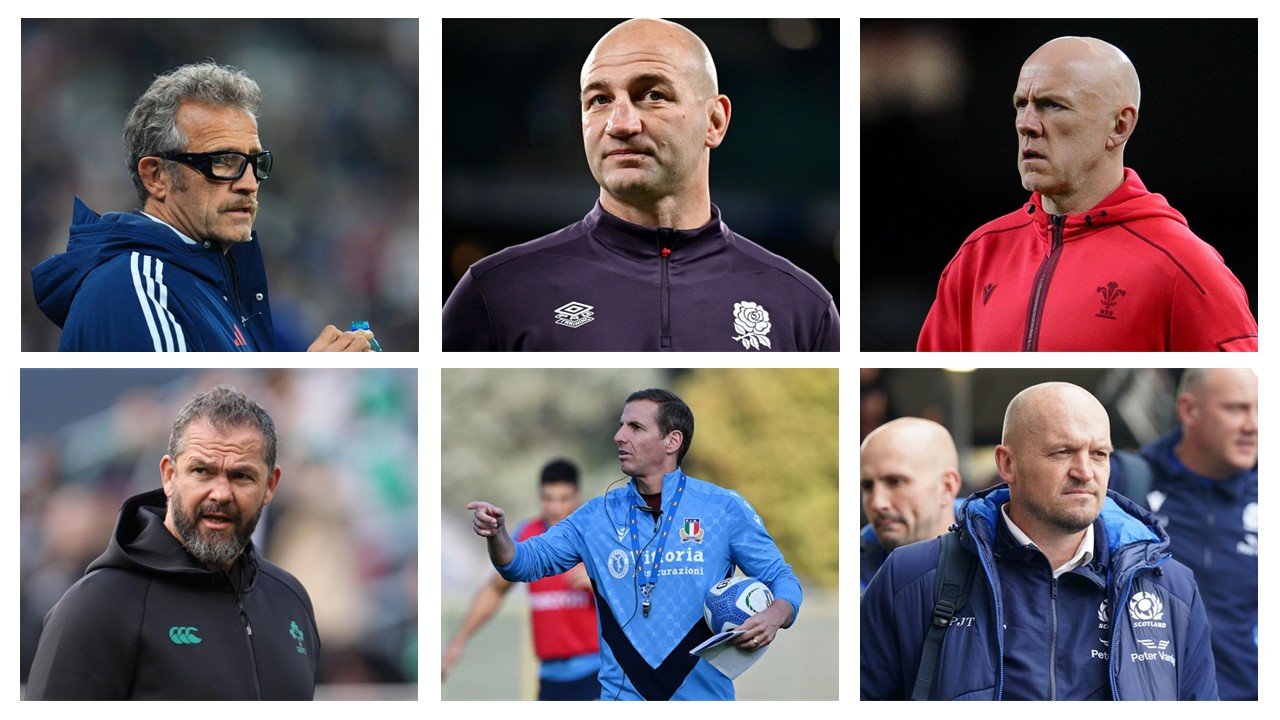
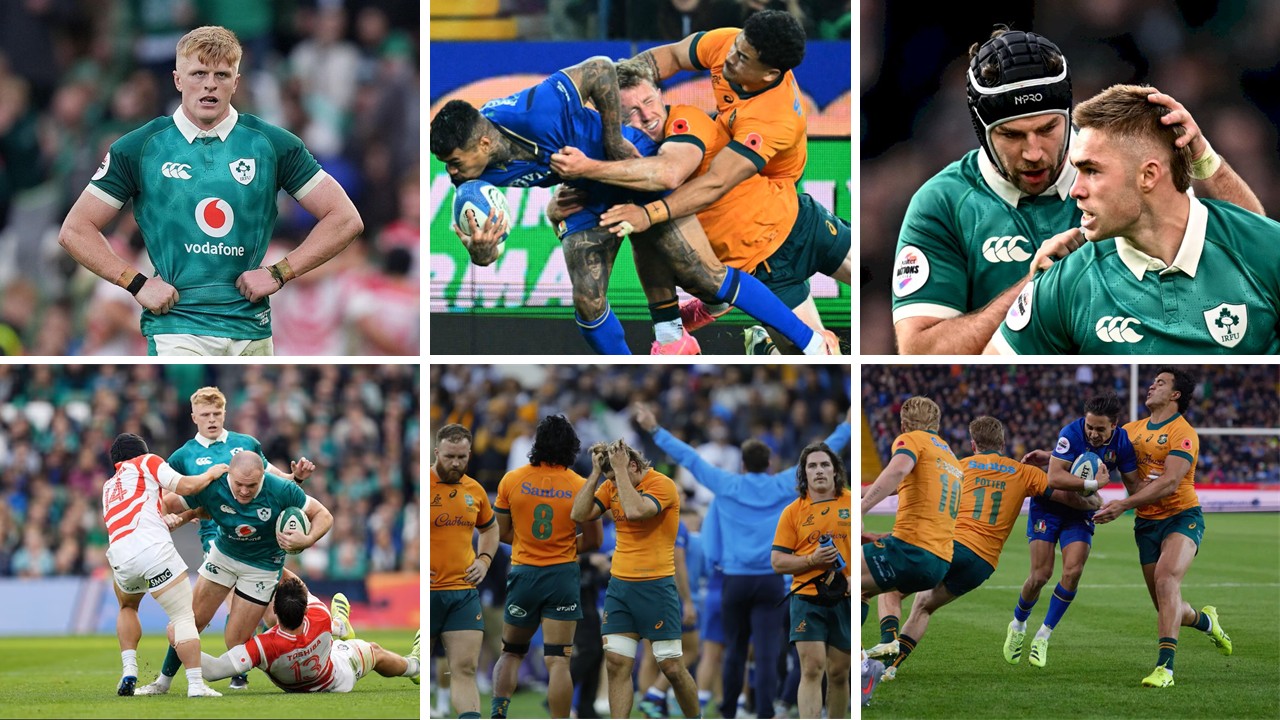
Well, after far too much work and severe cases of noses to the grindstone, we managed to briefly come up for air and talk about some rugby. While there has been a lot to mull over in the rugby universe over the past few weeks and since the last time we managed to put pen to paper, we’ve boiled this week’s missive down to three key points that got us the most animated. Tomorrow sees the start of a Tournament we dearly love, but has suffered in the past few years from a rather cumbersome structure, and sadly, this year isn’t really much better. Yes, it’s European Rugby’s version of Football’s Champions League, as the European Champions and Challenge Cups kick off this weekend, with the added spice of South African teams in recent years. As an international competition that brings some of the World’s best and most storied clubs together, it still has plenty of appeal and the potential to produce some thrilling contests.
Of huge interest to all of us was this week’s World Cup draw for the 2027 edition of the global showpiece in Australia. The expanded Tournament now features 24 teams, up from the usual 20, in six groups of four. The 6 best teams in the World at the moment avoid the potential of facing each other in the Pool stages. However, it still means that by the quarters there will be inevitable exits of some very big names, and, as always, controversy is ripe, as it doesn’t seem all that much better than the highly disputed, borderline farcical draw for the 2023 World Cup. We try to break down the ramifications for the six top teams.
Finally, if you, like us, witnessed the horror show in Cardiff last weekend, you would think that Welsh rugby is officially deceased after they were annihilated 73-0 by the World Champions South Africa. The Springboks had a good number of their big guns, as well as a plethora of rising talent. Wales, on the other hand, had to combat the green and gold juggernaut without many of their key players, and it’s been a rough old month for Welsh fans, as new Coach Steve Tandy’s reign has not got off to the most promising start. However, contrast that with the fortunes of Welsh clubs in the URC, and all of a sudden we have to ask ourselves: is the picture really that bleak, and by the time the Six Nations rolls around, could Wales start to think of handing their Wooden Spoon to someone else?
So without any further ado, let’s get into what kept our pints short but frothy.
Will this year’s European Champions and Challenge Cups produce a tournament that holds our interest from the start?
A tournament once loved and eagerly anticipated by rugby fans has lost a lot of its shine in recent years. The format is still cumbersome, but this year it could and should produce a more evenly balanced tournament that holds our interest from the start, as opposed to only the Quarter-Finals.
Despite the whole thing feeling a bit flat and pointless last year, this is still a tournament we cherish, as Europe and South Africa’s best clubs will compete over the next two weeks in the first two rounds of Pool matches. Last year, many of the contests were complete mismatches, and there was very little at stake until the knockouts in April, making it hard to generate much interest in the first four weeks of both Competitions. While the Challenge Cup may still suffer the same fate this year, there are enough big games in the Champions Cup during the Pool stages to keep us interested.
A lot of the usual questions remain: will South African sides prioritise this over a Competition like the URC, which they seem to value more? Furthermore, French sides often don’t take it all that seriously until the knockouts, especially those who don’t consider themselves as silverware contenders. With the quality of rugby on offer in England’s Premiership and France’s Top 14 this year, is it ultimately going to devolve into a cross-channel shootout as the knockouts approach, or will South African and Irish sides spoil the Anglo-French party?
We think that some of the answers to those questions will be found in this opening weekend. On Friday morning, two sides who should be doing much better than they are in their respective leagues kick the tournament off in Salford, as Sale Sharks host the Glasgow Warriors. Glasgow Warriors arrive fully loaded, despite only managing to be a mid-table team this year in the URC, after having been URC Champions in 2024. Sale, meanwhile, have some big guns in their ranks that have been key to England’s recent revival, yet they too somehow can’t seem to rise out of the middle echelons of the Premiership. Are both teams prioritising European over domestic glory this year? Looking at Glasgow’s lineup for tomorrow’s match, that would seem plausible, but in Sale’s case, much less so, though for the English side niggling injuries mean that they are without the services of George Ford in the playmaker role.
On Saturday morning, defending Champions Bordeaux make the long trek to Pretoria to face South African powerhouse the Bulls. The Bulls, who have struggled with consistency on the big stage in Europe, will surely be up for the challenge of kicking off their European campaign in style in front of their demanding and devoted fans. French teams are not renowned for their ability to travel well, and Bordeaux themselves have not proven to be the razzle-dazzle team they were last season, despite boasting the talents of France’s hottest try-scoring properties, Louis Bielle-Biarrey and Damian Penaud. Once again, though, it’s a case of two teams who should be doing so much better than they are in their own competitions, possibly prioritizing European glory this year.
Perhaps one of the most tasty fixtures of the weekend though is that between Bath and Munster on Saturday afternoon. Bath are dominating the English Premiership this year, while Munster’s traditional grunt and grit have seen them firmly ensconced in the URC’s top three this season. Could Munster be the surprise Irish package of the Tournament and if so, how will that affect Irish selection decisions going into the Six Nations? With Max Ojomoh being one of England’s revelations this Autumn, and a genuinely stacked Bath side it’s going to require every ounce of grit and determination that the Irishmen can muster if they are to start their European exploits with a win.
Sunday also sees some intriguing encounters, with the morning clash between a red-hot Pau and Northampton being the highlight. Northampton made it to the final last year and packs a raft of talent in terms of all that is new, bright, and shiny about England this year. Pau, meanwhile, are lighting up the TOP14 with their pack of relative unknowns this year, and the French outfit is exceptionally dangerous and would love nothing better than to celebrate their promotion to the Champions League with a home win over last year’s runners-up. Northampton have Championship material written all over them this year, and it’s hard to see them not going deep into the knockout stages. Still, Pau will not be daunted by the challenge – let’s face it, they have taken scalps off French giants like Toulouse and Bordeaux already this season.
Finally, Edinburgh find themselves back in Champions Cup action this year on Sunday afternoon. However, their campaign opener at home will not be easy against French side Toulon, who are one of the most successful teams in the competition’s history. European glory means almost as much to Toulon as it does to fellow French competitors Toulouse. However, if Edinburgh can pull off the unthinkable, they may enjoy an extended stay in the competition this year, rather than an early exit stage left once the Pools are concluded.
If some of these games are as good as they promise to be, then this year’s tournament could see a return to the competition’s heydays, where some of the bigger games had a genuine Test match feel to them, especially come the knockouts. We can’t wait to find out, and best of all, the tournament has become so much easier to watch here in Canada through FLO Rugby, along with the usual providers from the past, Premier Sports Asia.
Sale vs Glasgow – Friday, December 5th – 3:00 PM (Eastern) – Premier Sports Asia and FLO Rugby (live and on demand)
Bulls vs Bordeaux – Saturday, December 6th – 10:15 AM (Eastern) – Premier Sports Asia and FLO Rugby (live and on demand)
Bath vs Munster – Saturday, December 6th – 3:00 PM (Eastern) – Premier Sports Asia and FLO Rugby (live and on demand)
Pau vs Northampton – Sunday, December 7th – 8:00 AM (Eastern) – Premier Sports Asia and FLO Rugby (live and on demand)
Edinburgh vs RC Toulon – Sunday, December 7th – 12:30 PM (Eastern) – Premier Sports Asia and FLO Rugby (live and on demand)
The World’s Top Six Teams and arguably the most likely contenders to lift the Webb Ellis Trophy avoid having to face each other in the Pools, but their route from there to the Final is not without its problems and as always decidedly more fraught for some and easier for others.
In fairness to World Rugby, setting up the World Cup Pools was always going to be contentious, and the resulting draw for the 2027 edition in Australia means that, based on current rankings, one of the top two teams, South Africa and New Zealand, will be on a plane home after the Quarter-Finals.
Well the names have been pulled from the hat and we now know what the Pools for the 2027 World Cup look like. It’s never going to be perfect and striking a balance that works for everyone is next to impossible. However, the gross imperfections of the 2023 edition seem to have been avoided for the most part, unless you ask the current number 1 and 2 sides in the World, South Africa and New Zealand. Therein lies the rub, one of these two teams will be going home after the Quarter-Finals barring a miracle. Despite the top six teams in the current World Rankings all being put in different Pools, based on the current format South Africa and New Zealand look set to clash in the Quarter-Finals and not in the Semi-Finals.
Pool A sees New Zealand as the dominant team, with, in reality, their only potential banana skin being hosts Australia, who they share the group with. Barring the improbable scenario of New Zealand being beaten by Chile or Hong Kong, the All Blacks will go through as either the winners of the Pool or the runners-up. The problem is that if they want to avoid the risk of a potential Quarter-Final exit against the Springboks, they could have to throw the game against Australia in the Pools. Unlikely and a definite gamble given that in Pool B, South Africa might be thinking exactly the same and choose to throw their game against Italy. While it’s unlikely that either would do so, it is nevertheless a scenario, made worse by the possibility that hosts Australia could be thinking the same to avoid a Quarter-Final clash with South Africa and, consequently, let their game against New Zealand slide. It’s a variable set of pressures that, in reality, the tournament could do without. If truth be told, both Australia and New Zealand would arguably prefer to finish second in Pool A and have a much better chance of making it to the Semi-Finals than if they finished first.
In Pool B, South Africa faces very few potential banana skins, so if they were to throw a match as in the above scenario, it would look all the more obvious. Hence, it’s unlikely to happen, but as things stand, they look set to face either New Zealand or Australia in the Quarter-Finals, unless Italy takes them to school in the Pool stages, which would be one of the potential great storylines of the Tournament, but unlikely.
Once we leave Pools A and B, the top teams in Pools C, D, E, and F have a much more level playing field and a route to a potential Semi-Final spot and beyond. In Pool C, Argentina look set to be unchallenged, leaving them to face Ireland in the Quarter-Finals. Given they’ve been Ireland’s bogey side in the past at World Cups, along with Ireland’s now well-documented inability to get past the Quarter-Finals, the Pumas will feel more than content with their lot, and a possible Semi-Final Clash with England.
In Pool D, the Scots will feel aggrieved once more to be drawn alongside their old nemesis Ireland. Ireland, as the top team in Pool D, is also unlikely to be thrilled at the prospect of coming off second best to the Scots in the Pools. If the Scots top the Pool, they have the unenviable task of a Quarter-Final against Argentina, or, if they finish second, a Round of 16 against France. For Ireland, given their apparent psychological stumbling block when it comes to the World Cup, they will be unhappy with either France as Round of 16 rivals or Argentina as Quarter-Final opponents. However, they would probably prefer the South Americans over their Gallic rivals.
In Pool E, France will be feeling relatively positive and comfortable, knowing that, as the top-ranked team in the Pool, they face no real jeopardy and look set to face Fiji in the Quarter-Finals, provided they can get through an awkward Round of 16 encounter against either Ireland or Scotland. Get through that, and then there is the potential nightmare scenario of a Semi-Final with South Africa and all the ghosts of 2023 that come with it. However, till then, it should be relatively plain sailing for France.
Finally, Pool F sees England with arguably the most leisurely ride of them all to the Semi-Finals. The only real variable for them is who their Quarter-Final will be against, either Australia or New Zealand. Given their demolition of both these teams this Autumn, you’d think that, although neither can be taken lightly, the knowledge that they can comfortably beat both teams with the proper preparation will help reduce some sleepless nights.
Look, it was never going to be perfect, and the potential of having either the number 1 or 2 ranked side in the World leaving the party at the Quarter-Finals is less than ideal. However, given New Zealand’s current trajectory, will they still be the number 2 side in the World come 2027? The debate around this will rage on well into many late nights in pubs and bars around the globe until October 1st, 2027, and the opening whistle of a tournament that could be one of the most openly contested versions in years. We can’t wait to find out!
Contrast the dejection of the Welsh national team after their 73-0 mauling at the hands of the Springboks with the feel-good factor in Cardiff in the URC and the Scarlets’ thumping of URC powerhouse Glasgow last weekend, 23-0. Are things really all that bad in the Principality?
Wales’ absolute thrashing at the hands of South Africa was an utterly pointless exercise that highlighted how out of touch the WRU’s management is with its clubs and the state of the game in Wales. It’s surely not all doom and gloom, however, with the Cardiff Blues second on the URC log and Scarlets thumping 2024 URC Champions Glasgow 23-0 in the Llanelli side’s first win of the season.
The nightmare at the Principality Stadium last Saturday, brought to a close a truly dismal year for Welsh rugby at Test Level. New Coach Steve Tandy’s first four games in charge hardly heralded in a brave new dawn for Wales. Heavy losses to Argentina and New Zealand, and a scrappy and labored one point win over Japan didn’t exactly fill Welsh supporters with a sense of optimism about the future. Even returning superstars like Louis Rees-Zammit couldn’t reverse the tide of destruction wrought on Wales by their opponents and a scoreboard that just kept ticking the wrong way.
That final Test last weekend against South Africa, outside the November Test window, simply should never have been played by a Welsh side bereft of oxygen and big-name talent. With their talismanic Captain and exceptional back rower Jack Morgan out with injury sustained during the first Test against Argentina and their big name players back on Club duty in the English Premiership and elsewhere, Wales sadly never stood a chance. It was a cash grab, plain and simple, and Welsh rugby ultimately looked poorer for it.
However, before Welsh fans go reaching for the nearest stiff drink they can find, we’d argue that all is not lost. The National Team may be on life support, but at the Club level, things don’t look as grim as they could be. Cardiff Blues currently sit in second place in the URC table. Scarlets won their first game of the season against 2024 Champions Glasgow. They didn’t just win, they left the Scots scoreless. Admittedly, the Glaswegians were missing the vast majority of their 1st choice players. However, it was still an impressive victory nonetheless and a much-needed shot in the arm for rugby as a whole in the beleaguered Principality. Even the lowly Dragons gave Irish powerhouse Leinster some genuinely nerve wracking moments last weekend.
This weekend sees Cardiff open their European Challenge Cup account with a trip to Paris and a rather ominous-looking Stade Francais. This could be the start of Welsh rugby’s renaissance if Cardiff can show the Parisians in their flashy pink jerseys that blue is the in color this season. For us, it’s the most crucial game of the opening weekend of the Challenge Cup. Cardiff have an exceptionally challenging Pool stage journey, having to face, in addition to the Men in Pink from Paris, Ulster, Racing 92, and Exeter. If they can keep their URC momentum going and find a route to the knockout stages of the Challenge Cup, then we’d argue the roots of a Welsh renaissance are in the making. It’s still a mountain to climb to make them competitive in time for the World Cup, but Wales need to throw last weekend in the dustbin where it belongs and start to develop a cautious sense of cheerfulness!
Stade Francais vs Cardiff – Saturday, December 6th – 8:00 AM (Eastern) – Premier Sports Asia and FLO Rugby (live and on demand)
Well, that’s it for this week, folks. Probably under the gun again next week with the daily grind, but hopefully, we’ll manage to get some Champions and Challenge Cup musings on to these pages at some point. In the meantime, enjoy what should be a very interesting weekend!
Anyone else enjoying these November Tests as much as we are, despite having to sandwich them in between a ridiculous work schedule? We did manage to catch three cracking games of rugby as Scotland came tantalisingly close once again to almost upsetting New Zealand’s apple cart in a genuine thriller. Then France and South Africa went at it hammer and tongs. Still, ultimately, the inability of literally any team right now to go the full eighty minutes with the Springbok juggernaut saw Les Bleus run out of both puff and ideas. Finally, on Sunday, Argentina produced an extraordinary display of attacking rugby against a brave but ultimately outclassed Welsh outfit, and not exactly the dawn of a new era that so many beleaguered Welsh fans were hoping for under recently appointed Head Coach Steve Tandy.
While much has been said in the press this week about the ramifications of these November Tests on the World Cup draw next month to decide the composition of the Pools in Australia, the top six who look set to occupy Band 1 and therefore a much easier route to the knockouts needn’t stress too much. South Africa really doesn’t need to worry at all, as their remaining opponents—Italy, Ireland, and Wales — are sadly unlikely to cause them too much grief, with only Ireland a potential banana skin. Nevertheless, we take a look at how it all may shape up come the final whistle in Cardiff on the 29th of November.
As always, we pick our three big games of the weekend as our focus, work permitting, will be firmly on the action set to unfold in Twickenham, Dublin, and Murrayfield. Can England lay down a genuine marker that they intend to lift the Webb Ellis Cup for only the second time on the same soil they did it the first time around in the 2003 World Cup in Australia? Can Ireland finally realize that some long-overdue personnel changes and a reworking of their toolbox must now be addressed with the utmost urgency, as they seek to sink another nail into Australia’s listing ship despite its promise at the start of the season? Finally, if you want thrills and spills, then look no further than Murrayfield on Sunday, as two glorious attacking and free-flowing sides have at it in the shape of Scotland and Argentina.
So, as we’ve had a bit of a breather this week work-wise, let’s look ahead to an important and potentially fascinating weekend.
Also, please share with us the sad news regarding Mark from Two Cents Rugby’s father as a postscript to this week’s missive, and offer him your support if you can. The legendary Gazza will be sorely missed.
While there is lots of talk around seedings permutations for the World Cup draw next month, the reality is that, for the most part there really aren’t any, as the top six, barring any surprises, look set to remain the top six
South Africa, New Zealand, Ireland, England, France, and Argentina will hang on to their rankings in the top six and thus ensure an easier run to the knockouts of the 2027 World Cup. All that really remains to be determined is the order in which they will occupy those spots after this month. South Africa would appear to be unshakeable at the top, and England could well pip Ireland to third. Argentina remains the wild and entertaining card, absolutely determined to hang onto that cherished sixth spot on the table and thus a Band 1 seeding for the World Cup draw.
While much has been said about the permutations of these November Tests on the draw, which takes place next month for the Pools at the next World Cup in Australia, we’d argue that perhaps it’s a bit of a storm in a teacup, especially after the first of two rounds of the November Series. The fuss all seems to stem from the fact that at the end of the Autumn Test window, the top six teams in the World Rankings will occupy the fabled Band 1 of the draw. Essentially, that means at least in the Pool stages none of the top six teams will have to face each other, making what should be an easier route to the knockout stages. In theory, however, if you look at the state of things and those six teams who will occupy Band 2, there will still be some decidedly uncomfortable games in the Pool stages for the likes of France and Ireland. Even Argentina, who arguably are playing some of the best rugby we’ve ever seen them play, need to be concerned if they can’t fix their lack of consistency from one game to the next, despite a veritable conveyor belt of talent now coming out of this South American powerhouse. Australia, Fiji, Italy and Scotland could seriously jeopardise the hopes of the bottom three of Band 1 should they meet in the Pools.
Hang on, we hear you say, we thought you just said there was no jeopardy. In the sense of the current top six staying there, that’s not really a concern. It’s simply more to do with the order after November concludes as well as worrying trends in sliding form. Argentina perhaps looks the most vulnerable as thumping losses to both Scotland and England, and Australia pulling off resounding wins over Ireland and France could see them swap that sixth place with the Wallabies. However, even if Argentina loses to both Scotland and England, we can’t see the margins of defeat being all that severe. We fear slightly for Australia at the hands of a French side looking to make a point in a fortnight in Paris, as well as an uncomfortable trip to Dublin this weekend, even if Ireland are definitely not at their best at the moment.
South Africa and New Zealand should remain top of the pile in first and second as we simply can’t see South Africa losing to Italy, Ireland, or Wales in their current imperious form. Ireland remains the wild card if they pull off one of their performances for the ages when they meet the Springboks in a fortnight. As for that third place, we could see England getting some serious traction in the next few weeks. An Irish win over a wounded but competent Australian side this weekend, despite the Wallabies’ dip in form on tour, is by no means a certainty, while England getting one over an All Black side that seems unsure of itself is a distinct possibility. If England were to follow that up with a win over Argentina, while Ireland gets pummeled by South Africa, then there would definitely be a shift in that third-place ranking in England’s favor.
So yes, technically, there is little to no jeopardy in the next two weekends, but statements of intent will need to be made, particularly by Ireland, France, and Argentina. Australia and Scotland may be hoping that the tables turn in their favor, but for us, it’s all a bit too much in the realms of a fantasy league that simply doesn’t exist right now. New Zealand will want to survive Twickenham and then put the Welsh to the sword so they can return home and really start to develop a World Cup strategy based on all the lessons learnt in this turbulent transition period. South Africa will also want to reflect on lessons learnt, even if it’s unlikely anyone will knock them off their perch, and ensure that the body of new talent currently being fast-tracked is fully embedded into their World Cup plans. England will simply want to notch their already impressive World Cup preparation up a few gears. Jeopardy, no, but deadlines to meet over the coming weeks for all concerned, and a target to be hit? – Absolutely!
England must clearly fancy their chances this weekend as the All Blacks look far from their invincible selves of years gone by.
England looked dominant against Australia, and their team is an exciting package of experience and raw young talent. New Zealand survived their Murrayfield scare thanks to some bloodied heroics by Damian McKenzie in the final quarter, but as good as they are, there are still some definite chinks that just can’t get rubbed out of the All Blacks’ armor, making this weekend’s clash between the two a fascinating high-stakes affair
England are clearly looking forward to this weekend’s tussle with New Zealand at Twickenham. To be honest, so they should. We’d argue that based on current form, we’re tipping our hats in their direction as favourites. New Zealand are keen to complete their “Grand Slam” of the Home Nations this Autumn. In reality, it’s only England standing in the way of that ambition, as courageous as Wales are likely to be in New Zealand’s last game of 2025, it’s hard to get our heads around the idea of the Welsh pulling off what is essentially an unthinkable upset.
Of all the Six Nations countries, you could argue that England looks in the rudest health and at a perfect point in this halfway marker in their preparations for the next World Cup. There is established talent in the squad, all at the right age, and a raft of new talent that is now firmly embedded in England’s operational mentality, with an incredibly bright future ahead of them. There is enough depth to cover for injury in all the key playmaking positions. It’s simply a question of fine-tuning it.
One could argue that New Zealand has much the same in terms of depth, but the changing of the old guard and the bedding in of the new, all allied to a new Coaching philosophy, are not nearly as advanced as England’s developments in the same areas. Make no mistake, this is an excellent New Zealand side in the making. The Coaching box just needs to determine the kind of game it wants the All Blacks to play, then develop the right players accordingly. New Zealand’s biggest Achilles Heel at the moment would appear to be consistency in direction, not a lack of talent or ability. This very good side is just not the well-oiled machine that saw New Zealand win two back-to-back World Cups in 2011 and 2015—for now.
Saturday’s lineups are fascinating and should provide some riveting contests on the pitch. That English front row looks feisty and dangerous, even if in Heyes and Fin Baxter, it may be a tad inexperienced. However, Jamie George, despite his advancing years, still seems to manage to huff and puff his way through a good 60 minutes and ensure that England’s lineouts hit their mark. However, New Zealand has a unit that can more than match it, but the benches on both sides will need to make no apologies when they come on with England’s Ellis Genge bringing his usual edge. The enormous Dutchman, now bona fide New Zealander Fabian Holland, will give Maro Itoje some serious competition in the lineouts.
It’s the back-row battle royale between the two sides that is likely to be one of the most critical contests on Saturday. We said that after England’s summer Tour of Argentina, where their young guns not selected for Lions duty were so impressive, Bath’s Guy Pepper had to be seen as a starter. So far, he simply hasn’t disappointed and has been outstanding, but his duel with arguably one of the best back rowers of the modern game, New Zealand’s Ardie Savea, will be a genuine coming of age. England number eight Ben Earl is probably peaking at just the right time in readiness for the next World Cup, and New Zealand’s outstanding newcomer Peter Lakai will have to be at his best to keep the rampaging Englishman in check.
England seems comfortable with the playmaking axis of Alex Mitchell and George Ford at 9 and 10, and Ford’s always impressive tactical game has started to finally develop some real attacking nous. They’ll need to be good to negate the threat of Cameron Roigard, who is clearly New Zealand’s plan for the World Cup in the nine jersey, while Beauden Barrett provides the calm and spark that the All Blacks have relied on for so long now.
England, if they can’t maintain dominance through their forward pack, may feel less assured in the backs, though, as we think that England’s centre pairings are still a work in progress, as is their back three. Freddie Steward seems to be getting back to his best at fullback, and Immanuel Feyi-Waboso is absolutely electric out wide on the wing if England can create space for him. However, even if their combinations don’t always click New Zealand’s offering in the backs packs massive danger. From the always headline-grabbing exploits of fullback Will Jordan to Leicester Fainga’anuku and speedster Leroy Carter out wide, England’s defensive set will be tested to the limit, along with a powerful and quick All Black centre pairing. Carter, in particular, has an unnerving habit of popping up where you least expect him and causing all kinds of havoc, in much the same vein as the Springboks’ diminutive wingers. In short, excuse the pun, but highly mobile and dangerous small men with an eye for space and how to use it.
Much has been made of England’s “Pom Squad” as a variation on the Springboks’ infamous “Bomb Squad”. We have to admit it certainly looks dangerous, with peroxide blonde back row sensation Henry Pollock grabbing plenty of headline space. Some feel the exuberant young man needs to learn some humility, but to be honest, we enjoy his unabashed showmanship at times, as his skill set justifies it. Rugby has always had its brash entertainers; they are part of the landscape, whether you like them or not, and they help to make the game as colorful and emotional as it can be at times. You could never accuse Pollock of not getting fans invested and involved in the game through his unbridled enthusiasm. However, Pollock aside, that’s a competent English bench with the old warhorse Tom Curry always a clear and present danger.
If England has a potential weakness, it could be those last two spots on the bench taken up by Marcus Smith and Ben Spencer. We’d argue New Zealand’s offering is much stronger when you throw in the kind of heroic sacrifices Damian McKenzie made against Scotland last weekend. McKenzie is the kind of player that can bring you back from the brink, and the images of McKenzie at the end of the Murrayfield clash, where he looked like one of the few bloodied survivors of the first rush over the top of the trenches at the Somme, said it all. We’re just not sure that Marcus Smith is of the same calibre when all the chips are down. Don’t get us wrong, Smith is a remarkable player, but McKenzie’s all-court skills put him in a different league, at least for the moment.
Either way, this should be a classic and without a doubt the biggest game of the weekend. So strap yourselves in and brace for impact!
England vs New Zealand – Saturday, November 15th – 10:10 AM (Eastern) – DAZN, Premier Sports Asia and Stan Sports Australia (live and on demand)
Ireland and Australia need a big game on Saturday, plain and simple – something which seems to be eluding them both lately
Ireland’s embrace of new talent needs to hit high gear from now until the World Cup if they are to avoid another disappointing exit, while Australia needs to steady a ship that looked so promising at the start of the season
These two teams are decidedly unsure of themselves and trying to understand why, given their talent, the stars aren’t aligning for them all of a sudden. Does that sound about right in summing up how Ireland and Australia must be feeling heading into their meeting at the Aviva this Saturday? Australia’s season started so positively this year, running the Lions close and ultimately losing the Series, but still denying the tourists a whitewash. Then, who can forget that epic upset of the Springboks at their hallowed ground of Johannesburg’s Ellis Park at the start of the Rugby Championship? Since then, the euphoria has started to wane, culminating in that humiliating defeat to Italy last weekend. Things don’t really get any easier in the shape of admittedly a misfiring Ireland and France, but still two teams who are at home and have an urgent need to silence their critics, especially Ireland.
In relation to Ireland, 2025 has not been a year they will want to remember. A difficult Six Nations campaign, a mixed bag in terms of Irish performances on the Lions Tour with some awkward injuries thrown in, an utterly flat second half against New Zealand in the Chicago rematch, and an at times clumsy win over Japan. Ireland may sit third in the World Rankings, but they sure as hell don’t look like it at the moment. We’ve always said that if Ireland are to finally get their World Cup Quarter Final demon off their backs, they needed to embrace pain and change early on in this current World Cup cycle. We feel that in order to continue pursuing results at the expense of development, they have lost two valuable years in the process of rebuilding and are now trying to play catch-up and reinvent the wheel against the backdrop of a ticking and increasingly unforgiving clock.
It was interesting that when we were down in Chicago a fortnight ago, many of the Irish fans seemed almost resigned to Ireland’s current fate, and many felt that the only real positive would be learning valuable lessons from painful defeats to New Zealand, Australia, and South Africa. The general consensus was that Ireland and their Coaching staff had rested on the laurels of Ireland’s previous success, built around the core of a now rapidly ageing squad. While other teams were embracing their new talent and making sure they got plenty of game time, Ireland seemed reluctant to take similar leaps of faith, despite some clearly defined talent. Furthermore, Coach Andy Farrell’s seeming predisposition to build the core of his squad around the blue of Leinster, with all the other provinces as fringe additions, didn’t seem to be helping develop Ireland’s depth.
This weekend’s lineup for Ireland does little to dispel such concerns. Of the starting fifteen, 12 wear the blue of Leinster in the URC. It’s only the bench where there is a glimmer of the four proud provinces of Ireland, as despite the front row being an all-Leinster affair, Connacht, Ulster, and Munster all get a look in. Meanwhile, the Prendergast/Crowley fly-half debate continues at fever pitch, with Crowley now on the bench after starting Ireland’s first two November Tests. Despite a wobbly showing at times against Japan and a poor second half in Chicago, we’d still argue the Munster man is the preferred choice. Prendergast has some magic, and some of his offloads when he came off the bench against Japan had to be seen to be believed. However, are they what’s needed for a punishing and bruising encounter with South Africa a week from now, and are his defensive liabilities enough to keep a rampaging Wallaby backline in check?
As for Australia, we are really struggling to understand how the wheels have fallen off so dramatically after such a bright start to 2025. With the departure of Coach Joe Schmidt at the end of the month, these are indeed worrying signs. We could understand it if Australia were a poor team, which, let’s be brutally honest, they were until the end of last year. However, that is not the case now, but suddenly the results are eluding them. Their set-piece work is solid if not spectacular; they have an outstanding set of highly physical, very mobile second- and back-row forwards, and their backs and centres are world-class. The weak links in the chain would appear to be their halfback pairings and the age-old problem of a lack of discipline that has plagued Wallaby sides for much of the last decade. They gave away twice as many penalties as Italy last weekend. The porous defences that are often the downfall of Australian sides in Super Rugby are also creeping back into the Wallabies’ performances in their last 6 games. Their average tackle success rate in their previous six matches has been a paltry 82%, which is nowhere near where it needs to be at this level. They’ll take some comfort in the fact that, at present, Ireland’s is also pretty poor, but it’s not much to cheer about.
Consequently, this weekend’s game between the two sides is a high-stakes affair. Were Australia to pick up a win, it would be a massive shot in the arm ahead of a tough final hurrah of the year against a French side who will be looking to make a statement after a disappointing performance against South Africa last weekend. For Ireland, it’s time to start looking at what the youngsters in the team can do. It’s time for Paddy McCarthy, Dan Sheehan, Sam Prendergast, Tommy O’Brien, Thomas Clarkson, Cian Prendergast, Craig Casey, and Jack Crowley to really start to take ownership of their jerseys with an eye to Ireland’s future, and Saturday must be a marker for it.
Ireland vs Australia – Saturday, November 15th – 3:10 PM (Eastern) – DAZN, Premier Sports Asia and Stan Sports Australia (live and on demand)
If you want spice and fast, free flowing rugby then look no further than Murrayfield this weekend
Argentina look on song at the moment, but have they managed to fix their Achilles’ heel of a lack of consistency? Meanwhile, Scotland showed us last weekend that they know how to thrill.
We are so looking forward to this one, and in terms of pure rugby entertainment, it’s the game we’re most excited about. New Zealand and England may be the titanic struggle of this weekend, but this game should be a fitting end to a weekend complete with plenty of fireworks and pyrotechnics. Both these teams love to play fast, free-flowing, and at times borderline chaotic attacking rugby. It’s just so much fun to watch. Throw in Argentina’s monster forward pack crashing through defences like Australian land trains with brake failures, and you’ll be hard pressed to find a better way to spend two hours of your morning on Sunday.
As of this going online, we are still without the team sheets, but it does look like Scotland maestro Finn Russell will be available at fly-half. Scotland produced some magical rugby at times last weekend against the All Blacks, but that ongoing inability to close out big games in the final quarter tripped them up yet again. However, when you have the likes of centre Sione Tuipolutu, Darcy Graham, and Kyle Steyn out wide with Blair Kinghorn at the back and Finn Russell pulling the strings, literally ANYTHING can happen, and it did last weekend.
However, Argentina are more than capable of pulling off similar heroics, as evidenced by their performance against a courageous but ultimately poor Welsh side last weekend. Although it’s a side note, we feel we have to give honorable mention to Welsh Captain and back rower Jac Morgan, who picked up a nasty arm injury, which sees him out of the rest of the November Tests. Morgan is one of our favourite players here at the Lineout, and his never-say-die workaholic attitude continues to garner our utmost respect, even though it’s saddled to a seemingly lost cause at the moment. As a result, we are absolutely gutted that he will play no further part in November’s action, and wish him a speedy recovery.
Still back to Argentina, whose kicking and offloading game had to be seen to be believed last weekend in their utterly emphatic win over Wales. Argentina seems to be producing a veritable conveyor belt of world-class tens at the moment. Their latest project, Geronimo Prisciantelli, was outstanding last weekend, alongside the excellent Santiago Carreras at fullback, who is also more than handy in the ten jersey. Add in Tomas Albornoz, who will sadly miss this November’s campaign due to injury. Still, Argentina are veritably locked and loaded in the fly-half berth ahead of the World Cup, and we’re pretty sure they will unearth yet another star in the making between now and then.
Argentina thoroughly deserve their ranking as the sixth-best team in the world, and imagine what they could do if they mastered the art of consistency from one game to the next, something that continues to plague them and deny them their true potential. Wales made them look perhaps slightly better than they really are, and Scotland should be a much sterner Test, especially if the Scots play the way they did against New Zealand. It’s predicted to be a dry track, which should favor running rugby on Sunday in Edinburgh, so these two exciting sides should be able to operate at full throttle. Even if your fan loyalties lie elsewhere this weekend, this is one game that every rugby-loving neutral will not want to miss this month. If you fancy a spin on the roller coasters this weekend, this will be your game!
Scotland vs Argentina – Sunday, November 16th – 10:10 AM (Eastern) – DAZN, Premier Sports Asia and Stan Sports Australia (live and on demand)
Well, folks, that’s it for this week. We have to apologise in advance that next week’s missive is much more likely to be the condensed version we used last week, as work looks set to eat up much of our time, but we’ll do our best. Enjoy the rugby; there should be lots to get excited about.
On a sad note, one of our favourite YouTubers, Mark from Two Cents Rugby, shared some tragic news with us this week, which you may have noticed if you regularly watch his excellent content. His father, the legendary Gazza, whose frank and honest commentary has given us so much over the last few years when he has joined Mark on his videos, is not well and, sadly, may not be with us for much longer. We at the Lineout were absolutely devastated to learn this, but let’s all fulfill Gazza’s wishes and help get Mark’s subscriber count over the 100,000 mark if you’re not a subscriber already. From all of us here at the Lineout, take care, Gazza, wherever your journey takes you. You will be sorely missed.
We all felt a little bit flat on our return from the Ireland/New Zealand rematch in Chicago last weekend, compared to the extraordinary experience the same match provided 9 years ago in 2016. Ireland have some serious homework ahead of their meeting with Australia in a fortnight. This weekend, France and South Africa should produce a classic that says less about events gone by from the last World Cup and more about what lies ahead at the next. Scotland and New Zealand could produce one of the most chaotic and unpredictable but ultimately enjoyable romps of the month on Saturday. At the same time, Italy and Australia is a huge-stakes and intriguing affair for both teams.
Due to us just getting back from Chicago and the All Blacks/Ireland game, and finding that our employers saddled us with an unreasonable number of deadlines and workloads this week, we sadly are going to have to keep this week’s Calls down to a few one-liners. A more in-depth resumption of service will return next week.
Last week saw the two headline events of Ireland vs New Zealand and England vs Australia. Of the two, we’d argue that, despite witnessing the first in person, Australia and England produced a better game. Ultimately, New Zealand hit their straps in the second half of their adventure in Chicago, while Ireland never really got going; it simply didn’t fire the imagination as a spectacle, and there were some somewhat controversial issues surrounding how the game was staged, officiated, and managed. It was all in stark contrast to the game in 2016, which was a fantastic experience. In short, when the US hosts the 2031 Rugby World Cup, it will have to drastically improve.
As for this weekend, there is no doubt the headline game is France vs South Africa. We are slightly reluctant to bill it as a rematch of their Quarter Final duel at the last World Cup. The game in Chicago last weekend, a rematch of the 2016 epic between New Zealand and Ireland at the same venue, was overhyped to the point that it simply didn’t deliver. We fear that drawing too many parallels between France and South Africa now and in 2023 could also lead to an anticlimax. It’s a game in its own right, regardless of past histories and perceived grudges, and let’s all hope it ends up being a cracking game of rugby in the spirit of the moment, something it has the potential to be and then some, given the current quality of the two teams. In short, the here and now is why you should be watching this game, not on historical events two years ago.
Australia and Italy do battle this weekend as well, and that should be an intriguing game as well. Despite a brave effort, Australia failed to really get out of the blocks against England, and Italy has everything to prove this month, especially as these games will have an impact on the upcoming World Cup draw at the end of the year and seedings for the Pools. Italy has looked decidedly promising of late, and while their next fixture against South Africa is likely to be very much a case of a bridge too far, this fixture is probably the one they are targeting the most to get some significant gains in.
The other big-ticket item this weekend is Scotland vs New Zealand. New Zealand got the first-round ticket to their November Grand Slam aspirations punched and validated in Chicago. Based on form, they should get a second ribbon this weekend, but can Scotland take their 85-0 annihilation of the USA last weekend and put it to good use to throw the All Blacks off their game? New Zealand ultimately got the measure of Ireland in the second half in Chicago, but can they handle a Scottish side likely to be full of surprises, especially when Scotland’s mischievous wizard Finn Russell is waving the wand from the fly-half berth? The answer is yes, probably, but there is also the outside chance this could end up being the biggest banana-skin match of the month. Besides, who doesn’t enjoy seeing Scotland operate their running game at full tilt, as we still liken them to the Northern Hemisphere’s version of the Flying Fijians.
So, like we say, apologies for the brevity of all this, but life and the demands of our various employers in their headlong rush to the end of the year have meant that our rugby chinwags have had to be put on the back burner this week. Enjoy what should be a great weekend, and we hope to resume regular service next week.
Scotland vs New Zealand – Saturday, November 8th – 10:10 PM (Eastern) – DAZN, Premier Sports Asia and Stan Sports Australia (live and on demand)
Italy vs Australia – Saturday, November 8th – 12:40 PM (Eastern) – DAZN, Premier Sports Asia and Stan Sports Australia (live and on demand)
France vs South Africa – Saturday, November 8th – 3:10 PM (Eastern) – DAZN, Premier Sports Asia and Stan Sports Australia (live and on demand)
This week, as you can imagine, there aren’t too many surprises about what we’ll be concerning ourselves with. You guessed it, there is a decided nip in the air, and if you’re a rugby fan in the Northern Hemisphere, that only means one thing – November’s traditional smorgasbord of International Rugby. Although the official three-week window starts next weekend, there’s always one or two massive fixtures the weekend before to get the party started. It’s so much better this year for us here in North America as New Zealand and Ireland get set for an epic rematch of that historic game nine years ago at Chicago’s Soldier Field. Just like 2016, the Lineout Crew are packing their bags and heading down to the Windy City, and let’s face it, Chicago has become for Ireland what Twickenham has become for South Africa – a rather friendly home away from home. For every black jersey in the stands in Chicago on Saturday, expect it to be surrounded by at least three in green. The Guinness will flow, the craic will be on, and countless new rugby friendships will be struck up in the pubs and bars of Chicago.
Meanwhile, across the Pond at the home of English Rugby, a packed Twickenham will see Australia and England do battle, and the Wallabies have a crack at repeating that extraordinary last-gasp win they pulled off last year. The stakes are high for both sides, but both look to be on a strong upward trajectory, just in time for the World Cup in two years.
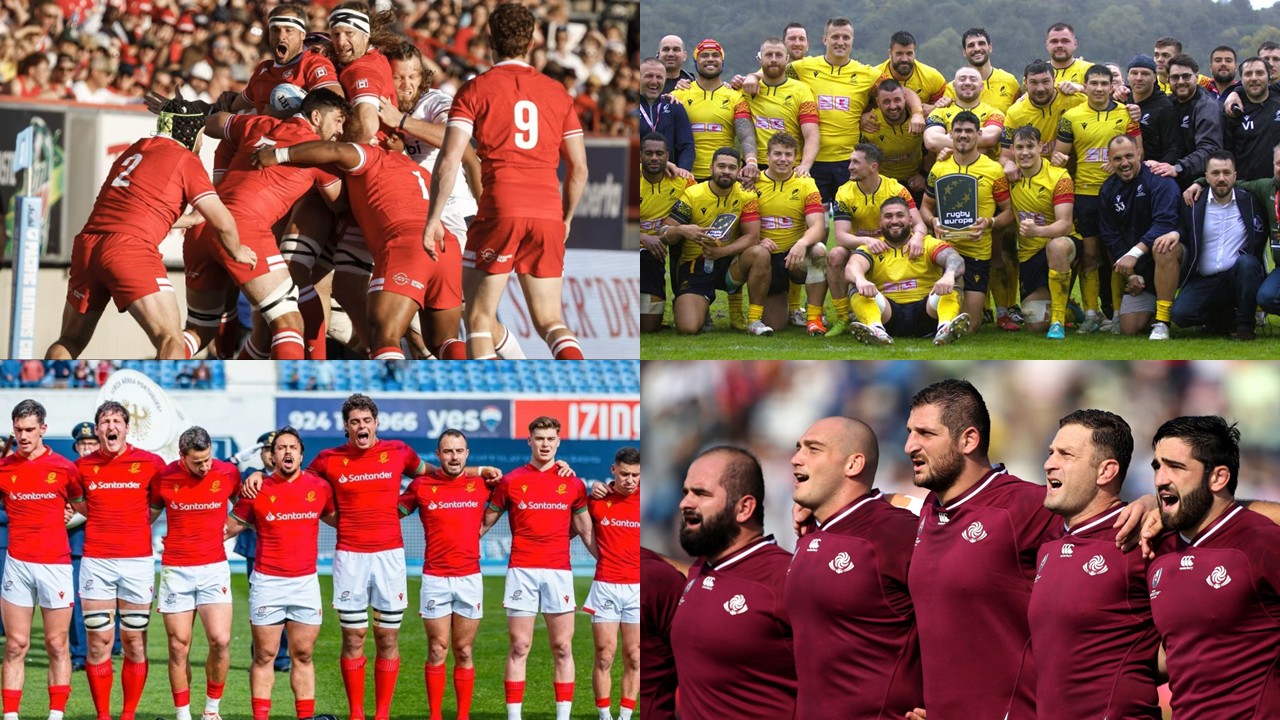
Last but not least, while they may not be playing any of the big boys, Canada’s Men have an excellent three-week stretch of competition in Europe, taking on Romania, Portugal, and Georgia. While none of these teams may be in the top ten World Rankings, Georgia is knocking increasingly hard at the door of the Six Nations. At the same time, Portugal won the hearts and minds of every neutral with their superb showing at the last World Cup, including that memorable win over Fiji.
The rivalry between Ireland and New Zealand has produced a roller coaster of emotions for both teams and their supporters since that memorable day in Chicago nine years ago, and expect it to be no different this Saturday!
From the highs of Chicago in 2016 and the series win in New Zealand in 2022 to the lows of yet another World Cup Quarter Final exit in 2023 at the hands of the All Blacks, Saturday’s match in Chicago will need to draw on the glories of the past and develop the foundations to start writing a new Irish story. New Zealand, on the other hand, will know that they’ve already written the first chapters of theirs and have a pretty good plotline to work with.
Hi ho, hi ho, it’s off to Chicago we go! Yes, just like that memorable day nine years ago in 2016, the Lineout Crew is off to cheer on the Men in Green at Soldier Field this weekend. We apologize in advance for our slightly green bias towards all things rugby this month, but amongst our ranks the predominant allegiances lean towards Ireland and South Africa, which will make the Test between the two later next month a rather heated affair with plenty of frothy pints here at the Lineout. There are also some closet French supporters in our midst, which should make next weekend especially interesting. However, we digress and on to the business at hand, and one of the most eagerly anticipated Tests of 2025.
So the teams are out, the stage is set, and one of the most anticipated Tests of the year is only 48 hours away. There are grudges to be settled on both sides. For Ireland, it’s having been knocked out of the last two World Cups at their traditional stumbling block —the Quarter Finals —by the Men in Black. For New Zealand, it’s exacting revenge on Ireland on the very field where their recent, in relative terms, famous rivalry all began in 2016. Also, there’s that little matter of Ireland being the first to win a series in New Zealand in 2022 since the great French team of 1994. So yes, in short, matches between these two passionate sides have been rather tasty, to say the least, in the last decade.
Just like in 2016, there are many parallels. Ireland, as they were then, come into this match as relative underdogs. Just like in 2016, they were only able to finish third in the Six Nations this year. Also, like 9 years ago, they are in the midst of a generational change of Irish players. Finally, just to throw some spice into the mix, they are missing some key players as a result of Lions duty injuries, as well as many of the assembled squad not having played together since the Six Nations way back in March.
Contrast that with New Zealand, who, by comparison, arrive in Chicago off the back of 9 Tests together since July, of which they have won 7. Furthermore, although they, too, are changing the guard in terms of personnel, most notably in the Coaching box, they are arguably much further along in the process than Ireland. Sure, they have had their wobbles against South Africa and Argentina, and there is no denying that they don’t exactly look like the all-conquering sides of old, but we’d venture that they aren’t exactly the side you want to kick off a challenging November against.
Here’s one interesting little side note: Ireland, while probably not placing a tremendous amount of emphasis on it, have no doubt thought about it. New Zealand doesn’t traditionally fare all that well in “neutral” venues. Not that one could really call Chicago a neutral field for the Irish. When we turned up in 2016, Soldier Field was a sea of green, and this is the same town that dyes the river green on St. Patrick’s Day every year. Still, it’s not Dublin, though much like Twickenham for the Springboks is a home away from home, Chicago seems to have served the same purpose for Ireland, with Saturday’s game being a sellout and expected to draw well in excess of 70,000 fans there (at least 70% of whom are likely to be wearing green jerseys). However, technically, it’s a neutral ground. The All Blacks outside World Cups don’t have an excellent record at such grounds. They lost to Ireland at Soldier Field in 2016, Argentina in Sydney in the 2020 Rugby Championship, and then South Africa at Twickenham ahead of the 2023 Rugby World Cup. Possibly just a coincidence, but something that could sit uneasily on the mind for the All Blacks if things don’t go according to plan from the kickoff.
Still enough of the fantasy league stuff, and let’s focus on the here and now. As we said above, in our humble opinion, Ireland remains just as they were in 2016 —very much the underdogs for Saturday’s contest. Injuries have left some players out of the equation altogether, like fullback Hugo Keenan, while others are just back from injury, such as regular Captain and back rower Caelan Doris. On top of all that, there has been much hand-wringing in the Irish press and by ourselves over Head Coach Andy Farrell’s devotion to anything wearing the blue of Leinster, even if this year the Dublin outfit is well off the boil so far in the URC.
As a result, the team he has picked is an interesting selection, to say the least, and could well set the tone for a new-look Ireland moving forward. It’s still heavily biased in favor of Leinster, but the other provinces get a shot at stamping their authority on some key positions. The Leinster front row is all there, and Dan Sheehan takes the Captaincy for Saturday. That’s one area we feel relatively comfortable in: despite Leinster’s woes, Tadgh Furlong seems to be back to his rampaging best, while Sheehan is, in our opinion, the best thing to happen to Irish rugby since Johnny Sexton. While the jury is out on James Ryan in the second row, his Munster colleague is probably Ireland’s best player of the last two years. Tadgh Beirne is quite simply an extraordinary rugby player, and we’d argue is to Ireland what Ardie Savea is to New Zealand.
There is experimentation in the back row for Ireland, as there is for New Zealand, and it really needs to fire, with Doris kept on the bench due to a lack of game time. Baird, Van der Flier, and Conan are all proven commodities, but they are looking decidedly less than flash of late while on Leinster duty. We hope to be proven wrong, but have a feeling this is one area New Zealand will be looking to cause severe disruptions in, especially with the likes of a superhuman like Ardie Savea, fuelled by his personal stash of kryptonite.
However, most Irish supporters will have breathed a sigh of relief when Munster’s Jack Crowley got the nod as Ireland’s starting playmaker in the 10 jersey. We won’t rehash the debate over Prendergast vs Crowley, which we visited last week, but suffice to say Crowley deserves his shot and, in our humble opinion, is the man for the job, especially given his defensive skill set, which is something his Leinster colleague is a bit thin on.
We find the All Black 11-15 personnel downright frightening and are just not sure Ireland has the pace and skill set to keep them in check. All Black center Jordie Barrett will have an intimate understanding of O’Brien, Lowe, Osborne, and Ringrose from his time at Leinster last year. If the New Zealander clicks with Quinn Tupaea, who, when on song, is a massive danger, it could be a long day at the office for Ireland. Their center pairing of Ulster’s Stuart McCloskey, who is in the form of his life at the moment, and Gary Ringrose, who has been battling injury, is an interesting but potentially exciting roll of the dice. As for Jamie Osborne, the 23-year-old is going to have his hands full and then some in the battle of the fullbacks with All Black try-scoring machine Will Jordan. Meanwhile, Tommy O’Brien will need to have spent some solid time on the tackling bags to bring down Caleb Clarke, while a decidedly out-of-form James Lowe will need to find some of his old defensive nous and spark to keep new All Black sensation Leroy Carter in check.
The bench for both sides packs some threat. As mentioned above, Caelan Doris is on call to lend some calm, while Munster’s “atomic kitten”, scrum half Craig Casey, sees his first serious outing since injury. Sam Prendergast is waiting on the sidelines to potentially inject some magic into the last stanzas of the game, but don’t be surprised if Ireland has a narrow lead by the closing stages and does not see him make an appearance at all. It’s a respectable and capable Irish bench as opposed to an exciting and potentially lethal All Black offering, including the likes of fly half/fullback Damian McKenzie, loose forward Wallace Sititi, and try-scoring Hooker Samisoni Taukei’aho, to name but a few.
This could be a free-running spectacle, but we somehow doubt it. It’s more likely to be a case of both sides trying to keep things close and playing a relatively conservative game. Ireland will want Crowley to keep the All Black defenses guessing while ensuring that Ireland can put them under pressure at the breakdown and allow the wrecking ball of Tadgh Beirne to be at his best in both attack and defense. New Zealand, though, will be keen to test the defensive frailties of an out-of-sorts Lowe and an unproven O’Brien at this level, but will also be quite content to have the center pairing of Barrett and Tupaea keeping things rolling up the middle off the power of Savea and Lakai. If Ireland can shut down that threat, win those all-important collisions, stop New Zealand from spreading it wide, and keep them pinned in the back of their half with a smart kicking game, then they may yet repeat history, but it’s a big ask.
We didn’t feel all that confident about Ireland’s chances last time we walked into Soldier Field 9 years ago, and look what happened. However, things have moved on since then, but we can’t wait to find out if a bit of good old-fashioned Irish luck allied to some serious grit can create another bit of Rugby magic this Saturday. Either way, a good time will be had by all, and what is hopefully becoming a bit of a traditional match between these two feisty rivals in this unique location, especially for us rugby-starved fans in North America, will continue!
Ireland vs New Zealand – Saturday, November 1st – 4:00 PM (Eastern) – Premier Sports Asia and Stan Sports Australia (live and on demand) Also Irish Rugby+ (live only)
England and Australia in the last year have shown a remarkable ability to light the afterburners when they need them most, making Saturday’s opening match between the two sides such an exciting starting gun to their November campaigns!
Australia took a last gasp dying seconds win over England when the two met at Twickenham last November, while England did precisely the same to France in this year’s Six Nations. This has all the trappings of a thriller in the making!
Australia may lament that, as this falls just outside the official November Test window, they don’t have access to some of their English-based players, while England can draw on their full roster. Although this seems slightly unfair in favor of England, we’d argue that the team that Wallaby Coach Joe Schmidt is fielding at Twickenham on Saturday needs to make no apologies. Barring question marks around the 10 jersey, we certainly don’t see anything that would ring the alarm bells. It’s an excellent squad, well seasoned after a Rugby Championship that saw them put in some big performances. England also fields a powerhouse team, but this is their first outing together as a full squad since the Six Nations, with plenty of new faces. With so many England players on duty with the Lions this summer, the England squad that successfully toured Argentina only bears a fleeting resemblance to Steve Borthwick’s selections for Saturday’s Test against the Wallabies.
For Australia, Coach Joe Schmidt will hope his charges put an authoritative stamp on proceedings right from the opening whistle. While their ability to come from behind in the second half was nothing if not extraordinary this Rugby Championship, it certainly doesn’t do much for their Coach’s blood pressure and their supporters’ heart conditions, as exciting as it may be to watch.
In Steve Borthwick’s case, he will be hoping that his bold choice of mixing veterans with some of the youngsters who so impressed in Argentina this summer will set the tone for how England now builds in this final two-year run-up to the next World Cup. We’ll be honest: we really like the balance of old and new in Saturday’s lineup. We wouldn’t be at all surprised to see minor variations during November, but otherwise see this as the squad heading to the World Cup, barring a few retirements.
Looking at the teamsheets, we’re fascinated to see how the forward battles play out. Under Schmidt, Australia has become much more structured in their set-piece work, allied to a very capable forward pack. The scrum has become a lot more potent and effective. If Taniela Tupou can stay on the right side of the excellent Georgian referee Nika Amashukeli, then they could actually make life exceptionally difficult for England. Propping up the other side of the scrum, Tupou’s partner in crime, Angus Bell, has been one of Australia’s best players in the last twelve months, while Billy Pollard is maturing quickly into the Hooker position and all the responsibility it brings with it. England’s counter in the front row is equally menacing. Still, despite his truly stellar service to England over the last ten years, questions are starting to be asked about whether England really has a long-term plan at Hooker, with Saturday’s starter Jamie George highly unlikely to make the World Cup.
The big talking point for us, though, lies in the back rows, which should be one of the most dynamic and exciting contests on the park. We are delighted to see youngster Guy Pepper get the starting blindside jersey for this game, while gold dust Henry Pollock is seen as an impact player off the bench. Pepper has been sensational with Bath this past year and seems equally at home on either side of the scrum. Pollock, by comparison, clearly struggled at times on the Lions Tour this summer. The Northampton youngster can produce some truly remarkable moments. Still, they tend to be flashy spectacles rather than the discipline and impact needed for building the necessary pressure to assure ascendancy. As a result, we’d argue it’s a shrewd call by Borthwick to use the two as he has for Saturday’s game.
For Australia, that back row really did come of age this Rugby Championship and during the Lions Series. In Captain Harry Wilson, they have a truly inspirational leader, and his combination with Fraser McWreight has game-breaking moments written all over it. At the same time, Rob Valentini packs the kind of battering ram Australia needs to ensure quality go-forward ball. In short, England are going to have their work cut out for them containing this all-action trio, who have also shown some extraordinary resilience in defense.
Despite all the razzle-dazzle of the Lions and Six Nations, Borthwick has finally gone with the tried and trusted George Ford in the playmaking role. We’ll be the first to admit that up until this summer, we’d always found the Sale Man’s game slightly pedestrian, albeit exceptionally effective. This summer in Argentina, and over the last 12 months with Sale, he seems to have undergone a complete rejuvenation. He’s intelligent, quick, and imaginative, in addition to all his steady hands-on-the-tiller attributes. His game is so much more rounded and dynamic than it used to be, plus he is, without a doubt, the most seasoned fly-half in terms of experience that England has at their disposal. In short, despite our reservations of years gone by, we find ourselves looking at Ford in a completely different light this past year. For us, if we’d seen anyone else other than Ford on the starting 15 sheet, we would have been left scratching our noggins in bewilderment, such is the man’s transformation.
Australia will not be feeling so comfortable in their playmaking axis. Jake Gordon produced some big moments this summer in both the Lions Tour and the Rugby Championship. Despite some of our ongoing reservations with the Waratahs’ scrum half, we are willing to reserve judgment till the end of November. However, at 10, Australia just looks vulnerable, especially with the talented but very inexperienced Tane Edmed running the show. The lad has promise, make no mistake, but taking on England in the cauldron of Twickenham and up against a cool head like George Ford is a massive ask of the young man.
However, if Australia can hold their nerve and put on display the kind of defensive heroics that served them so well against the Lions and their Rugby Championship opponents at times, their backs could provide the Wallabies license to thrill. We were absolutely mesmerized by Australia’s running game at times during both the Lions Tour and the Rugby Championship. Let loose the Wallaby backs and all of a sudden you’re in for the kind of bold attacking rugby that generally only the French can pull off. The Wallaby center pairing of Paisami and Sua’ali’i is simply electric, and Morgensen and the aptly named Harry Potter out wide can create some memorable magic.
However, so too can England’s contingent, with Immanuel Feyi-Waboso set to be the next big thing for the Men in White. The only slight furrowing of brows here at the Lineout was the decision to put Tommy Freeman at center. The Northampton man is at his try-scoring best out wide on the wing, and we are not sure that trying to contain the Sua’ali’i/Paisami axis will be the best use of his talents.
Australia will be without the services of Tom Wright, who suffered a brutal injury in the second Test against the Springboks. The Brumbies fullback had arguably been the Wallabies’ best player in 2025, and although his replacement, Andrew Kellaway, is no slouch, Wright’s all-court game has been sorely missed by the Wallabies at times since his departure. Meanwhile, England’s Freddie Steward, after falling out of favor in the 15 jersey, is back on song—defensively, he can still be a liability, but so can Kellaway.
This should be a high-scoring, exceptionally entertaining contest and one which, along with the Soldier Field epic, is our other pick of the weekend. We’d argue that if it wasn’t for the lack of consistency in the playmaking axis at 9 and 10, Australia could repeat their Ellis Park heroics against the Springboks earlier this summer. However, that is not the case, and remains the single most significant variable on the day for Australia, one that England, with the seasoned crux of Alex Mitchell and George Ford, will not have to fret over. For us, that is where the game will be won, and England clearly has the edge, allied to home advantage. We can’t wait to see if Australia can upset the apple cart once again this year, something which, if this year’s results are to be believed, is clearly part of their DNA at the moment. However, if England make the scoreboard and the pressure that goes with it all their own in the first quarter, Australia are unlikely to wrestle it back this time around, even though they are this year’s undisputed comeback kings. Either way, expect 80 minutes of rollicking rugby entertainment on Saturday!
England vs Australia – Saturday, November 1st – 11:10 AM (Eastern) – DAZN, Premier Sports Asia and Stan Sports Australia (live and on demand)
Canada can look forward to some excellent adventures in Europe this November and some sound preparation for the World Cup!
Canada has qualified for the World Cup in Australia in 2027 at long last. As a result, they have finally got a decent November Tour to Europe, which sees them play a Tier Two powerhouse in Georgia, while Portugal has the potential to be the next big-ticket item in European Tier Two Rugby. Meanwhile, Romania, much like Canada, looks to start rebuilding towards the glory days of the 80s and 90s.
Finally, Canada gets a European Tour, which should really give them a measure of where they stand as they start their preparations for their World Cup adventures in Australia in 2027. Having not been to a World Cup since Japan in 2019, the lack of exposure has clearly dented the team’s ability, along with a woeful Coaching regime until last year. Since the sea change appointment of Steve Meehan this year, Canada’s fortunes have definitely started to look up. Romania, Portugal, and Georgia, who have also qualified for the next World Cup, sit much higher in World Rugby’s rankings than we do, with Georgia currently at 11th. Portugal and Romania sit 20th and 21st, respectively, and therefore serve as better benchmarks for Canada to judge themselves against, given their 24th ranking.
As we say, after not feeling overly enthusiastic about the Men’s program for the last few years, there is a genuine sense of optimism amongst our ranks as we approach this November. Georgia at home is likely to be far too big a mountain for Canada to climb, but Romania and Portugal are legitimate targets. If Canada can put in a good showing in all three of these games, even picking up a win or two, then Canada can start to develop some self-belief for their World Cup campaign in Australia.
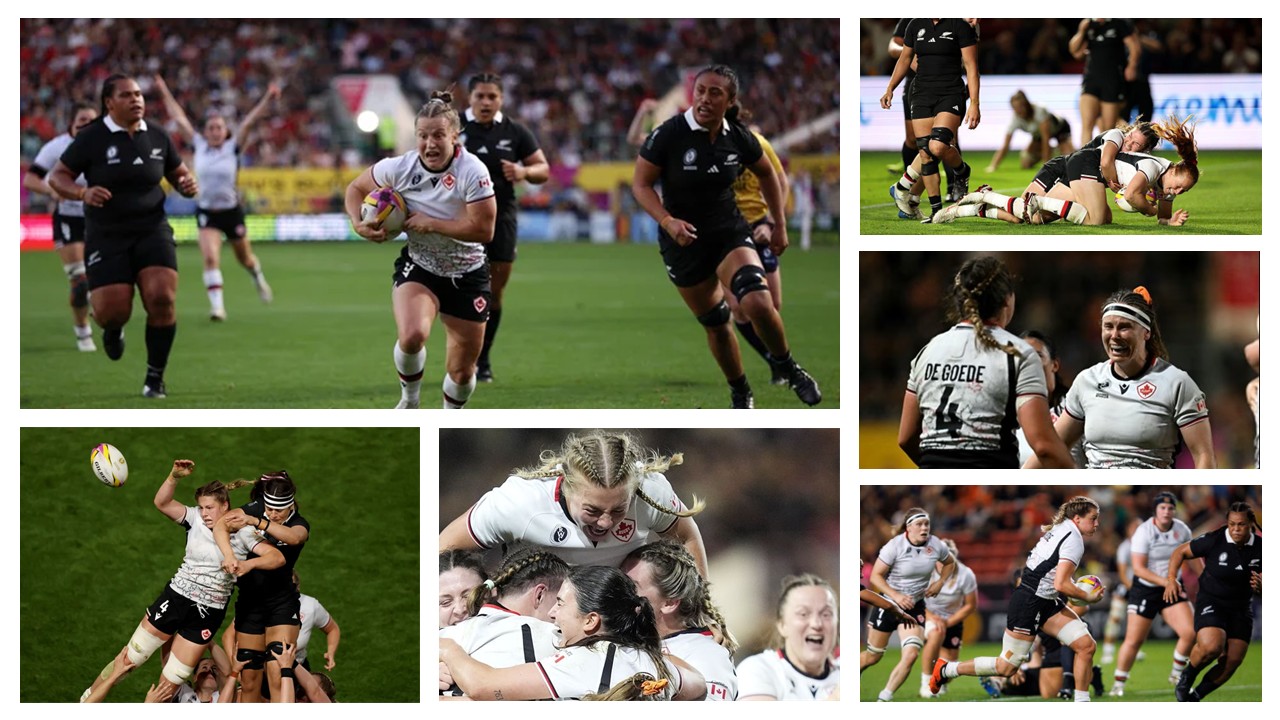
The Men’s Program has tended to sit very much in the shadows of the Women’s program up till now, and, to be quite honest, we can’t see that changing much. Canada’s Women are a proven International success story and look set for bigger and better things. As everyone who reads this blog knows, if Rugby Canada needs to prioritize their funding based on results, then we are firmly in the camp of seeing the Women’s Program lead the charge and get the support its extraordinary efforts deserve. Let’s face it, we don’t think Canada’s Women having to fundraise again to go to Australia in 2029 would sit all that well with the sporting public in this country after the last Women’s World Cup, and so it shouldn’t.
Consequently, this European Tour is the first step on a long road of putting Men’s Rugby back on the sporting landscape in this country. The Women have unquestionably now cemented their place in Canada’s sporting future, and the sky is the limit. For the Men, though, it’s small steps for now, and the next three weeks are an excellent opportunity to raise their profile against quality opposition who, for the most part, are at the same level. It may not be France vs. South Africa or Ireland vs. New Zealand, but we have a hunch that, as Canadian rugby fans, you’ll be more than just a little interested in events in Bucharest, Lisbon, and Tbilisi in the coming weeks.
Well, that’s it for this week, folks, as we pack up and head off down to Soldier Field. For any of you at the game, we’ll be starting our pre-game festivities at Fado’s before wending our way to the field. If you can make it, say hi; otherwise, enjoy what should be two cracking Tests this weekend.
This week, we mourn the passing of the Rugby Championship as we know it, as we’re sadly not all that excited about its replacement next year by a self-indulgent exposition of what is supposedly Rugby’s greatest rivalry. We also look at the hottest debate in rugby right now as to who really is the fairest fly-half of them all in Ireland Coach Andy Farrell’s mirror, as he ponders who gets to start in the number 10 jersey against the All Blacks in just over a week. Finally, we look ahead to another weekend of rather intriguing URC action, to say the least.
That’s what’s been keeping our pints frothy this week, so let’s get into it!
Although many in South Africa and New Zealand seem overly excited by a resumption of efforts to recreate the glorious old touring histories of days gone by, a lot of rugby fans have genuinely mixed feelings. At the same time, Argentina and Australia are excluded from the hijacking of the Rugby Championship.
Spare a thought for Argentina and Australia, who, after probably the best Rugby Championship in history, are left wondering what just happened to a tournament that had done so much to develop their national sides in recent times. South Africa and New Zealand have decided to reinstate old-school type Tours next year in a questionable cash grab with a format that makes little, if any, sense
If you ever wanted a room full of divided opinion, bring up this subject. Let’s face it, we all thoroughly enjoyed this year’s roller coaster Rugby Championship, which left us all hungry for more. Sadly, though, we’re going to have to wait until at least 2027 to fill our plates again, and even that looks questionable. South Africa and New Zealand have opted themselves out of next year’s Rugby Championship, leaving Australia and Argentina, two teams who did so well this year, wondering what they are supposed to do instead. South Africa and New Zealand have decided instead to recreate the glories of old by reinventing the Springbok/All Black Tours of yesteryear.
As a result next year there will be no Rugby Championship and instead New Zealand will travel to South Africa to play against the four South African URC franchises and three Tests against the Springboks. In addition, for some reason best known to themselves they will play a fourth Test outside of South Africa with locations such as Twickenham or Dublin’s Croke Park being put forth as possible venues. A lot of South African and New Zealand fans seem ecstatic about the idea while the rest of us feel less so. It’s been also interesting to note that even in South Africa and New Zealand there have been some dissenting voices who genuinely lament the passing of the Rugby Championship just as it was really starting to count for something. Let’s face it there were four intense rivalries this year that looked set to only grow from four quality sides.
We’ll be honest: we’re in the decidedly unenthusiastic camp, even though we have some strong South African loyalties amongst us. The tours of old had a certain history to them that will be hard to replicate, and the political landscapes that made some aspects of the rivalry spicier and more contentious at times are also thankfully relics of the past.
As for the Tour itself, currently labeled Rugby’s Greatest Rivalry, even that doesn’t sit quite right with us, much in the same vein as the Six Nations being constantly billed as Rugby’s Greatest Championship, which also leaves a slightly uneasy taste on the palate. South Africa vs. New Zealand is a classic, intense rivalry with deep history and, at times, an intensity hard to match or beat. For South African and New Zealand fans, the ultimate measure of their team’s status is whether or not they can get one over their most prestigious foe. However, you could also argue that “Le Crunch” between England and France every year in the Six Nations has equal stature and relevance to their respective fans, or the Calcutta Cup between Scotland and England as another example.
International Rugby has now become so competitive that such rivalries are important, but perhaps no longer the benchmark they once were. There is the point that’s hard to argue against that, between them, South Africa and New Zealand have won 7 out of the 10 World Cups to date. They are likely to win plenty more, but surely it is only a matter of time before countries like France, England, and perhaps a resurgent Australia start putting their names on the trophy, with the English and Wallabies already having done so. Even countries like Ireland and possibly Argentina may get the engravers busy, though the Irish have to somehow overcome their Quarter-Final mental block. In short, South Africa vs New Zealand may be for now and in the past one of Rugby’s most intense rivalries, but to say it’s the greatest is debatable. Like we say, though, we’ll take the terminology as a marketing gimmick, just like the Six Nations being Rugby’s greatest Championship, and leave it at that.
As for the Tour itself, though, we’re just not that enthused. Is watching the All Blacks pummel a hapless Lions side in a half-empty Ellis Park going to be enjoyable? Not really. Sure, the other three games against the Stormers, Sharks, and Bulls provincial sides should be more entertaining, but even then, question marks remain. Much like a Lions Tour, will these provincial sides be depleted as a result of their best players being kept in reserve for those all-important 4 Tests, to the point that it’s simply no contest? Agreed, the 3 Tests in South Africa should be absolute crackers, but once again, they are not all that evenly distributed. Durban, Port Elizabeth, and Bloemfontein won’t see a Test while Johannesburg gets two. Finally, don’t get us started on that 4th Test. We simply can’t see the point, especially as it’s not even being played in South Africa, other than it being a blatant cash grab by the South African and New Zealand Unions. Furthermore, what happens if it ends up being a drawn Series at 2 apiece as a result of this fourth Test? Nobody at this level likes a draw; they want a winner, plain and simple, so why can’t it just be the best of 3 in South Africa?
Apparently, a full Rugby Championship will be held in 2027 and 2030 with all four countries, but once again, we question its validity for the 2027 edition. In World Cup years, the Rugby Championship has been played, but shortened to each team playing each other once, for a total of three games, as opposed to the usual home-and-away six-game format. Do Australia, Argentina, South Africa, and New Zealand really want a full-blown tournament right before the World Cup and all the injury risks it entails? We can’t imagine the Six Nations countries would be up for playing their tournament a few weeks out from the start of the World Cup. While we appreciate that all countries invariably play warm-up games before the World Cup, they don’t have the intensity or the high-stakes value of a designated Championship.
While we appreciate that we’ve wittered on long enough about this, we nevertheless feel quite strongly about it. The Rugby Championship was working rather well, we thought —really didn’t need fixing —and, most important of all, we really enjoyed it. It did wonders for all four countries, exposing them to a high-stakes competition full of intensity and different playing styles, something New Zealand and Australia have missed since the departure of South Africa and Argentina from Super Rugby. While Australia has struggled in recent years, they showed signs of being at a real turning point in this year’s Championship, and the same could be said of Argentina. To be honest, the side that looks to benefit the most from this is New Zealand, as they still get to keep their Bledisloe Cup fixtures with Australia after next year’s Tour to South Africa. As a result, in 2026, New Zealand gets to play South Africa and Australia in the traditional Rugby Championship window. South Africa only gets to play New Zealand. Australia only gets to play New Zealand, and Argentina doesn’t get to play anyone. Is it just us, or does this seem slightly one-sided in favor of one particular team in the fabled black jerseys and all the marketing moolah that goes with it?
We wish South Africa and New Zealand, and their fans, all the best next year, and will grudgingly admit that we will watch — and most likely enjoy —the three Tests in South Africa, but not as much as we would have enjoyed an old-school Rugby Championship. Perhaps the lack of one next year and an inconclusive drawn Series between South Africa and New Zealand will suddenly make fans long for what got thrown away. The nostalgia for the Rugby Championships will ultimately replace these old-fashioned Tours, and before we know it, we’re back where we started. Besides, the Rugby Championship already had a tour-style format. Anyway, enough said, and time will tell!
After the Croke Park epic last weekend, the Crowley/Prendergast debate just got so much spicier and, dare we say it, a lot more obvious
After Munster’s utter dismantling of Leinster last weekend and a Man of the Match performance from Munster fly half Jack Crowley, there can surely be little, if any, debate about who should get Ireland’s starting jersey at 10 for the Autumn Internationals, despite the brilliance at times of Leinster’s Sam Prendergast
Well, if you ever needed a game to seal an argument, we certainly got one last weekend. Speaking of rivalries, as they seem to have set the tone for this week’s musings, that between Irish provinces Munster and Leinster is right up there. Intensity in games between the two is always an absolute given, with no prisoners taken. Add in an exhibition of available talent and opportunities missed right after Ireland’s November selections had been announced by Irish Coach Andy Farrell, and fireworks were always going to be guaranteed. Of the two sides, it would appear Munster had the biggest axe to grind, as despite being the best Irish team in the URC this year so far, and a whopping 9 places ahead of defending Champions Leinster at second on the standings table, only four representatives from Limerick and the surrounding areas made Irish Coach Andy Farrell’s selection lists compared to the 21 from Leinster who got seats on the bus for Ireland’s November Internationals.
Of those four from Munster, now six due to injuries to the original selections from across Ireland’s four provinces, fly-half Jack Crowley did make the cut. As a result, the biggest question on every Irish supporter’s lips is who will get the starting playmaker jersey and the number 10 on their back? Will it be Munster’s Jack Crowley or Leinster’s Sam Prendergast? For us here at the Lineout, there has been no debate for the last two years. We’re with the Munsterman hands down. Sure, he’s fluffed his lines on occasion, but we’d argue that’s simply down to the fact he’s just not getting enough game time in the green of Ireland with any degree of consistency. Instead, Andy Farrell seems to think that anything dressed in the blue of Leinster is the panacea for all of Ireland’s ills.
Don’t get us wrong, Sam Prendergast is an outstanding player and will be a solid servant to Irish rugby in years to come. However, is he a Test level 10 now? Sadly, despite his considerable talents, the answer to that question, in our probably misguided opinion, is no. What Ireland needs from their fly-half is the kind of physicality, consistency, and ability to execute under pressure that Sexton gave them. While we do not believe that teams should try to replicate certain players, many of the essential qualities that made Sexton such a consistent performer for Ireland, Crowley possesses in a much more rounded sense than Prendergast. The skills on display by Crowley last Saturday at Croke Park were exemplary. What Crowley did was impressive and highly skilled, but not flashy. Furthermore, the Munsterman brought an element of physical play to the 10 jersey, both in attack and defense, that Prendergast simply cannot match at the moment. Crowley made 18 tackles last Saturday, and when Leinster were putting the pressure on, assured that Munster, assisted by an impressive defensive effort from the forward pack led by the truly extraordinary Tadgh Beirne, were able to come up with exit strategies from clear and present danger.
In short, it was an assured performance from Crowley. The same could not be said of his opposite number, a trait that has become increasingly prevalent in both the blue of Leinster and the green of Ireland over the last twelve months. Prendergast’s execution can, in one breath, be sublime and then woeful the next. His brilliance is hampered by a lack of consistency and, at times, exceptionally poor decision-making under pressure. Add in the fact that the poor lad just can’t seem to tackle to save his life, and at present, he is potentially more of a liability than an asset for Ireland. Like we say, the purpose of this is not to belittle Prendergast, as we genuinely believe he is a huge talent in the making, but at present, his toolkit is not as well-stocked as it needs to be at the international level.
As a result, we argue in favor of giving Prendergast more time to develop and resisting the temptation to thrust him into the spotlight from the outset. Shatter the young man’s confidence early in his career, and all that promise is snuffed out before it’s really been seasoned and had a chance to shine. Consequently, if Ireland and Andy Farrell need to make a choice, then we’d argue Jack Crowley has to be his starting fly-half. Prendergast has the potential to be a spectacular replacement off the bench, but only when a sense of control and order has been established by Ireland and reflected in the scoreline. For us, Crowley is the player to fill that primary role from the starting whistle. So there you have it, the Lineout’s two cents worth on Andy Farrell’s potentially biggest selection dilemma of November – Crowley first across the finish line and Prendergast a strong second. We can’t wait to see how it all plays out in Chicago in a week, and best of all, we’ll be there to see how the cards are dealt!
Plenty to look forward to in the URC this weekend, but four fixtures and their potential ramifications really stand out
The URC has thrown up some surprises so far this season, especially looking at the log, but will this weekend see the resumption of regular service after these four key fixtures are done and dusted?
This has been, up to now, a genuinely intriguing and exciting start to the URC season. If you’d asked us at the beginning of the season if, after four Rounds, both Italian teams would be in the top eight while defending Champions Leinster would have only won one of their first four games and find themselves just outside the bottom four, we would have probably asked you what your tipple was and where we could get some. Perhaps even more surprising, given the constant tales of gloom and doom regarding anything related to rugby coming out of Wales these days, is the fact that Cardiff occupy the fourth spot on the log. Consequently, there are plenty of games this weekend that will give us some idea of whether this is all early-season smoke and mirrors or a trend that could be repeated as the season unfolds.
For us, there are four big games this weekend. Glasgow’s tussle with the Bulls on Friday night is the first game on our radar. Glasgow comes into this almost fully loaded, with many figures set to play a big part in Scotland’s November Internationals. The Bulls are slightly less so, though there are still some big names in Friday’s lineup, most notably forwards Ruan Nortje and front rowers Gerhard Steenkamp and Johan Grobbelaar. Glasgow sits third on the log and looks set for a strong season, and on current form, a shoo-in for the playoffs. The Bulls have not had the brightest start to their season and still appear to be struggling on the road, as they did last season. However, they have a new and proven Coach in the shape of Johan Ackerman, and in winger Sebastian de Klerk, one of the most exciting players South Africa has seen in a while. If the Bulls speedster doesn’t get some big game time in Springbok colors this November, then we’d argue that Coach Rassie Erasmus is clearly not studying his tea leaves properly.
Italian rugby has so far been a pleasant surprise package in the opening stages of this URC season. Benetton’s 43-0 hiding at the hands of Edinburgh last weekend made a bit of a mockery of that statement, but we’d like to think it was simply a blip on the radar for the Italians. Zebre Parma, on the other hand, are genuinely making us sit up and take notice this season. They’ve won two and lost two, but against the table-topping Stormers last weekend, even though they lost, it definitely was not all one-way traffic. However, it’s that Saturday crunch match between Benetton and the Stormers in Treviso that is really piquing our curiosity. Italy will play South Africa this November, and if Benetton, who field a significant representation of the Italian squad, can at least hold their own against the Stormers this weekend, then that November dustup in Turin could be a lot closer than we might think. Italian Coach Gonzalo Quesada will be watching this one closely.
Another genuinely interesting Irish derby takes place on Saturday at Munster’s legendary Thomond Park as the West of Ireland does battle when Connacht comes to town. If you ask us, both Connacht and even more so Munster got seriously short-changed in Ireland Coach Andy Farrell’s November selection. That imbalance has been slightly redressed with two last-minute Munster call-ups, but expect to see plenty of others put their hands up for inclusion on Saturday should the stretcher bearers get busy at the start of Ireland’s November campaign. Munster and Connacht will be without the services of those players already called up for Ireland duty, as the squad left this Tuesday for their opener against New Zealand in Chicago in a week. Consequently, this fixture will give us a fascinating look at another level of Irish depth and potential last-minute call-ups.
Finally, is Wales in the shape of Cardiff starting to breathe fire again? Cardiff have looked good value for money so far this season and fully deserve their fourth place on the log. This weekend will see a genuine Test of where they are at and what hope there is for Welsh interests in this year’s competition when they host Edinburgh. Edinburgh are looking a lot sharper than their ninth-place standing in the current standings would suggest. They are getting better with every outing, and you can’t help but get the feeling that the pendulum is about to swing any moment now and see the Scotsmen start propelling themselves up the ladder at a rate of knots. Their significant variable appears to be the injury clouds hanging over the squad, but so far, they have managed to maintain a clean bill of health. If all the lights come on at once for Edinburgh, as they look increasingly likely to do, this could be a very long afternoon for Cardiff, but if not then Welsh fans can head to the Principality Stadium on November 9th for that game against Argentina with a cautious sense of optimism as they embrace life under new Coach Steve Tandy, whose time with Scotland certainly made an impression.
Glasgow vs Bulls – Friday, October 24th – 2:45 PM (Eastern) – Sportsnet+, Premier Sports Asia, FLO Rugby
Benetton vs Stormers – Saturday, October 25th – 12:30 PM (Eastern) – Sportsnet+, Premier Sports Asia, FLO Rugby
Munster vs Connacht – Saturday, October 25th – 2:45 PM (Eastern) – Sportsnet+, Premier Sports Asia, FLO Rugby
Cardiff vs Edinburgh – Saturday, October 25th – 2:45 PM (Eastern) – Sportsnet+, Premier Sports Asia, FLO Rugby
That’s it for this week, folks, and bring on Chicago next week!!
This week we’ll be turning our attention to Club Rugby as our favourite competition the URC really gets into its stride, and take a look at who looks the best representative of the five participating countries Ireland, Italy, Scotland and South Africa and Wales so far.
We also look ahead to the first International weekend and specifically that mouth watering clash between Ireland and New Zealand close to home for us here in Canada, as the two sides have a rematch of their 2016 classic at Soldier Field in Chicago, which we will be fortunate enough to be attending again this year in person.
Finally, the momentum seems to be growing to ensure that pesky sideshow fronted by Mike Tindall, the highly controversial R360 competition will get the boot out the door before it’s even managed to figure out what size boots to wear.
So in a busy week work wise that’s what kept our pints frothy!
After 3 Rounds of the URC, which have provided some thrilling action – who’s hot and who looks set to build?
After three Rounds of competition, the best representatives so far of the respective participating countries are Munster, Benetton, Glasgow, the Stormers, and Cardiff, but we think it’s all going to change this weekend.
The URC has got off to a rollicking start, but in many ways, it’s only this last round and subsequent rounds that we’ll really get to see who’s who in the zoo. Is Zebre Parma’s remarkably bright start about to evaporate as it always does? Are Leinster about to bounce back now they are up to full strength once more? Is there hope for any of the Welsh sides this year? Is Scotland’s story set to be once more all about Glasgow and will South African sides finally master the art of long distance travel since the demise of Super Rugby with the Stormers set to be the new force majeure? There are so many questions and relatively few answers, but perhaps this weekend, we’ll get a few that will make our crystal ball gazing slightly more academic.
After three Rounds, Munster look to be the best Irish outfit, but they haven’t been exactly crushing the opposition in their first three outings, and apart from their opener against the hapless Scarlets they’ve been tight and uncomfortably close wins. This weekend sees an absolute classic as they travel to Dublin’s Croke Park for a demonstration of Ireland’s biggest rivalry as they take on Leinster. Leinster have had a shaky start to their season, and their tour to South Africa for their first two games was a bit of horror show. They recovered nicely against a poor Sharks outfit back in Dublin last weekend to get their first win, but the bright blue of Leinster looks a bit like it’s been exposed to some bleach over the summer. Both sides will, for the most part, have the full complement once more of their Internationals, who have been absent since duty on the Lions Tour this summer. An interesting sidenote to the traditional Irish dominance of Munster and Leinster is a rather flash looking Ulster this year. If Ulster had not had their game cancelled in Round 2 due to inclement weather they would be the strongest Irish outfit so far this season, making their clash with a struggling Sharks side this weekend much more interesting. Connacht bring up the rear under new Coach Stuart Lancaster, but we think they will improve dramatically as the season progresses and like Ulster are a game short so far due to their Round 2 fixture also being cancelled.
Over in Italy, it’s been an exceptionally bright start to the season, with traditional Wooden Spooners Zebre Parma finding themselves 8th on the log after 3 Rounds, though their clash with a red hot Stormers side who seem to have mastered the art of travel this weekend should see Zebre return to a more regular spot on the lower half of the table. Benetton however look, as they invariably do, to be the Italian side to beat and a genuine contender for a playoff spot. Their trip to the Scottish capital this weekend to do battle with an Edinburgh side that suddenly seemed to click into life last weekend should be highly entertaining.
In Scotland, Glasgow always look set to go deep into the competition, though their season has not started exactly the way they would have wanted, having come short against Benetton. While they annihilated the Dragons last weekend, that’s hardly a benchmark, and Ospreys this weekend may also not shed too much light on Glasgow’s overall form at this stage in the competition. Edinburgh, on the other hand have plenty of promise, and this could be the year that sees them trump their Scottish rivals from the West. They may be sitting close to the bottom of the log, but last week’s arm wrestle with Munster showed plenty of intent, and they will be keen to make a statement against Benetton this weekend.
Of the South African representatives, the Stormers look to be the team to beat so far in the competition. Having won all three of their games comfortably, including their first game on the road last weekend they look exceptionally dangerous, and their next gen Springbok fly half Sacha Feinberg-Mngomezulu will be making plenty of headlines this year in both the stripes of his Cape Town side and the green and gold of South Africa. The Stormers first two games on the road won’t really shed too much light on whether or not they can replicate their form at home, as the Scarlets and their opponents this weekend Zebre Parma aren’t exactly the competition’s big guns, but that trip to Munster at the end of November will tell us a great deal about whether or not the Cape Tonians are title contenders this year. Meanwhile, the Bulls, who were last year’s runners up, look impressive but still slightly unsure of themselves under new Coach Johan Ackermann. The Bulls fixture against Irish side Connacht this weekend will tell us if they’ve got over their jet lag, after getting hammered by Ulster last weekend or if once again this year, life on the road will not be a strongpoint for the Men from Pretoria. Last and sadly seemingly least the Sharks and the Lions have yet to fire a shot this year, and the Sharks even with some of their Internationals back last weekend looked poor against Leinster, while the Lions appear to be missing in action for the first three Rounds.
Finally, the misery, for the most part, continues in Wales with the calls to reduce the Principality’s representation in the tournament to two franchises growing ever louder. It’s hard to argue against this with three of the Welsh teams languishing in at the bottom of the table after three Rounds. It’s only the men in the blue hoops from the Welsh capital, Cardiff, who have shown any genuine threat so far this season. This weekend sees them take on the truly woeful Dragons which should see a strong win, and help Cardiff keep in the top eight and with it some momentum to help keep them in contention until the break for the November Internationals. After that, however, life suddenly gets a whole lot tougher, especially if the injuries start to mount, especially with a tough European Challenge Cup campaign to fit around their URC exploits as the season unfolds. However, for now, we’ll run with the much needed sense of optimism that is a sprinkle of good news in an otherwise bleak landscape for Welsh rugby.
Like we say, it’s very early days yet and almost impossible to draw any conclusions, but it’s certainly an interesting start to the season, and potentially one that promises much excitement over the coming months. As a genuine international club competition, there’s a lot to like about the URC, and it’s certainly going to keep us close to our TV screens over the long winter months!
The big rematch in Chicago approaches as the opportunity for Ireland to make history twice looks far from certain
Ever since that historic first win over the All Blacks in Chicago in 2016, Ireland/New Zealand fixtures have become a genuine clash of fierce and passionate rivalries. New Zealand, this year, look to be much more on point than Ireland and on course to settle an old score, but hang on a minute Ireland were outright underdogs last time as well so who knows?
We’re all pretty excited here at the Lineout about the Chicago rematch between New Zealand and Ireland next month, nine years on from when we all trooped down there to see the Irish beat the All Blacks for the first time in history. What we’re less sure about is whether or not Ireland can make it two from two this time around at Soldier Field. While Ireland had massive underdog labels attached to them in 2016 and still managed to make history, this time around, the variables look so much greater.
First up, it will be Ireland’s first proper Test outing since the Six Nations way back in March. For New Zealand, it will be their 9th Test this year of which they’ve won 7. Form definitely favors the Men in Black despite their wobbles in losses to Argentina and South Africa this year and some edgy wins over a developmental French side earlier in the summer. Ireland finished this year’s Six Nations in third place, which is ironically where they also finished the 2016 Six Nations.
Both teams are in a process of transition, which in many ways was also the case in 2016. However, the Irish side of 2016 would go on to enjoy a run of success for the next 6 years which would see 2 Six Nations Grand Slams, and several periods ranked as the number one side in the World. Yes we know, they still exited the 2019 and 2023 World Cups in the Quarter Finals, but apart from that ongoing seemingly insurmountable mental hurdle for Irish rugby to overcome, Chicago marked the start of a truly golden period of Irish rugby. The potential for Ireland to remain in the top five would appear to be a given these days, but they definitely look a long way off from being able to occupy the top spot in World Rugby’s rankings at the moment. New Zealand meanwhile despite some obvious teething problems with their new Coaching regime and the process of embedding a raft of world class new talent into the All Blacks setup, look much more likely to build on their current status as the number two team in the World Rankings.
Ireland have some genuine problems to contend with at the moment that New Zealand simply don’t have to concern themselves with. Ireland’s tight five looks far from settled and suffers from ongoing injury issues. The scrum is an area of Ireland’s game that New Zealand, with their much more established and proven platform, will be keen to punish and exploit. The back row for Ireland looks slightly more dependable and threatening, but combinations and linkages with the tight five still need to be worked on.
The one glaring area that Ireland look decidedly weak in is their playmaking axis in the nine and ten jerseys. Ever since the departure of Johnny Sexton, Ireland have looked decidedly unsure of themselves in this part of the park. Jamison Gibson-Park has been the go to at scrum half for the last few years, but even his star seems to be fading somewhat and he has yet to combine effectively with either Jack Crowley or Sam Prendergast at fly half. As for the number 10 jersey, Ireland are nowhere near to deciding what works best. Sam Prendergast looks to have some genuine talent and vision in the position, but his lack of physicality and almost non-existent tackling skills mean he is a defensive liability coupled to some naive decision-making at times. Crowley seems more dependable both physically and under pressure, but the Munsterman just can’t seem to catch the eye of Coach Andy Farrell with any degree of regularity.
The ongoing concern with Ireland is that they remain too Leinster heavy, and we’re not the only ones with this view, as it seems to be a consistent theme running through the Irish sporting press. With Leinster so far failing to sparkle to any great degree this year in the opening rounds of the URC, surely there is more room in the Ireland squad named to prepare for the November Tests, to allow for a more balanced representation from the other three provinces, Munster, Ulster and Connacht.
New Zealand, on the other hand, looks relatively well balanced for the most part and with a depth and physicality that is now well seasoned in 2025. There are still a few kinks to work out in the process, but they will arrive in Chicago as a much more settled and proven quantity than Ireland so far this year. Just like 2016, the game at Solider Field this year will be very much New Zealand’s game to lose with Ireland and their supporters hoping that they can pull the kind of rabbits out of their hat that they did nine years ago much to everyone’s surprise. Just like that famous day almost a decade ago, it’s a sellout, and Chicago will be officially Irish for the weekend, with green jerseys vastly outnumbering those in black in the stands. The atmosphere and the crowd will be set to lift Ireland’s spirits regardless of the uncertainties. In short, they won’t be lacking in support, and Soldier Field has become an unofficial “home ground” for Ireland much as Twickenham in London has become the same for the Springboks.
To sum up, we can’t wait for the party to begin, but as to what the outcome will be, let’s just say our enthusiasm doesn’t match our sense of optimism. We hope to be proven wrong just as we were in 2016, but either way, as a spectacle and an event, it will be hard to beat. Regardless of the final score, the craic will be all that matters, and in that respect, Chicago certainly knows how to deliver when it comes to anything wearing green and an oval ball!
Mike Tindall’s R360 rugby sideshow with all its controversies seems to be heading for the exit without ever having kicked a ball, but World Rugby must get serious about fixing the state of the game that gives rise to ideas like R360in the first place
As some of the most important International Unions in the game show some solidarity and slam the door in Mike Tindall’s face regarding his dubious R360 breakaway league, they must now embrace the changes needed that drove R360 to threaten the game from the outset. In short, put your money where your mouth is World Rugby if you’re serious about growing the game globally!
We, like many others, will unashamedly admit to being firmly in the “no thank you” camp on this one. The unamimous rejection by many of the biggest Unions, England, France, New Zealand, Ireland, South Africa, Italy and Scotland of Mike Tindall’s breakaway R360 league seems to finally be the kiss of death for an idea of decidedly questionable value. Furthermore the World Rugby Referees association has also banned its referees from participating in officiating matches for the R360 while the 8 Unions mentioned above have also categorically stated that players choosing to sign with R360 would be ineligible for Test selection. In short, it’s dead in the water before it’s even chucked its first pass.
As we have already said, we are not overly sad to see the back of it. We couldn’t really see how it would contribute to the current overstuffed global calendar, let alone grow the game globally. It’s big money from questionable sources, sadly much of it being “sportwashing” from slightly unsavoury oil rich Gulf sheikdoms, and we just can’t see how it will trickle down to say benefit a country like Samoa, Georgia or Chile. Furthermore, it has failed to answer many of the questions raised about player welfare and how it will fit with existing club rugby seasons and calendars, let alone the increasingly crowded International window. It seems to run on the premise that any kind of change is good and the shock to the current order it would deliver would be for the greater good of the development of the game as a whole. It is all very questionable if you ask us.
However, as much as we’re glad to see the back of it, some of the issues around the current structure of the modern game need to be addressed by World Rugby and its representative Unions. The whole R360 distraction must serve as a catalyst for some much needed change. First up is an alignment of calendars and the development of a global season that makes sense for countries on both sides of the Equator. Much of what is being proposed, such as the Rugby Championship taking place at the same time as the Six Nations, seems half baked, to say the least. Furthermore, it looks like a knee-jerk reaction to the loss of a Tournament in the shape of the Rugby Championship that provided so much value this year – more on that in next week’s column.
As we’ve said all along, there is, in our humble opinion, too much rugby at the moment, and it seems completely counterintuitive to World Rugby’s claim of putting player welfare first. It’s also a confusing landscape with now a World Cup, a Nations Cup, Tours some years and not others, an overcrowded club calendar with competitions like Super Rugby and the European Champions Cup struggling to find relevance or interest at times. At the club level, some competitions, such as France’s TOP 14, would appear to be thriving while England’s Premiership, despite the quality of its product, simply can’t make the books balance. Meanwhile rugby in once traditional heartlands like Wales and Samoa look to be in danger of going the way of the Dodo, while emerging Nations like Chile, Portugal and Georgia continue to struggle to get the recognition and development they deserve.
If Mike Tindall and his merry band of R360 backers have taught us one thing, it’s that World Rugby, despite it’s growing popularity as an International sport has rested on its laurels for far too long. Trying to get the various Unions to agree on anything other than a united no to change is not the way to move the game forward. Our beloved sport is at crossroads that could take it to the next level, but at the moment its management by the various Unions and its governing body in the shape World Rugby resembles the misguided attempts of poorly qualified summer students trying to organise camps for rowdy preschoolers.
We have a great game that is attracting a growing number of fans and supporters but who still know relatively little about what is not always the easiest game to understand and follow. Make the landscape simpler, more logical, and ultimately more engaging, and the people will come. It’s very simple, World Rugby. Take the lines of your theme song, the “World in Union” played at every World Cup, and put them into practice!
Well, that’s enough ranting for one week, as excitement builds towards the traditional fare of the November Test window, even though next year it’s being replaced by something called the Nations Cup. So just like for this year’s Rugby Championship which was so enjoyable, although we’re not quite sure what’s coming down the pipe from next year onwards in relation to that Tournament’s future, we’ll enjoy our club competitions this month and live in the moment for the Internationals come November.
Our resident scribe has returned from a much needed break in Portugal and we’ve managed to get up to speed on all the rugby of the last few weeks, and as a result get a brief summary down on paper so we can return to our regular missives. First up, a huge shout out to our fabulous Canadian Women who emerged as silver medallists in the recently concluded Women’s World Cup after a gutsy performance against now World Champions England in front of 81,000+ fans. In short, it was a momentous occassion and Canada’s Women did us all proud even if as we feared England in their Twickenham Fortress may just have been a bridge too far – for now at least but watch this space! Also congratulations to our own Sophie de Goede who has been named the Women’s Player of the Year, an honor which is richly deserved especially when one considers her remarkable comeback from a serious ACL injury last year.
In addition to the Women’s World Cup, the Rugby Championship drew to a thrilling finale last weekend in Perth and London, and has been the best we can remember making it all the more gutting that it’s future now looks in serious doubt. There have been some attempts this week to give the Southern Hemisphere’s flagship Tournament a new lease of life and we’ll give our thoughts on that and what was a stellar competition this year that left us all hungry for more.
Finally, our favourite club competiton the United Rugby Championship (URC) is now fully underway for the 2025/26 season and the first two rounds have thrown up some genuine surprises, as teams from South Africa, Italy, Scotland, Ireland and Wales get stuck into each other.
So, without any further ado, now the scribe is back here is a quick whip round of this week’s reunion banter over some frothy pints.
Canada’s Women put up a brave fight in the World Cup Final, but Fortress Twickenham still belongs to England
This year’s Women’s Rugby World Cup Final lived up to its billing in front of 81,000+ fans at Twickenham and saw England emerge as worthy World Champions. Canada should feel immensely proud of their silver medal in a campaign which saw them capture the hearts and minds of many a neutral and sets them up as genuine contenders to lift the Cup in Australia in four years time.
There’s only one negative aspect of this year’s Women’s Rugby World Cup, and that is the fact it’s over. However, for six weeks, we were treated to a glorious exhibition of not only the Women’s game but the sport as a whole. It was big, loud, and hugely entertaining, and some of the rugby on display by the four finalists in particular was breathtaking at times. Canada’s fabulous Women became fan favorites and played arguably some of the most innovative rugby we’ve seen in not just the Women’s game but the sport as a whole. It was heady stuff and had us glued to our TV screens. Every single member of Canada’s team at the World Cup should feel hugely proud of what they achieved, in some respects against all odds, and excited about the dawn of a genuinely exciting future for Women’s Rugby in Canada.
Now the dust has settled on a fabulous tournament, it’s time to take stock and build some perspective going forward. First of all and most important Canada’s Women, although naturally disappointed to have come just short in the Final, should feel exceptionally pleased with their World Cup campaign and no shame whatsoever in their Second Place Finish and silver medal. Without sounding disrespectful, we always felt that at this stage in their development, it was going to be hard for Canada to overcome England at the home of English rugby in front of a passionate home crowd. Canada, up to this point, had simply not played in that kind of pressure match and in front of that kind of a crowd. Consequently, to play as well as they did and almost claw their way back into the match in the first quarter of the second half shows enormous spirit and talent. Ultimately, it wasn’t enough to get one over an England team that came into the match, having lost only one of their last 63 games.
Canada were clearly not in awe of England, and despite the pressure and the cauldron of noise and expectation they found themselves faced with, they remained competitive throughout. Ultimately, though England’s combined experience and almost clinical mastery of the basics of the game overcame Canada’s raw talent and determination. England were deserved winners as their technical proficiency in they key areas of the game, especially under pressure, was just that much better than Canada’s. They may not have been as inventive as Canada, but they had the Canadians’ game figured out and knew how to negate its strengths. England’s all court game was just that more fleshed out than Canada’s.
What really stood out for us, though this Tournament, is that although England may be World Champions, everyone else is catching up fast, especially Canada, New Zealand, and France. Meanwhile despite some lopsided scorelines in the Pool stages there are also new forces emerging in Women’s Rugby that will need to be watched so take note of Scotland, Australia, South Africa and Ireland in this next four year World Cup cycle. England may be Champions now, but we very much doubt that they will arrive in Australia in 2029 on the back of the same kind of winning streak that they started this year’s tournament with. In short, teams are going to start beating England with increasing regularity in the next four years. England’s undisputed reign over the Six Nations is likely to end, and their primacy in the WXV has already been shown to be vulnerable. They will still be the team to beat, but they will not be allowed the luxury of resting on their laurels for long.
As for Canada, the future continues to look bright, especially when you consider that the average age of Canada’s matchday 23 was 29. While that does mean that quite a few of these players are unlikely to feature in Canada’s next World Cup performance in Australia in 2029, there is still a core of young talent and experienced veterans in this squad and more rising through the ranks that there is every reason to think that Canada can be even more competitive in four years time.
The key will be to fast-track those players coming through the system, especially to ensure they get time playing in Europe or New Zealand as many of the current squad do. While we respect the value of the US domestic league, Women’s Elite Rugby, it is simply not of the caliber of say England’s Premiership Women’s Rugby, France’s Elite 1 Feminine or New Zealand’s Super Rugby Aupiki. It’s a bit like what the MLR is to the Men’s game. It’s nice to have, but it doesn’t really help in the development of a team that can compete internationally with the World’s best. Canada are as good as they are now because the likes of Sophie de Goede and many of her colleagues are playing week in week out alongside some of the players representing England in teams like Saracens and Exeter. Those pipelines to England, France, and New Zealand must be kept open so that at least 75% of our players are developing their skills and a knowledge of their potential World Cup opponents in four years’ time.
While we would dearly love to see our National Team players closer to home and their family and friends, the harsh reality is that in order for Canada to remain competitive on the World Stage and keep the momentum of this World Cup going, then the future lies outside North America – plain and simple. It will be Rugby Canada’s responsibility to assist and strengthen those linkages and opportunities for Canadian Women to play overseas.
If all this is done, and the services of stellar Coaches like Kevin Rouet are kept and augmented with additional staff akin to the other big teams we saw at the World Cup, then the future for Canada’s Women looks exceptionally bright. However, most important of all right now is to pay tribute to a fantastic effort by Canada’s Women at this World Cup and one which lit the imagination of rugby fans and sports fans in general in this country from St. John’s to Tofino! Congratulations also to Sophie de Goede for being named Women’s Player of the Year. De Goede really does have a remarkable all court game and is hugely talented in so many aspects of the sport. As a result, Saracens must be even more excited to have her back for their shot at the Premiership Women’s Rugby Trophy in England this year. So well done Ladies you made us all so proud and onwards and upwards to even bigger and better things! The World Cup may be over, but as Winston Churchill once famously said , “This is not the end, but the end of the beginning!”
It was a Rugby Championship that finally delivered excitement, thrills, and spills by the bucketload – making its potential demise seem all that more unjust!
That was hands down the most exciting Rugby Championship to date, and as a result, it must not be allowed to fade into obscurity. The competition’s relevance and value to the four participating countries is enormous, and rugby in the Southern Hemisphere will be poorer for the lack of it!
This is just a quick summary of the Rugby Championship, as we’ve had to condense all four games of the final two rounds into a rushed viewing. South Africa emerged as well deserved Champions, though it has to be said that things didn’t quite go their way as we expected them to in their final “home” game of the Championship at Twickenham. Even though it was technically Argentina’s home game, there is no denying that Twickenham is home to probably the largest group of Springbok supporters outside South Africa. New Zealand ultimately finished a strong second, after two convincing Bledisloe Cup outings against a much improved Wallaby outfit, though Australia ultimately faded towards the end of the tournament as injuries and fatigue post the Lions Tour took their inevitable toll. Finally, Argentina pulled up the rear, but their position on the table doesn’t really do them justice as they were a genuine threat to anyone they took on, and look set to keep getting better.
What this Championship highlighted perhaps more than anything else was the fact that its demise next year needs to be addressed. It’s a quality competition featuring increasingly evenly matched teams. All four teams play distinctly different styles of the game, and exposure to those differences and how to cope with them has been hugely beneficial to the development of all four participating teams. We’d argue there is infinitely more value in terms of making your team competitive come the World Cup by a Rugby Championship format than what it is being replaced by next year, a reversion to All Black/Springbok Tours at the expense of Australia and Argentina. We think that the fans in South Africa and New Zealand would much rather see their team play four extra Tests against Argentina/Australia as opposed to one extra Test against each other and a series of relatively meaningless games against provincial sides.
This week, though, there seems to be some remorse and a rather half-baked scrambled idea to hold the Rugby Championship at the same time as the Six Nations is being proposed. Quite frankly, we can’t see it getting airborne, despite some arguing that it is the first step in a much talked about alignment of the global calendar. However, at least there is recognition of the value of this important Tournament and how it mustn’t be allowed to fade into obscurity and irrelevance.
So, as mentioned above, South Africa emerged victorious and back to back Champions for the first time in the Tournament’s history. Despite some wobbles along the way, most notably in the opener against Australia at Johannesburg’s Ellis Park, the Springboks increasingly looked the dominant side. If it wasn’t for some seriously shaky lineout work at Auckland’s Eden Park, they probably might have even made a clean sweep of New Zealand, as their second game in Wellington was an emphatic dismantling of the All Blacks. That was followed up by an even more impressive shredding of a quality Pumas side in Durban and the coming of age of new sensation Sacha Feinberg-Mngomezulu in the fly half berth. However, as the game at Twickenham against a vastly improved Argentinian side a week later showed, the Springboks are still far from having things their own way, and there were collective sighs of relief all round at the final whistle and a narrow two point win to seal the Championship.
What South Africa did show, however, was the truly alarming depth across the park they now possess, much of which, unlike their rivals, has almost matured into a fine vintage. They have a range of options for any given match day, and barring some discipline, kicking errors and that occassionally misfiring lineout, the Springboks look the closest they’ve been to being the finished product ahead of the next World Cup. The world has been warned that the World Champions are waiting for them, and they seem rather well prepared.
New Zealand who found themselves second on the log when festivities wrapped up have essentially figured out what their toolbox looks like for this World Cup cycle and who and what’s in it. The next year is all about refining those combinations and finessing procedures. All the requisite parts are in place, they just need to be assembled properly and adapted to different opponents. Much like South Africa, they too are spoilt for depth, though we’d argue that some more experience needs to be gained before New Zealand can start to look like a finished product. That also extends to the Coaching Box as despite what others say, we feel that Scott Robertson is slowly but surely getting the measure of life as an International Coach. It’s still a work in progress, but we’d argue that once this year wraps up for the All Blacks in Cardiff, Robertson will have the requisite experience necessary to silence his critics.
Australia will perhaps feel the most disappointed of all the teams this year as they end up finishing third after being in the hunt for the silverware right up until Round 5, something they have been distinctly unused to in recent years. That win for the ages, in the Tournament opener against South Africa at Ellis Park, will be a source of inspiration for this Wallabies side as they head into the next phase of their World Cup preparation without the exceptional guidance of Coach Joe Schmidt who has transformed this team. Schmidt, as agreed, is leaving his role as Coach due to family commitments back home in New Zealand. However, the foundation he leaves behind is a huge opportunity for Australia to build on under new boss Les Kiss. We’ll be honest the jury is very much out for us as to whether the Wallabies can continue to shine as a result of this changing of the guard in their Coaching box ahead of a potentially punishing Northern Hemisphere Tour this November.
Nevertheless, despite the upheaval in the Coaching box, the Wallabies have successfully rebuilt themselves from the wreckage left over after the last truly disastrous World Cup. This year, the Wallabies have played some genuinely brilliant rugby at times, which has been a joy to watch. Some promising talent, particularly the much hyped Joseph Sua’alli’i, has finally shown his potential as an outstanding center. They have a powerful and capable forward pack, and their backs when not nursing injuries are absolutely electric but also starting to show a defensive acuity that has been sorely lacking in Australian rugby for the last few years. In short, there is lots to like about the Wallabies version 2025.0. If they can keep their current momentum going this November and return home with some big scalps while not missing a beat after Joe Schmidt’s departure, then all of a sudden that home World Cup in 2029 is something for every Australian supporter to feel genuinely excited and optimistic about.
Finally, bringing up the rear this year are Argentina, but as already mentioned, it’s not a fair reflection of their performance this tournament. They beat Australia and New Zealand twice, once at home and once away, and almost managed a win over the mighty Springboks. The Pumas played some mesmerising rugby at times this tournament, which combined their enormous physical prowess with some genuinely silky and polished attacking play. As always, they were monsters in defence, and some of their offloads under pressure in attack had to be seen to be believed. Argentina, possibly courtesy of its legendary success with the round ball, possess some genuinely unique skills with both ball in hand and off the boot. What’s perhaps most exciting is the amount of talent they are now producing and how quickly it’s maturing. Their second and back row stocks are truly impressive, while in the center channels and the back three, they can field world class combinations on any given Saturday.
Argentina are shackled at the moment by an almost complete lack of scrum prowess. If there is one thing Coach Felipe Contepomi has to address urgently ahead of a challenging November, it’s this. For every Argentinian supporter this must be really hard to stomach, as in the past the Pumas scrum has been one of their most powerful and effective weapons, but it’s sadly been quite a while now since we’ve been able to talk in whispered tones of reverence about Argentina’s ability in this critical area of the game. Their other Achilles Heel remains consistency, though we can’t help feeling that they are closer this year to hitting that elusive target than they’ve ever been. Fix that and the scrum, and Argentina will be a team that has every reason to believe they can make the final four come the next World Cup in Australia!
The URC gets underway, and already there are plenty of surprises in what could be the best year yet for the competition
Is this the year that Italy makes a statement in the URC and are traditional Irish stalwarts Leinster in crisis while Munster looks set to shine?
We know that we have a bias towards the URC as a club competition, and we make no apologies for it. France’s TOP 14 is utterly outstanding, and England’s Premiership is producing some excellent rugby so far this season. However, it’s that international flavor of the URC, featuring teams from Italy, Ireland, Wales, Scotland and South Africa that draws us in every year and gets the focus of our limited time to watch rugby over the winter at the weekends. This year’s edition has already got off to a rollicking start but in the process thrown up more questions than answers, to the point where we ask ourselves if we’re not on the cusp of what could end up being the best season yet.
After only two rounds, it’s South African sides who are dominant, as the Bulls and the Stormers top the table. The big question on everyone’s lips is, will they travel well this year? Both teams have played their first two fixtures at home, but this weekend sees the Stormers visit Wales to play the Scarlets and the Bulls with a potentially awkward encounter in Belfast against Ulster.
The big talking point for us, though, after two rounds is the fact that perennial Wooden Spoonists, Italy’s Zebre Parma, find themselves fourth on the log after 2 Rounds. Furthermore, last weekend, fellow Italian outfit Benetton beat defending URC champions Glasgow. This weekend, Benetton host South Africa’s Lions, who Zebre beat last week, while Zebre make their first road trip of the season to Wales to face the Ospreys. If both Italian outfits record wins this weekend, are we finally witnessing the Italian potential that has been on show lately in the Six Nations? We can’t wait to find out.
Meanwhile, across the Irish sea, it’s troubled times for some and cause for celebration for others. Is this the year that Munster or even Connacht finally show Leinster how it’s done? Let’s be brutally honest here, Leinster have looked decidedly off boil in their opening two Rounds on tour in South Africa. Admittedly there were glimmers of the old Leinster magic in a spirited attempt at a comeback against the Bulls last weekend, but so far Leinster look a shadow of the side that for the past few years has been the dominant force in the competition. Meanwhile over on the West Coast of Ireland, Connacht under new Coach Stuart Lancaster look very impressive indeed, even if they have only played one game so far as last weekend’s fixture was cancelled due to inclement weather, a fate which also befell the other Irish side Ulster. Munster though, look their usual gritty selves, and after some cabinet reshuffles, look quietly menacing so far this season.
The big shock, though, has been traditional Irish giants Leinster’s lack of form so far. Admittedly, they started their season with a difficult tour to South Africa to face the country’s two best teams, the Stormers and Bulls. Their opener against the Stormers, which saw them lose 35-0, was a horror show. They fared better a week later at altitude against the Bulls but are still a long way off from being the customary powerhouse of the competition. It’s early days, and their game at home in Dublin against South Africa’s Sharks this weekend will tell us much as to whether or not Leinster will be able to stop the rot this season.
Well, that’s it for this week folks, as mentioned above, this was simply a quick chat around rugby after we only just managed to catch up due to various absences. More to come next week in terms of a return to regular service. Take care and hope everyone is adjusting to slightly cooler weather after what seemed like an endless summer.
Although, our Resident Scribe is in the process of packing his bags and taking a leave of absence for the next 9 days for a family holiday, he like us felt that he simply couldn’t leave without a brief recognition of the remarkable achievement by Canada’s extraordinary Women in booking their place in next weekend’s Women’s Rugby World Cup Final where they will face off against tournament hosts England.
That Semi-Final performance against New Zealand was perhaps one of the most incredible displays of skill and determination we’ve witnessed in a very long time by any team in either the Men or Women’s game. We were confident that Canada could beat New Zealand, albeit in what was likely to be a close fought and tense match. If you told us that Canada would run in 3 tries in the space of the first 24 minutes against 6 times World Champions New Zealand, we probably would have asked you what paralell universe you lived in. After last Friday’s full throttle demolition of the reigning World Champions by Canada, we now believe that in reality, the sky is the limit for this remarkable group of Canadian Women.
A Quick Postscript on Canada’s Incredible Semi-Final Performance against New Zealand
That was simply remarkable, and Canada’s Women have fully earned the right to dream big as they head to the Final of the Rugby World Cup!
So Canada are off to the Rugby World Cup Final against England next Saturday! That was a game for the ages. We were literally blown away by Canada’s performance. The speed of play, the clinical execution, the sight of fifteen women playing as one and perhaps best of all the resolve to stay calm and focused in the face of a determined onslaught from New Zealand in the final 30 minutes – it all had to be seen to be believed.
Right from the moment of walking onto the pitch at Bristol’s Ashton Gate, Canada looked utterly composed and if anything the more relaxed of the two teams, and completely unphased by the magnitude of the task in front of them and the sense of occassion. These are all traits which will stand them in good stead in front of 80,000 passionate supporters, the vast majority of whom will be English, when they face off next weekend against England to determine who will lift the ultimate prize.
Canada are no longer dark horses or underdogs. They are now genuine contenders plain and simple. England will be an even bigger challenge next weekend, but the remarkable ability of this team to take each match in its stride should give them as good a chance as any of spoiling England’s party. If Canada can keep their discipline as they did so well against New Zealand and silence the crowd, there is no reason they shouldn’t consider themselves as potential World Champions next Saturday.
England are unlikely to let them play at the same speed they showed against New Zealand and are more likely to try and bog them down in a war of attrition in the physical battles around the rucks. Canada are unlikely to get the space out wide they were allowed to play in against New Zealand and the physicality England will bring to the contest will mean that Canada’s high tempo passing and kicking game may not be allowed to come to the fore. Canada will need to ensure that they make smart decisions under intense pressure on when to spread the ball quickly and when to hang onto it and go to ground. Against England, their passing game may be more problematic, and the handling errors more frequent if Canada don’t adapt.
Are we confident that Canada can rock the rugby world next Saturday at Twickenham next Saturday? Absolutely! Will it be easy on the biggest stage this remarkable group of Women have ever seen? Absolutely not, and despite Canada’s brilliance, there is no denying that England will go into Saturday’s Final as the favorites. However, if Canada can maintain the same extraordinary sense of calm and focus they showed when lining up against New Zealand this past weekend and maintain it for the full eighty minutes, there is no reason not to think that it could be 23 Women in Red jerseys who will be hoisting that most cherished piece of silverware on Saturday. They have the skill, ability, cohesion, and most importantly, the belief and confidence to get the job done as far as we’re concerned.
Whatever happens next Saturday at Twickenham, we as Canadians will be unbelievably proud of this exemplary group of Women athletes who have shown the World that they are a force to be reckoned with now and for the forseeable future. They have demonstrated that ultimate sporting value of what it possible when you all pull together and play for each other.
So, from all of us here at the Lineout to our remarkable Canadian Women, we’ll be watching and cheering you on every step of the way next weekend. Make your dreams a reality, and whatever the result know you will always hold a special place in this country’s sporting history and our hearts and will have made us proud! GO CANADA GO!
Canada vs England – Saturday, September 27th – 10:30 AM (Eastern) – TSN 1 and 4, Stan Sport Australia (live and on demand)
Well, folks, it’s probably the biggest weekend in Canadian Rugby history for a very long time. Our outstanding Canadian Women are through to the Women’s Rugby World Cup Semi-Finals against New Zealand this Friday in Bristol. If you do anything this weekend make sure that at 1400 (Eastern) you are firmly ensconced in front of a TV, preferably at your local pub so you help to get more Canadians cheering on our remarkable Women. If you’re at your local, make sure they put it up on the big screen, and let’s get this critical game front and center of everybody’s sporting attention in this country from Tofino to St. John’s.France and England also do battle in the second Semi-Final on Saturday, but there’s no denying that in terms of quality, Canada’s tussle with New Zealand is likely to be the highlight of the weekend. Both New Zealand and Canada are performing at their peak, as is England, but sadly, France look a long way off the mark required to get past the tournament hosts.
Meanwhile, in the Men’s game, Canada play for 3rd or fourth place honors in the Pacific Nations Cup against Tonga, while Japan and Fiji fight it out for the trophy this year. Unfortunately, apart from that epic win in Calgary over the USA and with it qualification for the World Cup, Canada has sadly turned in a relatively lackluster performance since then against Japan and Fiji. The tournament’s Finals now being played out in the USA, have sadly failed to capture the imagination, especially when you compare it to the quality and excitement of Canada’s Women in the World Cup in England these past few weeks. The rows and rows of empty seats at all the games last weekend in Colorado, even for the USA’s World Cup qualifier against Samoa, highlighted how in the case of the Men’s game rugby has failed to really gain any traction in the USA. It doesn’t bode well for the Americans hosting the World Cup in six years’ time.
The same could not be said for a thrilling weekend of Rugby Championship action, which once again saw the table get flipped upside down as South Africa and Argentina came storming back from their defeats in the previous Round last weekend. As each of the four teams now have two losses and two wins, this is shaping up to be the most exciting Rugby Championship in the tournament’s history, making us bemoan it’s demise next year even more.
Our resident scribe is back from his training course but is about to head off on a well-earned vacation with his family, so we’ll need to keep this short and sharp. So, without any further ado, here’s what got us talking over some rushed but animated pints!
Canada lights the afterburners and goes storming into the Rugby World Cup Semi-Finals!
Canada’s emphatic 45-7 win over Australia in the Quarter-Finals last weekend saw them book their Semi-Final date with New Zealand’s Black Fernsthis Friday in Bristol, in what is arguably the biggest game in Canada’s rugby history.
We’ll shamelessly admit our bias here. After all, we are a Canadian rugby blog at the end of the day, even if there is a range of nationalities representing our merry band. But yes, we are buzzing with excitement about what is without a doubt the most important fixture in Canadian rugby history in the last ten years in either the Men’s or Women’s game.
Canada’s Women will do battle on Friday in Bristol with New Zealand’s mighty Black Ferns for a spot in the World Cup Final at Twickenham a week later. New Zealand are the defending World Champions with a pedigree in the tournament that is second to none. Canada are the upstarts who have always been competitive and full of surprises. This time around, though Canada are no longer underdogs – they are genuine contenders plain and simple. Oh and just to add extra spice to the contest despite being reigning back to back World Champions and having won 6 of the 9 tournaments to date, New Zealand are still only the third best team in the world. Not that we place a huge amount of meaning or weight on the World Rankings, but there is that little side note that on Friday the World Number Two plays the World Number Three, and it’s Canada who have the number 2 on their jersey not New Zealand.
However, it’s time to put the hype aside and let the rugby do the talking. Many are rightly billing this as THE biggest game in the tournament so far. Sure, there’s another Semi-Final Saturday between Tournament hosts and favorites England and a rather controversial France. Nevertheless, it’s Friday’s clash that everyone can’t stop talking about, and rightly so. Both New Zealand and Canada have produced some mesmerising rugby this tournament. We’d argue that New Zealand have had the slightly harder road to Friday’s encounter than Canada, with two tough games against Ireland and South Africa leading up to this Semi-Final. For Canada, each game has got progressively harder since that Pool opener against Fiji, but they’ve never really had to batten down the hatches, dig deep and do a genuine rethink at half time, something which New Zealand had to do and then some in last week’s Quarter-Final with South Africa as they headed into the sheds at half time with the scores tied 10-10.
Consequently, heading into this match, New Zealand know what pressure means, but Canada, perhaps less so. Will that ultimately be the linchpin that separates the two sides at the full-time whistle? In short, it is impossible to say, and all we can do for now is base our opinions on form heading into this Semi-Final. Canada have shown they can be adaptable and fix things on the fly when they need to, while at the same time, their offloading and handling skills have to be seen to be believed. What’s more remarkable is the sheer mobility and tempo of their forward pack. Canada’s forwards are hitting the rucks at speed, winning the collisions, and then managing an outrageous run of phases to ultimately release their lightning backs. Canada’s counterattack has been one of the best of the tournament, while their setpiece work has provided a consistent and powerful platform to work off.
Much has been said of New Zealand so far this tournament not being able to start well but finish strongly, whereas Canada have tended to start all guns blazing only to then have a much more conservative finish. Some have labeled this as a liability that sides like New Zealand, once they get into their stride, will punish. There may well be some truth to such arguments, but watching Canada play, we are not overly concerned. After going into the sheds at half time last week in their Semi-Final against Australia with a comfortable 31-5 lead, we’ve seen some commentary suggesting that Canada’s lack of a killer instinct to put a monster score up against Australia in the second half leaves them vulnerable. We’d argue differently. In the second half Canada still managed to put another 16 unanswered points on the Australians without having to really break a sweat while at the same time keeping the Wallaroos scoreless from the sixth minute of the game onwards. Whichever way you cut it, that’s pretty impressive both in terms of defense and how you manage a game with an eye to what lies ahead after the final whistle. Furthermore, why put a 60 point score on a side that essentially has no way back into the match, and in the process run the risk of injury for a much bigger fixture you’ve already booked your tickets for by the 50th minute? We’d argue that’s pretty savvy game management from Coach Kevin Rouet and his charges. Unlike New Zealand, Canada head into their Semi-Final with a clean bill of health.
However, despite all the positives and the optimism buzzing around the table over our pints, there is no denying that Friday’s Semi-Final against New Zealand will be a massive milestone in the remarkable story of Canadian Women’s Rugby, and they will be facing one of the World’s best on its biggest stage. New Zealand are back to back Champions for a reason – they know better than anyone else what these big pressure moments feel like and how to handle them. Canada are no longer in awe of New Zealand but know that whatever successes they’ve had recently against them, on a World Cup stage, this is New Zealand’s comfort zone. The Black Ferns have been here before six times over and know what it takes to get the job done. While Canada have an incredible collective cohesion, the Black Ferns have an unrivaled collective history of how to perform and the results to prove it at World Cups.
Can Canada win on Friday? Absolutely! Will they win? Only the scoreboard at the final whistle will be able to give us the answer to that multilayered question. We can’t wait to find out, but from all of us here at the Lineout, and we’re sure we speak for every Canadian rugby fan on this one, whatever happens Ladies we know you will have made us unbelievably proud! So give it your all and very best of luck – we’ll be cheering you on every second of the way!
New Zealand vs Canada – Friday, September 19th – 1:30 PM (Eastern) – TSN 1, TSN4 and Stan Sport Australia (live and on demand)
New Zealand and England look to be the teams to beat while barring a miracle France prepare to exit stage left
New Zealand are on a roll and along with Canada have had increasingly difficult games to get them to their Semi-Final spots. WithEngland, who so far haven’t really been tested, they remain tournament favourites, though Canada could have a lot to say about this after Friday. France, meanwhile, have had some tough games but have never really looked overlyconvincing along with developing an unfortunate penchant for cannibalism in their Quarter Final clash with Ireland.
So, as much as our focus is centered on our remarkable Canadian Women, there are three other teams all vying for a shot at glory at Twickenham on September 27th. New Zealand face Canada in a match that is impossible to call. New Zealand may have a far more established and successful World Cup pedigree than Canada, but in terms of ability and skill, there is little if anything separating the sides. New Zealand have had the benefit of facing the sternest possible Test in their Quarter-Final clash with South Africa. The Black Ferns headed into the changing rooms at half time with it 10 apiece, but came out in the second half and switched several gears in the blink of an eye and simply never looked back. It seems to be a trend so far this World Cup that they have started poorly but ultimately finished at full throttle and completely in charge of proceedings. Against Canada, they will know that they will have to start and finish strong, as if they have to chase the game Canada have the potential to never let them back in.
Some have argued that New Zealand’s depth is not what it needs to be this World Cup, but we’ve haven’t seen any evidence of this. The loss for this all important Semi-Final of one of the undisputed stars of the tournament back rower Jorja Miller, will be a serious cross for New Zealand to bear on Friday but her replacement Kennedy Tukuafu is certainly no slouch. Meanwhile, winger Braxton Sorensen-McGee has become one of the standouts of the tournament and is its leading try scorer and will put Canada’s Asia Hogan-Rochester’s defensive skills under the sternest of examinations. Canada’s forward pack will need to starve New Zealand of ball out wide and thus ensure that the Black Ferns Portia Woodman-Wickliffe and Sorensen-McGee don’t feature on the post match highlight reels. Meanwhile, keeping Stacey Waaka quiet in the center channels will be key for Canada. The battle between Canada’s Sophie de Goede and the Black Ferns Alana Bremner in the second row looks set to be one for the ages. In short, some of the one on one micro contests in this game look set to be some of the most fascinating of the entire tournament.
As a result, Saturday’s encounter between England and France doesn’t quite have the same gloss to it as that between Canada and New Zealand for the neutrals. For French and English supporters, it’s clearly do or die stuff in a bitter rivalry. In our concerns mentioned above that perhaps Canada hasn’t quite been tested to the degree necessary so far, we’d argue the alarm bells are ringing louder for England on that front. They have essentially breezed through this tournament, and even when they haven’t looked all that convincing the result has never looked in doubt. As a result, we’re not really sure if we’ve seen the real England yet, and for Canada and New Zealand, that is concerning. Furthermore, France really aren’t playing all that well, and let’s be brutally honest, must surely consider themselves lucky to be in this Semi-Final in the first place.
For England, we’re just not sure they are as good as everyone makes them out to be. Furthermore, will the pressure and expectations of a World Cup at home expose some cracks in the setup? Let’s face it at Twickenham this year in front of 37,500 expectant fans, England almost didn’t get the job done against France and only managed a one point win.
Meanwhile, France look nowhere near the quality of the team that almost tripped England up earlier this year. They have had some good performances in this World Cup, but consistency has not been their strong point. Furthermore, they look a tad disorganised, especially under pressure. We don’t want to labor the point, but Ireland were the better side last weekend, and France can consider themselves very lucky to grind out a win. In addition, their discipline has been really poor at times, with the ultimate insult being back rower Axelle Berthoumieu’s use of cannibalism in the now infamous biting incident on Ireland’s Aoife Wafer, which remarkably saw no sanction whatsoever during the match – Berthoumieu has now received a post game citing and a twelve match ban.
There was definitely a slip up from referee Aimee Barrett-Theron and her officiating team, given that they somehow were able to see the tiniest infringements that you had to use a microscope to see at other times in the game, and yet somehow the sight of a player blatantly trying to gnaw an opponent’s arm off escaped their attention. Hopefully, there will be a more observant performance from Barret-Theron and her team, who are usually excellent, when they officiate the Black Ferns/Canada Semi-Final this Friday.
We can’t see any other result than England going through to the Final unless France somehow fix all their demons and put in the performance of the tournament. They do have the ability to pull it off if they can get their mindset right, but we’d argue that is one aspect of this French team that is not where it needs to be. Either way, even though we think the England/France game will be the poorer cousin of this weekend’s Semi-Finals we can’t wait to find out if there isn’t a shock to the system lurking in blue jerseys on Saturday.
New Zealand vs Canada – Friday, September 19th – 1:30 PM (Eastern) – TSN 1, TSN4 and Stan Sport Australia (live and on demand)
France vs England – Saturday, September 20th – 10:10 AM (Eastern) – TSN 1, TSN3 and Stan Sport Australia (live and on demand)
South Africa learn how to reinvent themselves while the All Blacks look increasingly confused and unhappy with life in general
South Africa seem to be embracing their roller coaster ride through this year’s Rugby Championship, and although struggling with change at times seem to be enjoying the challenge of embracing it. New Zealand, on the other hand, look increasingly the opposite and just don’t seem to be enjoying playing rugby at the moment
First of all, what a game! Secondly, and more importantly, a heartfelt apology from all of us here at the Lineout to Coach Rassie Erasmus and his team regarding some of our doubts about their abilities after the first Test at Eden Park. We’ve always said that Erasmus is probably the smartest man in International Rugby and has no equal in getting the most out of his players. Perhaps most of all, we all feel a slight degree of collective guilt for raising questions regarding whether or not legendary Captain Siya Kolisi still has it in him for the big pressure moments. Just watch his extraordinary line break at the start of the second half, which we’d argue was the catalyst that turned on all the lights in the Springbok camp. A point from which they simply never looked back and put an absolute stranglehold on the game in a 36 unanswered point, five try romp over an utterly outclassed All Black side. If there ever was a better example of what a difference a week makes, then we can’t think of one.
We’ve consistently said that so far, this Rugby Championship South Africa have looked uncertain about exactly what type of game they want to play and how to go about it and with what personnel. We’d argue that after Saturday’s fabulous display in Wellington, the blurred vision is gone, and they are playing in 4K resolution. There are still some tweaks needed here and there, with there still being a flashing red warning light over the Springboks’ lineout but overall everyone finally seems to know their roles and responsibilities and how to play Springbok rugby version 2025.0.
The proof of the pudding will still be in the eating with two challenging encounters with Argentina to conclude their Rugby Championship campaign and a November Tour of Europe requiring them to test their new skill sets against the three Northern Hemisphere Horsemen of the Apocalypse, France, Ireland and England. Consistency also doesn’t seem to be an area that the Springboks have quite managed to master yet, but we’d argue that after last weekend’s Wellington performance they now know what they need to do to hang on to that cherished ranking of World Number One and two back to back World Championships in the trophy cabinet.
As for New Zealand, despite the country seeming to be in a state of national mourning, we really don’t think things are as bad as they seemed. Yes, they are going through some teething issues, and no, they are not world beaters right now in their current shape. But this is New Zealand we’re talking about. They will get there. Their problems seem to stem from a touch of inconsistency and all the problems associated with blooding new players at this stage in their World Cup cycle. We don’t think that at this stage, radical moves like sacking new Coach Scott Robertson will solve anything. His lack of International experience may be an Achilles Heel, but by the time the end of the year rolls around, he’ll hardly be short of it. There could be some justification to look at some of his Coaching support staff especially in the forwards department, as they’ve been in the job since the last World Cup cycle, but this all smacks of a knee jerk reaction.
New Zealand simply have to accept the fact that with the way the International game has developed, they are simply not the all conquering invincible top dogs anymore, nor are they ever likely to be again. Even South Africa’s current dominance will not go on forever. New Zealand and South Africa’s targets in a World Cup year should be to win 75% of the games they play and learn from the 25% they lose. Any side that can do so can realistically consider a place in the next World Cup Final. To be honest, that is going to be the reality of any of the Top 10 countries for the foreseeable future. Does that mean your team is in chaos? Absolutely not, but the navel gazing and self analysis currently going on in New Zealand circles is a little bit over the top, in our opinion. The All Blacks lost a match, and will lose plenty more between now and the next World Cup, but it certainly doesn’t mean that they still aren’t one of the very best sides on the planet and more than capable of lifting the Webb Ellis Cup in two years time.
On that note, yes New Zealand does have some issues which they will need to work through and which they probably will in time for their first Bledisloe Cup clash with Australia at Eden Park in a fortnight’s time. One interesting statistic from the Wellington match was how poor New Zealand’s tackle success rate was at a paltry 59%. However, South Africa’s wasn’t much better at only 62%, but when South Africa were dominating territory and possession as they did in the second half, they were able to get away with it while New Zealand were not, especially when the Springboks made three times the number of metres in the game that the All Blacks did. Despite all the fuss made about New Zealand’s lack of success in the forward battles, on the setpiece side of things, things were better. However, although their lineouts were woeful, once again, South Africa’s weren’t much better, and their scrum success was actually 11% better than South Africa’s at 89% compared to the Springboks 79%.
Where New Zealand came short was the physical battles in the loose, and once South Africa’s rampaging mobile forwards were able to get license to roam, New Zealand just weren’t winning the collisions. Missing almost 50 tackles really doesn’t aid your cause when you’ve got monsters like RG Snyman running at you. South Africa in the second half found a tempo and pace with which they were able to dictate how the game unfolded and put them firmly in the driver’s seat. New Zealand simply had no answers to it, but we’re fairly sure they’ve developed some by now. If the trend continues for the remainder of the Rugby Championship and then into the November Test window, then fair enough maybe it is time to make some changes starting with the Coaching Box.
However, at this stage we’d argue it’s far too premature. Of the eight Tests New Zealand played so far this year, they’ve won 5 and lost three with six remaining. If for example they lose to Wales this November, then we’d agree that it’s time to man the lifeboats but otherwise it’s a case of playing all the cards in their deck and seeing what kind of hand they want to hold as the countdown to the next World Cup starts in earnest next year. Right now, if we take that World Cup benchmark percentage of a 75% win rate this year, New Zealand are at 63%, which is perfectably respectable, especially in a year devoted to retooling the squad.
Australia and Argentina are just so much fun to watch right now regardless of the scorelines – champagne rugby at its best!
Argentina’s tour of Australia for this last two rounds of the Rugby Championship has been blockbuster entertainment. Both the Wallabies and Pumas are producing some rugby that is just a joy to watch, in some genuinely nailbiting, turbocharged affairs. A huge credit must go to both teams for their never say die attitude and some rather remarkable skills, leaving us all hungry for more!
As we’ve said repeatedly over the last four weeks, this Rugby Championship has been the best in the Tournament’s history, which makes the lack of one next year all the more gutting as South Africa and New Zealand have decided to play in their own sandbox together and forfeit the Rugby Championship. Former World Rugby Vice-Chairman Agustin Pichot has called the decision by South Africa and New Zealand to forego the Rugby Championship next year in favor of an old school All Blacks Tour to New Zealand selfish. While that perhaps may be too strong a term, it’s understandable how it can be perceived as such. What Argentina and Australia will do without the competition next year, which has been so beneficial to their development, especially this year, is as yet still to be determined. You can also argue given New Zealand’s current wobbles, that they would get more out of playing South Africa, Argentina and Australia twice next year in the Rugby Championship than the questionable benefit of an extra Test against the Springboks and a collection of probably one sided matches against South African provincial sides. Look at the interest levels in the recent Lions Tour to Australia as a case in point, it was only the actual three Tests where there was genuine competition and corresponding big money revenues in terms of bums on seats in the stands.
All that said, though, the die has been cast, so we will just have to celebrate this year’s extraordinary edition of the Rugby Championship for what it is. It’s been a competition where the standings on the table change every week, and if a team wins one week, then it’s almost a dead ringer that they will lose the next. In short, it’s riveting stuff. Australia and Argentina have played some fantastic and genuinely silky running rugby these past two weeks. Argentina ultimately won this second Test comfortably and pushed Australia hard in the first, which saw the Wallabies come out on top. We say comfortably as that last try by Australia in the second Test should never have been awarded, as the last pass from Andrew Kellaway to Filipo Daugunu was clearly forward, so in reality, the score was actually 28-19.
However, that doesn’t take away from an absolutely outstanding second half from Australia who found themselves trailing 19-7 at half time. Argentina dominated the first half and Pumas fly half Santiago Carreras kept the scoreboard ticking over with a 100% success rate off the tee. Some genuinely poor discipline from Australia along with an opportunistic try from the Pumas Captain fantastic Julian Montoya in the seventh minute gave Argentina the edge. In the second half, Australia found a way around Argentina’s physical dominance and scored two superb tries. Even the lead up to the controversial third try by the Wallabies was spectacular until that forward pass that somehow got overlooked by all the officials.
One thing the Wallabies have definitely proved to their critics this Rugby Championship is that they are the undisputed Kings of the comeback. However, as enthralling as it is, there is no denying that Joe Schmidt and his Coaching staff would prefer that they don’t rely on it as a talent. Their failure to gain any ascendancy in the first half and their lack of discipline in the second meant they were essentially having to play catch-up rugby with one hand tied behind their back. Not a trait you want to go into a World Cup with.
As for Argentina, they now face the daunting prospect of a trip to face a Springbok side brimming with confidence. Although the two South African game legs of this final stage of the Rugby Championship have traditionally been split between the two countries, the home game for the Pumas will not be played in Argentina this year but instead at Twickenham. You could argue that it’s a slightly unfair advantage for the Springboks as Twickenham has become, for all intents and purposes, an additional home ground for them, given the huge number of South Africans living in the UK. However, from a revenue point of view, the attraction for both teams is clearly a lure hard to ignore.
Still, if Argentina’s passing and kicking game is as anything as polished as it’s become during the course of this Rugby Championship, there is no reason to suspect that they won’t be able to hold their own against the Springboks. That allied to a physicality that should be able to match anything South Africa throws at them and increasing prowess at scrum time, which until recently has been a weak link in the Pumas armory, should ensure two very competitive contests. Whichever way you cut it, Argentina look set to have one of their best finishes ever, making the sense of injustice that they won’t be able to build on such a momentum in the Championship next year all that much harder to swallow.
In conclusion, though, hats off to both teams for giving us an exquisite demonstration of glorious fast-paced running rugby over the last two weeks, and we look forward to more.
Men’s Rugby in North America doesn’t fire the imagination the way the Women’s game does, and perhaps some harsh realities need to be faced
Even though Canada and the USA have now both qualified for the next Men’s World Cup in Australia in 2027, it just doesn’t really seem to be generating the same level of interest, enthusiasm or excitement that the Women’s efforts in England at the moment are. Maybe it’s time to accept some harsh realities about what the future of the Men’s game in this part of the World really looks like.
Watching the Pacific Nations Cup last weekend, in a depressingly empty Stadium in Denver, didn’t exactly fill us with confidence about the future of the Men’s game in this part of the World. Sure both Canada and the USA have now qualified for the next Rugby World Cup in Australia in 2027, but looking at the rows and rows of empty seats you couldn’t help get the feeling that does anyone really care – especially in the USA? To be honest if we hear one more rugby journalist or media platform tout the US as the next sleeping giant in World Rugby and a market about to explode, excuse us if we all fall off our collective bar stools in absolute mirth. Sadly a reality check is needed, and World Rugby also needs to stop thrashing a dead horse and hope that somehow all the sporting financial excesses so prevalent in so many American sports will suddenly find their way into World Rugby’s coffers. If they are genuine about growing the global game, then invest in emerging countries in South America and Europe while at the same time supporting the efforts of struggling traditional rugby countries like Samoa and Tonga. We’d argue there is a bright and immediate future for Rugby in North America and particularly Canada, but to be honest, it’s in the Women’s game and should be funded accordingly.
None of this is to imply that we don’t want to see the Men’s game in Canada develop or that for a second, we don’t appreciate the efforts of Canada’s Men’s team. We have seen some genuine progress this year from the Men after the horror show of the last five years, but in the grand scheme of things, it’s sadly still a drop in the ocean. However, as we said in an earlier piece, the path for our Men’s players is fatally flawed, and quite frankly, the MLR as the primary destination for most players is making things worse. Simply put, it’s just not a high-quality competition. Is it fun and entertaining? Yes. Is it at a standard that can equip our players to genuinely compete at an international level? No and unlikely to become so. If more of our players were playing professionally in Europe or the Southern Hemisphere, then we’d feel a lot more optimistic. Look at the impact of Evan Olmstead and Tyler Ardron who both play professionally in France on Canada’s performance against the USA last month, and then compare it to Canada’s efforts without them against Japan and Fiji.
We recoiled in horror recently when one set of commentators during one of Canada’s Women’s matches at the ongoing World Cup suggested the development of a Women’s MLR. Canada’s Women are as good as they are due to a skilful integration of the International experience that some of the team are getting on the Sevens circuit, coupled to a player base plying their trade professionally in top flight leagues like England’s PWR and France’s Elite 1. So thanks, but no thanks. As much as we recognise the value of Canada’s Women being able to be based at home to play their rugby, we think they would all agree that it would not further their professional development and as a result we think there would be few who would want to sign up for it.
So OK, you lot we hear you say, you’re great at bashing it but what’s your solution? We agree it’s easy for us as armchair critics to point fingers, but we do so because we genuinely care and want the feel good factor that everyone saw on our Men’s faces at the end of that epic win over the US in Calgary back in August to be something we see on a regular basis. We have no idea if any of this is feasible, but it’s worth a shot. So here’s the Lineout’s plan to fix Canadian Men’s rugby.
With no Canadian teams in the MLR, set up our own. Something along the lines of the Vancouver Highlanders model. Convince World Rugby to provide some funding for a small league say comprising five teams with one each from BC, Alberta, Ontario, Quebec and possibly the Maritimes, but with the caveat that the team has to generate 75% of its roster from a local player base. We appreciate this may be a significant roadblock but what we want to try and avoid is the tendency, as is prevalent in the MLR of drafting in overseas players to fill the ranks, many of whom are past their sell by date or looking for a way to ease into retirement. Have a limited season, say from April to June or mid August to mid-October, and pick suitable venues appropriate to crowd sizes. Ensure that a Canadian broadcaster has the rights to it on a mainstream platform. Have this league affiliated with some club competition in Europe such as the English Premiership, France’s PRO D2, or the URC so that should Canadian players meet the standards there is the opportunity for up to 25% of the league’s players to become eligible for professional contracts in a European league. A similar model is currently in place with the Quebec Women’s Union and France’s Elite 1 and has been hugely successful. Finally set up an annual match where the MLR champions play the Canadian League Champions, initially this may be slightly one sided in favor of the Americans but we’re confident over time it could become a positive fixture and one eagerly anticipated by the Canadian rugby public.
Next up, integrate a percentage of the Men’s Sevens team into this proposed Canadian league and also Canada’s International 15s program along the lines of what has been done with the Canadian Women’s program. Then, work with World Rugby to reinstate the annual Americas Cup competition with emerging countries from South America like Chile, Brazil, and more established nations like Uruguay. Finally set up an annual competition running in the International Test window in November in Europe, where the winner and runner up of Rugby Europe (the Second Tier of the Six Nations) plays the US and Canada.
We appreciate that all of this costs money and we are offering no solutions as to how to go about addressing the financial side of things as it’s not our forte, but we do feel that without some model along these lines, Men’s Rugby in Canada and even the USA will continue to flounder. The International Game is advancing at a rapid pace, and both countries are getting left behind. As delighted as we are that both Canada and our neighbours to the South have managed to qualify for the Rugby World Cup in Australia in 2027, the sad reality is that both teams are there in all likelihood to make up the numbers in a tournament that has been expanded from 20 to 24 teams. The participation of both countries will be valuable and important, but we fear that watching Canada and the USA get humiliated in the Pool stages will do nothing to further the Men’s game in North America in its current state.
Make it successful and the people will come. The number of girls and young Women taking up Rugby in Canada in the last five years has been truly impressive, and is all down to the growing success that Canada’s Women are having on the International stage. We’ve spoken to an increasing number of parents whose daughters are choosing rugby over other sports, and a large part of that is down to them being inspired by the efforts of Alex Tessier and her colleagues on their journey to World Cup glory. With the sporting landscape in Canada, especially in Men’s sports, so dominated by our American neighbours, Women’s Rugby has provided a genuinely exciting opportunity for Canada to shine at a sport with a rapidly growing global audience.
Like we say, we’re not sure if any of this is even remotely feasible, but we need to start somewhere. So on that note, regardless of the pitfalls of the current system and the trials and tribulations of our Men’s programme, we’ll be cheering them on against Tonga this Saturday in the Pacific Nations Cup and are sure you will be too. Whatever the problems rugby has in this country in the Men’s game, there is no denying the heart and committment of the players who don the red jersey and we salute them for it and will continue to stand by them. We simply want a better system to help all their hard work and commitment get the results they deserve. In short, we wouldn’t be saying all of this if we didn’t care.
Canada vs Tonga – Saturday, September 20th – 6:35 PM (Eastern) – TSN 5, TSN+ and Stan Sport Australia (live and on demand)
Well, that’s it for this week, folks. We simply can’t wait for Friday and all the very best of luck to our FABULOUS Women. As mentioned at the start of this instalment, our resident scribe is taking a leave of absence from all things rugby while on vacation with his family, with the exception of the Women’s World Cup Final for the next week or so. As a result there will be no more musings from us till the beginning of October, though we will keep the TV page up to date, at least listings wise for what is on during the weekend he’s away. So enjoy the weekend and GO CANADA GO!!!!!
P. S. Alexandre Tessier has got us a Doctor’s Note for anyone who needs one tomorrow 🙂
Well, that was quite the weekend, wasn’t it? A really interesting final round of Women’s Rugby World Cup Pool action set the stage for the Quarter Finals, and although there were very few if any surprises in the results, there was plenty for us to learn about the teams now at the business end of the tournament. Meanwhile, the Rugby Championship was enthralling, and the big ticket item of New Zealand vs. South Africa at Eden Park lived up to its billing and then some. Across the Tasman in Australia, the Wallabies and the Pumas treated us to an exquisite demonstration of running rugby in the Townsville sunshine. In short, it was a pretty epic weekend for us rugby fans.
We’ll have to keep this one shorter than usual as our resident scribe is now out of the country locked into an annual recurrent training exercise for the next week, so we haven’t really had an opportunity to kick our rugby thoughts around. As a result, this brief distillation of our collective opinions will have to do.
Canada are comfortably through to the Quarter Finals, but the hard work now begins in earnest, and there is still plenty of room for improvement
Canada got a solid 40-19 win over a combative and strong Scottish outfit, but they still have plenty of homework ahead of their Quarter-Final date with Australia
Canada will feel pleased that once again, they got a stern Test from Scotland in their final game of the Pool stages and preparation for the all-important knockout stages, which now begin in earnest this weekend. However, it’s time to hunker down and really address some issues that the Scotland game exposed. Canada will be aware that their potential Semi-Final opponents, England, New Zealand and France all put big scores on their opponents in the final round of Pool action, making Canada’s 42-19 scoreline against Scotland appear not quite so shiny. Don’t get us wrong, it was a fine win, and Scotland were brave and highly challenging opponents who made life genuinely difficult and testing at times for Canada. However, considering that Canada’s potential Semi-Final opponents, New Zealand, managed to clinch top honors in their pool with a 40-0 win over a strong but ultimately outclassed Irish side, Canada’s Women know that they will need to analyse every last second of the videos of their three Pool games and hammer out the kinks on the training pitch this week.
On the plus side, we still feel that this side are perhaps better than any other at taking valuable lessons learned and correcting any deficiencies that are exposed as a result. So what were the deficiencies we hear you ask? Despite ending up with an emphatic win, there were periods in this game, just like against Wales, where Canada struggled to assert their authority. For a good twenty minutes of the first half, despite taking an early lead, Canada simply couldn’t put a fiesty Scottish side on the ropes, and some shaky defense saw Scotland cross in the corner. Given the Black Ferns’ exploits at the weekend out wide, they will have noticed Canada’s defensive lapses with relish. For the final 30 minutes of the match, Canada improved and steadily exerted a stranglehold over proceedings, but the reality is that they should have had Scotland in a stranglehold much sooner.
It’s the defensive weaknesses that Scotland exposed that concerned us. Up to now, Canada has been pretty solid on defense, but the Scots showed up an area that the incisive Black Ferns’ runners, especially teenage sensation Braxton Sorensen-McGee will be keen to exploit. Scotland made almost as many metres as Canada did, but their tackle success rate was considerably higher. The Scots beat 29 defenders, whereas Canada were only able to beat 14. Canada made 173 tackles compared to Scotland’s 164, but whereas the Scots missed 14 tackles, Canada missed 29. In short, that’s uncomfortable reading. While such a statistic is unlikely to be a banana skin against Australia, when up against Canada’s likely Semi-Final opponents New Zealand, it could be an Achilles Heel that could end their World Cup aspirations. Canada’s lineout also wasn’t as good as it has been up till now in the tournament, and at ruck time, there were periods of the match where Scotland were more effective at getting turnover ball.
Don’t get us wrong. None of this is being said in any disrespect to our fabulous Canadian Women. Any regular reader of this blog knows we are some of their biggest fans. However, given our vested interest in this team, it would be inappropriate to paper over the cracks in an otherwise fine win. Coach Kevin Rouet and the team will know what they are and that from now on, Canada are going to have up their game considerably. In short, the glass is only three quarters full right now, and if Canada are to end up at Twickenham on September 27th, then they know they have some considerable work to do this week.
As we’ve said all along however, this team has consistently shown that when it comes to the big moments, they perhaps learn faster than any other team in the Women’s game with an ability to adapt and improve that is second to none. While there were some aspects of the Pool stages that concerned us, we are confident that those three games were simply dress rehearsals for the real business now at hand. Australia will pose another stern examination, which we’re confident Canada can pass in order to set themselves up for a Semi Final encounter with a Black Ferns side that just gets better with every outing.
Canada vs Australia – Saturday, September 13th – 11:00 AM (Eastern) – TSN 3 and Stan Sport Australia (live and on demand)
Meanwhile, the other three horsewomen of the Apocalapyse, England, France, and New Zealand, all showed Canada that they will need to find another few gears by the time they meet any of them in the Semi-Finals
England, France and New Zealand all put in utterly dominant performances in their final Pool matches which highlighted how much Canada now has to up their game, especially as New Zealand look to be their most likely Semi-Final opponents
So the Pools are over, and this Tournament gets down to the real do or die stuff and really showpiece the four top teams and their exciting brands of rugby. Sadly, this weekend is likely to produce a few more slightly lopsided results in favor of the three big sides in the tournament in addition to Canada. England and New Zealand will have what should be relatively straightforward warmup games for their Semi-Final dates against Scotland and South Africa, respectively. However, France and Ireland should on paper be a bit more of a nerve-wracking affair. Well, that was until France suddenly found a sixth gear and utterly blitzed past a capable but ultimately outclassed South African side in their final game of the Pool rounds.
If anything, that’s what has struck us the most. Both France and New Zealand have produced consistently and dramatically improved performances from their opening games in the Tournament’s Pool stages. Meanwhile, England and Canada have comfortably got the job done in the Pool stages but have at times towards the latter stages shown some weaknesses and cracks that France and Ireland will have taken copious notes on. Remember that in the recent Six Nations, France only lost to England at Twickenham by a point, and in their last meeting, Canada could only manage a draw with the Black Ferns. Are we suggesting a France/New Zealand Final we hear you say? At this stage, we certainly don’t think it’s beyond the realms of possibility.
As for this weekend, we simply can not see Scotland despite the skill and bravery they showed at times against Canada last weekend, tripping up England. Likewise, although South Africa have ended up being the feel good story of the tournament, it’s hard to see Saturday’s fixture against New Zealand as anything but a spirited swansong to the Springboks’ fantastic World Cup campaign. Like we say, though, it’s that France and Ireland matchup on Sunday, that is the one real variable. Despite New Zealand putting Ireland to the sword 40-0 last weekend, Ireland simply weren’t that bad, and if France have a bad day at the office, which they are often prone to, then Ireland could find themselves alive for one more round. However, this French outfit appears to be quietly building a momentum that if it continues, it could become unstoppable.
In short, all the talk up to now has been about England and New Zealand, and based on the evidence, it’s totally justified. Canada have the potential to spoil both teams’ World Cup parties, but based on what we’ve seen so far it’s the French that we feel have the strongest dark horse tag heading into the knockout rounds and the side that all teams may have the hardest time of building a game plan against.
Every game this weekend, regardless of scorelines or which teams emerge victorious, will be worth watching. There has been some fantastic rugby on display by all sides concerned, and the spirit of the tournament has showcased both how far the Women’s game has come and how it has captured the rugby public’s imagination. You won’t want to miss a minute of it!
New Zealand vs South Africa – Saturday, September 13th – 7:42 AM (Eastern) – TSN 3 and Stan Sport Australia (live and on demand)
France vs Ireland – Sunday, September 14th – 7:42 AM (Eastern) – TSN 3 and Stan Sport Australia (live and on demand)
England vs Scotland – Sunday, September 14th – 10:42 AM (Eastern) – TSN 3 and Stan Sport Australia (live and on demand)
The hype was justified as New Zealand seem to be getting a better handle on their learning curve than South Africa
Apart from reinforcing the inevitable truth that the All Blacks just don’t lose at Eden Park, Saturday’s hugely physical Rugby Championship dustup in Auckland between the two arch rivals, seemed to indicate that New Zealand seems to be a bit closer to embracing their new future than South Africa
We had all hoped for a traditional lung busting, big, and bruising Springboks/All Blacks clash at Eden Park, and that was exactly what we got. There would have been some genuinely sore bodies heading into the respective changing rooms at the full-time whistle, as a gladiatorial clash ended with the All Blacks having the clear edge. To be honest there wasn’t much in it between the sides, but New Zealand were simply that much better at the basics when it mattered most and their transition from the old to new guard looks to be progressing on a much sounder footing than South Africa’s similar journey.
South Africa did claw their way back into the match as the Springboks bench managed to make the last quarter a genuinely nerve wracking affair, with the All Blacks no doubt breathing a huge sigh of relief when referee Karl Dickson blew the whistle after 81 and half minutes of intense hand to hand combat. The All Blacks’ incredible record of 51 back to back wins at the sacred turf of Auckland’s Eden Park remains intact. To sum up, it’s a fact – you clearly can’t beat the All Blacks at Eden Park! No wonder the All Blacks have chosen it as their venue to defend their Bledisloe Cup title against Australia in a few weeks’ time.
There were some remarkable performances from the All Blacks, but perhaps none stood out more than back rower Ardie Savea, especially when he got the match winning turnover. We’ve been huge fans of Savea ever since he first donned the famous black jersey back in 2016, and quite frankly regard him as one of New Zealand’s greatest players of the last 50 years. His work rate is simply off the charts, and as a quiet and inspirational leader, he is almost peerless. If you ever wanted a definition of talisman, then look no further than Ardie Savea.
In addition to Savea’s brilliance, scrum half Finlay Christie also deserves some serious praise, especially given the fact that he was only the All Blacks fourth choice number 9 drafted in due to New Zealand’s casualty wards being full of scrum halves. We’ve always thought that Christie has been seriously underrated by the All Black selectors, but we’d argue after last weekend it will be hard to look past his name on the team sheet as New Zealand starts to shape their World Cup plans.
As for South Africa, it’s definitely not all gloom and doom, especially given their final quarter. However, things are clearly not clicking for the Springboks at the moment, forcing them to play catch-up rugby. Something they are more than capable of doing, but it’s clear that selections and combinations are just not clicking. Their set piece work is creaking and causing them problems, especially at the lineout. Defensively at the back, they often look at sixes and sevens, and the decision-making and execution overall is not what it needs to be, as new combinations and tactics are worked on. There were only two players that really stood out for us last Saturday, and it was as always the irrepressible back rower Pieter-Steph du Toit, who can walk amongst greats like New Zealand’s Ardie Savea any day of the week. However, spare a thought for live wire utility forward Kwagga Smith who, when he came off the bench, almost single handedly turned around the Springboks’ fortunes. We’ve always been massive fans of Smith, and he fully justified our conviction that he remains perhaps South Africa’s most underrated player of the last decade.
South Africa perhaps need to take a long, hard look at some of their veterans after last weekend. Is perhaps Siya Kolisi’s legendary time in Springboks colors coming to an end, despite his almost spiritual like value to the South African cause? Although he’s been a fine servant, fullback Willie le Roux’s time is definitely up, and some genuine committment needs to be made to South Africa’s next generation of backline stocks, perhaps starting with promoting winger Ethan Hooker to the starting fifteen. What do they do for the Hooker position? Regular stalwart Malcolm Marx, although still a beast in the contact areas, is making South Africa’s lineout once a staple of Springbok setpiece dominance, a genuine liability.
Heading into Round 4 in Wellington, we feel that New Zealand are answering these types of questions with more confidence than South Africa. It should be another belter, at a venue that the Springboks have felt more comfortable at in recent times. It’s still a Rugby Championship, very much up for grabs for all four teams, so expect the sparks to fly!
New Zealand vs South Africa – Saturday, September 13th – 3:05 AM (Eastern) – TSN+, FLO Rugby, Premier Sports Asia and Stan Sport Australia (live and on demand)
A good time was had by all in a fabulous display of skill as Argentina and Australia put on a glorious display of free-flowing rugby
Both sides deserved to win this match in a display of high octane rugby, but inevitably only one side could claim the honors and this weekend it was the Wallabies who crossed the finish line first, setting up a potentially thrilling rematch in Sydney this weekend.
We think we can all agree that Saturday’s encounter between Australia and Argentina was genuinely solid rugby entertainment, and it was a terrific way to spend two hours on a Saturday. In short, it was extremely good fun. Two highly talented sides with some exquisite skills went at it hammer and tongs and played some glorious free flowing and and fast paced rugby. Best of all, we were all left in total suspense until the final whistle as to who would emerge the winner. We can’t remember the last time we saw two such evenly matched and highly skilled teams. If that wasn’t a fabulous advertisement for the thrills and spills of International Test Rugby, then we don’t know what is.
Argentina won’t be happy with the fact that they let a game that had it gone to regular time and not 85 minutes, they would have won. At half time, the Pumas had a convincing 21-7 lead, and for all intents and purposes, it looked set to be their party in the second half. However, the one thing we’ve learned about this current Wallabies side is just how dangerous they are in the second half, regardless of the score in the first. Argentina were only able to manage three points in the second half, whereas Australia were able to score three converted tries. It was a barnstormer of a second half in which center Joseph Sua’ali’i lived up to all the hype surrounding him at the start of this season by scoring two of the Wallabies second half tries, with Prop Angus Bell as he so often does, managing to finish the job for the Australia.
What impressed us the most about Australia was their willingness to take the game to Argentina, and rather than take an easy three points on offer on numerous occassions, they repeatedly chose to press their physical advantage in the second half and kick for the corner. Against a big, powerful Pumas side that is some pretty gutsy decision making, but it also showed how much belief after some very lean years there now is in this Wallaby team. In Harry Wilson, as we’ve said on numerous occasions over the last year, Australia have found a real leader, and his influence on the team simply can not be underestimated. The highly mobile and skilled back rower leads by example, and as Australia ramped up their second half intensity, Wilson’s red scrum cap could always be found at the forefront of the action. The comparisons with the legendary John Eales are already starting to be made. No matter what the scoreline, Wilson, somehow, through his quiet but confident leadership, inspires his charges on to greater heights.
As for Argentina, they will be frustrated at how Australia got themselves back into the game, even though trawling through the post match statistics, there is very little to separate the sides. It was definitely a game of two halves, and while Argentina still looked strong in the second, the Wallabies had more of a clinical edge to them in how they went about proceedings. As Australia increased the tempo in the second half, the Pumas defence started to crack under the relentless onslaught, and as a result their missed tackle count allowed the Wallabies opportunities they simply weren’t getting in the second half. The Pumas scrum continued to creak, and their discipline tripped them up at key times in a desperate attempt to keep an Australian side growing in confidence at bay.
The good news is we get to do it all over again this Saturday in Sydney, in what should be an equally entertaining affair. Spare a thought for the Wallabies luckless Tom Lynagh, who sadly picked up another knock in last week’s encounter and instead is replaced at fly half by Tane Edmed. The Brumbies fly half gets his first start in a Wallaby jersey and his inclusion will serve to showcase the increasingly impressive young talent that the Wallabies are starting to cultivate and which could peak at just the right time for the World Cup in two years. Meanwhile, Argentina will have studied the tapes, and we think it’s safe to say will be ready for more while having cleaned up the mistakes of last Saturday. It looks to be another fast track in Sydney this Saturday as the weather gods look set to keep things dry. So strap yourselves and ready yourselves for Round 2 of the Australian/Argentinian Grand Prix!
Australia vs Argentina – Saturday, September 13th – 12:00 AM (Eastern) – TSN+, FLO Rugby, Premier Sports Asia and Stan Sport Australia (live and on demand)
Canada have qualified for the 2027 Rugby World Cup, as have their Pacific Nations Cup opponents this weekend Fiji
It’s been a long time coming but Canada have finally managed to secure a World Cup berth for 2027. As they play this weekend in Colorado and seek a shot at top honors in this year’s Pacific Nations Championship, Fiji as tournament favourites are likely to give them a rather rude wake up call as to what life is like back on the big stage
Whatever happens this weekend in the Pacific Nations Cup Semi-Final between Canada and Fiji in Denver, Canada’s Men can rest safe in the knowledge that after 6 long years of heartache, they are finally going to a World Cup again in 2027 in Australia. They won’t be happy with their implosion against Japan a fortnight ago, but we still hold that there is at long last a positive change taking place under the new Coaching regime of Steve Meehan. Canada looks more polished, and there is a cohesion in the team that has been woefully absent in the last few years.
Against Fiji this weekend, Canada are really going to have to work on their defense as give the Fijians any hint of space, and Canada will end up with a very long and frustrating day at the office. A lot of the polish and organisation that we saw in Canada’s set piece play and execution against the USA will need to be rediscovered. Fiji simply thrive in open play and against sides who lack structure in their defensive systems they are master opportunists. While Fiji may not have the tactical ability of Japan, the amount of chaos they can create in the blink of an eye will punish any team that can not remain organized for the full eighty minutes. That final quarter of big games still remains an Achilles Heel for Canada, and it will be fascinating to see if they can master it in Denver.
Despite the loss and rather alarming scoreline in Japan a fortnight ago, it still needs to be emphasised that for the first 55 minutes of that match, Canada were very much in contention. As we’ve just mentioned above, fix that final quarter and, although Fiji will be this new look Canada’s sternest test to date, the scoreline should still at least be respectable even if it may be a tall order for Canada to come away with a win at this stage in their redevelopment. Hopefully, the Men will be spurred on by a strong Quarter Final win by Canada’s Women in the World Cup this Saturday, and Sunday in Denver will mark another encouraging milestone in the Canadian Men’s journey to Australia in 2027.
Fiji vs Canada – Sunday, September 14th – 8:35 PM (Eastern) – TSN 2, TSN+ and Stan Sport Australia (live and on demand)
Like we say, slightly shorter on our musings this week as we haven’t really had the time to have a decent banter about rugby with some of us being away, which looks set to be a common theme for much of this month, but we’ll do our best. Enjoy what should be a fantastic weekend of rugby and regarding the Women’s World Cup – GO CANADA GO!!!!!!!!!