First up, huge apologies that it is over a month since we last sat down to write. Life’s been a bit crazy lately for us with work and family commitments and is likely to remain so for a wee while to come, but we are determined to get at least two missives a month out from now on, especially as it is now only 86 days till the Rugby World Cup!
So despite our month of silence there has been plenty to fuel the debates over some very frothy pints. In many ways though it all seems to have come to a head this week. Our attention has been focused on the end of the club season in Europe, with only France left to conclude their domestic season this weekend. The fortunes of Irish sides and the ramifications of their recent performances for Ireland’s World Cup chances as they remain, at least for now, the number one ranked team in the world, has fuelled much speculation. The potential fallout from their Captain’s recent antics at the Heineken Cup final has also sparked much debate.
We take a look at what seems to be yet another inevitable New Zealand domination of the Super Rugby knockout rounds at Australia’s expense and what it means for the Rugby Championship and World Cup. We look ahead to the start of the Springboks International season culminating in the World Cup, with the defending Champions perhaps being the side posing the most unanswered questions ahead of the global tournament. Last but definitely not least we pass judgement on what can only be described as a desperately disappointing 2023 season for the Toronto Arrows.
So like we say we may have been quiet on the written front, but the pints have had just as much froth on them this past month as they always do!
The importance of knowing one’s place and the consequences for the game if one of its sacred and cherished values is not honored!

As we sit down to write this the controversy is swirling as Ireland and Leinster Captain Johnny Sexton awaits the outcome of an EPCR disciplinary hearing this week. Sexton is in the dock for allegedly storming onto the pitch at the Aviva Stadium at the end of last month’s Heineken Cup final in Dublin between his side and ultimate winners French side La Rochelle, and abusing South African referee Jaco Peyper. There is plenty of speculation surrounding what exactly was said and to who, however the basic tenet comes down to the fact that Sexton who was not playing in the match and not part of the Coaching staff essentially felt he had the right to question the ability of Peyper and his team. While the feelings on the day and the level of emotional investment Sexton has had in the team over the years were there for all to see, and which no doubt had some bearing on his behaviour, whichever way you cut it it’s still hard to justify.
He is currently going before a disciplinary committee which will determine the severity and length of what would appear to be an inevitable ban. The ramifications of this on Ireland’s World Cup preparations will be significant. The best case scenario is that he may miss most of Ireland’s World Cup warm-up games but the worst case scenario is that he could potentially miss the World Cup entirely. This would be a hard pill for both him and Irish supporters to swallow as the Leinster legend has said that the World Cup is to be his last hurrah.
For us there are two issues here. Firstly as much as we respect Sexton for the truly extraordinary and gifted player he is along with being perhaps one of Irish rugby’s greatest servants over the last 14 years, his behavior on May 20th was unacceptable. Secondly, while he has now compromised his and his team’s World Cup preparations by his actions, it would nevertheless be a shame both for him and the tournament as a whole if we weren’t able to see one of the legends of the modern game take his final bow at the global showdown.
In our humble opinion regardless of what or wasn’t said by Sexton to referee Jaco Peyper, before Sexton marched out onto the pitch in his “civvies” looking more like the irate manager of a professional football team than a rugby player, he needed to take an objective pause and think to himself, in his role as Irish Captain, how his behaviour would be perceived. It’s one thing as a player to vent some emotion after a gruelling 80 minutes of physical confrontation, but to do it as a spectator from the comfort of the stands smacks of poor taste and a certain sense of entitlement. In rugby respect for officials and fellow players is an essential bedrock and foundation of the sport and disregarding it sets dangerous precedents for the future. In short, it’s not a trend we want to see, and certainly not one we want our children to accept as normal as they seek to emulate their heroes on the pitch.
Refereeing in such a fluid, dynamic and at times complicated game like rugby is an exceptionally challenging task and mistakes will get made. However, as many have pointed out on several occasions many of Peyper’s decisions actually favored Leinster at times rather than La Rochelle. Leinster blew that game after throwing away an impressive early lead and they knew it. A degree of complacency seemed to set in after the first quarter and Leinster’s 3 try blitz in the first ten minutes. La Rochelle found a way to claw their way back into that game and once they did they hung on like men possessed and capitalised on the remarkable team culture that has been created in the club. In running the risk of wearing out an old cliche, sometimes how you win is more important than the actual winning, and La Rochelle seemed more focused on the former and Leinster the latter.
On the second issue, we would hate to see Sexton as a legend of the Irish game miss this last opportunity to add to the remarkable recent history that Ireland has made since first beating the All Blacks in Chicago in 2016, especially as his skills and efforts have been such a big part of making it happen. To ban him from being able to play a part in this swansong event of his career would be cruel and in our view a punishment out of proportion with the actual crime. He sadly has always been a rather mouthy player and it is a side of his character that most Irish supporters wish he could control, even if at times it is the result of him wearing his heart on his sleeve and fighting for his teammates. Nevertheless, he needs to control it and manage it in a manner appropriate to the situation at hand. Were Ireland to go all the way and actually lift the Webb Ellis trophy on October 28th, we very much doubt Irish supporters would want such a victory to be seen as a result of poor gamesmanship from their Captain, and it would tarnish a dream held dear by many.
Sexton has unfortunately potentially set himself up for failure by not taking the opportunity to apologise at the outset for his behaviour and put it down to a heat of the moment episode of madness. We sincerely hope that this will all eventually blow over but that some valuable lessons get learnt in the process. Sexton is likely to get the rap he deserves in the form of some sort of reasonable and sensible short term ban, allowing him and Ireland to move on from it and focus on what really matters – being the best they and he can be in a tournament which should showcase the very best of Irish rugby and what it stands for.
On a positive note, Ireland could certainly do with some of that good old fashioned Munster grit heading into the World Cup!

Regular readers of this blog know that we’ve always regarded Munster as a rather gritty and “nuggetty” side, who perhaps epitomize the old adage of rolling up your sleeves and getting the job done. They may not be as flash as a French flagship side like Toulouse or clinical as their Irish rivals Leinster, but when the chips are down the remarkable club culture that has propelled Munster to some memorable achievements in the past shines through.
It’s that grit and single mindedness that could serve Ireland well on their World Cup journey in the coming months. Perhaps what is most significant in Munster’s quest for the URC crown this year was the amount of time they had to spend away from home and travelling. All three of their URC knockout games were played on the road. Admittedly, their quarter and semi-final dates in Glasgow and Dublin were not so far away, allowing a sizeable contingent of the Red Army at both games. However, to travel all the way down to South Africa and back three times in the space of just over six weeks, which included their Round of 16 Heineken Cup clash with the Sharks is impressive. The challenge of playing together week in week out and on the road bred some real cohesion in the squad. It’s that Munster ability to work together under pressure and on and off airplanes/tour buses for weeks at at time this year that the Ireland coaching staff will want to tap into as they prepare their charges for their bid at World Cup glory this fall.
In addition to Munster’s abilities as a band of brothers, some individual acts of brilliance stood out and which all bode well for Irish World Cup hopes. Second rower Tadhg Beirne was absolutely immense on his return from injury and his barnstorming form will be one of Ireland’s most important weapons this year. Back rower Peter O’Mahony was instrumental in leading from the front and his warrior mentality is a genuine talisman for the team. Scrum half Conor Murray is back to his best at just the right time after his star seemed to dip, ably supported by the “atomic kitten” off the bench in the shape of Craig Casey. Meanwhile fly half Jack Crowley is rapidly starting to make people wonder if he isn’t the second coming in terms of looking at life after Johnny Sexton.
Like we say Munster may not be the team that you remember in terms of razzle dazzle, but if those essential qualities in the modern game of grit, determination and absolute focus are what you are looking for then there are few that can beat them – all qualities that Ireland will need in abundance if they are to make their own history this fall in France.
Australia’s traditional misfortunes in Trans Tasman competition come back to bite them once more in the knockout stages of Super Rugby, as the Wallabies look to kick off their International season culminating in the World Cup
Australia and Super Rugby are a genuine conundrum. Let’s face it if you’ve watched any of the Australian derbies this Super Rugby season they’ve been genuinely entertaining affairs showcasing some highly skilled players. However, take those teams across the Tasman or bring New Zealand sides across said body of water and all of a sudden with the exception of the Brumbies, Australian sides don’t look nearly as flash. There have been one or two notable exceptions to this rule, perhaps the most significant being the Reds ending the Chiefs unbeaten winning streak and doing it in New Zealand to boot, while almost pulling it off again in the quarter finals. However in general put a New Zealand and Australian outfit together in the same room and the winner usually ends up being the one with a fondness for small flightless birds.
This weekend’s semi-finals look set to continue the theme as Australia’s only genuine and consistent threat in the competition in the last five years, the Brumbies, have the unenviable task of travelling to New Zealand to take on tournament favorites this year the Chiefs. With the Rugby Championship just around the corner it doesn’t bode well for the Wallabies, although at least come the World Cup a month later they have perhaps the easiest Pool of any of the Tier One countries.
Even though the Brumbies are the most successful Australian Super Rugby side in the competition’s 27 year history, having won it twice and been runners-up four times, their success has rarely translated into Wallaby success in the Rugby Championship (or Tri-Nations as it used to be). It was only in 2001 when the Brumbies first won the Championship that Australia went on to win the Tri Nations as it was that year. Admittedly in 2011 the only year the Reds won the tournament Australia also went on to win the Tri Nations. However, in the Rugby Championship era since 2012, apart from the Waratahs lifting the Super Rugby title in 2014 no Australian side has ever won Super Rugby and only once has there been an Australian runner up. The Rugby Championship has proven to be a similar story with the Wallabies only lifting the trophy once in the abbreviated 2015 tournament. Meanwhile the Bledisloe Cup, the much cherished piece of silverware competed for annually by Australia and New Zealand, hasn’t resided on Australian shores since 2002.
So what’s the fix for Australian Super Rugby and the Wallabies as a whole? Given the competition in Australia for the sporting public’s attention, Rugby Union remains a distant cousin behind AFL, Rugby League and Cricket. Consequently, Australia simply doesn’t have the depth or interest to realistically support five internationally competitive franchises. The reality is more like three. As some players have recently pointed out, the competition for spots in these franchises is as a result not nearly as fierce as it would be across the Tasman or in Europe. As some have said, the likelihood of you getting picked on a regular basis is 70-80% which really only requires 60% effort. Reduce that talent pool to three teams and all of a sudden, as in days of old without the Rebels and Force, competition for starting spots suddenly becomes that much more intense, and individual performances week in week out go up a few gears. All of this feeds positively into the development of the Wallabies.
It remains to be seen what Coach Eddie Jones can do with his Wallaby charges in the coming months. That the talent is there is unquestionable, but how match fit it is for gruelling Test campaigns or able to compete on the international stage is a much more complex and vexing problem for England’s former Boss to work out. As mentioned above, Australia’s journey to a World Cup quarter final is almost child’s play, barring a sudden Welsh resurgence or Fiji turning their own Super Rugby heroics into success on the International stage. Consequently, despite the trials and tribulations of a truncated Rugby Championship this year, Jones has plenty of time to come up with some answers. Either way, we think he along with us will be watching the action at Waikato Stadium this Saturday with keen interest.
South Africa’s four sides competing in Europe this year had a mixed bag of results, making the 2023 edition of the Springboks a genuinely difficult team to predict in terms of who will make the cut for the World Cup and what their chances are
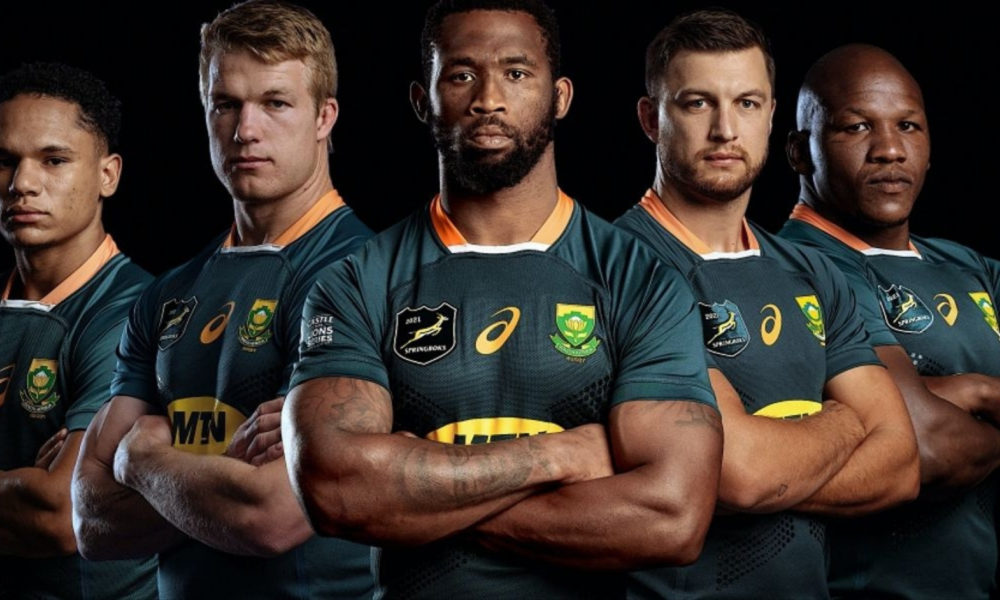
We often wonder how different Super Rugby would be if South African sides were still in it. We think that overall it’s safe to say that South Africa’s switch to life in Europe has been a positive and successful undertaking. They have injected some genuine excitement into both the United Rugby Championship and the European Champions and Challenge Cups, even if in the latter their first year in the Competition wasn’t exactly a huge success in terms of results. South African sides have had to adapt the way they play the game, and even if their physicality is still an essential cornerstone of how they structure their game plan, they have benefitted from regular exposure to the power and pace of the Irish and French, the physical and set piece strength of the English, and the creativity of the Scots. Italian flair and Welsh doggedness have also been useful learning experiences.
This season has reaffirmed that South Africa continues to be blessed a with a genuine wealth of talent, that is now perhaps much more seasoned internationally than it was in the days of South African participation in Super Rugby. Unlike their New Zealand rivals who are limited to playing a handful of Australian sides that they seem able to beat with ease week in week out, South African sides have clearly relished their European experiences and the need to adapt quickly to a wider range of playing styles. The down side to that is that Ireland, France and Scotland, whom South Africa are likely going to have to deal with first, up to and including the quarter final stage, have a much better idea of what to expect as opposed to to say what these European sides might face against New Zealand or Australia.
Nevertheless after seeing their charges experience 10 months of seasoning in European club competition, Springbok Coaches Jacques Nienaber and Rassie Erasmus are genuinely spoilt for choice in terms of selection. The only downside may be slightly higher fatigue levels compared to their Australian and New Zealand counterparts come the Rugby Championship next month and the World Cup in September. Nevertheless we can’t wait to see if South Africa’s big European experiment of the last two years pays the hoped for dividends in France come September. If it does we have a hunch that South Africa could well be on the edge of a period of global dominance previously reserved only for the All Blacks.
Flying the White Flag as the Arrows surrender their worst season on record to the dustbin of history and the soul searching begins
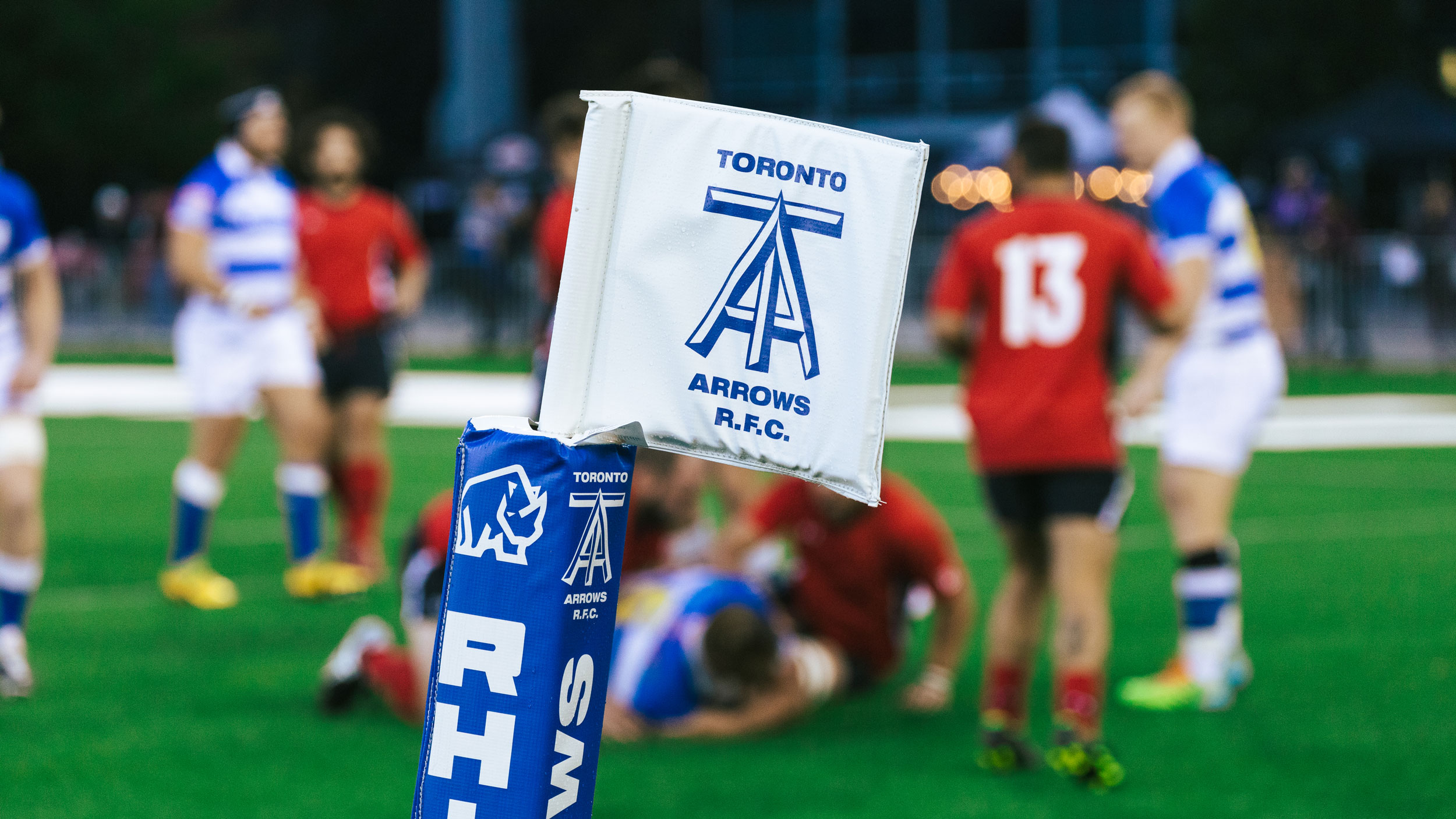
The Toronto Arrows still have one more game to play against New Orleans Gold this weekend, but even if they manage to pull off another elusive win and we sincerely hope they do, it still won’t take the edge off what has been a bitterly disappointing season for the Club and its supporters. As the worst team in the league, having won only one of their 15 games and drawn two others, it’s been a season to forget for the Arrows and their fans. The team looks hopelessly disjointed at times and rather rudderless in terms of direction and the type of game they want to play. As the season has progressed and the losses continued to mount, it’s been genuinely depressing to see the growing number of empty seats at York Lions Stadium, the Arrows home ground in Toronto.
So what’s gone so dramatically wrong this year, following on from a decline that became evident last season but now seems to be in freefall? Some have cited injuries, and while that hasn’t helped the Arrows cause this year, we can’t help feeling that it’s simply an excuse to hide behind. Look at the starting lineups of the last few weeks, and while we agree that there are omissions, week in week out courtesy of the stretcher bearers, there are still enough familiar faces from one week to the next to build some consistency and cohesion on the pitch. However, this doesn’t seem to be happening. While we applaud the focus on Canadian talent in this year’s squad much of it is young and inexperienced. It lacks seasoned experience alongside it both from Canada and abroad. What little overseas talent the Arrows do have, consists mainly of players who never got a look in at the top level in their own national sides and have been put out to pasture in the MLR as a home for foreign players in the twilight of their careers, or those simply not good enough to go the distance at home.
Many of the problems that plagued the Arrows towards the end of last season have simply become even more pronounced this year. Most notably a seeming inability to make first phase tackles, a lineout that fails to fire consistently, creaking set pieces, poor decision making and discipline coupled to a kicking game that simply gifts the opposition possession, seems to have little or no purpose and is usually poorly executed. It would appear that despite whatever skills may or may not be lacking in the players themselves, Coaching would appear to have been almost an afterthought this year. To be honest, our overriding impression is one of a team that isn’t actually being Coached at all. While the players will have to do some soul searching in trying to solve some of the problems on the field for next year, we’d argue that the real work needs to be done in the Coaching box, and if necessary a fresh start made for next season and beyond. The players can only do so much but what they really need is direction, which we feel there has been precious little of this season.
We don’t want to paint a completely negative picture and be down on the players, some of whom have put in massive shifts this year, and we still hold that D’Shawn Bowen has been one of the most exciting finds of the season for the League as a whole. We remain staunch Arrows supporters but change is drastically needed and in our opinion it needs to start at the top. Get some seasoned and proven international talent into the squad along with a decent set of Coaches, even if it’s only one or two players and start to rebuild. Apparently this year was supposed to be all about rebuilding but it would appear to have torn down any foundations the team had and left them only rubble to work on and no blueprints to move forward with.
We hope that next season the Arrows are able to rise from the ashes as if they can’t, just like the remarkable Canadian aircraft whose name they so proudly take but which ultimately never got beyond the prototype stage, they run the risk of being consigned to the “what might have beens” of history.
So that’s it for this week folks and we promise to be more prolific in the buildup to the World Cup. Like we say Super Rugby semi finals to look forward to this weekend and the Arrows last hurrah for 2023. As always take care and enjoy summer’s faltering start.
 The Lineout