With the Six Nations almost upon us, obviously, our attention is starting its seismic shift towards one of our favorite times of the year. However, despite our focus being almost completely centered on International Rugby’s oldest and perhaps most colorful and cherished tournament, the rest of the Rugby World does not act in isolation over the coming weeks. There have been announcements South of the Equator, most noticeably in Australia, which will have serious ramifications on how the Rugby World may look come 2027 and the next World Cup in a Land Down Under.
Nevertheless, with all those pre tournament nerves and first round of selection decisions to be made, it’s the Six Nations that dominates the headlines and which has kept most of our pints frothy and lively. So, without any further adieu, let’s cast our eyes over Coaching appointments in Australia and then get straight into the meat and bones of the next few weeks, our beloved Six Nations.
With Joe Schmidt’s appointment, is there finally something to cheer about in Australian rugby
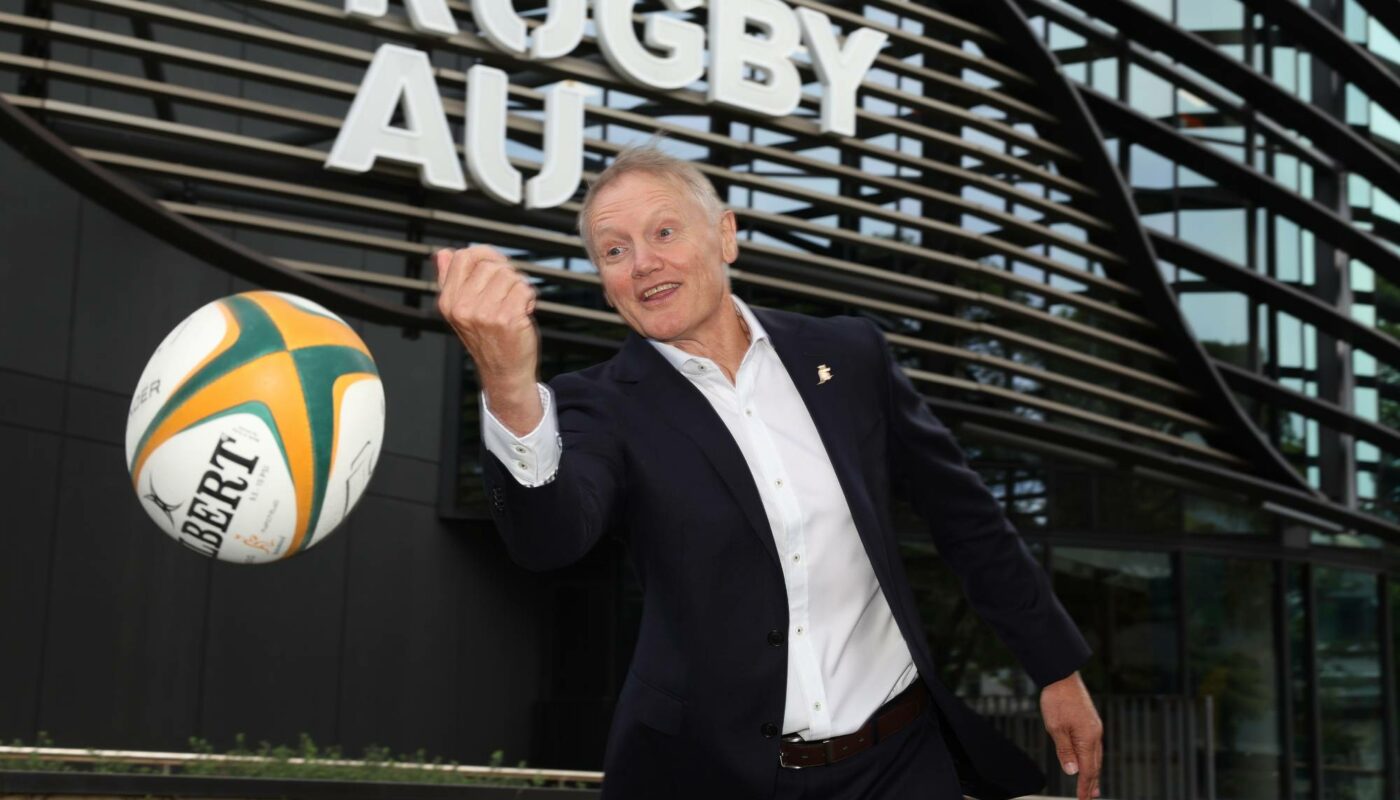
The more the rumors grew, the more we all knew that it was both inevitable and ultimately a no-brainer. The appointment of former Ireland Coach Joe Schmidt to the Wallabies job should really come as no surprise after the train wreck of Eddie Jones’ brief tenure, which saw the Wallabies crash out of the World Cup and drop to their lowest ever spot in the World Rankings. Once David Nucifora, the former High Performance Director at the Irish Rugby Football Union was appointed as an advisor to the rebuilding process going on in Australian rugby many of us saw Schmidt as a natural fit with the Wallaby Coaching job. The two know each other exceptionally well, and their experience of retooling Irish rugby from the ground up will be invaluable to Rugby Australia’s own much needed transition. In short, it’s a win-win situation for the Wallabies.
Perhaps the one area for confusion is the fact that Schmidt is only contracted till the end of 2025. As everyone who reads this blog knows we are definitely not fans of changing Coaches midway through a World Cup cycle. However, you can see what the thinking is, especially with a British and Irish Lions tour to Australia next summer. Given the dire straits Australian rugby and the Wallabies find themselves in, that Lions Tour is an absolutely critical benchmark as to whether or not the Wallabies are fixable or not. In their present state, most people are predicting a Lions whitewash next year. As a result who better to prepare for it than a Coach and former Performance Director who have an intimate knowledge of the Irish, as well as exposure to the other British Isles teams through numerous Six Nations campaigns.
As for Schmidt’s tenure with the Wallabies post 2025, that remains to be seen. One of the main reasons he gave up the Ireland job in 2019 irrespective of Ireland’s disappointing exit from the World Cup that year, is that he wanted to go home to New Zealand to be closer to his son who faces challenges with epilepsy. Consequently, he prefers to keep his options open, and that should be respected. Should the Lions Tour go well and the Wallabies look set to be on the road to recovery and on course to launch a potentially successful World Cup campaign when Australia hosts the global showpiece in 2027, then one could well see Schmidt taking a two year extension. As he said in his various press interviews, he and Rugby Australia will cross that bridge when they get to it.
In the interim, what Australia will get is a commitment to detail and one of the sharpest brains in International Rugby in the shape of one of the best process orientated Coaches around. Liked and trusted by players and fans, Schmidt will bring a much needed injection of stability and order to how the Wallabies are run in the next two years. Long term, his approach may become too much of a straitjacket, as evidenced by Ireland clearly enjoying the freedom to be creative under his successor Andy Farrell, which some say was harder to do under a Schmidt regime. Nevertheless, as a 2-4 year fix to many of the problems the Wallabies find themselves in, both attitude and structure wise, Schmidt is probably the best thing to happen to Wallaby Rugby since John Eales. It will be fascinating to see what he can do with his charges come the Lions Tour next year – but whatever happens from now on, write Australia off at your peril.
One man’s loss but another’s chance to shine?
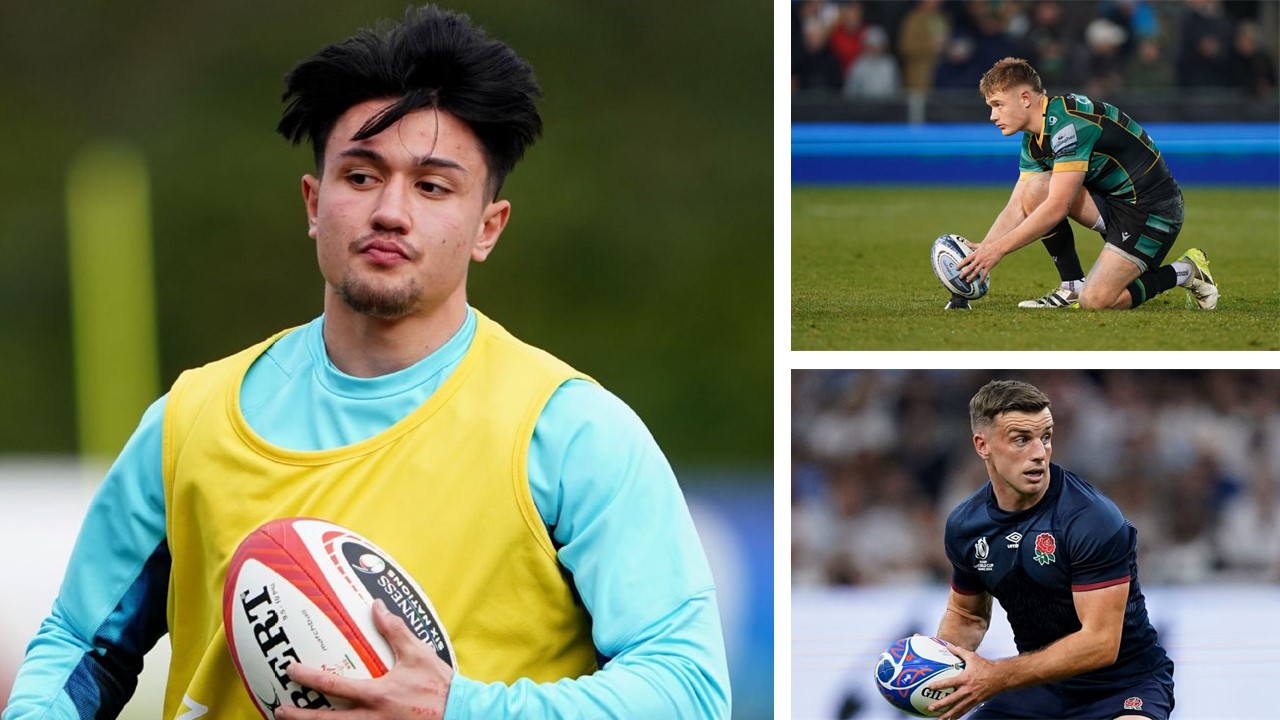
England Coach Steve Borthwick is plagued by a selection dilemma. Prior to this week, it seemed a nailed on certainty that Harlequins dynamo Marcus Smith would be his first choice fly half. With Smith now injured and set to miss the opener against Italy at a bare minimum, Borthwick’s other two options Sale’s George Ford and Northampton’s Finn Smith are now at the forefront of his selection decisions. Who to pick?
If you ask us, we’d go with Finn Smith for the opener against Italy. It is perhaps England’s easiest game to gamble with and therefore a golden opportunity to give the exceptionally promising youngster a thorough Test of his abilities at this level, prior to the more demanding fixtures which lie in wait as the tournament progresses. Borthwick could then choose to follow that up with what should be a straightforward fixture against a very green Welsh side at Twickenham. After those two opening weekends, if Marcus Smith is back to full fitness then get him on the bench for the Scotland game and allow Ford who proved to be so reliable during the World Cup to start against Scotland at Murrayfield. Depending on how fit Marcus Smith is and how well Ford fares against Scotland then possibly go with a combination of Marcus Smith starting against Ireland with Ford on the bench, leaving that all important final game against France to be determined in terms of your fly half options.
Or conversely if Finn Smith has an absolute stormer against Italy followed up with a demolition of Wales, will it be Marcus Smith and George Ford who are battling it out for bench warming duties for the rest of the tournament? We still think it will be a combination of the above-mentioned scenarios, but there is no denying the quality of Finn Smith and the potential he promises for England’s future. If he and Marcus Smith are developed to their full potential during this World Cup cycle, then England could find themselves in exceptionally rude and seasoned health in the fly half department come Australia in 2027.
It really comes down to what Borthwick wants out of his number 10 for this weekend and the tone he wants to set for England for the rest of the tournament. George Ford is a more capable defensive and tactical fly half, but Finn Smith brings with him some genuine attacking flair and a boot that can be exceptionally reliable in terms of keeping the scoreboard ticking over. Furthermore, the Northampton playmaker has an exceptionally calm head on his shoulders, considering he’s only 21.
This year in the Six Nations England’s chief rivals for the silverware Scotland, France and Ireland can attack from anywhere, and as good as England are defensively their attacking game was only marginally better at the end of the World Cup than at the beginning. England know that they will have to be much more dynamic in attack coupled to their strong defensive platform if they want to build on their World Cup achievements. Ford’s big game experience or Smith’s dynamism – who will Italy have to contend with this Saturday? We can’t wait to find out, but don’t envy the decision Borthwick will have to make.
The match likely to set the tone for the whole tournament is the opener

Let’s face it, for many people, this is the World Cup final that never was. As a result, it is without doubt the most eagerly anticipated Six Nations opener in years. Ireland go into the tournament as the number two side in the world with their hosts for this weekend’s curtain raiser France in a strong 4th. They are hands down the best two sides in Europe, and despite some enforced changes to personnel on both sides, it’s hard to separate the two of them. Friday’s clash in Marseille has the makings of a Six Nations classic, and it’s only the beginning of what should be a fascinating tournament for both sides and their supporters.
Is there a Grand Slam in the making? We think not, but then we said that about both 2022 where France proved us wrong and 2023 where Ireland left us with egg all over our faces. As we mentioned in last week’s piece, there is the potential for a banana skin lying in wait for both these sides, most notably Scotland at Murrayfield for France and England for Ireland at Twickenham. However, that’s a bit too much crystal ball gazing for the moment, so let’s focus on the here and now and Friday’s lineups.
If you look at the front rows, we think it’s impossible to separate the two. Tadgh Furlong hasn’t been his barnstorming best in the last year, but then perhaps neither has Cyril Baille. Peato Mauvaka is just as dynamic at Hooker as Ireland’s superman Dan Sheehan. Perhaps the biggest question is, will Andrew Porter be able to compete with the behemoth that is France’s Uini Atonio in the front row? If he can, we’d argue that Ireland look like gaining some ascendancy come scrum time. Add to that the power that Tadgh Beirne brings at second row alongside spectacular newcomer Joe McCarthy, and all of a sudden, Ireland really start to look the part in the forward exchanges. However, it’s France’s back row that is likely to prove the great equalizer as the two Captains go at it, France’s Gregory Alldritt and Ireland’s Peter O’Mahony. For us whoever gains ascendancy will in part be down to who gains the upper hand at number 8 at the breakdowns and in the loose, making the struggle between France’s Alldritt and Ireland’s Caelan Doris one of the highlights of the afternoon.
In the half backs, it’s the first real examination of what life after Johnny Sexton looks like for Ireland. The legendary fly half who finally called time at the end of the World Cup on one of the greatest careers Irish rugby has ever seen will take some replacing. The man tipped with filling those giant boots is Munster’s Jack Crowley. We like what we’ve seen so far, and like most, do not see the point of trying to draw comparisons with Sexton. Crowley will need to develop his own identity and style, and we sincerely hope the Ireland Coaching staff will enable him to do so. He’ll have his work cut out for him though on Friday night in Marseille against France’s Mathieu Jalibert who has seized with both hands the opportunity afforded him by regular fly half Romain Ntamack’s prolonged absence due to injury. Maxime Lucu is another who is no doubt relishing the fact that he gets to duke it out with Nolann Le Garrec for the scrum half berth this Six Nations, with the latter consigned to bench duty for Friday’s encounter. France may be missing the likes of Dupont and Ntamack in this part of the field, but they still ooze world class quality.
In the backs, it’s a veritable assortment of some of rugby’s finest dancing feet. Perhaps for Ireland, the most interesting battle and one we can’t wait to see is that between Ireland’s Calvin Nash and France’s Yoram Moefana. The Munster winger is a player who has consistently caught our eye in the last year, and we’re delighted to see him finally get a chance to prove himself on one of Test Rugby’s biggest stages. Mofana on the wing is an interesting call as he tends to play more in the centers, and as a result, is this a golden opportunity for a memorable debut from Nash? France’s Jonathan Danty and Ireland’s Bundee Aki are likely to steal a few headlines in the center channels. Has Ireland’s James Lowe really got the pace and defensive skills to keep the most spectacular try machine in Test Rugby right now France’s Damian Penaud in check? Last but not least one of the fastest and most reliable fullbacks in the global game right now, Ireland’s outstanding Hugo Keenan, meets the tactical nous and vision of France’s Thomas Ramos allied to a boot that rarely misses its targets.
In short, what a contest we have on our hands and one we find it almost impossible to call. Either way we expect to be fully entertained for eighty minutes as two of the world’s best sides put their considerable skill sets on show in a contest that from the very outset will lay down the marker for which team will be the one to beat this year. It could be argued that by the time referee Karl Dickson calls full time, the winner will already have one hand on the trophy after only the first game of a Championship that looks set to be one of the most interesting post World Cup Six Nations in years.
England’s Steve Borthwick will want to lay down a marker that his 2nd year in charge is all about building on England’s surprise performance at the World Cup. Meanwhile, Italy’s new man knows he has to turn Italy’s momentum under his predecessor into actual wins, and as a result, Saturday’s opener is critical for both Coaches.

England’s game to lose – maybe? Or Italy’s chance to at last start the tournament on more than just a promising note of competitiveness? Every single game this weekend throws up some fascinating permutations, and Saturday’s dustup in Rome is no exception. England will want to lay down a marker that the promise they showed in last year’s World Cup, ultimately finishing as bronze medalists, was no flash in the pan. Meanwhile, Italy will want to show that all the promise they have shown in the last eighteen months can now start to be translated into results under new Coach Argentinian maestro Gonzalo Quesada.
While many questioned the wisdom of replacing Kieran Crowley as Coach after the last World Cup, given Italy’s blowout in the global showdown, perhaps it was time for change. Also, let’s not forget that Quesada brings with him some serious Coaching pedigree. He boasts an impressive Coaching record in the TOP14, and who can forget that in his one year in charge of Argentinian Super Rugby side the Jaguares, he managed to get them to the final. We can’t wait to see what he can do with Italy, who find themselves in very similar circumstances to the Jaguares back in 2019.
England Coach Steve Borthwick, on the other hand, knows how his charges can rise to the challenge after the World Cup. As a result, it is clear that there is a quiet sense of optimism in the England camp. A recent spate of injuries hasn’t made his selection decisions any easier, but if England can finally get their attack going then they could well be one of the teams in the hunt for glory come the closing stages of the tournament.
For Italy, despite the impressive talents of their Loosehead Prop Danilo Fischetti, they are likely to struggle in the front row and set piece contests. However, if the England second row has one of their off days, Italy could pose the Men in White, some serious problems in the shape of Niccolo Cannone and Frederico Ruzza. Ruzza’s skills in the loose and the lineout are exceptional, while Cannone is a genuine nuisance at the breakdown. It’s a capable back row with Michele Lamaro, the battering ram of Sebastian Negri, and one of the outstanding players of last year’s Six Nations number 8 Lorenzo Cannone. For Italy’s forward pack to fire, they need patience and discipline as well as knowing that miracle plays are just not part of Italy’s DNA yet.
In the halfbacks, we can’t wait to see how Super Mario meets rugby in the shape of the Garbisi brothers, Paolo and Alessandro. Paolo as fly half needs no introduction, but his brother Alessandro has been turning heads in the scrum half berth at Benetton. Tommaso Menoncello is back from injury after missing the World Cup alongside Ignacio Brex in the midfield, and this makes for a very tasty and exciting center pairing. Speedsters Monty Ioane and the exceptional Ange Capuozzo give Italy plenty of power and pace out wide, and if Tommaso Allan has a good day at fullback, then Italy have a capable starting XV if they can keep their composure.
For England, like we’ve already said, we feel that their front row should easily have the measure of Italy, though their second row could face some challenges. In the back row, apart from the phenomenal talents of number 8 Ben Earl, it could be slightly less stable than Italy’s offering particularly with the untested flanker combination of veteran Sam Underhill and new boy Ethan Roots.
After much speculation, Borthwick has gone with George Ford as his starting number 10, but should England pull away early, will we get to see Finn Smith strut his stuff off the bench and really open up the English attack, especially when allied with live wire scrum half Alex Mitchell, his Northampton team mate? Fraser Dingwall finally gets a debut in the centers despite being on the periphery of the England squad since 2019 alongside one of England’s standout players of the World Cup Henry Slade. Tommy Freeman who has been outstanding for Northampton this season gets the nod on the wing alongside Elliot Daly who most English Coaches and fans seem to have a love/hate relationship with, but whose powerful boot takes some beating. At the back, the irrepressible Freddie Steward will look to regain his confidence after a troubled 2023 season, which had as many lows as it did highs, despite his mastery of the aerial battles.
This is a genuinely fascinating contest which, in principle, England should win, but there are absolutely no guarantees. Italy have a habit of opening their campaign in style and at home in front of an always passionate Stadio Olimpico, England will need to negate the crowd from the get-go. However, as impressive as Italy have been composure and patience are not their strongpoints as matches unfold, and as a result in the last quarter their execution goes out the window as they start to chase games and their style of play becomes overly ambitious and a tad desperate. England are masters of the long slow grind and will be more than happy to let the Italians trip over their own bootlaces if they start to panic. Consequently this is a game for England to settle their nerves, start to develop an attacking game in the final quarter if they have a comfortable lead on the scoreboard and ultimately leave Italy with all the work to do.
Gatland rolls the dice against Townsend, who has plenty of reasons to smile

Another intriguing contest awaits us at the Principality Stadium on Saturday in Cardiff. Many feel that Scotland are the favorites for this one, and while we can see the logic behind that, much like the game being played before it in Rome, this match may well have a few twists in its tale before referee Ben O’Keefe blows the final whistle.
Despite Wales Coach Warren Gatland naming a young squad for this Six Nations and one of their youngest ever Captains in second rower Dafydd Jenkins at 21, there is still some serious experience in the starting XV against Scotland. Gareth Davies, Nick Tompkins, Josh Adams, Adam Beard, Ryan Elias, and Aaron Wainwright between them boast almost 300 caps for Wales. Consequently, it’s not exactly lambs to the slaughter as some pundits have described it. Admittedly, we fear that the front row may well struggle against Scotland, particularly if Ryan Elias’ lineout throwing goes wayward as it has a tendency to do. In the second row, Adam Beard should lend some calm to his partner and Captain Dafydd Jenkins, but it’s still a bold gamble by Gatland to hand the youngster the leadership role in what will be a challenging campaign. Meanwhile a solid back row featuring the exceptional talents of Leicester’s Tommy Reffell ably assisted by Aaron Wainwright who has provided some much needed Welsh grunt and grit at times, should help keep Wales honest in the face of a daunting Scottish back row.
It’s that halfback pairing, though, for Wales that really needs to fire. We all know what Gareth Davies can do at scrum half and Sam Costelow has looked like a worthy successor to Dan Biggar at times, but it’s just not a reliable or consistent enough offering when juxtaposed against the havoc and controlled chaos that Scotland’s Finn Russell and Ben White can cause. Wales have no slouches on the wing in the shape of Rio Dyer and Josh Adams, but can Josh Adams keep Scotland’s one man wrecking ball Duhan van der Merwe in check while Kyle Steyn proved to be a revelation for Scotland in last year’s tournament?
However, the most fascinating experiment by both sides will be at fullback. Both Coaches have chosen to field players with one cap between them. Wales Cameron Winnet makes his debut while Kyle Rowe has a mere 1 cap to his name for Scotland. Rowe has been on fire for Glasgow Warriors, though his normal position is on the wing and Scotland Coach Gregor Townsend would have no doubt preferred Blair Kinghorn in the 15 jersey had it not been for a training injury this week. It’s a massive experiment for both sides and one that could prove costly.
Nevertheless, even with it being in the cauldron of the Principality Stadium, it’s hard to argue against Scotland coming across as the more settled and proven side. Admittedly they had a poor World Cup, and will want to atone for it, but we can’t help feeling that their exploits in France were not an accurate reflection of their capabilities and more that of being placed in a rather lopsided draw right from the get go. Scotland are invariably given the Dark Horse tag at the start of every Six Nations, but this year that label appears to have some genuine weight to it, as perhaps more than any other side they know who they are, how they want to play and what they are capable of.
So let the games begin!!!!
 The Lineout