Where to begin since we last put pen to paper? The Six Nations is over for another year, but this year’s edition is one that will definitely remain on our playlists for many years to come. Ireland emerged as the deserved Champions in the end without a Grand Slam and were pushed hard at the end by both England and Scotland. A great side yes, but definitely not the best side in the world despite what their media may think, with the forthcoming two match series to South Africa in the summer, the real test as to whether or not that epithet is deserved or not. France after a truly horrific start, managed to snap out of their World Cup malaise in the final two rounds and finally began to show us that once the blue machine clicks into gear it’s hard to beat. England’s defeat of Ireland in Round 4 was the crowning achievement of a tournament that saw them build on their World Cup successes in leaps and bounds and finally look like a side that everyone needs to be wary of – take note New Zealand come the summer! Scotland impressed when needed to but retained their Championship defining status of being consistently inconsistent and as a result despite all the promise never really being title contenders – cue broken record of the last twenty years. Italy blew us all, including Wales and Scotland, off the park this year, and although we say it quietly would finally have appeared to have earned the right to dream big dreams. Last but definitely not least, although Wales were left clutching the Wooden Spoon and lost all their games, we can’t help feeling that all the gloom and doom in the Principality is rather misplaced.
Talking of the Six Nations, though, we’re delighted that it’s not over yet. Yes, the Women’s version is in full swing, and we, for one, are excited by what we’re seeing. First up, the quality of rugby on display appears to have gone up yet another notch from last year’s excellent tournament. Ireland and Scotland seem to be quietly getting their houses in order and look set to have a much better tournament this year than last year’s poor showings. Wales, despite losing their opening game, are never to be taken lightly, and we have a hunch they will only get better as the tournament progresses despite the calamitous predicament that the sport finds itself in in the Principality. France, just as they did last year, are just warming up to the task at hand now that the initial cobwebs have been dusted off. Italy will also only get better as they managed to hold England scoreless until the 30th minute in their opener, after which the wheels admittedly did fall off rather dramatically, but then it is against England we’re talking about. However, just like last year, England look disturbingly ominous already at this early stage, though not quite the juggernaut they appeared to be last year. In short, it looks set to be a thrilling tournament, but perhaps what was most heartening for us was to see the packed stands for all three matches, particularly in Cardiff and Le Mans, which once again serves to highlight the growth and appeal of the Women’s’ game. With the Pacific Four just around the corner for our fabulous Canadian Women and then the WXV, what a fantastic year lies ahead of the 2025 World Cup for Women’s Rugby.
Last but not least, Super Rugby is starting to get genuinely interesting. The question remarks remain about Australian rugby, but the Reds and Brumbies so far seem to be making a strong statement that all is not lost in a Land Down Under. However, it’s still early days yet and these two sides always tend to look strong at the start and then fade as the playoffs loom, making the next month’s round of action a critical time under the microscope for Australian rugby, as there is plenty of Trans Tasman action on offer to see how well these sides can face up to international competition. However, the big talking point for us here is just how much fun Fijian Drua’s season is turning out to be. We always suspected it would be, especially with so many games being played in front of their delirious home fans. Fortress Fiji is rapidly turning into a very daunting place to travel to, and if the enthusiasm of the fans in the stands doesn’t ooze off your TV screens into your living rooms then we’d argue you’re more a casual spectator than a genuine rugby fan. The Drua are building towards a favorable run to the playoffs, and if they can capitalise on their momentum so far, we’re in for some SERIOUS entertainment. Let the games begin. We’re already practicing the “Na Bole” – so step aside all Haka lovers.
So that’s what got us talking this week, and without further ado, let’s get into it!
Ireland look at lot better than the Wooden Spoon holders they were last year, while Scotland look to escape the bottom half of the table this year
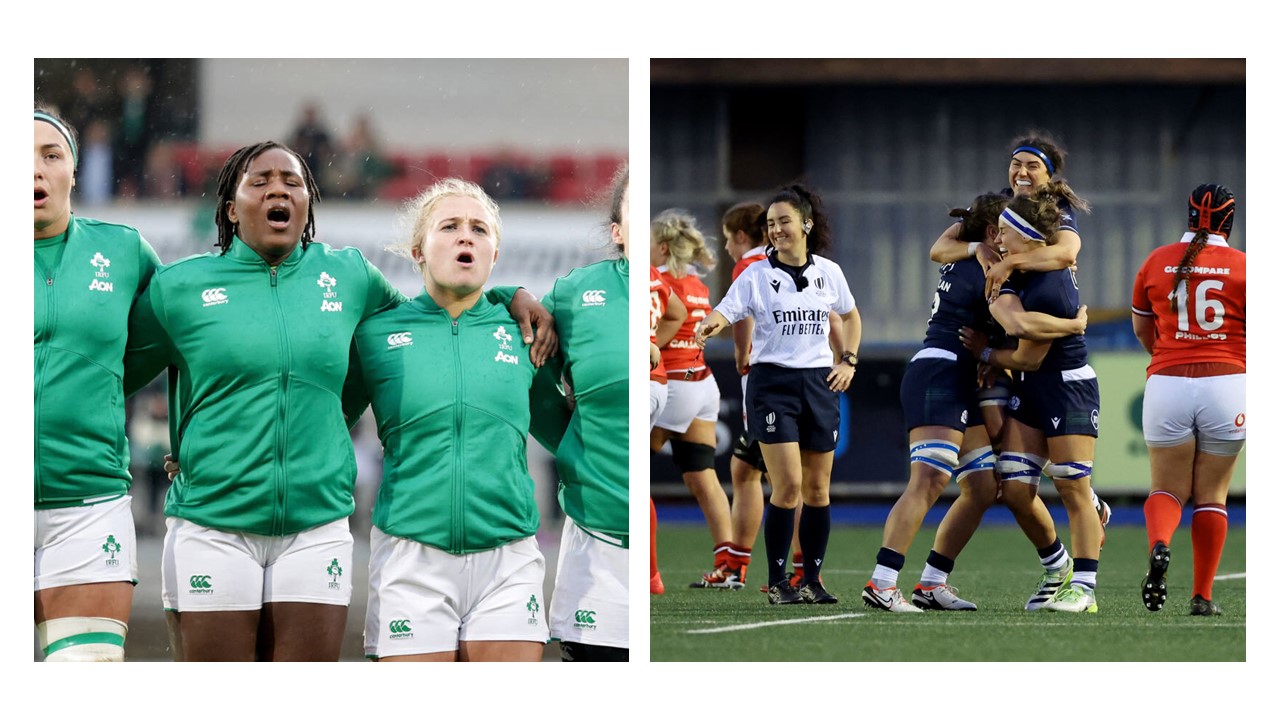
This year’s Women’s Six Nations looks set to be even better than last year’s edition and a tad more competitive. Admittedly, England, in particular, look the front runners, but France are rapidly warming to the task and ultimately look to be challenging the Red Roses’ dominance. However, what is perhaps most exciting is that Scotland look to be making a strong mid table challenge, while Ireland who were seriously adrift last year also look like they may be able to hand the Wooden Spoon they collected in 2023 to someone else. Italy, meanwhile remain the exciting package they always are despite a very wobbly start against England. Last but not least, Wales should not be written off despite sitting firmly on the bottom rung of the ladder after the first two rounds. However, perhaps the most heartening thing has been the packed stands and crowd enthusiasm which once again reinforces not only the quality of rugby being played but the continued growth of and support for the Women’s game which is fantastic to see.
England, however, will take some beating whichever way you look at it. They dominate most of the statistics but don’t quite look as polished as they did last year. The opening game against Italy required a lot of cobwebs to be blown off, and for the first 30 minutes, England did not look at the races and made an uncharacteristically high number of errors. However, thereafter, it appeared relatively plain sailing. In their next match against Wales they looked considerably sharper, but how sharp remains questionable as sadly Wales were poor whichever way you cut it. Their next fixture in a fortnight’s time against Scotland in Edinburgh will tell us a great deal about where England are headed by the time they face their most likely challenger for the silverware France at the end of the tournament. Their goal kicking as evidenced in the game against Wales could do with some serious improvement, but otherwise, this is a very polished looking unit indeed.
France, look set for a strong finish but were pushed hard by both Ireland and Scotland. Scotland pushed them to the limits for the full eighty in Edinburgh, and Ireland put up a feisty challenge in Le Mans at times in their opening match. Nevertheless, France, as they always do in this tournament, get better with each outing. They face an intriguing fixture with a fired up Italy in a fortnight’s time in Paris, but much like England it’s hard to find any glaring faults with this French team and their set piece work is arguably the best in the competition. They also have the advantage of their toughest game being their last against the Red Roses, and in France’s southwest, the country’s spiritual home of rugby to boot. France are just getting going, and everyone else has now been warned.
Italy continue to be the dark horse of the Women’s Six Nations. Despite their blowout against England, in the first round, this is a very dangerous and capable team. With the confidence of a solid win over a vastly improved Irish side in Dublin last weekend, they will be feeling confident about their date with France in Paris as their next fixture. Their defense in their own 22 against a determined Irish outfit was impressive, and they’ll need it against a French side adept at exposing defensive frailties close to the try line. However as strong as they are defensively in their own 22 their tackle success rate elsewhere across the pitch is the poorest in the competition and will need to dramatically improve if they are to handle France’s silky runners.
Scotland, this year, it has to be said, do look impressive. It was a gritty display against Wales in their opener, and if they keep it up then a much cherished spot in the WXV Tier One competition against the World’s best at the end of the year is a distinct possibility. They found the going tough against Wales on the road in their opener but found a way to hang on and claim a valuable win, while against France last weekend, they managed to remain within three points of their opponents for almost the full eighty minutes while denying the French access to the try line despite Les Bleus having the lion’s share of territory and being the more dominant side in attack. Their defense has been superb, and their tackle rate is one of the highest and most successful in the competition so far. Consequently, they must be feeling more than a little optimistic about the tall order of hosting England in just under two weeks.
Ireland, for us, have so far been a revelation. They were poor last year, but the Irish team that has shown up in the first two rounds of this year’s competition has looked hugely improved from last year’s Wooden Spoon edition. It is still clearly a work in progress, and they remain winless after the first two rounds, but we think there could well be two wins up for grabs this year. First up is the chance to host a struggling Welsh outfit in Dublin in two weeks. If that goes well and they are able to provide England as much competition as they did France, then their final game in Dublin against a tricky Scottish outfit, could end up being a positive step in their rebuilding programme. All this is not to say that they aren’t without their problems. Their set piece work remains poor with a faltering lineout and scrum, and their decision-making at times against Italy was lamentable allied to some poor execution under pressure. However, they look a lot more focused than last year, and their attacking game at times is ferocious as is their overall commitment, all of which is a far cry from what we saw 12 months ago. The skills are there they just need to be fine-tuned, and we imagine they will have been by the time the tournament wraps up next month, giving them a strong start to their rebuilding process.
As for Wales, we’re just not sure what’s not working as they looked so promising last year, but it’s clearly not clicking for them this time around. Their set piece work is woeful, and while there is no lack of heart or commitment in this Welsh team, they just don’t look the unified unit that got them to Tier 1 of the WXV last year. Their fixture list doesn’t really get any easier with a tough trip to a rejuvenated Ireland. They then have the luxury of facing France and Italy at home as their last two games, but we have a hunch that both these sides will have some serious momentum behind them by that stage that could well be a tough ask for Wales.
Like we say, though, we’ve thoroughly enjoyed this year’s edition so far, and the tournament looks set to continue to grow in popularity and grow the Women’s game further.
Super Rugby finally looks not to be all about New Zealand this year
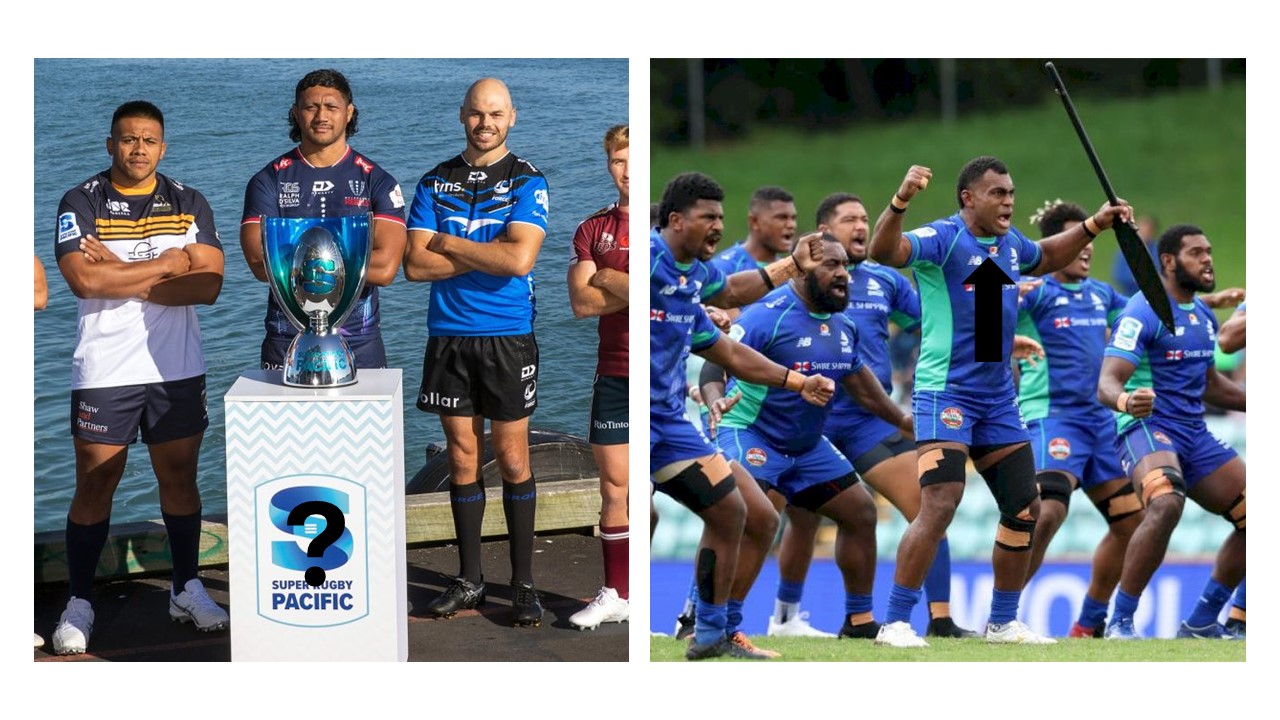
Well so far it’s not been so one sided in favor of the Kiwis, with the expected demise of back to back Champions for the last seven years, New Zealand’s Crusaders, seemingly on the cards at least for this year anyway. Australian sides have looked competitive, particularly the Reds and the Brumbies, but then they always do at the beginning of the season. The Fijian Drua seem impossible to beat at home in Fiji, even if judging by last weekend’s game against Australia’s Western Force, surfing skills will also need to be added to rugby player’s considerable range of talents.
Of the New Zealand teams who still look the primary force in the competition, it appears to be heading towards a final between the Hurricanes and the Chiefs, but the Blues may have a lot to say about this. The Chiefs were runners up last year, but so far this year it all seems to be about the Hurricanes, though the recent potentially season ending injury to their all star scrum half Cameron Roigard could significantly change this outlook as well as getting new All Black Coach Scott Robertson sweating. As mentioned above the Crusaders under new management in the Coaching box are nowhere to be found so far, although last weekend’s first win of the season against the Chiefs could be a season defining moment for them, causing us all to eat our words – seven years of pedigree doesn’t quite vanish overnight. The Highlanders meanwhile seem to be the New Zealand team that simply can’t cut the mustard and, despite some heroic performances at times, have only managed 2 wins.
However, across the Tasman, the Brumbies, as they always do look the strongest Australian side, having won five of their six games. However, of those five wins, only one was against perpetual Kiwi strugglers, the Highlanders, with all other games against Australian sides and Moana Pasifika with their one loss coming at the hands of New Zealand’s Chiefs. The Reds, however, can feel slightly more optimistic as in their two matches against New Zealand opposition, they managed a win over the Chiefs and pushed the Hurricanes hard in Wellington. As the season now takes it’s traditional mid season slow down, it will be hard to really gauge where Australian sides sit in the competition, with the Force nowhere near where they need to be in the standings at the bottom of the table closely followed by the Waratahs. The Melbourne Rebels despite financial ruin staring them in the face have managed to do surprisingly well against the odds, but nevertheless were soundly beaten in their solitary trans Tasman expedition to face the Hurricanes and struggled to scratch out a win against Moana Pasifika.
For us, though, it’s the Fijian Drua who are providing all the excitement this tournament. Having even more home games this year than they did last year is clearly paying dividends. Although they got off to a shaky start against the Blues in Auckland, they have got steadily better as the tournament has progressed, and at home in Fiji, they would appear invincible. We’d be hard pressed to say that we didn’t enjoy their recent water polo match against the Western Force in Lautoka. While life on the road hasn’t been all that kind to them, losing to the Blues, Chiefs and Moana Pasifika, they’ve shown some definite promise and we fancy their chances against the Rebels this weekend in Melbourne. Either way it’s nonstop entertainment watching them in action and we think we can safely say that a spot in the knockouts is assured especially with two of their final five games at home, and a win on the road against either the Rebels or the Force, or preferably both, a distinct possibility.
Spare a thought for the other Pacific Island side, Moana Pasifika, who, although not based in the Islands, will play one game in Tonga against the Highlanders. Although they do have a win over the Drua to their name and also managed to push the Rebels to the limit, this is a side that has 110% heart but consistently falls short in the results department with some very challenging fixtures ahead of them to finish out their season. Still, we have a hunch that the game in Tonga should be a classic and one you definitely won’t want to miss.
Ireland, as expected, hung onto the silverware, and France finally managed to put the disappointment of the World Cup behind them, but both sides still have plenty of work to do for the future

Well, it’s over for another year, but what a marvelous tournament it ended up being, and definitely the best post World Cup Six Nations we can ever remember. We did not fully jump on the Ireland hype train that their national media did, and definitely held firm to the belief that a Grand Slam was not in the mix this year for the Men in Green. However, we did find it hard to think that anyone else was going to wrestle the trophy away from them after that commanding opening performance against France. At times, Ireland were not quite where they needed to be, and towards the end of the tournament, were surely breathing a sigh of relief that the opener against France had gone so well. England seriously upset their apple cart and outplayed them at their own game, while Scotland pushed them hard all the way to the final whistle.
Nevertheless, Ireland can look back on a campaign that has laid some solid building blocks for the future. Jack Crowley has picked up where Jonathan Sexton left off at fly half, and in Calvin Nash and Joe McCarthy Ireland’s future stocks look very bright indeed. The front row could still use some work, as could the back row, particularly if this year’s Captain Peter O’Mahony really does hang up his legendary boots for good. However, Ireland scored more tries than anyone else by quite some margin, and their defensive work as always was phenomenal. They made more meters than any other team and passed the ball more. They led the numbers in terms of line breaks, were second in lineout steals only to England, and despite their scrum creaking at times still had the second most dominant scrum.
Where they won’t be happy is their lineout work, which was sadly suspect at times, and they missed a few more tackles than a team that has been called the world’s best should at this level. Nevertheless, their work at the breakdown is remarkable, and their reign as turnover kings is second only to Italy of all people while they hang onto their crown of the fastest ruck operators in the business. In short, lots to look forward to ahead of a crucial two Test Tour to South Africa this summer which will really determine whether or not they can legitimately call themselves the “best team in the world” or not. For us, there are plenty of reasons to be optimistic, but the jury is still most definitely out on that call.
Let’s be honest, France looked in danger of having one of their worst Six Nations ever, adding to the earth-shattering disappointment of the World Cup and the seemingly inevitable axing of Head Coach Fabien Galthie. However, as we suspected it eventually would, the Tylenol Extra and black coffee finally took effect, and against Wales, France snapped out of their World Cup hangover. They proved that French rugby can breathe and put on the razzle dazzle without Antoine Dupont in the shape of Nolann Le Garrec, who is now surely France’s first choice number nine in the absence of “le petit general”. France, much like Ireland, cautiously put some new talent on display, and by the end of the tournament, it was finally starting to deliver some much needed results. There is still plenty of fine tuning required, but when you consider how young this team already was, its strong second place finish is a testament to the fact that as painful as it was, the World Cup was simply a hiccough on the road to bigger and better things.
With Thomas Ramos, France had an assured points kicker, despite his odd wobble and being forced into the ten jersey for the final two games of the tournament. With Damian Penaud out wide on the wing they also had this year’s King of the line break. However, although they had rallied by the end of the tournament, and their remarkable offloading game was back on song, that characteristically stalwart and almost impenetrable French defense was hard to spot at times this Championship. They consistently made their tackles and their overall success rate in this department was one of the best in the competition, but their defensive shape often lacked the structure we’re used to seeing and at times was downright porous. By the time the tournament wrapped up they seemed to have started rebuilding Fortress “Les Bleus” but its absence at times in the opening three rounds was quite an eye opener and something which their opponents for the remainder of the year will have taken careful note of. While they had the most successful scrum of the competition, they will be seriously concerned with their lineout efficiency, which was decidedly sketchy at times.
It wasn’t a Six Nations to remember for France, but by the time it wrapped up in Lyon, there was a genuine belief that France are back and mean business. With various key players such as Romain Ntamack and Antoine Dupont returning to the fold during the course of the coming months, expect France to pick up where they left off after last Year’s Six Nations – perhaps not quite as shiny but still a force to be reckoned with in no uncertain terms.
England are back people, so watch this space, while Scotland are left wondering why a side that promises so much ultimately delivers so little

We had a hunch that England were only going to get better after they ended up with a bronze medal at the World Cup, much to practically everyone’s surprise, including it would seem their own. They may not have been the world’s most exciting team, mainly because their attacking game was almost nonexistent, but they knew how to grind out wins. They built on that quality this Six Nations but also managed to add an attacking game that shows genuine promise. They struggled to get past Italy in the opening round, but still got the job done and then made hard work of containing a Welsh side that simply refused to be in awe of their more experienced opponents. Question marks were being raised by the time they got on the bus for the now exceptionally difficult encounter with their nemesis of the last few years Scotland. Had England simply been a flash in the pan at the World Cup with a lucky draw, or had they genuinely turned a corner?
We’d argue that England were struggling simply because they were trying to answer their critics by developing an attacking game. They were clearly trying out a new style and trying to blend it into their exceptionally capable defensive platform. At times, England was clearly having teething problems with the process, and Scotland exposed it to the full, as they beat their opponents from South of Hadrian’s Wall yet again. However, what followed 2 weeks later was one of the best games of the tournament as England went full throttle Irish on Ireland. They had clearly decided that the only way to beat Ireland was to play Ireland’s breakneck game in attack and defense but do it better than the Men in Green, which is precisely what they did for a full eighty minutes at Twickenham. It was all a little bit too close for comfort at times, with Ireland gaining the ascendancy in the final quarter with only a last second drop goal from fly half Marcus Smith sealing the deal for England at the death. Nevertheless, it was one of the most exciting games of the Championship with England showing some genuine flair and style on attack at times. The ultimate agonizing two point loss to France at the death was a bitter pill to swallow, but the future looks bright indeed for the much maligned Head Coach Steve Borthwick and his charges. Their two Test series in New Zealand this summer will be a genuine insight into how far England have come in the last year.
In terms of how far their attacking game has come since the World Cup, it’s interesting to note that they were second only to Ireland in terms of line breaks this Six Nations, a statistic which find of the year back rower Ben Earl played a huge part in. However, one area they won’t be happy with is their tackle success rate, which was one of the worst in the competition, and was blatantly obvious at times, especially against France. Their lineout work was for the most part solid along with much of their set piece work and although their discipline could have been better on occasion for the most part it was markedly improved from the Eddie Jones era. England are back people and mean business, with a fascinating but exciting year ahead of them.
Scotland retained their title this Six Nations of being the most frustrating team on the planet to watch/support. They are a fabulous team make no mistake who play a divinely inspired game of rugby at times. The problem is that they simply can’t do it with any degree of consistency whatsoever, and as a result we’re left humming the same funeral march every year – so much promise but so little to show for it. Sure, they managed their now traditional rout of England, but that’s the only major aspect of this Six Nations they ended up getting to cheer about. Admittedly, they didn’t quite fade into obscurity in the latter half of the Championship as they have done with alarming regularity for the last few years. To be fair to them, all their games were close, and some could still argue that had that try at the death against France have been allowed we would have all been singing a much different tune. However, the point is that it wasn’t and Scotland ultimately lost their three games through a lack of killer instinct and that said trait almost caused them to throw their opening game against Wales, which they managed to win by only one point.
The sad reality with Scotland is that they are simply not an 80-minute ruthlessly efficient team. They have some truly god given talent but it all counts for very little if you can only apply it for 65 minutes or so and then decide to take a mid match nap, leaving yourself scrambling in those final 5 minutes to snatch a win from the jaws of defeat and expose yourself to all the mistakes that come with such pressure. In short, a side that on paper has no need to play desperation rugby invariably does so in the final ten minutes. Such traits sadly do not win Championships, let alone World Cups. This theme has become such a broken record with Scotland that we have simply run out of answers. We think it lies somewhat deeper than leadership on or off the pitch or in the Coaching box. However, as Scotland’s longest serving Coach, questions are no doubt being asked about the longevity of Gregor Townsend as he appears unable to fix this quintessential Scottish stumbling block.
It’s not all gloom and doom as Scotland led the offload statistics this Six Nations even if some of them were wildly optimistic and ended up costing Finn Russell and his teammates valuable possession. They also tackled like demons and led the tournament in terms of tackle success rate. Clearly, the work they did on defensive systems this past few months paid some dividends. However, their scrum and set piece work was an absolute disaster and caused them to leak more penalties as a result than any other side. Nevertheless, put all the statistics aside, both good and bad, and it’s still that lack of focus at key moments that trips Scotland up every time. Somehow, it needs to be fixed and quickly as you get the sense that Scottish supporters are starting to question if their side’s promise is merely nothing more than smoke and mirrors. We sincerely hope for their sake that it’s not, and Scottish rugby finds the supplies of collective espresso it needs.
“Viva Italia” finally has a positive and meaningful ring to it, while Wales, despite the abyss they find themselves staring into, should take heart
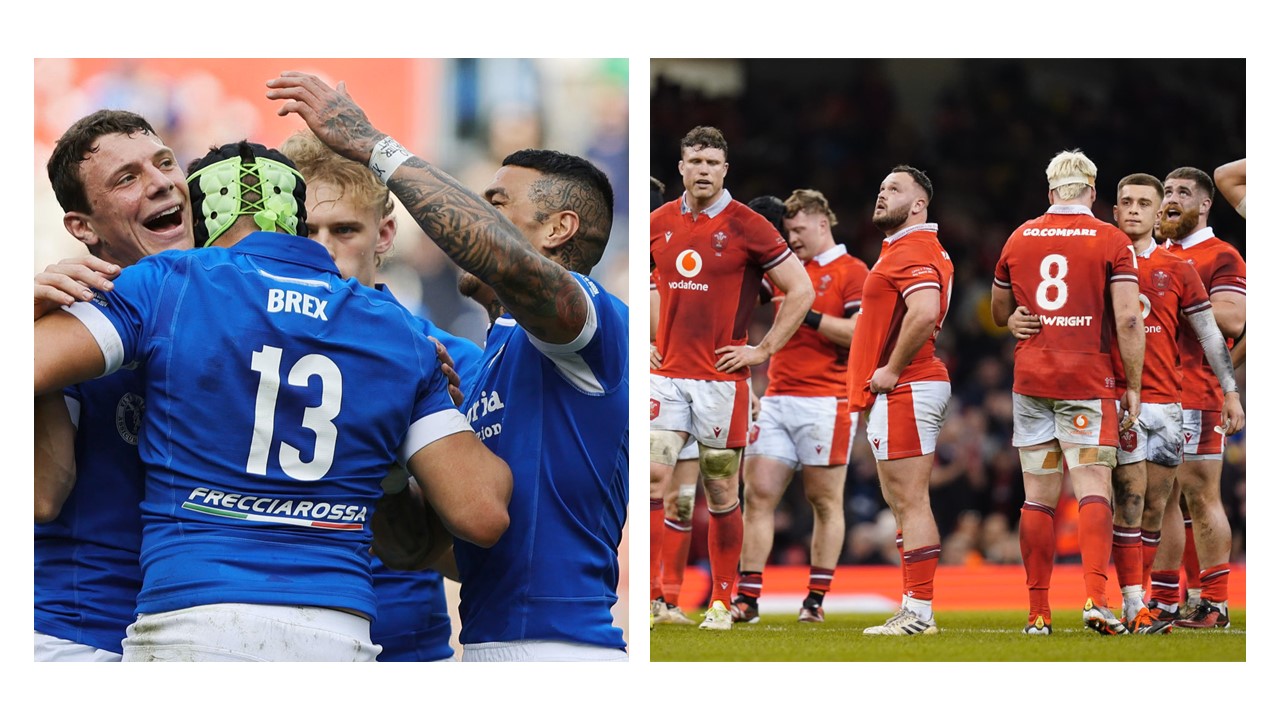
Viva ITALIA!!!! We have to be honest and say we’ve been wanting to shout this for the last 24 years, and even though we have been able to do so at times in the past it’s been hard to do it with any long lasting conviction. Well, not so this year! What a fabulous tournament from the Azurri, and if that kick at the final whistle in Lille in Round Three against France had gone through the uprights, it would have been Italy’s greatest feat and finish in a tournament in their proud history. New Coach Gonzalo Quesada has taken the building blocks put in place by his predecessor Kieran Crowley and turned them into foundations of steel. It’s always been a joy to watch Italy in the last few years, but invariably one that ends on a note of intense frustration. Well, we’re pleased to say not this year, and Italy finally appear to have turned a corner.
Italy have shown increasing skill in the last few years and a genuinely exciting attacking game, however in the same breadth Italy would be guilty of extreme impatience and their players getting caught up in the heat of the moment with decision making, discipline and skills suffering as a result. The essential difference this year was that they finally showed some composure and patience, and it paid huge dividends. They made smart and informed decisions and took chances when they were on but were equally comfortable playing it safe when necessary. Their ambition, which had often appeared reckless in seasons gone by, looked controlled and well managed. In short, this was such a positive Italian campaign, and the future finally looks very bright indeed. While Italy won’t be happy with the fact that they missed more tackles than any other team this Six Nations, they will take some solid comfort in the fact that they had more breakdown steals than any other team, including Ireland for whom that is traditionally a bread and butter statistic. There are still plenty of things to work on, particularly in the set pieces though across the board Italy fared much better in terms of success than they normally do and their scrum showed significant improvement, while Federico Ruzza was a constant menace in any lineout he appeared in. Captain Michele Lamaro led from the front and made more tackles than any other player in the tournament, while for us the midfield pairing of Juan Ignacio Brex and Tommaso Menoncello was one of the best of the entire Championship.
In short, there is so much to be excited about an Italian side that finally appears to have arrived after years of false dawns. We can’t wait for the Autumn Nations series, which sees them test their mettle against New Zealand and Argentina. The wins against Wales and Scotland were outstanding achievements, and that agonizing draw with France was still a cause for celebration. In all honesty Italy’s only negative this Six Nations was that 36-0 blowout against Ireland in Dublin, but we have a hunch is one they learnt a great deal from which they clearly demonstrated in the final three rounds.
As for Wales, we offer our heartfelt commiserations to a side left clutching the Wooden Spoon. You simply can’t fault Wales for the effort that Warren Gatland’s young and rather inexperienced side put in. They were often predicted to be lambs to the slaughter against bigger opponents but still managed to put up a fight that left many of their opponents having to dig deep. They were outclassed by tournament favorites Ireland and a French outfit that finally found their groove, but for the rest of the tournament, although they finished winless, they can still hold their heads high.
Coach Warren Gatland chose one of the youngest and most inexperienced squads to ever don the famous red jersey. While that lack of experience was there for all to see throughout the tournament, Wales never looked in awe of the monumental task in front of them. The only time we really thought they felt themselves genuinely outclassed was in that third round match against Ireland. They reveled in the opportunity to expose Scotland’s lack of focus in Round One and came within one point of getting the Scots off to a truly miserable start in their own backyard. They appeared completely unfazed by playing in front of the 80,000 Twickenham faithful and caused England all sorts of problems and were unlucky to lose that game by a mere two points, having lost to Scotland by only 1 point a week earlier. The Italian game was a bitter pill to swallow especially at home, but once again it wasn’t for the want of trying, but it was clear that a grueling five week campaign and such a young and inexperienced group had little left in the tank for one last hurrah. However, once again to their credit, even if it wasn’t particularly well organized or executed Wales threw the kitchen sink at the Italians, even if they only managed to find said sink in the changing rooms at half time.
There were some rays of light in this Welsh campaign though despite the humility of stirring the Six Nations pot with the Wooden Spoon. Their lineout was one of the best in the competition, and they actually won more of their own lineouts than any other team. Back rower Tommy Refell, or “Turnover Tommy” as he is more accurately known, had more breakdown steals than any other player in the tournament. Wales young Captain Dafydd Jenkins was an inspirational leader on and off the pitch and was huge in the rucks for Wales. Cameron Winnett was a revelation at fullback, even though he had only played a grand total of 16 games of professional rugby prior to the start of the Six Nations, and Rio Dyer on the wing was sensational. Question marks remain as to who can fill Dan Biggar’s boots at fly half, and that is a debate that is unlikely to be resolved any time soon, but as we say despite the lack of results we’d argue it actually wasn’t such a bad Six Nations for Wales as some are making it out to be.
It’s a refit for the future as far as Wales is concerned, and given the turmoil in the game at the domestic level, we’d argue it’s a pretty good starting point with some significant promise. We also appreciated the way in which Coach Warren Gatland let his players express themselves, even if it proved costly at times, rather than lock them into his traditional “Warrenball” straitjackets. Wales now look ahead to a two Test Tour to Australia this summer, a country which finds itself in a similar rugby crisis to themselves. Consequently, with the Six Nations and the chance to allow this new team to gel accomplished, the Tour to Australia could be a golden opportunity to achieve some big results against a team that has yet to find its feet under new management. We have a hunch it could be one of the most fascinating of all the summer tours and have a sneaking suspicion Wales are going to come out of it with some degree of credit. We can’t wait to find out!
Well, that’s it for this week, folks, and sorry, this has been rather a long time coming, but life just seems remarkably busy these days. So onwards and upwards, and here’s looking forward to the business ends of Super Rugby, the Champions Cup, and the URC as well as a fabulous Women’s Six Nations!
 The Lineout
Great round up. No-one can do it like you!
LikeLike
Thanks Neil. Great read again.
LikeLike