Canada’s REMARKABLE women once again do us proud by taking the silver medal in the Women’s Sevens at the Paris Olympics this week in an absolute thriller against New Zealand in the Stade de France. A huge shout out to an extraordinary team that once again demonstrates that the Women’s game when it comes to rugby in this country is in exceptionally rude health. Heartfelt congratulations to all the team for an absolutely top drawer Olympic campaign and one which has shown that the sky is the limit for this very impressive group of young and talented players!
Also, what a final weekend of the big summer tours that was!!! The icing on the cake was without a doubt that seismic second Test between South Africa and Ireland in Durban, but the thrills and spills to be had in Auckland and Sydney also helped cap off a memorable weekend. Despite the concerns that a set of Summer Tours could have been a bit of a damp squib after the seemingly interminable season for many of the teams, which started with preparations for the World Cup last year, we were pleasantly surprised at both the intensity and drama and at times outrageous skills on display, even if player fatigue was a legitimate concern for many of the teams involved.
All of this is not to detract in any way from the final weekend of the Summer Tours which featured such Lineout fan favorites as Portugal, Georgia and Fiji up against the big boys, but there is no denying that last weekend of the big Tours provided us with a fascinating glimpse into the lessons learnt from the last World Cup cycle and what it means going forward looking ahead to the next global showdown in Australia in 2027. Coaching regimes changed hands, new playing styles made their first tentative steps and the future stars of the next generation of International Rugby started to make their presence felt as the old guard began an inevitable shuffle to the sidelines to make way for them, while still showing that there is plenty of pedigree left in such experienced heads when called upon for clutch moments.
In short, the first two weekends of July were fascinating viewing and proved that the International game, despite the almost incessant pressures placed on it for yet more fixtures and longer seasons, is still remarkably robust and capable of the type of enthralling spectacle that makes our glorious sport so unique. Even our own Canadian Men, reeling from the worst crisis in confidence in the history of the game in this country, managed to eke out an impressive win over Romania, and which clearly showed there is still plenty of pride left in the jersey. While it may sadly provide a stay of execution for Rugby Canada’s inept management of the Men’s program and in particular the Coaching department, it was still an important win that will surely help rejuvenate what has been up to now dwindling interest in the Men’s game, especially when compared to the runaway success of the Women’s program.
So, with so much to talk about this summer, here’s what struck us the most about a remarkable month in Rugby.
Canada’s Women continue to make their mark on the World Stage by claiming Silver in Olympic Sevens
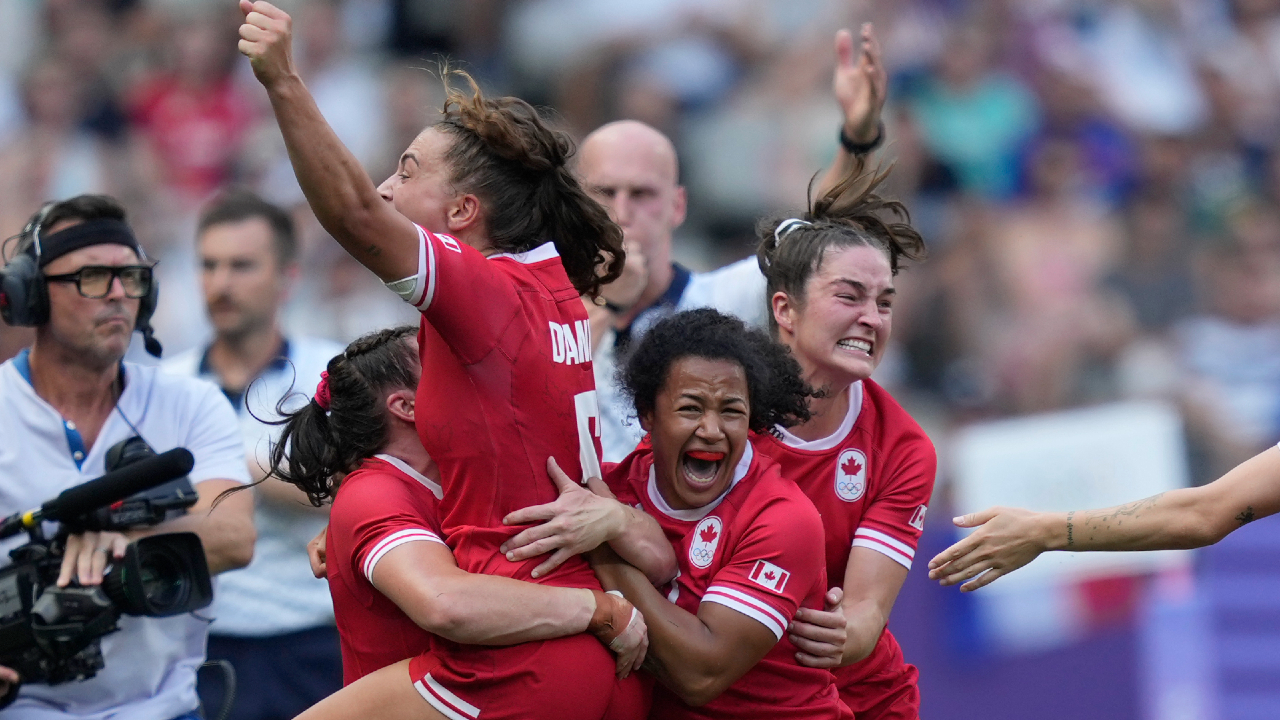
As anyone knows who is a regular visitor to this site, we are HUGE fans of Canadian Women’s Rugby, and their Silver medal in 7s at the Paris Olympics this week further cemented our belief that the story of this remarkable group of women is one of the most exciting in International Sport right now. There was no denying they were drawn in a tight Pool with New Zealand and Fiji, but they claimed a hard fought win over Fiji. They sadly received a bit of a schooling at the hands of New Zealand but then finished the Pool strongly with a tough win over China.
Nevertheless, despite emerging second in their Pool, we had concerns over the caliber of their opponents in the knockout stages, starting with a Quarter-Final against France. They then proceeded to rip up the form book and really come into their own in three stunning matches. They dealt with hosts France in a nervy Quarter Final, which saw a thrilling finish with the Canadians emerging the winners. Next, they had to face one of the tournament favorites Australia in a semi-final. Despite being the underdogs, they took the game by the scruff of the neck in the second half and never looked back, producing arguably one of the best games of the tournament and a fine win. In the Gold Medal match against reigning Olympic Champions New Zealand, they produced a spectacular performance which Canada only lost at the death by less than a converted try.
In short, against all odds, Canada’s women produced one of the most memorable stories of this Olympics and one that continued to show that Women’s rugby in this country is a force to be reckoned with. Many players on the 7s team are are also doing duty in the 15s game, and thus Canada is rapidly developing a pool of talented players which will serve their upcoming campaign in the WXV in September exceptionally well. At present, Canada sits third in the World Rankings in the 15s game and 5th in the 7s game. Compare that to 21 for the Men in the 15s and 12th in the 7s.
We’ve said it before, and we’ll say it again, the success of Canadian Women in International Rugby at both the 7s and 15s level deserves our wholehearted support. While the Men’s game in Canada continues to be in a state of crisis we would be devastated if the limited funding we have in this country for rugby was diverted to salvage the Men’s program at the expense of the Women’s success. Our Canadian women have done us proud every time they take to the field and we need to continue to build on that hard work and dedication to ensure that they are able to continue to take their incredible efforts to the next level. In short, ladies, we salute you for once again doing yourselves and the jersey proud!
World Champions South Africa remain King of the Hill after a thrilling series that saw Ireland and South Africa claim one each

What we got treated to a few weeks ago as South Africa and Ireland did battle in Durban was nothing short of the highest octane rugby entertainment possible to cap off a remarkable series. South Africa claimed the first Test in an edgy and intensely physical encounter. The off the charts physicality of the Springboks in the first Test left Ireland with a telling injury count, and made it unthinkable that the Men from the Emerald Isle could survive a similar encounter only a week later. What most of us weren’t expecting was Ireland to outBok the Boks in the first half of the second Test. South Africa were clearly not expecting to be on the receiving end of a brutally physical Irish performance in the first half that left them bloodied and battered, and which saw Ireland heading into the sheds 16-6 ahead on the scoreboard.
There was clearly some soul searching at half time and South Africa quickly took control of proceedings and as the game headed into the final quarter the hosts were back in charge at 21-19, and with Handre Pollard adding a further three as the game wound down with fifteen minutes left on the clock. The final ten minutes saw an absolutely heroic Irish defense hold back repeated Springbok onslaughts but most extraordinary of all the return of the drop goal, and not just one drop goal but two!
It was a fascinating series between two equally matched sides. Ireland’s fightback in the first Test was equally as impressive as South Africa’s in the second. The telling component in both matches was that first half dominance ultimately paid off in ensuring the winner, even if in Ireland’s case in the second Test thinking outside the box was necessary to snatch the win from the jaws of defeat. In the first Test South Africa pulverized Ireland in the first half and continued the process well into the first quarter of the second, and that and the altitude meant there was little left in the tank for an Irish side at the end of one of the longest seasons in history. What’s more, we saw an expansive and infinitely more complex attacking style of play from South Africa that was keeping Ireland guessing, in addition to having to cope with the Springboks’ traditional physicality. That made Ireland’s remarkable comeback in the final quarter of the second half so extraordinary. In short it was a a thrill ride of a Test match from both teams and left us hungry for more, but also doubting that a second offering could match up to the quality of the first – were we ever in for a surprise!
However, the first Test left Ireland with a troubling injury list, with Hooker Dan Sheehan and scrum half Craig Casey being the most notable absentees for Round 2. South Africa in yet another demonstration of their resilience at this level headed into the second Test with a clean bill of health, and the writing seemed on the wall for a triumphant series sweep for the Springboks in Durban. What we got instead was perhaps one of the most brutally physical Test matches we can remember in a very long time. South Africa seemed clearly taken aback by the ferocity with which Ireland controlled the first half, littering the pitch with Springbok casualties. It was a classic “stand em up, knock em down and slug it out” Test match of old, with Ireland controlling the proceedings in a decidedly dominant fashion for the first forty minutes and heading into the sheds 16-6 ahead on the scoreboard.
South Africa seemed to recover from their initial shock at Ireland’s brutality in the first half and proceeded to put an Irish side starting to flag under enormous pressure once again, both physically and mentally. Ireland’s discipline started to crack, and Handre Pollard’s boot made them pay dearly. Ireland are a side that relies on maintaining possession and stringing together an almost endless set of phases. South Africa, in the second half, made sure that Ireland simply were not allowed to do this and, as a result, were able to do very little with the possession they had, as well as forcing mistakes. Watch the replay, and in that final ten minutes, you’ll notice that the ball is coming out of the rucks and being passed to players sitting much further back than we’re used to seeing from Ireland. In a sense, Ireland had run out of options, and it was left to Frawley to chance Ireland’s arm with two audacious drop goals from deep. It was Test theatre at its best and allowed Ireland to do the unthinkable and snatch what had appeared at kickoff to be an impossible win.
While a decider would have been icing on the cake, it was still a series that showcased two of the best, if not THE best teams in the World. As we saw in New Zealand, the All Blacks and England are hot on South Africa and Ireland’s heels, and we have a hunch that the top five spots in World Rugby are going to change hands with increasing regularity over the next 18 months, making for some epic Test matches. Those two Tests in South Africa in the Rugby Championship between the All Blacks and Springboks at the end of next month are the next big thing on International Rugby’s radar and we can’t wait to see how it changes the pecking order, ahead of New Zealand’s trips to England, Ireland and France at the end of the year. Strap yourselves in folks for a roller coaster ending to the year!
Razor’s first two outings in charge of the All Blacks were tight, nervy affairs, which saw his charges get the job done, but the promise is off the charts

We think it’s safe to say that new All Blacks’ Coach Scott Robertson has lived up to the hype surrounding his appointment after his first three Tests in charge of one of International Rugby’s most fabled units. England were able to put his Coaching credentials under the harshest examination over two weekends, and there is no denying that New Zealand were lucky to emerge 1 point winners in the first Test. However, the second Test was a much more assured affair from the Men in Black, still edgy at times and England were in it to win it right until the final whistle, but the All Blacks were clearly starting to find their groove under their new boss. Their 47-5 drubbing of Fiji a week later left few in doubt that New Zealand are back with a vengeance and are only going to get better.
They’ll enjoy the visit of Argentina to their shores for two tests to kick off their Rugby Championship campaign. The Pumas’ raw physicality will be excellent preparation for a tough trip to South Africa to play their greatest rivals, the Springboks in Johannesburg and Cape Town. By the time they trade blows with Australia for the Bledisloe and the conclusion to the Rugby Championship, New Zealand if evidence of this England series is anything to go by should be fighting fit for a tough tour of Europe at the end of the year, which sees them take on England, Ireland and France.
However, it’s that trip to South Africa that will really tell us how effective the All Blacks transformation has been under Robertson’s stewardship. Emerge from that with flying colors, and the rest of the rugby world may need to start running for the hills once more. Nevertheless, as impressive as New Zealand were against England, especially in the second Test, we don’t think that South Africa, Ireland and France are quaking in their boots just yet, while England will definitely fancy their chances at Twickenham at the end of the year.
It’s hard to judge New Zealand’s opening game against England and Robertson’s first outing in charge of the All Black machine. New Zealand always start their International season looking slightly rusty and a tad disconnected, and that was very much in evidence in Dunedin in the First Test. England were statistically the better side, and had Marcus Smith had a more successful stint off the kicking tee, the Men in White would have picked up a famous win on New Zealand soil. As we feared from Super Rugby where New Zealand sides have not had to do much in defense, the All Blacks tackle success rate was not where it needed to be at this level. Their lineouts were a fiasco, and the scrum creaked and groaned its way through the full eighty minutes. There were individual moments of brilliance which helped New Zealand seal an incredibly edgy and tad fortunate win but England gave them plenty of food for thought and it was clearly an uncomfortable evening for the Men in Black on the pitch and most of the All Black Coaching box had hardly any fingernails left at the final whistle.
Enter the second Test and an All Black side clearly much more comfortable with their new processes and Robertson’s way of unpacking and fixing the problems encountered in the First Test. It wasn’t perfect, but it was a much more cohesive New Zealand performance compared to the First Test. Players clearly understood the roles and what was expected of them as a team. Their set piece work apart from the lineouts was vastly improved, and their tackles were sticking this time around.
Their lineout woes will be a concern as England’s Maro Itoje was a constant source of misery, and Eben Etzebeth, Pieter Steph du Toit, Franco Mostert, RG Snyman of South Africa lie in wait for New Zealand and will revel in the opportunity to cause similar disruptions at the end of August. Furthermore, New Zealand were unable to dominate either territory or possession in the second Test, but defensively, they looked much better organized as well having the upper hand when it came to getting turnover ball. While England had more ball to work with, New Zealand were more clinical and deadly in terms of the opportunities they were able to create. They put England under pressure in the contact areas and allowed the smiling assassin, fly half Damian McKenzie plenty of shots at goal as England’s discipline cracked. When veteran fullback Beauden Barrett came on with 30 to go, the seasoned All Black campaigner showed that his pedigree when it comes to turning a game on its head is still very much in evidence. In short, it was a master class display from one of New Zealand’s greatest playmakers.
This All Black side under Robertson is still very much a work in progress, but all the signs are there that New Zealand is back with a vengeance and are likely to be one of Test Rugby’s most exciting and dominant sides during this next World Cup cycle. Robertson is a shrewd operator who knows how to think on his feet and adapt. For All Black supporters clearly frustrated by the last four years of New Zealand’s inconsistent fortunes, Robertson certainly seems to be the robust shot of espresso that everyone was clamoring for.
England may have lost the series 2-0 to New Zealand, but they leave the Land of the Long White Cloud with their heads held high

Let’s be brutally honest traveling to New Zealand and taking on the legendary All Blacks is not a task for the faint-hearted. Of the teams that do, many leave battered and bruised and, with their confidence seriously dented. Therefore, it was with a sense of trepidation that we watched England’s young charges depart for the Land of the Long White Cloud. Since taking over from Eddie Jones, Steve Borthwick has faced plenty of criticism, but the recent World Cup and Six Nations clearly showed that England is on an upward trajectory. What better test of the strength of those improvements than a trip to New Zealand.
There was only one slight complication, the All Blacks were now under the tutelage of one of the most eagerly anticipated Coaching talents that New Zealand has seen in the last 25 years. The Crusaders legendary Scott Robertson is now calling the shots in the Coaching box, and what better test of your credentials than a career opener against a rejuvenated England.
Despite the aura surrounding Scott Robertson and his new look All Blacks, you never got the impression that England were fazed by the task they were up against and if anything were clearly relishing the challenge. In short, England were able to leave New Zealand with their heads held high as they produced two superb Tests. Although they emerged winless, the first Test was exceptionally close and saw the Red Rose losing by a mere point. Had they remembered to pack their kicking boots for that first Test, they would have emerged victorious. However, fly half Marcus Smith produced a dazzling display of attacking rugby and was the equal of his opposite number, Damian McKenzie. England’s set piece work was exceptionally solid, especially at scrum time, while flanker Maro Itoje was back to his disruptive best, especially in the lineouts.
In the second Test, New Zealand had clearly got their heads around the way Scott Robertson wanted them to play, but England still gave them no quarter and right up until the final ten minutes the game hung in the balance. England’s kicking authority and ability to turn pressure into points from the tee was on song unlike in the first Test, although New Zealand clearly got the better of them at scrum time, though Maro Itoje continued to cause no end of grief for New Zealand in the lineouts and at the rucks. Defensively England, slipped off the boil slightly as New Zealand’s back line of Sevu Reece and Mark Tele’a found ways to open them up all orchestrated by a brilliant cameo from veteran fullback Beauden Barrett. When the two sides meet again at Twickenham this fall, expect England to have worked out the relatively few weaknesses that caught them out this July.
In short, England have nothing to apologise for going forward after their Two Tests in New Zealand. They acquitted themselves well, came within a hair’s breadth of tying the series in the First Test, and the new spine of this team looks exceptionally healthy and capable. They will want to address their concerns in the front row as New Zealand clearly got the better of them there in the second Test. However, the second row of George Martin and Maro Itoje looks to be an exceptional blend of raw talent and seasoned aggression. The back row stocks of Ben Earl and Chandler Cunnigham-Smith look set to go from strength to strength, with Sam Underhill getting back to the form that made him such headline news a few years ago. Alex Mitchell and Marcus Smith are an explosive half back pairing while the back line of Northampton’s Tommy Freeman and George Furbank, now boosted by exceptional newcomer Immanuel Feyi-Waboso look electric, with Furbank finally showing some confidence and sound decision making in the 15 jersey. The centre pairing remains the only possible weak link in a set of backs that look to pay huge dividends for England in this World Cup cycle, and even there it is not for lack of talent it’s just determining what is the right mix of players.
England will be a team to watch this fall as they take on a raft of top class Southern Hemisphere opponents in the shape of the big three of New Zealand, Australia, and South Africa. The future looks very bright indeed, and Steve Borthwick can now silence his critics as England clearly have an idea of what they want to be and how to achieve it.
After the horror show of the Eddie Jones experiment, former All Blacks and Ireland Coaching maestro Joe Schmidt is giving the Wallabies plenty to smile about

Wales were probably exactly the team that new Wallabies Coach Joe Schmidt wanted his team to play to get them some confidence ahead of a gruelling Rugby Championship, and to put behind them the nightmare of last year’s World Cup. This is not to say that Wales were pushovers, far from it, but there is no denying that perhaps one of the youngest Welsh sides to ever don the famous red jersey, is a long way off where they could be. Australia looked like they were finally enjoying playing rugby again in their Two Test series against the Welsh, despite the fact that new Coach Joe Schmidt is perhaps one of the most process and structure oriented Coaches in the International game.
Australian sides are a bit like the French. They simply don’t like too many rules placed on them and instead crave a certain freedom of expression on the rugby pitch to show off their talents. The problem with this is that their discipline tends to go out the window in the process, and their defense rapidly finds itself at sixes and sevens. Against a disorganized Welsh outfit their defensive structures looked much more robust, but with a change of personnel against Georgia after the two Welsh Tests, some familiar cracks that we see all too often in Super Rugby resurfaced. The one problem that Schmidt has yet to effectively address, though, is discipline as Australia against both Wales and Georgia gave away far too many needless and costly penalties. It’s better than it was under Eddie Jones but it still leaves a lot to be desired and South Africa, New Zealand and Argentina will be keenly aware of this as an easy way to put Australia on the backfoot in the Rugby Championship.
One area, though, where Australia will be genuinely happy as they start this new journey to their own World Cup in four years’ time will be in the strength and effectiveness of their forward pack. Throughout the series against Wales and the game against Georgia, Australia’s set piece work looked solid. The front row held its own though South Africa will be a much sterner test this month, while the second row looked exceptionally capable. However, it’s the potential of their back row that probably got most people sitting up and taking note. Rob Valetini has really come into his own as a devastatingly effective player both in attack and defense while Fraser McReight continues to create havoc in the loose, and newcomer Charlie Cale was a revelation. The jury still is out for us on the halfback partnerships Australia has at its disposal though we have a hunch, it will be Tate McDermott taking the scrum half starting berth for the Rugby Championship.
However, what excites us the most, provided it can shore up its defensive frailties between now and the Rugby Championship is Australia’s back five. In the centres, especially in Hunter Paisami Australia look lethal, while out wide especially in Filipo Daugunu the Wallabies look to get back to their glorious running rugby days of Campese and company, with Kellaway having an equally blistering turn of pace and foot on the other wing. Meanwhile, Tom Wright at fullback just gets more electric with every outing.
We really liked what we saw with this new look Wallabies, under Joe Schmidt. It’s still early days yet, and the visit of a bruising and increasingly dynamic South African side for Two Tests starting next week would send a chill up most Coaches’ spines. However, we think Schmidt can get his charges to the point where they can give a good account of themselves and maybe even pull off an upset, before an always challenging Two Test tour to Argentina followed by the Bledisloe series against the old enemy New Zealand.
It’s hard to say whether or not facing New Zealand first in the Rugby Championship rather than at the end would be more preferable. It’s a two edged sword as if they faced them at the beginning we’re not sure that Wales would have proved ample preparation for the biggest challenge this new look Wallaby side will face since the World Cup. However, at the end of the Rugby Championship, the All Blacks will be well versed in the game their new Coach Scott Robertson wants them to play. You could also argue though the experience of playing away in Argentina, never an easy place to go, and two bruising encounters with South Africa are more likely to equip the Wallabies for success against New Zealand than if they were to face such a challenge at the beginning of the Rugby Championship. Either way, we can’t wait to find out!
It wasn’t pretty, and it’s hard to judge what it really means in the grand scheme of things, but Canada’s Men finally get a much needed win
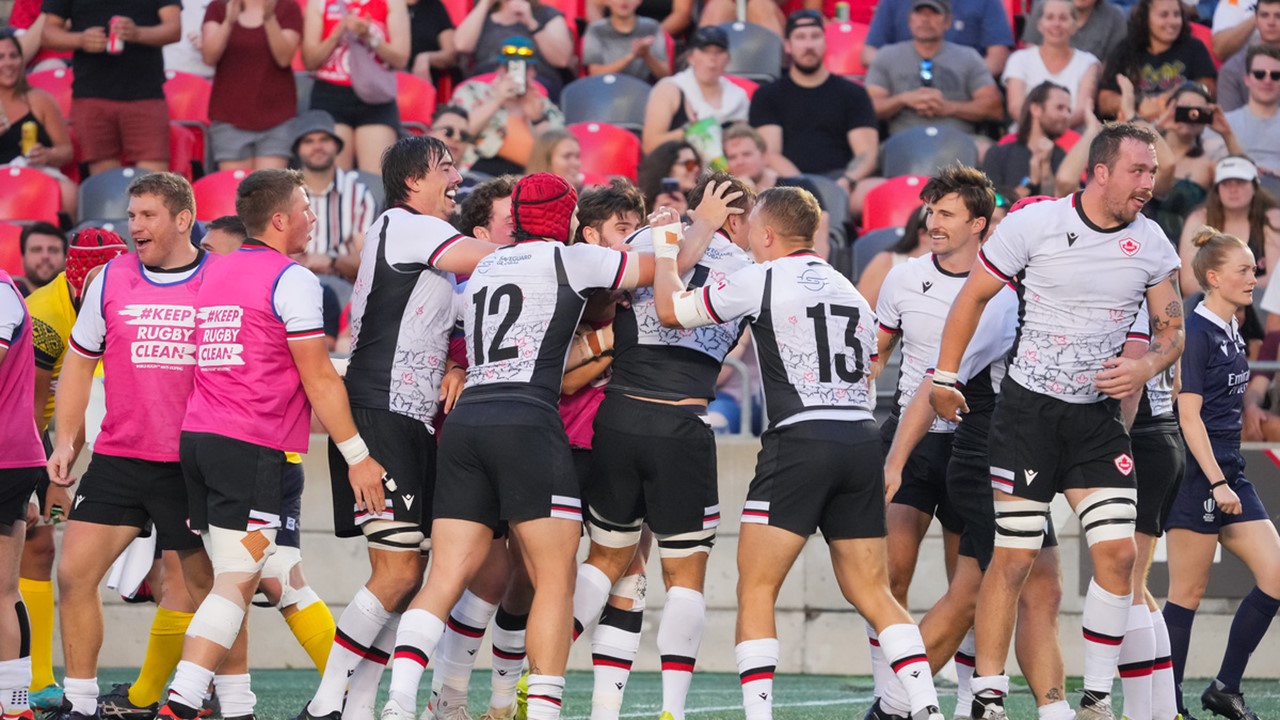
Well, it’s a win people and we’ll take it! However, as delighted as we were to see Canada get the win over Romania, a side that had beat our greatest rivals South of the 49th parallel only a week earlier, we are not completely convinced that Canada is emerging from the wasteland of the last four years. It was perhaps the most complete performance we’ve seen from Canada in a long time, but sadly, that’s not saying a great deal. The Romania that beat the USA the week before were not the same Romanian side in spirit and execution that Canada got a much needed 35-22 win over a week later.
A sense of perspective is perhaps needed here. Canada were blitzed 73-12 by a largely young and inexperienced Scottish side. A week later, a much stronger Scottish side faced our North American rivals the USA and only managed to beat the Americans 42-7. Our concern lies in the fact that wholesale change is needed in the management of the Men’s program in this country, starting in the Coaching Box, with Kingsley Jones well past his sell by date. We fear that the win over Romania will simply put off the inevitable in terms of the need for change – change that is desperately needed at the start of this World Cup cycle, not halfway through it.
Canada will get a chance to see where they are really at in terms of progress made in this year’s Pacific Nations Cup, which sees them play Japan and the USA at the end of this month. Both Japan and the US are in a similar crisis of confidence to ourselves with the US struggling to get a win, and Japan clearly not enjoying their second dose of an Eddie Jones Coaching regime. If anything, the Romanian win will see Canada head into the PNC as the most confident side, being the only one with a win so far this year. However, despite the euphoria of that much needed win, the jury is still out for us as to whether or not Canada have turned a corner under Kingsley Jones. If the PNC indicates that we haven’t, then we have to be brutally honest, and Rugby Canada has to stop putting off the inevitable and start 2025 with a clean sheet. They owe it to both the players and their die-hard but long-suffering supporters.
Nevertheless a huge shout out to Canada and that win over Romania – onwards and upwards gentlemen and let it be the start of a bright new future with our without the management problems that have plagued the game up till now!
Well, that’s it for now folks, sorry it has been so long since pen last got put to paper. It’s been an incredibly busy summer for us both at work and on the home front, making it very difficult to watch rugby this summer, let alone talk and write about it. We’ll do our best to cover the Rugby Championship but can’t make any promises at this stage. Till then, enjoy what remains of the summer, and here’s looking forward to what should be a fascinating Rugby Championship and a do or die Pacific Nations Cup for Canada.
To end this missive, here’s the moment that turned the Olympic 7s as we upset favorites Australia and a tribute to our remarkable women!
 The Lineout