This week we’ll be turning our attention to Club Rugby as our favourite competition the URC really gets into its stride, and take a look at who looks the best representative of the five participating countries Ireland, Italy, Scotland and South Africa and Wales so far.
We also look ahead to the first International weekend and specifically that mouth watering clash between Ireland and New Zealand close to home for us here in Canada, as the two sides have a rematch of their 2016 classic at Soldier Field in Chicago, which we will be fortunate enough to be attending again this year in person.
Finally, the momentum seems to be growing to ensure that pesky sideshow fronted by Mike Tindall, the highly controversial R360 competition will get the boot out the door before it’s even managed to figure out what size boots to wear.
So in a busy week work wise that’s what kept our pints frothy!
After 3 Rounds of the URC, which have provided some thrilling action – who’s hot and who looks set to build?
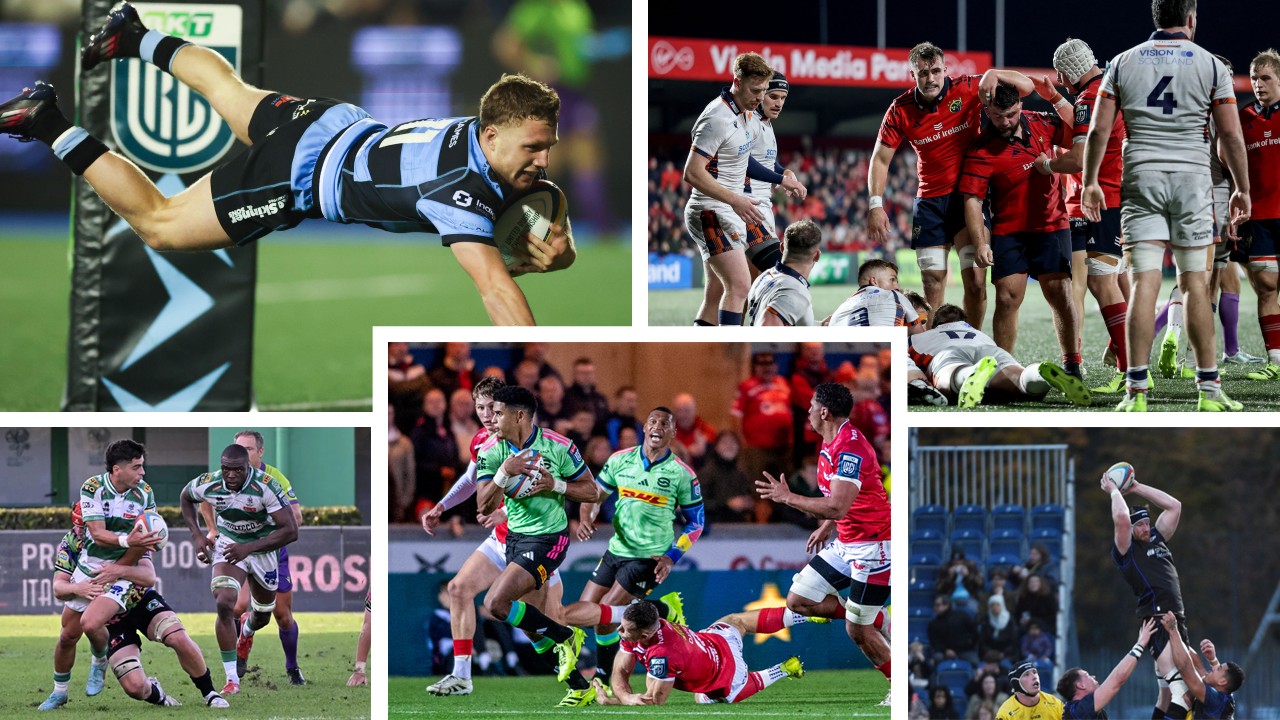
The URC has got off to a rollicking start, but in many ways, it’s only this last round and subsequent rounds that we’ll really get to see who’s who in the zoo. Is Zebre Parma’s remarkably bright start about to evaporate as it always does? Are Leinster about to bounce back now they are up to full strength once more? Is there hope for any of the Welsh sides this year? Is Scotland’s story set to be once more all about Glasgow and will South African sides finally master the art of long distance travel since the demise of Super Rugby with the Stormers set to be the new force majeure? There are so many questions and relatively few answers, but perhaps this weekend, we’ll get a few that will make our crystal ball gazing slightly more academic.
After three Rounds, Munster look to be the best Irish outfit, but they haven’t been exactly crushing the opposition in their first three outings, and apart from their opener against the hapless Scarlets they’ve been tight and uncomfortably close wins. This weekend sees an absolute classic as they travel to Dublin’s Croke Park for a demonstration of Ireland’s biggest rivalry as they take on Leinster. Leinster have had a shaky start to their season, and their tour to South Africa for their first two games was a bit of horror show. They recovered nicely against a poor Sharks outfit back in Dublin last weekend to get their first win, but the bright blue of Leinster looks a bit like it’s been exposed to some bleach over the summer. Both sides will, for the most part, have the full complement once more of their Internationals, who have been absent since duty on the Lions Tour this summer. An interesting sidenote to the traditional Irish dominance of Munster and Leinster is a rather flash looking Ulster this year. If Ulster had not had their game cancelled in Round 2 due to inclement weather they would be the strongest Irish outfit so far this season, making their clash with a struggling Sharks side this weekend much more interesting. Connacht bring up the rear under new Coach Stuart Lancaster, but we think they will improve dramatically as the season progresses and like Ulster are a game short so far due to their Round 2 fixture also being cancelled.
Over in Italy, it’s been an exceptionally bright start to the season, with traditional Wooden Spooners Zebre Parma finding themselves 8th on the log after 3 Rounds, though their clash with a red hot Stormers side who seem to have mastered the art of travel this weekend should see Zebre return to a more regular spot on the lower half of the table. Benetton however look, as they invariably do, to be the Italian side to beat and a genuine contender for a playoff spot. Their trip to the Scottish capital this weekend to do battle with an Edinburgh side that suddenly seemed to click into life last weekend should be highly entertaining.
In Scotland, Glasgow always look set to go deep into the competition, though their season has not started exactly the way they would have wanted, having come short against Benetton. While they annihilated the Dragons last weekend, that’s hardly a benchmark, and Ospreys this weekend may also not shed too much light on Glasgow’s overall form at this stage in the competition. Edinburgh, on the other hand have plenty of promise, and this could be the year that sees them trump their Scottish rivals from the West. They may be sitting close to the bottom of the log, but last week’s arm wrestle with Munster showed plenty of intent, and they will be keen to make a statement against Benetton this weekend.
Of the South African representatives, the Stormers look to be the team to beat so far in the competition. Having won all three of their games comfortably, including their first game on the road last weekend they look exceptionally dangerous, and their next gen Springbok fly half Sacha Feinberg-Mngomezulu will be making plenty of headlines this year in both the stripes of his Cape Town side and the green and gold of South Africa. The Stormers first two games on the road won’t really shed too much light on whether or not they can replicate their form at home, as the Scarlets and their opponents this weekend Zebre Parma aren’t exactly the competition’s big guns, but that trip to Munster at the end of November will tell us a great deal about whether or not the Cape Tonians are title contenders this year. Meanwhile, the Bulls, who were last year’s runners up, look impressive but still slightly unsure of themselves under new Coach Johan Ackermann. The Bulls fixture against Irish side Connacht this weekend will tell us if they’ve got over their jet lag, after getting hammered by Ulster last weekend or if once again this year, life on the road will not be a strongpoint for the Men from Pretoria. Last and sadly seemingly least the Sharks and the Lions have yet to fire a shot this year, and the Sharks even with some of their Internationals back last weekend looked poor against Leinster, while the Lions appear to be missing in action for the first three Rounds.
Finally, the misery, for the most part, continues in Wales with the calls to reduce the Principality’s representation in the tournament to two franchises growing ever louder. It’s hard to argue against this with three of the Welsh teams languishing in at the bottom of the table after three Rounds. It’s only the men in the blue hoops from the Welsh capital, Cardiff, who have shown any genuine threat so far this season. This weekend sees them take on the truly woeful Dragons which should see a strong win, and help Cardiff keep in the top eight and with it some momentum to help keep them in contention until the break for the November Internationals. After that, however, life suddenly gets a whole lot tougher, especially if the injuries start to mount, especially with a tough European Challenge Cup campaign to fit around their URC exploits as the season unfolds. However, for now, we’ll run with the much needed sense of optimism that is a sprinkle of good news in an otherwise bleak landscape for Welsh rugby.
Like we say, it’s very early days yet and almost impossible to draw any conclusions, but it’s certainly an interesting start to the season, and potentially one that promises much excitement over the coming months. As a genuine international club competition, there’s a lot to like about the URC, and it’s certainly going to keep us close to our TV screens over the long winter months!
The big rematch in Chicago approaches as the opportunity for Ireland to make history twice looks far from certain

We’re all pretty excited here at the Lineout about the Chicago rematch between New Zealand and Ireland next month, nine years on from when we all trooped down there to see the Irish beat the All Blacks for the first time in history. What we’re less sure about is whether or not Ireland can make it two from two this time around at Soldier Field. While Ireland had massive underdog labels attached to them in 2016 and still managed to make history, this time around, the variables look so much greater.
First up, it will be Ireland’s first proper Test outing since the Six Nations way back in March. For New Zealand, it will be their 9th Test this year of which they’ve won 7. Form definitely favors the Men in Black despite their wobbles in losses to Argentina and South Africa this year and some edgy wins over a developmental French side earlier in the summer. Ireland finished this year’s Six Nations in third place, which is ironically where they also finished the 2016 Six Nations.
Both teams are in a process of transition, which in many ways was also the case in 2016. However, the Irish side of 2016 would go on to enjoy a run of success for the next 6 years which would see 2 Six Nations Grand Slams, and several periods ranked as the number one side in the World. Yes we know, they still exited the 2019 and 2023 World Cups in the Quarter Finals, but apart from that ongoing seemingly insurmountable mental hurdle for Irish rugby to overcome, Chicago marked the start of a truly golden period of Irish rugby. The potential for Ireland to remain in the top five would appear to be a given these days, but they definitely look a long way off from being able to occupy the top spot in World Rugby’s rankings at the moment. New Zealand meanwhile despite some obvious teething problems with their new Coaching regime and the process of embedding a raft of world class new talent into the All Blacks setup, look much more likely to build on their current status as the number two team in the World Rankings.
Ireland have some genuine problems to contend with at the moment that New Zealand simply don’t have to concern themselves with. Ireland’s tight five looks far from settled and suffers from ongoing injury issues. The scrum is an area of Ireland’s game that New Zealand, with their much more established and proven platform, will be keen to punish and exploit. The back row for Ireland looks slightly more dependable and threatening, but combinations and linkages with the tight five still need to be worked on.
The one glaring area that Ireland look decidedly weak in is their playmaking axis in the nine and ten jerseys. Ever since the departure of Johnny Sexton, Ireland have looked decidedly unsure of themselves in this part of the park. Jamison Gibson-Park has been the go to at scrum half for the last few years, but even his star seems to be fading somewhat and he has yet to combine effectively with either Jack Crowley or Sam Prendergast at fly half. As for the number 10 jersey, Ireland are nowhere near to deciding what works best. Sam Prendergast looks to have some genuine talent and vision in the position, but his lack of physicality and almost non-existent tackling skills mean he is a defensive liability coupled to some naive decision-making at times. Crowley seems more dependable both physically and under pressure, but the Munsterman just can’t seem to catch the eye of Coach Andy Farrell with any degree of regularity.
The ongoing concern with Ireland is that they remain too Leinster heavy, and we’re not the only ones with this view, as it seems to be a consistent theme running through the Irish sporting press. With Leinster so far failing to sparkle to any great degree this year in the opening rounds of the URC, surely there is more room in the Ireland squad named to prepare for the November Tests, to allow for a more balanced representation from the other three provinces, Munster, Ulster and Connacht.
New Zealand, on the other hand, looks relatively well balanced for the most part and with a depth and physicality that is now well seasoned in 2025. There are still a few kinks to work out in the process, but they will arrive in Chicago as a much more settled and proven quantity than Ireland so far this year. Just like 2016, the game at Solider Field this year will be very much New Zealand’s game to lose with Ireland and their supporters hoping that they can pull the kind of rabbits out of their hat that they did nine years ago much to everyone’s surprise. Just like that famous day almost a decade ago, it’s a sellout, and Chicago will be officially Irish for the weekend, with green jerseys vastly outnumbering those in black in the stands. The atmosphere and the crowd will be set to lift Ireland’s spirits regardless of the uncertainties. In short, they won’t be lacking in support, and Soldier Field has become an unofficial “home ground” for Ireland much as Twickenham in London has become the same for the Springboks.
To sum up, we can’t wait for the party to begin, but as to what the outcome will be, let’s just say our enthusiasm doesn’t match our sense of optimism. We hope to be proven wrong just as we were in 2016, but either way, as a spectacle and an event, it will be hard to beat. Regardless of the final score, the craic will be all that matters, and in that respect, Chicago certainly knows how to deliver when it comes to anything wearing green and an oval ball!
Mike Tindall’s R360 rugby sideshow with all its controversies seems to be heading for the exit without ever having kicked a ball, but World Rugby must get serious about fixing the state of the game that gives rise to ideas like R360 in the first place

We, like many others, will unashamedly admit to being firmly in the “no thank you” camp on this one. The unamimous rejection by many of the biggest Unions, England, France, New Zealand, Ireland, South Africa, Italy and Scotland of Mike Tindall’s breakaway R360 league seems to finally be the kiss of death for an idea of decidedly questionable value. Furthermore the World Rugby Referees association has also banned its referees from participating in officiating matches for the R360 while the 8 Unions mentioned above have also categorically stated that players choosing to sign with R360 would be ineligible for Test selection. In short, it’s dead in the water before it’s even chucked its first pass.
As we have already said, we are not overly sad to see the back of it. We couldn’t really see how it would contribute to the current overstuffed global calendar, let alone grow the game globally. It’s big money from questionable sources, sadly much of it being “sportwashing” from slightly unsavoury oil rich Gulf sheikdoms, and we just can’t see how it will trickle down to say benefit a country like Samoa, Georgia or Chile. Furthermore, it has failed to answer many of the questions raised about player welfare and how it will fit with existing club rugby seasons and calendars, let alone the increasingly crowded International window. It seems to run on the premise that any kind of change is good and the shock to the current order it would deliver would be for the greater good of the development of the game as a whole. It is all very questionable if you ask us.
However, as much as we’re glad to see the back of it, some of the issues around the current structure of the modern game need to be addressed by World Rugby and its representative Unions. The whole R360 distraction must serve as a catalyst for some much needed change. First up is an alignment of calendars and the development of a global season that makes sense for countries on both sides of the Equator. Much of what is being proposed, such as the Rugby Championship taking place at the same time as the Six Nations, seems half baked, to say the least. Furthermore, it looks like a knee-jerk reaction to the loss of a Tournament in the shape of the Rugby Championship that provided so much value this year – more on that in next week’s column.
As we’ve said all along, there is, in our humble opinion, too much rugby at the moment, and it seems completely counterintuitive to World Rugby’s claim of putting player welfare first. It’s also a confusing landscape with now a World Cup, a Nations Cup, Tours some years and not others, an overcrowded club calendar with competitions like Super Rugby and the European Champions Cup struggling to find relevance or interest at times. At the club level, some competitions, such as France’s TOP 14, would appear to be thriving while England’s Premiership, despite the quality of its product, simply can’t make the books balance. Meanwhile rugby in once traditional heartlands like Wales and Samoa look to be in danger of going the way of the Dodo, while emerging Nations like Chile, Portugal and Georgia continue to struggle to get the recognition and development they deserve.
If Mike Tindall and his merry band of R360 backers have taught us one thing, it’s that World Rugby, despite it’s growing popularity as an International sport has rested on its laurels for far too long. Trying to get the various Unions to agree on anything other than a united no to change is not the way to move the game forward. Our beloved sport is at crossroads that could take it to the next level, but at the moment its management by the various Unions and its governing body in the shape World Rugby resembles the misguided attempts of poorly qualified summer students trying to organise camps for rowdy preschoolers.
We have a great game that is attracting a growing number of fans and supporters but who still know relatively little about what is not always the easiest game to understand and follow. Make the landscape simpler, more logical, and ultimately more engaging, and the people will come. It’s very simple, World Rugby. Take the lines of your theme song, the “World in Union” played at every World Cup, and put them into practice!
Well, that’s enough ranting for one week, as excitement builds towards the traditional fare of the November Test window, even though next year it’s being replaced by something called the Nations Cup. So just like for this year’s Rugby Championship which was so enjoyable, although we’re not quite sure what’s coming down the pipe from next year onwards in relation to that Tournament’s future, we’ll enjoy our club competitions this month and live in the moment for the Internationals come November.
 The Lineout