Well, it’s only two weeks away, so the Six Nations is starting to focus our attention. This week, we had a look at the squads for the six countries, how they struck us, and their respective chances.
However, the Bomb Shell that really got us talking was the sacking of All Black Coach Scott Robertson. While we thought that things weren’t all that rosy in the All Blacks camp, we found it hard to believe that New Zealand would sack their Coach 18 months out from the World Cup, especially since there was so much fanfare surrounding Robertson’s initial appointment in 2023. Didn’t see that one coming – did any of you?
The Pools are now done in the Champions and Challenge Cups, and despite ongoing frustrations with the two Tournaments, there is no denying that there have been some absolutely cracking matches. While there may still be some potential dead rubbers in the Round of 16 as the first phase of the knockout stages, by the same token, in the mid seedings, there should be some absolute belters.
Lastly, with an eye to the Six Nations, there is a rather interesting tussle this weekend in the URC as Benetton visit Cardiff. Despite Wales and Italy being the two bottom-ranked teams from last year’s Six Nations, Cardiff sit 4th on the URC table and are on fire, while Benetton sit eighth but finished the Pool stages of the Challenge Cup as the second-highest-ranked team. Will the form of Cardiff ultimately transform into improved fortunes for Wales in the Six Nations? On the same note, can the form of Zebre Parma, and more specifically Benetton, help Italy achieve their strongest finish ever this year?
Scott Robertson has been shown the door as New Zealand appears to throw caution to the wind 18 months out from the next World Cup
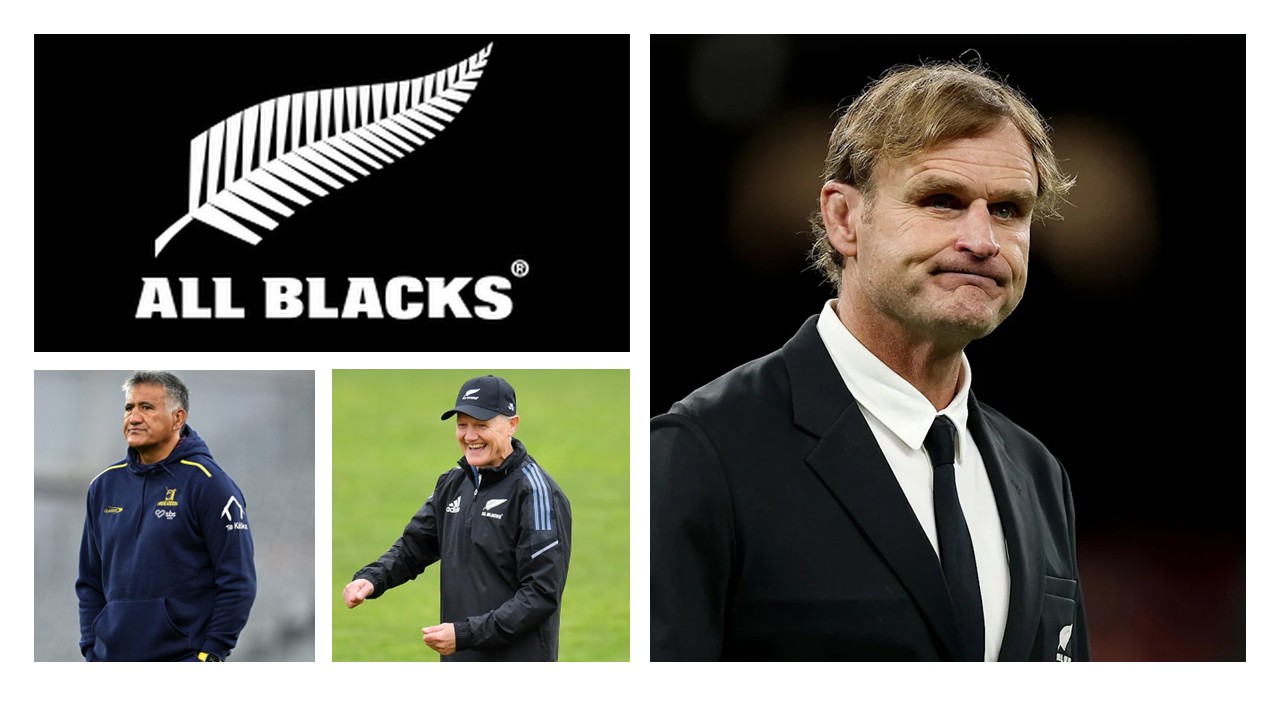
While it was blatantly apparent that things were not quite right in the Land of the Long White Cloud in terms of the All Blacks’ fortunes, we, like most of the rest of the rugby world, were caught slightly offguard by the NZRU’s decision this week to sack current All Blacks Coach Scott Robertson. To be honest, while we could recognize there were problems, we still struggle to believe that, at this late stage in a World Cup cycle, sacking your Coach, who had a 74% win rate last year, is a prudent decision. The All Blacks played 13 games last year and lost only 3. That’s pretty good by today’s standards, considering that the Springboks, who played two more games than they did and are currently considered the World’s best team, lost two of their games. England, who are the other big chargers of 2025, played 12 games and lost one.
So what we’re saying is, given the standards of the top teams, the harsh reality is you simply aren’t going to win all your games every year. Therefore, Scott Robertson’s summary execution does seem a tad harsh. The argument appears to be that, of those 10 wins, many looked ragged and unconvincing at times. However, even South Africa this year didn’t always quite look the all-conquering force that they are labelled as, and there were a few games they would probably prefer to forget.
There was no denying that Robertson never looked overly comfortable in the role. Despite his enthusiasm, his players often looked as if they were desperately unsure of the game they were supposed to be playing, and there was dissension in the Coaching box as two Assistant Coaches packed their bags in 2025. New Zealand looked disjointed on the pitch, and selection decisions seemed to be in constant flux. Add to that all those nasty rumours, which no one seems to be able to quantify or own, alleging that Robertson had lost control of the changing room, and some of the senior players were considering throwing in the towels on their time in an All Black jersey, most notably their most valuable player, Ardie Savea. Post-match interviews were invariably awkward affairs with Robertson often looking distinctly uncomfortable. Not exactly resume-building stuff, is it?
But let’s rewind the tape to six months before the last World Cup. The NZRU were literally tripping over themselves to appoint Robertson as Head Coach after the conclusion of the 2023 Super Rugby season and another unprecedented Crusaders seventh consecutive crown. Robertson could apparently do no wrong, despite his Super Rugby success and his lack of International Coaching experience. Ian Foster, the incumbent All Black Coach at the time, only managed to keep his job through to the conclusion of the 2023 World Cup due to a threatened player rebellion if he were sacked. In fairness to Foster, he did manage to get New Zealand to the Final even though he had to spend the last six months of his contract knowing that he was ancient history as far as the NZRU were concerned.
Robertson was to bring the same kind of squad cohesion, sense of purpose, and focus that he built at the Crusaders to the famous black jersey. In short, he was tasked with reinventing the All Blacks just as he did with the Crusaders. The problem is that his charges didn’t get the same memo and simply didn’t like the changes being attempted. In short, Robertson and his methods became increasingly contentious, and it would appear he lacked the support of his players, particularly the senior players, who still seem slighted by the sidelining of Foster. It was clearly a toxic environment, and sadly, it was Robertson who found himself facing the firing squad.
While all the sordid details of this process may or may not be made public, we can’t help feeling it’s all a bit of a knee-jerk reaction and that Robertson is an easy scapegoat. There seemed to be very little, if any, ownership by the players themselves for some genuinely sloppy and poor performances on the pitch, and we’re not sure that Robertson’s dismissal will solve any of that. The aura surrounding the All Blacks has long since disappeared, and to be honest, it is unlikely to ever return. Don’t get us wrong, they still are and always will be one of International Rugby’s greatest teams, but the sooner they adjust to the reality that they are more than beatable on any given day, the better. They are a team by which their opponents can measure their standing, but they are no longer the benchmark that determines your success or failure as an International side. In short, the rugby world will always respect them as a truly formidable opponent, but they are unlikely ever to be in awe of them again. The sooner New Zealand management, players and Coaches understand this, the sooner the All Blacks’ fortunes will improve.
As anyone who reads our misguided musings regularly knows, we are collectively violently opposed to Coaching changes late in a Rugby World Cup cycle, and this is no exception. Nevertheless, the die has been cast, and New Zealand must live with this decision, even if, as we fear, it may prove costly come the World Cup next year in Australia. So who’s in the front running for the job? The general consensus seems to point to Highlanders Coach Jamie Joseph getting the nod to take the All Blacks to the World Cup. Many are also touting current Wallaby Coach Joe Schmidt, who relinquishes the Australia job this summer.
Let’s start with Joseph, who was also Japan’s Head Coach from 2016 to 2023 and led the Brave Blossoms to notable success. Since leaving Japan, he has coached the New Zealand Super Rugby side, the Highlanders, as well as the All Blacks XV touring side last November. Although he took the Highlanders to a Super Rugby title the year before he left for Japan, his results since then haven’t been the brightest. During Japan’s World Cup in 2019 under Joseph’s direction, Japan had notable successes, including beating Ireland and Scotland in the Pool stages and reaching the quarter-finals.
However, since then Japan have had only fleeting success until Joseph was replaced by Eddie Jones after the 2023 World Cup. Since his return to the Highlanders, the New Zealand franchise hasn’t exactly hit the high notes, finishing 6th in 2024 and 10th, 1 spot away from the bottom of the table in 2025. 2025 was not a good year for the Otago outfit, as they won only 3 of their 14 games and were generally considered an easy points haul by the other teams. A seemingly popular and likeable character, Joseph will probably be well received by the New Zealand public, but given his results of the last five years, turning the All Blacks into genuine World Cup contenders in a mere 18 months may be setting him up to fail. There were also allegations that he was overly strict and set in his ways during his time in Japan, and given the apparent changing-room revolt in New Zealand, cited as one of the underlying causes of Robertson’s premature exit, is New Zealand about to make another mistake?
As for Joe Schmidt there is very little to be said that hasn’t already been said about his extremely impressive International Coaching resume. In addition, he was part of the team assisting Ian Foster during the 2023 World Cup. However, it would appear that although he is stepping away from his current post as Wallaby Coach this summer, Australia are pushing to secure him in some sort of advisory capacity once he returns to New Zealand to assist incoming Coach Les Kiss and possibly even a role for the World Cup that may see him return to Australia for the duration of the tournament next year.
If you ask us, we’d throw out two wild cards who also happen to be Kiwis. We were always huge fans of Dave Rennie, the former Wallaby Coach, who was unceremoniously tossed just before the 2023 World Cup in favour of a disastrous experiment with Eddie Jones. We thought the culture he tried to build at the Wallabies has been a foundation for their recent success. He was popular with the players and seemed able to recognize and develop new talent, weld it into existing structures, and allow Australia to play to their strengths. He currently coaches the Kobe Steelers in Japan, who are third in the league this year.
Our other wild card is the Auckland Blues Coach, Vern Cotter. Cotter, like Rennie, also has significant International Coaching experience with both Fiji and Scotland. We were big fans of Cotter in his time with Fiji and Scotland, and would argue that his time with both laid the foundations for many of the successes they have achieved in recent years. Many in Scotland still feel he should never have lost the job to Gregor Townsend, and it remains a sore point for many former Scotland players and fans. Cotter, despite being perceived as a hard taskmaster, was universally respected and liked by the players he coached, and his departure from the Scotland role was clearly a difficult and emotional one for all concerned.
So who will get the job remains to be seen, and if you ask us, it is not the current front-runner, Joseph. We’d put our money on Cotter, but we’re not writing the cheques, so it does seem a Joseph announcement is imminent as the most likely candidate to pick up the pieces. Either way, whether you liked Robertson or not, and can look past some of the uncomfortable sticking points around player discontent, we still think this is a borderline reckless decision by New Zealand. We sincerely hope we are proven wrong in 18 months in Australia, but whoever gets the job, all we can say is rather him than us!
Time for some crystal ball gazing on our part, but the Champions and Challenge Cups could head to some fascinating conclusions if the cards fall correctly.

As we’ve said all along, the formats of both Cups are messy and detract from what could and should be fantastic competitions. If you need further proof of the potential quality on offer, then look no further than some of the epic contests that got played out over the last two weekends. It was thrilling and heady stuff at times, even if some of the outcomes and what was at stake for some teams seemed to be preordained. There is no denying that, despite its clunky, at times nonsensical format, this is a competition loved by players and fans alike, even if its delivery leaves a lot to be desired.
The Pool stages still don’t quite work for some teams, who just don’t see it as a competition worth devoting resources to. Some of this is not helped by travel logistics, especially for South African teams, who have punishing schedules that make us fear they will be unable to get past the Round of 16. Contrast that with the Stormers’ success in the URC this year and a schedule that makes much more sense, allowing them to manage player rotation and travel-related fatigue more effectively.
However, all that aside, there is no denying that in the Champions Cup, Glasgow and Bordeaux have been spectacular to watch, and we sincerely hope these two will make it to the Final in Bilbao. Bordeaux, as defending Champions, show no sign of easing up, while Glasgow have taken their URC form and simply turned it up a couple of notches. That Glasgow second-half comeback from 21-0 down to Toulouse still needs to be seen to be believed, and Scotland Coach Gregor Townsend must surely be grinning from ear to ear.
Meanwhile, in the Challenge Cup, Ulster continue to be the revelation they have been all season in the URC and have left us utterly dumbfounded that Andy Farrell hasn’t included more of the Men from Belfast in his Six Nations squad. Nathan Doak, though, did make it, and if ever there was a case for fast-tracking an option to Jamison Gibson-Park, then this is surely the time for Ireland and Farrell to seize the day. Meanwhile, over in Italy, Benetton have been excellent entertainment value, and Italian Coach Gonzalo Quesada, who traditionally draws much of his Six Nations squad from the Green and Whites, will no doubt be feeling exceptionally optimistic about his side’s chances next month as a result. We’ve had so much fun watching these two sides in the Challenge Cup that, just like Bordeaux and Glasgow, it would almost be a travesty if they didn’t make it to the Final.
So there you go, we’ve laid out our stall on how we’d like to see this year’s competition end and who we’d like to see in the Finals. Now we’re at the business end of the tournament, we can’t wait to cheer all four sides on and see if we get our wish. In a competition that still needs a significant overhaul to return to its glory days, we’ve ditched our traditional loyalties and found it’s the best way to enjoy it. Unless you have diehard convictions about who you have to support regardless, we suggest you do the same to get the most out of this year’s edition!
With the Six Nations only two weeks away, we ponder the chances of all six teams based on the squad selections made by their respective Coaches
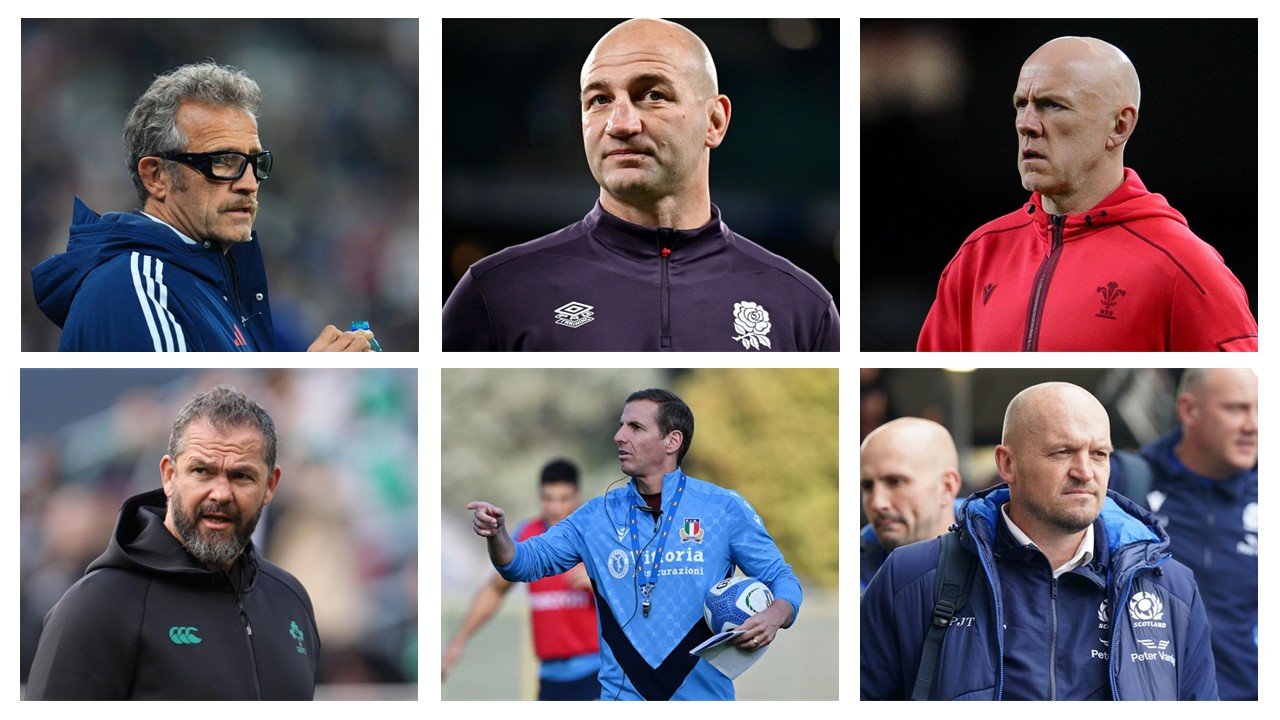
With England the only side yet to reveal its Six Nations squad, we look at what the other Six Nations teams have settled on and the possible permutations for England’s squad. Whatever England decides on this coming Friday, it’s still hard not to see them as the front-runners. Defending Champions France appear to be rolling the dice in their selections, with a few of their choices clearly raising eyebrows. Ireland is in desperate need of a rebuild, though it doesn’t look like they will get it this Six Nations, leading many to believe a crucial opportunity is being missed ahead of the World Cup. Scotland has the potential, but ongoing concerns with selection consistency and a feeling that it’s time for change in the Coaching box appear to dampen what should be an otherwise boundless sense of optimism. Italy look set to continue their upward trajectory even without some key players, while Wales desperately seeks to halt a seemingly endless slide down the World Rankings.
Let’s start with those who think the side most likely to lift the cherished silverware this year is England. Whether you like England or not, you simply cannot deny that they are the form team going into the Tournament this year and have potentially the most dynamic squad, with the perfect blend of electric young talent and seasoned campaigners. Of the 12 Tests they played last year, they only lost one of them, their Six Nations opener against Ireland, after which they simply never looked back. Admittedly, some of those wins weren’t pretty and relatively narrow to say the least, such as their one-point wins over France and Scotland and a genuine tussle with Argentina in their final Test of the year. However, the point is that England, like South Africa, has found a way to win and dig in when it matters most.
Steve Borthwick is finally blessed with the kind of depth to choose from that perhaps only South Africa, New Zealand and France can match. As he watches the reruns of the recently concluded last two Rounds of the Pool stages of the Champions Cup, he will have some difficult choices to make. He will scratch his head over his front-row selections, which remain a problem area for England, especially given injuries to some of his natural choices, such as Fin Baxter, Will Stuart, and new sensation Asher Opoku-Fordjour. He tends to prefer Ellis Genge to come in off the bench and put the killer instinct into England’s forward pack to finish off big games, but is probably going to be forced into using the Bristol man as his starting loosehead prop. At Hooker, Jamie George, even at 35, still looks set to be his go-to for the 2 jersey with Luke Cowan-Dickie as backup. However, it is one area that England needs to address ahead of the World Cup.
Elsewhere in the forward pack, though, Borthwick is simply spoilt for choice. Maro Itoje is nailed on for the Captain’s jersey in the second row, with Alex Coles likely to be the breakout lock for England this tournament. In the back row, England’s depth is simply ridiculous, from the electric showman Henry Pollock to the Currys, Ben Earl and new sensation Guy Pepper, to name but a few of the most likely candidates. There’s depth to the nine jersey with Alex Mitchell nailed on as his number one choice, and in the playmaking role at 10, George Ford has matured into the all-court player England have wanted him to be for so long, ably assisted by Fin Smith and impact wonder kid Marcus Smith.
England’s centre channels and backs are the stuff of dreams, with new centre sensation Max Ojomoh from Bath likely to be grabbing plenty of headlines over the next two months. Henry Slade has been on fire for Exeter, and it remains to be seen if he can still translate his club performances into what is required on the International stage, as there have been problems in that regard in the past. But with Fraser Dingwall and Ollie Lawrence also in the mix, there is very little cause for alarm. The back three provide plenty of dynamic attacking threats in Tommy Freeman, Tom Roebuck and the spectacular Immanuel Feyi-Waboso, with Freddie Steward and Elliot Daly taking care of the high balls. In short, England will be the side to beat, with the most cohesive and potentially settled squad, in our opinion.
Our next best bet to lift the trophy is France, who are the defending Champions. However, Coach Fabien Galthie’s selections, as they inevitably do, have raised quite a few eyebrows this year. They will prove to be either a stroke of genius or a disastrous experiment. France has the luck of the draw this year in facing both of their most formidable opponents, England and Ireland, at home, but trips to Murrayfield and Rome can often be fraught affairs for les Bleus.
France has chosen to cap eight new players this Six Nations, which is by far the most courageous approach of any of the Coaches and has clearly shown that France’s eyes are on the big prize next year in Australia, even if it costs them this Six Nations. His front row is solid with very few surprises, but it’s the second row onwards where changes abound. Thomas Staniforth brings some Australian grunt to the lock position after qualifying for France this year. In the back row, Alexandre Fischer and Temo Matiu also get their first France callups. However, France’s stocks in the forwards are so strong that, regardless of the changes, opposition sides will at times struggle to achieve the kind of parity and dominance needed to contain a daunting collection of talented, powerful and highly mobile Frenchmen.
In the halfbacks, Antoine Dupont appears back to his magical best after being out for almost a year with injury, but at times hasn’t quite looked his imperious self in the nine jersey, and we’d argue that France is lacking depth in the position with both Maxime Lucu and Nolan le Garrec out with injury. At fly half, they are also without Romain Ntamack, but with Matthieu Jalibert, they have one of the form players in Europe right now, and there’s enough depth in the squad to cover the position when needed.
It’s in the backs that France have decided to go with 7 new players and most controversially drop try-scoring machine Damian Penaud. Penaud was not included due to perceived defensive frailties. However, it’s still hard to fathom why he is so out of favour with Galthie when you consider that for every try he concedes through defensive lapses, he is likely to put two or more on the scoreboard for his side in every match, either directly or through assists. Obviously, the fastest man in World Rugby, Louis Bielle-Biarrey, makes the squad on the wing, along with a player we really like the look of, Theo Attisogbe, but also watch for newcomer Aaron Grandidier Nkanang, who ironically also qualifies for England, but is now firmly nailed on for France. Apart from Penaud and the addition of 7 newcomers, there are plenty of familiar faces in the French backs, and none more so than perhaps the most reliable kicker in International Rugby right now, fullback Thomas Ramos. In short, it’s a bold side, but one with plenty of power and pace, and could be the most exciting team to watch this Six Nations.
On paper, Ireland should finish third or fourth; Scotland and possibly Italy could have a lot to say about that, and we are simply not convinced by Ireland at the moment. Andy Farrell’s selections also don’t give us much confidence in the brave new dawn that, in reality, Ireland need to embrace if they plan to be even remotely competitive next year in Australia and avoid yet another Quarter Final exit. There is too much reliance on the old guard in our potentially misguided view of this Six Nations, in the hopes that it will prevent Ireland from slipping below third place when the Tournament finishes in March. In our view, no pain, no gain, and that is very much the danger for Ireland moving forward. Agreed, Ireland may retain their third-place finish of last year, but in the process, they will learn very little about the depth they have at their disposal, and should injuries continue to plague them this year, it will leave them ill-prepared and rushing to catch up with their opponents in terms of depth development come the World Cup next year.
The only area where we feel Ireland has been forced to make much-needed change is in the front row. While no changes are needed in terms of the Hooker position with Dan Sheehan and Ronan Kelleher, especially the former, doing a solid job for province and country, Ireland’s stocks in the propping department need a reboot. With injury plaguing some of the regular choices like Tadgh Furlong, Andrew Porter and new boy Paddy McCarthy at the moment, Ireland have a golden opportunity to really test their depth in this department this Six Nations. Leinster’s Jack Boyle, Michael Milne and Thomas Clarkson, Munster’s Jeremy Loughman and Ulster’s Tom O’Toole should also see plenty of action propping up Ireland’s front row this Six Nations and with an insight into Ireland’s depth in this crucial area. In the second row, we’re also delighted to see Munster’s Edwin Edogbo, along with Connacht’s Cian Prendergast and Leinster stalwart Joe McCarthy, so plenty of new talent there for Andy Farrell to assess in Ireland’s capacity. The back row is solid, and we’ve never really felt that this area needs a complete overhaul. Its depth is good enough at this stage for at least the World Cup next year.
In the backs, though, we would have liked to see a lot more variety than we’re seeing, with an eye to the future. Given their form in the URC, we’d argue there should be a much bigger role for Ulster in Andy Farrell’s selections. Admittedly, Nathan Doak at scrum half, Stewart McCloskey in the centre, along with Jacob Stockdale and Robert Baloucoune on the wings, all make the cut from the Belfast side for this Six Nations. Still, if Ireland is really serious about developing some depth for the World Cup, then surely there’s a place for two other Ulstermen, Jude Postlewaithe and Zac Ward (we’d also argue there’s a role for Ward’s brother, Bryn, in the back row). Also, Leinster’s Joshua Kenny was superb in the Champions Cup, and we’d argue the youngster is unlucky not to get a shot at a place on the wing for Ireland this Six Nations, especially given the rather alarming dip in form of James Lowe over the last year.
Ireland won’t have it easy this year with tough trips to Twickenham and Paris, but their three home games against Scotland, Wales and Italy, we can’t help feeling, are missed opportunities to have a look at depth. Better to take some pain now, even if it means a potential fourth-place finish should Scotland or Italy decide to trip them up, but learn something about the depth you have or lack of it and what is required to develop it in time for the World Cup. On this selection, we feel that while some progress will be made on this front, it’s still a tad conservative, given that Ireland needs to be a lot braver.
The annual conundrum of how Scotland will perform this year is once again a topic of hot debate here at the Lineout as we look at Coach Gregor Townsend’s selections. To be honest, we don’t have a great deal to say, other than it’s a strong squad rippling with talent and a good mix of youth and experience. However, Scotland’s problem is not a lack of talent, and surprisingly also depth, given its relatively small player base, but consistency and harnessing that talent to produce results.
Scotland plays great rugby that is both entertaining and exciting. However, a lack of killer instinct and the ability to finish off big games continually eludes them. It’s not the talent, if anything, it seems more a question of mentality, and we’re simply not sure whether that fault lies in the Coaching box, with the players themselves or a combination of the two. Much of Townsend’s selection naturally draws on the two Scottish teams in the URC, Glasgow and Edinburgh, along with a sprinkling of Scottish talent making their name in France and England. What’s perhaps more critical is harnessing the winning mentality that is rippling through the Glasgow Warriors in both the URC and Europe. Tap into that, and all of a sudden, Scotland could become a genuine problem for the big guns like England and France, especially when you consider that they will be hosting the two tournament front-runners at Murrayfield.
In short, there is no reason that Scotland can’t have an exceptional tournament, but sadly, we feel that by the midpoint of the tournament, we’ll be getting that sinking feeling once again. We sincerely hope not. Scotland’s opener in Rome against a fired-up Italian side with plenty of points to prove this year will tell us a lot about how Scotland do this year. If that goes well and they follow it up by reclaiming the Calcutta Cup a week later against England at Murrayfield, then all of a sudden, Scotland are very much in the mix and on track to blow the whole Tournament wide open. Suffice to say, if Scotland can put all the pieces together, they could surprise not only themselves but also give us a Tournament to remember for many years to come. We can’t wait to find out if this is the year for Scotland to be more than just everyone’s favourite second team.
Italy, as always, remains the Tournament’s biggest wild card. Perpetually on the verge of doing great things but always falling just short. Much like Scotland, they have a side that can both surprise and entertain. We’re not under any illusions that they’ll win it this year, but there is no denying that Italy are capable of some huge upsets. Italian players are becoming increasingly valuable commodities in European rugby, plying their trade with big-name teams in France and England. At the same time, Benetton has looked particularly sharp in the Challenge Cup this year and remains embedded in the top eight of the URC. Even Zebre Parma, the traditional whipping boys of the URC, are becoming a challenging side.
All of this feeds into Coach Gonzalo Quesada’s selections. Like many of his counterparts, he is having to face a Six Nations without some key personnel, most notably Ange Capuozzo, the all-star Toulouse utility back and powerhouse Exeter back rower Ross Vintcent. Traditional back row stalwart and inspiration Sebastian Negri is also out with injury.
However, with adversity comes opportunity, and Italy have the potential to be competitive throughout the competition. Their set-piece work has become much better, and even with the injuries they face, they can, as evidenced by Benetton, still field a credible front row and have solid options come lineout time in both the Hooker department and second row, led by the exceptional Federico Ruzza. The Cannone brothers in the second and back rows were outstanding last year, and look out for Manuel Zuliani, who is one of the most exciting back rowers in Europe at the moment.
Meanwhile, in the backs, there is also plenty to like the look of with all the regular names, barring Capuozzo and fly-half Tommasso Allan. Italy’s powerhouse centre pairing of Juan Ignacio Brex and Tommaso Menoncello returns, but also look out for Northampton winger Edoardo Todaro, who has been regularly making a name for himself in the Gallagher Premiership.
If Italy can continue to improve their discipline and set-piece work, they have the talent and brains to make a genuine impact this year in the Six Nations and dream of their strongest finish to date.
Finally, we come to Wales, and at this stage, we simply don’t know what to think. Wales had a truly awful 2025 and Six Nations, but there are plenty of signs at the URC level and in Europe that the Welsh dragon is starting to breathe fire again. Cardiff’s performances in the URC this season have been spectacular. If there is one aspect of Welsh Coach Steve Tandy’s selections that caused a few raised eyebrows, it’s the relative lack of Cardiff players on the teamsheet. While Welsh sides have done less well in Europe, there are still plenty of reasons to be optimistic, especially when looking at Cardiff. We have a hunch that as the tournament wears on, Cardiff players may suddenly find themselves on Tandy’s speed dial.
There is plenty of talent in this Welsh squad; the problem seems to be getting it to play effectively together as a unit. Despite a bit of a horror show for new Coach Steve Tandy in his first run of games in charge of Wales in November, there were moments where you felt that if they could just connect the dots and come a little better prepared, then Wales will start lifting themselves out of the quagmire they have found themselves in for the last few years. The administration of Welsh rugby is still a complete disaster and is no small stumbling block for the national side. However, the pride in the jersey is still strong enough, and the volume at the Principality is still loud enough to get this team back on trackwith the proper guidance from the Coaching box. Steve Tandy had a good innings with Scotland, and the players, fans, and the WRU just need to give him time.
We still think this Six Nations will be a fairly turbulent ride for the Men in Red, but we have a hunch there will be one or two big moments that will once again give their die-hard fans reason to believe. Just like International Rugby needs a strong Australian side, it also needs a Welsh side capable of projecting and safeguarding the legends associated with that cherished red jersey.
As a foretaste of the Six Nations, we think you might find this weekend’s URC encounter between Cardiff and Benetton more than a little interesting as a teaser

This weekend, our anticipation of one of our favourite times of the year, the Six Nations, starts to gather some serious momentum. As a teaser, we regard this weekend’s URC clash between Welsh outfit Cardiff and Italy’s Benetton as a perfect appetizer. Both teams have shown some excellent form this year, and given their national sides cause for cautious optimism come the Six Nations. Perhaps our only question mark is the relative lack of Cardiff content, especially amongst the backs in Welsh Coach Steve Tandy’s Six Nations selections. The same cannot be said of Italian Coach Gonzalo Quesada’s Six Nations squad, which is very Benetton-heavy.
Cariff at home this season have proven almost impossible to beat, and their Challenge Cup wins over Ulster and Racing 92 were superb. They won’t be happy with the 31-0 thrashing they received at the hands of Exeter last weekend in England’s West Country, but hopefully it was a wake-up call. With a nuggety Benetton side to host this weekend, they will need to lay down a marker both for their URC aspirations, as they currently sit fourth on the log and also ahead of a tense campaign for Wales in the Six Nations, that Welsh rugby is finally starting to emerge from the wilderness it found itself lost in for the last four years.
We haven’t seen the team sheets yet, and now that Gonzalo Quesada has named his Italian Six Nations squad, some key players may not be available for this contest. However, given that a win in Cardiff would propel Benetton back up the URC table and give Gonzalo’s charges a genuine confidence boost ahead of a much-anticipated Six Nations, there is a distinct possibility that Benetton will turn up fully loaded in Cardiff on Saturday. If they do, this will be one of the most entertaining contests of the weekend and give us a fascinating insight into how the two countries may fare come the Six Nations. Like we say, as a Six Nations appetizer, you could be in for a treat, especially given the fact that while Cardiff may be one of the URC’s hottest properties right now, Benetton have been outstanding in European competition in the Challenge Cup. In short, you might want to have a look at this one!
Cardiff vs Benetton – Saturday, January 24th – 2:45 PM (Eastern) – Sportsnet+, Flo Rugby and Premier Sports (live and on demand)
Well, that’s it for this week, folks, bring on Sixmas Eve in two weeks!
 The Lineout