Well, that was all rather a lot of fun, wasn’t it? We haven’t enjoyed a Six Nations as much as the recently concluded 2026 edition in a very long time. It’s a tournament we always look forward to, and it is usually the highlight of our annual calendar. Still, this year’s offering was something truly special and, dare we say it, perhaps the greatest Six Nations of this century so far. It had drama and constantly changing plotlines. If you like attacking rugby, you were delighted to find yourself in some sort of try-scoring Nirvana for five weeks. But as much as the whitewash seemed to be getting crossed every five minutes, there were also some truly heroic defensive efforts, and we’d argue that at times Wales’ defence in particular was of Victoria Cross standards despite them ultimately holding the Wooden Spoon for another year.
France were ultimately crowned worthy champions, but they certainly did not have things all their own way, and a blue colored Grand Slam was not to be. Scotland denied them that accolade, and even a seemingly shell-shocked England came back from the dead on the final weekend to force France to pin all their hopes on one dramatic last kick. However, when you have perhaps the coolest customer in Test Rugby right now, the Iceman himself, French fullback Thomas Ramos, being asked to seal the deal, it would seem you can go ahead and pop the champagne corks even before his laser-guided boot has kissed the leather.
Ireland appeared to be a spent force after the opening weekend and a humiliating loss to France, but hit some seriously high notes over the course of the tournament, ultimately finishing a strong second and lifting the Triple Crown. Their performances against both Italy and Wales still left many nagging questions that will need to be addressed in the coming months. Still, their utter demolition of England at Twickenham and a conclusive routing of a Scottish side that had put 50 points on eventual champions France only the week before showed that Ireland is hardly a force in decline. The long-overdue process of rebuilding has finally gained momentum, and all of a sudden, Ireland can look towards the future with a healthy sense of optimism.
Scotland sadly were just Scotland. Brilliant one outing and then a shambles the next. Simply put, it’s just so frustrating to watch, and for their supporters, it must be beyond painful. Scotland are a very good team but consistent they simply are not. As usual, the debate will continue to rage on as to whether the fault lies in the Coaching box or in the players’ mindsets – but sadly, we are likely to be no closer to getting a definitive answer. The opening loss to Italy in Rome, in conditions that should have been bread-and-butter for Scotland, set an ominous tone for the rest of their Championship. However, as always, a trip to Twickenham and against the old enemy, Scotland, were simply outstanding and ensured that the Calcutta Cup remained a permanent fixture on display at Murrayfield. Then a laboured performance against a fired-up Welsh side saw them just squeak home the winners, followed up by an absolute demolition job on France the following week and a record score of 50 points against their Gallic visitors, which nobody saw coming, and with it the derailing of France’s Grand Slam hopes. Then in Dublin, Scotland sadly resorted to form and exited the Six Nations with a whimper as Ireland made them look sloppy, tired and disorganized. A team all of us here at the Lineout love to watch play, but sadly can never really take seriously in any competition that requires a consistency of performance week in week out. In short, a team that are absolute masters of producing brilliant upsets but are unable to put together a string of results when it matters most.
How good were Italy at times this Six Nations? As a result of a mostly positive campaign, they finish a strong 4th. However, much like Scotland, for all their brilliance, consistency is not their strong suit. Nevertheless, the improvements Italy have made, and continue to build on under Coach Gonzalo Quesada, are there for all to see. Italy are definitely no longer in the Six Nations to make up the numbers. Their two wins in both their home games were impressive. Against Scotland in their Championship opener, in appalling conditions, Italy produced one of the most tactically astute performances we’ve seen from them, and that historic first-ever win against England was superb and well deserved. They managed to scare the living daylights out of the Irish until the Men in Green figured out what was necessary on the hour mark to subdue an Italian side well up for the task at hand. The same could be said of their encounter against France in Lille, even if the scoreline ultimately didn’t reflect it. Their final game against Wales in Cardiff appeared to be a bridge too far against a Welsh side that had a massive point to prove in front of a home crowd that had finally learnt how to make the Principality a cacophony of Welsh pride once more.
England, despite their worst finish in years and winning just one game, should still feel some sense of optimism, even if they could only manage a lowly fifth place and almost got to feel what it’s like to cook with a Wooden Spoon. After humiliating losses to Scotland, Ireland and Italy, the knives were out, especially for Coach Steve Borthwick. However, we’d argue that if England are as bad as everyone says they are, they would have been unable to turn in the kind of performance on the final weekend in Paris that came so agonizingly close to robbing France of the title. They also wouldn’t have been able to put almost 50 points on a team that at least for the first three rounds of the Tournament looked utterly invincible. That England are misfiring horribly at times is not in question, but we still have trouble signing up to the idea that they are a poor team and badly coached. Problems there are aplenty, but given the talent at their disposal, we’d argue they are easily fixable.
Lastly, despite managing only one win and once again left clutching the Wooden Spoon, Wales were, along with Italy, the feel-good story of this Six Nations. You sensed that even in their opening loss to England at Twickenham, Wales had turned a corner at long last under new Coach Steve Tandy. France was always going to be a serious challenge, and it proved exactly that. However, once France and England were out of the way, Wales came alive. They put up a genuine fight against Scotland, and the commitment to the red jersey and the heroics that came with it were awe-inspiring at times. They followed it up in Dublin, forcing Ireland to work exceptionally hard. Wales were no longer the pushover they had been for the last 18 months. Belief and pride in the jersey were restored. By the time the faithful trooped into the Principality Stadium on Super Saturday for the do-or-die clash with Italy, it was plain for all to see – the Welsh dragon has been successfully resuscitated, and with it, Welsh rugby and its famous fans.
So, without any further ado, and given the fact that we have only just managed to reunite, here’s our quick whip round of the six participants and their Lineout grade for this year’s Six Nations.
France gets the job done in mesmerizing fashion for the most part, but the odd wobble means it’s not quite perfection – 8/10
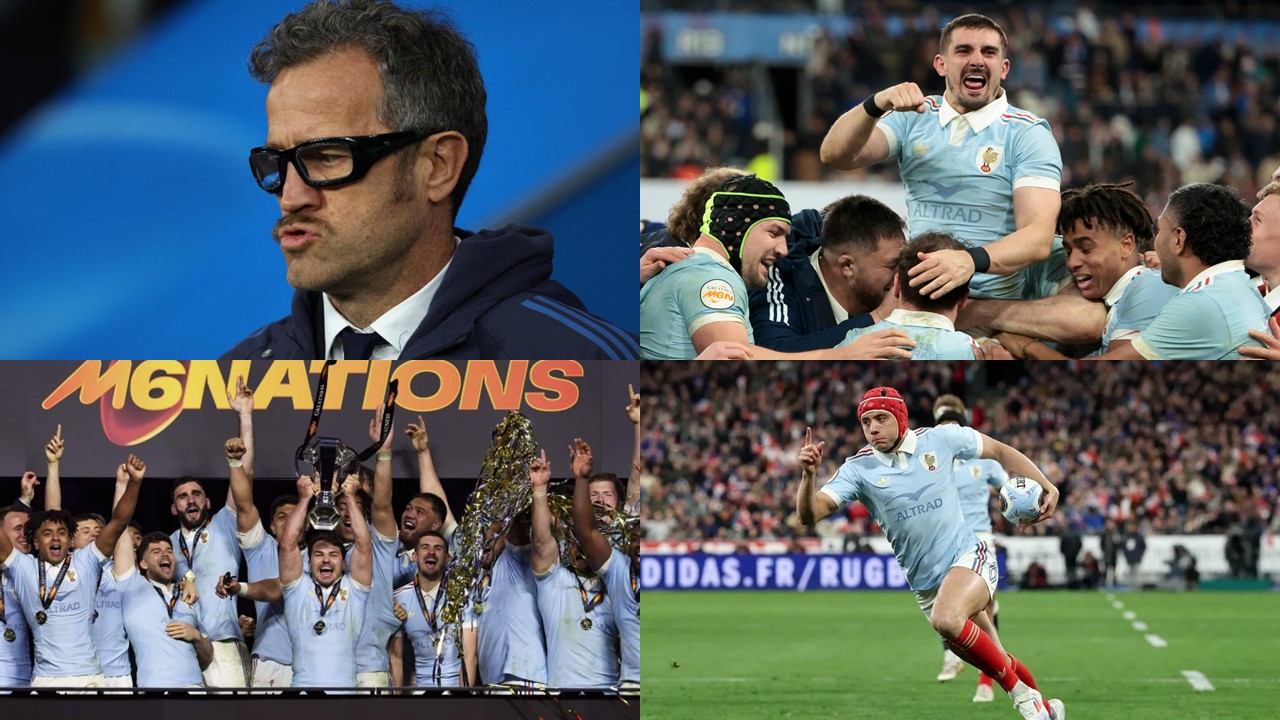
France were simply breathtaking to watch at times this Six Nations, so why only an eight, we hear you ask? From that opening demolition of Ireland in Paris to the final weekend and that helter-skelter performance against England, France kept us on the edge of our seats for 5 spell binding weekends. However, it wasn’t without its flaws, and you sensed a creeping fatigue setting in by the time of Round 4 and France’s trip to Murrayfield. This year’s tournament format, which also saw only one weekend break in five weeks of competition, can also bear some responsibility, in our view, for France’s slight dip in form at the end. You simply cannot play the kind of rugby that France does at breakneck speed week in week out, especially when many of your players have been doing the same every weekend in the TOP 14. It’s something France will need to address ahead of the World Cup.
Consequently, the banana skin served up to France by Scotland at Murrayfield didn’t quite come as the surprise many portrayed it to be. What shocked us all was the extent to which France skidded into touch on said peel. If you had asked anyone before the game whether they thought Scotland would put 50 points on France, you would have been politely laughed out of whatever establishment in which you were asking the question. Where was France’s resolute defence, and the same query was raised again a week later in the final game against England, where the Men in White almost managed to put another 50 points on the hosts and eventual Champions in Paris? Admittedly, France returned the favour against England, leaving it to a penalty kick at the death to seal the silverware, but despite their brilliance, there were some serious imperfections. Against Scotland, not only was their defence uncharacteristically porous, but their execution and organization were almost laughable until the final quarter. We always felt that a seriously wounded England would be a problem on the final weekend, especially in a match that has so much history, pride and rivalry attached to it. What we got was a game for the ages, with the scoreline changing hands every five minutes.
Ultimately, France found the nerve to seal a win and with it the Championship. It was the ultimate pressure Test and one which will serve them well next year in Australia, even if we doubt they will want to run things that close again. As for the team itself, winger extraordinaire Louis Bielle-Biarrey was the star of the competition and ran in almost two tries a game and assisted countless others. His exploits earned him Player of the Tournament for the second year in a row. Fullback Thomas Ramos and his laser-guided boot and completely unflappable nature under pressure are perhaps France’s greatest weapons. Meanwhile, Matthieu Jalibert at halfback appears to have buried his differences with French Coach Fabien Galthie and is surely Les Bleus’ number-one starter in the 10 jersey. However, the blooding of new players last year in the controversial Tour to New Zealand by a supposedly under-strength French side has paid huge dividends. So many of those players are now forming the backbone of a young, dynamic, and increasingly accomplished French side.
One thing that did strike us about France’s campaign this year is that, although he is still an extraordinary player, scrum-half Antoine Dupont is perhaps not quite the force he once was. Perhaps it’s just that the players around him have grown in stature and ability. However, we’d argue that, while still an integral and vital part of the team’s spine, he is perhaps no longer the fabric and central focus of what France builds their game plan around, and, in our humble opinion, heading into a World Cup, that’s no bad thing. In short, it makes for a more cohesive and complete team, something which France are shaping up to be with plenty of interchangeable depth at their disposal. For all those countries eyeing the World Cup in Australia next year, you have been warned!
Ireland finally embrace change and are definitely no longer a side in decline! – 7.5/10
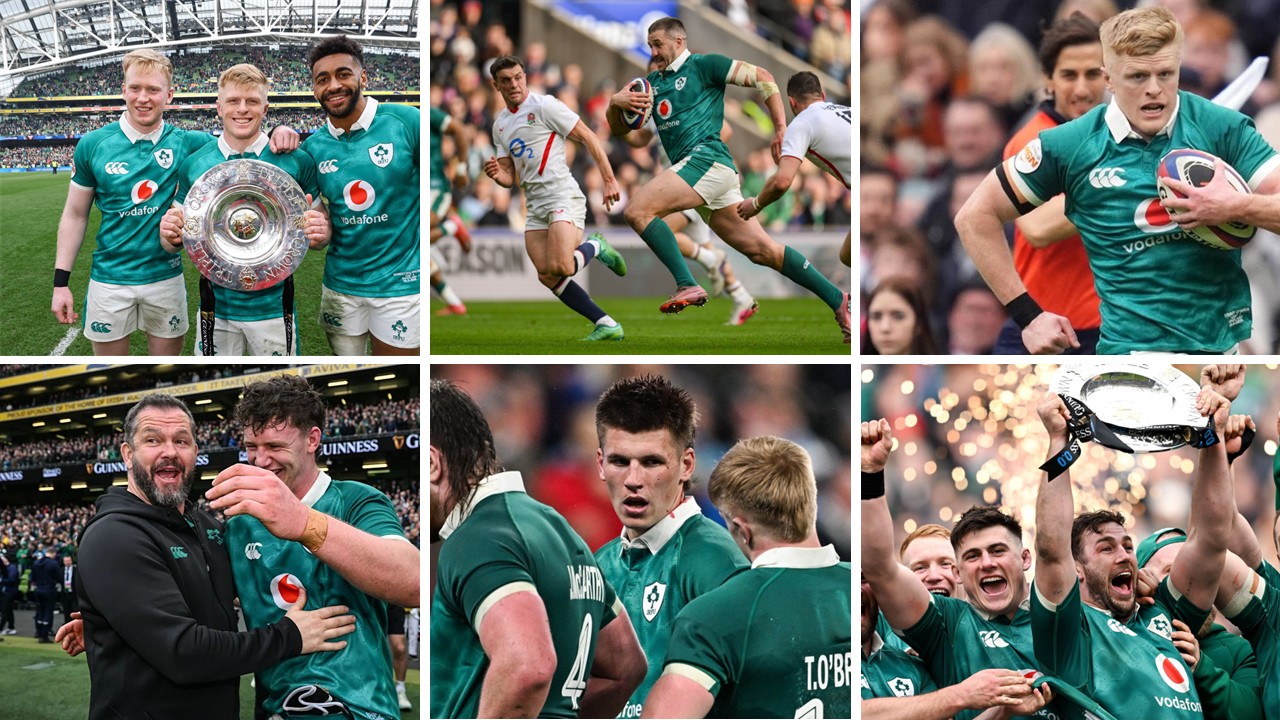
If you have been reading this blog regularly over the last year, you will recall us saying repeatedly that we’d much rather see Ireland finish lower in the Six Nations standings, but in the process, bring in new talent and learn about their depth. For us, results were less important than experience and process. Consequently, imagine our utter delight to not only see Ireland start to think outside the box in terms of selection and reward players based on form and blood new talent this Six Nations. When you can do that, and as icing on the cake, bag a Triple Crown to go with it and finish a strong second and almost actually win the damn thing if it wasn’t for a certain French fullback who never misses, then even better.
So hang on, we hear you say. You lot all seem pretty chipper about Ireland, so why only a 7.5? Well, Ireland showed us what they could do most notably against England and Scotland, but at times looked decidedly unsure of themselves, and it was evident that new players and processes were taking a while to bed in. Furthermore, it was only the embarrassment of that inept and lacklustre performance against France in the opener that seemingly forced Ireland into such long overdue changes. To be honest, there was quite a bit of unpleasantness after that game, especially directed at some of the players involved, which we were slightly appalled at. Poor Sam Prendergast at fly half seemed to be the real target, and as a result, we were relieved to see Coach Andy Farrell take the young man out of the spotlight for the rest of the tournament. As we’ve said all along, he is a fine player, he’s just not where he needs to be for Test level rugby at this stage in his fledgling career.
Consequently, the changes were wrought, and some players really came to the fore. It was a nervy and uncomfortable outing against Italy, which looked decidedly laboured at times. Ireland ultimately won comfortably, but for much of the match, we couldn’t help but get the feeling that an upset was on the cards. Then there was that trip to Twickenham and an utter demolition job on England. Even if you weren’t an Irish supporter, we reckon you’d be hard pressed to deny you had a rather jolly time that Saturday afternoon – we certainly did. The image of the utterly magnificent Stuart McCloskey running down a startled Marcus Smith like a deer in the highlights, wearing a giant grin throughout the whole process, will keep us smiling for many months to come. It was just a fun game to watch (well, unless you were an England supporter that is – though even quite a few of them seemed to quite enjoy it regardless of the scoreline) and Ireland were back to their very best.
On that note, although hardly a youngster and sadly probably with only next year’s World Cup left in him, how good was Ulster’s Stuart McCloskey this tournament? We are definitely not alone in rating him as the top centre of the competition. He was clearly the missing link that Ireland has been without at centre for quite some time now. Possessing incredible speed and brute force strength allied to a silky pair of hands, McCloskey is someone Ireland’s opponents over the next 18 months will be desperately figuring out how to contain.
Of the new blood, though, there was plenty to get excited about. Tommy O’Brien lived up to all the hype we’ve been giving him over the last year on the wing, and with each outing, he simply got better so that by the time he got to the final game against Scotland, his place in Ireland’s lineup going forward should be written in stone. Jamie Osborne was outstanding at full back and negated the loss of Hugo Keenan to injury. Meanwhile, another Ulsterman, Robert Balacoune, stamped his authority on the right wing.
All the traditional stalwarts, such as utility forward Tadgh Beirne, scrum half Jamison Gibson-Park, flankers Josh van der Flier and Jack Conan, stood up and were counted, while Jack Crowley, for the most part, has made the ten jersey his at long last going forward. Perhaps most important of all, the leadership qualities and skill set of back-rower and Captain Caelan Doris came to the fore when it was needed most.
All of a sudden, Ireland has gone from being down and out to a side reborn. There is no denying that Andy Farrell, once he’s sat down, thought through his selection processes, and committed to them, is the right man to get the most out of his charges, young and old, experienced and inexperienced. As a team-building Coach who knows how to build unity, strength, and a common purpose, there are few better motivators. There are still a myriad of issues for Ireland to work through before they can be considered contenders next year in Australia, perhaps most notably in the scrum. Still, there is every reason to believe that after this Six Nations, Ireland is on an upward rather than a downward trajectory once more.
Oh, Scotland, so close, so entertaining, so skilled, but sadly still so far away! – 7/10
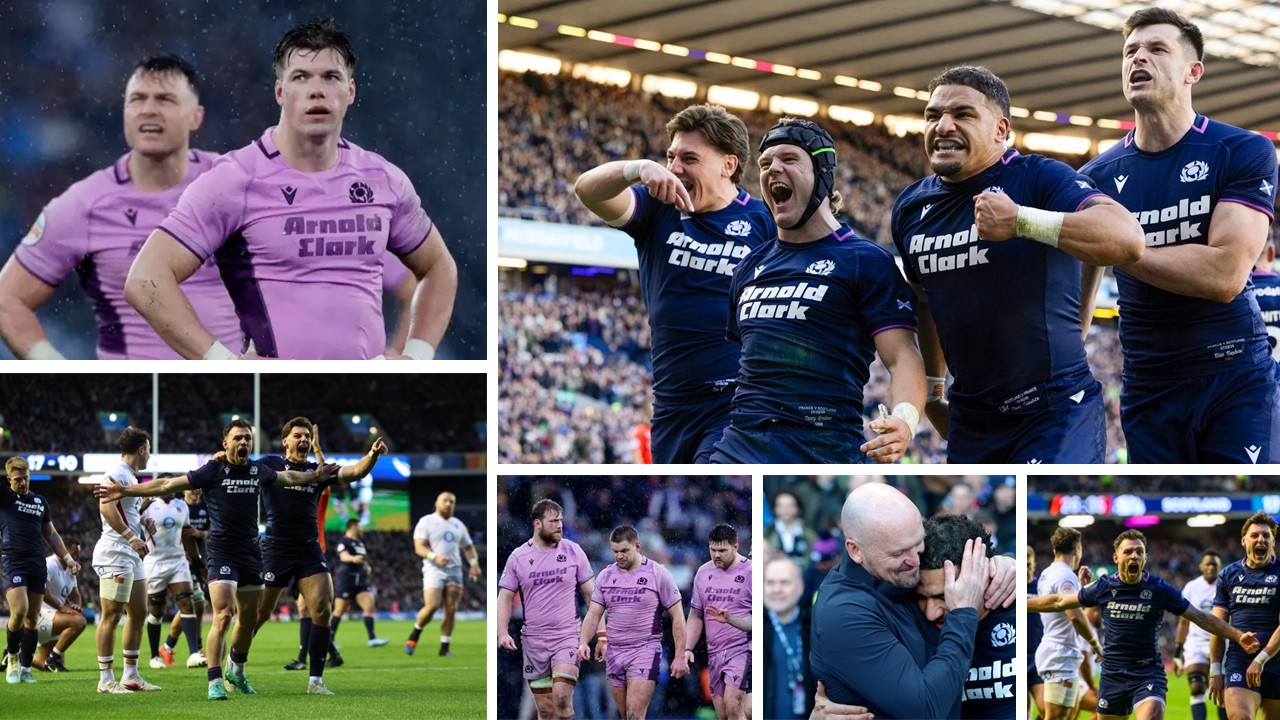
Let’s be positive here. Scotland, perhaps more than any other Six Nations in recent memory, was genuinely in the hunt this year, right up until the final weekend. There was a little more consistency in getting results week in, week out. In recent editions of the tournament, they’ve tended to be brilliant one week and a shambles the next. This year, it was more of a case of fantastic one week and laboured the next. They still managed to get results, though, even if the execution wasn’t pretty, at least until that final weekend.
To be honest, rating Scotland this year proved exceptionally difficult for us. They essentially had a pretty solid tournament. The opening game in a rain-sodden Rome was not a good start; maybe it was those awful mauve outfits they had to wear. However, in conditions that you would have thought would have traditionally suited the Scots, Italy proved to be the masters. The Italians dominated the high ball in exceptionally tricky conditions, their set piece work was consistently more accurate than the Scots, and they showed a patience and composure that completely eluded Scotland. In short, Scotland just couldn’t seem to get anything right, and it didn’t bode well for the rest of their campaign.
Then it was a date with England at Murrayfield for the Calcutta Cup, a fixture which, for the last few years, has been their specialty. They took apart an England side that hadn’t been beaten in 11 straight games and once again returned the Calcutta Cup to the Murrayfield trophy cabinet where it would seem it clearly belongs these days. Then it was a messy, awkward game against a Welsh side that played to a man as if their lives depended on it. Still, unlike Scottish sides of years gone by, they managed to keep their nerve and show the resolve to get the result against a side that simply refused to lie down and go away. That was followed by that incredible display against France at Murrayfield, in which the Scots put an unheard-of 50 points on the visitors. Admittedly, France were rather off the boil, but Scotland simply didn’t take their foot off the pedal and allow France to turn the heat up. It was a magnificent performance with winger Kyle Steyn making try-scoring sensation Louis Bielle-Biarrey look like a rank amateur at times.
However, the seeds of Scotland’s ultimate demise once more came to the fore in the final fifteen minutes as France finally woke up and came storming back into the match. Fortunately, Scotland mustered enough resolve to hang on and claim a win, albeit by only 10 points. The alarm bells were ringing, though, and Scotland’s traditional issue with literally taking their eye off the ball once they thought the job was done at 45-14 almost came back to haunt them. We’ve often bemoaned Scotland’s lack of killer instinct, and in that final quarter, there still wasn’t enough of it on hand for our liking.
We also felt that, before the tournament, in Scotland’s case, especially given their relative lack of depth, there perhaps isn’t the staying power to last a full five weeks of competition at this level of intensity, especially with this year’s tournament running over a shorter period of time with only one weekend off. That definitely seemed to be the case by the time Scotland arrived in Dublin for their final game. There just wasn’t enough huff and puff left in the tank compared to Ireland, which seemed to have plenty.
In short, we just can’t put our finger on why Scotland is the perennially unfinished machine in terms of staying power and distance. They are a team we hold highly in our estimation and really want to see do well, but who sadly ultimately disappoint. It has once again raised the question of whether it is time for Coach Gregor Townsend to move on, given that he has now been in the role since 2017 and is the longest-serving current International Coach in Test Rugby. However, as anyone who reads this blog knows, we are not in favour of Coach changes a mere 18 months out from a World Cup. So Scotland are stuck with Townsend at least until the end of 2027, regardless, and let’s face it, you can’t be all that bad if you can produce the kind of performances Scotland showed against England and France this year.
Scotland have a tough 18 months ahead of them, with more questions than answers, but we still hold that this is a fabulous team with huge potential if they can just develop consistency – end of broken record!!!
Italy are finally here after years of false starts and everybody couldn’t be happier! – 7/10
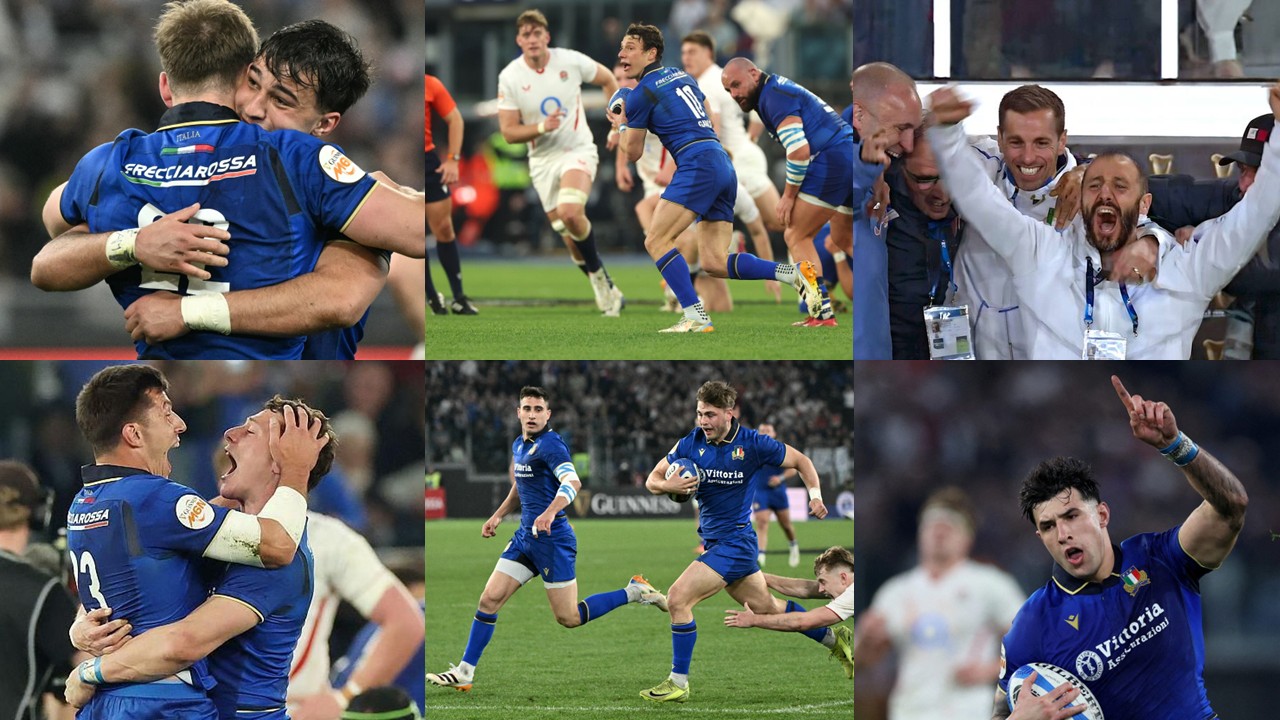
We had a lot of fun watching Italy in this Six Nations, and we have a hunch you did too. Their score of 7 may seem slightly high, given that they only won two games and finished fourth. It may not be fair, but their score is based more on our recognition of sheer effort and how far they’ve come this Six Nations, and on those grounds alone, we think they deserve a high mark. Let’s be brutally honest, for much of their 26-year tenure in the Six Nations, Italy, despite plenty of heart, has had a sad tradition of being the tournament’s whipping boys. Until recently, they were reliable holders of the Wooden Spoon until Wales relieved them of that unpleasant label. The last 18 months under new Coach Gonzalo Quesada have seen a definite uptick in performance, and this year’s fourth-place finish was one of their best ever.
The Azurri party this year all got off to an impressive start in the Stadio Olimpico in Rome, beset by conditions that Noah and his Ark would have felt right at home in. These were not the kind of conditions that Italian rugby tends to thrive in, yet against a much more acclimatized opponent, Scotland, that’s precisely what they did. It was the Italians who were Masters of the monsoon, as opposed to the Scots, who one would have thought would have been more used to such conditions. They dominated the aerial contest and, in contrast to the Scots, who simply couldn’t catch a ball if it was given to them on a plate, made slick passes. Scotland struggled throughout the match with the wet conditions. Italy mastered the wet and were precise and accurate in everything they did. They held their nerve and discipline and were patient. Unlike Italian sides of years gone by, when something simply wasn’t on, they didn’t attempt it. There were no Hail Mary passes in impossible conditions, and they built phases and took the opportunities when they presented themselves, leaving the Scots increasingly panicked, error-strewn and flustered.
After the Roman deluge, Italy put up a brave fight but ultimately couldn’t hold back an Irish outfit in Dublin, which seemed taken aback by the ferocity and ability of Italy’s challenge. That was followed by a trip to Lille, the site of that memorable draw a few years ago that almost saw an Italian win, barring an errant penalty kick at the death. Once again, Italy made life difficult for a French side who initially struggled to get to grips with them.
Italy then returned to Rome and the pièce de résistance of their campaign: their first-ever win over England. Put aside the fact that England have been far from their best this Six Nations and reflect on the fact that while Italy didn’t thrash England, they both contained and managed them for the full eighty minutes and kept a competitive edge over their opponents. It wasn’t the flashiest Italian performance, but it was precise and measured and once again showed a patience that has all too often escaped them in big games like this. At half-time, England had the ascendancy, but in the second half, Italy patiently and clinically worked their way back into the game and secured a historic win. They didn’t panic when down on the scoreboard despite the almost overbearing expectation of a packed Stadio Olimpico. Once again, they held their nerve and played composed, sensible rugby, and even when mistakes were made, they stuck to the plan.
Perhaps our only real disappointment came in Italy’s final game in Cardiff where to be honest Italy seemed to run out of steam and spark and genuinely looked a bit out of puff. Admittedly they were up against an incredibly motivated and committed Welsh side who to a man played like a team possessed. Nevertheless, Italy looked like it was a bridge too far for them and their campaign sadly fizzled out at the final hurdle.
However, all that aside, if Italy can develop the stamina to go the distance, there is absolutely no doubt that this team has both age and skill on their side. What’s more, we can finally talk about depth in Italy’s squad. They genuinely have world-class players, and the Italian set piece is now a strength rather than a liability. The sight of the Italian scrum giving their seasoned Irish counterparts gratuitous flying lessons will be on our highlights reel for years to come. Tommaso Menoncello and Ignacio Brex are one of the best centre pairings in Test rugby right now. Their scrum is a potent weapon; Niccolo Cannone, Andrea Zambonin and Federico Ruzza are exceptionally capable lineout operators. Their back row is powerful and mobile, while their halfback pairings are solid and reliable. Their backs are quick, nimble, outstanding in the air, and excellent opportunists. In short, there is a great deal to like about Italy 2026.0.
Much like their Scottish rivals, fix the endurance and consistency issues and the future for this Italian side looks extremely promising – so much so that we think a Quarter-Final tilt is more than possible for them next year in Australia. In short – watch this space!
How the mighty have fallen, but the nuts and bolts are still there – 5/10
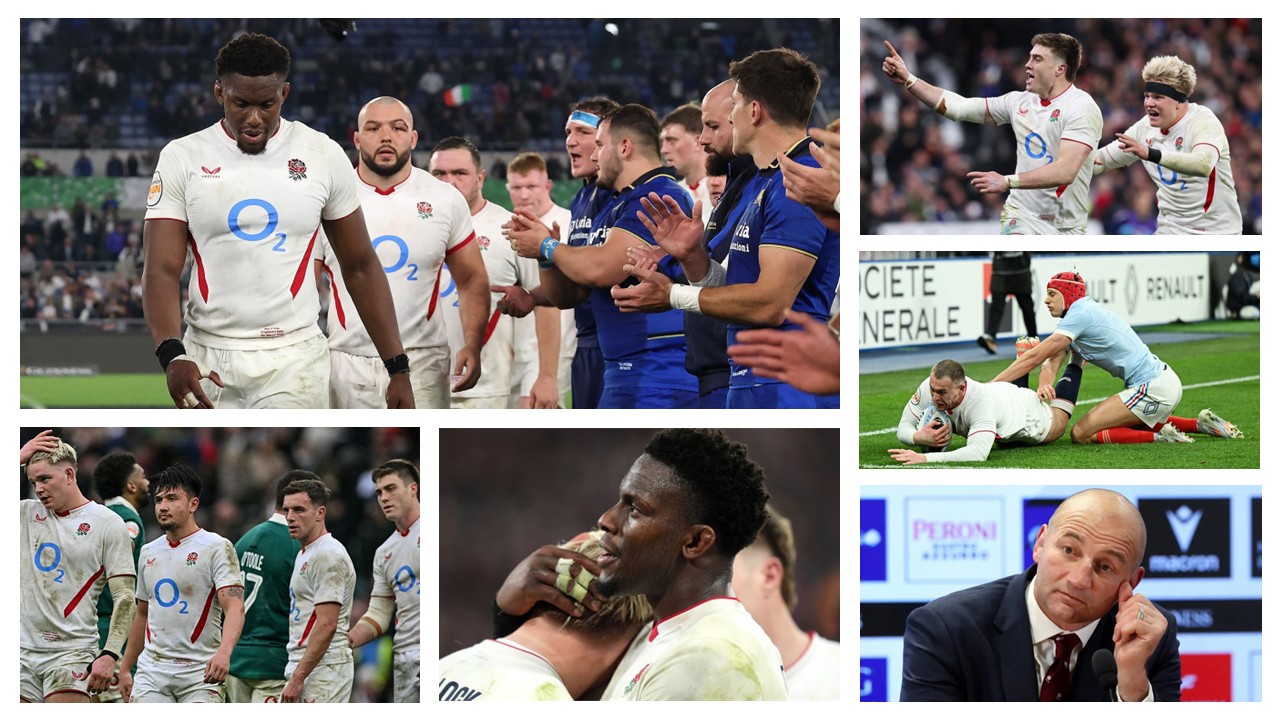
Agreeing on a mark for England produced the hottest debate amongst all of us. Given that the public and the media went after England, and especially Coach Steve Borthwick, with knives drawn this Six Nations, it was hard to reach an objective assessment of England’s performance. Agreed, it left a great deal to be desired, especially given the fact that heading into the tournament, they were tipped as favourites along with France, but found themselves potentially having to duke it out with Wales to avoid the Wooden Spoon. How do you then assess England’s Six Nations objectively? Well, suffice to say this one caused the odd spilled pint and certainly plenty of froth. However, in the end, their saving grace was that final performance against France. If a team can put something like that together away from home and against the eventual Champions, then all is definitely not lost!
England got their campaign off to a fairly comfortable start against Wales, but that was always a given, especially as the Welsh were making their first tentative steps out of the wasteland that has decimated the sport in the Principality for the last two years. There was plenty of grit and determination on display from the Welsh, but England had little difficulty in making their beleaguered opponents do all the hard work. England looked confident and in charge of proceedings.
How different they looked a week later in Edinburgh as Scotland ran rings around them. England’s defence out wide looked beyond porous, and the Scots exploited it to the full, while England’s kicking strategy provided plenty for their opponents to work with. In short, as the game wore on, England looked increasingly bewildered and out of ideas. Furthermore, they seemed incapable of moving away from a game plan that was clearly setting them up to fail.
What was perhaps more alarming was that, a week later, against Ireland at Twickenham, England looked as though they had learnt absolutely nothing from the Murrayfield debacle. Ireland completely dismantled them, and it was the worst English performance we’ve seen since the World Cup. Sadly, the post-mortem on the Ireland game had nothing positive to say about England. England’s defence was a mess, and their set-piece work was a mere shadow of the effort that had seen them win 11 back-to-back games in 2025, while their kicking game showed no ability to adapt whatsoever and, for the most part, was simply wasteful.
From there, things only got worse as a shell-shocked England headed to Italy to face an Azurri side clearly smelling blood and aware of the historic opportunity on offer. England were slightly more inventive than they had been against Scotland and Ireland, but were still outclassed by an Italian side that just looked like they wanted it more. Italy didn’t have its best game, but recovered from its mistakes, unlike England, which seemed increasingly impatient and frustrated. The heads went down, and the fight simply went out of England as we watched a team seemingly impatient for referee Luc Ramos to blow the final whistle and put them out of their misery. Contrast that against, Italy’s growing confidence grew as they began their second-half comeback.
England looked shattered and demoralized after the Italy game, probably not helped by a savaging in the press and social media. Let’s not underestimate for a second the size of the challenge facing them in that final weekend trip to Paris. They had been soundly written off by all and sundry, and cricket scores were being predicted. Consequently, imagine everyone’s surprise as perhaps one of the most remarkable games of the modern Six Nations era unfolded before our eyes. For every score made by France, England would answer right back with one of their own. Going into the half-time break with a three-point lead, this was an English side completely unrecognizable from their past three outings. The same pattern repeated itself in the second half, in a 94-point seesaw battle between the two sides. With time up and England with a slender one-point lead off a converted Tommy Freeman try that appeared to seal the deal at the 78-minute mark, France made one last heroic push and England’s discipline at the end of an exhausting 82 minutes cracked, allowing French fullback Thomas Ramos a shot at goal. The last person you want taking a shot at your posts is Thomas Ramos, and the rest is history.
So yes, it was a poor Six Nations campaign from a side that, on paper, should have done so much better. However, does that mean that a complete wholesale change is needed? Does Steve Borthwick need to be shown the door? Is George Ford suddenly a poor choice fly-half? Is Henry Pollock’s reputation bigger than his abilities, regardless of some of the occasionally irritating aspects of his showmanship? We’d argue that the answers to all these questions are no. Borthwick has got results out of this team leading up to the Six Nations and even a poor campaign ended with a vertiably rejuvenated performance. Furthermore, the Lineout’s broken record of the folly of changing Coaches at this stage in the World Cup cycle is playing loudly as we write. George Ford is a reliable and accomplished player who simply had a poor tournament, and no effort was made to fix the issues that were causing him and England problems. Pollock is a showman, yes, and sometimes we wish he would tone it down a bit, but there is no denying the boy has remarkable talent if managed properly, which will only serve England well. Our advice to England and their supporters is that this Six Nations was probably precisely the kick up the backside that a very talented team that appeared to be resting on its laurels needed. If they can learn the lessons it provided them in spades and move on to the next set of challenges, namely a rather daunting and challenging trip to the World Champions Springboks’ backyard this summer. It’s definitely not the time to man the life rafts as far as we’re concerned.
Wales are back and we never doubted it for a second – 7/10

Yes we can see your raised eyebrows over us giving Wales who are once again this year’s Six Nations Wooden Spoonists an encouraging 7/10. They only won one game we hear you say. However, as the saying goes, sometimes it’s now you win but how you play in defeat. In that sense we’d actually give Wales a score of 10. With each performance in this Six Nations they got better and their heroics and determination at times were off the charts. All of it culminating in them finally getting their first Six Nations win since March 11, 2023 as they beat Italy convincingly in a skilled performance that saw 23 red jerseys bursting with the emotion and pride associated with pulling on the famous jersey.
It was 1,009 days since Wales had last won a Six Nations match when the final whistle blew on March 14th, and they emerged triumphant over their nemesis of recent years, Italy. The lead up to that win was slow and steady but full of purpose. New Coach Steve Tandy has done an impressive job of rebuilding this team and giving an impressive raft of new talent an opportunity to shine and become an integral part of Wales’ fortunes with an eye to the future. Admittedly Wales’ opener against England was not exactly the kind of start to get the pulse racing, as the final score of 48-7 seemed to indicate that Welsh woes were far from over. Their hosting of France a week later didn’t go much better but in both matches there was a huge amount of heart and grit on display even if it didn’t translate into scoreboard success.
Roll on Round 3 and Scotland’s visit to Cardiff, and all of a sudden, all the lights came on. Wales could and should have won that game, but missed it by a mere three points. The Welsh defence, in the face of repeated Scottish assaults, was ferocious, and Steve Tandy’s time as Scotland defence Coach meant that his knowledge of the inner workings of how Scotland plays rugby was invaluable. It was an inspired display that sadly fell just short of the mark, but it was obvious for all to see that Wales were slowly turning a corner. They were playing as a team again, with the youngsters in particular embracing the opportunities being given to them.
Wales’ trip to Ireland in Round 4 was another strong performance and for us produced one of the highlights of the tournament. Prop Rhys Carre’s sensational try left us grinning from ear to ear. We can’t remember the last time we saw the kind of pure joy on the giant prop’s face as he suddenly found himself clear of three Irish defenders and in acres of space. It was one of the best and most fun tries of the tournament. Once again though Wales played with purpose and often made Ireland look slightly out of shape.
Finally, on Super Saturday, against a team that has caused them so much grief over the past few years, Wales turned a corner and got back to winning ways. It was a fantastic showing from the Men in Red. It was organized, and apart from a few issues at scrum time, Wales were clearly the dominant side. It was a glorious display of structured yet free-flowing attacking rugby of the kind that Cardiff is lighting up the URC with at the moment. Wales simply didn’t let a clearly tiring Italian team get organized, and as a result, they ran proceedings from start to finish. Fly-half Dan Edwards finally came of age in the number 10 jersey, Eddie James has been a revelation in the centres, and Alex Mann simply tackled his heart out in the back row. These Welsh young guns are a very exciting prospect. Meanwhile, back-rower Aaron Wainwright was our Welsh player of the tournament, as he often has been in recent years. The man’s work ethic simply has to be seen to be believed, and even in Wales’ darkest days, he has just refused to be cowed. Dewi Lake at Hooker proved to be a tireless and inspirational Captain while Tomos Williams proved consistently why he is Lions material in the scrum half berth.
Like we say, we thought the effort of this Welsh team this tournament was superhuman at times and reflected an unwavering commitment to put Welsh rugby back on the Test Rugby landscape. We’d argue they succeeded in doing so with flying colours. Steve Tandy has got them all singing from the same song sheet, and we’d argue that they have every reason to feel confident about their Rugby Nations campaign this summer, even with the hectic travel schedule and a date with World Champions South Africa in Durban.
The organization of the game in Wales remains a disheartening spectacle of incompetence and mismanagement. Still, in this Six Nations, Steve Tandy and his charges played their hearts out to demonstrate that, despite all the problems Welsh rugby and the famous red jersey still have, they still have a heart that beats proudly and fiercely. Steve Tandy and his team’s to-do list is still several pages long, but we can’t wait to see what they do next!
Well, that’s it for this year’s Six Nations folks. Take our potentially misguided markings as you will, but in our humble opinion, they reflect the results, and we thoroughly enjoyed the debates they generated around a tournament we’ll be remembering for many years to come!
 The Lineout