Lineout Calls of the Week – The Year Ahead – Part 1 – England and France

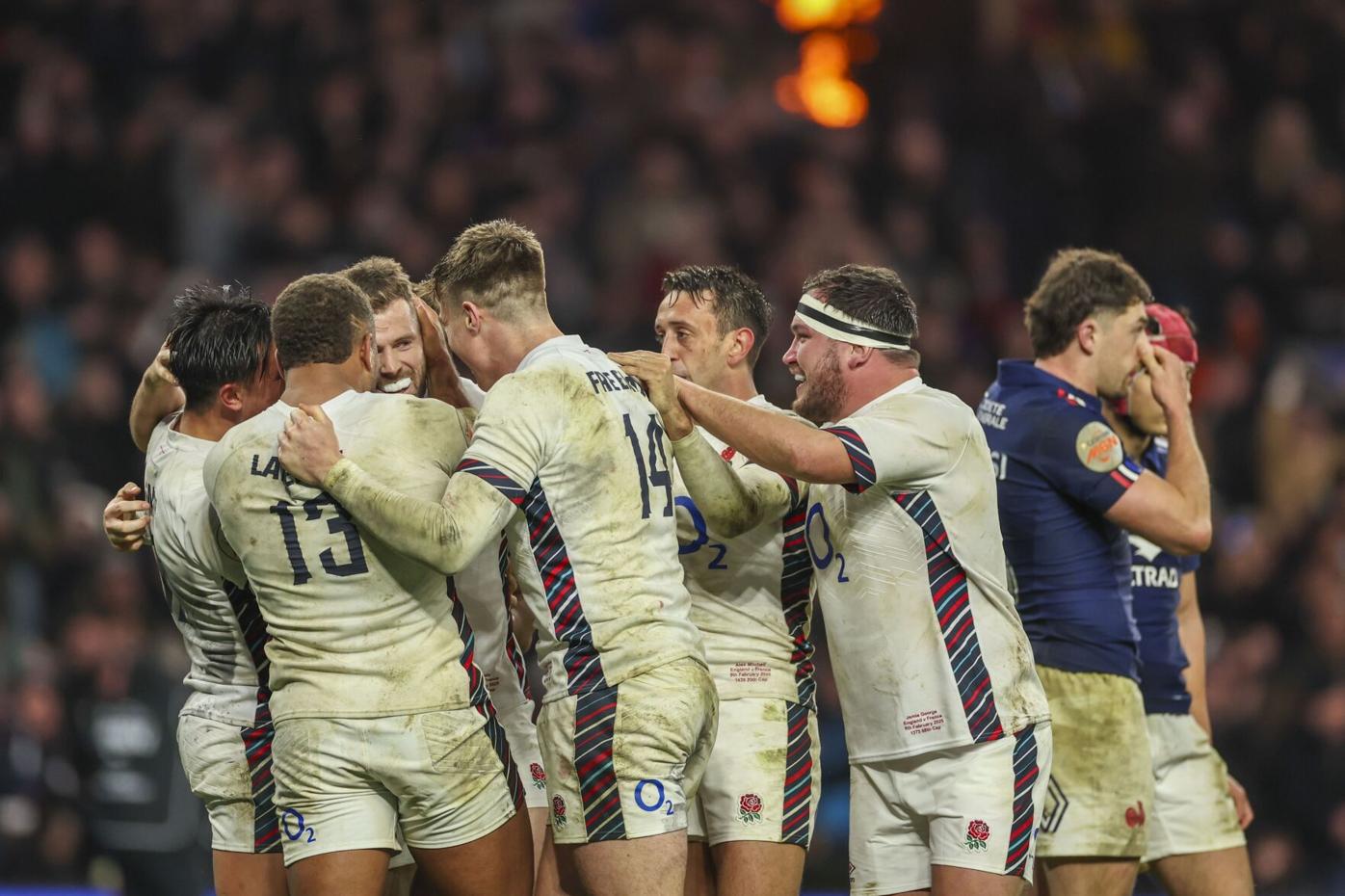
With the Six Nations JUST around the corner, we start 2025 with a look at England and France and what lies in store for them this year.

2024 was a challenging year for England. They put in some good performances make no mistake, but the vast majority of them weren’t convincing and displayed a singular inability to close out big games. England’s 2024 was very much a story of could have/should have/but ultimately didn’t. Of the 12 games they played, they only managed five wins. Their performance last year can be best summed up as downright frustrating for their supporters.

Of their five wins, only two of them were dominant – their away and home games with Japan. While their win over Ireland in the Six Nations was a big scalp, it was only by one point and hung in the balance for the vast majority of the match. Of their three games against New Zealand in their summer tour, two of them could have seen England emerge victorious as England had the lead until the final quarter. In the game against Australia in the Autumn, England had the game won by the 79th minute, only to then lose it in the final 30 seconds. If England can’t fix their seeming inability to close out big games, then 2025 could be an even more painful and frustrating year for them, with the axe likely to fall for Coach Steve Borthwick.

For France, it was a much better year by comparison. A strong second place finish in the Six Nations, followed by a tour of mixed but in general solid fortunes in South America and a clean sweep of their Autumn Nations campaign with a narrow one point win over New Zealand in arguably one of the best games of 2024.

Club Rugby in France is in exceptionally rude health with the TOP 14 seen by many as the world’s finest club competition. Despite French clubs’ budget for a seemingly inexhaustible supply of international talent, it’s French players who consistently make the headlines, week in week out in the competition, providing France with the kind of depth that is the envy of her Northern Hemisphere rivals. France’s U20s team continually produces results with France consistently finishing in the top 2 in the Under 20s World Championship since 2018.

This year sees a challenging program with tough trips to England, Italy, and Ireland in the Six Nations not helped by a troubling injury list. That’s followed by a three Test tour to New Zealand, which has already been under a negative spotlight as France announced that the vast majority of their A-List players will not be making the trip. Nevertheless, watch any TOP 14 or European Champions Cup game featuring a French side, and we have a hunch that New Zealand might need to be careful of what they wish for and could even end up having to eat humble pie this summer.

England need to find that final quarter fix and develop some consistency in both execution and selection

England Coach Steve Borthwick knows the pressure is on as his team simply has to find that finishing formula this year. One of the keys may be cementing the roles of two of his brightest rising stars, playmaker Marcus Smith and all action forward Chandler Cunnigham- South.

2024 was a frustrating year for England, whichever way you cut it. So close yet so far, ultimately from being the team they need to be. They struggled to assert themselves against Italy and Wales despite narrow wins in both games in the opening two games of last year’s Six Nations and managed to fluff their lines for the fourth year in a row against Scotland and with it the Calcutta Cup. A third place finish in the Six Nations saw them put in a strong performance against Ireland to snatch victory from the jaws of defeat in the dying seconds. Their campaign ended on a low note as they were handed an agonisignly close loss in Paris against France as once again they failed to close out a high stakes game and lost the plot with 1 minute left on the clock.

The Six Nations was followed by a trip to Japan where they thumped their former Coach Eddie Jones’ charges 52-17 and a two Test series in New Zealand where in both matches they fell agonisingly short of upending their hosts. New Zealand came to Twickenham in the fall, and once again, England simply couldn’t close out the game – a theme that was to be repeated against Australia and South Africa over the next two weeks. Their only solace being another thrashing of Eddie Jones Japanese charges at the end of the Autumn Nations.

Don’t get us wrong, England are a good team and are blessed with some truly world-class players. Steve Borthwick seems a decent Coach committed to results. However, this ongoing inability to close out big games is concerning given the talent at his disposal. If anything, England seem plagued by the All Blacks’ recent struggles with the final 20 minutes of Test Rugby. New Zealand would appear to have sorted that out, but England still look off the mark. A conservative play style and perhaps not the best decision making when it comes to choosing their starting 15, seems to be hindering England, in conjunction with the fact that they are clearly struggling with how to integrate the world class electric talent of fly half Marcus Smith into a cohesive game plan. In our humble opinion, until England can crack that nut, their struggles will continue. Smith has a remarkable ability to spot opportunities, but the rest of his team seem to be several pages behind on the team playbook sheet, leaving him exposed and without the necessary support. If England can fix that and ally the rest of their considerable talent to Smith’s sense of vision as games unfold, they could be unstoppable.

So, what are England’s prospects this year? You’d have to argue it gets off to an uneasy start with a tough Six Nations opener featuring a trip to Dublin to face back to back champions, Ireland. That’s followed by hosting a red hot France and then a Scottish side, which appears to be a permanent thorn in England’s side. As a result despite the tough trip to Ireland immediately followed by a visit from tournament favourites France, England’s draw improves as the tournament progresses with a run of three back to back home games at Twickenham, and then a final trip on Super Saturday to Wales to take on a Welsh side likely licking plenty of wounds at that stage and with one hand already clutching the Wooden Spoon.

After the Six Nations, it’s most likely Lions duty in Australia for the likes of key players like new England Captain and talismanic second rower Maro Itoje, dynamic back rower Chandler Cunnigham-South and fly half wizard Marcus Smith among others. For those not going to Australia with the Lions, there is a challenging summer Two Test series in Argentina. As yet, we are unsure of England’s Autumn Nations campaign, but if England have a positive Six Nations, then the stay of execution for under pressure Coach Steve Borthwick should be assured.

As for the Six Nations, which will be the ultimate Test of what England has learnt in the last twelve months, we think another third place is in the offing. A lot of it is going to depend on Borthwick’s decision-making around who his fly half is going to be. Go with Marcus Smith allied to an attacking fast paced back row including players like Cunnigham-South, Ben Earls and new sensation Tom Willis and England could seriously cut up the turf against big rivals like Ireland, France and Scotland as well as potentially get some serious momentum early in the tournament.

On that note, although England are still rueing the loss of Jack Willis to French club rugby where he is steadfastly performing miracles week in week out with Toulouse, his younger brother Tom looks set to carry on the family tradition and is already showing exceptionally promising signs for Saracens. If however, Borthwick allies Smith to a more grind and graft forward pack approach then the Harlequins fly half and the rest of his team are likely to be out of sync, and the more conservative play style of a fly half in the mold of George Ford or Finn Smith would be the more appropriate choice.

The other big call in terms of Borthwick’s selection decisions is the choice of second rower and all action man Maro Itoje as the Red Roses Captain this year. There is no denying that England needs a Captain who is likely to stay on the pitch for the full 80 minutes, a role Itoje often performs, as well as his constant energy and enthusiasm in spurring his teammates on at every turnover ball or penalty won by England. Former Captain and Hooker Jamie George, although a noble servant, rarely lasts the full 80 minutes, and it is evident that the change in leadership on the pitch at such crucial junctures is costing England that final 20 minutes. As a motivational speaker on the pitch, England will be hard pressed to beat the highly vocal and animated Itoje.

If England get through this Six Nations with a settled squad that clearly demonstrates a selection policy reflecting the game they want to play and who they are going to build it around, then 2025 could be a rather special year in terms of looking towards a future that has always promised but never materialised. If they chop and change throughout the Six Nations, we fear England may continue to find themselves stuck in a garage filled with high quality components but without the manual on how to assemble them all into a world beating machine, and sadly Steve Borthwick ending up having to start dusting off his resume come the end of the tournament.

France could prove to be one of THE hottest tickets of 2025 with a level of depth that few countries can boast

Despite some injury concerns, French Coach Fabien Galthie is surely feeling more than just a little optimistic about his side’s chances this year. He has a raft of rapidly rising stars at his disposal and more being discovered every week, exemplified by Bordeaux’s electric winger Louis Bielle-Biarrey and Toulose’s spectacular second rower Emmanuel Meafou.

France had a good year last year make no mistake. They still managed to finish second in the Six Nations, despite being without the services of arguably the greatest player on the planet, scrum half Antoine Dupont who was busy preparing for Olympic Sevens duty for his country, and a shaky start to their campaign which saw them lose to Ireland in Marseille in the opening round. Then there was a tense trip to Scotland where they almost came unstuck, followed by a draw with Italy which should have been the Azurri’s game but for an unfortunate wobble of the kicking tee and a rushed kick in the dying seconds of the game in Lille. Then it was a demolition job on Wales in Cardiff, finishing with a nervy win over England in Paris.

Nevertheless, in the process France unearthed a bucket load of rising talent, a challenge which they intensified on a gruelling summer tour of South America which saw them get solid wins over Argentina and Uruguay, but come just short of clinching the series as a Pumas side with a point to prove taught them a few harsh lessons in their final Test which they lost in Buenos Aries.

Then, with their full complement of superstars, they proceeded to annihiliate Japan in the Autumn and get revenge for Argentina getting the better of them that summer. In perhaps one of the best games of the year, they held on to close the game out against New Zealand by a mere point, but it was a masterclass in holding one’s nerve in the face of a determined and dangerous opponent who kept clawing their way back into contention – a trait that has been sadly absent all too often in France’s recent past.

It was a year where phenomenal winger Damian Penaud scored tries simply for fun, while his partner on the other wing Louis Bielle-Biarrey left us speechless at times with his turn of pace and magic feet. Giant second rower Emmanuel Meafou struck fear into every opposition forward pack he encountered and proved almost impossible to bring down, a trait that has made him one of Toulouse’s most valuable assets this season both in Europe and the TOP 14. Whenever one player was unavailable due to either club committments or injury, another simply stepped into his place and picked up where they left off. In short, whatever squad France turned out on any given day, it was hard to find a weakness, even if the names weren’t overly familiar at times.

In short, France seems to be developing a level of depth that is the envy of most of their opponents. There are the tried and trusted veterans and a host of up and coming stars in the making. Head Coach Fabien Galthie must feel that the Rugby Gods have blessed him with a golden horn of riches.

Much talk has been made of their current injury list for the Six Nations, which sees them missing the services of key forwards like back rower Charles Ollivon, but also centres Gael Fickou and Jonathan Danty. Unfortunate, yes, but not exactly the end of the world, given France’s talent pool. Watch any TOP 14 game, and you’ll see that France is blessed with more quality centres than they know what to do with, while the back row has a queue out the front door of potential replacements. Admittedly, experience may be lacking in some cases, but there is still enough of a seasoned spine in this French team to carry them through. There are temporary injury issues affecting superstar winger Damian Penaud and in our opinion one of the world’s most dynamic second rowers at the moment Thibaud Flament, but both players should be available for at least the second half of France’s Six Nations campaign.

It’s our humble opinion that while France may not clinch a Grand Slam this Six Natioins, they are odds on favourites to lift the trophy on March 15th. After that it’s a three Test Tour to New Zealand, with an exciting development squad as Galthie and the French Union have elected to rest the majority of their A-List players much to the chagrin of the New Zealand public. While the Kiwis may be upset, we can’t wait to see France’s “next gen” team in action and feel that New Zealand may well end up having to eat humble pie in at least one of those Tests.

France end their year with dates scheduled for the Autumn Nations series against World Champions South Africa, followed by fixtures with Fiji and finally Australia. If the summer tour goes well and some valuable experience is gained by France’s newbies, and come November their big guns gain revenge for France’s World Cup semi final exit at the hands of the Springboks, then what a year this could be for Galthie and his players – especially if the Six Nations trophy is sitting locked away in Paris by the time his young charges board the long flight to New Zealand at the end of June. If you’re a neutral this year, then we have a hunch you’ll be watching and wearing a lot of blue in 2025!

We’ll be back tomorrow with Ireland and Italy!

Lineout Calls of the Week – International Duty Calls for the URC

While in our previous post we raved on about France’s TOP 14 as probably the premier rugby club competition on the planet, we now turn our attention to our favorite club competition and how players from its various countries are likely to influence the eagerly anticipated Autumn Nations Series. As you know, if you follow this blog, the United Rugby Championship featuring teams from Ireland, South Africa, Scotland, Wales, and Italy keeps our attention week in week out over the long fall and winter months. Its international flavor is producing a consistently high standard of rugby, and there is no doubt that the exposure players get through it is excellent preparation for International Duty.

So, without any further ado, let’s get into how the URC season so far will have a bearing on who is likely to be making the headlines as the International Season in the Northern Hemisphere gets underway.

While Leinster continues to dominate the URC, albeit without any silverware to show for it recently, it’s proving to be a mixed bag for other Irish teams

Leinster’s regular season dominance of the URC sees them heavily represented in Irish Coach Andy Farrell’s Autumn Nations squad Captained by the exceptional Caelan Doris, while the fly half debate rages between Munster’s Jack Crowley and Leinster’s Ciaran Frawley. Meanwhile, is a forgotten hero in the shape of Ulster’s Jacob Stockdale likely to be back to his best again against New Zealand?

Leinster, the superstars of the modern-day URC, are a conundrum. Week in week out, they put on thrilling displays with a player base that consistently makes up the bulk of any Ireland squad. However, for the last three seasons, they have singularly failed to reach the finals and hoist what is an increasingly cherished piece of silverware in rugby circles. The quality of their squad is not in doubt, and when seamlessly blended into the national side results do come their way, albeit not the most cherished one of all, life beyond the Quarter Finals at a World Cup.

Nevertheless, Ireland head into this Autumn Nations Campaign as the number one side in the World and with it a huge target on their back. Their rivals for this prestigous number, South Africa, will not get a chance to spar with the Men from the Emerald Isle this fall, but Ireland did manage to deny South Africa a series win when on their summer tour to the Springboks homeland, ending it with 1 apiece. Ireland will be looking instead for revenge against New Zealand this November, who last year handed them yet another Quarter Final exit at the World Cup. Clashes between these two sides have now become the stuff of legends, and Ireland have become a genuine problem team for the All Blacks, particularly when the Irish are on home soil. Consequently, this will be the game Ireland will want to win the most.

That’s not to say that the rest of the month is without its challenges. For us, the real wild card is that game against Argentina, immediately following the All Blacks game. If getting one over New Zealand seriously depletes Ireland’s resources given an already troubling injury list, Argentina if they have one of their “on” days could catch Ireland unawares, much as the Pumas did against South Africa and New Zealand this year. Even that final game of their Autumn campaign against a slowly improving Australian outfit, with their former Coach Joe Schmidt and his intimate knowledge of Irish rugby running the Wallabies game plan, could become a problem for Ireland if the medics have been busy throughout the month.

We’ve always felt that Ireland have lacked a leader with the stature of the mighty Paul O’Connell, but in Leinster’s Caelan Doris, we have a hunch they are rediscovering it. Johnny Sexton and Peter O’Mahony have been fine leaders of men able to galvanize that Irish fighting spirit, but all too often the red mist got in the way of objective leadership in the heat of battle, something that Doris seems to manage exceptionally well. He’s no pushover, and his charges rally to him in a heartbeat but he knows when to play the nuances of the ebb and flow of a game and how to manage the officials – a trait we always felt O’Connell was particularly gifted with.

Leinster, as always, are heavily represented in the forward pack, but there are the usual Munster suspects there as well. Munsterman Tadgh Beirne is always a natural choice for Andy Farrell and even if his form at club at present is not quite at his normal barnstorming best, he invariably transforms into a loose forward from hell popping up ALL over the park once he dons the green jersey. His club teammate and epitome of the Irish fighting spirit, Peter O’Mahony, also finds himself in the mix once more, despite rumors of retirement. However, for us, it’s the Ulster contingent of new cap Cormac Izuchukwu, Nick Timoney, and Tom O’Toole that we’re most excited to see in action. These three have been a large part of Ulster’s steady grind in the URC, which still sees them holding onto 7th on the log. Meanwhile, Cian Prendergast and U20s legend, along with Dave Heffernan and Finlay Bealham, bring some reliability in the forward battles that have put Connacht fifth on the URC log.

In the backs, though, all the talk will be centered around the debate as to who should ultimately be developed to fill the boots of legendary fly half Johnny Sexton. Will it be current incumbent Jack Crowley from Munster, or Leinster’s Ciaran Frawley, whose pedigree is growing with every outing and which helped Ireland draw the series with South Africa this summer at the death. However, for us, it’s the return to form of Ulster winger Jacob Stockdale that’s proving to be the most exciting for us. Remember his exploits in that first epic win over the Men in Black in Dublin in 2018, which cemented the current rivalry between the two sides which kicked off in Chicago in 2016. The man has some genuine gas and extraordinary athleticism, now allied to some improved defensive skills. Leinster’s Hugo Keenan, who is almost impossible to tackle on a good day, also returns to the fullback role after Olympic Sevens’ duty and is already making his presence felt on the URC circuit. Connacht’s Mack Hansen also returns from injury, and we all know what the maverick winger can do given a hint of space.

Ireland have the potential to have it all their own way this Autumn, but a growing injury list could scuttle their plans and New Zealand, Argentina and even Australia know that at times the medics and consistency can be Ireland’s greatest Achilles Heel. Also the Fiji game should be a chance for some of the younger Irish guns who have made such an impression at the under 20s level to get their names under the lights on the big stage at the Avivia. Either way, these have the potential to be some of the best games of the series.

Defending URC Champions Glasgow continue to look the real deal, but can Scotland’s two teams in the competition produce enough depth for a challenging run of fixtures this November?

Glasgow has become a remarkable team. World class, in their own right, they have heavily influenced Scottish Coach Gregor Townsend’s selection decisions with stellar players like Rory Darge and Sione Tuipolotu getting the Captain’s armband. Bolstered by the likes of Edinburgh’s Duhan van der Merwe, they like everyone else this November will see their clash with World Champions South Africa as their biggest challenge.

Scottish teams, both at URC level and Internationally, now have a reputation of consistently punching above their weight. Scotland has a mere two teams in the URC, Glasgow and Edinburgh, with the former being defending Champions. While there are a host of players plying their trade in the English Premiership and a sprinkling in France’s TOP 14, Scotland despite its relatively small player base has an exciting group of players to call upon for International duty.

Glasgow Warriors, who are defending URC champions and currently sit a comfortable second on the log, are providing Scottish Coach Gregor Townsend with the bulk of his Autumn Nations squad. Glasgow are just back from a tour to South Africa, which saw them lose narrowly to South Africa’s “super” team the Sharks and claim a solid win against the Stormers. Consequently, they will be primed and ready to go for the game they no doubt want to win the most this autumn, that fixture against the Springboks on November 10th. Their ever impressive Vice Captain and Glasgow loose forward Rory Darge has shown that Glasgow’s forward pack can compete with South Africa’s best. While Edinburgh are not having a dream start to their season, they still add value to any Scottish selection and are well represented in Townsend’s picks, and not just to make up the numbers.

In the backs, Glasgow have been a revelation this season, and as a result, their own Sione Tuipolotu is given the Scotland Captaincy this Autumn. In addition to his raft of dynamic Glasgow speedsters he’ll be ably assisted by Edinburgh’s try scoring sensation and South African import Duhan van der Merwe, and Toulouse’s Blair Kinghorn who has found life in France a revelation. Bath’s Finn Russell will be weaving his magic in the ten jersey and assisting Tuipolotu as the other vice Captain, while the scrum half berth looks set to be hotly contested between Toulon’s Ben White, Glasgow’s George Horne and Edinburgh’s Ali Price.

Scotland are an exceptionally exciting side who, on their day are capable of beating anyone. Consequently, as a benchmark for their progress ahead of what should be a hotly contested Six Nations next February, they are likely to be setting the South African game as their ultimate prize. Fiji should be a good measure of the less experienced squad members, while Australia should be a real chance to blend the young and the old, especially if things go well against South Africa. We regard Scotland as the Northern equivalent of the Flying Fijians, so you won’t want to miss any of their four games this Autumn.

South African teams have had a massive impact on improving the quality of the URC, and their exposure to it has meant that the Springboks arrive for November’s fixture list with an intimate knowledge of many of their opponents. Everyone in the URC is already painfully aware of the fact that it’s dangerous to swim with Sharks

The Sharks’ Springbok heavy super side featuring the likes of Siya Kolisi, Eben Etzebeth, Aphelele Fassi and Lukanyo Am among others is already starting to wreak havoc in the URC, but the Bulls are also making a hefty contribution to Springbok Coach Rassie Erasmus’ November plans.

Despite the initial scepticism voiced by some over the introduction of the four South African franchises, the Bulls, Lions, Stormers and Sharks into the URC a few years ago, there is little doubt that it’s been a huge success and transformed the competition into one of the most exciting brands out there in club rugby. We are sympathetic to some of the logistical concerns involved, but so far, that seems to have been managed relatively effectively. Players and fans seem to be thoroughly enjoying an experiment that has become a runaway success.

What we’ve found fascinating this season is that while the Sharks and their heavyweight contingent of Springboks, are graudally clawing their way up the URC ladder at a rate of knots and we have a strong hunch we’ll be seeing them in the final, the lesser known Lions have been THE surprise package of the competition so far. The Men from Johannesburg sit fourth on the log at the moment and have a raft of superstars in the making. Meanwhile, the Bulls, long a powerhouse of Super Rugby, sit third. The only South African team genuinely struggling to make a dent in the competition are ironically the one team who has one the title, Cape Town’s Stormers.

Despite the runaway success and sheer entertainment value of the Lions, we were very surprised to see none of them make it into Coach Rassie Erasmus’ selection lists. It’s our opinion that at this stage in South Africa’s World Cup cycle that is a mistake, but then the Springbok Coaching Maestro, is rarely wrong in his calls so whether you agree or not you have to give him the benefit of the doubt. Keep your chins up Lions supporters, you’ll be seeing your boys sooner or later in the Green and Gold.

Erasmus is clearly looking for a clean sweep this Autumn Nations series to knock Ireland off their number one perch in the World Rankings. As a result he is leaving little to chance, and for his forward pack is drawing heavily on his tried and trusted Sharks Springbok contingent, the emerging stars from the Bulls and a host of players plying their trade predominantly in Japan but also a sprinkling from Europe. All the Sharks heavyweights are there Siya Kolisi, Bongi Mbonambi, Vincent Koch, Eben Etzebeth, Ox Nche, but so is the Japanese gang of Pieter Steph du Toit, Kwagga Smith, Malcolm Marx, Franco Mostert and Jaspar Wiese. However, of note are the Bulls relative newcomers who are playing an increasingly dominant role in the Springboks ever present physicality such as second rower Ruan Nortje, prop Gerhard Steenkamp and back rower Marco van Staden. This is a unit that is going to leave plenty of dents on the pitches at Murrayfield, Twickenham, and Cardiff next month.

In the backs, it’s no surprise to see the Sharks once more making up the bulk of Rassie’s picks. We’re delighted to see a player who we tipped for big things a few years ago, finally coming into his own. The Sharks fullback Aphelele Fassi is speed personified, but now also has some superb game management and a clever kicking game to add to his bow. The other Sharks who are increasingly grabbing the headlines for us are scrum half Grant Williams and his partner in the nine jersey at the Shark Tank Jaden Hendrikse, both of whom also possess remarkably accurate and handy boots, particularly if fly half Manie Libbok is having one of his nightmare days off the kicking tee. On the fly half question, Erasmus has loaded his options with the Stormers brilliant playmaker but unreliable goal kicker Manie Libbok. Leicester Tigers Iceman Handre Pollard is naturally in the squad for those big games and is likely to take center stage in the ten jersey for the game South Africa will want to win the most against England. Also, look out for the Bulls duo out wide of Canan Moodie and Kurt Lee Arendse, along with Japan based legend Cheslin Kolbe. All three of them are finally being integrated into an exciting free-flowing Springbok game plan that is allowed to exercise its remarkable talent off the back of South Africa’s traditional physical dominance up front.

This is a VERY exciting Springbok unit that is destined to cause some genuine heartache in the pubs around Murrayfield, Twickenham, and the Principality Stadium this Autumn. They no doubt will set their sights on rubbing England’s nose in the turf yet again at Twickenham on November 16th as their most important game, but a clean sweep across the board, will be key if they are to settle their score with Ireland in the World Rankings after the summer, even though the two are not meeting this month. Their opponents have been warned, and it may be time to find some shark repellent!

After a few years in the doldrums, this URC season is showing some genuine hope for Welsh rugby, which will be a delight to beleaugered Welsh Coach Warren Gatland

The Scarlets baby faced warrior Sam Costelow has been Welsh Coach Warren Gatland’s hope for the future in the fly half role but Cardiff’s Ben Thomas is pushing him hard, while traditional Welsh bruisers Aaron Wainwright of the Dragons and Jac Morgan of the Ospreys are set to be the grunt of a Welsh pack showing signs of a renaissance

It would probably still be a stretch to say that Welsh rugby is in a happy place, but based on this URC season, there may well be reasons to be cautiously optimistic about this Autumn Nations series. Albeit it’s early days in the season, but there are two Welsh teams in the top eight spots on the log. Scarlets sit sixth, and Cardiff currently occupies the eigth spot. Even traditional no hopers, the Dragons have a game in hand and, at times, have looked genuinely competitive. The Ospreys despite some genuine talent in their ranks and the fact that in every other season they have tended to be the dominant Welsh side, appear to be struggling but Welsh Coach Warren Gatland knows that once they pull on the red jersey their club form becomes irrelevant.

As a result, it’s a healthy spread across the four Welsh URC teams in terms of Gatland’s selections, with some notable additions from the English Premiership. The Dragons Aaron Wainwright and Ospreys Jac Morgan become men possessed once they pull on a Welsh jersey, and the same can be said of Leicester Tigers “Turnover” Tommy Reffell. However, it’s Exeter Chiefs’ second rower Christ Tshiunza, who we find we’re constantly looking for in the Welsh starting 15 on matchday. The Congolese born lock has a manic physicality to him that reminds us of New Zealand’s Ardie Savea and his whirling dervish antics on a rugby field. In short, it’s an exciting package.

In the backs, a player we are genuinely excited to see in action is a newcomer from Gloucester Max Llewellyn. The increasingly impressive center tackles like a demon and already has five tries to his name in the English Premiership for his Gloucester club. We’re already huge fans of Cardiff fullback Cameron Winnett, whose appearances have shown a maturity and ability well beyond his 21 years.

However, perhaps the biggest question on everyone’s lips in Wales is the future of fly half Sam Costelow. Although he looks as though he’s just come out of primary school, it’s clear to see why Welsh Coach Warren Gatland feels he is the future of the 10 jersey in Wales. It’s just that the consistency isn’t there sometimes, especially under pressure. As a result, Cardiff’s Ben Thomas is rapidly stealing his limelight. The Cardiff Blues playmaker is also highly effective in the centre channels, so if Costelow can make a positive impression this Autumn then in theory the 10 jersey is safe in his hands and Thomas’ considerable abilities can be used elsewhere on the pitch. Waiting in the wings if all else fails is Gloucester’s Gareth Anscombe, who has had an equally chequered time of it in the Welsh number 10 jersey.

Wales, given their own lack of confidence, will see the game against an equally unsure Australia as their biggest prize this fall and just retribution for the misfortunes they suffered in a Land Down Under this summer. Do well here and emerge with a solid win, and their date a week later with powerhouse World Champions South Africa may be less of a humiliation. Time will tell for a side very much in the process of rebuilding, but Wales’ efforts next month may be some of the most interesting to watch in terms of a team’s development at this stage of the World Cup cycle.

Italian Rugby is showing signs of finally coming of age with some players benefitting from the frenetic pace of France’s TOP 14 while Benetton continue to get better with every year in the URC

Toulouse’s Ange Capuozzo is one of THE most exciting wingers in club rugby right now, while Benetton’s new boy Manuel Zuliani is adding some real cut and thrust to an already impressive forward pack. Benetton’s Tommaso Menoncello is arguably one of Europe’s most damaging centres and could make some serious inroads against Argentina in the game Italy are most likely targetting as their benchmark of this Autumn campaign.

Yes, you guessed we can’t wait to tune into the Ange Capuozzo show over the coming weeks. The Toulouse try machine is rapidly becoming an International sensation, and although he looks like at times you can snap him in two with just a wind gust, the youngster is not shy of the physical side of the game, and has put in some try saving tackles that his brother in stature, South Africa’s Cheslin Kolbe would be proud of.

However, enough of our fan boy adulation of Capuozzo, justified as it is. Italy are finally starting to look like a side genuinely emerging from their unfair tag of the last twenty years, of simply being a side there to make up the numbers. Their best Six Nations ever this year has translated into a continued strong showing in the URC by Benetton, even if as they head into the Autumn International break, they remain outside the top 8. Nevertheless, they have put in some strong performances, including a win over the Sharks and a narrow loss to the Bulls last weekend. Even traditional whipping boys Zebre Parma, while although sitting bottom of the URC table managed to pull off the upset of the season by beating Irish giants Munster and almost got a win against emerging South African super side the Lions two weeks ago. The promise that Italian rugby has always held is slowly starting to awaken at long last. Under the guidance of new Coach Gonzalo Quesada, Italy are set to have the most positive buildup to a World Cup they’ve had in years.

It’s also worth pointing out that Italian players are gaining increasing interest from overseas clubs, and that is reflected in Gonzalo’s forward selections for November. Exeter’s loose forward Ross Vintcent is making serious waves in the English Premiership and caught the eye in Italy’s summer tour of the South Pacific and Japan. Dino Lamb impresses week in week out for Harlequins, and Hooker Gianmarco Lucchesi is often in Toulon highlight reels, while Marco Riccioni is becoming a consistent feature of the Saracens front row. However, Benetton, as usual, takes the lions share of votes, with the Cannone brothers, Michele Lamaro, and for us, one of Italy’s best players, the irrepressible and exceptionally dynamic second rower Federico Ruzza. We’re also really looking forward to seeing relative newcomer loose forward and U20s superstar Manuel Zuliani really come into his own this Autumn at the International level in the same manner which he is doing so at his club Benetton. He is the club’s most prolific turnover master and is likely to be a genuine problem for opposition defenses.

In the backs, once again, it’s no surprise that Benetton once more dominate the lists, but there’s also a healthy sprinkling of overseas based players, most notably the outstanding Ange Capuozzo from Toulouse. Opposite him on the other wing expect to see a lot of Lyon based winger Monty Ioane. The scrum half contest will be equally tasty with fly half and Toulon based Paolo Garbisi’s brother Alessandro being Quesada’s preferred staring nine, but Lyon’s Martin Page-Relo is making everyone sit up and take notice of his role in the nine jersey. For us, though, one of the most exciting things in Italian rugby right now is the Benetton center pairing of Juan Ignacio Brex and arguably Italy’s player of the year Tommaso Menoncello. Menoncello is superb at breaking up opposition defenses and allied to the equally destructive Brex gives Italy huge traction in both attack and defense in the center channels. Menoncello also has a blistering turn of speed, making him very hard to bring down once he’s built up a head of steam. Allied to Capuozzo, Ioane and Benetton’s electric Louis Lynagh (son of famous Wallaby Michael Lynagh) out wide, Menoncello could end up being a genuine handful for Argentina, which is likely to be the game they are targetting the most this November.

This is a VERY respectable Italian side and one that shows great promise for the future. They will definitely fancy their chances against a strong but wildly inconsistent Pumas side, and as a result, this is likely to be their biggest game of the Autumn series. Should they emerge victorious from that match and find themselves facing an All Black side that is at the end of a 2024 season they would rather forget, could this be the biggest Autumn Nations series in Italian history? We can’t wait to find out, but either way, Italy will want a strong campaign to prove that their dramatically improved Six Nations performance this year was no flash in the pan. Oh and while you’re at it Italy please make sure that Ange Capuozzo gets to see plenty of ball!

Lineout Calls of the Week – England and France’s Domestic Muscle to be put to the Test

As one of our favorite times of the year kicks off this weekend, the Autumn Nations, we look ahead to what should be a cracking series. In the first of two instalments, we look at the fortunes of England and France in relation to the progress of their two domestic competitions, the Premiership and the TOP 14 so far this season.

England will be looking to show New Zealand, who’s boss at Twickenham, but will ultimately want to knock World Champions South Africa off their Perch

After giving New Zealand serious food for thought this summer, England will want to show that Twickenham has the same aura for them as Eden Park does for the All Blacks. However, it’s that big Test against a seemingly unstoppable Springbok side two weeks later that will really tell England how far they’ve come since the World Cup. Expect Saracens Ben Earl to be at the forefront of it all while Finn and Marcus battle it out to see which Smith is Borthwick’s preferred fly half. Meanwhile Harlequins rising star loose forward Chandler Cunnigham-Smith could be the biggest event of the series

England and their supporters will be relishing this Autumn Nations series, as they get back to back duels with New Zealand, England, and South Africa in that order. They will have been disappointed to come just shy of tilting windmills in New Zealand this summer, but will be heartened by some strong performances at times in this year’s Six Nations, most notable of which saw them deny the current number one ranked side in the world Ireland, a Grand Slam.

Despite its ongoing structural and financial difficulties, the English Premiership has produced some cracking rugby so far this season, and as a result, England Coach Steve Borthwick has been spoilt for choice when it comes to selection. Individuals like Ben Earl from Saracens who have become such a force in England’s back row were no doubt at the top of Borthwick’s list. This series, is also likely to shed more light on who his starting number 10 is likely to be for this World Cup cycle.

Despite Bath finding themselves at the top of the Premiership table, they feature slightly less in Borthwick’s selection priorities than some of the other teams with Borthwick having a genuine penchant for packing his forwards with representatives from fourth placed Saracens, with the irrepressible Ben Earl likely to be in the thick of everything. In the backs, he tends to favor players from Northampton despite the fact that the Saints are having a rather poor start to their season so far sitting 7th on the Premiership log. However, the debate as to who is the fairest fly half of them all will continue to rage between the equally talented Marcus Smith of Harlequins and Finn Smith of Northampton.

Overall, there is a fairly consistent representation of much the same group that traveled to New Zealand in the summer, but also some interesting new faces. Northampton’s quartet of George Furbank at fullback, Fin Smith in the hotly contested fly half berth and Tommy Freeman and Ollie Sleightholme out wide clearly provide England with some attacking grunt, alongside Saracens centre Alex Lozowski who we’ve always felt is a seriously underrated player, and who has sadly been overlooked on too many occasions by England selectors. Expect some genuine excitement from Exeter winger Immanuel Feyi-Waboso, who looks to be the next big thing in England’s back line. Leicester Tigers scrum half Jack van Poortfliet is back in the mix though for us the jury is out on whether or not he really is the way forward for England in the number nine jersey or whether it should be Harry Randall from Bristol Bears.

Up front England remain relatively unchanged from the summer tour to New Zealand, though Sale’s Curry Twins make a return from injury and Charlie Ewels is also back from the casualty ward at Bath, though we do have concerns about his discipline at times. However, for us, it’s Leicester’s George Martin, who is one of the most eye-catching components of England’s forward pack. The loose forward was consistently impressive in New Zealand this summer, and at only 23, this will be a player to watch in this World Cup cycle. Perhaps even more exciting is the new found phenomenon of Harlequins loose forward Chandler Cunnigham-Smith. The dynamic 21 year old has had a meteoric rise through the ranks since joining Harlequins and made a huge impact off the bench against Ireland in the Six Nations and also during England’s tour to New Zealand this summer. Allied with England’s one man panzer division in the shape of Saracens Ben Earl this will be a player to watch.

This weekend’s game against New Zealand will be a highlight of England’s autumn schedule, and they will be desperate to prove that their two losses on tour to the Men in Black were as close as the scorelines suggested. They will want to make the point that Twickenham is their version of New Zealand’s Eden Park and that they are tough to beat on their hallowed ground. However, for us, we imagine their biggest and most anticipated Test awaits on November 16th when they face the World Champions South Africa. The Springboks are on an almost irrepressible roll since the World Cup, with only Argentina and Ireland raining on their seemingly unstoppable parade this year. South Africa have denied England World Cup glory in the last two iterations of the tournament, and surely there is just more than a hint of a score to be settled here, especially on England’s home turf. We don’t think it’s likely but, if England were to pull off a clean sweep of their four Autumn Internationals with wins over New Zealand, Australia, South Africa and Japan, then their Six Nations rivals will have been well and truly warned come next February!

Can the excitement of perhaps the best club competition on the planet, France’s Top 14, translate itself onto the International stage once more?

If Toulouse superstar Antoine Dupont and Bordeaux’s try scoring machines Damian Penaud and Louis Bielle-Biarrey have anything to do with it, we’d say yes.

While we tend to follow in detail the URC due to its international flavor, there is no denying that we try to make a point of catching action when we can in France’s outstanding domestic competition the TOP 14. Agreed the finances that this competition seems to have at its disposal help make it such an exciting product replete with numerous international superstars, but there is no denying that it produces some of the most scintillating club rugby on the planet. If you don’t believe us, catch the highlights of table topping Toulouse thrashing Toulon this weekend.

Consequently, there are very few surprises that the bulk of Coach Fabien Galthie’s side is comprised of players from the two teams that are dominating the table in the TOP 14, Toulouse and Bordeaux Begles. While Toulouse dominates the forward selections, Bordeaux takes the lions’ share of the backs. Naturally Toulouse’s extraordinary scrum half Antoine Dupont is in the mix although his club halfback partner Romain Ntamack is sidelined with injury. However, look out for Nolann le Garrec from Racing 92 who is chasing hard on Dupont’s heels to be his deputy and who is likely to feature as the starting 9 for the Japan game and possibly even the Argentina fixture. We’re also fascinated to see if Antoine Frisch, who consistently shone for Irish province Munster, but now has returned to his homeland and is making some noise at Toulon, is able to lay down a marker in the blue jersey.

Without having watched much of the TOP 14 we’re intrigued to see how France’s forward pack fare, but in general Fabien Galthie and his Coaching staff have been able to consistently source a mobile yet highly physical set of forwards, and there are plenty of big names in this autumn’s selection such as Gregory Aldritt, Charles Ollivon, Anthony Jelonch and so the list goes on and on. One player we think might burst onto France’s radar this autumn is former France U20s World Champion Captain and Montpelier loose forward Lenni Nouchi. The young man will turn 21 the day before France play Argentina this November, and we have a hunch that we are going to be seeing a lot of his name mentioned in French press releases over the course of this World Cup cycle.

There is little doubt that France will be placing huge emphasis on their game against the All Blacks on November 16th, especially as it is still unfinished business from the World Cup in their eyes as having beaten them in the Pool stages, many expected that it would ultimately be a rematch in the Final. It will be their biggest game of the November series for France, especially as contests between the two at the Stade de France have produced some genuine classics in the last few years. However, could Argentina, if they fix their issues with consistency, also produce a contest for the ages a week later? France will need a strong November to set them up for a solid Six Nations campaign, which, although they finished second this year, left them with more questions than answers at times. The World Cup hangover and resulting bitter disappointment that came with it should definitely be behind them now, so expect to see a French side that could genuinely be the finished product in Australia in 2027 really start to shine.

We’ll be back with the URC countries including South Africa next!

Lineout Calls of the Week – The WXV Comes of Age in a Thrilling Final

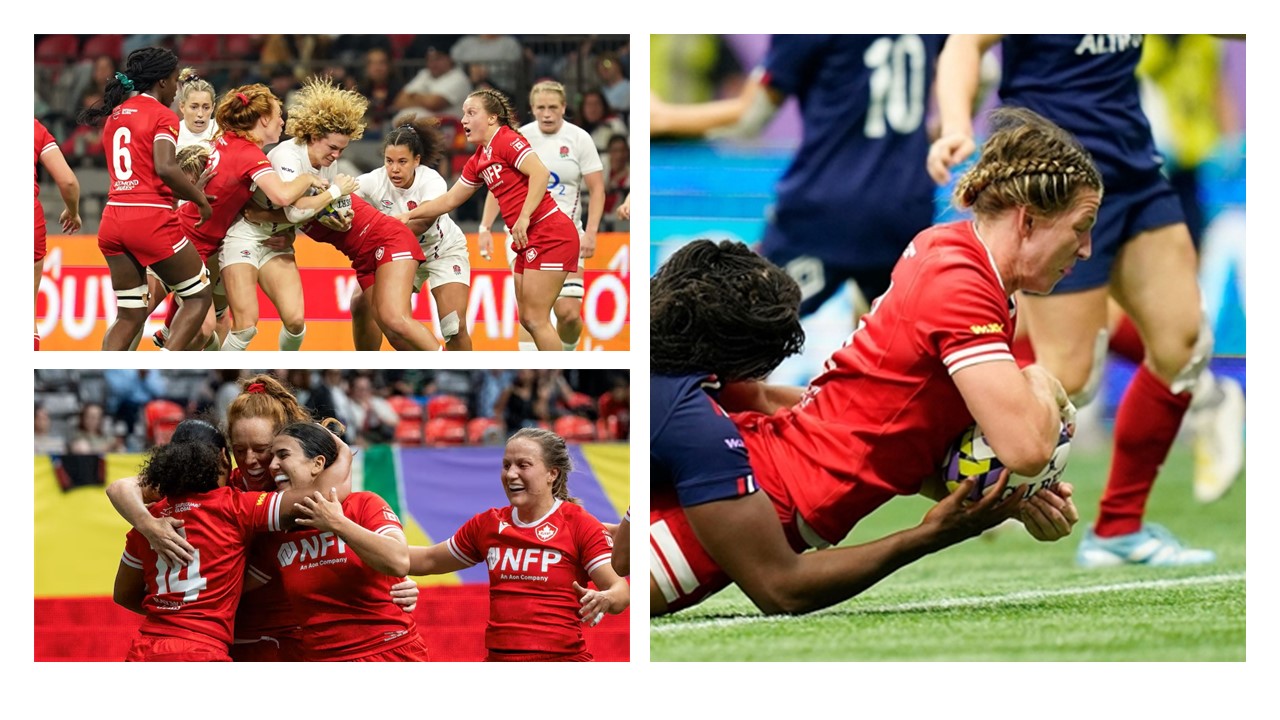
Well, what a tournament that was! We thoroughly enjoyed our three weekends of top flight Women’s rugby and if the frenetic pace and at times brutal physicality of the final match between Canada and England are anything to go by, then next year’s World Cup in England should be a run away box office success. While we were slightly disappointed that there was FAR too much empty space in the stands at BC Place, and that Canada ultimately fell just short of the ultimate prize, both for the Women’s game as a whole and Canada in particular there are plenty of reasons to be optimistic as we look towards next year’s World Cup.

Firstly, the rugby, for the most part, was of a very high standard, with some standout games culminating in that epic final between England and Canada. As we’ve mentioned before, what we love most about the Women’s game is that it often plays out like an enthralling hybrid of the 7s and 15s codes. There tends to be a lot more open play than in the Men’s game, which makes for some fast running rugby and some spectacular offloading skills. The ball tends to be in play a lot longer, and some of the meters made statistics make one feel exhausted just going over them. For example in post contact meters made England in their final game against Canada made 215, compare that to South Africa in their 48-7 romp over Argentina in the final round of the Rugby Championship who only made 40 more at 255. There is also no lack of physicality as between them Canada and England put in 306 tackles in the Final (some of which looked positively bone jarring) compared to 269 in the final game of the Rugby Championship between South Africa and Argentina. Both Canada and England made well over 100 ball carries each, which is not far off the number South Africa and Argentina made between them in their final game of the Rugby Championship. Do you see where we’re going with this? In short, Women’s Rugby is an exciting spectacle, and we can’t wait for next year’s World Cup.

So, without any further ado, let’s unpack that game from Canada’s point of view and what we can expect from them looking ahead to the World Cup next year.

Canada shows so much promise despite the challenges they face, but there is a need for honesty in the work that now needs to be done

Canada had a remarkable tournament that propelled them to the number 2 spot in the world, but that final match against England demonstrated that they are still slightly short of the mark in terms of being a finished product

First up, a huge congratulations to Canada’s extraordinary women, who put on the show of a lifetime over the last few weeks. Some notable wins over France and Ireland and a heartbreaking loss to England, despite Canada being very much in the hunt for the top prize until the 70th minute, have cemented Canada’s place as the number 2 team in the world and made them genuine contenders for World Cup glory in England next year. It’s an achievement that they and every Canadian rugby fan can be hugely proud of. Unlike their main rivals, England, France, and New Zealand, Canada’s women get precious little time together to prepare for tournaments like this. It is hoped that in the runup to the World Cup this will be rectified, but it is still unlikely to be at the same level or consistency as countries like England and France, and suffer from all the funding constraints that go with it. These are concerns that France, New Zealand, and England will simply not have to reckon with. On the plus side a good chunk of Canada’s roster are getting paid as professionals in England and France and have a tough season of top flight domestic club rugby ahead of them as preparation, and a golden opportunity to get a face to face understanding of their French and English opponents come the World Cup.

Canada opened their WXV 1 account with a thrilling 46-24 win over France. Canada dominated possession, and although France had a slightly more effective kicking game when it came to territory, Canada’s work in the set pieces and their physicality in defense left France reeling at times. On attack they were ruthless and made an impressive 369 meters with ball in hand post contact, spearheaded by player of the match second rower Laetitia Royer, and caused France to have to make an exhausting 173 tackles.

Next up was a tough challenge against Ireland, which Canada won comfortably in the end 21-8 but were pushed by an Irish side exceeding all expectations. However, some of the cracks that would ultimately trip Canada up in the England game began to surface. Their lineout work started to falter badly to the point that it was a genuine liability come the England game. Tackles started to be missed, resulting in Ireland making an impressive 326 post contact meters compared to only 237 for Canada.

Then came that final game against England with it all on the line. What a battle it was, and a genuinely thrilling contest that has set the tone for the World Cup next year. It was a final worthy of the name, huge physicality from both sides, fantastic tries, and a nervy and edgy encounter right to the end. Well, almost the end, as sadly it’s hard to deny that Canada ran out of gas in the final ten minutes. So let’s unpack what struck us as to how Canada, despite a genuinely heroic and impressive effort, ultimately came short in a match which we felt to be honest they should and could have won.

First up, it has to be mentioned that England’s discipline was costly at times, and Canada failed to take advantage of it. For twenty minutes of that match, England had only fourteen players, and Canada were unable to make their player advantage count with points on the board. There were numerous occasions where Canada had an overlap out wide off a spectacular line break and in the heat of the moment didn’t take the opportunity presented, allowing England to bring them to ground and effect a turnover. Then there was the problem of the lineouts, which disintegrated at an alarming rate as the match progressed to the point where Canada ended the game with a 59% success rate, which is unacceptable at this level. They can draw some consolation from the fact that they were good at disrupting England’s lineouts causing the Red Roses to only be 10% more effective at lineout time, something they will want to capitalize on should the two meet again next year at the World Cup.

Although Canada’s scrum held its own against England, we feel it led them to believe that they could attack England’s defenses in close through a rolling maul. In our opinion, that was a huge mistake. England’s maul defense is simply the best in the world by a country mile. Canada scored their opening try in close and off the 5 meter line, which led to a misguided sense that England were vulnerable close to the try line. If you look at how the match played out England were most exposed and Canada most dangerous in broken play, as the Canadians playing at speed were able to disrupt England’s defenses and deny them the opportunity to regroup. With Canada’s lineout consistently failing, we simply couldn’t understand the value of repeatedly kicking for the corner in the hopes of mauling the ball over from a lineout that just wasn’t firing, instead of taking points from the tee to keep the scoreboard ticking over. In short, it wasn’t the best decision making and showed a slight lack of big match temperament and experience, something England has in spades.

We feel slightly uncomfortable singling out the lineout as we feel it puts Hooker Emily Tutosi in an unfair light. She is a remarkable player and tackled her heart out in this match and led the tackle count of any player from either side, but was clearly struggling with the lineout. As a result was it fair to put even more pressure on a player by constantly kicking for the corner, when as far as that aspect of her game was considered she was having a horrible day at the office? Furthermore, if that was Canada’s strategy, why leave it until the 75th minute to bring her replacement off the bench? On that note, we simply did not understand the Coaching Box decisions regarding substitutions. A lot of key substitutions only came on after the 75th minute, when Canada was exhausted and England’s bench were already making their impact felt. Furthermore, Canada had a quality bench who could have really made an impact, so why not use it? Players coming on in the dying minutes of a match hardly have the time to adjust to and take the measure of the ebb and flow of a game, making them almost redundant.

Make no mistake. England are deserved Champions once again, and their position of being ranked the number 1 team in the World is certainly not to be questioned. However, can they be beaten, we’d argue yes, and Canada had a golden opportunity to do so last Saturday in Vancouver, which sadly ended up going begging. Should the two meet again come the World Cup, which looks a distinct possibility, then the daunting prospect of playing at a packed and noisy Twickenham filled with 60,000+ English supporters as opposed to the cavernous emptiness of BC Place and its vocal but tiny group of committed 5000 spectators, will be a tough psychological hurdle for Canada to overcome. Consequently, they needed to take the opportunity presented to them as a confidence booster for the same event on a MUCH larger stage next year.

We feel confident they can, and the talent is certainly there. Add into the mix the return of talismanic Captain Sophie de Goede to bolster the leadership group of Alex Tessier, Emily Tutosi, Tyson Beukeboom, Courtney Holtkamp, DaLeaka Menin, Justine Pelletier and Claudia Apps and the sky is the limit for this team. This tournament really brought to the forefront the remarkable talents of players like Laetitia Royer, Pam Buisa, Fabiola Forteza, and Fancy Bermudez-Chavez to name but a few in a very capable group of players. None of our concerns that came out of the game against England are meant to distract from the remarkable achievements of this exceptional group of players who have made us so proud as Canadian rugby fans over the last three weeks. By contrast if they learn the lessons they need to from this kind of exposure and the heartbreaking setback of that game against England, they will have every right to challenge for the ultimate prize at Twickenham on September 27th next year.

So from all of us here at the Lineout, thank you to all of Canada’s women who made us so proud this past three weeks at the WXV and know we will be cheering you on every step of the way to the big show in England next year. You should be very proud of what you’ve achieved and how you work together as a team, and rest assured that an even bigger and brighter future awaits you all as a result!

Lineout Calls of the Week – A remarkable July with plenty of reasons to be cheerful

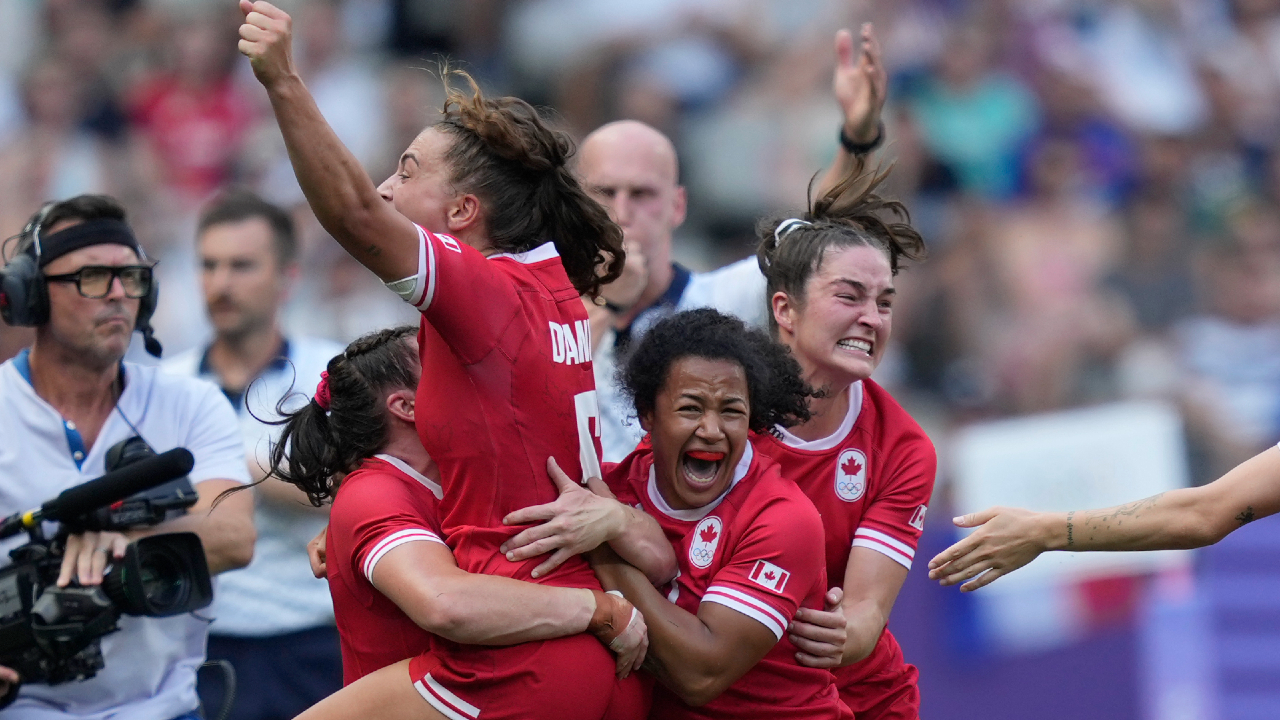
Canada’s REMARKABLE women once again do us proud by taking the silver medal in the Women’s Sevens at the Paris Olympics this week in an absolute thriller against New Zealand in the Stade de France. A huge shout out to an extraordinary team that once again demonstrates that the Women’s game when it comes to rugby in this country is in exceptionally rude health. Heartfelt congratulations to all the team for an absolutely top drawer Olympic campaign and one which has shown that the sky is the limit for this very impressive group of young and talented players!

Also, what a final weekend of the big summer tours that was!!! The icing on the cake was without a doubt that seismic second Test between South Africa and Ireland in Durban, but the thrills and spills to be had in Auckland and Sydney also helped cap off a memorable weekend. Despite the concerns that a set of Summer Tours could have been a bit of a damp squib after the seemingly interminable season for many of the teams, which started with preparations for the World Cup last year, we were pleasantly surprised at both the intensity and drama and at times outrageous skills on display, even if player fatigue was a legitimate concern for many of the teams involved.

All of this is not to detract in any way from the final weekend of the Summer Tours which featured such Lineout fan favorites as Portugal, Georgia and Fiji up against the big boys, but there is no denying that last weekend of the big Tours provided us with a fascinating glimpse into the lessons learnt from the last World Cup cycle and what it means going forward looking ahead to the next global showdown in Australia in 2027. Coaching regimes changed hands, new playing styles made their first tentative steps and the future stars of the next generation of International Rugby started to make their presence felt as the old guard began an inevitable shuffle to the sidelines to make way for them, while still showing that there is plenty of pedigree left in such experienced heads when called upon for clutch moments.

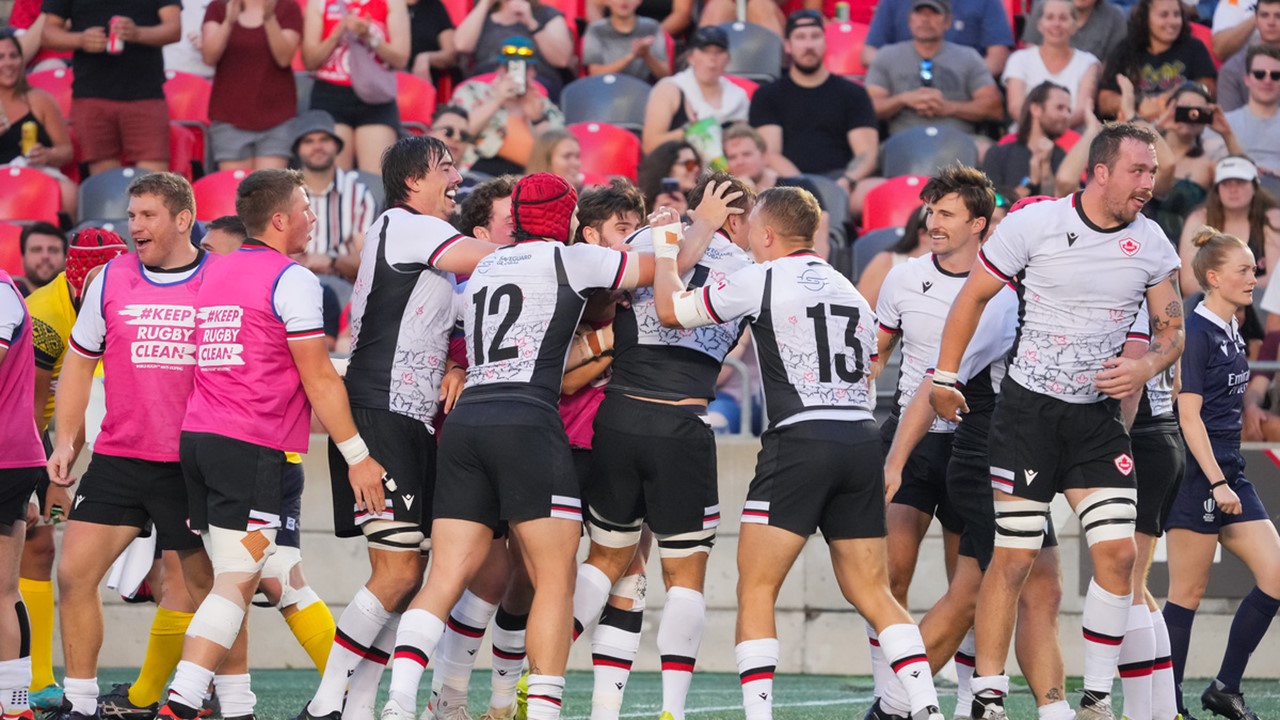
In short, the first two weekends of July were fascinating viewing and proved that the International game, despite the almost incessant pressures placed on it for yet more fixtures and longer seasons, is still remarkably robust and capable of the type of enthralling spectacle that makes our glorious sport so unique. Even our own Canadian Men, reeling from the worst crisis in confidence in the history of the game in this country, managed to eke out an impressive win over Romania, and which clearly showed there is still plenty of pride left in the jersey. While it may sadly provide a stay of execution for Rugby Canada’s inept management of the Men’s program and in particular the Coaching department, it was still an important win that will surely help rejuvenate what has been up to now dwindling interest in the Men’s game, especially when compared to the runaway success of the Women’s program.

So, with so much to talk about this summer, here’s what struck us the most about a remarkable month in Rugby.

Canada’s Women continue to make their mark on the World Stage by claiming Silver in Olympic Sevens

There seems very little that Canadian women can’t do when it comes to International Rugby at the moment, and their Silver medal in a thrilling final against New Zealand was the highlight of an extraordinary Olympic campaign

As anyone knows who is a regular visitor to this site, we are HUGE fans of Canadian Women’s Rugby, and their Silver medal in 7s at the Paris Olympics this week further cemented our belief that the story of this remarkable group of women is one of the most exciting in International Sport right now. There was no denying they were drawn in a tight Pool with New Zealand and Fiji, but they claimed a hard fought win over Fiji. They sadly received a bit of a schooling at the hands of New Zealand but then finished the Pool strongly with a tough win over China.

Nevertheless, despite emerging second in their Pool, we had concerns over the caliber of their opponents in the knockout stages, starting with a Quarter-Final against France. They then proceeded to rip up the form book and really come into their own in three stunning matches. They dealt with hosts France in a nervy Quarter Final, which saw a thrilling finish with the Canadians emerging the winners. Next, they had to face one of the tournament favorites Australia in a semi-final. Despite being the underdogs, they took the game by the scruff of the neck in the second half and never looked back, producing arguably one of the best games of the tournament and a fine win. In the Gold Medal match against reigning Olympic Champions New Zealand, they produced a spectacular performance which Canada only lost at the death by less than a converted try.

In short, against all odds, Canada’s women produced one of the most memorable stories of this Olympics and one that continued to show that Women’s rugby in this country is a force to be reckoned with. Many players on the 7s team are are also doing duty in the 15s game, and thus Canada is rapidly developing a pool of talented players which will serve their upcoming campaign in the WXV in September exceptionally well. At present, Canada sits third in the World Rankings in the 15s game and 5th in the 7s game. Compare that to 21 for the Men in the 15s and 12th in the 7s.

We’ve said it before, and we’ll say it again, the success of Canadian Women in International Rugby at both the 7s and 15s level deserves our wholehearted support. While the Men’s game in Canada continues to be in a state of crisis we would be devastated if the limited funding we have in this country for rugby was diverted to salvage the Men’s program at the expense of the Women’s success. Our Canadian women have done us proud every time they take to the field and we need to continue to build on that hard work and dedication to ensure that they are able to continue to take their incredible efforts to the next level. In short, ladies, we salute you for once again doing yourselves and the jersey proud!

World Champions South Africa remain King of the Hill after a thrilling series that saw Ireland and South Africa claim one each

Without a doubt the best series of the lot but one that made us hungry for just one more to make a series decider, but South Africa and Ireland still remain top of the pile in terms of World Rankings

What we got treated to a few weeks ago as South Africa and Ireland did battle in Durban was nothing short of the highest octane rugby entertainment possible to cap off a remarkable series. South Africa claimed the first Test in an edgy and intensely physical encounter. The off the charts physicality of the Springboks in the first Test left Ireland with a telling injury count, and made it unthinkable that the Men from the Emerald Isle could survive a similar encounter only a week later. What most of us weren’t expecting was Ireland to outBok the Boks in the first half of the second Test. South Africa were clearly not expecting to be on the receiving end of a brutally physical Irish performance in the first half that left them bloodied and battered, and which saw Ireland heading into the sheds 16-6 ahead on the scoreboard.

There was clearly some soul searching at half time and South Africa quickly took control of proceedings and as the game headed into the final quarter the hosts were back in charge at 21-19, and with Handre Pollard adding a further three as the game wound down with fifteen minutes left on the clock. The final ten minutes saw an absolutely heroic Irish defense hold back repeated Springbok onslaughts but most extraordinary of all the return of the drop goal, and not just one drop goal but two!

It was a fascinating series between two equally matched sides. Ireland’s fightback in the first Test was equally as impressive as South Africa’s in the second. The telling component in both matches was that first half dominance ultimately paid off in ensuring the winner, even if in Ireland’s case in the second Test thinking outside the box was necessary to snatch the win from the jaws of defeat. In the first Test South Africa pulverized Ireland in the first half and continued the process well into the first quarter of the second, and that and the altitude meant there was little left in the tank for an Irish side at the end of one of the longest seasons in history. What’s more, we saw an expansive and infinitely more complex attacking style of play from South Africa that was keeping Ireland guessing, in addition to having to cope with the Springboks’ traditional physicality. That made Ireland’s remarkable comeback in the final quarter of the second half so extraordinary. In short it was a a thrill ride of a Test match from both teams and left us hungry for more, but also doubting that a second offering could match up to the quality of the first – were we ever in for a surprise!

However, the first Test left Ireland with a troubling injury list, with Hooker Dan Sheehan and scrum half Craig Casey being the most notable absentees for Round 2. South Africa in yet another demonstration of their resilience at this level headed into the second Test with a clean bill of health, and the writing seemed on the wall for a triumphant series sweep for the Springboks in Durban. What we got instead was perhaps one of the most brutally physical Test matches we can remember in a very long time. South Africa seemed clearly taken aback by the ferocity with which Ireland controlled the first half, littering the pitch with Springbok casualties. It was a classic “stand em up, knock em down and slug it out” Test match of old, with Ireland controlling the proceedings in a decidedly dominant fashion for the first forty minutes and heading into the sheds 16-6 ahead on the scoreboard.

South Africa seemed to recover from their initial shock at Ireland’s brutality in the first half and proceeded to put an Irish side starting to flag under enormous pressure once again, both physically and mentally. Ireland’s discipline started to crack, and Handre Pollard’s boot made them pay dearly. Ireland are a side that relies on maintaining possession and stringing together an almost endless set of phases. South Africa, in the second half, made sure that Ireland simply were not allowed to do this and, as a result, were able to do very little with the possession they had, as well as forcing mistakes. Watch the replay, and in that final ten minutes, you’ll notice that the ball is coming out of the rucks and being passed to players sitting much further back than we’re used to seeing from Ireland. In a sense, Ireland had run out of options, and it was left to Frawley to chance Ireland’s arm with two audacious drop goals from deep. It was Test theatre at its best and allowed Ireland to do the unthinkable and snatch what had appeared at kickoff to be an impossible win.

While a decider would have been icing on the cake, it was still a series that showcased two of the best, if not THE best teams in the World. As we saw in New Zealand, the All Blacks and England are hot on South Africa and Ireland’s heels, and we have a hunch that the top five spots in World Rugby are going to change hands with increasing regularity over the next 18 months, making for some epic Test matches. Those two Tests in South Africa in the Rugby Championship between the All Blacks and Springboks at the end of next month are the next big thing on International Rugby’s radar and we can’t wait to see how it changes the pecking order, ahead of New Zealand’s trips to England, Ireland and France at the end of the year. Strap yourselves in folks for a roller coaster ending to the year!

Razor’s first two outings in charge of the All Blacks were tight, nervy affairs, which saw his charges get the job done, but the promise is off the charts

Scott Robertson certainly had a baptism of fire against a very slick and fired up England outfit, but there is no denying that this latest chapter of the All Blacks legacy looks destined to live up to its blockbuster billing

We think it’s safe to say that new All Blacks’ Coach Scott Robertson has lived up to the hype surrounding his appointment after his first three Tests in charge of one of International Rugby’s most fabled units. England were able to put his Coaching credentials under the harshest examination over two weekends, and there is no denying that New Zealand were lucky to emerge 1 point winners in the first Test. However, the second Test was a much more assured affair from the Men in Black, still edgy at times and England were in it to win it right until the final whistle, but the All Blacks were clearly starting to find their groove under their new boss. Their 47-5 drubbing of Fiji a week later left few in doubt that New Zealand are back with a vengeance and are only going to get better.

They’ll enjoy the visit of Argentina to their shores for two tests to kick off their Rugby Championship campaign. The Pumas’ raw physicality will be excellent preparation for a tough trip to South Africa to play their greatest rivals, the Springboks in Johannesburg and Cape Town. By the time they trade blows with Australia for the Bledisloe and the conclusion to the Rugby Championship, New Zealand if evidence of this England series is anything to go by should be fighting fit for a tough tour of Europe at the end of the year, which sees them take on England, Ireland and France.

However, it’s that trip to South Africa that will really tell us how effective the All Blacks transformation has been under Robertson’s stewardship. Emerge from that with flying colors, and the rest of the rugby world may need to start running for the hills once more. Nevertheless, as impressive as New Zealand were against England, especially in the second Test, we don’t think that South Africa, Ireland and France are quaking in their boots just yet, while England will definitely fancy their chances at Twickenham at the end of the year.

It’s hard to judge New Zealand’s opening game against England and Robertson’s first outing in charge of the All Black machine. New Zealand always start their International season looking slightly rusty and a tad disconnected, and that was very much in evidence in Dunedin in the First Test. England were statistically the better side, and had Marcus Smith had a more successful stint off the kicking tee, the Men in White would have picked up a famous win on New Zealand soil. As we feared from Super Rugby where New Zealand sides have not had to do much in defense, the All Blacks tackle success rate was not where it needed to be at this level. Their lineouts were a fiasco, and the scrum creaked and groaned its way through the full eighty minutes. There were individual moments of brilliance which helped New Zealand seal an incredibly edgy and tad fortunate win but England gave them plenty of food for thought and it was clearly an uncomfortable evening for the Men in Black on the pitch and most of the All Black Coaching box had hardly any fingernails left at the final whistle.

Enter the second Test and an All Black side clearly much more comfortable with their new processes and Robertson’s way of unpacking and fixing the problems encountered in the First Test. It wasn’t perfect, but it was a much more cohesive New Zealand performance compared to the First Test. Players clearly understood the roles and what was expected of them as a team. Their set piece work apart from the lineouts was vastly improved, and their tackles were sticking this time around.

Their lineout woes will be a concern as England’s Maro Itoje was a constant source of misery, and Eben Etzebeth, Pieter Steph du Toit, Franco Mostert, RG Snyman of South Africa lie in wait for New Zealand and will revel in the opportunity to cause similar disruptions at the end of August. Furthermore, New Zealand were unable to dominate either territory or possession in the second Test, but defensively, they looked much better organized as well having the upper hand when it came to getting turnover ball. While England had more ball to work with, New Zealand were more clinical and deadly in terms of the opportunities they were able to create. They put England under pressure in the contact areas and allowed the smiling assassin, fly half Damian McKenzie plenty of shots at goal as England’s discipline cracked. When veteran fullback Beauden Barrett came on with 30 to go, the seasoned All Black campaigner showed that his pedigree when it comes to turning a game on its head is still very much in evidence. In short, it was a master class display from one of New Zealand’s greatest playmakers.

This All Black side under Robertson is still very much a work in progress, but all the signs are there that New Zealand is back with a vengeance and are likely to be one of Test Rugby’s most exciting and dominant sides during this next World Cup cycle. Robertson is a shrewd operator who knows how to think on his feet and adapt. For All Black supporters clearly frustrated by the last four years of New Zealand’s inconsistent fortunes, Robertson certainly seems to be the robust shot of espresso that everyone was clamoring for.

England may have lost the series 2-0 to New Zealand, but they leave the Land of the Long White Cloud with their heads held high

There was absolutely no shame in England’s series loss to Scott Robertson’s new look All Blacks as Steve Borthwick’s charges gave a magnificent account of themselves in two exceptionally hard fought contests with no quarters given and fly half Marcus Smith was a revelation

Let’s be brutally honest traveling to New Zealand and taking on the legendary All Blacks is not a task for the faint-hearted. Of the teams that do, many leave battered and bruised and, with their confidence seriously dented. Therefore, it was with a sense of trepidation that we watched England’s young charges depart for the Land of the Long White Cloud. Since taking over from Eddie Jones, Steve Borthwick has faced plenty of criticism, but the recent World Cup and Six Nations clearly showed that England is on an upward trajectory. What better test of the strength of those improvements than a trip to New Zealand.

There was only one slight complication, the All Blacks were now under the tutelage of one of the most eagerly anticipated Coaching talents that New Zealand has seen in the last 25 years. The Crusaders legendary Scott Robertson is now calling the shots in the Coaching box, and what better test of your credentials than a career opener against a rejuvenated England.

Despite the aura surrounding Scott Robertson and his new look All Blacks, you never got the impression that England were fazed by the task they were up against and if anything were clearly relishing the challenge. In short, England were able to leave New Zealand with their heads held high as they produced two superb Tests. Although they emerged winless, the first Test was exceptionally close and saw the Red Rose losing by a mere point. Had they remembered to pack their kicking boots for that first Test, they would have emerged victorious. However, fly half Marcus Smith produced a dazzling display of attacking rugby and was the equal of his opposite number, Damian McKenzie. England’s set piece work was exceptionally solid, especially at scrum time, while flanker Maro Itoje was back to his disruptive best, especially in the lineouts.

In the second Test, New Zealand had clearly got their heads around the way Scott Robertson wanted them to play, but England still gave them no quarter and right up until the final ten minutes the game hung in the balance. England’s kicking authority and ability to turn pressure into points from the tee was on song unlike in the first Test, although New Zealand clearly got the better of them at scrum time, though Maro Itoje continued to cause no end of grief for New Zealand in the lineouts and at the rucks. Defensively England, slipped off the boil slightly as New Zealand’s back line of Sevu Reece and Mark Tele’a found ways to open them up all orchestrated by a brilliant cameo from veteran fullback Beauden Barrett. When the two sides meet again at Twickenham this fall, expect England to have worked out the relatively few weaknesses that caught them out this July.

In short, England have nothing to apologise for going forward after their Two Tests in New Zealand. They acquitted themselves well, came within a hair’s breadth of tying the series in the First Test, and the new spine of this team looks exceptionally healthy and capable. They will want to address their concerns in the front row as New Zealand clearly got the better of them there in the second Test. However, the second row of George Martin and Maro Itoje looks to be an exceptional blend of raw talent and seasoned aggression. The back row stocks of Ben Earl and Chandler Cunnigham-Smith look set to go from strength to strength, with Sam Underhill getting back to the form that made him such headline news a few years ago. Alex Mitchell and Marcus Smith are an explosive half back pairing while the back line of Northampton’s Tommy Freeman and George Furbank, now boosted by exceptional newcomer Immanuel Feyi-Waboso look electric, with Furbank finally showing some confidence and sound decision making in the 15 jersey. The centre pairing remains the only possible weak link in a set of backs that look to pay huge dividends for England in this World Cup cycle, and even there it is not for lack of talent it’s just determining what is the right mix of players.

England will be a team to watch this fall as they take on a raft of top class Southern Hemisphere opponents in the shape of the big three of New Zealand, Australia, and South Africa. The future looks very bright indeed, and Steve Borthwick can now silence his critics as England clearly have an idea of what they want to be and how to achieve it.

After the horror show of the Eddie Jones experiment, former All Blacks and Ireland Coaching maestro Joe Schmidt is giving the Wallabies plenty to smile about

Wales may not have been the sternest of opponents for the Wallabies under new management, but it was a huge boost to their confidence after one of the worst years in their history, and a vital step in their rebuilding process.

Wales were probably exactly the team that new Wallabies Coach Joe Schmidt wanted his team to play to get them some confidence ahead of a gruelling Rugby Championship, and to put behind them the nightmare of last year’s World Cup. This is not to say that Wales were pushovers, far from it, but there is no denying that perhaps one of the youngest Welsh sides to ever don the famous red jersey, is a long way off where they could be. Australia looked like they were finally enjoying playing rugby again in their Two Test series against the Welsh, despite the fact that new Coach Joe Schmidt is perhaps one of the most process and structure oriented Coaches in the International game.

Australian sides are a bit like the French. They simply don’t like too many rules placed on them and instead crave a certain freedom of expression on the rugby pitch to show off their talents. The problem with this is that their discipline tends to go out the window in the process, and their defense rapidly finds itself at sixes and sevens. Against a disorganized Welsh outfit their defensive structures looked much more robust, but with a change of personnel against Georgia after the two Welsh Tests, some familiar cracks that we see all too often in Super Rugby resurfaced. The one problem that Schmidt has yet to effectively address, though, is discipline as Australia against both Wales and Georgia gave away far too many needless and costly penalties. It’s better than it was under Eddie Jones but it still leaves a lot to be desired and South Africa, New Zealand and Argentina will be keenly aware of this as an easy way to put Australia on the backfoot in the Rugby Championship.

One area, though, where Australia will be genuinely happy as they start this new journey to their own World Cup in four years’ time will be in the strength and effectiveness of their forward pack. Throughout the series against Wales and the game against Georgia, Australia’s set piece work looked solid. The front row held its own though South Africa will be a much sterner test this month, while the second row looked exceptionally capable. However, it’s the potential of their back row that probably got most people sitting up and taking note. Rob Valetini has really come into his own as a devastatingly effective player both in attack and defense while Fraser McReight continues to create havoc in the loose, and newcomer Charlie Cale was a revelation. The jury still is out for us on the halfback partnerships Australia has at its disposal though we have a hunch, it will be Tate McDermott taking the scrum half starting berth for the Rugby Championship.

However, what excites us the most, provided it can shore up its defensive frailties between now and the Rugby Championship is Australia’s back five. In the centres, especially in Hunter Paisami Australia look lethal, while out wide especially in Filipo Daugunu the Wallabies look to get back to their glorious running rugby days of Campese and company, with Kellaway having an equally blistering turn of pace and foot on the other wing. Meanwhile, Tom Wright at fullback just gets more electric with every outing.

We really liked what we saw with this new look Wallabies, under Joe Schmidt. It’s still early days yet, and the visit of a bruising and increasingly dynamic South African side for Two Tests starting next week would send a chill up most Coaches’ spines. However, we think Schmidt can get his charges to the point where they can give a good account of themselves and maybe even pull off an upset, before an always challenging Two Test tour to Argentina followed by the Bledisloe series against the old enemy New Zealand.

It’s hard to say whether or not facing New Zealand first in the Rugby Championship rather than at the end would be more preferable. It’s a two edged sword as if they faced them at the beginning we’re not sure that Wales would have proved ample preparation for the biggest challenge this new look Wallaby side will face since the World Cup. However, at the end of the Rugby Championship, the All Blacks will be well versed in the game their new Coach Scott Robertson wants them to play. You could also argue though the experience of playing away in Argentina, never an easy place to go, and two bruising encounters with South Africa are more likely to equip the Wallabies for success against New Zealand than if they were to face such a challenge at the beginning of the Rugby Championship. Either way, we can’t wait to find out!

It wasn’t pretty, and it’s hard to judge what it really means in the grand scheme of things, but Canada’s Men finally get a much needed win

Canada’s win over Romania was an important one, especially as the Eastern Europeans beat our arch rivals the USA last month. Now, the hard work really begins to prove that it’s not merely a flash in the pan.

Well, it’s a win people and we’ll take it! However, as delighted as we were to see Canada get the win over Romania, a side that had beat our greatest rivals South of the 49th parallel only a week earlier, we are not completely convinced that Canada is emerging from the wasteland of the last four years. It was perhaps the most complete performance we’ve seen from Canada in a long time, but sadly, that’s not saying a great deal. The Romania that beat the USA the week before were not the same Romanian side in spirit and execution that Canada got a much needed 35-22 win over a week later.

A sense of perspective is perhaps needed here. Canada were blitzed 73-12 by a largely young and inexperienced Scottish side. A week later, a much stronger Scottish side faced our North American rivals the USA and only managed to beat the Americans 42-7. Our concern lies in the fact that wholesale change is needed in the management of the Men’s program in this country, starting in the Coaching Box, with Kingsley Jones well past his sell by date. We fear that the win over Romania will simply put off the inevitable in terms of the need for change – change that is desperately needed at the start of this World Cup cycle, not halfway through it.

Canada will get a chance to see where they are really at in terms of progress made in this year’s Pacific Nations Cup, which sees them play Japan and the USA at the end of this month. Both Japan and the US are in a similar crisis of confidence to ourselves with the US struggling to get a win, and Japan clearly not enjoying their second dose of an Eddie Jones Coaching regime. If anything, the Romanian win will see Canada head into the PNC as the most confident side, being the only one with a win so far this year. However, despite the euphoria of that much needed win, the jury is still out for us as to whether or not Canada have turned a corner under Kingsley Jones. If the PNC indicates that we haven’t, then we have to be brutally honest, and Rugby Canada has to stop putting off the inevitable and start 2025 with a clean sheet. They owe it to both the players and their die-hard but long-suffering supporters.

Nevertheless a huge shout out to Canada and that win over Romania – onwards and upwards gentlemen and let it be the start of a bright new future with our without the management problems that have plagued the game up till now!

Well, that’s it for now folks, sorry it has been so long since pen last got put to paper. It’s been an incredibly busy summer for us both at work and on the home front, making it very difficult to watch rugby this summer, let alone talk and write about it. We’ll do our best to cover the Rugby Championship but can’t make any promises at this stage. Till then, enjoy what remains of the summer, and here’s looking forward to what should be a fascinating Rugby Championship and a do or die Pacific Nations Cup for Canada.

To end this missive, here’s the moment that turned the Olympic 7s as we upset favorites Australia and a tribute to our remarkable women!

WAY TO GO LADIES!!!!!!!

Lineout Calls of the Week

So much to talk about this week, but let’s get started straight away by paying tribute to Canada’s EXTRAORDINARY Women!!!! The past few weeks have been a glorious celebration of this remarkable team’s commitment, hard work, and downright skill. In short – WHAT A TEAM!!! By claiming this year’s Pacific Four series Championship title, they have propelled themselves into second place in the World Rugby Rankings. Sure there is the daunting task of trying to topple the seemingly untouchable Red Roses and then try and beat England in their own backyard at next year’s World Cup, but there is no denying that on current form Canada has probably the best shot at giant slaying it has ever had. Any Canadian passionate about rugby should be making travel plans to Vancouver this year for September 27th – October 13th as Canada takes its first steps on meeting that challenge in the WXV Tier 1 competition.

This week our attention shifts to the prospect of a classic European Champions Cup Final and one of the biggest rivalries in the European game, as the two best club sides the competition has ever seen face off in London. France’s Toulouse look to add a sixth European star to their fabled jersey, while Ireland’s Leinster seek a fifth. These are arguably the two greatest teams of the professional era in European rugby, and wherever your regular season allegiances lie, we have a hunch you’ll be telling family and friends that you are unavailable Saturday morning. There’s also the prospect of a rather tasty Challenge Cup Final the day before as South Africa lends its brawn and pace to the competition by facing off against England’s Gloucester who have a raft of outstanding internationals in their midst. In short, this is the closest you’ll get to full-blown Test rugby until the international season resumes in July.

It may not be the Champions Cup, but the United Rugby Championship which has become a fan favourite here at the Lineout due to its mix of playing styles from five different countries heads into a genuinely fascinating final round of fixtures after this weekend that sees the middle of the table more hotly contested than it’s ever been. There is no question that it will have ramifications on the biggest tour of the year as Ireland head to South Africa. Meanwhile, the English Premiership has thrown up a fascinating question regarding which young buck flyhalf will be England’s starting 10 for a hugely anticipated tour of New Zealand by the Men in White.

So, in short, there’s plenty to talk about, so let’s get into it, starting with our outstanding women!

Canada claims this year’s Pacific Four Series and with it the number 2 spot in the World

The sky is definitely the limit for Canada’s amazing women at the moment, after their outstanding but hard fought win over New Zealand in the Black Ferns own backyard

We can honestly say that we have never felt prouder to be Canadian rugby fans than we did at 230 AM on Sunday morning when French referee Aurelie Groizeleau blew the final whistle, sealing an historic 22-19 win for Canada over New Zealand. The sacrifices and effort made by these phenomenal players was perhaps best summed up by a very emotional player of the match Tighthead Prop DaLeaka Menin, as it was plain for the world to see what that win meant to the team. To travel to New Zealand and face the World Champions in their own backyard and come away with a win is a massive achievement for a team that continues to grow in both confidence and ability. Perhaps most refreshing of all, though, is that despite their success, none of it seems to be going to their heads. While they have earned some well-earned rest and reflection, they are also cognizant of the challenge that lies ahead of them and the need to continually improve.

That performance in Christchurch, however, was nothing short of spectacular, particularly given that they had to hold firm against a determined New Zealand onslaught for the final ten minutes with only 14 players. Canada’s defense was absolutely immense, but what has impressed us week in week out has been how organized and cohesive this team is. What’s more is their ability to quickly fix issues as a game unfolds. In the game against New Zealand, their lineout was clearly struggling in the first half, and the Black Ferns were capitalizing on Canada’s difficulties. In the second half and the appearance of Emily Tutosi, problem solved, and that takes nothing away from starting Hooker Sara Cline, who had a stellar tournament. In short, they play for each other, and it means that everyone knows their roles and how to support one another. We have seen very few teams across all the competitions we follow who have managed to develop such a level of organization and cohesion.

In a team that performed so well as a group, it’s hard to make honorable mentions but there is no denying that certain players really made their presence felt and as a result kept popping up on the highlights reel of Canada’s Pacific Four Series this year. Without a doubt, one has to start with their inspirational leader, Sophie de Goede. The fact that the back rower is a mere 24 years of age and is one of the most accomplished players of all time in the Women’s game speaks volumes about her ability. De Goede is a once in a generation player and is recognized as such by players and fans alike around the globe. Oh, and did we mention she probably has the most reliable boot of any back rower in either the men or women’s game?

We were incredibly impressed with Tighthead Prop DaLeaka Menin and felt her player of the match award reflected an impressive campaign in this Pacific Four Series. We felt that Sara Cline and Emily Tuttosi were outstanding, with the latter bringing a stability to the number 2 jersey that is needed in crunch moments such as that last half of the Black Ferns game. Veteran second rower Tyson Beukeboom shows no signs of letting up and at 33 and a record breaking 68 caps looks set to continue to trouble Canada’s opponents, alongside Laetitia Royer who was a notable addition to Canada’s second row stocks. The halfback pairing of Olivia Apps and Claire Gallagher showed enormous promise for the World Cup. In the backs, Alex Tessier’s experience and composure is such an asset to the team, while newcomer Shoshanah Seumanutafa also made us sit up and take notice. We’ve always been excited by the potential that Fancy Bermudez brings to the team, but in this tournament, the live wire utility back really shone.

Like we say, our honor call could go on for a long time with this team, and by singling out a few names, it in no way detracts from the contributions made by every other member of this remarkable team and the outstanding Coaching squad led by Kevin Rouet. Canada will know that bigger challenges now lie ahead of them, starting with a meeting with England in September/October at the WXV Tier 1. However, given the ability and desire of this team to constantly improve and learn from each experience, we simply can’t wait to see how this outstanding group of women continues to fly the flag for Canadian rugby over the coming year and make us even prouder of their achievements than we already are.

From all of us here at the Lineout an absolutely massive vote of confidence and round of applause for Sophie de Goede and her exceptional charges. Onwards and upwards ladies!!!!

Does club rugby really get any bigger than this?

As two giants of European rugby prepare to do battle this Saturday in London, the contest between arguably the two best scrum halves in the world at the moment, Leinster’s Jamison Gibson-Park and Toulouse’s Antoine Dupont will be front and centre of an epic contest

As rugby fans, what a treat we are in for this Saturday! The two most successful teams in the history of European club competition, France’s Toulouse and Ireland’s Leinster lock horns in London, in a game that has all the trappings of a full blown Test match. There will be battles all across the pitch, but the one that is likely to stand out the most is that between the two gentlemen chosen to wear the number nine jersey. The analogy we draw with it is the surgeon in the shape of Gibson-Park meets the visionary artist in the shape of Dupont. The Leinsterman’s understanding of his team’s game plan and how to create those lightning quick linkages between his forwards and backs is remarkable. Meanwhile Dupont’s ability to think on his feet and see and create space, while at the same time making chaos theory appear a natural part of Toulouse’s game defies all logic and is practically impossible to defend against.

Therein, though, lies the rub. Some critics have pointed to the fact that the defensive structures that World Cup winning Coach Jacques Nienaber has brought to Leinster, have blunted their attacking ability somewhat, allowing sides such as Toulouse who thrive on creating opportunities from unstructured play a chance to unseat Leinster’s best laid plans. We’d agree to a certain extent, but by the same token given Leinster’s structural integrity in both attack and defense, Toulouse may find it impossible to create such opportunities. The sheer effort of trying to contain Leinster’s powerful physical attacks will create gaps in the Toulouse defense, which Gibson-Park has become a master at exploiting.

Where both sides will excel, though, is the presence of some remarkable jackalers in their packs. However, we’d argue that Toulouse are slightly more stacked in that department than the Irishmen. Peato Mauvaka, Jack Willis and Julian Marchand are serious threats in this regard for Toulouse and if Leinster leave themselves exposed at all in any of the breakdown exchanges it could be a long afternoon for them with these three in the mix. If Toulouse create any momentum in attack from quick turnover ball at the breakdown from a jackal, then their ability to create space through their offloading game invariably orchestrated by Dupont is remarkable and Leinster will have to be at their best to negate this.

Lastly, we’d also argue that Leinster may well want to control their traditional lightning charge out of the blocks in their last two Final appearances in the first quarter. They have struggled to maintain that momentum for the rest of the match, and although they may have built up an impressive lead in the first 20 minutes, they seem unable to build on it. The same issue was evident in their semi-final performance against Northampton this year. Eventually, their opponents start chipping away at such leads, and a sense of doubt and desperation starts to creep into the blue jerseys, and we all know how things end once that happens. If anything, Leinster almost need a low scoring match of attrition in the first half, allowing them to exploit Toulouse’s tiring defenses in the second. Put it this way, if Leinster look like they are running away with it in the first twenty minutes, the blue jerseys in the Lineout crew watching the game on Saturday are going to start to feel distinctly uncomfortable.

Either way, we’re in for an absolute belter on Saturday morning, and we hope you’ve all made your excuses to family and friends. As everyone is saying, it’s a game that is essentially impossible to call, so we won’t. Well, maybe Leinster are tired of being bridesmaids for the last two years, and really want the same number of stars as Toulouse on their jersey this time around? Just saying…………..

The URC gets spicy!!!!

The last round of the regular season next weekend and fight for the playoffs in the URC is perhaps the most fascinating and internationally flavored edition we’ve ever seen.

Next weekend one of these teams seasons will be over, but which one is almost impossible to call, making next weekend’s last round of the URC regular season one of the most fascinating we’ve ever seen, and essentially knockout rugby before the Quarters have even started. It’s a photo finish before the finals and, as a result, one of the most exciting conclusions to a regular season in a competition that is packed with international flavor.

Edinburgh 6th, Benetton 7th, and the Lions 8th all have 49 points, while Connacht sit with 45 at 9th on the log. For the Lions and Connacht, the challenge is the hardest. Connacht is faced with the unenviable task of traveling to Leinster to take on a side that may be basking in European glory if they come right against Toulouse this weekend. Will this make the men from Dublin vulnerable through complacency or one that has so much momentum they are too much for a Connacht side that has not dealt with confidence crises all that well at times this season? The Lions despite a phenomenal late charge this year, and that game in Johannesburg against a powerhouse Glasgow outfit last weekend that had to be seen to be believed, have a tough assignment in their final game by having to travel to Cape Town to face the second best South African outfit in the competition the Stormers.

Perhaps though it’s that matchup between Edinburgh and Benetton in Italy that holds the highest stakes. Lose and potentially both teams could find their season over, but then that also depends on what happens across the board. When the final whistle is blown, neither side, regardless of the outcome, will really be able to relax until the referee calls time on the final game of the regular season in Cardiff between Ospreys and the Blues. If things don’t quite go according to plan, then Ospreys could suddenly find themselves in the hunt for that 8th playoff spot if they walk away with a win. In short, that’s how close it is for everyone. Bonus points will be the order of the day for the four teams we’ve focused on, especially if any of them are on the losing side. If they are, then two losing bonus points are simply non-negotiable.

In short, we very much doubt any of these games will be lackluster affairs in a competition that has genuine international flair week in week out, given that it is technically considered a domestic league. Compared to competitions such as Super Rugby, the stakes just seem so much higher. There’s everything to play for next weekend, and for all intents and purposes, the knockouts have already started in what we’d argue has been one of the most entertaining leagues this season.

Expectations Massive – but how much will fatigue play a part?

In one of the most anticipated summer tours in years, concerns are already being raised that it may not live up to expectations as players with a lot of top flight rugby behind them on both sides turn up for a tough two Test series

If you’ve followed this blog or listened to the podcast, you’ll be familiar with one of our pet peeves – player fatigue. It’s the specter of that concern, which is casting a shadow over a set of two matches that we and the rest of the world are looking forward to immensely. Many are dubbing Ireland’s Two Test Tour to South Africa this summer as the World Cup final that never was, as the number one and two sides in the World go head to head. We don’t doubt it will be a great series but are also concerned that for many of the players, it will be yet another exhausting outing of intense rugby in a season seemingly without end.

While we respect the fact that rugby players, particularly at this level are well paid professional athletes, there is no getting away from the fact that it’s a long old season, especially with a World Cup thrown into the mix last year. Paid they may be for their labors – but robots they are not. Think about it, for both South Africa and Ireland, their players will have been playing rugby almost nonstop since August 2022.

For both teams, their domestic seasons got underway in September of 2022, with South Africa now competing in the United Rugby Championship as well as the European Champions Cup. A long arduous domestic season with plenty of travel wrapped up at the end of May last year. Admittedly, the players got a break in June, but towards the end of that, there were the initial training squads for the World Cup. Then, in July, South African players were involved in the abbreviated Rugby Championship. Roll on August and some grueling World Cup warmup matches for both sides and then into September and into the teeth of a very challenging World Cup Pool for both sides. Although Ireland exited at the Quarter Final stage, they were right back into it with the URC in November, as were the World Cup winning South Africans. That was followed up by Champions and Challenge Cup action in December and January in addition to the URC. Some of South Africa’s players had a break after the World Cup before they headed to Japan for the start of the Japanese competition in February. Consequently since the start of this year, for the South Africans, there has been Japan League One, URC, Challenge and Champions Cup, while for Ireland it’s been URC, Challenge and Champions Cup and a grueling Six Nations campaign.

By the time that Ireland and South Africa meet at Loftus Versfeld in Pretoria on July 6th, their players will have been playing top level rugby with hardly any breaks for a period of 22 months (almost two years)! Yes we know there are such things as squad rotation and the like, but that is still a TON of top flight rugby, which begs the question of how much will be left in the tank for both sides come July 6th? Agreed pride will be at stake and there will be a great sense of occasion and expectation surrounding these two Tests, especially in terms of the World pecking order, so it is unlikely that players will lack motivation. However, they’re only human at the end of the day and will the intensity and spectacle of both matches suffer from the simple fact of too much rugby and the toll it takes on athletes regardless of the peak physical conditioning they are able to maintain these days?

We sincerely hope that the series delivers on its promise, but we’d be dishonest if like many others we didn’t voice our concerns that players are being asked too much in order to satiate a seemingly endless demand for more rugby and more revenue. In short, let the players and games be the judge, and may whatever lessons need to get learned as a result be taken on board.

The Smiths – England’s music makers on the pitch pose a finely tuned dilemma for Coach Steve Bothwick

Which Smith will start, and which will bench for the Tour to New Zealand? Marcus or Finn?

If you were Steve Borthwick, you really would be spoilt for choice right now wouldn’t you ahead of England’s two Test Tour to New Zealand in July? In Marcus Smith and Finn Smith, you have two of the most exciting fly half talents England has seen since Johnny Wilkinson helped England lift their only World Cup in 2003. Also, let’s not forget George Ford, hero of the most recent World Cup. So, who does the England Coach choose for a Tour that is likely to set the tone for England’s journey to the next World Cup in Australia in 2027?

If he is asking himself that question, the one with a view to 2027, then for us, the choice is pretty straightforward. It’s between the two Smiths plain and simple. If you’re building for the future, which is essentially what Borthwick needs to do, then that is where his focus needs to lie. There is no better test of character than playing the All Blacks in their own backyard. Marcus Smith now has enough Test experience under his belt to help mentor his younger namesake on big pressure moments, but these two are the future of England in the ten jersey, and George Ford despite his considerable talents is not. Furthermore, although Ford supplies a steady hand to England, their attack, which was starting to show so much promise in the Six Nations at long last, is still not as flash under his tutelage as it could be. The Smiths are so much more dynamic in that regard and that is a quality you will need against a free running side like New Zealand.

Some have argued that throwing a youngster like Finn Smith into the cauldron of playing New Zealand in front of the All Black faithful at Eden Park is likely to push him too far too soon, and as a result shatter an otherwise promising career. We’d argue that while that is a risk, it’s one worth taking. Given that the World Cup is in Australia in 2027 and with the preponderance of Kiwis living in Australia, any All Black game at the next World Cup will be akin to a home game for the Men in Black. Finn Smith will need to learn to adjust to that pressure, and the sooner he does so, the better. Hence a golden opportunity awaits in July, and even if England do get put to the sword with the Northampton Saints pivot on the pitch, processes need to be in place to help him work through it in readiness for when the two sides meet again at Twickenham this fall and beyond.

As you may have surmised from the above, we are firmly in the camp that says take the Smiths to New Zealand and leave Ford at home. As to who starts when and where, that’s a more complex issue, and certainly, for the second game at Eden Park, we’d argue that it has to be made at a later date. For the first Test though we’d argue that Finn starts with Marcus on the bench. It will only be New Zealand’s second game under new Coach Scott Robertson, and from what we’ve seen of Super Rugby so far we think there will be more than just a few creases to work out especially defensively. We’d argue that the younger Smith is the player best able to manage a controlled game, while Marcus Smith can come on in the final quarter to really get New Zealand guessing and clinch those big game moments, particularly if the All Blacks find themselves behind on the scoreboard. However, for the second Test at Eden Park, a ground that New Zealand just doesn’t lose on, we’d argue Marcus Smith’s big game experience may make him the more logical starter. Nevertheless, what happens in the first Test will really determine the answer to that question.

Either way, we can’t wait to find out and, even more importantly, who ends up getting tickets for the long flight South. A bit like our concerns with the Ireland/South Africa series, player fatigue at the end of a very long cycle courtesy of the World Cup, may be a concern though more so for England than New Zealand, but as a look into both sides prospective futures it’s a series that will tell us a great deal.

Well, that’s it for this missive. Once again, a HUGE shout out to our fabulous Canadian Women and book your tickets to Vancouver this fall. Summer is finally here, and one of the most eagerly anticipated Cup Finals in years awaits this weekend. Dust off the barbis, get out the coolers, and strap yourselves in!!!!!!

Lineout Calls of the Week

Well, we think it’s only fair to say that the primary focus of this week’s edition is Women’s Rugby. There was that thrilling conclusion to the Women’s Six Nations last weekend, which saw England become Grand Slam Champions for the third year in a row and the 16th time since the tournament began in 1996. Whichever way you cut it, that is an extremely impressive record, and one that on their present form shows no sign of being broken any time soon, despite a very determined France’s best efforts. There were some terrific matches this tournament and despite playing probably the worst game of the Championship when they played England and were put to the sword by the Red Roses, Ireland went from last year’s Wooden Spoon holders to finishing third and with it both automatic qualification for next year’s World Cup as well as the Tier 1 WXV competition at the end of this year. It was a much needed boost for Women’s Rugby in Ireland, which had plummeted from being Six Nations and Grand Slam Champions in 2013 to failing to qualify for the last World Cup.

To cap off a memorable weekend in Women’s Rugby our own fantastic Canadian Women got their Pacific Four campaign off to a rousing start in California by completely demolishing a US side that simply had no answers for their clinical and brutally efficient second half performance. It was only Canada’s first game of the year, and there were clearly some cobwebs to be dusted off in the first half, but the fourth best team in the world are already looking exceptionally dangerous.

In the rest of the rugby world, there was plenty of action as both Super Rugby Pacific and the URC, along with France’s Top 14 and the English Premiership all approach the business end of their seasons and those all important playoff spots. As we sadly don’t really follow events in France and England as these are purely domestic competitions, we can’t really comment but from snippets we have seen there have been some thrilling encounters and this upcoming weekend’s Champions Cup semi final between Toulouse and Harlequins looks set to be a cracker.

In Super Rugby Pacific, a familiar pattern seems to be once more emerging that Australian sides are unlikely to go much further than the Quarter Finals, and there are only two sides for whom that looks set to be a certainty. The United Rugby Championship also is increasingly looking skewed in favor of Ireland and South Africa, making that two Test series between the two in July a mouth watering prospect. However, Scottish interests are well represented by Glasgow, and Italy remains ever hopeful courtesy of an impressive looking Benetton outfit. In short, everything to play for now in these final few weeks of regular season competition in both hemispheres.

England reign supreme yet again, and who can stop them heading into a World Cup in their own backyard?

At next year’s World Cup in England, it will take an extraordinary team to derail the phenomenal prowess of the Red Roses

England may not be defending Champions when next year’s World Cup kicks off in their backyard, but it’s already proving difficult to see them as anything less by the time it all wraps up. Agreed, it’s New Zealand who are the current World Champions, but at last year’s WXV Tier 1 competition, they lost to England in Auckland. With England’s clinical demolition of France in Bordeaux last weekend, they have now beaten the French consistently for the last three years. In short, there is England, and seemingly, there is everyone else. New Zealand, France and Canada are all exceptional teams in their own right, and there is little doubt that by the time the World Cup rolls around they will have the potential to rain on England’s home parade, but it is going to take every ounce of ingenuity, composure and commitment with a generous dose of good luck thrown in for good measure.

England continued to trade on their physical dominance this Six Nations, and we have yet to see a team that can compete with them in that regard. However, England have now developed an attacking game that, at times, left us, let alone their opponents, breathless this Six Nations. Head Coach John Mitchell has added an offensive edge to this team to complement their physical game. Holly Aitchison at fly half has been the epitome of a quick thinking but strategic playmaker at fly half. Although the final game was more a showcase of England’s ability to cross the whitewash with their formidable forward pack, other games showed off the dazzling footwork and strength in the tackle of England’s assets out wide in the shape of Abby Dow and Jess Breach. One of the revelations of the tournament, particularly against Ireland was fullback Ellie Kildunne who was nothing short of sensational and ended up being the tournament’s leading try scorer.

While this tournament was a showcase of England’s player skills, as a team and as individuals, they simply dominated the vast majority of statistics across the board. Their opponents consistently struggled to stamp their own authority on any of the games in which England featured. It was only France who, in a second half, played at breakneck speed, looked like they had earned the right to play their own game and possibly get the better of England. In short, there is very little to say other than congratulations to a team who were simply the best at everything they did.

As they look ahead to the WXV Tier 1 Competition this year in Canada in September/October they know they have some work to do but it’s simply a case of fine tuning rather than wholesale fixes. Despite their phenomenal physical prowess, their scrum surprisingly remains a liability on occasion, and they had one of the lowest success rates in the tournament, with only Wales and Ireland faring worse than they did in terms of success at scrum time. Their goal kicking could do with some improvement, but then when you score as many tries as England did, it’s not surprising they missed the odd conversion. Nevertheless, come the World Cup next year, they won’t want to be missing valuable points opportunities in close games.

Apart from that, however, England can reflect on a memorable tournament that has clearly cemented their reputation as the current Rolls Royce standard of Women’s Rugby!

Ireland’s Women cautiously crawl out of the abyss they’d fallen into for the last four years

It’s been a long time coming, but Ireland are clearly starting to enjoy themselves again, even if that game against England is still a mighty large elephant in the room

The neglect of the Women’s game in Ireland over the last few years has been an injustice, particularly when juxtaposed against the remarkable success of the Men’s game. There is still a long way to go, but this Six Nations finally saw Ireland start to rediscover some of the magic that saw them win the tournament in 2013 and 2015, with the 2013 win achieved on the back of a Grand Slam. You got the feeling that a corner had finally been turned in their opener against France when they denied the French the opportunity to relax for the full eighty minutes in Le Mans. They could and should have beaten Italy at home a week later had it not been for some questionable decision-making at times. That got rectified two weeks later as they put in a solid and composed performance against Wales and got themselves a handsome win in the process.

The game against Wales made the outright disaster at Twickenham a week later, all the more difficult to both understand and justify. The 88-10 drubbing at the hands of England was painful to watch, and Ireland were woeful plain and simple. Very few people expected them to win, but to capitulate in the manner they did was hard to fathom. As England essentially scored a try every six minutes, Ireland looked at sixes and sevens defensively for the full eighty minutes. Once again, the questionable decision making that tripped them up against Italy came to the fore, and we lost track of the number of handling errors. In short, it’s one thing to lose against arguably the best team in the world, but to not show up for the occasion is another matter altogether, and at times Ireland were guilty of doing just that.

The final game against Scotland wasn’t pretty at times, but Ireland regained their shape and the composure that made them so effective against Wales. Their lineout remains a red flag item heading into both the WXV Tier 1 at the end of this year and, more importantly, the World Cup in 2025, which they have now qualified for. Their goal kicking could use some work, and their scrum definitely creaks at times. However, they are becoming as ferocious and effective in the rucks and at the breakdown as their male colleagues are renowned for, and they passed the ball more than any other team this Six Nations. If they can just make said passes go to hand then in winger Beibhinn Parsons they have a player who was second in the tournament to England’s phenomenal Ellie Kildunne for metres gained and metres carried, while in flanker Aoife Wafer they have one of the most exciting new players in the Northern Hemisphere.

Ireland are back and although they may have tripped over their bootlaces a few too many times this tournament there is no denying that this is a side who mean to make a statement once more in the years to come. In short, watch this space.

Canada make a statement that they clearly intend to pick up where they left off last year by putting the USA to the sword in the opening Round of the Pacific Four series

Canada set out their stall for 2024 with an emphatic win over the USA in Round 1 of the Pacific Four Series, in which Captain Sophie de Goede showcased once more why she is likely to end up as one of the greatest players of her generation

First, let’s give Captain Sophie de Goede and every one of her exceptional charges a standing ovation for that performance last Sunday against the USA. Given the disastrous state of the Men’s game in this country, De Goede and her colleagues gave us an 80-minute display that made us feel almost deliriously proud to be Canadian rugby fans. This really is a remarkable team for whom the future looks exceptionally bright indeed.

It was obvious that there were a few cobwebs to be dusted off in the first quarter, but Canada still found themselves 10-0 after only 10 minutes. The USA did manage to find their feet and fought their way back into the game, ending the first half 17-7 behind, but in the second half, Canada simply tore away in a clinical and perfectly executed game. Canada were on point, and their kicking game was outstanding. Once they found their groove, they were away, and there was simply no looking back as Canada ran away comfortable 50-7 winners. The only criticism we could make was stated in no uncertain terms by Captain Sophie de Goede in the post-match interview. They simply need to play with the same intensity and precision in the first half of games that they showed in that second half against the USA. If they do, then arguably, the sky is the limit for this team.

With the core of the team now seasoned professionals in Europe, there is experience and big match temperament in this Canadian squad. Well Coached by Kevin Rouet, we were impressed by how well drilled they looked after only 30 minutes considering this was their first game together since that memorable win against France last November in the WXV Tier 1 competition, which saw Canada finish second. Sophie de Goede is the glue that holds this exceptional team together, but veterans such as prop Emily Tutosi, second rower Tyson Beukeboom, scrum half Justine Pelletier and centre Alex Tessier provide the spine of a team that clearly gels both on and off the pitch. Add to that some genuinely exciting new talent in the shape of back rowers Pamphinette Buisa and Julia Omokhuale, fly half Claire Gallagher and utility back Fancy Bermudez Chavez, and Canada looks well positioned to be one of the contenders come the World Cup next year.

There are plenty of stern challenges ahead in the next few months which will really allow Canada’s remarkable women to measure where they are at in relation to the likes of England, New Zealand and France – but we think all the signs are already looking exceptionally positive. Roll on May 10th, which sees their next Pacific Four fixture against 5th ranked Australia and onwards and upwards ladies!!!

Is it business as usual once again in Super Rugby Pacific as we edge towards the playoffs?

New Zealand’s Hurricanes look to be the side to beat, but their loss to Australia’s Brumbies last weekend proved that they are not invincible. However, it’s still hard to see a semi-final lineup that doesn’t as always comprise three New Zealand teams and one solitary Australian side in the shape of the Brumbies.

Super Rugby Pacific is the big conundrum here at the Lineout. We’ll be completely honest and say that individual loyalties aside, the competition still fails to fire our imagination. That is not to say for a moment that there isn’t some outstanding rugby on display – far from it. Watch the highlights reel of any weekend, and there is more action and try scoring glory than most tournaments serve up in a month. However, as a competition, its outcome still seems to be all too inevitable. Come the semi-finals it will essentially become a New Zealand domestic competition, with the possibility of one Australian side, most likely the Brumbies, thrown into the mix to give it a semblance of being the Southern Hemisphere’s showpiece club/franchise tournament. Given the woeful state of Australian rugby at the moment, even that mix could be doubtful.

Let’s look at the front runners so far, for those four semi-final berths – you guessed it the Hurricanes, Blues and Chiefs from New Zealand and the Brumbies from Australia. The defending champions New Zealand’s Crusaders are making a late charge and could well end up bagging a quarter final spot, but in reality they are a shadow of the side that has so completely dominated the competition for the last seven consecutive years. New Zealand’s other outfit the Highlanders have simply not been at the races in Super Rugby Pacific since its Post Covid inception in 2022, to the point where they are consistently duking it out at the bottom of the table with the likes of the Western Force and Moana Pasifika. The Hurricanes given that they have only lost one game this season on the road to the Brumbies are likely to head into the playoffs at the top of the log, with a relatively easy ride to the end of their season, if their form holds. For the second placed Blues, it’s a slightly less comfortable ride, but if anything, their form seems to be improving as the season draws to a close. Finally fourth placed Chiefs have arguably the hardest road to the knockouts but with extraordinary fly half Damian McKenzie allied to new sensation Cortez Ratima in the other halfback slot and a back line that can slice and dice opposition defenses at will they should get the job done relatively easily.

In Australia, as they do every year, the Brumbies still look the most complete side on the western side of the Tasman and expect to see new Wallaby Coach Joe Scmidt draw a significant number of his squad from the Canberra outfit. They may not be the flashiest unit on the Australian circuit, but they know better than any other Australian squad how to work as a team and get the job done, and most importantly, secure those all important results. However, their two losses to date this year both on the road and to New Zealand sides, make for uncomfortable viewing as while they will most likely secure a home quarter final, thereafter some form of life on the road beckons. Surprisingly it’s the Melbourne Rebels, despite their financial woes, who are the next best Australian outift, but like the Queensland Reds right behind them in sixth place, consistency is not their strong suit and in the Rebels case they have yet to trouble a New Zealand side except for the utterly woeful Highlanders. For the Reds, there is no denying they are an exciting team to watch and in the shape of new winger Tim Ryan they have probably discovered the most exciting thing to happen to Australian attacking rugby since David Campese and Michael Lynagh. However, their run to the playoffs is an uncomfortable ride, featuring a trip to Fortress Fiji, and then the home of a rejuvenated Crusaders side in New Zealand. For the Rebels it’s an even more challenging road trip seeing them pack their bags to Fiji, Brisbane and Canberra, with their only two home games being against the red hot Blues and Chiefs from across the Tasman. As for the Waratahs and Western Force, pride is sadly the only thing left at stake for the remainder of the season.

Of the two Pacific Island sides, Fijian Drua are the strongest team, and the chances of them making a quarter final are looking like a very safe bet. However, they haven’t looked all that flash on the road, and New Zealand’s Hurricanes managed to break their winning streak at home with a win in Suva, though nobody seems to be able to crack Fortress Lautoka. They do have a relatively favorable fixture list in the runup to the playoffs with two home games against the Reds and Rebels. Then it’s a potentially easy road trip to Dunedin to face New Zealand’s bottom feeders the Highlanders along with a trip to Perth to face Australia’s worst outfit the Western Force. However, no one will envy them this weekend’s trip to Canberra to take on the Brumbies. Defensively, they also haven’t been that sharp, and discipline continues to trip them up in the heat of the moment. They have been huge entertainment value as always, especially at home in the Islands, but in all reality, a quarter-final berth is where the party is likely to end.

As for the other Pacific Island side, if you can really call them that considering they play 90% of their games at their “home” stadium of Mount Smart in New Zealand, Moana Pasifika have been fun to watch but have never really looked like upsetting any kind of established pecking order. A lot of their set piece work with the exception of their scrum is weak, and defensively, they often look suspect. A feisty and courageous team sadly lacking composure under pressure and the execution needed at times to win consistently. However, their game this weekend against the Highlanders in Tonga will be a great celebration of Pacific Island rugby, and we have a hunch Moana will make the locals proud.

We really hope that the end of this Super Rugby Pacific regular season will turn the competition on its head and make for a set of playoffs that turn the traditional form book inside out, but somehow it’s already shaping up to be yet another case of dusting off the turntable and playing that New Zealand’s greatest hits album all over again.

Glasgow and Munster show Leinster the error of traveling to South Africa late in the season with an understrength squad while the Bulls show why they’ve put all their eggs in the URC basket this year

Glasgow are running with all their big guns in the runoff to the playoffs, which allowed them to pip Leinster to the top of the table this weekend. Meanwhile Munster show that life on the road at the end of the season is a chore to be relished and embraced and which seems to bring out the best in them, while the Bulls have clearly made the URC the focus of their attention this year

What error we hear you say in relation to Leinster. They have to focus on their Champions Cup home semi final at a sold out Croke Park this weekend against Northampton, so it was no wonder they kept the big guns at home for the two week trip to South Africa, just like the Bulls chose to keep their hotshots at home instead of putting up a legitimate challenge in the Champions Cup so they could focus on the URC. So far it seems to be paying dividends for both teams, and Leinster are still second on the URC log with three relatively soft matches left in the URC and as a result plenty of time to wrestle back that top spot on the log from Glasgow. It’s very hard to argue with that logic, and in Leinster’s case given their stellar form both in Europe and the URC it’s not difficult to see them in the driving seat once more when the URC regular season wraps up on May 31st.

However, there is no denying that the focus has shifted to Scotland and Glasgow after their demolition of a hapless Zebre Parma last weekend catapulted them to the top of the URC log. With them out of the Champions Cup you can rest assured that they will be taking their two week tour of South Africa which will see them face both the Lions and the Bulls on the Highveld, very seriously indeed, with a contingent of front line troops on the long flight South. Come out of that with flying colors and a soft home game against Zebre Parma could see the Scottish side emerge top of the table at the end of the regular season. We can’t wait to find out!

And then there’s Ireland’s third placed Munster, who, just like last year, all of a sudden look like genuine contenders at the end of the regular season and seem to relish a late tour to South Africa. Unlike Leinster, they traveled to South Africa with all their heavies and got back to back results on the highveld against the Bulls and the Lions. They like Glasgow have a relatively straightforward end of season with two local derbies at the hallowed and often impregnable ground of Thomond Park against Connacht and Ulster and what should be an uncomplicated trip to Edinburgh given their excellent away form.

For South Africa’s Bulls, who currently sit in fourth it’s still a tough slog to the knockout stages even if they have the luxury of facing a potentially jet lagged but table topping Glasgow at Fortress Loftus Versfeld. That’s followed by a visit from Italy’s red hot Benetton, though the Italians will not have had the luxury of a week to acclimatize to the vagaries of playing at altitude coming straight from the steamy lowlands of Durban and the Shark Tank. Deal with the Scots and the Italians and the Bulls should be in the playoffs but they still face a challenging final regular season game on the road against a dramatically improved Sharks outfit.

Those are the teams we think will be in the semis, but what of the rest and the Quarters we hear you ask? We can’t see much change out of the Stormers, Connacht, Ulster, and Benetton making up the other four spots in the last eight going to the Quarters. Of those four and despite a strong campaign to date Benetton have the toughest end to their season, comprising two away games in South Africa, with the added complexity in addition to the travel of one being at sea level and the other at altitude. There’s an outside chance, and we mean outside that the Sharks could blaze their way off the back of three maximum points haul wins to that last Quarter Final spot, but we have trouble believing it.

The three main three wild cards are the Lions, Edinburgh, and Ospreys. For the Lions, their final two fixtures are a bit daunting, to say the least, admittedly a home fixture against Glasgow, but that’s followed by a trip to Cape Town and the Stormers. The Ospreys do have one soft target in terms of a home fixture against struggling Welsh compatriots the Dragons and then away to Cardiff, but their next immediate fixture against Leinster on the road is likely to be a foregone conclusion and one not in their favor. Last but not least, Edinburgh will be hoping that Ulster’s tough end to the season may help slingshot them into the final eight, providing they can make sense of Benetton in their final game on the road.

There’s no denying that the URC is arguably becoming the most fascinating of all the regular club competitions outside the Champions Cup, given the variety of playing cultures it embraces. It’s a much flashier product than the old rather stodgy and lackluster Pro14, which a bit like Super Rugby Pacific was for the most part dominated by Irish teams come the business end of things and lost much of its international appeal. Sure some of the logistics leave a bit to be desired at times, particularly juxtaposed against the demands of International Rugby and the European Champions Cup, but it’s still become a competition that we thoroughly enjoy, and it’s conclusion this year looks set to be even more fascinating than last year’s thrills and spills.

Well, that’s it for this missive. There’s lots to look forward to in the coming month, so strap yourselves in. The conclusion of the Champions Cup and the wrapping up of the regular seasons in Super Rugby and the URC are all in the mix, and perhaps best of all for us here in Canada, our extraordinary Women in action in the Pacific Four Series. Enjoy it all along with the start of spring and time to haul out the barbecues and enjoy some deck life once more!

The Lineout Calls of the Week

Where to begin since we last put pen to paper? The Six Nations is over for another year, but this year’s edition is one that will definitely remain on our playlists for many years to come. Ireland emerged as the deserved Champions in the end without a Grand Slam and were pushed hard at the end by both England and Scotland. A great side yes, but definitely not the best side in the world despite what their media may think, with the forthcoming two match series to South Africa in the summer, the real test as to whether or not that epithet is deserved or not. France after a truly horrific start, managed to snap out of their World Cup malaise in the final two rounds and finally began to show us that once the blue machine clicks into gear it’s hard to beat. England’s defeat of Ireland in Round 4 was the crowning achievement of a tournament that saw them build on their World Cup successes in leaps and bounds and finally look like a side that everyone needs to be wary of – take note New Zealand come the summer! Scotland impressed when needed to but retained their Championship defining status of being consistently inconsistent and as a result despite all the promise never really being title contenders – cue broken record of the last twenty years. Italy blew us all, including Wales and Scotland, off the park this year, and although we say it quietly would finally have appeared to have earned the right to dream big dreams. Last but definitely not least, although Wales were left clutching the Wooden Spoon and lost all their games, we can’t help feeling that all the gloom and doom in the Principality is rather misplaced.

Talking of the Six Nations, though, we’re delighted that it’s not over yet. Yes, the Women’s version is in full swing, and we, for one, are excited by what we’re seeing. First up, the quality of rugby on display appears to have gone up yet another notch from last year’s excellent tournament. Ireland and Scotland seem to be quietly getting their houses in order and look set to have a much better tournament this year than last year’s poor showings. Wales, despite losing their opening game, are never to be taken lightly, and we have a hunch they will only get better as the tournament progresses despite the calamitous predicament that the sport finds itself in in the Principality. France, just as they did last year, are just warming up to the task at hand now that the initial cobwebs have been dusted off. Italy will also only get better as they managed to hold England scoreless until the 30th minute in their opener, after which the wheels admittedly did fall off rather dramatically, but then it is against England we’re talking about. However, just like last year, England look disturbingly ominous already at this early stage, though not quite the juggernaut they appeared to be last year. In short, it looks set to be a thrilling tournament, but perhaps what was most heartening for us was to see the packed stands for all three matches, particularly in Cardiff and Le Mans, which once again serves to highlight the growth and appeal of the Women’s’ game. With the Pacific Four just around the corner for our fabulous Canadian Women and then the WXV, what a fantastic year lies ahead of the 2025 World Cup for Women’s Rugby.

Last but not least, Super Rugby is starting to get genuinely interesting. The question remarks remain about Australian rugby, but the Reds and Brumbies so far seem to be making a strong statement that all is not lost in a Land Down Under. However, it’s still early days yet and these two sides always tend to look strong at the start and then fade as the playoffs loom, making the next month’s round of action a critical time under the microscope for Australian rugby, as there is plenty of Trans Tasman action on offer to see how well these sides can face up to international competition. However, the big talking point for us here is just how much fun Fijian Drua’s season is turning out to be. We always suspected it would be, especially with so many games being played in front of their delirious home fans. Fortress Fiji is rapidly turning into a very daunting place to travel to, and if the enthusiasm of the fans in the stands doesn’t ooze off your TV screens into your living rooms then we’d argue you’re more a casual spectator than a genuine rugby fan. The Drua are building towards a favorable run to the playoffs, and if they can capitalise on their momentum so far, we’re in for some SERIOUS entertainment. Let the games begin. We’re already practicing the “Na Bole” – so step aside all Haka lovers.

So that’s what got us talking this week, and without further ado, let’s get into it!

Ireland look at lot better than the Wooden Spoon holders they were last year, while Scotland look to escape the bottom half of the table this year

Both Ireland and Scotland look like this year could give them genuine reasons for optimism after last year saw them have less than uplifting campaigns

This year’s Women’s Six Nations looks set to be even better than last year’s edition and a tad more competitive. Admittedly, England, in particular, look the front runners, but France are rapidly warming to the task and ultimately look to be challenging the Red Roses’ dominance. However, what is perhaps most exciting is that Scotland look to be making a strong mid table challenge, while Ireland who were seriously adrift last year also look like they may be able to hand the Wooden Spoon they collected in 2023 to someone else. Italy, meanwhile remain the exciting package they always are despite a very wobbly start against England. Last but not least, Wales should not be written off despite sitting firmly on the bottom rung of the ladder after the first two rounds. However, perhaps the most heartening thing has been the packed stands and crowd enthusiasm which once again reinforces not only the quality of rugby being played but the continued growth of and support for the Women’s game which is fantastic to see.

England, however, will take some beating whichever way you look at it. They dominate most of the statistics but don’t quite look as polished as they did last year. The opening game against Italy required a lot of cobwebs to be blown off, and for the first 30 minutes, England did not look at the races and made an uncharacteristically high number of errors. However, thereafter, it appeared relatively plain sailing. In their next match against Wales they looked considerably sharper, but how sharp remains questionable as sadly Wales were poor whichever way you cut it. Their next fixture in a fortnight’s time against Scotland in Edinburgh will tell us a great deal about where England are headed by the time they face their most likely challenger for the silverware France at the end of the tournament. Their goal kicking as evidenced in the game against Wales could do with some serious improvement, but otherwise, this is a very polished looking unit indeed.

France, look set for a strong finish but were pushed hard by both Ireland and Scotland. Scotland pushed them to the limits for the full eighty in Edinburgh, and Ireland put up a feisty challenge in Le Mans at times in their opening match. Nevertheless, France, as they always do in this tournament, get better with each outing. They face an intriguing fixture with a fired up Italy in a fortnight’s time in Paris, but much like England it’s hard to find any glaring faults with this French team and their set piece work is arguably the best in the competition. They also have the advantage of their toughest game being their last against the Red Roses, and in France’s southwest, the country’s spiritual home of rugby to boot. France are just getting going, and everyone else has now been warned.

Italy continue to be the dark horse of the Women’s Six Nations. Despite their blowout against England, in the first round, this is a very dangerous and capable team. With the confidence of a solid win over a vastly improved Irish side in Dublin last weekend, they will be feeling confident about their date with France in Paris as their next fixture. Their defense in their own 22 against a determined Irish outfit was impressive, and they’ll need it against a French side adept at exposing defensive frailties close to the try line. However as strong as they are defensively in their own 22 their tackle success rate elsewhere across the pitch is the poorest in the competition and will need to dramatically improve if they are to handle France’s silky runners.

Scotland, this year, it has to be said, do look impressive. It was a gritty display against Wales in their opener, and if they keep it up then a much cherished spot in the WXV Tier One competition against the World’s best at the end of the year is a distinct possibility. They found the going tough against Wales on the road in their opener but found a way to hang on and claim a valuable win, while against France last weekend, they managed to remain within three points of their opponents for almost the full eighty minutes while denying the French access to the try line despite Les Bleus having the lion’s share of territory and being the more dominant side in attack. Their defense has been superb, and their tackle rate is one of the highest and most successful in the competition so far. Consequently, they must be feeling more than a little optimistic about the tall order of hosting England in just under two weeks.

Ireland, for us, have so far been a revelation. They were poor last year, but the Irish team that has shown up in the first two rounds of this year’s competition has looked hugely improved from last year’s Wooden Spoon edition. It is still clearly a work in progress, and they remain winless after the first two rounds, but we think there could well be two wins up for grabs this year. First up is the chance to host a struggling Welsh outfit in Dublin in two weeks. If that goes well and they are able to provide England as much competition as they did France, then their final game in Dublin against a tricky Scottish outfit, could end up being a positive step in their rebuilding programme. All this is not to say that they aren’t without their problems. Their set piece work remains poor with a faltering lineout and scrum, and their decision-making at times against Italy was lamentable allied to some poor execution under pressure. However, they look a lot more focused than last year, and their attacking game at times is ferocious as is their overall commitment, all of which is a far cry from what we saw 12 months ago. The skills are there they just need to be fine-tuned, and we imagine they will have been by the time the tournament wraps up next month, giving them a strong start to their rebuilding process.

As for Wales, we’re just not sure what’s not working as they looked so promising last year, but it’s clearly not clicking for them this time around. Their set piece work is woeful, and while there is no lack of heart or commitment in this Welsh team, they just don’t look the unified unit that got them to Tier 1 of the WXV last year. Their fixture list doesn’t really get any easier with a tough trip to a rejuvenated Ireland. They then have the luxury of facing France and Italy at home as their last two games, but we have a hunch that both these sides will have some serious momentum behind them by that stage that could well be a tough ask for Wales.

Like we say, though, we’ve thoroughly enjoyed this year’s edition so far, and the tournament looks set to continue to grow in popularity and grow the Women’s game further.

Super Rugby finally looks not to be all about New Zealand this year

The proof of the pudding remains to be in the eating come the playoffs, but there does look to be some genuine promise from Australian sides this year, while the Drua are clearly determined to make Fiji’s success at the World Cup a statement of intent

Well so far it’s not been so one sided in favor of the Kiwis, with the expected demise of back to back Champions for the last seven years, New Zealand’s Crusaders, seemingly on the cards at least for this year anyway. Australian sides have looked competitive, particularly the Reds and the Brumbies, but then they always do at the beginning of the season. The Fijian Drua seem impossible to beat at home in Fiji, even if judging by last weekend’s game against Australia’s Western Force, surfing skills will also need to be added to rugby player’s considerable range of talents.

Of the New Zealand teams who still look the primary force in the competition, it appears to be heading towards a final between the Hurricanes and the Chiefs, but the Blues may have a lot to say about this. The Chiefs were runners up last year, but so far this year it all seems to be about the Hurricanes, though the recent potentially season ending injury to their all star scrum half Cameron Roigard could significantly change this outlook as well as getting new All Black Coach Scott Robertson sweating. As mentioned above the Crusaders under new management in the Coaching box are nowhere to be found so far, although last weekend’s first win of the season against the Chiefs could be a season defining moment for them, causing us all to eat our words – seven years of pedigree doesn’t quite vanish overnight. The Highlanders meanwhile seem to be the New Zealand team that simply can’t cut the mustard and, despite some heroic performances at times, have only managed 2 wins.

However, across the Tasman, the Brumbies, as they always do look the strongest Australian side, having won five of their six games. However, of those five wins, only one was against perpetual Kiwi strugglers, the Highlanders, with all other games against Australian sides and Moana Pasifika with their one loss coming at the hands of New Zealand’s Chiefs. The Reds, however, can feel slightly more optimistic as in their two matches against New Zealand opposition, they managed a win over the Chiefs and pushed the Hurricanes hard in Wellington. As the season now takes it’s traditional mid season slow down, it will be hard to really gauge where Australian sides sit in the competition, with the Force nowhere near where they need to be in the standings at the bottom of the table closely followed by the Waratahs. The Melbourne Rebels despite financial ruin staring them in the face have managed to do surprisingly well against the odds, but nevertheless were soundly beaten in their solitary trans Tasman expedition to face the Hurricanes and struggled to scratch out a win against Moana Pasifika.

For us, though, it’s the Fijian Drua who are providing all the excitement this tournament. Having even more home games this year than they did last year is clearly paying dividends. Although they got off to a shaky start against the Blues in Auckland, they have got steadily better as the tournament has progressed, and at home in Fiji, they would appear invincible. We’d be hard pressed to say that we didn’t enjoy their recent water polo match against the Western Force in Lautoka. While life on the road hasn’t been all that kind to them, losing to the Blues, Chiefs and Moana Pasifika, they’ve shown some definite promise and we fancy their chances against the Rebels this weekend in Melbourne. Either way it’s nonstop entertainment watching them in action and we think we can safely say that a spot in the knockouts is assured especially with two of their final five games at home, and a win on the road against either the Rebels or the Force, or preferably both, a distinct possibility.

Spare a thought for the other Pacific Island side, Moana Pasifika, who, although not based in the Islands, will play one game in Tonga against the Highlanders. Although they do have a win over the Drua to their name and also managed to push the Rebels to the limit, this is a side that has 110% heart but consistently falls short in the results department with some very challenging fixtures ahead of them to finish out their season. Still, we have a hunch that the game in Tonga should be a classic and one you definitely won’t want to miss.

Ireland, as expected, hung onto the silverware, and France finally managed to put the disappointment of the World Cup behind them, but both sides still have plenty of work to do for the future

Probably the most competitive Six Nations post a World Cup we can ever remember saw Ireland triumph, albeit with some teething problems, while France finally snapped out of their post World Cup stupor albeit a little bit later than they should have

Well, it’s over for another year, but what a marvelous tournament it ended up being, and definitely the best post World Cup Six Nations we can ever remember. We did not fully jump on the Ireland hype train that their national media did, and definitely held firm to the belief that a Grand Slam was not in the mix this year for the Men in Green. However, we did find it hard to think that anyone else was going to wrestle the trophy away from them after that commanding opening performance against France. At times, Ireland were not quite where they needed to be, and towards the end of the tournament, were surely breathing a sigh of relief that the opener against France had gone so well. England seriously upset their apple cart and outplayed them at their own game, while Scotland pushed them hard all the way to the final whistle.

Nevertheless, Ireland can look back on a campaign that has laid some solid building blocks for the future. Jack Crowley has picked up where Jonathan Sexton left off at fly half, and in Calvin Nash and Joe McCarthy Ireland’s future stocks look very bright indeed. The front row could still use some work, as could the back row, particularly if this year’s Captain Peter O’Mahony really does hang up his legendary boots for good. However, Ireland scored more tries than anyone else by quite some margin, and their defensive work as always was phenomenal. They made more meters than any other team and passed the ball more. They led the numbers in terms of line breaks, were second in lineout steals only to England, and despite their scrum creaking at times still had the second most dominant scrum.

Where they won’t be happy is their lineout work, which was sadly suspect at times, and they missed a few more tackles than a team that has been called the world’s best should at this level. Nevertheless, their work at the breakdown is remarkable, and their reign as turnover kings is second only to Italy of all people while they hang onto their crown of the fastest ruck operators in the business. In short, lots to look forward to ahead of a crucial two Test Tour to South Africa this summer which will really determine whether or not they can legitimately call themselves the “best team in the world” or not. For us, there are plenty of reasons to be optimistic, but the jury is still most definitely out on that call.

Let’s be honest, France looked in danger of having one of their worst Six Nations ever, adding to the earth-shattering disappointment of the World Cup and the seemingly inevitable axing of Head Coach Fabien Galthie. However, as we suspected it eventually would, the Tylenol Extra and black coffee finally took effect, and against Wales, France snapped out of their World Cup hangover. They proved that French rugby can breathe and put on the razzle dazzle without Antoine Dupont in the shape of Nolann Le Garrec, who is now surely France’s first choice number nine in the absence of “le petit general”. France, much like Ireland, cautiously put some new talent on display, and by the end of the tournament, it was finally starting to deliver some much needed results. There is still plenty of fine tuning required, but when you consider how young this team already was, its strong second place finish is a testament to the fact that as painful as it was, the World Cup was simply a hiccough on the road to bigger and better things.

With Thomas Ramos, France had an assured points kicker, despite his odd wobble and being forced into the ten jersey for the final two games of the tournament. With Damian Penaud out wide on the wing they also had this year’s King of the line break. However, although they had rallied by the end of the tournament, and their remarkable offloading game was back on song, that characteristically stalwart and almost impenetrable French defense was hard to spot at times this Championship. They consistently made their tackles and their overall success rate in this department was one of the best in the competition, but their defensive shape often lacked the structure we’re used to seeing and at times was downright porous. By the time the tournament wrapped up they seemed to have started rebuilding Fortress “Les Bleus” but its absence at times in the opening three rounds was quite an eye opener and something which their opponents for the remainder of the year will have taken careful note of. While they had the most successful scrum of the competition, they will be seriously concerned with their lineout efficiency, which was decidedly sketchy at times.

It wasn’t a Six Nations to remember for France, but by the time it wrapped up in Lyon, there was a genuine belief that France are back and mean business. With various key players such as Romain Ntamack and Antoine Dupont returning to the fold during the course of the coming months, expect France to pick up where they left off after last Year’s Six Nations – perhaps not quite as shiny but still a force to be reckoned with in no uncertain terms.

England are back people, so watch this space, while Scotland are left wondering why a side that promises so much ultimately delivers so little

England showed that their World Cup form was no flash in the pan, and now they actually have an attacking game to boot. Scotland meanwhile were consistently inconsistent despite some stunning performances.

We had a hunch that England were only going to get better after they ended up with a bronze medal at the World Cup, much to practically everyone’s surprise, including it would seem their own. They may not have been the world’s most exciting team, mainly because their attacking game was almost nonexistent, but they knew how to grind out wins. They built on that quality this Six Nations but also managed to add an attacking game that shows genuine promise. They struggled to get past Italy in the opening round, but still got the job done and then made hard work of containing a Welsh side that simply refused to be in awe of their more experienced opponents. Question marks were being raised by the time they got on the bus for the now exceptionally difficult encounter with their nemesis of the last few years Scotland. Had England simply been a flash in the pan at the World Cup with a lucky draw, or had they genuinely turned a corner?

We’d argue that England were struggling simply because they were trying to answer their critics by developing an attacking game. They were clearly trying out a new style and trying to blend it into their exceptionally capable defensive platform. At times, England was clearly having teething problems with the process, and Scotland exposed it to the full, as they beat their opponents from South of Hadrian’s Wall yet again. However, what followed 2 weeks later was one of the best games of the tournament as England went full throttle Irish on Ireland. They had clearly decided that the only way to beat Ireland was to play Ireland’s breakneck game in attack and defense but do it better than the Men in Green, which is precisely what they did for a full eighty minutes at Twickenham. It was all a little bit too close for comfort at times, with Ireland gaining the ascendancy in the final quarter with only a last second drop goal from fly half Marcus Smith sealing the deal for England at the death. Nevertheless, it was one of the most exciting games of the Championship with England showing some genuine flair and style on attack at times. The ultimate agonizing two point loss to France at the death was a bitter pill to swallow, but the future looks bright indeed for the much maligned Head Coach Steve Borthwick and his charges. Their two Test series in New Zealand this summer will be a genuine insight into how far England have come in the last year.

In terms of how far their attacking game has come since the World Cup, it’s interesting to note that they were second only to Ireland in terms of line breaks this Six Nations, a statistic which find of the year back rower Ben Earl played a huge part in. However, one area they won’t be happy with is their tackle success rate, which was one of the worst in the competition, and was blatantly obvious at times, especially against France. Their lineout work was for the most part solid along with much of their set piece work and although their discipline could have been better on occasion for the most part it was markedly improved from the Eddie Jones era. England are back people and mean business, with a fascinating but exciting year ahead of them.

Scotland retained their title this Six Nations of being the most frustrating team on the planet to watch/support. They are a fabulous team make no mistake who play a divinely inspired game of rugby at times. The problem is that they simply can’t do it with any degree of consistency whatsoever, and as a result we’re left humming the same funeral march every year – so much promise but so little to show for it. Sure, they managed their now traditional rout of England, but that’s the only major aspect of this Six Nations they ended up getting to cheer about. Admittedly, they didn’t quite fade into obscurity in the latter half of the Championship as they have done with alarming regularity for the last few years. To be fair to them, all their games were close, and some could still argue that had that try at the death against France have been allowed we would have all been singing a much different tune. However, the point is that it wasn’t and Scotland ultimately lost their three games through a lack of killer instinct and that said trait almost caused them to throw their opening game against Wales, which they managed to win by only one point.

The sad reality with Scotland is that they are simply not an 80-minute ruthlessly efficient team. They have some truly god given talent but it all counts for very little if you can only apply it for 65 minutes or so and then decide to take a mid match nap, leaving yourself scrambling in those final 5 minutes to snatch a win from the jaws of defeat and expose yourself to all the mistakes that come with such pressure. In short, a side that on paper has no need to play desperation rugby invariably does so in the final ten minutes. Such traits sadly do not win Championships, let alone World Cups. This theme has become such a broken record with Scotland that we have simply run out of answers. We think it lies somewhat deeper than leadership on or off the pitch or in the Coaching box. However, as Scotland’s longest serving Coach, questions are no doubt being asked about the longevity of Gregor Townsend as he appears unable to fix this quintessential Scottish stumbling block.

It’s not all gloom and doom as Scotland led the offload statistics this Six Nations even if some of them were wildly optimistic and ended up costing Finn Russell and his teammates valuable possession. They also tackled like demons and led the tournament in terms of tackle success rate. Clearly, the work they did on defensive systems this past few months paid some dividends. However, their scrum and set piece work was an absolute disaster and caused them to leak more penalties as a result than any other side. Nevertheless, put all the statistics aside, both good and bad, and it’s still that lack of focus at key moments that trips Scotland up every time. Somehow, it needs to be fixed and quickly as you get the sense that Scottish supporters are starting to question if their side’s promise is merely nothing more than smoke and mirrors. We sincerely hope for their sake that it’s not, and Scottish rugby finds the supplies of collective espresso it needs.

“Viva Italia” finally has a positive and meaningful ring to it, while Wales, despite the abyss they find themselves staring into, should take heart

After all the talk and false dawns, Italy finally arrive at the Six Nations party and can claim the right to stay after 24 years. Meanwhile in Wales although the state of the game in the Principality is in freefall without a parachute, there was some tremendous heart and grit put on display by their team this Six Nations that should give them grounds for optimism and their opponents cause for concern come the next World Cup

Viva ITALIA!!!! We have to be honest and say we’ve been wanting to shout this for the last 24 years, and even though we have been able to do so at times in the past it’s been hard to do it with any long lasting conviction. Well, not so this year! What a fabulous tournament from the Azurri, and if that kick at the final whistle in Lille in Round Three against France had gone through the uprights, it would have been Italy’s greatest feat and finish in a tournament in their proud history. New Coach Gonzalo Quesada has taken the building blocks put in place by his predecessor Kieran Crowley and turned them into foundations of steel. It’s always been a joy to watch Italy in the last few years, but invariably one that ends on a note of intense frustration. Well, we’re pleased to say not this year, and Italy finally appear to have turned a corner.

Italy have shown increasing skill in the last few years and a genuinely exciting attacking game, however in the same breadth Italy would be guilty of extreme impatience and their players getting caught up in the heat of the moment with decision making, discipline and skills suffering as a result. The essential difference this year was that they finally showed some composure and patience, and it paid huge dividends. They made smart and informed decisions and took chances when they were on but were equally comfortable playing it safe when necessary. Their ambition, which had often appeared reckless in seasons gone by, looked controlled and well managed. In short, this was such a positive Italian campaign, and the future finally looks very bright indeed. While Italy won’t be happy with the fact that they missed more tackles than any other team this Six Nations, they will take some solid comfort in the fact that they had more breakdown steals than any other team, including Ireland for whom that is traditionally a bread and butter statistic. There are still plenty of things to work on, particularly in the set pieces though across the board Italy fared much better in terms of success than they normally do and their scrum showed significant improvement, while Federico Ruzza was a constant menace in any lineout he appeared in. Captain Michele Lamaro led from the front and made more tackles than any other player in the tournament, while for us the midfield pairing of Juan Ignacio Brex and Tommaso Menoncello was one of the best of the entire Championship.

In short, there is so much to be excited about an Italian side that finally appears to have arrived after years of false dawns. We can’t wait for the Autumn Nations series, which sees them test their mettle against New Zealand and Argentina. The wins against Wales and Scotland were outstanding achievements, and that agonizing draw with France was still a cause for celebration. In all honesty Italy’s only negative this Six Nations was that 36-0 blowout against Ireland in Dublin, but we have a hunch is one they learnt a great deal from which they clearly demonstrated in the final three rounds.

As for Wales, we offer our heartfelt commiserations to a side left clutching the Wooden Spoon. You simply can’t fault Wales for the effort that Warren Gatland’s young and rather inexperienced side put in. They were often predicted to be lambs to the slaughter against bigger opponents but still managed to put up a fight that left many of their opponents having to dig deep. They were outclassed by tournament favorites Ireland and a French outfit that finally found their groove, but for the rest of the tournament, although they finished winless, they can still hold their heads high.

Coach Warren Gatland chose one of the youngest and most inexperienced squads to ever don the famous red jersey. While that lack of experience was there for all to see throughout the tournament, Wales never looked in awe of the monumental task in front of them. The only time we really thought they felt themselves genuinely outclassed was in that third round match against Ireland. They reveled in the opportunity to expose Scotland’s lack of focus in Round One and came within one point of getting the Scots off to a truly miserable start in their own backyard. They appeared completely unfazed by playing in front of the 80,000 Twickenham faithful and caused England all sorts of problems and were unlucky to lose that game by a mere two points, having lost to Scotland by only 1 point a week earlier. The Italian game was a bitter pill to swallow especially at home, but once again it wasn’t for the want of trying, but it was clear that a grueling five week campaign and such a young and inexperienced group had little left in the tank for one last hurrah. However, once again to their credit, even if it wasn’t particularly well organized or executed Wales threw the kitchen sink at the Italians, even if they only managed to find said sink in the changing rooms at half time.

There were some rays of light in this Welsh campaign though despite the humility of stirring the Six Nations pot with the Wooden Spoon. Their lineout was one of the best in the competition, and they actually won more of their own lineouts than any other team. Back rower Tommy Refell, or “Turnover Tommy” as he is more accurately known, had more breakdown steals than any other player in the tournament. Wales young Captain Dafydd Jenkins was an inspirational leader on and off the pitch and was huge in the rucks for Wales. Cameron Winnett was a revelation at fullback, even though he had only played a grand total of 16 games of professional rugby prior to the start of the Six Nations, and Rio Dyer on the wing was sensational. Question marks remain as to who can fill Dan Biggar’s boots at fly half, and that is a debate that is unlikely to be resolved any time soon, but as we say despite the lack of results we’d argue it actually wasn’t such a bad Six Nations for Wales as some are making it out to be.

It’s a refit for the future as far as Wales is concerned, and given the turmoil in the game at the domestic level, we’d argue it’s a pretty good starting point with some significant promise. We also appreciated the way in which Coach Warren Gatland let his players express themselves, even if it proved costly at times, rather than lock them into his traditional “Warrenball” straitjackets. Wales now look ahead to a two Test Tour to Australia this summer, a country which finds itself in a similar rugby crisis to themselves. Consequently, with the Six Nations and the chance to allow this new team to gel accomplished, the Tour to Australia could be a golden opportunity to achieve some big results against a team that has yet to find its feet under new management. We have a hunch it could be one of the most fascinating of all the summer tours and have a sneaking suspicion Wales are going to come out of it with some degree of credit. We can’t wait to find out!

Well, that’s it for this week, folks, and sorry, this has been rather a long time coming, but life just seems remarkably busy these days. So onwards and upwards, and here’s looking forward to the business ends of Super Rugby, the Champions Cup, and the URC as well as a fabulous Women’s Six Nations!

Lineout Calls of the Week – Six Nations Super Saturday

Is there anything else to really talk about this week in all honesty other than the penultimate end to what has been an enthralling Six Nations? This Super Saturday, as the tournament’s final weekend has come to be known, is going to be one of the most exciting in the competition’s 24-year history as a group of six fierce competitors.

Four teams are still in it to win it even though Ireland have a commanding lead on the points table, despite coming unstuck against England last weekend. England have been quietly in the hunt since the beginning, and if not for that unfortunate and costly wobble at Murrayfield in Round 3, would be the only side heading into the final Round unbeaten. Scotland although sitting in third place heading into the final weekend, are there by the skin of their teeth and have demonstrated their end of tournament customary fadeout by losing to Italy last weekend, and another difficult trip to Dublin awaits them this Saturday. France would seem to have finally recovered from their World Cup hangover if last weekend’s second half annihilation of Wales is anything to go by, even if their final game on home soil is against an English side that looked nothing short of awesome against Ireland. Italy would finally appear to have developed the ability to win big games and have been exceptionally competitive all tournament with the only real blip on the radar being found asleep at the wheel against Ireland in Round 2. Last but not least its been a strange but highly courageous tournament for Wales, despite them staring at the handle of the Wooden Spoon on Saturday, especially if they come unstuck against an exceptionally feisty and confident Italian side. This young and inexperienced Welsh side has certainly not been intimidated by the bright lights, and given it’s only year one of the next World Cup cycle, there is plenty to be excited about for the future.

So no, we’re not going to go into the various mathematical permutations of who needs to get what to finish where. Instead, what got us talking this week, especially looking over the team sheets is where we think the teams might stand come the final points table allied to a player that is likely to loom large in the respective Coaches’ plans for making that happen on Saturday and likely to be a big part of their future plans. We did cover all six teams but unfortunately on publishing for reasons best known to WordPress it deleted the sections on Scotland, Italy and France and we have been unable to recover them, so our apologies and we’re out of time. However, we have covered all three matches over on the Podcast see the link on the TV Page.

Ireland – No Grand Slam this year, but still the team to beat!


Andy Farrell will feel more than pleased with Ireland’s tournament, as although historic Grand Slams are no longer in the offing, he and his charges have learnt a great deal about themselves and the transition from the Sexton glory years to the Jack Crowley era has been almost seamless

Ireland’s one point loss to England at Twickenham last weekend, and with it a shot at historic back to back Grand Slams, was a setback on their march to Six Nations glory, but one they almost seemed to relish and with it the chance to embrace the lessons they needed to learn from it. Let’s be honest, Ireland had not really been tested until they arrived at Twickenham. Despite the opening game in Marseille against joint tournament favorites France being prematurely being billed the tournament decider – it simply wasn’t. France arrived still nursing an almighty World Cup hangover, allowing Ireland to keep them in check with relative ease. They then breezed past an Italian side still coming to grips with the way they could and should play under new Coach Gonzalo Quesada, and much the same could be said two weeks later as Ireland sailed past Wales without ever really having to get out of third gear.

Unlike the Irish media, who, after England’s loss to Scotland, essentially made the rather arrogant assumption that a Grand Slam was in the bag, we never felt the game at Twickenham was going to be easy. England had only suffered one loss and were quietly building towards something, even if they were tripping over their bootlaces at times and didn’t look overly confident in the process. We weren’t alone as you sensed the team, and most Irish supporters felt the same way. England were waiting to click into gear, and what better opportunity than to put one of the World’s best sides in their place on your home ground. That’s what happened last Saturday at Twickenham, and had George Ford brought his kicking boots with him, then it would have been a much more dominant scoreline than just the one point win in favor of England.

Ireland are a very good team, make no mistake, and we’d still be bold enough to say that they are the most complete side in the Championship. Ireland have dominated a large chunk of the statistics this tournament both at individual and team level. However, what happened last Saturday was that England were better at being Ireland than the Irish were at being themselves. The mark of great sides, such as the All Black squad from 2011 to 2019, was their ability to adapt on the pitch when things clearly weren’t going their way, and change things up if necessary. If there is a lesson Ireland needed to learn from last Saturday’s dustup at Twickenham, it’s that. Ireland kept playing as Ireland even though England essentially copied them and were, for all intents, better at playing the Irish game plan. Ireland have become so sure that their frenetic attack and blitz defense can overwhelm teams, they seem almost unsure of themselves when a team can match it play for play as England did last Saturday.

That’s where Jack Crowley comes in as perhaps the most important player in Andy Farrell’s plans going forward, and how to deal with a Scottish side who will come to Dublin with every intention of causing an upset and possessing the skill set to do it. Crowley will need to pull the strings when Plan A clearly isn’t working. What we’ve seen of him so far leads us to believe that he is the player to do and shows a creativity and ability to think on his feet that Sexton in his latter years wasn’t as comfortable with. Crowley is still developing his own style of how he wants to conduct the Irish symphony, but is not burdened by the aura or expectation that surrounded his predecessor.

In short, he’s much more of a free spirit and from what we’ve seen so far has an excellent eye for space and how to use it, while also much like his predecessor not shy of putting his body on the line for his teammates if that is what is required. The essential difference we feel though is that he is more prone to hang back and get a feel of the flow of the game, rather than rush headlong into the fray as Sexton was at times all too eager to do, resulting in a breakdown of communication and timing. Crowley has shown a calmness that belies his youth and which bodes well for the future. We simply haven’t seen him panic yet, and considering this is only his first year of picking up where Sexton left off, that’s an impressive quality indeed. We have a hunch that Andy Farrell has big plans for the Munster youngster, both with Ireland and the Lions next year.

Saturday’s tussle with Scotland must see Ireland be able to think on their feet, trust in their tried and proven processes, but also change things up when needed. There is a humility and eagerness to learn in this side, even if their media doesn’t reflect it, that should serve them well enough to get them home this Saturday in Dublin and lift one of the sport’s most cherished pieces of silverware for the second year in a row.

England are getting there make no mistake, despite the barrage of criticism they’ve been subjected to

England Coach Steve Borthwick has copped his fair share of criticism in the past year, but his charges are really starting to click and the platform that extraordinary back rower Ben Earl provides them both in attack and defense is proving rather formidable

We’ll put our hands up and be the first to say that we are guilty as charged if we’ve been less than positive about England at times so far this Six Nations. However, all that aside we were in awe of the performance England put in at Twickenham last Saturday. That was THE best English performance we’ve seen since the World Cup in 2019 plain and simple. It was cohesive, ferocious and meticulous in its execution against one of the best sides in the world. England rarely missed a beat and had George Ford brought his kicking boots the winning margin would have been even bigger. What’s more England’s attacking game showed a truckload of ambition and skill while, unlike in the first three Rounds, it was implemented with precision and confidence. In short, England are back and a French side who look to be coming out of their Post World Cup coma, will no doubt be feeling more than a little anxious about this Saturday’s meeting in Lyon with the Red Rose. In the space of a fortnight all England’s problems, so painfully in evidence at Murrayfield, were fixed. They clearly did their homework on the Irish and decided the best way to beat them was to play as Ireland themselves. That’s precisely what they did and were the better team on the day.

The statistics make for impressive reading, against Scotland England made 25 handling errors while against Ireland they only made 13, and passed the ball only slightly less. The game was played at a furious pace and intensity but there was a focus and sense of understanding of what they needed to do and how to do it under the kind of relentless pressure a side like Ireland can put you under. In short, this was a very good performance indeed and we’d argue one of the best games of the Championship so far. It will be an enormous confidence booster ahead of a tough trip to France.

Some have criticized Marcus Smith who came off the bench at fly half for George Ford, choosing to go for a guaranteed drop goal at the death when England had advantage and could have kicked for the corner and a bonus point try. We think Smith made the right choice, and in doing so won the match for England. That win more than anything is what England really needed at this stage in their development. There are three more Six Nations before the next World Cup. England are still a work in progress but it’s wins that are needed at the moment rather than trophies. There was absolutely no guarantee, given the quality of Ireland’s defensive structures, that England would have been able to maul it over the try line at the death – whereas that drop goal was a gifted certainty.

However, what perhaps impressed us the most about England’s performance was the superhuman effort from England’s number 8 Ben Earl. He had already emerged as England’s most important player at the end of the World Cup, but his performance last Saturday at Twickenham had to be seen to be believed. If he doesn’t get the nod as the best number 8 of the tournament then there really is no rugby justice. Earl’s importance to the way England want to play simply cannot be understated. He is rapidly becoming the linchpin in how this England side gets over the gain line, while at the same time disrupting any kind of flow or rhythm of England’s opponents. He is the catalyst both in attack and defense which is making the rest of his forward pack increasingly effective. His ability to carry the ball and break open defenses is becoming legendary, and in terms of meters carried he sits just behind Ireland’s James Lowe on the tournament stats table.

Earl’s abilities are more than just a rampaging back rower. This is a very well rounded rugby player who makes the role of a loose forward look like a craft, much more so than the one dimensional nature of some of his predecessors such as Eddie Jones’ favorite Billy Vunipola. Some of his offloads both under pressure and even in the tackle have been exceptional, and demonstrate a strength and skill set that is rapidly making him a linchpin of how Coach Steve Borthwick wants the team to move forward. In the game plan that England is developing expect to see a lot of it built around the skills and strengths that Earl brings to the table, both in attack and defense. Earl can rattle opposition sides by getting in their faces but at the same time maintaining his composure and discipline, if you ever could define a player in terms of controlled raw aggression then Earl fits the bill rather well.

It will be a big ask of England to travel to France with their new set of blueprints and put them into practice successfully against a French side with everything to prove. However, the weight of expectation in Lyon on Saturday is ALL on France and it tripped them up in the World Cup. As a result we have a sense that England may well be relishing the underdog label this weekend, and either way a strong finish is on the cards in this year’s tournament for Borthwick and his men.

France are emerging from their post World Cup hangover a little too late, but the signs are promising

Fabien Galthie’s tenure as Head Coach has been under the microscope since that World Cup quarter final defeat, but a solid win over England this weekend in Lyon would do much to restore integrity back to a battered French outfit both in the Coaching box and on the pitch

Let’s face it, it hasn’t been exactly fun times for Fabien Galthie and his charges this Six Nations. First there was the challenge of adapting to life without superstar Antoine Dupont in the scrum half berth, and to be honest until last Sunday in Cardiff that hasn’t gone that well. Then there was the difficulty in coming to terms with France’s premature exit from the World Cup. That in itself seems to have been the biggest hurdle to French progress in the last few months. France are simply not themselves either in the Coaching box or on the pitch. All that appeared to change last Sunday in Cardiff, but this weekend’s action in Lyon will confirm whether or not France really have emerged from their post World Cup malaise.

France have been an interesting conundrum this Six Nations, in that they haven’t exactly been awful and when you look at their overall statistics it doesn’t show a dominant French side vis a vis the rest of the competitors, but it doesn’t make for grim reading either. For example, their defensive stats while not quite up to their usual high standards are still nevertheless fairly robust. Their scrum success rate is the best in the competition, yet watching France since February, that clinical and well structured approach just doesn’t appear to be there. We’re not the first to comment on the fact that although their defensive stats wouldn’t necessarily set alarm bells ringing, there has been little doubt that while watching France’s defense in action on our TV screens this past two months, it has looked surprisingly and uncharacteristically porous at times. When it does all click they are amazing to watch but, that confidence that was so prevalent in everything they did last year up until the World Cup appears to be lacking.

However, last Sunday in Cardiff the sleeping giant that is France appeared to waken from its post World Cup stupor. If you ask us it was all down to a certain gentleman wearing the number 9 jersey. The legacy of Antione Dupont and his absence from proceedings this Six Nations seemed to leave the French squad in a state of confusion as to what game they should be playing and how to execute, with hardly anyone singing from the same song sheet to make matter worse. Enter Racing 92 scrum half Nolan le Garrec stage left, last Sunday in Cardiff. All of a sudden with him starting for France they finally started to click.

Although Maxime Lucu is a fine player in the position, his value added seems much greater as an impact player off the bench. Right from the get go le Garrec set the tone of what kind of game France were going to play and everybody seemed to understand what was required of them. Le Garrec’s ability to link his forwards to his backs and ability to make split second decisions was more akin to what France were used to under Dupont’s tenure. At long last France’s prowess on both attack and defense reasserted itself. In short, the disjointed French side we’d seen up till then was no longer in evidence.

For his efforts le Garrec has been rewarded with the starting berth in the 9 jersey for Le Crunch match with England this Saturday in Lyon. In him, Coach Galthie appears to have found a replacement for “le petit general” that he can rely on. The way France is structured at the moment that role is vital and as evidenced in the World Cup, when not there France look vulnerable. Looking to the future the ability to interchange between le Garrec, provided he passes the big test on Saturday, and Dupont will be critical to French plans going forward and with a view to Australia in 2027. He’ll be France’s most important player on Saturday, and it will be fascinating to see how well he copes with the weight of expectation of a nation.

So like we say no disrespect to Scotland, Italy and Wales but unfortunately technology decided to censor them this week. A thousand apologies, but there is a ton of content from our good mates Squidge, Two Cents, Riaan Louw and Eggchasers and our usual Podcast available on Spotify and other platforms over on the TV page for you to sink your teeth into and ponder so enjoy what should be an epic Super Saturday!

Lineout Calls of the Week

Well, it’s Six Nations time once more and some very tasty and indeed intriguing fixtures on the table this weekend. Wales look like no slackers despite their youth and relative inexperience, but can they really take on the Irish juggernaut on their home soil at the Aviva? Then, in one of our favorite fixtures of the tournament, can England wrestle back the Calcutta Cup from the Scots who have kept it locked away in Murrayfield’s deepest vault for the last three years? Last but not least a fascinating encounter awaits in Lille as France who are a long way off from firing on all cylinders host an Italian outfit that shows plenty of promise if they can simply be patient and master the basics. Lille is not one of France’s traditional rugby heartlands, and can the Italians use it to their advantage and treat it almost like a neutral ground?

In addition to the Six Nations, rugby in the Southern Hemisphere kicks into gear with the start of the Super Rugby Pacific season. There are so many questions to be answered. Can Australian sides, despite the massive upheaval and uncertainty going on in Australian rugby, actually be competitive this year, or will the tournament dissolve into a New Zealand domestic competition as it approaches its business end. Will everybody’s second team, the Fijian Drua, build on the success of the national side last year at the World Cup? Is the Crusaders remarkable seven year dominance of the tournament finally over now their Coach Scott “Razor” Robertson has moved on to the take the reins of the All Blacks Coaching job?

These were the main talking points for us this week, but there is also that intriguing little matter of South Africa opening their Test season this year at Twickenham in June against Wales, something which looks set to become par for the course in terms of the International Calendar in the coming years. Good for the game or just a money grab? We’d argue a bit of both.

So with so much to talk about, let’s get stuck into what kept our pints frothy this week.

South Africa clearly have a soft spot for Twickenham

Is Twickenham set to become the Loftus Versfeld of the North for the Springboks as they prepare to host Wales at the famous stadium in June to kickstart their season?

We’re beginning to get the impression that Twickenham is starting to feel like a comfortable old blanket for the Springboks. Look at the sea of green and gold that filled England HQ as they gave the All Blacks a schooling last August, and it’s easy to see why. The South African community in London is massive, and they all love and miss their rugby. Consequently, having their idols play essentially a home game in London is a dream come true for those suffering more than just a touch of homesickness. Add to this the significant injection of hard currency into SARU’s coffers, and it’s no surprise that they jumped at the opportunity.

Wales themselves, while probably wanting to play at the Principality and their own home ground, certainly won’t mind cashing in on the profits to be made from playing such a fixture in London, especially now Taylor Swift has booted them out of Cardiff for that proposed date anyway. Given the parlous state of finances that Welsh rugby is faced with, any opportunity to jump on the bandwagon of a cash cow won’t go amiss.

So put all the finances aside, and ask yourselves the question of whether or not this is too much rugby and who will be available on the proposed fixture date of June 22nd. If you were Irish, Scottish or possibly even Italian you might feel a bit peeved knowing that the final of the United Rugby Championship will also be taking place on that day, and therefore not have your best players available to face the World Champions. However, the harsh reality is that most Welsh teams will be well out of the URC by that stage, and only a handful of players playing in the English Premiership or French Top 14 will be affected. In the case of South Africa, only one of their URC teams is likely to be in the final unless Leinster or Glasgow suffer some massive end of season dip in form. Admittedly some of the best Springboks are still likely to be wrapping up their contractual obligations in the TOP 14 and English Premiership, but a sizeable proportion of the World Cup winning squad will have finished their club duties in Japan and thus be available for this match.

As a result, both teams should be able to put together pretty respectable sides that can do the occasion justice. It will be excellent preparation for Wales’ tour of Australia the next month, while South Africa will be getting spooled up to host Ireland and then the Rugby Championship. While initially it all looked a bit forced we actually think that if managed properly this could end up being a worthwhile fixture for both sides, with some very beneficial revenues to be made out of it for both in the process. Furthermore, if it does prove as financially lucrative as it promises to be, expect to see South Africa start their International Season in London on a regular basis.

In short, it’s an interesting proposition, and we can’t wait to see how it pans out and what it means for the future. Either way, it’s likely to be much more of a success than the rather tepid low quality encounter between these two that was held in Washington DC of all places at the same time six years ago.

Super Rugby Pacific – who will provide the spark this tournament desperately needs?

If this year’s Super Rugby Pacific simply dissolves into a New Zealand derby in the knockout stages, as it has done for the last few years, how relevant is it as an International Club tournament?

It’s back, folks, and although it doesn’t quite hold the same thrall for us as the Champions Cup in the Northern Hemisphere, it’s still an entertaining competition. Super Rugby Pacific, since the departure of South African sides in 2021, has definitely lost some of its luster and international flavor. It has been dominated by New Zealand teams since then, with the semis and especially the final being all Kiwi affairs. The arrival of the two Pacific Island sides Moana Pasifika and Fijian Drua spiced things up a bit more, and certainly, the addition of the Fijians has been a welcome and exciting addition. The crisis affecting Australian rugby over the last two years has been magnified in this competition, with the Brumbies being the only side who can consistently hold their own against their New Zealand rivals. The rest of the Australian teams rarely make much of a dent in the competition.

However, it’s not all gloom and doom, and this season throws up some interesting scenarios. While we expect to see New Zealand teams continue to dominate, we very much doubt that the Crusaders who have won the competition for the last 7 years will be lifting the trophy this year. Of the New Zealand sides, most likely to compete for the silverware, we think it will be between the Blues, Hurricanes, and Chiefs. The fan favorites for every neutral and all of us here at the Lineout, the Fijian Drua, are being tipped to go deep into the competition this year. Furthermore, you simply won’t want to miss any of their 7 home games in Fiji, where the atmosphere will be absolutely electric and one which literally pops out of your TV screen and into your living room. If every there was a solid advertisement for growing the game globally, it’s a Drua home game in Fiji. Also, expect to see Moana Pasifika throw the odd unexpected upset into the mix.

As for the Australian sides, it will be one of two scenarios. We hope they finally start to turn a corner and new Wallaby Coach Joe Schmidt is able to look forward to his Tests in charge this summer with some degree of optimism. What we’re hoping we don’t see is a continuing slide, and some franchises such as the Melbourne Rebels disappear forever into history, while Joe Schmidt ends up questioning his career choices. To say that 2024 is a make or break year for Australian rugby is likely to be the understatement of the decade, and it all starts on Friday when the Force meet the Hurricanes.

Sadly, for now, we are feeling more pessimistic than optimistic, but desperately hope that this opening weekend gives us and Australian supporters reasons to be cheerful not just for their own rugby but the competition as a whole. If New Zealand are to remain competitive on the International stage, they need some viable competition at club level and exposure to different playing styles, and Australia will be key to providing that. Without it, New Zealand will head into its International season with little quality overseas exposure if Australian sides remain uncompetitive at Super Rugby level. This could have ramifications for the All Blacks and their success on the International stage despite the genius of their new Coach, Scott Robertson.

In short, there are plenty of questions ahead of the new season and plenty at stake for all parties.

Ireland continue to reach for the stars

Wales know they have an almost impossible task ahead of them this weekend in their bid to put the brakes on the Irish blitzkrieg of this year’s Six Nations in Dublin

Who will derail Ireland? Can a young but ambitious side displaying a bucket load of that hard to quantify quality of Welsh grit get the job done? Or will it be left to either England or Scotland in the cauldrons of Twickenham and Murrayfield? To be honest, having watched Ireland in the opening two rounds, it’s hard to see the Men in Red being the outfit to upset the green apple cart on Saturday in Dublin. There will be plenty of grit and determination on hand, and Wales may at times force Ireland to think on their feet and throw caution to the wind. However, it’s hard to see a relatively inexperienced but courageous Welsh outfit topple the green juggernaut. Ireland have simply looked too good and clinical so far this Six Nations, and in their 36-0 drubbing of Italy two weeks ago they barely had to get into third gear, while their demolition job on France in Marseille in the opening weekend, which many dubbed as the Championship decider, was a well drilled performance of enterprise and efficiency.

As for Wales, we’d argue they have exceeded expectations so far. They simply refused to quit against both Scotland and England, and both those games could have gone either way. In short, write this young but gritty team off at your peril. While an upset of atomic proportions against Ireland in Dublin on Saturday afternoon is most likely fantasy league stuff, expect them to have a genuine crack at tilting windmills.

While we fully expect Wales to be competitive up front in the front and second row exchanges, it’s hard to see them getting the measure of the Irish offering, with the only question mark being Tadgh Furlong who hasn’t quite been at his rampaging best of late for Ireland. However, Wales have really struggled at set piece time with their scrum creaking horrendously at times and their lineout accuracy being especially suspect, though the decision to give Elliot Dee the starting Hooker berth did dramatically improve the Welsh performance in that department against England and we’re relieved that Coach Warren Gatland has kept the faith with Dee this weekend.

It’s a very capable and competitive Welsh back row, with Alex Mann in particular proving to be a revelation so far, having scored a try in both rounds. Tommy Reffell is pedigree through and through, but so is his opponent, Irish firebrand, and Captain Peter O’Mahony. Aaron Wainwright has been immense for Wales, but Ireland’s Caelan Doris is likely to walk away with the label of best number eight if not player of the tournament.

Ireland’s new halfback pairing of Jamison Gibson-Park and Jack Crowley is barely missing a beat since Johnny Sexton’s retirement, but Crowley’s goal kicking would appear to still be a work in progress along with some of the finer aspects of his tactical kicking, but it should still get the better of Wales. Unlike Ireland, Wales still seem to be unsure as to who their long-term replacement for fly half Dan Biggar is, with Sam Costelow getting his second Six Nations audition this year.

In the backs, the Welsh centre pairing of George North and Nick Tompkins certainly made England sit up and take notice of them two weeks ago at Twickenham, but they will have to be at their bravest to stop the Bundee Aki express and Robbie Henshaw’s quick thinking. Calvin Nash is relishing life on the wing for Ireland and seems to be a permanent fixture for the future while James Lowe continues to cause opposition defenses all kinds of headaches as well as a boot that keeps getting the Irish out of tricky situations with ease. The contest between Rio Dyer and Calvin Nash should be one of the most entertaining of the match, with the Welshman missing a few too many tackles for comfort, but no slacker in the speed department. Lastly, Ireland are forced into a change with Hugo Keenan out injured for this one at fullback, and as a result making a spot for utility back Ciaran Frawley to fill his rather large boots. Keenan’s reliability under the high ball and ability to break the gain line are becoming the stuff of legends, and as a result Frawley has some very big boots to fill on Saturday, as he attempts to contain his opposite number for Wales Cameron Winnett. The 21 year old Welshman looks born to the role and has easily been one of Coach Warren Gatland’s most impressive debutants in the red jersey this Six Nations.

This should be a fairly straightforward arm wrestle for Ireland in front of a very vocal and expectant home crowd. Get this one out of the way and all of a sudden Ireland have one hand firmly on the Six Nations trophy and that dream of back to back historic Grand Slams suddenly starts to look like a distinct possibility despite two tough trips to Twickenham and Murrayfield which lay ahead of them. As for Wales, expect further refinement and plenty of heart from Coach Warren Gatland’s young but exceptionally enthusiastic charges. Make no mistake, this is not a Welsh side to be taken lightly, despite its relative youth and inexperience and one which seems undaunted by supposedly stronger opponents. In short, this should be an entertaining contest and one that may require something stronger added to your morning coffee on Saturday.

The Calcutta Cup’s similarity to Braveheart gets stronger every year

As England prepare to storm the castle walls at Murrayfield, Scotland’s raw energy and passion will need to be converted into 80 minutes of pure focus and resolve if they are to keep the famous Cup in their keep for a fourth year running

This was always a great game, and it is steeped in history as one of our sport’s oldest and most prestigious trophies. However, in recent years, it has definitely been one of the highlights of the Six Nations Championship. Always tightly contested and a game won often by the slimmest of margins, in the last few years, it has produced some genuine classics. The last three years though have been all about Scotland, and even if the rest of their Six Nations campaign goes to pot, you feel this is the one they want to win the most – it’s their version of “Le Crunch”. Make no mistake England want it just as badly, especially as the Cup seems to have taken up permanent residency status in Scotland for the last three years, but it perhaps doesn’t have quite the same resonance as it does for the Scots especially when played at Murrayfield as it will be this Saturday.

Scotland, however, remain THE most frustrating team on the planet to get behind. They are one of our fan favourites here at the Lineout, but drive us to drink and elation in equal measure. So let’s get the elephant out of the room, sure Scotland should and could have beaten France at Murrayfield two weeks ago – but the point is they didn’t and they sadly only have themselves to blame. Yes we agree that the try at the death should have been awarded by the TMO and the on field officials, but in the harsh light of day, Scotland had actually lost that game 15 minutes earlier, and a win at the death would have simply glossed over a fundamental problem that until addressed will mean that Scotland will never be a Championship side.

Scotland have some extraordinary talent in their ranks, typified by their exceptional Captain and tactical maestro fly half Finn Russell. However, what they don’t have is focus and the killer instinct to go with it. In both of the opening rounds of this year’s Championship, both against Wales and then France, they had their foot on their opponents jugular, but then, after sixty minutes, invariably seemed to switch off. This was blatantly evident in the first game against Wales where they threw away a 27-0 lead in the second half, and were forced into a period of desperate and chaotic defense which saw them sneak home by one point as Wales scored 26 unanswered points.

In Round 2, they had a disorganized France on the ropes until the 60th minute and then once again proceeded to fall asleep, allowing France to steal the game. Admittedly, Scotland scrambled in the final minute to try and salvage the game, and the debate will rage on for years about that disallowed try, which would have allowed them to snatch it at the death. However, scrambling at the last minute does not win you games or Championships, especially when you’ve spent the last twenty minutes squandering a perfectly good lead. It’s clear that Finn Russell is exasperated by his teammates’ lack of focus, as are Scotland’s long suffering but faithful fans. Is it down to Coaching, a lack of fitness, poor communication and leadership on the pitch or just downright complacency? We simply can’t put our finger on it, but like many are tired of talking Scotland up, as much as we love watching them play.

Consequently, Saturday’s fixture is a perplexing one. This is Scotland’s last home game before a challenging trip to Rome and a potentially tournament wilting excursion to Dublin in the final Round. It just has to be a powerhouse performance for the full eighty minutes if Scotland are going to end this tournament on a high. Implode against England, and Scotland’s confidence, which is always suspect, is likely to hit rock bottom, making those final two road trips exceptionally challenging.

For England, it’s definitely a case of slow and steady wins the race. They head into Round 3 along with Ireland, as the only unbeaten sides so far, but unlike the Irish, they haven’t looked overly convincing in the way in which they’ve gone about it. They managed to eke out a win against Italy in Rome and then struggled to cope with a Welsh side that appeared to suffer no stage fright at Twickenham despite its lack of experience. England still look rather weak on attack, although tactically and defensively, they are looking much sharper these days. Their scrum, however, remains a disaster, but then Scotland’s isn’t much better, so they won’t be losing too much sleep over that while their discipline could also be improved.

We have a hunch that England’s forward pack will get the better of Scotland especially in the tight five, though Ellis Genge really needs to find some of the fire that served him so well in the front row for England during the World Cup. The same could be said of Jamie Ritchie in the back row for Scotland, as he appears to have lost a lot of the combative edge that was so important in last year’s Six Nations. However, the battle of the back rows should be one of the most intense contests of the afternoon and expect Scotland’s Rory Darge and England’s Ben Earl to be grabbing most of the headlines.

If they fire though for the full eighty minutes, then the halfback pairing of Scotland’s Finn Russell and Ben White should be able to put their team on the front foot provided that they can get their forwards and backs singing from the same song sheet for the full eighty minutes. The attacking potential in the Scottish duo is far more dangerous in our opinion than England’s offering of Danny Care and George Ford, and we’re just not convinced that they make an effective partnership, with Care seeming to play better alongside his Harlequins teammate the injured Marcus Smith. However, Ford’s tactical nous and ability to allow England to be comfortable playing without the ball and forcing their opponents to play from deep, served them well in the World Cup even if it weakens the attacking threat England pose.

English Premiership revelations Northampton are well represented in the backs with fullback George Furbank replacing England stalwart Freddie Steward and winger Tommy Freeman keeping his spot on the wing. As impressive as Furbank is for his club, he has yet to impress in an England jersey, and under Eddie Jones, his promise failed to materialize. We like the look of Scotland’s back five and the return of Blair Kinghorn to the fullback position after injury could set some sparks flying, while the center channels look threatening along with the South African contingent of Duhan van der Merwe and Kyle Steyn out wide. If the Scottish unit stays focused on the task at hand and defensively sound for the full eighty minutes on Saturday, we give the Scots the edge in this match over an English unit still looking to gel.

This one really could go either way, though we have a hunch that the Calcutta Cup may be remaining North of Hadrian’s Wall for another year. This is Scotland’s last show in front of the Murrayfield faithful this Six Nations, and they know they need to make a statement ahead of a challenging end to their tournament on the road. England will be desperate to rain on their parade and carry the cherished piece of silverware back to Twickenham at long last, but we have a hunch Scotland have the bigger point to prove on Saturday.

Italy and France attempt to dust off their World Cup blues on a ground that could be the closest thing to a neutral ground for Italy in France’s backyard

Lille may be the closest thing to a neutral ground that Italy can find in France, and with it a golden opportunity to confuse a French side still struggling to make sense of a World Cup that promised so much but delivered so little for them

Like we said earlier, this is perhaps for us the most intriguing of all the fixtures this weekend. The Calcutta Cup match at Murrayfield is the one that we’re most looking forward to, but the dustup in Northern France between Les Bleus and the Azurri is the one whose outcome fascinates us the most. Both teams need a convincing win. France are clearly still reeling from their World Cup disappointments, while Italy under new Coach Gonzalo Quesada looked impressive against England at times. They imploded dramatically against Ireland a week later, but for most of us, that outcome had been on the cards since the fixture list for this year’s Championship was announced, so there were very few surprises there. Where Italy tripped up is that they tried playing their ambitious game plan against a side that was able to shut it down before the plays had even been called. Had Italy been a bit more patient and conservative in their approach to the Irish game, the score line might not have been so painful.

French supporters will hope that their team has finally managed to regroup after a chaotic and disorganised first two Rounds. Admittedly they were able to salvage some pride against Scotland with a win two weeks ago, but one can’t help get the feeling that the Scots handed them that win on a plate after switching off for a crucial fifteen minutes of the game in the second half. Had Scotland managed to find that killer instinct which they so often leave in the changing rooms rather than bringing it with them onto the pitch, we probably would have had to write a very different postscript for that match. As it is, France still look a long way off the form that brought them such success last year and a Grand Slam in 2022. Italy will know this and given that they are playing in a venue that doesn’t exactly live and breathe rugby, they will clearly be fancying their chances if they have learnt the lessons they got given in the opening two rounds.

For Italy, the biggest improvement we can see is the decision to start with Benetton Hooker Giacomo Nicotera. His lineout throwing is vastly superior to Gianmarco Lucchesi, who, for reasons best known to the Italian Coaching staff, has been the starting Hooker in the two opening games of the tournament. Consequently, the lineout is an area where Italy has come undone, particularly against Ireland. Ally Nicotera to Danilo Fischetti and Giosue Zilochhi and the all Benetton front row could cause France some issues in the set pieces, where all three are used to plying their trade together at club level. It’s still a pretty impressive French front row, particularly with Cyril Baille in the mix, but they were certainly less than flash at times against Scotland, and their own lineouts are rather hit and miss affairs. The big talking point is that French second row where Cameron Woki will really need to rediscover his form, especially at lineout time, and the giant Posolo Tuilagi wrecking ball gets his first Test start. For Italy, Federico Ruzza is always a force but became so rattled by Ireland’s set piece dominance that his game disintegrated completely after such a strong showing from the big second rower against England a week before. If Italy’s Niccolo Cannone can keep the Tuilagi behemoth in check, then these could be two very competitive tight five units.

In the back row, the French should pull ahead, as there is little doubt that Italy are really struggling without Lorenzo Cannone to anchor the ship at 8. Nevertheless, France are also bereft of their talisman at number eight Gregory Alldritt, necessitating the Captaincy being handed back to Charles Ollivon. Paul Boudehent is into the starting XV alongside Ollivon along with Francois Cros, who moves to number 8, and provided such an impact off the bench against Scotland a fortnight ago. For Italy, all the talk is of a Test debut for Exeter sensation Ross Vintcent at number eight. He may be untested at this level, but his exploits at Exeter have shown that he certainly has the talent. Nevertheless, we can’t help feeling that overall France’s forward pack have the potential to make short work of their Italian counterparts, particularly if they are able to rattle their confidence early in the proceedings.

What has puzzled us, though, is the scrum half selections on both sides. We just don’t think that the Jallibert/Lucu combination is working for France despite it being so effective at club level, while Italy and Quesada would appear unable to settle on who should wear the number 9 jersey as Paolo Garbisi gets yet another new partner to marshal the forwards in the shape of Carcassone’s Martin Page-Relo. If you ask us, we would have preferred to see the Garbisi brothers reunited for this one, as they looked impressive against England in the opening round. As for France, this surely would have been a golden opportunity for Nolan le Garrec to get the starting 9 jersey, and if Lucu fails to have an impact it remains to be seen how long le Garrec bides his time keeping the bench warm on Sunday.

For Italy, we’re also not quite sure of the rationale of breaking up the Benetton center pairing of Tommaso Menoncello and Juan Ignacio Brex. It’s a highly effective unit, with each player complementing the other’s skill sets. Instead, Menoncello is moved to the wing, and Federico Mori is brought in alongside Brex at the centre. It’s definitely a gamble, but Italy now have two powerful wingers in Menoncello and Monty Ioane who excel at breaking the gain line with a handy turn of pace. France have stuck with Louis Bielle-Biarrey and Damian Penaud out wide, and both provide non-stop excitement with ball in hand even if their defense can be questioned at times. Lastly, Italian wonder kid Ange Capuozzo shores up Italy’s last line of defense at fullback against the consummate professional for France Thomas Ramos. There were glimmers of what Capuozzo can do with ball in hand against Ireland, and we’re hoping that this match will finally see him break free once more, while Ramos has been remarkably quiet by his standards so far this Six Nations.

Everything to play for here for both sides, and is this the chance for Italy to claim their first upset of the tournament? While it’s hard to see France slipping up on home soil, this is clearly the biggest potential banana skin of the weekend. France and Italy invariably end up running each other remarkably close in the Six Nations, and the Italians have a habit of catching France napping, and will want revenge after their drubbing at the hands of the French in the World Cup a few months ago. If Italy get their tails up early and then settle into a rhythm and don’t panic under pressure, this could be one to turn the form books upside down. We can’t wait to find out.

Well, that’s it for this week folks, lots to look forward to, and here’s hoping the Fijian Drua put on a show tonight in Auckland!