Lineout Calls of the Week

With the Six Nations almost upon us, obviously, our attention is starting its seismic shift towards one of our favorite times of the year. However, despite our focus being almost completely centered on International Rugby’s oldest and perhaps most colorful and cherished tournament, the rest of the Rugby World does not act in isolation over the coming weeks. There have been announcements South of the Equator, most noticeably in Australia, which will have serious ramifications on how the Rugby World may look come 2027 and the next World Cup in a Land Down Under.

Nevertheless, with all those pre tournament nerves and first round of selection decisions to be made, it’s the Six Nations that dominates the headlines and which has kept most of our pints frothy and lively. So, without any further adieu, let’s cast our eyes over Coaching appointments in Australia and then get straight into the meat and bones of the next few weeks, our beloved Six Nations.

With Joe Schmidt’s appointment, is there finally something to cheer about in Australian rugby

The appointment of former Ireland and All Black assistant Coach Joe Schmidt should give long suffering Wallaby fans some much needed optimism

The more the rumors grew, the more we all knew that it was both inevitable and ultimately a no-brainer. The appointment of former Ireland Coach Joe Schmidt to the Wallabies job should really come as no surprise after the train wreck of Eddie Jones’ brief tenure, which saw the Wallabies crash out of the World Cup and drop to their lowest ever spot in the World Rankings. Once David Nucifora, the former High Performance Director at the Irish Rugby Football Union was appointed as an advisor to the rebuilding process going on in Australian rugby many of us saw Schmidt as a natural fit with the Wallaby Coaching job. The two know each other exceptionally well, and their experience of retooling Irish rugby from the ground up will be invaluable to Rugby Australia’s own much needed transition. In short, it’s a win-win situation for the Wallabies.

Perhaps the one area for confusion is the fact that Schmidt is only contracted till the end of 2025. As everyone who reads this blog knows we are definitely not fans of changing Coaches midway through a World Cup cycle. However, you can see what the thinking is, especially with a British and Irish Lions tour to Australia next summer. Given the dire straits Australian rugby and the Wallabies find themselves in, that Lions Tour is an absolutely critical benchmark as to whether or not the Wallabies are fixable or not. In their present state, most people are predicting a Lions whitewash next year. As a result who better to prepare for it than a Coach and former Performance Director who have an intimate knowledge of the Irish, as well as exposure to the other British Isles teams through numerous Six Nations campaigns.

As for Schmidt’s tenure with the Wallabies post 2025, that remains to be seen. One of the main reasons he gave up the Ireland job in 2019 irrespective of Ireland’s disappointing exit from the World Cup that year, is that he wanted to go home to New Zealand to be closer to his son who faces challenges with epilepsy. Consequently, he prefers to keep his options open, and that should be respected. Should the Lions Tour go well and the Wallabies look set to be on the road to recovery and on course to launch a potentially successful World Cup campaign when Australia hosts the global showpiece in 2027, then one could well see Schmidt taking a two year extension. As he said in his various press interviews, he and Rugby Australia will cross that bridge when they get to it.

In the interim, what Australia will get is a commitment to detail and one of the sharpest brains in International Rugby in the shape of one of the best process orientated Coaches around. Liked and trusted by players and fans, Schmidt will bring a much needed injection of stability and order to how the Wallabies are run in the next two years. Long term, his approach may become too much of a straitjacket, as evidenced by Ireland clearly enjoying the freedom to be creative under his successor Andy Farrell, which some say was harder to do under a Schmidt regime. Nevertheless, as a 2-4 year fix to many of the problems the Wallabies find themselves in, both attitude and structure wise, Schmidt is probably the best thing to happen to Wallaby Rugby since John Eales. It will be fascinating to see what he can do with his charges come the Lions Tour next year – but whatever happens from now on, write Australia off at your peril.

One man’s loss but another’s chance to shine?

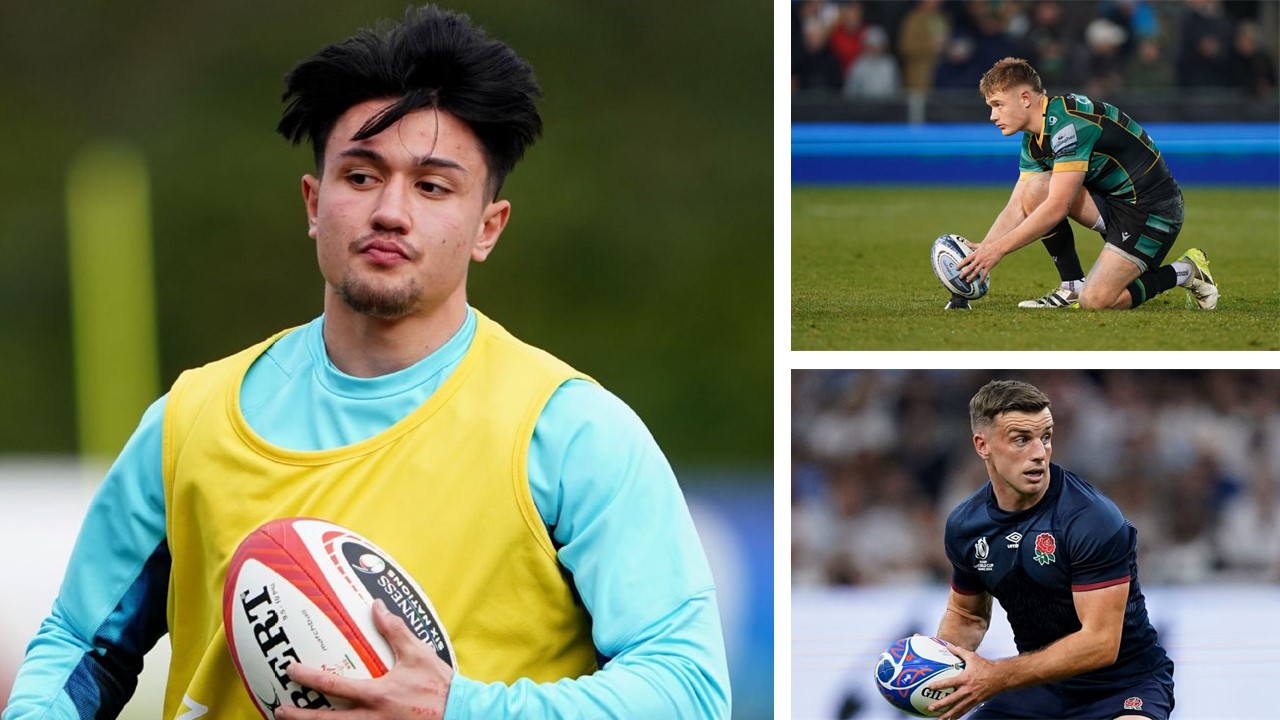
Marcus Smith contemplates a golden opportunity to stake his claim to England’s 10 jersey, potentially going missing through injury. Will it be tried and tested George Ford who gets to repeat his World Cup heroics or a chance for new boy, Northampton’s Finn Smith to announce himself as a contender?

England Coach Steve Borthwick is plagued by a selection dilemma. Prior to this week, it seemed a nailed on certainty that Harlequins dynamo Marcus Smith would be his first choice fly half. With Smith now injured and set to miss the opener against Italy at a bare minimum, Borthwick’s other two options Sale’s George Ford and Northampton’s Finn Smith are now at the forefront of his selection decisions. Who to pick?

If you ask us, we’d go with Finn Smith for the opener against Italy. It is perhaps England’s easiest game to gamble with and therefore a golden opportunity to give the exceptionally promising youngster a thorough Test of his abilities at this level, prior to the more demanding fixtures which lie in wait as the tournament progresses. Borthwick could then choose to follow that up with what should be a straightforward fixture against a very green Welsh side at Twickenham. After those two opening weekends, if Marcus Smith is back to full fitness then get him on the bench for the Scotland game and allow Ford who proved to be so reliable during the World Cup to start against Scotland at Murrayfield. Depending on how fit Marcus Smith is and how well Ford fares against Scotland then possibly go with a combination of Marcus Smith starting against Ireland with Ford on the bench, leaving that all important final game against France to be determined in terms of your fly half options.

Or conversely if Finn Smith has an absolute stormer against Italy followed up with a demolition of Wales, will it be Marcus Smith and George Ford who are battling it out for bench warming duties for the rest of the tournament? We still think it will be a combination of the above-mentioned scenarios, but there is no denying the quality of Finn Smith and the potential he promises for England’s future. If he and Marcus Smith are developed to their full potential during this World Cup cycle, then England could find themselves in exceptionally rude and seasoned health in the fly half department come Australia in 2027.

It really comes down to what Borthwick wants out of his number 10 for this weekend and the tone he wants to set for England for the rest of the tournament. George Ford is a more capable defensive and tactical fly half, but Finn Smith brings with him some genuine attacking flair and a boot that can be exceptionally reliable in terms of keeping the scoreboard ticking over. Furthermore, the Northampton playmaker has an exceptionally calm head on his shoulders, considering he’s only 21.

This year in the Six Nations England’s chief rivals for the silverware Scotland, France and Ireland can attack from anywhere, and as good as England are defensively their attacking game was only marginally better at the end of the World Cup than at the beginning. England know that they will have to be much more dynamic in attack coupled to their strong defensive platform if they want to build on their World Cup achievements. Ford’s big game experience or Smith’s dynamism – who will Italy have to contend with this Saturday? We can’t wait to find out, but don’t envy the decision Borthwick will have to make.

The match likely to set the tone for the whole tournament is the opener

In this year’s opening game, last year’s Grand Slam champions meet the 2022 Grand Slammers, with both looking to be the front runners for the silverware this year

Let’s face it, for many people, this is the World Cup final that never was. As a result, it is without doubt the most eagerly anticipated Six Nations opener in years. Ireland go into the tournament as the number two side in the world with their hosts for this weekend’s curtain raiser France in a strong 4th. They are hands down the best two sides in Europe, and despite some enforced changes to personnel on both sides, it’s hard to separate the two of them. Friday’s clash in Marseille has the makings of a Six Nations classic, and it’s only the beginning of what should be a fascinating tournament for both sides and their supporters.

Is there a Grand Slam in the making? We think not, but then we said that about both 2022 where France proved us wrong and 2023 where Ireland left us with egg all over our faces. As we mentioned in last week’s piece, there is the potential for a banana skin lying in wait for both these sides, most notably Scotland at Murrayfield for France and England for Ireland at Twickenham. However, that’s a bit too much crystal ball gazing for the moment, so let’s focus on the here and now and Friday’s lineups.

If you look at the front rows, we think it’s impossible to separate the two. Tadgh Furlong hasn’t been his barnstorming best in the last year, but then perhaps neither has Cyril Baille. Peato Mauvaka is just as dynamic at Hooker as Ireland’s superman Dan Sheehan. Perhaps the biggest question is, will Andrew Porter be able to compete with the behemoth that is France’s Uini Atonio in the front row? If he can, we’d argue that Ireland look like gaining some ascendancy come scrum time. Add to that the power that Tadgh Beirne brings at second row alongside spectacular newcomer Joe McCarthy, and all of a sudden, Ireland really start to look the part in the forward exchanges. However, it’s France’s back row that is likely to prove the great equalizer as the two Captains go at it, France’s Gregory Alldritt and Ireland’s Peter O’Mahony. For us whoever gains ascendancy will in part be down to who gains the upper hand at number 8 at the breakdowns and in the loose, making the struggle between France’s Alldritt and Ireland’s Caelan Doris one of the highlights of the afternoon.

In the half backs, it’s the first real examination of what life after Johnny Sexton looks like for Ireland. The legendary fly half who finally called time at the end of the World Cup on one of the greatest careers Irish rugby has ever seen will take some replacing. The man tipped with filling those giant boots is Munster’s Jack Crowley. We like what we’ve seen so far, and like most, do not see the point of trying to draw comparisons with Sexton. Crowley will need to develop his own identity and style, and we sincerely hope the Ireland Coaching staff will enable him to do so. He’ll have his work cut out for him though on Friday night in Marseille against France’s Mathieu Jalibert who has seized with both hands the opportunity afforded him by regular fly half Romain Ntamack’s prolonged absence due to injury. Maxime Lucu is another who is no doubt relishing the fact that he gets to duke it out with Nolann Le Garrec for the scrum half berth this Six Nations, with the latter consigned to bench duty for Friday’s encounter. France may be missing the likes of Dupont and Ntamack in this part of the field, but they still ooze world class quality.

In the backs, it’s a veritable assortment of some of rugby’s finest dancing feet. Perhaps for Ireland, the most interesting battle and one we can’t wait to see is that between Ireland’s Calvin Nash and France’s Yoram Moefana. The Munster winger is a player who has consistently caught our eye in the last year, and we’re delighted to see him finally get a chance to prove himself on one of Test Rugby’s biggest stages. Mofana on the wing is an interesting call as he tends to play more in the centers, and as a result, is this a golden opportunity for a memorable debut from Nash? France’s Jonathan Danty and Ireland’s Bundee Aki are likely to steal a few headlines in the center channels. Has Ireland’s James Lowe really got the pace and defensive skills to keep the most spectacular try machine in Test Rugby right now France’s Damian Penaud in check? Last but not least one of the fastest and most reliable fullbacks in the global game right now, Ireland’s outstanding Hugo Keenan, meets the tactical nous and vision of France’s Thomas Ramos allied to a boot that rarely misses its targets.

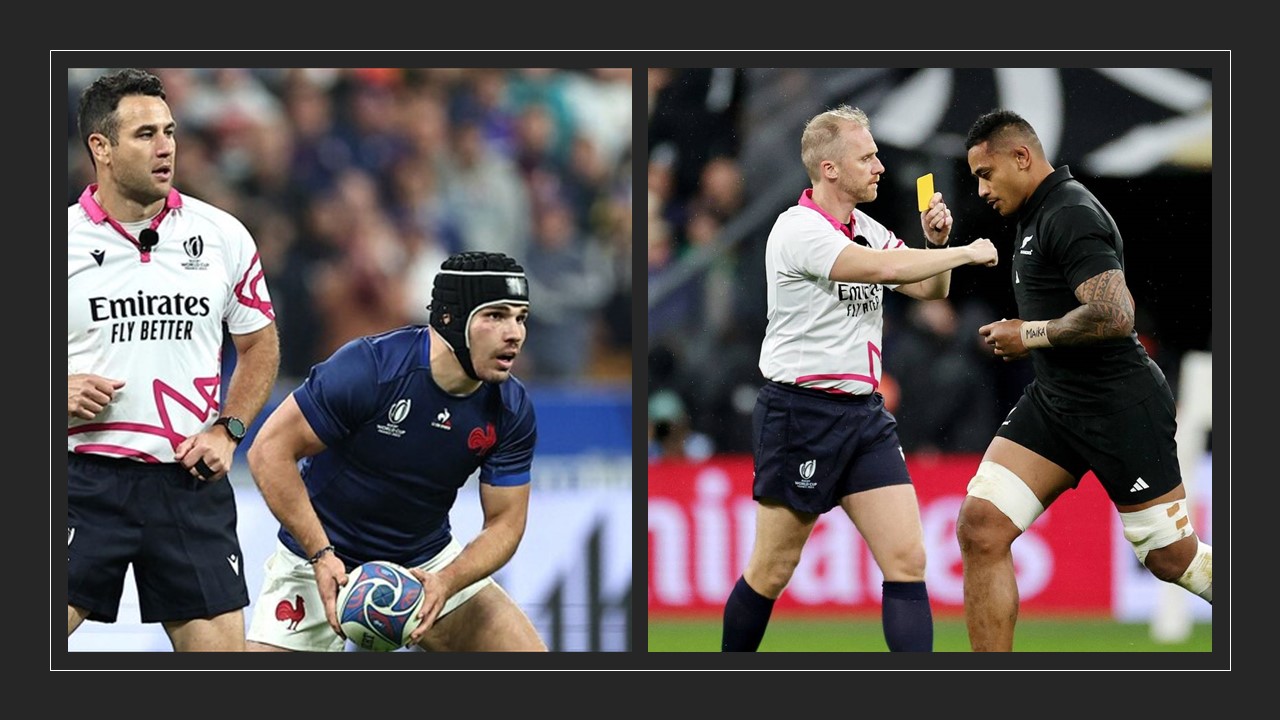
In short, what a contest we have on our hands and one we find it almost impossible to call. Either way we expect to be fully entertained for eighty minutes as two of the world’s best sides put their considerable skill sets on show in a contest that from the very outset will lay down the marker for which team will be the one to beat this year. It could be argued that by the time referee Karl Dickson calls full time, the winner will already have one hand on the trophy after only the first game of a Championship that looks set to be one of the most interesting post World Cup Six Nations in years.

England’s Steve Borthwick will want to lay down a marker that his 2nd year in charge is all about building on England’s surprise performance at the World Cup. Meanwhile, Italy’s new man knows he has to turn Italy’s momentum under his predecessor into actual wins, and as a result, Saturday’s opener is critical for both Coaches.

Steve Borthwick will want to turn England’s impressive performance against all the odds at last year’s World Cup into the ability to contest for the silverware this Six Nations. Meanwhile, his host, Italy’s new Coach, Gonzalo Quesada, knows that Italy’s recent competitiveness has to be translated into Six Nations wins

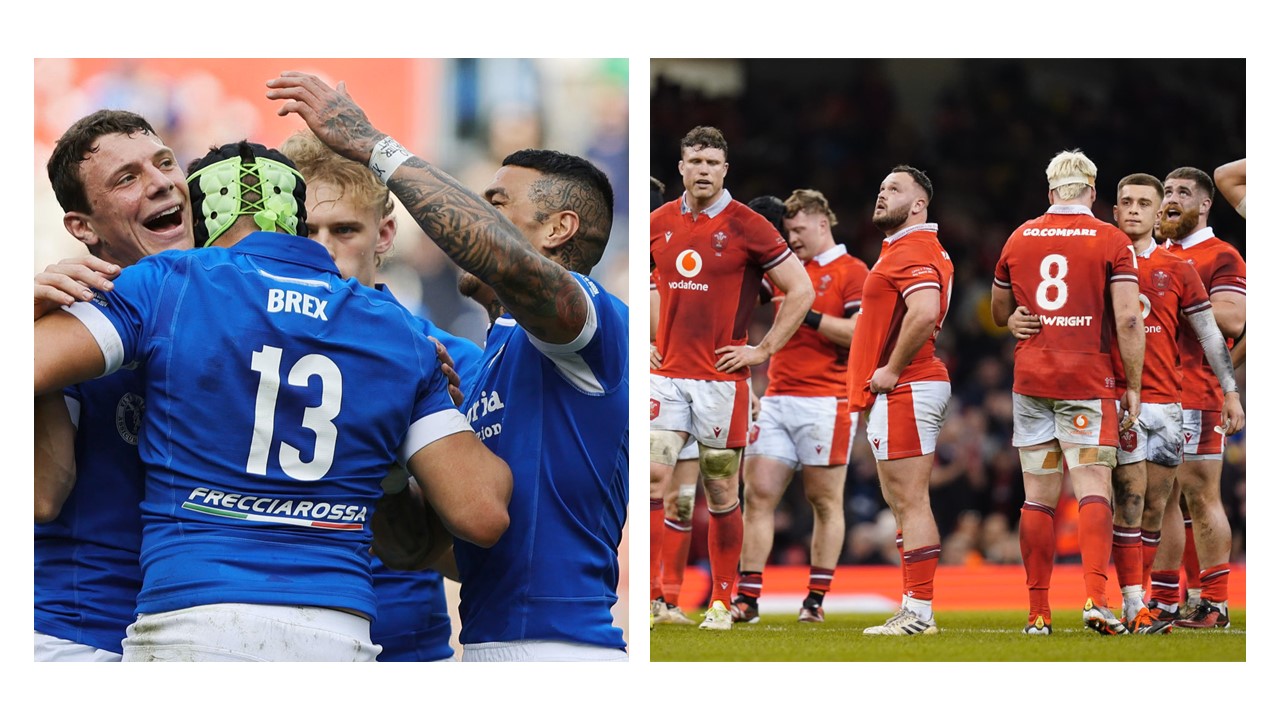
England’s game to lose – maybe? Or Italy’s chance to at last start the tournament on more than just a promising note of competitiveness? Every single game this weekend throws up some fascinating permutations, and Saturday’s dustup in Rome is no exception. England will want to lay down a marker that the promise they showed in last year’s World Cup, ultimately finishing as bronze medalists, was no flash in the pan. Meanwhile, Italy will want to show that all the promise they have shown in the last eighteen months can now start to be translated into results under new Coach Argentinian maestro Gonzalo Quesada.

While many questioned the wisdom of replacing Kieran Crowley as Coach after the last World Cup, given Italy’s blowout in the global showdown, perhaps it was time for change. Also, let’s not forget that Quesada brings with him some serious Coaching pedigree. He boasts an impressive Coaching record in the TOP14, and who can forget that in his one year in charge of Argentinian Super Rugby side the Jaguares, he managed to get them to the final. We can’t wait to see what he can do with Italy, who find themselves in very similar circumstances to the Jaguares back in 2019.

England Coach Steve Borthwick, on the other hand, knows how his charges can rise to the challenge after the World Cup. As a result, it is clear that there is a quiet sense of optimism in the England camp. A recent spate of injuries hasn’t made his selection decisions any easier, but if England can finally get their attack going then they could well be one of the teams in the hunt for glory come the closing stages of the tournament.

For Italy, despite the impressive talents of their Loosehead Prop Danilo Fischetti, they are likely to struggle in the front row and set piece contests. However, if the England second row has one of their off days, Italy could pose the Men in White, some serious problems in the shape of Niccolo Cannone and Frederico Ruzza. Ruzza’s skills in the loose and the lineout are exceptional, while Cannone is a genuine nuisance at the breakdown. It’s a capable back row with Michele Lamaro, the battering ram of Sebastian Negri, and one of the outstanding players of last year’s Six Nations number 8 Lorenzo Cannone. For Italy’s forward pack to fire, they need patience and discipline as well as knowing that miracle plays are just not part of Italy’s DNA yet.

In the halfbacks, we can’t wait to see how Super Mario meets rugby in the shape of the Garbisi brothers, Paolo and Alessandro. Paolo as fly half needs no introduction, but his brother Alessandro has been turning heads in the scrum half berth at Benetton. Tommaso Menoncello is back from injury after missing the World Cup alongside Ignacio Brex in the midfield, and this makes for a very tasty and exciting center pairing. Speedsters Monty Ioane and the exceptional Ange Capuozzo give Italy plenty of power and pace out wide, and if Tommaso Allan has a good day at fullback, then Italy have a capable starting XV if they can keep their composure.

For England, like we’ve already said, we feel that their front row should easily have the measure of Italy, though their second row could face some challenges. In the back row, apart from the phenomenal talents of number 8 Ben Earl, it could be slightly less stable than Italy’s offering particularly with the untested flanker combination of veteran Sam Underhill and new boy Ethan Roots.

After much speculation, Borthwick has gone with George Ford as his starting number 10, but should England pull away early, will we get to see Finn Smith strut his stuff off the bench and really open up the English attack, especially when allied with live wire scrum half Alex Mitchell, his Northampton team mate? Fraser Dingwall finally gets a debut in the centers despite being on the periphery of the England squad since 2019 alongside one of England’s standout players of the World Cup Henry Slade. Tommy Freeman who has been outstanding for Northampton this season gets the nod on the wing alongside Elliot Daly who most English Coaches and fans seem to have a love/hate relationship with, but whose powerful boot takes some beating. At the back, the irrepressible Freddie Steward will look to regain his confidence after a troubled 2023 season, which had as many lows as it did highs, despite his mastery of the aerial battles.

This is a genuinely fascinating contest which, in principle, England should win, but there are absolutely no guarantees. Italy have a habit of opening their campaign in style and at home in front of an always passionate Stadio Olimpico, England will need to negate the crowd from the get-go. However, as impressive as Italy have been composure and patience are not their strongpoints as matches unfold, and as a result in the last quarter their execution goes out the window as they start to chase games and their style of play becomes overly ambitious and a tad desperate. England are masters of the long slow grind and will be more than happy to let the Italians trip over their own bootlaces if they start to panic. Consequently this is a game for England to settle their nerves, start to develop an attacking game in the final quarter if they have a comfortable lead on the scoreboard and ultimately leave Italy with all the work to do.

Gatland rolls the dice against Townsend, who has plenty of reasons to smile

Welsh Coach Warren Gatland has put his faith in the future with perhaps the youngest Six Nations squad Wales has ever seen, while his opponent on Saturday fields perhaps the most settled Scottish Six Nations squad we’ve seen in years

Another intriguing contest awaits us at the Principality Stadium on Saturday in Cardiff. Many feel that Scotland are the favorites for this one, and while we can see the logic behind that, much like the game being played before it in Rome, this match may well have a few twists in its tale before referee Ben O’Keefe blows the final whistle.

Despite Wales Coach Warren Gatland naming a young squad for this Six Nations and one of their youngest ever Captains in second rower Dafydd Jenkins at 21, there is still some serious experience in the starting XV against Scotland. Gareth Davies, Nick Tompkins, Josh Adams, Adam Beard, Ryan Elias, and Aaron Wainwright between them boast almost 300 caps for Wales. Consequently, it’s not exactly lambs to the slaughter as some pundits have described it. Admittedly, we fear that the front row may well struggle against Scotland, particularly if Ryan Elias’ lineout throwing goes wayward as it has a tendency to do. In the second row, Adam Beard should lend some calm to his partner and Captain Dafydd Jenkins, but it’s still a bold gamble by Gatland to hand the youngster the leadership role in what will be a challenging campaign. Meanwhile a solid back row featuring the exceptional talents of Leicester’s Tommy Reffell ably assisted by Aaron Wainwright who has provided some much needed Welsh grunt and grit at times, should help keep Wales honest in the face of a daunting Scottish back row.

It’s that halfback pairing, though, for Wales that really needs to fire. We all know what Gareth Davies can do at scrum half and Sam Costelow has looked like a worthy successor to Dan Biggar at times, but it’s just not a reliable or consistent enough offering when juxtaposed against the havoc and controlled chaos that Scotland’s Finn Russell and Ben White can cause. Wales have no slouches on the wing in the shape of Rio Dyer and Josh Adams, but can Josh Adams keep Scotland’s one man wrecking ball Duhan van der Merwe in check while Kyle Steyn proved to be a revelation for Scotland in last year’s tournament?

However, the most fascinating experiment by both sides will be at fullback. Both Coaches have chosen to field players with one cap between them. Wales Cameron Winnet makes his debut while Kyle Rowe has a mere 1 cap to his name for Scotland. Rowe has been on fire for Glasgow Warriors, though his normal position is on the wing and Scotland Coach Gregor Townsend would have no doubt preferred Blair Kinghorn in the 15 jersey had it not been for a training injury this week. It’s a massive experiment for both sides and one that could prove costly.

Nevertheless, even with it being in the cauldron of the Principality Stadium, it’s hard to argue against Scotland coming across as the more settled and proven side. Admittedly they had a poor World Cup, and will want to atone for it, but we can’t help feeling that their exploits in France were not an accurate reflection of their capabilities and more that of being placed in a rather lopsided draw right from the get go. Scotland are invariably given the Dark Horse tag at the start of every Six Nations, but this year that label appears to have some genuine weight to it, as perhaps more than any other side they know who they are, how they want to play and what they are capable of.

So let the games begin!!!!

The Lineout Calls of the Week

The last weekend of European Champions Cup playoffs is the perfect appetizer for the Six Nations in just over two weeks’ time. While a few of the teams have already qualified for the knockout stages, for the majority of teams, places and pecking orders are still up for grabs. Even for those lucky few who have qualified, there’s the small matter of a strong finish to ensure that they get a home game in the Round of 16. In short, there is EVERYTHING to play for this weekend. The rugby up to now despite the rather clunky format of the Pool stages has been spectacular, and if any of the skills on display make it into the forthcoming Six Nations are we ever in for a treat!

On that note, with the start of the Six Nations only two weeks away, the Coaches have named their squads, and we delve into who looks the business and who looks set to upset the apple carts. As everyone else seems to be talking about it we offer our take on Welsh superstar Louis Rees-Zammit’s shock move to the NFL, and last but definitely not least we raise a toast to the exciting announcement of the first ever British and Irish Lions Women’s tour to New Zealand, as yet another affirmation of the rapid upwards trajectory of the Women’s game.

In short, there was plenty to keep our pints frothy this week, so let’s dive into it!

Champions Cup Knockout Race – it doesn’t get much more nerve-racking than this!

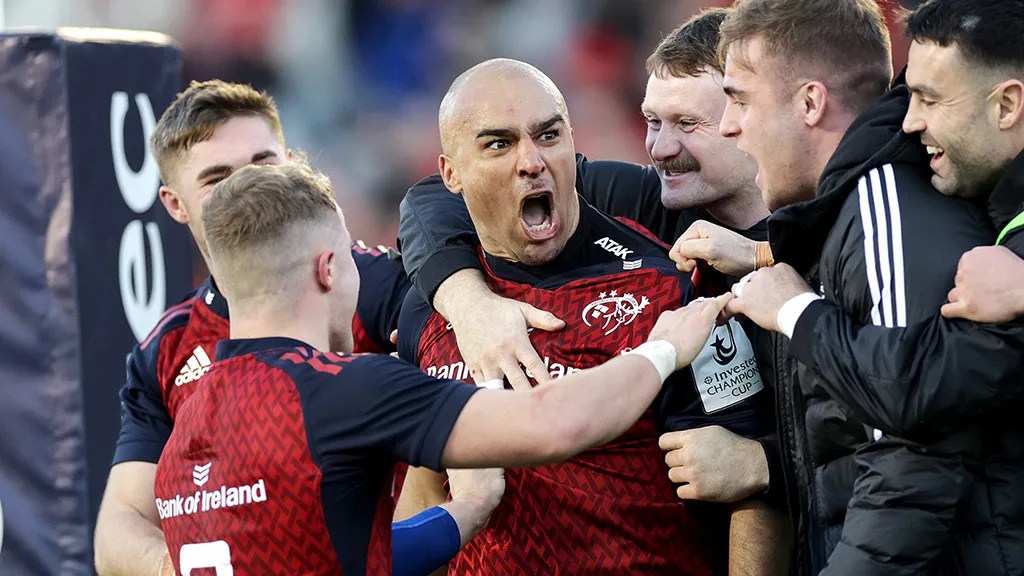
Despite some of its weaknesses in terms of structure, this year’s Champions Cup is serving up some truly extraordinary rugby propelling us into an enthralling final weekend of the Pool stages with EVERYTHING to play for for so many teams. As its tagline goes, it’s still the one to win – just ask Munster’s Simon Zebo.

First of all, if you’re like us, you will have been amazed at some of the rugby that has been played out over the first three rounds of the Pool stages in the Champions Cup. In short, it’s been high octane extraordinary entertainment. While a few teams head into this weekend knowing they have secured a berth already in the knockout round of sixteen, there is still plenty to play for across the board, especially to determine who gets home fixtures in the Knockout stages. There is only one team so far that is completely out of the running and that is Stade Francais (surprising given their form in the TOP14) but for a host of other teams there is everything to play for this weekend.

In Pool 1, Bordeaux and Lyon have already qualified, but Bordeaux will want a strong finish on the road to guarantee them a home game in the first of the knockout stages. No easy task when you consider they have to make the long trek to the cauldron of Loftus Versfeld in Pretoria and the added challenge of playing at altitude after the long journey. The Bulls look the best placed team out of Pool 1 to take one of the remaining knockout spots still up for grabs, especially given the fact they are likely to field a full strength side on their hallowed home ground backed by their fanatical supporters. For Lyon, it’s a trip to Saracens, but the English outfit will be rattled after the schooling they received at the hands of Bordeaux last weekend. Meanwhile, Bristol Bears will fancy their chances despite the trip to Galway to take on Connacht. Unlike Saracens and Bristol, Connacht’s chances of making it to the knockouts have become slim at best and require both Bristol and Saracens to slip up massively this weekend.

Pool 2 has been dominated by Bath and Toulouse, who are both through to the knockouts, making this weekend’s fixture between the two a genuine treat. Despite the genius of Bath and Scottish maestro Finn Russell you’d have to put your money on the Frenchmen who are keen to put a record sixth European star on their jersey, especially given the fact that it’s being played in front of the Toulouse faithful at home. However, English outfit Harlequins look the best placed out of the Pool to claim one of the last spots up for grabs as they host a promising Ulster side who have just fallen short of the mark this year. Racing 92 and Cardiff may have something to say about that, but sadly, especially for the Welshmen, it would look increasingly unlikely.

Pool 3 has seen Northampton back to their very best. Northampton have been a traditionally strong force in both the English Premiership and Europe. However, this year, they have been sensational. Qualifying already with seeming ease, all that remains is a tough trip to Munster, where despite a slow start, all the lights seem to have come on just when they are needed most for the Irishmen. However, if Northampton can bring their phenomenal form with them on the road, a home fixture in the Round of 16 is guaranteed. Pool 3 has been dominated so far by English teams with Exeter also showing some of the pedigree that won them the title in 2020. Exeter, despite a road trip this weekend, will be feeling more than a little optimistic about a strong finish to their Pool campaign. They face a Bayonne side for whom Europe has clearly been a bridge too far this season after their promotion to France’s TOP 14. Munster, however, may well have something to say in regards to how the knockout rounds will look, as they have looked particularly strong and midway through both their URC and European seasons have suddenly come alive. Northampton will be a hard side to knock over this weekend, but if anyone can do it, especially on the almost holy ground of Thomond Park, then it’s Munster. Glasgow and Toulon are for all intents and purposes out of the mix though the Scotsmen must surely feel a tad unlucky but there is a chance they could make it as they have had a strong campaign for the most part.

Pool 4 remains relatively wide open, with only Leinster having already secured a spot in the knockout stages. They face a challenging trip to knockout hopefuls Leicester, but a home Round of 16 fixture would appear to be nothing more than a formality for the Irish juggernaut. However, for everyone else, it’s open season. The Stormers have been playing some extraordinary rugby this season and will definitely fancy their chances on the long road trip from Cape Town to Paris to face a Stade Francais side playing for nothing more than pride. However, Leicester Tigers and Sale Sharks are still VERY much in the mix for a strong finish. Leicester’s date with Leinster is a potentially serious fly in the ointment for the English outfit, even if it is a home game at Welford Road. Meanwhile, Sale have the unenviable task of hosting a La Rochelle side that may be coming to the party slightly late but who now look in genuinely ominous form. If we were to place our bets on how the Pool will finish we’d argue La Rochelle second, Leicester 3rd and Sale 4th, however we’re definitely holding onto the receipt for our crystal ball fearing it could end up being a tad defective.

Either way, we’re all in for a genuine festival of high octane rugby this weekend, and you won’t want to miss a second of it!

Six Nations Squads – on paper, these are the three to beat!

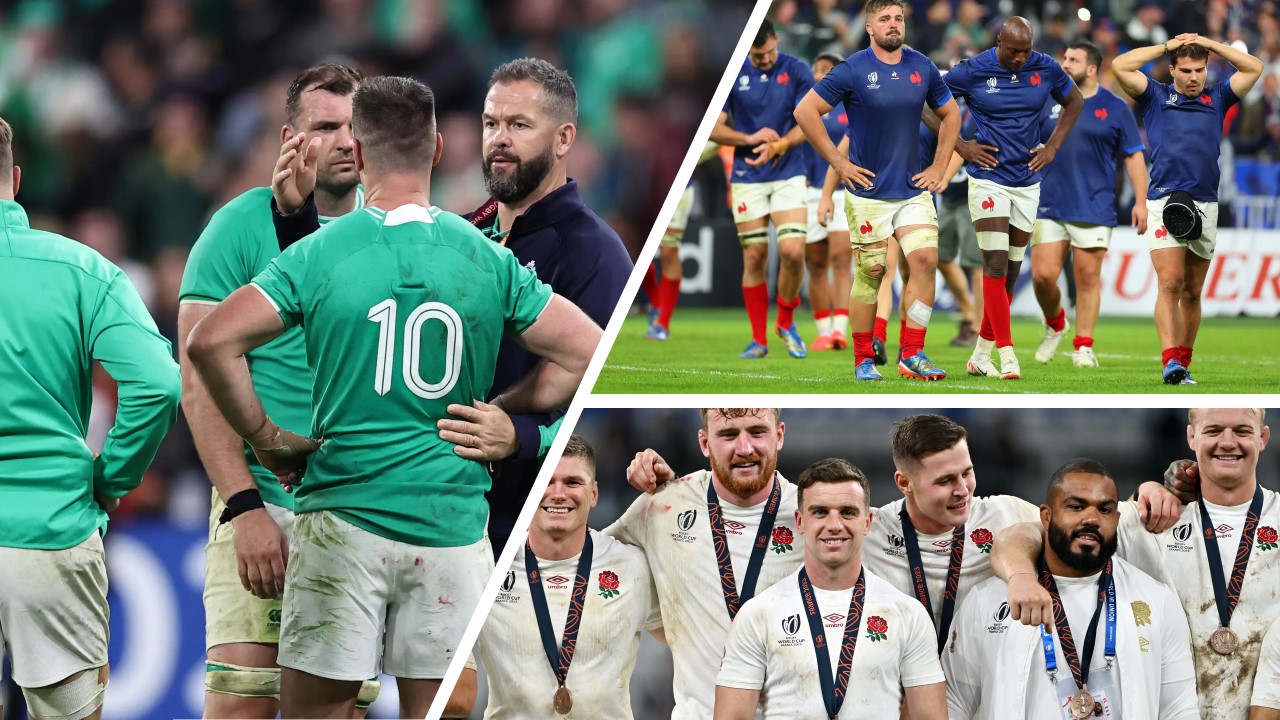
After watching French teams in action in the Champions Cup, it’s hard to deny Fabien Galthie’s men the favorites tag, but Andy Farrell’s Ireland may have a lot to say about it while Steve Borthwick’s England hope that their surprise performance at the World Cup and some stellar performances from English clubs in the Champions Cup might help them get into the top three.

Like we said last week, we are really looking forward to the start of this year’s tournament, unlike in past tournaments that have come straight off the back of a World Cup. There are a lot of new faces in the squads, coaching shuffles, and if form in the Champions Cup is anything to go by, we are in for a treat. We hold that France, Ireland, and England are the three taking the first three spots on the grid, but as always, we’ve had massive difficulty placing Scotland in terms of their chances. However, for the purposes of this piece, we’ll go with our gut and stick to the order we’ve settled on after much debate as to who the three front runners may end up being.

France must surely be the side looking most likely to win it. Sure there won’t be Antoine Dupont in the mix or Romain Ntamack, but then just watch a highlights reel of some of the French teams in Europe and all of a sudden that point seems null and void. Perhaps our only concern would be in the prop department, but at Hooker France is stacked with Peato Mauvaka and Julien Marchand set to make life a misery for the other teams. Meanwhile, they have depth in their second and back rows that most Coaches can only dream about. No Antoine Dupont, we hear you say well what about Maxime Lucu and Nolann le Garrec, and it almost seems like a bit of a moot point. The same can be said about the absence of Romain Ntamack with Matthieu Jalibert showing some career defining form at the moment. Their backs set a blistering pace, and the center channels are both sound defensively and lethal in attack. In short, we are struggling to find any deficiencies in this French squad. However, that’s what we said about France’s World Cup ambitions, and look how that turned out.

France this year will be without their traditional home of Stade de France as the venue is off limits due to preparations for Paris hosting the Olympic Games this summer. With both of their games against the other two title contenders, England and Ireland, being at home, the draw has certainly favored France this year. The only potential flies in the ointment are a very difficult trip to Scotland and the visit from Italy which for some reason often tends to catch France napping, though usually only at the start of the competition and this year’s fixture against the Azzurri is mid tournament. Wales should be nothing more than a formality even in the Principality Stadium, leaving le Crunch against England and a possible Grand Slam in the mix in Lyon on the final weekend of the tournament.

Ireland, though, may well have a great deal to say about France’s title ambitions, and the opening game of the tournament between the two may well set the tone for the entire Championship. The big question for Ireland will be what does life without Johnny Sexton look like. It’s going to be a three way race for who gets to wear the ten jersey going forward between Munster’s Jack Crawley and the two Leinster representatives of Ciaran Frawley and Harry Byrne, with the Munsterman clearly taking pole position. There’s a new Captain in the shape of 34 year old Shamrock warrior Peter O’Mahony, and we’re expecting second rower Joe McCarthy to cement his place in Ireland’s future over the coming weeks. In the meantime, expect to see two Ulstermen also make a name for themselves going forward, Number 8 Nick Timoney and Hooker Tom Stewart. There are all the usual suspects in the backs but a player we are really excited to see is Munster winger Calvin Nash, and can Ulster’s Jacob Stockdale return to the form that took the world by storm a few years ago?

Ireland face a challenging schedule, however, and it remains to be seen how this newer looking Ireland fare with the majority of their fixtures being on the road. They start off with a daunting trip to Marseille against France, and their only home fixtures are against the two weakest teams in the competition Italy and Wales. They also have the unenviable task of ending their campaign with two exceptionally tough road trips to Twickenham to face England and then end their tournament at Murrayfield against a Scotland side that will either be the revelation of the Championship at that stage or ending on their traditional damp fizzle. As good as Ireland are, given their schedule, we can’t help feeling that they’ll end up finishing a strong second with a Triple Crown in the bag.

If England’s surprising run through the World Cup finishing as bronze medallists is anything to go by, then they could be the side that everyone writes off at their peril. Furthermore, add into the equation the stunning form of sides like Northampton in the European Champions Cup, and all of a sudden, England look like they pose a genuine threat this year. Coach Steve Borthwick has settled into his role and seems to have the buy-in of his players. In short, this could be a genuinely fun year to be an English supporter after the misery of the last few. If England’s forward pack can gel and keep its discipline then there is the nucleus of a very potent unit there, especially with Borthwick cleaning out his cupboard of players that can no longer make the cut giving room for a younger generation to shine. The same can be said of the backs, and with no Owen Farrell in the mix, is this the year for Marcus Smith to really make the 10 jersey his own?

England start their campaign with a potential banana skin before they have had time to gel, by heading off to face a new look, Italy, under new management in the shape of Gonzalo Quesada. The visit from Wales to Twickenham should consolidate whatever good work gets done in Italy, preparing them for one of their most difficult assignments of recent years, a daunting trip to Murrayfield and their nemesis Scotland. If they emerge smiling from that encounter, then they will fancy their chances against a Johnny Sextonless Ireland at Twickenham before heading off to end their campaign against France in Lyon. Le Crunch match may not be being played at the Stade de France, but the noise generated by the 60,000 crammed into the Stade OL will be intimidating to say the least on the final game of the Championship especially if France are chasing the Grand Slam at that point.

Six Nations Squads looking to ruffle some feathers at the top

Scotland’s Gregor Townsend may have something more celebratory than just coffee in his cup come the end of the Six Nations as once again Scotland look set to spoil everyone’s parties, while Italy hope new Coach Gonzalo Quesada can finally nudge Italy over the hump of underachievement and write Warren Gatland’s Wales off at your peril despite the dismal state of rugby in the Principality

The trio of Scotland, Wales, and Italy may not be silverware contenders this year, but their potential to derail the best laid plans of the other three is a genuine possibility. Having said that, though, we genuinely feel that Scotland could well end up surprising us all and end up being in with a shot at the title this year. That may sound like a broken record, but bear in mind that the Scots made an early exit from the World Cup, and their seasoned veterans may well be the freshest of the top flight stars heading into the tournament.

We had a genuine tussle over where to put Scotland in terms of their chances heading into this Six Nations. Some could say they are definitely in it to win it. However, the issue of a lack of tournament consistency and staying power remains for us Scotland’s genuine Achilles Heel despite some of its seriously world class talent. In short, will this year be any different? Make no mistake, Scotland head into this tournament with some genuine depth across all positions and, for once, are not nursing a casualty list from hell. The talent, skill, and genuine grunt where it is needed is all there this year in Coach Gregor Townsend’s selections. The question simply remains as to whether or not they can go the distance for five rounds. We would like to say that this is the year, but sadly, history has proven us wrong every time. In the interim, however, we can guarantee that Scotland will provide us some of the most memorable games of the tournament as well as throwing the form book out the window. In short, be prepared to be entertained by the Men in Blue.

The tone for how Scotland will do will be set by that trip to Wales on the opening weekend. Put Wales to the sword and follow it up with throwing France off their game at Murrayfield a week later and all of a sudden Scotland could be in it to win it, especially if they manage their now customary win over England in Round 3 also to be held at Murrayfield. It then becomes that classic question of whether or not Scotland can find the formula to finally go the distance for a change. Traditionally, they run out of gas in the final rounds of the Championship, and this year will also not be kind to them in that regard. There is the awkward matter of a trip to Rome, which has often caused them to blow a tire in the past followed up by a final game against Ireland at the Aviva who by that stage could be chasing a Grand Slam in front of a delirious Dublin crowd. We’ll learn a lot about Scotland this Six Nations and what it means for the future and this next World Cup cycle.

Wales may surprise us all, and despite the ongoing crisis of confidence going on in the game at a domestic level, Coach Warren Gatland’s ability to turn the Men in Red into a formidable force that defies domestic form is legendary. He’s gone for one of the youngest squads ever seen in a Welsh Six Nations tournament, and there is no doubt about where his priorities lie – you guessed it Australia and the World Cup in 2027. While he will want to see his side competitive, his and perhaps even many Welsh supporters’ expectations of this tournament will be all about performance and building for the future rather than results. It’s a genuinely exciting Welsh squad that, while it may lack experience, is not short on talent, and the building blocks for the future are there for all to see. If this crop of Welsh youth thrives at Test level, then by the time the 2026 edition of the Six Nations rolls around expect Wales to be very much in the hunt for the silverware regardless of the woes of the domestic game.

The Welsh fixture list is not overly kind to the Men in Red this year, although they do have the advantage of getting their campaign underway at home to a Scottish side that is already causing a stir. However, if their opener doesn’t go well, then a confidence of crisis could set in for Gatland and his young charges as they spend the next two rounds on the road against Ireland and England. They end their campaign in the noisy yet comforting cauldron of the Principality Stadium against France and finish against Italy. However, this final fixture against the Azurri even in Cardiff has often proved to be a giant banana skin for them in recent years and it will be fascinating to see how well this young squad has coped with the pressure by this point.

Last but not least, traditional Wooden Spoon holders Italy look to show that the progress made under former Coach Kieran Crowley in the last two years was no flash in the pan. Under the new management of Argentinian Gonzalo Quesada, Italy look to hopefully turn a corner at long last. We admit that we like everyone else sound like a broken record when it comes to describing Italy at the start of every Six Nations, in our hopes that this year is the year that Italy finally silence their critics. Will Italy finally transition from feisty competitors who still manage to clutch the Wooden Spoon after yet another seemingly false dawn into a side that can genuinely compete for a spot in the top three finishers? It’s still a relatively young side, but boasting enough experience to make life difficult for some of the bigger teams. Add into the mix Benetton’s stellar form in the URC where they currently sit second as well as being serious contenders for Challenge Cup silverware this year in Europe, and there is room for cautious optimism if you’ll be sporting an Italian jersey over the coming months.

Nevertheless, they only have two home games this Six Nations, albeit their opener is against England in the Stadio Olimpico in Rome. Catch England napping, and all of a sudden, Italy could build some momentum for an almost impossible trip to Ireland a week later. However, there’s that two week lull in between before a trip to Lille, a venue which may suit Italy against France as the north of the country is not a traditional rugby heartland for Les Bleus – not exactly a neutral venue but also not the deafening cauldron of the Stade de France. They then return home to face a Scottish side who at that stage will either be a) waiting to unravel in the most spectacular yet depressingly familiar Scottish fashion or b) dismantling everyone who had the cheek to cast doubt on their Six Nations aspirations. Finally it’s off to Cardiff for a fixture that Italy often seem to relish at the end of the Six Nations – a surprise attack on Wales to salvage their campaign, especially as both these sides could at that stage be debating who will end up clutching this year’s Wooden Spoon.

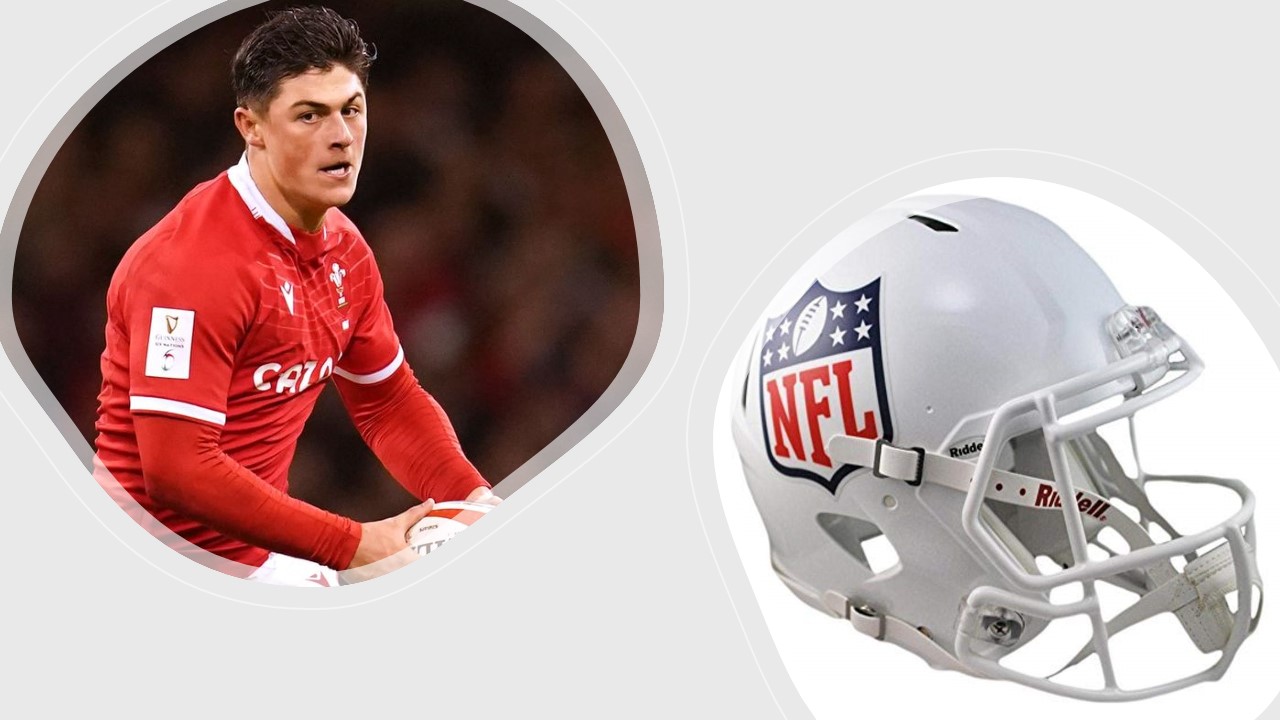
Louis Rees Zammit – the Welsh speedster aims to seek his fame and fortune across the Pond

While it definitely came as a surprise, the departure of the fastest Welshman alive to the lure of the US Dollar and pursuit of a childhood dream is to be respected and even applauded – we just hope it doesn’t prove to be the dead end it has for so many of his predecessors who have chosen similar journeys

To quote Monty Python – “nobody expects the Spanish Inquisition”, and to be honest that rather sums up our initial reaction to the announcement that all star Welsh winger Louis Ress-Zammit was to turn his back on a stellar International Rugby career and seek his fame and fortune in American Football in the NFL. Put aside our own distaste for the American version of playing with an oval ball – a game that despite its lavish budget (more likely because of it) is interrupted constantly by ad breaks and has about as much momentum as us doing our annual tax returns. Sure we appreciate there are complexities to it, not that we’ve invested the time or energy to try and understand them and that for millions of fans it’s a passion bordering on religion just as rugby is to us. Nevertheless it’s just not our cup of tea or pint of ale as we prefer our sporting pursuits served up in 80 minute bursts of frenetic action as opposed to 3+ hour marathons where the the ball can often only be in play for a mere 11 minutes.

However, clearly, for the young Louis Rees-Zammit and especially his father, the American game has been a fascination since childhood. His father, against all the odds, played the game in the UK, where it must have been a minority sport akin to playing ice hockey in the Maldives. His father was passionate about the game and instilled such passions in his son, who clearly has hankered a dream to give it a go. In that regard, you have to respect Rees-Zammit. The dreams that shape our childhood should as much as possible never be compromised. The Welsh winger also harbored a dream to don the red of his native Wales and also that of the British and Irish Lions. To his credit and through sheer determination and hard work, he has managed to do both and excelled in the process, and been a credit to both jerseys, all by the tender age of 22.

This next adventure of his should be celebrated as an example of someone living out their hopes and dreams. Admittedly, there have been very few successful transitions from rugby to American football, and despite his extraordinary talents, there are absolutely no guarantees that Rees-Zammit will break that mold. He will certainly give it his best shot despite the odds seeming to be against him. Some have said that it’s the lure of money that is driving his ambition, but we find that hard to believe. He was already on the radar for extremely lucrative contracts with several French TOP 14 clubs who would have paid him considerably more than the wages he’ll earn for at least the next two years as part of an NFL team’s practice squad. The vast majority of rugby players who have gone to the NFL have sadly not made it beyond the practice squads and ultimately returned to rugby.

While it may be a huge loss to Welsh rugby in the short term, there is a very strong chance that given the fact that Rees-Zammit is only 22, he’ll be back by the age of 25 if his NFL adventure does not live up to his expectations as it hasn’t for so many who have gone before him. All we say is give the lad a chance to try something he has always wanted to do, and if it doesn’t work out then he knows he still has a home in rugby for at least another five years when he will be at the height of his considerable prowess. Variety is the spice of life, and while it may not be our preferred pathway, we should always salute someone following their dreams. In short best of luck to Louis and we hope that he can rest assured that if it doesn’t work for him, he’ll more than likely be welcomed back by all of us with open arms to the game that has put him on the international sporting radar in the first place.

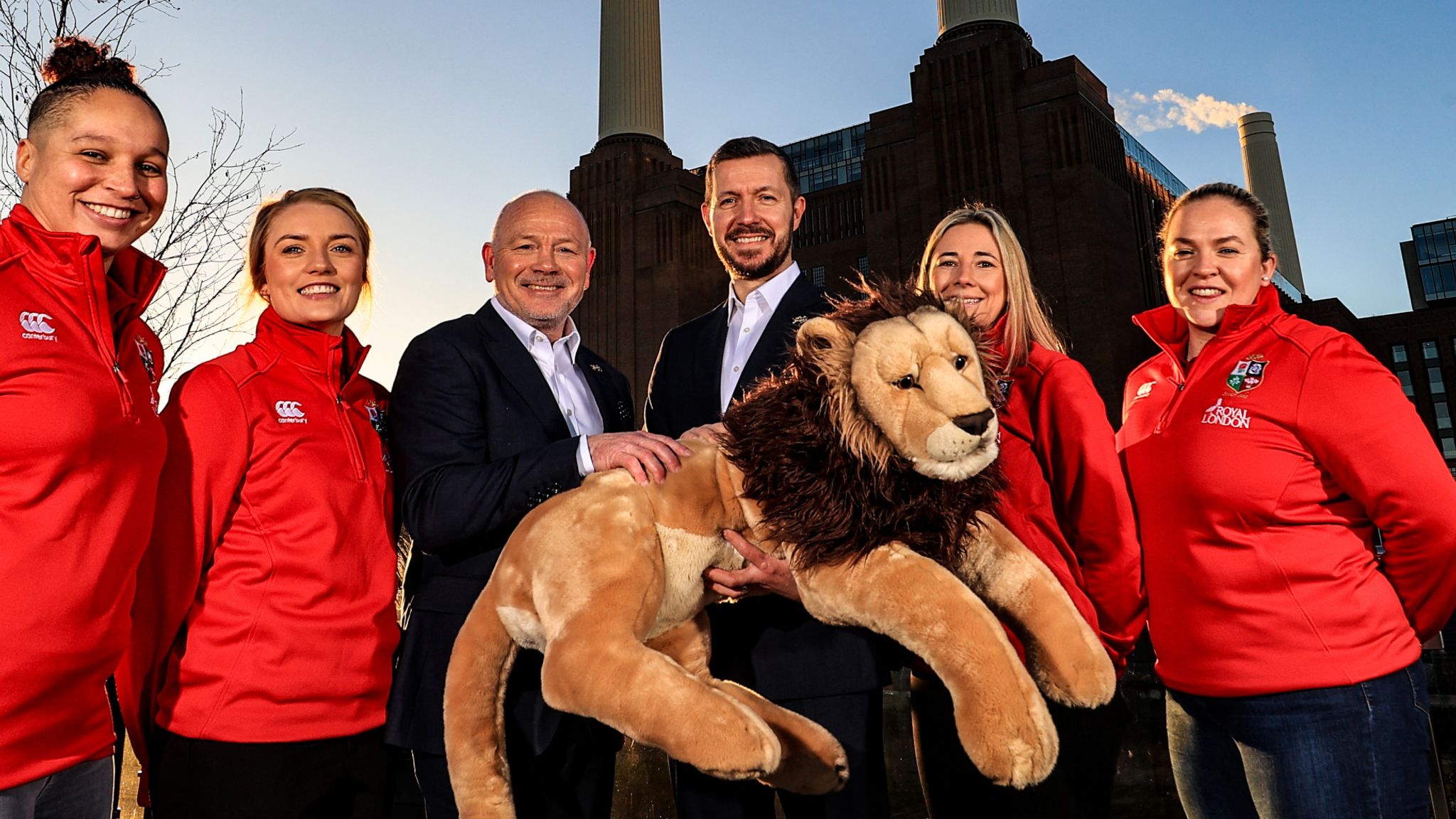
British and Irish Lions – Women’s Team to make historic first ever tour to New Zealand

The announcement of the first ever Women’s British and Irish Lions Tour to New Zealand in 2027 is a huge cause for celebration and once again serves to highlight the exciting future the Women’s game has ahead of it

We can not begin to describe how excited we are about this. As anyone who has read this blog for a while now knows, Women’s Rugby here at the Lineout is a big deal, and we aim to shout its successes from the rooftops as much as we can. We have found the growth of the Women’s game the most exciting thing that has happened to our beloved game in the last 20 years, and perhaps more than anything is bringing it to a wider global audience. British and Irish Lions Tours have a special place in the pantheon of International Rugby, even though some people now argue that their relevance is an anachronism of the past. A bit like the Six Nations, they are just as much a celebration of the color, camaraderie, and spirit of our game all set against a background of an outstanding spectator and fan atmosphere. In short, they are special occasions for fans and players alike, and given the success of the Women’s game, it is only fair that they become part of the party as well.

The tour kicks off in September 2027 and will see the Lions play against New Zealand’s Black Ferns in three Test matches in addition to a series of warmup games against New Zealand club sides. Given that the next World Cup in England in 2025 is going to boost the popularity of the Women’s game even further, there should be a corresponding positive spin off for interest in the Women’s game in the Lions Home Countries and New Zealand. If the series is a success and the final Test ends up being a decider expect numbers in attendance at Auckland’s famous Eden Park to be akin to those seen at Twickenham for last year’s Six Nations match between France and England. All this means greater Television and viewing revenues and a bigger pot available to help continue growing the Women’s game. While Lions Tours traditionally involve little input from World Rugby, this initial tour may require some support from the sport’s governing body to help alleviate some of the costs that will need to be shouldered by New Zealand Rugby to make it happen and kickstart the process for the future.

While the mechanics of it all, including finance still need some finessing, at the end of the day this is a glorious opportunity not just for New Zealand and the four British Isles Women’s sides the Lions represent, but for World Rugby as a whole as our sport continues to become more inclusive and increases its appeal to ever larger audiences.

Well, that’s it for this week, folks. Here’s a clip of the upcoming Netflix documentary series on the Six Nations to whet our appetites before the tournament begins. It airs on January 26th in a similar vein to the “Drive to Survive” series that they do for Formula 1. Take care everyone and enjoy what should be a thriller of a weekend Champions Cup wise.

The Lineout Calls of the Week – The Things We’re Looking Forward to the Most in 2024

There are so many things to look forward to – where do we begin? In the past, the year following a World Cup has often tended to be a bit of a damp squib in rugby terms. However, we have a hunch that 2024 is definitely going to break that mold. We all have our personal preferences, but this year, International Rugby should continue to shine and pick up on the momentum created by the World Cup.

We’re already seeing it in a Champions Cup that barring some disgruntlement about selection decisions by certain teams is setting us up for what should be a truly stellar set of knockout rounds. The end of the Pool stages in that competition nicely segues us into the first proper dosage of International Test Rugby with the kickoff of the Six Nations in February. That’s followed by our first glimpse of what should be a truly riveting year in International Women’s Rugby as the Women’s Six Nations gets underway, followed by the Pacific Four series and culminating in the WXV.

Then there’s the fascinating and potentially last of its kind tour by Ireland of South Africa in the summer. With the new World Rugby enforced International Calendar set to be part of the Test Rugby landscape from 2025 onwards, traditional summer and fall tours are likely to become a relic of the past with the exception of Lions Tours. Consequently a chance to see South Africa as World Champions host one of the World’s best sides in the shape of Ireland and all their travelling supporters will be a treat to savor before the dawn of World Rugby’s supposedly bright new future. Then to finish off the summer we have the mouthwatering prospect of two reenactments of the World Cup final to be played in South Africa as the Springboks host the All Blacks in two back to back matches as part of this year’s Rugby Championship.

If you’re not excited about this, then you may want to check your rugby pulse, as we and many others certainly are. But let’s delve into why we’re so excited and why our pints are already starting to froth before a whistle has even been blown.

European Champions Cup – things are going to get spicy

While Leinster, Bordeaux, Toulouse, and Northampton are all very much in the hunt for European Glory this year, there are at least 6 other teams hot on their heels with the same ambition

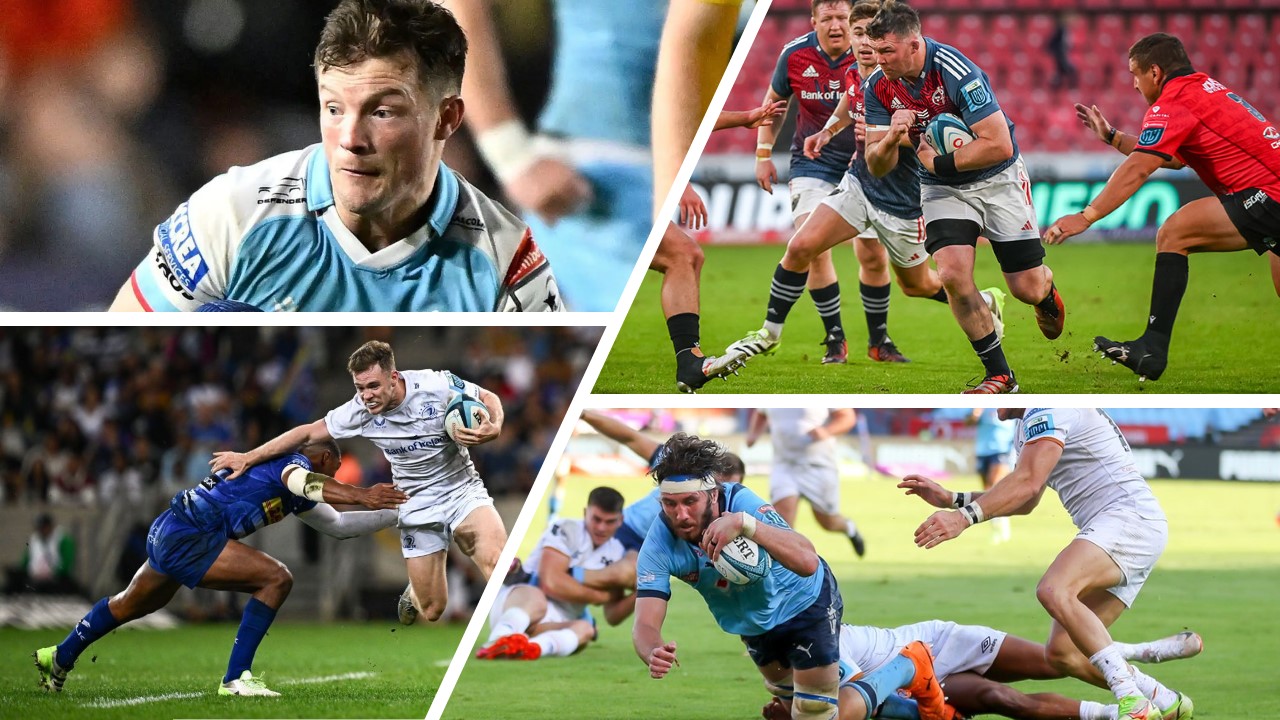
The action that kicks off this weekend in the last two rounds of the Pool stages in the Champions Cup is going to be a fascinating precursor to the Six Nations next month. The continued frisson of two South African teams in the mix adds increased interest to the whole adventure, and despite its ongoing clunky format, it has provided us with some mesmerising matches in the opening two rounds, with the final two weekends of Pool play suddenly very high stakes affairs for many of the teams.

For French interests, there have certainly been some surprises. Prior to the tournament, we’d tipped Racing 92 and La Rochelle to be the teams to beat from a French perspective. Racing 92 are dominating the TOP 14, and we thought it would be a natural progression to translate that form into Champions Cup success. However, it would seem that domestic form and European form, at least in the case of Racing 92, are chalk and cheese. The Parisians, even with the addition of Springbok superstar and World Cup winning Captain Siya Kolisi, have genuinely struggled in the opening two rounds and now have the unenviable task of travelling to Bath to take on an English outfit that just gets better and better. Meanwhile defending Champions La Rochelle have struggled to really make an impact and their decidedly middle of the road form in the TOP 14 shows no sign of abating in the Champions Cup with a tough visit from this year’s English surprise package Leicester lying in wait this weekend.

However, all is not lost for French fans as Bordeaux, now boasting the extraordinary talents of winger extraordinaire Damian Penaud, look to translate their rampaging form in the TOP 14 into European success, and should feel more than a little optimistic about advancing their cause this weekend when they host English outfit Saracens. All bets are on that the men from the Southwest of France are going to go deep into this tournament. Meanwhile, Toulouse are continuing to find their feet in both the TOP 14 and with it the right to assert their impeccable European Champions Cup credentials. The most successful French team in the history of European club competition face a daunting trip to Belfast to take on an Ulster outfit that is rather competitive, to say the least. Nevertheless, expect a late and ominous charge from both these French outfits over the next two weekends.

Meanwhile, it’s English sides that are turning the most heads in the competition so far. Despite all the uncertainties swirling around the English Premiership, it certainly hasn’t hindered a few of its clubs’ European aspirations. Bath are so far proving to be the handful we expected them to be guided by the wily boot and mind of their leading playmaker and Scottish maestro Finn Russell. They should have a comfortable home win over a struggling Racing 92 this weekend, but their final round is a very daunting trip to Toulouse. However, it’s Northampton who have so far taken everyone by storm, knocking off both Glasgow and Toulon. All they have in their way to prevent them winning their Pool is a relatively straightforward home fixture against Bayonne, and then a trip to Thomond Park to deal with a Munster side who by that stage may be completely out of the running for European glory anyway.

While Northampton and Bath may be the English front runners, Exeter and Leicester are keen to make the point that they are very much in the mix as well. Both teams sit second in each of their groups. However, the road to the knockouts is much more daunting for the Men from England’s Midlands. This weekend’s round sees Leicester with the unenviable task of a trip to defending champions La Rochelle. Although the Frenchmen are nowhere near the form they showed last year in either the TOP 14 or the Champions Cup, the thought of them getting knocked out of the hunt this weekend on home ground is something they will not entertain lightly. Leicester have to follow that up with entertaining European and Irish superstars Leinster, admittedly on their hallowed home ground of Welford Road. Meanwhile, Exeter have a slightly easier route to the knockouts. They will take comfort in the fact that they are the hosts when they meet Glasgow this weekend, and if they stick to form, then a close tussle should go their way. Their final Pool game sees them travel to Paris for a date with Stade Francais. This will be no pushover as although the Frenchmen are struggling to register a pulse so far in Europe, in the TOP 14, they are serious title contenders. Could a late run of form by the Frenchmen derail Exeter’s hopes? Either way, these four games could prove to be some of the most enthralling of the entire Pool stages.

In Ireland, we have to confess to being more than a little perplexed, as so far there are only two sides in it, Leinster and Ulster. Connacht are so far nowhere to be seen while a run of injuries is seriously hampering Munster’s campaign and their remaining fixtures look more than a little daunting. Nevertheless, Irish interests will, as they always are, be strongly represented deep into the campaign by the Leinster juggernaut. Leinster are comfortably at the top of the log in the URC and have so far looked the business in Europe. Their remaining Pool fixtures are relatively lightweight with a home game against Stade Francais and then a road trip to England to take on tournament hopefuls Leicester. Nevertheless, given their pedigree, this process should be relatively straightforward. For Ulster, however, the process is not so simple. First up is a visit from European giants Toulouse this weekend followed by a difficult road trip to Twickenham’s Stoop to take on Harlequins, with the Englishmen also very much still in the hunt for one of those last knockout spots.

We also have the sole representatives from Scotland and Wales, Glasgow and Cardiff. While Cardiff’s chances look done and dusted their truly remarkable fight against one of the tournament favourites last month, Bath should and could give their ardent supporters a glimmer of hope. Given the fact they face Harlequins at home this weekend and a struggling Racing 92 in Paris in the final round, is there an outside chance that Wales may have a representative in the knockout rounds of European rugby? Unlikely but not impossible. As for Glasgow while they may look the business in the URC their European form is fair to middling at best, and with two extremely tough fixtures left against Exeter and Toulon, we fear that Europe may be a bridge too far for the Scotsmen this year.

If your interests lie with the two newest kids on the block the South African outfits, the Stormers and the Bulls, then you may be feeling just a little uncertain this year. However, so far, if any of these two teams are going to make it through to the knockouts, then the Bulls would appear to be at the front of the queue. Despite their last game on the road being a loss to Lyon, it was only by one point, and they gave Saracens a fairly uncomfortable lesson in Pretoria at the beginning of the Championship. Given their form against Lyon on the road, we fancy their chances on this weekend’s road trip to Bristol, followed up a tough home game back on the Highveld against French hotshots Bordeaux. The Stormers have not quite had the start to their campaign they would have liked. They struggled in their opener away to Leicester but did manage a home win over defending Champions La Rochelle. This weekend, sees them hosting English outfit Sale Sharks, a match which they should win on their home turf followed up by a trip to Paris and a struggling Stade Francais. The Stormers may be starting late out of the blocks but could finish strongly with a potentially easier route to one of those last knockout spots than the Bulls. Either way, it should make for some exciting late drama from a South African perspective.

Also, while we’re on the topic of European competition, we strongly recommend if you have a FLO Rugby subscription catching Georgia’s Black Lions‘ exploits in the Challenge Cup. The Georgian outfit is on fire after thumping the Scarlets at Parc Y Scarlets and giving Gloucester the fright of their lives in Tbilisi. Their remaining two games against Castres in France and then a rapturous return to the Georgian Capital to face Clermont will be daunting propositions, but the crowd scenes in Tbilisi if the Black Lions pulls off the unthinkable will be worth the cost of your FLO subscription for the month and then some.

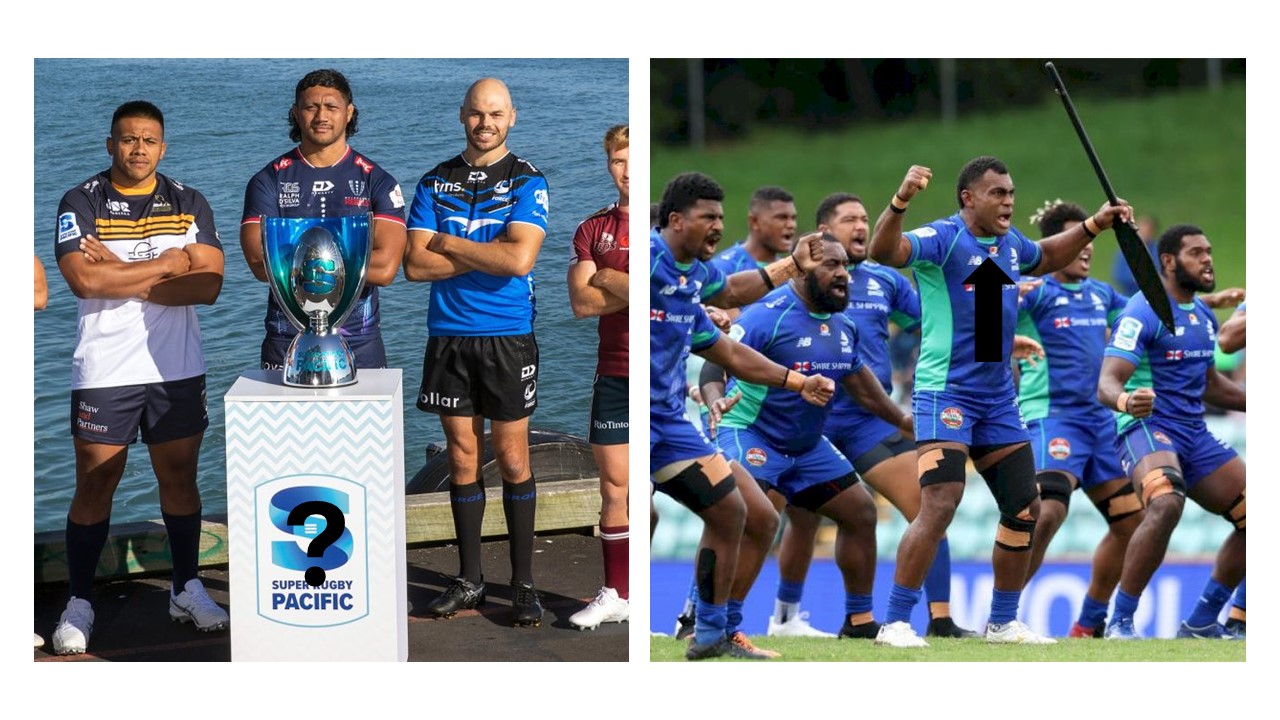
So, like we say, this tournament looks set to be a very spicy yet tasty affair indeed and definitely one of our highlights of 2024. We’d argue it’s the best club rugby competition in the world, especially now that Super Rugby is for all intents and purposes simply an exhibition league for New Zealand teams with some scintillating cameos from the Fijian Drua.

The Freshest Post World Cup Six Nations in Years

With a raft of retirements of some of the big names, while others decide to sit this one out, this could be the Six Nations tournament where a plethora of new talent gets the chance to shine straight out of the starting blocks of a new World Cup cycle, and hopefully give us one of the most open and fascinating tournaments in years.

We’ll be honest we usually don’t get all that excited about the Six Nations in a post World Cup year. Players who have been playing Test rugby flat out for a year usually arrive at the tournament exhausted and well off the pace. Despite the history, color, and tradition the tournament is steeped in, it often tends to be a slightly lackluster affair. Well, not so this year, we think.

First of all, there are a raft of retirements across the board of some of the biggest names of the decade. Ireland’s Johnny Sexton, Wales’ Alun Wyn Jones, Dan Biggar, and Justin Tipuric have all hung up their Test boots for good along with Scotland’s Stuart Hogg. Some players have decided to sit this one out, most notably France’s Antoine Dupont and England’s Owen Farrell, and injury clouds hang over a raft of other big names across the Six Nations player roster. There has been a Coaching change in Italy as well as a shuffling of the back room staff in a number of the participating countries.

Add into the mix a large group of new young players who didn’t go to the World Cup and are not suffering from that 12 month Test exhaustion factor, but are rapidly making a name for themselves in domestic and European competition. What you are likely to see are some of the youngest and freshest looking Six Nations squads we’ve seen in years. In short, it’s heady stuff and a golden opportunity for new talent to lay down some markers in this opening round of the next World Cup building cycle. We can’t wait and have a hunch it could be one of the most open and exciting Six Nations we’ve seen in years.

International Women’s Rugby – nonstop rugby excitement for 2024

Women’s International Rugby is going to be a roller coaster ride of thrills and spills in 2024 as it builds towards the apex of the World Cup in 2025

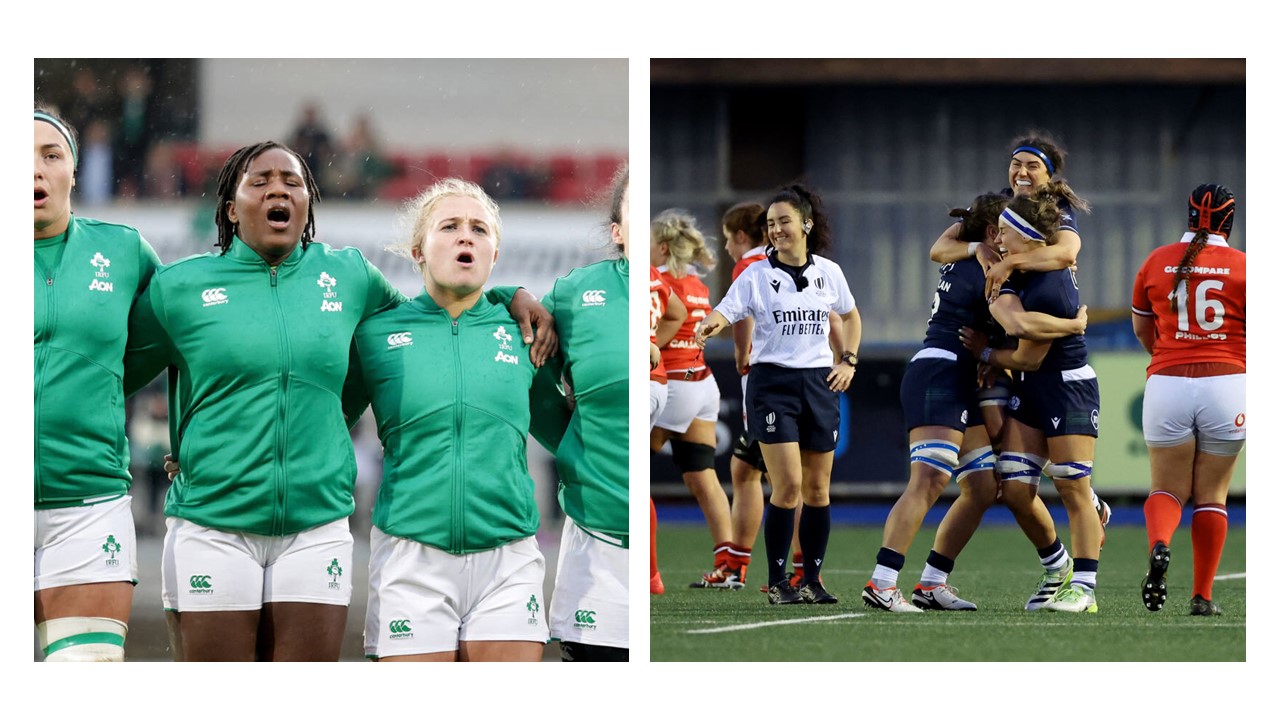
We hate to use the term product when it comes to sport, but there is no denying that Women’s’ Rugby is one that is on an almost meteoric upward trajectory and we couldn’t be more thrilled. Ever since the World Cup at the end of 2022 in New Zealand, the Women’s game has grown exponentially in both terms of popularity and viewership and with it the finances to back and grow it. Record attendances keep getting broken, most notably the 58,498 spectators who poured into the grounds at Twickenham in April to watch an epic tussle between France and England for Six Nations glory, which the Red Roses edged in an absolute thriller. In short, Women’s Rugby is a rip-roaring success, and 2024 looks set to take it to another level.

There is so much to look forward to this year in Womens’ Rugby, and perhaps, best of all, so much of it is now receiving mainstream media and television coverage, even here in Canada. Hot on the heels of this year’s Men’s’ Six Nations the Women’s’ Edition kicks off on March 23rd for five weekends of furious action. Then come the end of June/July, it’s Pacific Four tournament time as Canada, the USA, New Zealand, and Australia face off, with one of the two Southern Hemisphere countries being the host. After that, it’s the return of the WXV at a venue yet to be determined. Last year, it was held in New Zealand, but how exciting would it be if it was held in Canada this year?

Women’s’ Rugby has developed a style all of its own in the last four years, and we liken it to a thrilling hybrid of sevens and 15s rugby which brings the relative strengths of both codes together in one exciting format . In short, we simply can’t get enough and with the added bonus that our own fabulous Canadian women still remain the fourth best team in the World by quite a margin to their nearest rivals Australia makes it even better. Furthermore, Canada remains only one point behind third placed France. The gap is closing rapidly and we’re hugely excited about what Sophie de Goede and her charges can do in the red jersey this year in preparation for what should be the most competitive Women’s’ World Cup in history in England next year.

Ireland’s Tour to South Africa – Rematch anyone?

Just a few scores to be settled here, nothing more……???

After that monster clash in Paris in the Pool stages of the World Cup, it would be a bit of an understatement to say that South Africa and Ireland have some unfinished business, and what better opportunity to settle it than a two Test tour in South Africa in July. There will be other summer tours of note, such as Wales’ trip to Australia and England’s trip to the Land of the Long White Cloud, but none are as eagerly anticipated as the rematches taking place between Ireland and South Africa in Pretoria and Durban this July.

It will also be a good preparation for next year’s British and Irish Lions Coach, Ireland’s own Andy Farrell, who will be taking a sabbatical from his Irish duties starting in December this year till August 2025 to take charge of the Coaching duties for next year’s Lions tour to Australia.

The tour although short, will pose a myriad of challenges for Ireland, as in the space of a week they will have to adjust from playing rugby with all its physical and ball handling effects at altitude on the Highveld to the humid and slippery environment of a game by the Indian Ocean. The kicking and handling game you play in Pretoria is not the same game that will work for you in Durban. Farrell’s Ireland will need to be two different beasts while at the same time trying to figure out what box of tricks Springbok Coach Rassie Erasmus is likely to pull out of his seemingly bottomless hat.

In short, a quick and fascinating tour that will tell us much about the current number one and two sides in the World and where they are headed.

South Africa/New Zealand Rugby Championship Games – The Perfect mix of Grudge and Pride

The Giants will Roar in September and the Rugby World will shake

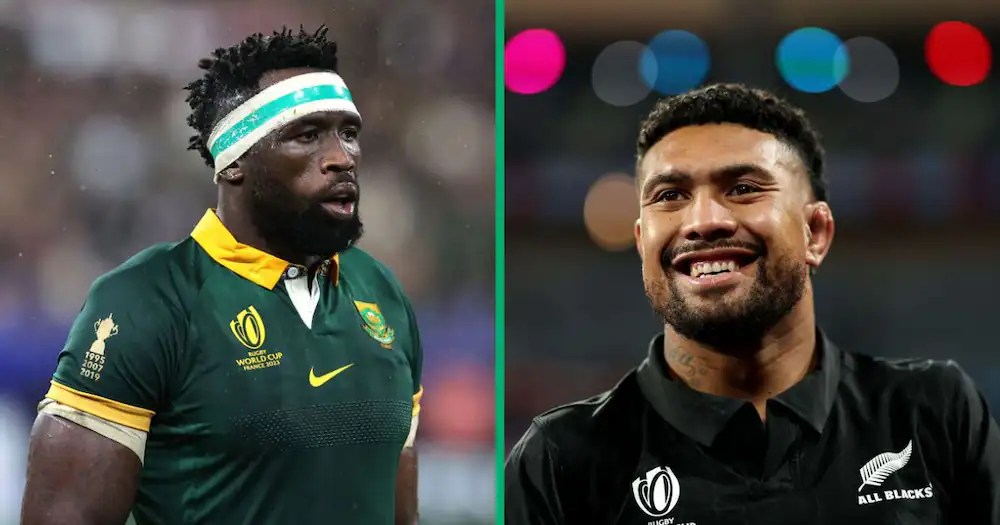
Put aside all the talk about South Africa potentially joining the Six Nations at some point in the future, as for both these teams, these two annual fixtures loom larger in their national psyches than any others. South Africa and New Zealand regard matches against other nations as important stepping stones to world dominance, but ultimately measure the mettle of how good they really are on who emerges with the bragging rights when the Springboks meet the All Blacks. The mythology around these fixtures is as large as any Six Nations game, and the buildup will start in pubs and bars weeks in advance.

This year, we will see the resumption of the mini tour format used in the Rugby Championship, and it’s the Springboks who end up on the right side of the draw this year. New Zealand will need to make the long trek to South Africa for two back to back Tests in one of the hardest places to tour on the planet. The local crowds will be keen for their heroes to repeat their World Cup heroics as well as that memorable thrashing of their Kiwi foes at Twickenham last year. Ellis Park in Johannesburg and Cape Town will be the venues and expect both to be packed to the rafters. It will be loud, raucous, and just a little bit intimidating, to say the least, for both the All Blacks and their brave band of traveling supporters. Rassie Erasmus will be the man in the Coaching Box hot seat once more for the Springboks and expect the sparks to fly.

However, as daunting as all of this will be for New Zealand, fortune will certainly favor the bold. South African players will have been playing rugby almost nonstop, unlike their New Zealand counterparts, as the one negative by product of what is now an essentially twelve month season given South African clubs participation in European competition since leaving Super Rugby. New Zealand players are likely to be coming into this a lot fresher as well as like their Northern counterparts boasting plenty of new talent. Nevertheless, probably the biggest talking point of all will be new All Black Coach Scott “Razor” Robertson’s first big test of character against New Zealand’s most important rival.

It’s the Rugby Championship, but these two matches will undoubtedly be its biggest highlights. With ongoing Coaching uncertainty in Australia and similar issues in Argentina, the likelihood of these two countries posing much of a challenge with the possible exception of the Pumas at home is slim at this stage. In the case of the Wallabies, it may be heightened if Australian sides are once more put to the sword by their Kiwi counterparts and rising stars like Fijian Drua during the forthcoming Super Rugby season.

Anyway, to wrap things up, you get the gist of where we are going with this. What a fascinating and potentially exciting year we have ahead of us. So get out your Rugby calendars, book your time off, make the necessary excuses to family and friends and hunker down for what should be one of the best post World Cup years we’ve seen in a very long time. Stay safe, everyone, and Happy New Year!

The Lineout Calls of the Week

We start this week’s piece with a heavy heart as we belatedly mourn the passing of a Canadian Rugby Icon, Toronto Arrows’ founder Bill Webb. Bill passed away at the end of August, and we deeply regret that it has taken us this long to get around to paying our tribute to such a noble servant of rugby in this country. Sadly we got caught up in the World Cup fervor at the beginning of September, and it is only now that we’ve finally had a chance to reflect on the legacy Bill leaves behind, and in doing so attempt to pay him a fitting tribute. Along with the sad news regarding Bill Webb, imagine our further grief when we learned last week that his cherished project the only Canadian franchise in the MLR, his beloved Toronto Arrows, is also shutting up shop. In short, for the Men’s game in this country, it’s been a brutal year and one that will be hard to recover from.

We also look at the decision by England Captain Owen Farrell to step away from International Rugby for an indefinite period. In large part this difficult call is a direct result of him finding himself and his family continually in the crosshairs of social media abuse, and even from English fans themselves and other countries in the stands at Test matches. We’ve already lamented the abuse directed at officials and are equally appalled when players and their families also become the targets of such cowardly behavior. It’s a growing problem in our game and must be stamped out before the rot is allowed to spread.

On a more upbeat note we look at the European Champions Cup which kicked off this weekend, and profile the three front runners along with three teams we think are likely to cause the biggest problems for everyone else, and in doing so provide the most entertainment value for your rugby watching/streaming dollar over the next few months.

Canada loses a rugby visionary as Toronto mourns the passing of one of its finest

Toronto Arrows founder Bill Webb was a legend in his own time and a deeply loved member of the Toronto and Canadian Rugby Community. His passing has left a giant hole in the Canadian Rugby fabric.

We’ll be honest. This has been a really tough piece to write. As mentioned above, like many, we were shocked to hear the news of Bill Webb’s passing at the end of August after a valiant struggle with cancer. We had wanted to write something at the time, but with all the other rugby distractions going on then, notably the start of the World Cup, we felt we would be unable to do one of Canada’s finest the justice he deserved in a rushed piece. Since then, it’s been hard to find a way to put into words a fitting tribute to a larger than life personality who had such a massive impact on the rugby landscape here in Toronto and in Canada as a whole. In short, this was a very sad day for Canadian rugby.

However, let us try and celebrate a remarkable rugby life and one that contributed so much to the growth of the game in this country. We were fortunate to bump into Bill on numerous occasions, either pitchside at Arrows games or at Hemingways in Toronto as he and other Arrows personalities sought to build a following for his beloved team. To say that Bill was an enthusiastic and devoted supporter of rugby in not only his native Toronto but Canada as a whole is barely scratching the surface of his commitment to the sport in this country. Always jovial and positive no matter how difficult things may have been for either his Arrows team or Canadian Men’s Rugby in general, it was always a pleasure to have a chat with Bill and his enthusiasm was infectious. Numerous Arrows players have cited how supportive Bill was of the team no matter where the team stood in the MLR standings, especially during last year’s exceptionally difficult season, where the team finished bottom of the league and only managed one win.

Bill started playing rugby in Grade 9 and went on to Captain the Laurier University team in his college days. From there, his larger than life personality was further developed as he spent time studying and playing rugby in England and then traveled extensively through Europe and Asia. He spent a great deal of time in Tibet and Nepal, where he even spent time as a trekking guide and was briefly detained by the Chinese authorities for a few days as a suspected spy. Such experiences would serve him well in a highly successful business career on his return to Canada.

His love of rugby and the values it holds dear served as a beacon for Bill and provided him the motivation to ceaselessly promote the game here in Canada and especially in Toronto. He was, and remained until his death, a key advisor to the Toronto Inner City Rugby Foundation (TIRF) which seeks to build community through rugby in 31 of Toronto’s underserved, low-income and priority neighbourhoods. He was also instrumental in securing funding for the Al Charron National Training Center for Rugby Canada in Langford, BC. A compassionate and loyal servant of the game, Bill felt that rugby could play a vital role in strengthening communities, especially those where young people found it hard to develop a sense of self-worth and esteem. The TIRF programme has been hugely successful in that regard here in Toronto, but most important of all ask any of its players what they feel it has done for them in life and you can see that Bill’s legacy will live on long into the future.

Bill’s tireless drive to establish the first professional rugby team in Canada, his beloved Toronto Arrows, who played five seasons in the MLR, is well documented. It was his heartfelt wish that the team should continue on after his passing, and as a result, imagine our dismay on hearing the news that, at least for now, the Arrows have shut up shop. It is our sincere hope that Bill’s wish that the team remains a part of the MLR can somehow be honored even if the team will play no part in the forthcoming 2024 season. Bill was a permanent fixture on the sidelines of every home game here in Toronto, and no matter what the scoreboard said, his commitment to and support of his players and their fans was 110%.

In short, you can never replace larger than life figures like Bill Webb. The best you can do is ensure that their legacy is honored and built upon. Bill’s tireless enthusiasm and commitment to rugby and its values is something all of us can take forward and promote in our own communities and in doing so hopefully do our part in honoring a remarkable Canadian rugby legend. From all of us here at the Lineout, our sincere and heartfelt condolences go out to Bill’s wife Agnes and his two sons James and Stephen. Bill was one of Canada’s finest, and although he may have hung up his own boots for good, his spirit will tie the bootlaces for many generations to come in this country.

Canada’s only foray into professional rugby comes to an end…..at least for now

Canada’s only professional rugby team, the Toronto Arrows is no more, at least for the 2024 season, and serves to highlight the troubled state of affairs in the Men’s game in this country with Rugby Canada nowhere to be found

Last week’s news that the Toronto Arrows will not compete in next year’s 2024 Major League Rugby (MLR) season was not the start to the New Year we had hoped for. Toronto do not appear to be alone, as North American professional rugby seems in rather troubled waters. Toronto was the second team to fold for the 2024 season, as Rugby Atlanta had also sold up shop, although in their case, they simply relocated to Los Angeles. However, this past week, we also saw the collapse of 2022 MLR champions the New York Ironworkers. In short, the competition is not really producing results, and now the lack of any Canadian teams in the League is a bitter blow.

There are large numbers of Canadian players on many of the teams in the MLR, but somehow unlike other competitions such as Super Rugby Americas in South America, it’s not really making the USA or Canada that much more competitive on the International stage. Three national teams from the South American version of the MLR competition featured in this year’s World Cup, Argentina, Chile, and Uruguay as opposed to Canada and the USA, the sole MLR countries not even qualifying. The MLR’s Glendale Raptors will participate in the Super Rugby Americas competition for 2024 which may help in the USA’s development, but it is still slim pickings and Canada remains lost out in the wilderness of professional rugby.

Rugby in North America is a very hard sell, especially North of the 49th parallel. You can essentially only play the game on the West Coast of Canada as the weather on the East Coast simply doesn’t allow for suitable playing conditions in the first two months of a regular MLR season, February and March. Add to that Rugby attempting to compete with other sports such as American Football and Ice Hockey which have absolutely mind bending advertising and TV coverage revenues and as a result sky high budget ceilings attracting a veritable waiting list of investors. There have been some brave and committed investors such as the Toronto Arrows Bill Webb in rugby in this country, but in general, Rugby is simply not a good bang for investors’ bucks in North America.

Elsewhere in the world the pinnacle of professional sport is ultimately to represent your country, which means that even in South America where soccer is the absolute king, the passion for the national jersey in any sport is so strong and such an end goal for players that you can still bring in the punters. Just watch the outpouring of national pride for the Chileans first World Cup outing this year, with even the President giving them a national send-off. We very much doubt Justin Trudeau or Joe Biden would send Canada or the USA off to the World Cup from Sussex Drive or the White House on national television. Unfortunately, in the sports that dominate the North American landscape, the pinnacle of a football player’s career is the Super Bowl, the Stanley Cup for hockey players, and the World Series for baseball players. In short, these are not international competitions. In Rugby while club passions produce some of the greatest rivalries in the sport, just watch a Munster/Leinster clash if you don’t believe us, the ultimate goal of donning your national jersey is front and center in every aspiring rugby player’s goals.

While we don’t doubt that is also the case for any player in the MLR, be they Canadian or American, their dreams simply won’t attract the funding that by comparison a young player at Toulouse or Leinster’s would. South American players are starting to make such a name for themselves, talent scouts from the three big European club competitions, England’s Premiership, France’s Top 14 and the United Rugby Championship are regular visitors to South American club games. Just witness the raft of signings of Chilean and Uruguayan players to European clubs post the World Cup.

Consequently, the demise of the Toronto Arrows is of concern to Canada’s Mens Program, and we find it slightly concerning that Rugby Canada has had very little to say about it. While it may have been difficult to keep a team going in Toronto, particularly with the sad passing of Bill Webb their primary supporter, efforts should have been made to find investors who may have been interested in relocating the team to a more logical base such as Vancouver or Vancouver Island. Surely Rugby Canada from their cozy offices on Vancouver Island must have connections to some of the considerable wealth and potential investors that are present in Vancouver and its surroundings?

Without a team in the MLR, Men’s Rugby in this country will continue to be very much a fringe sport, and its players denied the exposure they need to be competitive internationally. While the Women’s program has been a spectacular success with Canadian Women players getting lucrative professional contracts in England and France, the same cannot be said for the Men’s program. Canadian Women have been as successful as they are on the international stage precisely because many of them play their rugby professionally in Europe week in week out alongside some of the best players in the world. By comparison, our Men have no such outlet, and with the ongoing problems faced by the MLR, we’re just not sure where they are going to get it. Sadly, there are few Canadian Men’s players, or even US players, who would attract the attention of the cheque signers from the English Premiership, TOP 14 or URC.

The MLR is their best bet for the moment, but with no Canadian teams anymore, and the ongoing woes of the other teams in the league South of the border, both financially as well as very limited success in attracting a sustainable fan base, the future sadly does not look bright for Men’s Rugby in this country or in the US. With the USA set to host the World Cup in 2031, urgent action is needed with both Rugby USA and Rugby Canada needing to come together to make the MLR a meaningful competition as a path to international success. It’s a tall order, but certainly, in the case of the Toronto Arrows, it would be a fitting tribute to Bill Webb if Rugby Canada at least attempted to answer the call.

A player who always put his country first, has made the hard decision to step away to put his family first

England Captain Owen Farrell announced his decision this week to step away from Test Rugby for an indefinite period in order to ensure that he and his family are no longer subjected to abuse, particularly through social media. That he has had to do so is a sad reflection on the state of affairs in our game.

We were very saddened to hear the announcement from Owen Farrell that he has decided to take a step back from International Rugby for his own and his family’s well-being and mental health. As a result, the England Captain will not participate in the 2024 Six Nations, though hopefully we will see his return come the Autumn or England’s Tour to New Zealand in the summer of 2024. The abuse in social media of Owen Farrell has been off the charts this year and is completely unacceptable, and further highlights the blight currently affecting our beloved game, where individuals feel that they can intimidate players, coaches, officials and even their families from the comfort and anonymity of their keyboards.

Hang on, we hear you say you haven’t been exactly kind to Mr. Farrell, at times yourselves, so isn’t that the kettle calling the pot black? Agreed, it’s a fair cop, but we think there is a difference. While Owen Farrell may not be our favourite player at times on the pitch, whether it be for his problematic tackle technique or his outbursts towards officials in the heat of the moment, we have always held him in respect. While he may suffer from a lack of form at times, there is no denying that when he is on song in an England or Saracens jersey, there are few who can touch him. Furthermore, he is one of England’s most experienced players and has helped steer them to some of their greatest moments, and he has also done so in a British and Irish Lions jersey. Whether you personally like the man or not, his contribution to English rugby is immense, and he deserves our respect. We reserve the right to be critical when he or any other player is out of form, but none of it is meant in disrespect, and if it has ever been perceived as such, then we apologise.

However, what concerns us the most is the fact that certain individuals feel that a negative review of a player’s performance in the media then gives them license to target that person and their family in a torrent of highly distasteful abuse whether it be at the pitch or on the internet. There is simply no place for such behaviour in our game, and we’d be hard pressed to call those who do stoop to such levels genuine rugby fans as they simply don’t understand one of the basic principles of the game. We were very saddened to witness at both the World Cup and the Saracens/Bulls game in the Champions Cup this weekend, fans continuously booing Farrell and other players. The Bulls Coach Jake White lamented the behaviour of fans towards Farrell this weekend in Pretoria and hopefully people will get the message so that we can start to put a stop to such loutish and unsportsmanlike behaviour which ultimately tears a huge hole in the fabric of our game.

Let the rot stop forthwith. Owen, rest assured that it is our hope you’ll be back in an England jersey sooner rather than later. Whatever mistakes you may or may not have made in the past and which we may have been critical of, none of them have been made with malice on your part and are more a direct result of you wearing your heart on your sleeve and being the fierce and proud competitor you are for your country and the players you lead into battle. Starting with Farrell, let’s show every Player, Official and Coach the respect they deserve for making our game one of the greatest shows on earth!

It’s the best International Club competition in the World and these three have made it clear that they intend to be the pacesetters

With Bath, Leinster, and Racing 92 dominating their respective domestic competitions, they will be the teams aiming to be Masters of Europe in this year’s Champions Cup, which kicked off this weekend

The Champions Cup came roaring out of the blocks this weekend and left us spellbound and hungry for more. England’s Bath, France’s Racing 92, and Ireland’s Leinster are topping their respective domestic competitions, and this weekend, it was plain to see why. Bath dispatched a spirited Ulster in a match which showed the English outfit in total control, led by Scottish maestro and wizard fly half Finn Russell. Bath have a proud tradition in English rugby, and despite some very lean years recently, they are back to their very best. Meanwhile, in a rematch of last year’s Champions Cup final, Leinster traveled to La Rochelle to take on the defending French Champions. In appalling almost typhoon like conditions Leinster showed a master class of control and discipline which despite a strong challenge from the Frenchmen, saw the Irish outfit finally get to grips with a team that has denied them two successive Champions Cup trophies. Lastly although Racing 92 came just short in Paris against English outfit Harlequins, it was a pulsating contest decided on the finest of margins and showed that the French outfit looks set to only get better with each outing, making a place in the knockout stages an almost near certainty.

Bath’s route to the knockouts is challenging, but you can’t help feeling that they must feel more than a little optimistic about their chances. Their next fixture is a trip to a Cardiff side that got absolutely blitzed by Toulouse. Next up, they have to take on the might of Racing 92, but have the comfort of being able to do it cheered on by the Recreation Ground faithful at home. Their final encounter sees them travel to the South of France to take on European legends Toulouse. However, despite their pedigree, we are not as in awe of Stade Toulousain this year as we normally are. With hopefully some significant form under their belt, by that stage, the English outfit should find themselves in a strong position heading into the knockouts.

Leinster have made the traditional opening statement they always tend to make at the start of the competition. However, this year is a bit different. First up, there was no talisman Johnny Sexton steering the ship at 10. Both his replacements Harry Byrne and Ciaran Frawley rose to the occasion admirably in appalling typhoon like conditions, with the latter taking a monster 60 meter penalty kick which sealed the deal at the end of the game for the Irishmen. What perhaps was most telling was the defensive imprint of World Cup winning Springbok Coach Jacques Nienaber, who has now joined the Leinster Coaching setup. Despite repeated assaults, the Leinster defense was rock solid and was so disruptive to La Rochelle that the French unit struggled to gain any cohesion in attack. However, unlike Leinster sides of the last two years, despite the pressure and appalling conditions, the Irishmen to a man never looked flustered by the task they were handed. There was a calmness under pressure that will serve them exceptionally well in the weeks to come.

They have a difficult game against the current English powerhouse Sale up next, but at least it will be at home. That’s followed by another home fixture against France’s Stade Francais, which should be nothing more than a formality. Their last game before the knockouts is a tough trip to Leicester, but once again much like Bath should they have managed to build up a significant head of form by that stage they should make it easily into the knockouts.

As for Racing 92, we still think they are going to be one of the French teams to beat if not THE French team to beat. Star signing of World Cup winning Captain, South Africa’s Siya Kolisi, is already paying massive dividends as evidenced on Sunday night at Paris’ La Defense Arena. Harlequins were a very tricky proposition, and as mentioned in the next section below, we think are destined to be one of the surprise packages of the tournament. However, Racing took it to them for the full 80 minutes, and some of the line breaks by the French outfit had to be seen to be believed. They kept finding and creating holes in a solid Harlequins defense and were unlucky to not walk away the winners. In short, this is a team that is going to rapidly warm to the task at hand in the coming weeks and has the personnel to do so.

Their fixture list is also rather favorable as they travel to Ulster this weekend, but should have enough to get the job done, followed by a much more challenging trip to Bath. They end by hosting struggling Welsh outfit Cardiff, where the opportunity to claim those all-important maximum bonus points should be a mere formality. Their most daunting fixture prior to the knockouts is that awkward trip to Bath, which would have been so much more comfortable had they emerged the winners on Sunday night. However, with two bonus points from the loss to Harlequins, they should find themselves in a relative position of strength provided things go well against Ulster and Cardiff. They may not have gotten the result they wanted in the opening weekend, but write Racing off at your peril as we remain convinced they are genuine title contenders this year. A side that has been runners up three times must surely finally believe they can at long last end their run of being Championship bridesmaids.

Expect these three Wild Horses to be seriously hard to tame as the Champions Cup starts its stampede across the playing fields of Europe and South Africa

We have a hunch that France’s La Rochelle, England’s Harlequins and South Africa’s Bulls are going to be a rather large hurdle to any team’s aspirations to lift the European Champions Cup trophy in London on May 25th next year.

One are successive defending Champions, another a side whose history speaks volumes about English rugby, and last but not least, the new kids on the block are one of the most feared sides in South African rugby. Looking for troublemakers? Well, look no further than these three.

La Rochelle as back to back defending Champions and boasting a plethora of talent that regularly graces French Coach Fabien Galthie’s selection list will be hard to beat. Although they may have come short against Leinster this weekend at home in Monsoon Mary, it certainly wasn’t for the want of trying. They will be upset that they couldn’t breach a seemingly impenetrable Leinster defence, but they came very close on more than a few occasions, and had the ball not been a giant bar of soap fortune might certainly have favored the brave and in this case La Rochelle. La Rochelle ran at Leinster from every corner of the park and showed some genuine attacking enterprise.

They now face the long trip to Cape Town this Saturday to face the Stormers. However, despite the journey, we fancy their chances. The Stormers have simply not looked all that flash this year, World Cup distractions and absence of key personnel aside, though after their B team’s phenomenal heroics against Leicester this weekend we may have to revise that judgement sooner rather than later. However, it looks to be a perfect sunny day on Saturday in Cape Town, and if La Rochelle play the kind of attacking and kicking game they were able to put on display this Sunday in atrocious conditions, then on a fast dry track they should be more than capable of picking holes in a Stormers defence that looks porous at times. Next up they host Leicester at home and if they’ve had a big win on the road next weekend, they should be able to carry that momentum forward for both Leicester and their final game before the knockouts which is a trip to Sale. La Rochelle do not have an easy schedule as defending Champions in the runup to the knockouts but as they have proven so often this last two years they are more than capable of handling odds that would seem stacked against them.

We had a hunch that Harlequins were going to cause teams some serious bother in this year’s Champions Cup, and after their display in Paris on Sunday against Racing 92, we are now convinced. There are some very big personalities on this team who know how to upset opposition teams’ apple carts. The entire Harlequins front row, including the irrepressible mischief maker and character extraordinaire Joe Marler, caused Racing all kinds of problems on Sunday night. Joe Launchbury looked like he was once more putting his hand up for selection for England in the second row, alongside Dino Lamb, who is a bright prospect for Italy. Alex Dombrandt also seemed to be back to his best at 8, while Danny Care appeared to roll back the years at scrum half. Meanwhile, Marcus Smith made a statement that with Owen Farrell out of the Six Nations, there should be no doubt whatsoever about him sporting the 10 jersey in England’s forthcoming campaign. Andre the Giant smashed everything in his path in the center channels in the best tradition of a rampaging Springbok wing forward.

In short, watch this team as they mean business and appear to have more tricks up their sleeves than their jersey’s trademark emblem. They have a relatively favorable fixture list with no long-distance travel involved. Next up, they face French legends Toulouse at home at the Stoop before traveling across the Severn to face a Cardiff side clearly at sixes and sevens defensively and no match for Marcus Smith’s wily tricks. Their last match is back home at the Stoop against Irish side Ulster. By that stage, the Irishmen will have had a Champions Cup journey from hell having had to face Bath, Racing 92, and Toulouse, which should favor Harlequins rather nicely. Provided Harlequins don’t get complacent, we have absolutely no doubt that we’ll be seeing England’s court jesters in the knockouts.

Last but definitely not least, we have the Bulls, whose demolition of English giants Saracens this weekend at Loftus Versfeld in Pretoria was something to behold. Admittedly, the Englishmen were clearly struggling with the effects of altitude, but the Bulls played a rather dashing and almost uncharacteristic game for them. Bulls teams of old have tended to be all about awe-inspiring physicality and not much else, able to capitalise on the energy sapping demands of playing at altitude on the Highveld. Well, after watching them in action this weekend, we’d say that’s a thing of the past. They ran Saracens off the park in some glorious running and attacking rugby – stodgy and ponderous they definitely were not. If anything one of their traditional assets, the scrum was almost their Achilles Heel. Either way, though, this is a VERY exciting Bulls side to watch who are currently sitting third in the United Rugby Championship.

Admittedly, their schedule leaves a bit to be desired with two back to back trips to challenging opponents. First up, they are off to Lyon in France this weekend to attempt to deal with a TOP 14 side that put on a very impressive away from home display against Bristol Bears. The Bulls are home for Christmas but then it’s the long flight up to England’s West Country to face off against Bristol’s Bears with the Englishmen looking equally enterprising in attack and capable of some physical grunt as the Bulls did this weekend. Their last match before the knockouts, however, is against Bordeaux, who were one of the only two French teams to record a win this weekend and who feature French superstar winger Damian Penaud. However, it’s at Fortress Loftus Versfeld in Pretoria, which should be packed to the rafters if the Bulls go into this game undefeated. Next weekend’s trip to Lyon will tell us more about the Bulls’ fortunes, but we have a strong suspicion that there’s a lot more to write on this story before the knockouts.

So that’s it for this week. Sorry that it has been so long in going to press, but life and work have fumbled us into touch quite a bit since our return from France. Most importantly, we feel genuinely remiss in the fact that it has taken us so long to pay our respects to Bill Webb, and once again, our heartfelt sympathies to his family. In this week’s missive, which has placed so much emphasis on respect, it is only fitting that we start and end with Bill Webb. Missed but never to be forgotten – Rest in Peace Bill and thank you for everything you have done for rugby in Toronto and Canada.

The Lineout Calls of the Week

We have to apologise for still playing catch-up after getting back from France, so unfortunately we’ve had to postpone our review of our outstanding Canadian Women’s performance in the recently concluded Tier 1 competition of the WXV in New Zealand. However, now that we finally get to sit down and mull over what was nothing short of a stellar performance, we have to give our Canadian ladies a HUGE shout out and will start this week’s piece with a focus on their achievements. On a slightly less positive note, we’ll also be looking at the Canadian Men’s initial efforts in the La Vila competition in Spain. We’ll also take a look at the countries that now occupy the top five spots in the World Rankings after the World Cup, and what hitting the reset button will mean for them. Last but definitely not least, we’ll bid a very fond farewell to one of the game’s greatest whistleblowers – the much revered Wayne Barnes.

So without any further ado here’s what kept our pints frothy since our last missive.

Our Canadian Women do us proud yet again!!!!

Canada’s efforts in the recently concluded WXV Tier 1 tournament saw them finish a very strong second ahead of the likes of France and New Zealand, capped off by a fine win against les Bleus.

Canadian Women’s rugby continues to provide us all with hope for the future of rugby in this country as well as being a source of genuine pride. Captain Sophie de Goede and her outstanding charges continue to prove that rugby in Canada is most definitely not a lost cause. Canada’s strong second place finish in the WXV tournament sees them maintain their ranking as the fourth best Womens team in the World, and drawing ever closer to France’s third place ranking.

There is still a considerable gulf between Canada and the best team in the world England, as evidenced by Canada’s only loss in the WXV. However, considering that many of our players are playing their club rugby in many of the same professional teams in England that the Red Roses are drawn from, there is plenty to be optimistic about in terms of Canada’s ability to close the gap in the coming years. For example, England Captain Marlie Packer and Sophie de Goede pack down together in the same scrum week in week out for Saracens. Of Canada’s starting XV against France two weeks ago, the entire forward pack plays professionally in England along with Fly Half Julia Schell, Centre Alex Tessier and Winger Paige Farries – in short almost 75% of the team.

Canada started their WXV with a clinical demolition of Wales, and although the Welsh finished at the bottom of the table, they were not exactly pushovers. They were one of the most competitive teams in the Six Nations this year and ran eventual WXV third place finishers Australia extremely close. Our biggest concern heading into the WXV was that Canada, in reality, had played very little rugby since their World Cup heroics last November. They finished a strong second in this Summer’s three game Pacific Four series against New Zealand, Australia, and the USA. They then had a two game series against England in September, which saw them be competitive, especially in the second fixture, but ultimately fall short on both occasions. Still, only five games heading into the type of high-level competition that the WXV at Tier 1 level is rapidly proving to be left us concerned that they may be slightly short on game time come October.

As evidenced by their solid win over Wales, we shouldn’t have been concerned. Their second game against England which saw them take a relatively heavy loss 45-12, did set some alarm bells ringing given that the following weekend they were set to face France who put them to the sword 36-0 in the World Cup bronze medal final last November. Nevertheless, even in the loss against England, there were plenty of positives, and Canada were very much in contention for the first hour. Sadly, they needed to find another twenty minutes at this level, something we can honestly say they did against France a week later.

What has perhaps impressed us the most about this Canadian Women’s team this year is their ability to learn and learn FAST. All the mistakes they made against New Zealand in the second game of the Pacific Four series they addressed to the full against Australia a week later. The same can be said of the mistakes they made in the game against England in the WXV, when they went on to play France a week later. In short, give this team a to-do checklist, and they go out and tick all the boxes, and do it all in the space of a mere 7 days. The handling was crisper, the set piece work was tighter, and their kicking game much more precise for the most part. Still there were mistakes made and against a powerhouse team like France that is to be expected, but once Canada found their groove on the half hour mark they never looked back and from the 44th minute never relinquished their lead on the scoreboard, despite a very determined comeback from the French. A few opportunities were missed that could have extended the scoreline even further, but Canada kept their composure and made sure that all the pressure was on France and not them.

The win against France and Canada’s strong second place finish in both this year’s Pacific Four series and the WXV Tier 1 are significant milestones in helping them to build on the momentum gained at last year’s World Cup. In both competitions, they faced the best in the world and acquitted themselves well. They may have lost against the number 1 and 2 sides in the World this year, in the shape of England and New Zealand, but in both matches, they gave their opponents serious food for thought. This team knows how to win, and that culture and positivity is evident in everything they do, no matter what the numbers say on the scoreboard – in short this is a team that just refuses to give up.

It’s that commitment and never say die attitude which has so impressed us this past 18 months – qualities the Canadian Men’s Team could do well to emulate. That perhaps makes the case all the more pressing that if the Men and Womens programs are competing for limited amounts of funding, then priority in allocating said funding MUST be merit based. On that basis, the Women’s program must take priority – they’ve earned it and deserve it, plain and simple. We were appalled to learn that some of our Canadian Women had to fundraise themselves to ensure their participation at last year’s World Cup in New Zealand. Meanwhile the Men’s team who can count on one hand the number of games they have won in the last four years, appear to be under no such pressure as a seemingly endless succession of losses and mediocre performances are taken as an acceptable benchmark for maintaining the status quo in Canadian Rugby. If you ask us, that’s a red card all year long!

In short, all this Canadian Women’s team needs to do is find the quality of execution needed to finish out games in the final quarter against outfits like England and New Zealand. They have shown us this year that they can do it against everyone else, there is just that little bit extra that’s required for opponents like the Black Ferns and the Red Roses. Like we say, though, this team’s ability to learn from and correct their mistakes is exemplary, as is their togetherness as a unit and a collective belief in themselves and their abilities. We’ve loved watching them play this year and have been immensely proud of their efforts. We can’t wait to see what they can do in 2024 and feel that come the World Cup in England in 2025, they will be seen as genuine title contenders, but in an even stronger position than they were in the 2022 edition in New Zealand. So well done, Ladies, and we look forward to celebrating with you what should be an even more successful year ahead!

Meanwhile over in Spain……………what can we say?

While the La Vila competition in Spain featuring Canada, the USA, Spain and Brazil seems to be a slightly cobbled together affair in the grand scheme of things, there’s that uncomfortable feeling of “oh dear here we go again” when it comes to Canada

Don’t get us wrong. We genuinely want to sit here and write positive things about Canadian Men’s Rugby. The problem is it’s a bit like being promised a brand new exciting and groundbreaking model of a new car every year only to arrive at the showroom to find that it’s exactly the same as last year’s model, which wasn’t all that interesting to begin with. It’s also perhaps hard to find enthusiasm for a Men’s program that, in comparison to Canada’s extraordinary Womens programme, is a bit like comparing a Ferrari to a Lada. You can get both cars in red, but only one actually has any performance.

Canada’s loss by 42-20 to Spain last weekend in the opening game of the slightly makeshift La Vila tournament in Spain between the USA, Brazil, Canada, and Spain left us feeling more than a little flat. Admittedly, Canada woke up slightly in the second half and played some half decent rugby, but as always with the Mens team, it was far too little too late. What is the point of Coach Kingsley Jones wittering on about positives in the second half when you don’t show up for the first?

Therein lies the problem. Watching Canada shuffle half heartedly around the pitch in the first half with no drive, commitment, or any sense of purpose left a rather bitter taste in our mouths. We simply don’t buy the excuse that Canada hasn’t had much game time this year. While there is some validity to that crutch, Spain hasn’t exactly been pounding the Test pitches this year either. Spain did play five games earlier this year, but only in Rugby Europe (the second tier Six Nations competition) where the only genuine high-level opposition they faced was Portugal and Georgia. They did play Romania as well, but as we witnessed in the World Cup, Romania has been exceptionally poor this year. Canada got to play Tonga twice, which is almost the same. The Spaniards did play Argentina in a World Cup warmup, but that was such a schooling by the South Americans that it almost didn’t count.

As much as we continue to hold the view that the entire Coaching regime under Kingsley Jones needs to be shown the door as soon as possible at the start of this next World Cup building cycle, the players themselves need to take responsibility for Canada’s performances as well. While the Coaching quality may be seriously lacking, the players need to at least show some heart on the pitch. Most of the players looked in the first half as if they’d really rather be somewhere else. At the risk of sounding a lot like Kingsley Jones himself, there were some positives, most notably new number eight Matt Oworu. Unlike many of his colleagues he wore his heart on his sleeve the whole time he was on the pitch, and was one of the few players who genuinely looked like there was a rugby match going on and pride in the jersey actually meant something to him.

While Canada did roll up their sleeves somewhat in the second half and claw back two tries, there is no denying that they never looked like winning that game, especially given the fact that Spain managed to run in a staggering five tries in the first half. Spain, by comparison, looked like they were relishing the task at hand and weren’t afraid to make mistakes and, as a result, were highly entertaining to watch. To be honest, it was a bit like the Ferrari/Lada comparison mentioned above.

There is a strong possibility that Canada will beat Brazil this coming weekend, but let’s be honest, there are no guarantees. However, assuming that they do, what concerns us is that all the failings highlighted in the game against Spain will be swept under the carpet and Jones and his staff will start making bold predictions about the building blocks of a trip to the next World Cup in Australia in 2027. Unfortunately, this will prove nothing. Given the fact that World Rugby, in their misguided wisdom have expanded the competition to 24 teams for Australia, it is now almost guaranteed that no matter how mediocre Canada is, they will qualify. Consequently, a string of wins between now and then against other bottom of the rung Tier 2 nations will give Canada no indication of whether or not the team is actually making any progress to the point where we can once more occupy the top rungs of the Tier 2 ladder – an aspiration that in their present state is nothing more than a pipe dream.

The MLR as North America’s first foray into professional rugby is simply not producing the results at Test level that similar initiatives for Tier Two nations are having in South America and Europe, and we don’t think it’s just a question of money. In North America funding should be much easier to access than in places like Portugal, Spain, Uruguay, and Chile which have miniscule player bases and sporting cultures that are almost overwhelmed by football to the point that there is little if any room for anything else.

In short, we’re tired of the excuses. It can be better than this as our extraordinary women are proving to us every year. It’s time to wake up and smell the coffee burning gentlemen!

So where do the Southern Hemisphere’s big two go from here?

South Africa may be World Champions for a record fourth time, but there is no denying that is the end of an era for this Springbok generation while much the same can be said for some of New Zealand’s class of ’23’.

South Africa have been crowned the most successful World Cup competitor as a result of having now got four Webb Ellis trophies locked away in their cabinet. However, all good things must come to an end, and in their case, this golden generation of the last two World Cups needs a major refit. Legends like Duane Vermeulen have hung up their boots, whilst the likes of Bongi Mbonambi, Eben Etzebeth, Faf de Klerk and Pieter Steph du Toit will all be very much the wrong side of 30 come the next World Cup. Furthermore, and perhaps most importantly, will their inspirational Captain Siya Kolisi still have one more big push left in him at the age of 36 in 2027? We’d argue providing the injury gods are kind to him, probably yes, but it’s clearly a gamble.

South Africa will need some major retooling over the next four years, and while there is talent aplenty in the country, we have a hunch that it’s not quite the caliber of this extraordinary group of Springboks who have risen so spectacularly to the occasion in the last two World Cups. There’s a need for some consistency and Plans A,B, and C in the fly half position. There is no clear succession to Faf de Klerk and Cobus Reinach in the scrum half berth. The United Rugby Championship is rapidly starting to produce an impressive looking set of back and second row understudies to the likes of Etzebeth and Vermeulen, but they need plenty of game time over the next four years. However, their front row stocks still look relatively barren for now and there is ongoing confusion as to what South Africa’s midfield pairings should really look like, whilst the backline in general could use some tweaking with an eye to the future particularly at fullback.

As for New Zealand, they lose some big names after this World Cup most notably in the shape of scrum half Aaron Smith and second rower Sam Whitelock, but we’d argue there is enough new and seasoned talent in this All Black squad that will be the right side of thirty come the next World Cup. Add into the mix a new Coaching regime under the tutelage of the most successful Super Rugby Coach in history, the Crusaders’ Scott Robertson, and All Black supporters have every reason to be wildly optimistic over the next four years. When you consider that back rower and vice Captain Ardie Savea, who was without doubt New Zealand’s best player this tournament will be 34 come the World Cup in Australia and probably at the peak of his remarkable prowess and leadership abilities – it would seem that the All Blacks are in VERY safe hands for the next four years.

The only negative we can see is the continuing stagnation of Super Rugby, despite the addition of Pacific Island sides. The competition is increasingly becoming a very one-sided affair in favor of New Zealand. As a result, New Zealand teams only face genuine competition amongst themselves. We’re not holding our breath that the Australian franchises spread too thinly amongst five sides are likely to become that much more competitive over the next four years. Meanwhile, the odd defeat to sides like the Fijian Drua doesn’t really give New Zealand players enough exposure to different playing styles over the long five month Super Rugby season, before the soon to be revised international calendar gets underway in the second half of New Zealand’s rugby calendar. Juxtapose this against South African and European sides who are exposed to a variety of different styles during the course of the Northern Hemisphere club season in the shape of the Champions and Challenge Cups, along with South African, Irish, Italian, Welsh and Scottish sides all playing together in the United Rugby Championship.

This is not an insurmountable challenge for a country blessed with a depth of talent that most countries can only dream about. As shown during this World Cup there is the nucleus of a very dynamic All Black side in the making over the next four years, but they will need to be mindful of the fact that they are not the International benchmark they have been in years gone by. In many cases, the rest of the World has caught up and, in some cases, surpassed New Zealand. The aura around the All Blacks has gone even if the respect is still there in spades. New Zealand is still a side everyone wants to beat, but this new All Black generation will need to embrace the reality of the fact that they are one of international rugby’s elite rather than its focal point of excellence, if they want to keep us all guessing over the next four years.

In the Northern Hemisphere, it’s time to hit the reset button for Ireland and England, while France simply need to make some design changes

For Ireland despite the pain of yet another quarter final exit the future continues to look bright, France need to attend some classes in decision making and England need to figure out who and what they want to be while developing some desperately needed young talent

After the elation of the World Cup for some lucky nations and the heartbreak for others, one of the most exciting things after the dust has settled is the opportunity to pick up the pieces and in many cases start with a completely clean sheet of paper, as teams start out on their journey of building for the next World Cup. Of the three Northern Hemisphere countries that found themselves in the top five of the World Rankings after this World Cup, Ireland, France and much to everyone’s surprise including perhaps even their own, England there is cause for genuine optimism and excitement as they look to the future.

For Ireland, the obvious heartbreak and emotional scarring of once again not being able to get beyond the Quarter Final stages on their eighth attempt will need to be dealt with. However, we think it’s a bit different this time around. First of all, although they lost to New Zealand, unlike in other World Cups they put on a display that has earned that Quarter Final fixture in Paris the worthy title of one of the greatest games of rugby ever played. In stark contrast to previous World Cups, Ireland did not exit with a whimper come the knockouts, it was a full blooded arm wrestle lost on the finest of margins right to the final whistle.

Some old heads will likely hang up their boots after this World Cup, with talisman and Captain Jonathan Sexton already having called time on an illustrious career. However, there is a raft of exciting Irish talent waiting in the wings ready to take their place. The argument that a lot of younger players didn’t get the game time they needed this previous World Cup cycle is a valid concern, but in the next four years, this can no longer be an excuse. Ireland have to hit the reset button and hit it hard. They are blessed with depth in every position across the park but it now needs to be fast tracked from day one of this new World Cup cycle, and where it is found wanting new recruits brought into the fold in a timely and supportive manner.

Perhaps the biggest question lurking over Ireland is whether or not Coach Andy Farrell will be with the team for the next four years. His contract is up for renewal midway through this World Cup cycle, with him also being tipped for the Head Coaching job for the British and Irish Lions tour to Australia in 2025. This would necessitate him being slightly less hands-on with Ireland for up to a year. Indications would appear to be that the popular Englishman is keen to stay with Ireland till the conclusion of the next World Cup, and we very much hope for their sake that this will indeed be the case.

Farrell has done a brilliant job with Ireland and is very highly respected and liked by his players and the Irish rugby public in general. In short, Ireland will want to keep his services, and he appears enthusiastic about the prospect of his role with the national side being continued. In our humble opinion, the IRFU should be making every effort to iron out Farrell’s contract extension until the end of 2027 as soon as possible. As everyone knows we are very much against the changing of a Coach midway through a World Cup cycle, and if Ireland are serious about breaking their Quarter Final curse, then this uncertainty needs to be put to bed at the start of this World Cup rebuilding phase and not halfway through it. Do that, and despite the pain of October 14th, Ireland’s future still looks very shiny indeed.

For France, October 15th, 2023, is a day that will live in infamy for them, but it needs to be brushed under the carpet of French rugby history as soon as possible. France should have been in at least the semi-finals, had it not been for a lopsided draw, and some poor decision-making at critical moments in the Quarter Final against South Africa. However, give that loss some perspective. They were in that game all the way and only lost by one point. Admittedly, they lost control of the final ten minutes and allowed South Africa as a result to hold on and claw out what seemed an impossible win. Nevertheless, once France are able to move on, the future looks very bright indeed.

This is still one of the youngest groups of players of any of the top nations, blessed with an abundance of truly remarkable talent. Tighten up the decision-making that tripped them up on a few occasions against South Africa in the Quarter Final, and all of a sudden, you have a team that will be exceptionally hard to beat. Remove the added pressure of playing in front of an expectant and demanding home crowd in your own World Cup, and we have a hunch that France will be a lot more relaxed and composed come the World Cup in Australia in four years time. Having been in France for this World Cup, the pressure on Fabien Galthie and his charges to produce that BIG result was palpable to the point where the weight of possible failure must have been almost impossible to bear for this French team at times. France deflated in seconds once Ben O’Keefe blew the final whistle in Paris on October 15th and the country with it. They were still great hosts, but you couldn’t help but feel that despite the disappointment, a massive weight had been lifted off the shoulders of this young but very talented team.

The majority of this French squad who fell just short of the mark this World Cup will be at the absolute height of their rugby prowess come Australia in four years time, with the vast majority of them still being under thirty or just a hair over it. Scrum half Antoine Dupont will only just have turned 32 whilst Fly Half Romain Ntamack will have just turned 28 along with phenomenal number 8 Charles Aldritt, who will have just had his 30th birthday. If they and many of this French team are this good now, just imagine what they are going to be like in four years’ time with that much more experience under their belts. Meanwhile France continue to dominate the World Under 20s championship, the TOP 14 is considered the best club competition in the World, and it’s hard not to feel optimistic about France’s chances come Australia in 2027. We couldn’t help feeling that as good as France looked for this World Cup there was still a year or two more of seasoning required if they really were going to go all the way and lift the Webb Ellis trophy. That will happen in the next four years, and as a result, the rest of the world has been warned!

England was the complete surprise package of the World Cup. So much so that we have a hunch that even they were quite taken aback by how well they ended up doing. Written off by everyone, ourselves included, they exceeded expectations and then some. Did they play a particularly enterprising or attractive brand of rugby? No, but then, in reality, neither did South Africa at times, and they went on and won the thing. England still may have precious little in the way of an attacking game, but when it comes to grunt and determination and perhaps a healthy dose of sheer bloody mindedness, they were hard to beat this World Cup.

They played a shrewd defensive game at times and used their kicking game to make up for what they lacked in attack. The more they played, the more they started to believe in themselves, and by the end of the tournament, they actually looked like they were genuinely enjoying playing rugby again. As they grew into the tournament, they became more expressive and at times even started to look mildly adventurous by their own conservative standards. Owen Farrell, after some initial wobbles, rose once more to the challenge of the Captaincy and, for the most part, led his charges well. Ben Earl finally provided the edge that England has been lacking at number eight for years, while Ollie Chessum provided the added stability and grunt in England’s second row that his partner Maro Itoje has needed for so long.

Questions now remain for England about the future, and answers need to be found quickly. Owen Farrell is unlikely to be around for the next World Cup, and England’s long-term fly half prospect needs to be settled for the next four years. In short, is it Marcus Smith, George Ford, or someone starting to make waves at club level in the Premiership? England can not afford the Jonathan Sexton experiment at fly half as Farrell will be over 36 come the next World Cup. Some hard decisions need to be made here and made soon. The same applies to the scrum half berth with both Danny Care and Ben Youngs now very much out of contention. England also need to determine what they want their midfield to look like, and Manu Tuilagi is not the answer going forward, whereas the likes of Ollie Lawrence and Joe Marchant, amongst others, are. The front row definitely needs some work, but the back row and second rows are finally starting to hum.

If Coach Steve Borthwick can put all the pieces together in the next four years, and allow England to win by playing attractive attacking rugby in conjunction with their ability to win ugly when they need to and which they have proven rather adept at, then this could be a formidable England team in the making. Despite all the criticisms levelled at him after he took over from the universally loathed Eddie Jones, Borthwick seems like a genuinely likeable fellow who has transformed this team into a group that seems to enjoy playing rugby once more. He seems to have the buy-in and trust of his players and, as a result, in our opinion, needs to be given a fair kick at the can over the next four years. Give him and his team the support, staff, and resources they need, and you could well see England challenging for top honors come Australia, in marked contrast to how they started this World Cup campaign.

England’s roller coaster ride of more lows than highs since that World Cup exit in the Pool stages at their home tournament back in 2015 is now hopefully a thing of the past. Develop some consistency and learn how to play with ball in hand, and England and their supporters could at long last look forward to Saturday afternoons and Test rugby once more.

There is no denying the legacy one of Rugby’s officiating legends, England’s Wayne Barnes, has left on the game – and we’d argue it’s a positive one

While some may not have agreed with some of his decisions in an illustrious 17 year career as a Test referee, Wayne Barnes will go down in history as one of the game’s finest and his legacy will live on long after his final game in the middle which was this year’s World Cup Final

We’ll be the first to ashamedly put our hands up and say that in the early days of Wayne Barnes’ career, he wasn’t our favorite referee. We found him a touch pedantic, slightly stubborn and just a tad irritating. Since then, though, the Englishman has firmly worked his way into our favorites club alongside some of the game’s very best. He’s definitely up there with Wales’ Nigel Owens, South Africa’s Jonathan Kaplan, Ireland’s Alain Rolland, and New Zealand’s Paddy O’Brien to name but a few of the game’s greatest. In short, he has become one of the finest and most likable individuals to wear a whistle round his neck in our beloved game.

While all referees make mistakes, especially in the early days of their careers, Barnes has evolved into one of the best in the business. Sure there have been times where we might have raised a few eyebrows on some of his calls, but certainly in the last ten years, we can honestly say that we never found any of his judgements to be blatantly off the mark.

The fact that in the last few years whenever we’ve seen Barnes’ name pencilled in as the man in charge of a big Test we’ve always breathed a sigh of relief says a lot about the man and the legacy he leaves behind. Was he perfect – no? Was he fair and earned the respect of the players he officiated over – absolutely. Furthermore, we appreciated how he made it a point of communicating with French players in French and even started to get rather handy at Spanish with teams from South America. He made it crystal clear what he expected from the players he refereed in terms of standards, and we also found that he excelled at allowing games to flow and his style suited it. Games he was in charge of tended to have momentum and rarely degenerated into tedious slugfests of endless scrum resets and technicalities. In short, he allowed players and games to breathe.

Consequently we are very sad to see him hang up his whistle for good, and as mentioned in last week’s missive we have shared the collective distaste for any abuse that has been directed at him or his family over the years. Being a referee in rugby is a largely thankless task, but one that Barnes rose to with class, grace, and a touch of panache. While he may no longer be the man in the middle on Saturday afternoons, we are delighted to hear that he will continue to use his legal background to campaign against player and referee abuse in our sport, and hopefully help develop protocols to put an end to the disturbing rise in social media attacks we’ve seen in recent times aimed at officials and players alike.

So we wish “Barnesy” a fond farewell and owe him some heartfelt gratitude for his service to our game over the years, and which we are delighted to hear that he seems set to continue off the pitch. To Wayne Barnes and his family all the very best for the future and we sincerely hope you’ll continue to be the larger than life presence in our game you’ve been for all these years – we are certainly going to miss you!

Well, that’s it for this week, folks. Till our next missive take care and lots to look forward to in the coming months as we start to cast our eyes over the horizon to a Land Down under in four years’ time.

Lineout Calls of the Week – Postcards from France

That Friday, back at the beginning of September, when we all crowded around our TV screens to watch France and New Zealand, kick off Rugby World Cup 2023, now suddenly seems a very long time ago. Since then, a World Cup that was never going to be without its controversies has still somehow managed to deliver one of the most enthralling tournaments since its inception back in 1987.

Many of us, myself and my family included, were lucky enough to be there in person for some of it. The lopsided nature of the draw had its downsides, but nevertheless, in the Quarter Finals in Paris, we were treated to two of the greatest games of rugby we are likely to ever see. There was heartbreak for the host nation France far too early, and despite some of the local interest being somewhat diminished after Les Bleus Quarter Final exit, the Final itself was one for the ages which ultimately saw a team who had perhaps fought for it harder than any other, emerge worthy winners. The Pool stages showcased that despite World Rugby’s best efforts to ensure that the Top Tiers of Rugby remain an exclusive and elite club, rugby is alive and well in many far flung corners of the globe and building a passionate and committed fan base.

In short, it’s been a glorious two months that has brought with it the full range of emotions that such a showpiece event should have. We’ve all cheered, laughed, cried, made new friends, and been wrapped up in a genuine celebration of all the good things about our glorious sport. Despite some distractions, Rugby, for the most part, remains a noble game with its bedrock values of sportsmanship, camaraderie, and respect still very much intact.

In this piece, we’ll look at the things that struck us most about this World Cup and what it means for the future. We’ll be doing a separate piece on what we think the five teams that have emerged atop the World Rankings have learnt from this World Cup, and what they need to do with an eye to the next global showdown in Australia in 2027. However, for now, it’s savoring the fine glass of wine that Rugby World Cup 2023 France has been, which is most important.

So, without any further ado, here’s what struck me most about the last eight weeks, including a memorable two week sojourn in France.

It wasn’t perfect, but France is still a glorious place to host a World Cup

Paris was a fabulous host for the big games and the city’s grandeur lent itself well to the occasion, whilst across the country France’s love of the game was clearly evident, especially in some of its rugby heartlands like Toulouse

France is just a great place to host a Rugby World Cup – that’s all there is to it. Sure, there were some teething problems in the opening weeks of the tournament, but even without France featuring in the final two weekends, the country embraced the tournament hook, line, and sinker. Everywhere you went, you were reminded that France was hosting Rugby’s big show. Although France were knocked out early, and as a result the interest was perhaps not as all encompassing as it could have been, there was still plenty of bonhomie and good cheer towards the supporters of the remaining participating nations who were to be seen everywhere. Some cities such as Toulouse, where we ended our own trip, simply live and breathe rugby – it’s everywhere. Kids were playing rugby in the old town squares, rugby balls were to be seen in every shop window and before long you’d find yourself at the Stade Toulousain shop kitting yourself out in one of their famous jerseys.

People were friendly, enthusiastic, and perhaps best of all even in Paris, you never felt that you were being taken advantage of. Let’s face it there was plenty of opportunity to gouge fans of their hard earned trip of a lifetime cash, but it just never felt like that. Fans at the packed Stade de France for the two Quarter Finals we were at were, for the most part, orderly and respectful. The trains ran well and on time. It was easy to get to and from the games despite the 80,000 plus in attendance at both. The atmosphere was incredible at the Stade de France, and we wouldn’t have missed it for the world.

Our whole experience was perhaps best summed up on our final day in Toulouse, as I took my 11 year old son to the Stade Toulousain shop in the centre of town before catching the train back to Paris and our flight home. Still proudly wearing his French shirt, one of the shop assistants smiled at him as he bought his Toulouse jersey, as his two favorite players, Romain Ntamack and Antoine Dupont, play for the famous French club. “Don’t worry, son,” he said, “we may not have won, but you were here and shared our journey with us – and that is what is important.”

Thank you France!

South Africa’s win showed that sometimes the desire to win can be even more important than the skills needed to do so

South Africa’s three wins in the knockout stages, all by a single point are a feat we are unlikely to ever see again, but as a result they have emerged worthy Champions for a record breaking fourth time

South Africa is the most successful country in World Cup history, having now won the Webb Ellis trophy four times. While they may not have played the most attractive rugby at times, they showed that they simply know better than anyone how to win those fine margins at this level, and what it means to them and their country. Every country deserves to lift a World Cup, but as the tournament progressed, it was very hard not to get behind South Africa regardless of who you supported. South Africans don’t have much to cheer about a lot of the time given the problems their country is grappling with, but it was plain to see how much winning this World Cup meant to them, and especially to do it against their greatest rivals of all time New Zealand.

Their Captain, Siya Kolisi, has been one of the standout players of the tournament. He has embodied the principle of leading from the front and what it means to play for your country. His humility and pride in the jersey has been humbling to watch, as has his remarkable ability to make everyone on the team feel included in South Africa’s remarkable journey this past two months. While this may be his last World Cup in the green and gold, his legacy will serve as an inspiration to not only those in his own country but people around the world for generations to come. In our humble opinion, he is one of the greatest sportsmen of all time, and many could do well to emulate his example, particularly in terms of how to be a leader.

South Africa had perhaps the toughest route to the final of any of the teams. Starting off in the Pool of Death, which saw them lose to Ireland, they had to face the hosts France in the Quarters. That Quarter Final was without doubt one of the most remarkable games of rugby we have ever witnessed, but as they did in all their knockout games, South Africa found a way to control those final ten minutes and secure a one point win, even if all the odds screamed against it. They did the same against England a week later, and then we all know what happened last Saturday against New Zealand. Knockout rugby is a game of very, very fine margins and it’s safe to say that South Africa perhaps more than any other Test nation, know how deep you have to dig to eke out those wins. In between World Cups, that quality may not be very evident in the Springboks, but come the World Cup, they often become a completely different animal.

The World Cup is special for everyone and the pinnacle of any rugby player’s career, but the legacy left by Francois Pienaar and his charges that memorable day back in 1995 in Johannesburg is burned deep into the Springbok psyche, as it continues to unite a nation. Put aside all your technical analysis and stats, and we think you’ll find that it’s that spirit which ends up being the X-factor that brings South Africa home and gives them an edge come World Cups that few other countries can really muster.

Thank you, South Africa, for a remarkable World Cup campaign and sharing your journey in how to unite a nation with us!

Spare a thought for New Zealand and in particular Sam Cane

While we celebrate South Africa’s remarkable win and what it means for their troubled country, one must also take time to honor a New Zealand side that gave it their all and to a man played for each other, even with their Captain sidelined with an unfortunate red card for much of the match

Saturday’s World Cup Final in Paris was a clash between two of International Rugby’s greatest and fiercest rivals. A contest between these two countries is always an awe-inspiring occasion and one of International Sport’s greatest spectacles. Consequently, no quarter is ever given by either side, and Saturday’s encounter saw 46 men throw everything they had into a titanic contest. It may not have been a high scoring affair, but bodies were put on the line and sacrifices made for the full eighty minutes in a pulsating contest that hinged on the finest of margins.

New Zealand are a proud rugby nation, with perhaps the longest and greatest tradition in the sport. Pulling on that black jersey carries exactly the same weight and pride as the Springbok jersey does. Victory elates a nation while defeat breaks 5 million hearts in an instant. The players know the expectation that lies behind the jersey, and failure is a heavy burden to bear.

Spare a thought therefore for New Zealand’s Captain Sam Cane, whose red card reduced his side to 14 men. Put aside the debate around the legitimacy of said card, even though practically everyone agrees that within the letter of the laws as they stand, it was the correct call. Sam Cane has overcome enormous obstacles in his career to get to where he is and potentially lead his side to World Cup glory. He is a decent man and a fine player, and never once have we seen him play in a manner that could jeopardize that character assessment. As a result, having to watch him sidelined on the bench as his country were a man down for much of the match was heartbreaking. It was clear that he felt he had let his team down when they needed him most, and watching him bear such a burden of guilt was hard to take.

To give credit to New Zealand, in his absence, they notched it up another couple of gears and to a man played for their sidelined Captain. They appeared to have the measure of South Africa in the third quarter, and you felt that the engravers would soon be starting to carve the letter N and beyond on the base of the Webb Ellis trophy. However, despite a truly extraordinary effort from New Zealand, it wasn’t to be as the Springboks much vaunted ability to find that extra bit of grunt and resolve to win big games like this once more came to the fore. New Zealand DID not lose that game because of Sam Cane. If anything, in the second half, they became stronger as a result of his predicament. New Zealand were exceptionally worthy finalists who played an outstanding game but lost on the smallest of margins. In short, there is everything to be proud of despite the loss.

Well done, New Zealand. You played some fantastic rugby this World Cup, and you’ll be back stronger as a result!

The abuse piled on referees at times this tournament has NO place in our game – plain and simple!

Although the officiating has come under the microscope at times during this tournament, the abuse levelled at Ben O’Keefe and Wayne Barnes who in our view had excellent World Cups must be stamped out, and a firm line taken for the future as it severely erodes one of the the most basic tenets of our sport – that of respect

Let’s face it, being a Test Rugby referee is probably one of the hardest and most thankless tasks on the planet. Sure there were some big calls this tournament, but for the most part in the crunch matches from the knockout stages onwards we felt that, even allowing for the odd inevitable mistake or borderline decision, the standard of officiating in this tournament has been exceptionally high. As a result, imagine our disappointment at reading of death threats being made against Ben O’Keefe after the France/South Africa final and then Wayne Barnes after the Final between New Zealand and South Africa. Furthermore, numerous officials have been subjected to abuse and put in the crosshairs of social media after certain matches. In short, it is simply unacceptable and must be condemned from the top down and by us as rugby fans.

In the specific cases of both Ben O’Keefe and Wayne Barnes, these are two fine and fair individuals who consistently deliver at the highest level. Are they human? Absolutely, and as a result, they and their team will occasionally miss aspects of the game, which may or may not have had an influence on the ultimate outcome of the match.

As we have repeatedly said, and as echoed by one of the game’s greatest, former Welsh referee Nigel Owens, rugby is an exceptionally fluid, complex, highly technical and dynamic game which requires officials to have not just one but several pairs of eyes in the back of their heads. We share Owens’ concerns that the game has become slightly too technical from a law point of view, and the influence of TMOs could at times be reduced. Some of the technicalities involved not only confuse players and spectators alike, but disrupt the flow of the game and require the officials to have both PhDs in rugby law as well as be able to have a sense of spatial perception that even the most gifted players are incapable of.

Nevertheless, if you look at the two big games that Ben O’Keefe and Wayne Barnes were involved with – the France/South Africa Quarter Final and the New Zealand/South Africa Final, there is unanimous consent that within the letter of the law as it stands now they got the calls right, as hard as it may be for both the losing sides to swallow given there was only one point in both games separating the teams at the final whistle. France lost to South Africa, not because of the officiating but because of some exceptionally poor decision making in the final ten minutes, and New Zealand lost in the Final not because of the red card but because of some uncharacteristically poor goal kicking on their part. Had those kicks gone through New Zealand would have beaten South Africa just as they beat Ireland two weeks earlier by 4 points, even with 14 men.

At the end of the day, teams know that some decisions will go against them, and others will give them a golden, albeit lucky opportunity. It’s how you manage those opportunities and with it the expectations of the officials on any given day that wins you matches. On their own respective days, both France and New Zealand fell just short. We agree that the lawmakers need to take a long hard look at how officiating is carried out, as well as simplify the rule book somewhat after this World Cup, but the derision and threats that O’Keefe and Barnes have received have no place in our sport.

To Barnes and O’Keefe we offer our thanks and respect along with all the other officials and referees who were given an almost impossible task this past two months, but who performed admirably day in day out and in the face of endless criticism and hostility. In short, job well done!

Out with the old as we look ahead to a not so brave new world!

As we cast our thoughts forward to the next World Cup in Australia in 2027, this 4 year cycle should see the back of some old dinosaurs who are stopping the game from embracing the future

So it’s off to Australia in four years’ time, with a bigger tournament and more teams. Eddie Jones failed to deliver Australia’s new dawn in the most spectacular fashion, and Bill Beaumont and World Rugby firmly slammed the door in the face of countries like Portugal, Samoa, Georgia and Uruguay who so inspired us this tournament, at least until 2030. There has been so much to be positive about in this World Cup, but International Rugby is definitely not at the gates of a Brave New World after this World Cup. The upper levels of Rugby’s management remain littered with out of touch dinosaurs in bloated blazers who have little or no interest in how to tap into the potential of rugby in the 21st century. Beaumont’s cozy relationship with the disgraced former President of the French Rugby Federation Bernard Laporte, who is now on trial for fraud, corruption and embezzlement, showed that World Rugby in its present state is nothing more than a cozy cabal of self serving individuals enjoying a rather comfortable ride to their retirement nests.

Bill Beaumont’s term as World Rugby Chairman is up at the end of 2024, and he simply has to go if a legacy for the future can be created in Australia in four years’ time. His main challenger four years ago, Agustin Pichot from Argentina is the only person we’ve seen in World Rugby who has a genuinely exciting and inclusive plan for the future of the sport globally, but his radical thinking was an anathema to the comfortable club that sits at the top of the World Rugby order. Eddie Jones’ departure from the Wallabies was inevitable after this World Cup, but as always, with Jones, it was done in a manner that made it all about him and exemplified his divisive nature. However, much like Beaumont and company, he is a relic of the past and hopefully will start to quickly fade into rugby history. Has his departure from the Wallabies been timed for a run at Beaumont’s replacement? We sincerely hope not.

Thank you to all 20 teams, players and Coaches in this year’s Rugby World Cup, who showed us that despite the staggering level of incompetence and self interest shown by Rugby’s governing bodies both Nationally and Internationally, the love and joy of playing our glorious game is what keeps people coming back for more, and packing the stands to the rafters! They have shown us that Rugby as a global sport is at a crossroads that can only benefit the many rather than the few if the right decisions are made. To the players, coaches, and fans of this Rugby World Cup – we salute you and share your hopes and dreams for the future!!!!

Lineout Calls of the Week – Rugby World Cup Pool Stages

Caught your breath yet? We’re not sure if we have. After five glorious weekends, the Pool stages of the Rugby World Cup are wrapped up, and what a glorious journey it’s been. Perhaps most exciting was the fact that there have been so many matches that on paper looked set to be dead rubbers, but turned out to be eighty minute edge of your seat thrill rides. Some of the big guns have left us speechless, but then so have some of the minnows. There’s been elation for many and heartbreak for some, all set against a backdrop of colorful and exuberant fans that have embraced our sport in all its glory, camaraderie and the values it holds dear. In short, we’ve loved every minute of it, and although the Pools are now sadly wrapped up, what a fantastic festival of rugby these past five weeks have been.

So now the tournament heads to the business end, and there is still so much to look forward to. We’ll have to keep this one brief as our family is in the midst of packing for the flight to Paris and the two Quarter Finals in the City of Light. Nevertheless, we’ve managed to share a few collective thoughts over a few frothy pints, and here’s what got us talking, looking back and looking ahead.

Let’s be blunt – there are two Semi-Finals taking place in Paris this weekend!

The two games taking place in the Stade de France this weekend between the top four sides in the world are semi-finals in all but name

Could Saturday and Sunday’s blockbusters at the Stade de France be any bigger if they tried? Due to the much talked about lopsided nature of the draw, we very much doubt it. The four best teams in the world go head to head in Paris, and there is very little doubt in most people’s minds that the two winners will be the finalists on October 28th in Paris. Sure there is that little matter of some actual semi-finals a week after this coming weekend, but in reality they should be little more than a formality for the two teams who walk away from the Paris showdowns this weekend.

Ireland and New Zealand get us started on Saturday, and the similarities between the clash the next day between France and South Africa are more than just a little striking. In both games, a three times World Champion in the shape of both New Zealand and South Africa meets two Northern Hemisphere sides who have never managed to lift the trophy. In the case of Ireland, they have never managed to even make it past the Quarter Finals, whereas France have at least made it to three Finals. The big question is who’s under more pressure, France or Ireland?

France having won their Pool and being the host Nation must surely be favourites on Sunday over South Africa. Despite getting a wake up call of note from Uruguay, France have for the most part looked relatively comfortable with the task at hand, and so far seem to be at ease with the enormous weight of expectation of a nation who demands nothing less than absolute success. Even the loss of their star playmaker, Captain, and scrum half Antoine Dupont didn’t really seem to phase them. Furthermore, France’s remarkable medical resources went into high gear, and now their talisman will return to face South Africa. After their wobble against Uruguay, we simply can’t find any evident weaknesses in this French outfit. Even if Dupont’s Phantom of the Opera face mask fails him and he has to return to the bench against South Africa, we have a hunch this French team still won’t miss a beat.

In Damian Penaud, they have the tournament’s leading try scorer and in Tomas Ramos the leading points scorer. If you compare their statistics in the tournament to date to those of their opponents on Sunday, there are only two areas where South Africa has an edge and that is in dominant tackles and defenders beaten, and it’s only really in the former where the Springboks have a clear lead over their French counterparts. Add to that South Africa’s inability to gain success from the kicking tee, and on paper, it’s hard to argue against France getting the job done on Sunday.

As for South Africa, they will have to rely on their physicality to stifle French creativity, and ensure that their discipline is water tight thus negating the threat of Tomas Ramos and his kicking tee, while at the same time hoping they don’t have rely on their own tee too often. For us, though, the biggest question is who they put in at fly half and what centre partnership they go with given that Lukhanyo Am is now available. For the fly half question, as much as arguably Handre Pollard is the more accurate kicker, Manie Libbok, despite his erratic form off the tee, offers South Africa so much more ability to create and use space. Ally, that skill to Lukhanyo Am’s vision and control in the midfield and South Africa just might be able to unlock that resolute French defence. Out wide South Africa can be just as lethal as France, but they need a conductor to allow those wide channels to breathe, and consequently, our gut instinct is a Libbok/Am axis to make it happen.

Ireland, like France, dominated their Pool, but unlike the hosts, they never appeared to get rattled once so far this tournament. They have one or two niggling injury concerns heading into their clash with New Zealand this Saturday, but nowhere near on the scale of World Cups in the past. While Ireland may have never made it past the Quarter Finals there is a quiet assurance and adaptability about them this tournament that we’ve never seen before. Add to that perhaps the biggest ever travelling Green Army seen at a World Cup in the stands assuring them, in the loudest possible way, that the psychological hurdle of getting past the Quarters is simply all “in their head” according to the Dolores O’Riordan Cranberries classic Zombie.

On paper, New Zealand actually looks sharper than Ireland, and the stats don’t often lie. However, look at those Irish performances against South Africa and Scotland. They were clinical, efficient, and ruthless. Against South Africa, they simply found a way to absorb everything South Africa threw at them, despite the Springboks dominating many aspects of the game. They played a smart game that, apart from a lineout that backfired dramatically in the first half, still found a way to win. If you look at many of Ireland’s performances in the last year that’s been a consistent theme, they simply find a way to win based on their cohesiveness and understanding of their game plan that is second to none. In short, they are just really good at playing their brand of rugby and adapting it to suit the needs of each new opponent they face. That final performance against Scotland, apart from switching off for five minutes and allowing Scotland to score two tries, was perhaps the most complete Irish performance we’ve ever witnessed. This is a very smart team with everybody singing from the same song sheet.

New Zealand appears to be rising rapidly to the challenge. They’ve scored more tries and points than any other team, but we’d qualify that with the fact they’ve only really been tested once, in the tournament opener against France. To write them off would be the height of foolishness, but they also know that many see them as the underdogs on Saturday, and they are clearly enjoying the lack of attention and pressure this brings. Compare this to Ireland, who know that a nation expects them to finally break their dismal record of failure in the knockout stages of the World Cup. This is an exceptionally good All Black side. We just feel that as a unit, they simply aren’t clicking the way Ireland are at the moment. In reality, that is the only difference we can find between the two. Perhaps the best way to think of this match is that New Zealand are playing for something they’ve already owned and simply want back again, whereas Ireland have a chance to turn their wildest dreams into reality. We’ll let you decide who might be feeling the most pressure and weight of expectation, and as a result, how it might affect either side’s chances on the day.

Meanwhile down in Marseille some actual Quarter Finals are being played

While life after the Quarter Finals may all end in tears, there’s no doubt that Marseille’s four Quarter Finalists will be keen to book a TGV ticket to Paris and exceed all our expectations in the process

As the easy side of the draw, and based on what we’ve seen so far, we have a hunch that Marseille’s four Quarter Finals are likely to be as good as it gets this World Cup for the four teams involved. Whoever emerges will have to face one of the four Super Teams in Pools A and B, giving creedence to the argument that the Semi Finals are a foregone conclusion. Pools C and D have definitely been the two most competitive groups in the tournament, but with perhaps the exception of Wales and at times Fiji, there have been some rather mediocre performances which have provided us with our four Quarter Finalists on this side of the draw.

Wales were the first to qualify and will get the party in Marseilles going on Saturday against an Argentinian side that failed to fire the imagination until their final game against Japan. The Welsh have definitely been the surprise package of the tournament in relation to Tier One countries. Written off by all and sundry before the World Cup, Wales have looked the best they’ve been in years since that tense opener against Fiji. They are boasting some very impressive numbers and have rapidly become the tournament’s smoking gun. Their demolition of Australia was clearly the icing on the cake, and despite a scrappy performance at times against Portugal, this Welsh team looks very settled and comfortable with the job at hand. Much like New Zealand, nobody is really paying them much attention, and they seem to like it that way. Furthermore, although their reunification this year with long-running Coach Warren Gatland gave rise to fears of the resumption of boring but effective “Warrenball”, there’s a lot to like about version 13.0 of Gatland’s Wales, as stodgy and predictable it definitely is not.

Their opponents on Saturday, Argentina, quite frankly have been anything but awe-inspiring. Until that is when they played Japan in a do or die fixture this Sunday. Perhaps that’s what they needed to finally spark them into life, as to be honest, we were struggling to find a pulse in this Pumas side until then. In reality, we still think they are quite a ways off the mark required to beat a Welsh unit that has looked the most consistent of all the sides in Pools C and D. However, Argentina appear to play their best rugby when it comes to the knockout stages, ask any Irish supporter, and as a result, to write them off on Saturday would be the height of folly. The big question mark centres around how well they can cope with the loss of inspirational back rower and talisman Pablo Matera, who is out for the rest of the tournament with injury. Matera has provided the fire in all of the Pumas’ recent famous victories, and without him, Argentina suddenly becomes an unknown quantity despite their wealth of talent. Hard one to call, but it’s certainly one of the weekend’s most intriguing fixtures.

England, like Wales, despite most people expecting them to crash out of the tournament in a ball of flames, surprised everyone by winning their Pool with a Round to spare. However, the quality of their opposition at times made the Men in White look exceptionally good. Their first opponents, Argentina, failed to show up on the day, allowing England to win by executing a solid kicking and defensive game. Japan, like Argentina, also clearly misread their fixture list and thought they were playing Chile instead of England, allowing England a comfortable second straight win. A brave Chilean side were sadly nothing more than a training run for a well resourced England, now featuring the return from suspension of Captain Owen Farrell. England were through to the quarters without really having to work for it.

Then Samoa turned up and highlighted the fact that England remains a poor and rather rudderless side bereft of an attacking game. The Pacific Islanders almost became the second side to make the South Pacific a place of misery for England, as the Men in White secured a narrow one point win. It was a dismal performance from England that showcased either complacency or a lack of imagination, though in our view, it was most likely a combination of the two. Traits they will pay dearly for against Fiji, who exploited such weaknesses to the full at the end of August at Twickenham. Of all the teams this tournament, England are the side we’ve found the least convincing, and one who have benefitted from opposition weaknesses rather than their own strengths. We’ll find out on Sunday, but we’re not holding our breath.

England’s opponents on Sunday in Marseille, Fiji, have also left us frustrated. We still feel they are a genuinely classy side, but consistency is simply not their strong point. Their opening game against Wales was one of the best of the Pool stages, and if that final pass had gone to hand, then they could well have ended up winning their Pool. However, that loss seemed to motivate them for that epic win over Australia a week later, where they simply outplayed the Wallabies from start to finish.

After that, however, the wheels have fallen off dramatically. We can’t figure out if it was fatigue or loss of momentum, but the almost two weeks of down time between the Australian game and their encounter with Georgia did them no favors. Their set piece work, which has improved so much during this World Cup cycle, was downright sloppy, and they were lucky to win that game against a much more structured Georgian outfit. Had Georgia been more disciplined, Fiji could have easily lost that game.

As for that final Pool game against Portugal which saw Os Lobos claim their first ever win in a World Cup, we couldn’t help get the feeling we were watching Fiji’s demise at the hands of Uruguay in the 2019 tournament all over again. Fiji put in a more cohesive performance than they did the week before against Georgia, but seemed to struggle with Portugal’s remarkable spirit and bravery. Fiji kept getting rattled by a side that simply refused to lay down and quit. As a result, the cohesion and execution that made them such a handful for Wales and Australia kept breaking down at key moments, as Portugal kept going off the script that Fiji had prepared for them. We have no doubt they’ll rise to the occasion against England and, with two back to back games under their belt, will be much sharper than what we saw in their final two Pool games. We certainly hope so, as an early exit for the magical Fijians would be as sad to witness as Scotland’s unfortunate premature exit from the Tournament.

It’s adieu to one of our favourite teams far too early, and back to the future for Australia

The lopsided nature of the draw made Scotland’s chances of progressing almost null and void from the outset, while Australia found themselves in free fall without a parachute

Your heart has to go out to Scotland, who, let’s be honest, were doomed to failure from the start. There was much justified talk about their ability as a highly skilled but maverick side to upset the giants in their Pool of Death. Sadly, though, it wasn’t to be. They never really got the chance to tilt at windmills in their two key games, which bookended their tournament. They opened their account against South Africa, who simply didn’t allow them to play, and as a result, we just didn’t see any of the promise Scotland was supposed to bring to this World Cup. They thrilled us against Tonga and Romania, but in their final match against Ireland, they once again were left with little to say. If Ireland hadn’t had a five minute lapse of concentration in the final quarter, Scotland would have emerged scoreless from that contest.

Scotland’s lack of consistency and inability to be competitive in the setpieces dogged them in the big games and ultimately found them not fit for the task at hand on the biggest stage of all. So it’s back to the drawing board despite their wealth of world class talent and yet another World Cup cycle to try and find the missing pieces. We’re genuinely sorry to see them go, and had their Pool been slightly easier, perhaps they would have found the confidence to go deeper. We’ll sadly have to wait until Australia in 2027 to find out.

Talking of Australia, they unfortunately only have themselves to blame for their first ever exit from a World Cup before the knockout stages. There is plenty of talent in this side, but it was simply too raw and inexperienced for the task at hand. Add to that a Coaching change that was going to add even more uncertainty into a side already struggling with confidence, and this World Cup was never going to end well. That it would end as such a categoric failure, however, will leave Australian rugby in a position of vulnerability that it has never been in.

Much like England, rugby in Australia is poorly managed, coached, and administered. Add in the fact that it is increasingly becoming a minority sport up against serious competition from Rugby League and AFL, and the alarm bells must surely be ringing. It will be hard to recover from the disaster of this World Cup, no matter what measures are put in place. Australian rugby has been on an accelerated slide to the bottom since the last World Cup. Its Super Rugby sides are uncompetitive unless they play each other, and internationally, Australia have only managed a 30% win rate, having won only 14 of their 43 matches since the 2019 World Cup.

With those kinds of numbers, you are in serious danger of losing your rapidly dwindling fan base. Under Dave Rennie, who was given his marching orders at the end of last year, things were slowly starting to look up, but under his replacement, Eddie Jones Australia have essentially gone skydiving without a parachute. We continue to hold that Jones’ appointment was a massive miscalculation on Rugby Australia’s part, and it remains to be seen if, after this, Jones himself still has a future in international coaching, let alone Australia. Nevertheless, the players themselves also need to take some ownership for the mess the sport now finds itself in. In short, the next four years will determine the future of the sport in Australia, and right now, the diagnosis is less than optimistic. We hope not, but the Wallabies look set to become a side much like Scotland that has a license to thrill, but is never really a contender on the big stage.

Portugal provide us with the most magical conclusion to the Pool stages!

Portugal’s heroics in the final game of the Pool stages were a marvelous end to a campaign that inspired us all and reinforced the potential and importance of the Tier Two countries

What a SPECTACULAR way to end the Pool stages!! Portugal’s first ever World Cup win was a glorious celebration of our game and its potential. Portugal were worth their inclusion in this tournament from their opening match to that glorious final win over Fiji. It’s made all the more remarkable when you consider that they were the last team to qualify for this World Cup. Coach Patrice Lagisquet has left a remarkable legacy in his four years in charge of the team, and probably more than any other Coach in the tournament can look back on a job well done. As Portugal seek a new Coach after this World Cup, they must be given the exposure they so desperately crave to more International competition and be allowed to build on the remarkable momentum of this Tournament.

What has been extraordinary about Portugal is that despite only winning one game, we never saw the outrageous score lines that other Tier Two teams suffered. They never lost a match by more than 20 points and drew with fellow Tier Two opponents, Georgia. Of the two teams originally tipped to win the Pool, Australia, and Wales, they managed to keep the score difference to twenty points in both games. Then there was that remarkable win over Fiji to cap off a glorious tournament that won them fans around the globe. It was an extraordinary match that showcased that sometimes the desire to win is just as important as the skills needed to win, and Portugal demonstrated plenty of both. The matchday 23 that went up against Fiji put in a truly massive effort that will be remembered for years to come – if ever a victory has been earned at a World Cup through blood, sweat and tears and a ton of heart it was that one. Portugal’s success has been egged on in this tournament by some remarkably colorful and passionate fans whose commitment must now be rewarded in this next World Cup cycle.

Portugal’s journey through this World Cup has been a joyous expression of everything that is great about the global game, and we and thousands of others have loved every minute of it. We salute them, and they are our team of the Pool stages, leaving us hungry for more in years to come! We just hope they will be given the opportunities that they have now so rightfully earned.

A Tournament that has had its fair share of genuinely classy moments

There have been so many moments in this World Cup that have shown that the values of our great sport are still held dear, and which can be such a powerful inspiration in a world that sadly doesn’t seem to have much to cheer about these days

Perhaps one of the best side affects of this World Cup has been the distraction it has provided us in a World beset with problems, and which has shown that the value of the human spirit still shines through. As we shudder from reading the daily headlines in the papers about the blatantly obvious effects of climate change, the depressing and seemingly endless war in Ukraine, ethnic genocide in Nagorno Karabakh and the always simmering boiling pot of conflict in the Middle East, this Rugby World Cup has allowed us a welcome distraction in plenty of 80 minute bites this past five weeks. It’s reaffirmed the value of camaraderie and shared values and the fact that players from a huge range of cultural backgrounds can respect each other and form bonds that will last long after this tournament wraps up. In short, it’s shown that the value of the human spirit is still a powerful force.

There have been so many moments of genuine class in this World Cup that have exemplified this, but we’ve highlighted three that have struck us the most. Firstly, Springbok Captain Siya Kolisi has not only been an ambassador for our sport but his country as well. His passion for his country and its people shines through in everything he says. He knows the difficulties South Africans face at all levels, yet he remains so positive and supportive of his teammates’ struggles on the pitch and those of his fellow citizens back home. If ever there was a player who embodies the pride and responsibility of playing for your country, then Kolisi showcases it to the full. There is humility to his words and actions, but also a strength that many, including some of our world leaders, would do well to emulate.

Perhaps one of the most heartwarming images we have seen so far is the sight of the entire South African and Tongan teams joining a group huddle and prayer on the pitch after their match. Despite South Africa emerging victorious, the recognition that they had been part of something special against a spirited and courageous side was there for all to see. The coming together of two very different cultures as a unified group of brothers in arms to recognise a special moment together, showed once more how unique our sport is and the remarkable shared values it has managed to maintain.

Last but definitely not least was the moment after the final Pool Match, where Fijian Coach Simon Raiwalui entered the Portuguese team dressing room and presented the players with Fijian kit and congratulated his opponents on an historic win. To watch the Portuguese players then embrace Raiwalui and wish him and his team success in their campaign through the knockout stages was genuine class from both sides. In short, we think you’d be hard pressed to show us another sport where mutual respect plays such a huge part in how the game is played both before and after the whistle.

So that’s it for the Pool Stages Folks and what a ride it’s been. We hope you’ve enjoyed it as much as we have. Like I say, I and the family are off to France tomorrow and won’t be back until just before the Final. I’ll do my best to get something out after this weekend’s epic round of Quarter Finals, but it’s going to be a very busy couple of weeks and we don’t want to miss a moment of soaking up the atmosphere. In short, I’ll do my best but will make no false promises. In the meantime, take care everyone and enjoy what should be an epic conclusion to a World Cup that has so far exceeded expectations!

Lineout Calls of the Week – Rugby World Cup 2023

Well, it’s the final Round of Pool matches, and in some cases, it almost feels like a round of 16 weekend, given the do or die nature of some of the matches. Italy need to somehow dig deep and find the inspiration to make life difficult for France as they have on occasion in the Six Nations, even though the likelihood of them progressing to the knockout stages at either New Zealand or France’s expense is rather remote to say the least. Samoa are in a similar situation against England and have to hope that either Japan or Argentina do them a favor, assuming the Islanders do the unthinkable and knock off an already qualified English outfit on Saturday.

Then, there’s the epic encounter between Ireland and Scotland with more mathematical permutations than most hedge fund managers have to deal with on a daily basis. It is essentially a must win for Scotland. Ireland also need a victory, but were the Irish to lose, they would have to carefully manage the scoreline till the final whistle to retain their Pool domination and route to a quarter final with New Zealand.

Then, on Sunday, it’s do or die for Argentina and Japan, with Samoa looking on anxiously from the sidelines if they pull off the upset of the tournament the day before and beat England. Last but not least Australia who for all intents and purposes will be making their seat selections on Sunday for the long flight home, will still be watching Fiji and Portugal’s encounter clutching every rabbit’s foot they can collectively find. If Portugal as one of the tournament’s favourite teams for all the neutrals upset Fiji, then Australia could suddenly find themselves having to put those flights on hold for a week as they find themselves with a quarter final spot against all odds.

That’s what got us talking this week, but also the fate of three teams that after this tournament, we want to see a LOT more, namely Portugal, Georgia, and Uruguay. We’re frustrated by how they are getting locked out of top-level competition by World Rugby for the next 4 years, despite the governing body’s adamant claim that they want to grow the game globally. This topic, in particular, kept our pints frothier than normal as we sought to look at the options for making continued exposure for these three countries a reality.

So without any further ado and before our resident scribe and his family head off to France for the Quarter-Finals, let’s get into it.

Can we please see more of the these three in the next four years – a LOT more!
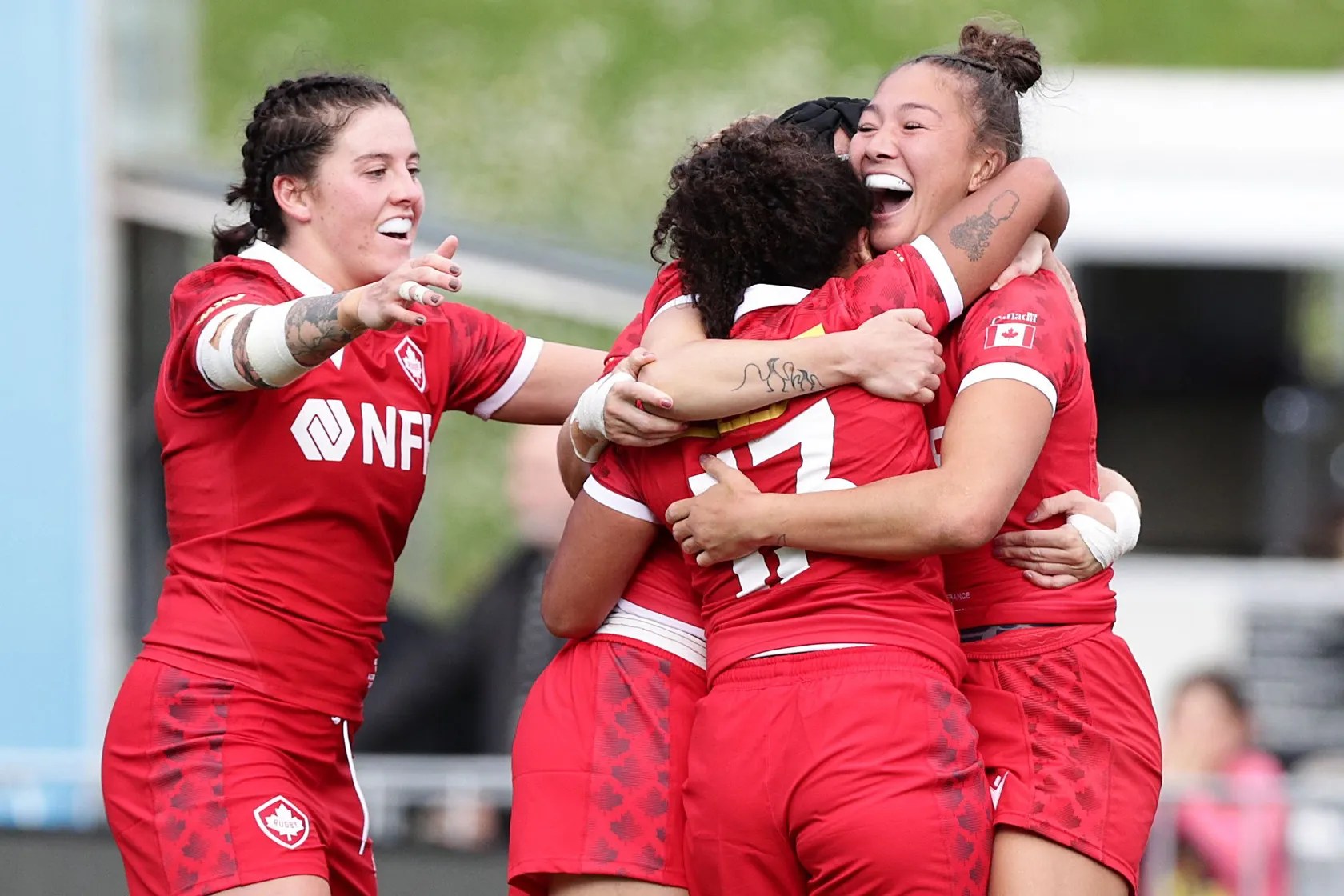
Many of the Tier 2 sides have inspired us this tournament, but Portugal, Uruguay and Georgia have been EXCELLENT value for money and something has to be done to fast track the momentum they’ve gained at this tournament

Uruguay, in their opening game against France, had us spellbound and have done so ever since. They have an absolutely committed and powerful forward pack, a talented halfback partnership and some genuinely silky backs all of whom have provided us with some glorious entertainment, especially when they gave the tournament hosts France some serious food for thought. Georgia’s never say die attitude is always inspirational, and their traditional forward power is now allied to some genuinely exciting and dynamic back play. Then there’s Portugal, who have become solid fan favorites here at the Lineout. We shamefully have to confess to knowing little about them prior to the tournament, but they are now firmly on our radar for the future. With each game, they have gotten better and better, and even against big teams like Wales and Australia, there have been no outright thrashings. They have been competitive and a joy to watch, as have their exuberant and passionate fans.

There have been strong cases made by all the Tier 2 nations during this World Cup both on and off the pitch for more exposure to Tier 1 nations. However, sadly, it seems to be falling on deaf ears as World Rugby seeks to consolidate the power of the major Rugby Nations in the next four year cycle. Tier 2 nations will be all but excluded from access to Tier 1 Tests in 2025 and 2026 as a result of World Rugby’s new competition starting in 2026 between the Six Nations and Rugby Championship countries. They may have some access to France, Italy, Argentina, New Zealand and South Africa in 2025 when the British and Irish Lions Tour Australia, but apart from that it’s slim pickings to the point where some could end up like Samoa having only faced one Tier 1 nation in an entire World Cup cycle.

A plate competition has been proposed by many, and we certainly think it’s a good idea during the World Cup, but World Rugby looks set to firmly quash that idea, while at the same time determined to expand the tournament to 24 teams for the 2027 edition in Australia. Unless something drastic is done during this next World Cup cycle, all we can see is this expansion providing the big teams with even more cannon fodder training games during the Pool stages. A plate competition would give teams like Portugal, Georgia and Uruguay something to play for after the Pool stages with these teams having caught the imagination of millions this tournament, while at the same time giving them more exposure to knockout international rugby. While we understand the cost implications of such a move, surely the long-term benefits in terms of ticket sales and TV rights would offset this in the long run.

So, if that’s not on the table, then ensuring that these countries get as much exposure as possible in the next four years will be vital. 2026 looks set to be a lost cause, but in 2024 and 2025, priority must be given to getting these countries access to their Tier 1 colleagues. Outside the Six Nations and Rugby Championship windows in 2024, the July and November Test windows should feature Tier Two nations as much as possible. In 2025, those players not selected for the British and Irish Lions Tour to Australia should be playing Tier Two countries during the July Test window. Also, Italy, France, South Africa, New Zealand, and Argentina, who will not be involved with the Lions, should also make themselves available. In November, the same should apply as from 2026 Tier 2 countries look set to be cut off from their Tier 1 counterparts for both the July and November Test windows. As for 2027, it’s hard to judge as outside the Six Nations and Rugby Championship, there will be the inevitable warm-ups come August, which should see Tier 2 nations getting some exposure.

In short, it’s not all gloom and doom but in this critical next four year cycle, in order to build on the momentum made by sides like Portugal, Georgia and Uruguay, a genuine commitment and effort really needs to be made by World Rugby. Also let’s face it we haven’t even mentioned the USA and Canada who failed to qualify for this year’s tournament and remain in the wilderness of International Test Rugby, with the Americans set to host the tournament in 2031. We hope the SOS call will be heard, but given the actions so far of World Rugby we are feeling slightly less than optimistic as a golden opportunity to grow the game globally looks set to go missing once more.

Pool A remains the school of hard knocks and remarkable comebacks

The Rugby World has been abuzz with the potentially remarkable comeback of French superstar and scrum half Antoine Dupont after he look set to exit the tournament with injury after the game with Namibia. Meanwhile Italy suddenly find themselves in a dark place and New Zealand keep smiling at the fact that nobody still seems overly concerned about the growing threat they pose.

We’ve learned three things from Pool A’s encounters. Firstly France clearly have some rather extraordinary medical facilities at their disposal, as Antoine Dupont has made a remarkable recovery from his injury against Namibia to the point where it now looks certain that he will participate in France’s campaign in the knockout stages. Secondly, after their thrashing at the hands of the All Blacks, Italy’s much vaunted improvement during this World Cup cycle looks in danger of being nothing more than a smoke and mirrors exercise. Lastly, everyone is only just starting to wake up to the increasing threat that New Zealand pose in this tournament, despite everyone essentially writing them off at the start of the tournament.

For France, all the talk of the last two weeks has been the bedside blow by blow account of Captain and scrum half Antoine Dupont’s recovery from a broken jaw picked up in the game against Namibia Such is the apparent level of skill in the French medical profession that “le petit general” looks set to return to steering his country through the knockout stages. While we and the rest of the world are delighted at the thought of seeing one of the world’s best players back in action, there are two questions that nag us.

Firstly, isn’t this all a bit rushed, especially as his first game is likely to see him have to face up to the bruising physicality that South Africa brings? How confident does he feel in himself and his body’s ability to withstand the pain and punishment of such an encounter? Is it even fair, especially given the growing emphasis on player welfare, to expect him to do so – regardless of how much he may want to? Secondly, has all the emphasis put on rushing Dupont back into service come at the expense of the team’s confidence as a whole? Sure, he’s an important player, but so important that a very talented French team with considerable depth can’t cope and progress further into the tournament without him after the Pool stages? There’s a danger, in our view, that all this hype and focus on Dupont may have been a negative and confidence sapping sideshow for the rest of the team. The first indication of that will be what kind of performance they put in against Italy on Friday night.

As for Italy, it’s really hard to judge where they’re at mentally after that complete and utter capitulation to the All Blacks last weekend. This is a good Italian team in our view, who somehow went completely and utterly AWOL for 70 minutes last weekend in Lyon. We were more than a little shocked at how dramatically Italy imploded psychologically in that match. Their body language oozed a sense of hopelessness and defeat. They managed to find a spark of their old selves on the 47th minute, but once the All Black try machine kicked back into gear three minutes later, the heads and shoulders drooped once more and Italy only seemed to snap out of it again in the final five minutes. Although they did start to look like the espresso had finally kicked in in that final five minutes, in reality, they only played 10 minutes of rugby in an eighty minute match. In short, to say Italy were awful is putting it mildly, and as their Coach Kieran Crowley said after the match there was nothing to do with that game than simply toss it in the bin when it comes to analysis.

Can they bounce back to the point where on Friday night they once more make France feel distinctly uncomfortable, as they have at times in Six Nations gone by? It’s a hard ask, and their demeanor after that All Blacks game was so abject that it would seem they now have a mountain to climb. However, we’d argue that once they’ve picked themselves up off the floor, pride against a foe they are considerably more familiar with than New Zealand will kick in. Furthermore, they will be painfully aware that back to back thrashings will once again raise the debate about their legitimacy in tournaments like the Six Nations, and this should be enough to spur them into showing us more of the kind of Italy we’ve come to expect in this World Cup cycle. They surely can’t be any worse than what we saw last weekend – can they?

New Zealand, however, will roll into their final Pool game against Uruguay this afternoon, confident that their quarter-final birth is secure, barring Italy pulling off the upset of the tournament. Furthermore, they’ll be rather comfortable that they have managed to stay on the fringes of the World Cup hype train, and it’s only now that people are suddenly talking about the genuine threat they pose. Well, not everybody. Despite the Twickenham horror show back in August and their opening loss to France, we haven’t for a second written off New Zealand. They may not be quite the vintage they were from 2011-2019, but this is a very dangerous team that, on their day, can still blow anybody off a rugby pitch with ease. Consistency may still dog them, and some questions about their defense and comfort in prolonged physical exchanges remain, but give this team room to play and allow them to take charge early on and all of sudden their opponents are having to play a significant amount of catch up rugby, putting all the pressure and risk of errors on the opposition.

Pool B as the Pool of Death remains just that!!!

On paper at least it would appear that Ireland and South Africa have done enough to secure their quarter final berths, but as it was always destined to do, courtesy of Scotland, Pool B is set to go down to the wire

As the French love to say, “en principe” Ireland and South Africa are through to the quarter finals, and Scotland sadly are on the way out. However, despite one needing a spreadsheet and a fully charged calculator to work out all the mathematical possibilities that could determine how this Pool plays out, Scotland are still very much in this to the point where a win for them on Saturday night in Paris could send either Ireland or South Africa packing. It would have to be a 21 clear points haul for them over Ireland while at the same time denying the Men in Green a bonus point, but it’s not beyond the realms of possibility.

Scotland remain the Fiji of the Northern Hemisphere, and if they and the truly remarkable Finn Russell fire, then who knows? Our problem lies in the fact that their ability to outmuscle Ireland in the set piece battles is questionable, putting even more pressure on Russell to create magic, which can cause him to appear almost reckless at times. Scotland are capable of some remarkable performances, and we have a hunch that this will be one of them. However, probably not remarkable enough for them to rewrite Pool B’s form book. Either way, there is no denying that this is one of the most eagerly anticipated and potentially nailbiting encounters of the entire Pool stages.

Ireland, rested after their physically sapping encounter against South Africa, will want to continue their remarkable winning streak of 16 games. We, like most supporters of both sides, have found the ideas being put forward that both teams may manufacture a result to see South Africa make an early exit preposterous and a tad offensive. These are two sides with a proud rivalry, who will both want to make a statement on Saturday night in Paris. No quarter will be given, and if Scotland do end up exiting the tournament they will want to do so in a manner that leaves few people in doubt about the lopsided nature of the draw that sees the first, third and fifth sides lumped together in one Pool. Form and favor appear to tip their hat towards Ireland in this one, but it should still end up being one of the most enthralling contests of the Pool stages. The only negative caveat to this looming spectacle is that the likelihood of us not being able to watch one of the tournament’s best sides Scotland after the Pool stages looks set to be depressingly high.

As for South Africa, they will no doubt all be watching this one with a stiff drink in their hands to calm the nerves. They will take comfort in the fact that they dispatched Scotland with relative ease at the start of the tournament, and it’s hard to really judge the Scots against the likes of Tonga and Romania despite the impressive scorelines. They will know that there are no givens in this one, but that form and fate favors them to be the ones accompanying Ireland to the Quarter Finals in Paris next weekend.

Is there still a sliver of hope for Australia in Pool C?

Australia will be hoping that Portugal can do them a massive favor against Fiji on Sunday as the Wallabies chances of making the Quarter Finals are equivalent to a snowballs’ chance in Alice Springs.

To be honest, no. We appreciate that’s a rather harsh and brutal statement from us, especially as we are given to excessive bouts of optimism when we look at the possible outcomes of games. We would love nothing better than for our underdog favourites of this tournament, Portugal to chuck the World Rugby form book out the window and pull one over on Fiji by more than eight points while at the same time denying the Islanders any bonus points. This would secure Australia, against all the odds, a place in the quarter finals. However, reality dictates that this is the kind of fantasy stuff that Eddie Jones dreams up in his selection decisions. Australia have only themselves to blame for their early exit, and while much of it can probably be pinned on the shoulders of Eddie Jones, the players will also know that sadly they just haven’t been good enough at this World Cup. There is talent aplenty there to work with for the future, but it was all too much too soon.

The other problem we have with the above wild card scenario, which would see Australia cheating death, is that we just aren’t ready to see Fiji go home yet. We’re firmly seated and strapped in on Fiji’s roller coaster ride to the knockouts, and we definitely don’t want it to end just yet. The thought of a Fiji and England rematch in Marseille next weekend after the Twickenham slip up in August is truly mouthwatering and with it the possibility of Fiji going as far as the Semi-Finals. Fiji were clearly rattled by Georgia at times last weekend and looked as if all the hype surrounding them had gone to their heads. A revved up Portuguese side will bring all the threats Georgia posed, and their backs will expose many of the defensive frailties which saw Fiji miss 28 tackles and emerge with only a 74% tackle success rate in that match. Shades of the Uruguayan banana skin, which cost Fiji at the last World Cup, could come back to haunt them. Georgia was a very useful wake up call and we doubt that Fiji will make many of the same mistakes again, but this still should be a fascinating and at times nail-biting encounter, especially if you’re a Wallaby supporter.

Argentina struggle to come to terms with how their fate lies in the balance of their final Pool D game, while Japan look like they remember what the Brighton miracle was all about 8 years ago.

Argentina were Pool D favorites heading into the tournament, but now find themselves with it all to do in their final Pool game against a Japanese side that once again look like they believe in themselves.

While Argentina’s thumping of their South American counterparts Chile looked very impressive last weekend, their tournament to date has looked anything but. We were certain that they were destined to waltz through Pool D, but so far, they have done anything but. They failed to show up against England, and their win over Samoa looked distinctly labored. Furthermore, with all due respect to Chile, given Argentina’s rather lackluster performances so far, how easy is it to judge them in victory against a team experiencing their first ever World Cup. Have they really fixed all the issues that cost them against England, and which made living with Samoa distinctly uncomfortable at times?

Argentina need one big performance against a quality side to spark them into life and allow them to show the form that they have graced World Cups with since 2007. Unfortunately, they’ve left it a little bit late this time around, and Japan will surely be feeling more than a little optimistic. We have a hunch they’ll turn a corner this Sunday in Nantes, but there is also the distinct possibility they could exit this tournament with a whimper.

As for Japan, opportunity knocks in Nantes on Sunday. However, much like Argentina, they have really failed to fire this tournament. As a result, one could argue that of all the contests this weekend, this one is the most evenly balanced. Both sides know that if they do get through to the knockout stages they will have to ramp up their game by at least 50% from what they’ve put on display so far, as they will have to face a Welsh unit that is brimming with confidence. There have been glimmers of the kind of brilliance we saw from Japan at the last World Cup, but it’s been fleeting and without any degree of consistency or genuine sense of cohesion within the team.

However, in their celebrations after a hard fought and at times scrappy win over Samoa last weekend, the belief that served them so well at the last global showdown seemed to emerge once more. We think that ultimately Argentina’s powerhouse brand of rugby, particularly if it clicks, will be too much for this slightly out of sorts Japanese side, but write them off at your peril. Just like the Pumas, there is one big performance somewhere out there. We just wonder if it may not come too late.

Well, that’s it for the Pool Stages folks as we get ready to get down to the business end of the tournament. We’ll try and get something out next week ahead of the Quarters, but I and the family are off to France for two weeks for the Quarter Finals, so I can’t promise anything. Will definitely try and keep up the Podcast on the road, but the written word may have to wait until we get back.

In the meantime enjoy what should be a thrilling final weekend of the Pool stages and then on to the serious business of the World Cup!!!!!

Lineout Calls of the Week – Rugby World Cup 2023

Well, the wait is over, and the Rugby World Cup is now fully underway in France, and what a fascinating tournament it’s already proving to be. There are the usual controversies, starting with the opening ceremony, which some of us found a wee bit confusing at times, to say the least. Then there was the nightmare on Elm Street with the National anthems in the first weekend, which the organisers have, thankfully, now fixed. However, more problematic are the ongoing issues surrounding a lack of consistency in refereeing decisions, as well as what can only be described as too much officiating at times, which can sap the joy out of contests. Nevertheless, despite all of this, it’s already shaping up to be a tournament that is coughing up plenty of surprises, which are perhaps a direct result of the slightly lopsided nature of the draw. Our overall impression, however, is of a tournament that is already keeping us glued to our TV screens, with plenty more entertainment to follow and drama to unfold. It’s still our sport’s greatest festival, and we’re loving every minute of it.

We’ve attempted to watch every single game since opening night, and with that and the usual pressures of life, it’s left us little time to get thoughts down on paper. So for the pool stages we’ll likely be putting one missive out during the halfway point as this piece is and one at the end, and then resume normal service once we’re into the quarters and a more manageable viewing workload.

We’ll dive into some overall impressions of the tournament in general and then get into the nitty gritty of how we think each of the four Pools are shaping up after the first two rounds. So without any further ado, here’s what kept our numerous pints frothy over the last two weeks.

No World Cup is without its controversies – one is ongoing and another much to the delight of fans has been fixed

The debate around officiating continues to get in the way of an otherwise excellent tournament – while the controversy surrounding the well intentioned anthems was quickly and swiftly fixed to the delight of fans

Well, the World Cup got underway with an interesting opening ceremony, as that’s probably the best way we could describe it. Opening ceremonies, for the most part, tend to leave us a bit cold and seem to be a mere formality that one has to get through before the real action begins. The spectacle at the Stade de France was lavish, but we’re not sure we really got the message or its connection to rugby and the 200th anniversary of the first time William Webb Ellis decided to pick up a ball and run with it. Nevertheless, on a sweltering evening in Paris, the main event was soon to come, and we weren’t disappointed.

However, La Marseillaise, which surely has to be one of the greatest anthems in rugby, was really not done justice despite the best efforts of some committed school children. Don’t get us wrong, we applaud the efforts of these children who have mastered all 20 different anthems in a variety of languages. However, without accompanying musical instrumentation, such great pre-game rituals sadly got lost, and the delivery was slightly surreal and rather hollow. Players and fans alike looked lost and confused and struggled to sing along. Nevertheless, give the authorities full credit as after the first weekend all the anthems have been reworked to include instrumentation and the result is now so much better, while still preserving the remarkable efforts of the children involved.

Like any major tournament there were the inevitable teething troubles on the first weekend which do seem to have been rectified, most notably the chaotic crowd scenes and entry to stadiums particularly at the England/Argentina game in Marseille. However, the major issue that continues to dog the tournament is the officiating, which sadly seems to be a topic we just can’t seem to stop talking about this year.

World Rugby has adopted the bunker system for yellow and red cards where instead of sucking up huge chunks of game time as referees and TMOs dissect endless footage of incidents on the big screen, yellow cards are handed out and then the incident is given to the TMOs to review to determine whether said offence should then be upgraded to a red. All sounds great right and a positive addition to the process. Unfortunately, however, it has been marred by glaring inconsistencies. Some offenses aren’t even flagged, while others get scrutinised to death, and the offending players dealt harsh sentences. Some cards that should be red simply remain yellow, leaving players and supporters frustrated and confused. In short, it’s messy and once again smacks of inconsistency while leaving newcomers to the game bewildered and completely unsure what the rules really are from one game to the next. We’re not sure what the answer is here, and we doubt very much that we’re going to see any positive corrections during this World Cup.

Perhaps our biggest sticking point, however, is the tendency for almost every try to end up under review. While we agree that some tries do need to be examined as to whether or not the ball actually made it across the line, or there weren’t any transgressions leading up to it, the almost constant micro analysis of every single whitewash crossing is taking some of the pleasure and euphoria out of the game. A kicker is lining up for the conversion, and then all of a sudden, the referee is seen pressing his earpiece closer to his ear to overcome the noise of thousands of elated fans. Next thing, the arms come up framing a TV screen, and the joy gets sucked out of the game for the next five minutes. We understand the reasoning behind it, but there is definitely a bit of a disconnect going on at times, as rugby appears to be turning into some sort of hybrid exercise between players, fans, and video lawyers. Match officials should be allowed the benefit of the doubt unless it’s blatantly obvious that the try is questionable. This might help grow the game to new audiences as well as increasing the enjoyment for the thousands of committed fans in the stadiums and those crowded around TV screens in living rooms and bars across the world.

Uruguay make a statement for all Tier 2 countries by giving France the scare of their lives, while New Zealand make short work of Namibia and discover a rapidly rising star

Uruguay’s outstanding challenge to France reinforced the case for Tier 2 nations to have more exposure to their Tier 1 counterparts as they gave a seemingly complacent French outfit a wake up call of note. Meanwhile New Zealand’s demolition of a courageous but hapless Namibia put scrum half Cam Roigard at the front and centre of New Zealand’s future plans

So as we break down the Pools we reflect back on how we predicted the teams would finish, and when it comes to Pool A we think it’s fairly safe to say that the likelihood of France finishing first and New Zealand second still looks on cue, but we simply have to give Uruguay a massive shout out after they gave France a very loud wake up call.

France opened the tournament in style by beating New Zealand comfortably in the end, in a second half performance that saw them pull out all the stops. They ran the show, and although New Zealand had slightly more possession, France ensured that they could do little with it. Although both sides scored two tries apiece and New Zealand came storming out of the blocks at the opening whistle and scored the first try within the opening two minutes, the focus of the match soon centred on France’s ability to disrupt the New Zealand game plan. Once again in the opening stanza of the second half the All Blacks looked to set the pace with another try from winger Mark Telea inside the opening two minutes, but that would be the last hurrah for New Zealand.

Thereafter, it was the Fabien Galthie show for the last half hour with both of France’s sublimely executed tries coming in the second half. New Zealand was doing infinitely more work than their French counterparts, yet were failing to execute in the red zone, despite France missing twice the number of tackles – something which will be making France’s defensive brains trust pound their whiteboards in frustration. However, the All Blacks were not having a good day with the boot and their discipline was laughable as they conceded 12 penalties to France’s 4, including a yellow card for fullback Will Jordan who was lucky not to see red. France sealed the deal with a spectacular try from Melvyn Jaminet and the rest is history. However, the match left many of us with an overriding impression that neither side are invincible.

That was reinforced by France’s second game against Uruguay. In short what a performance from the South Americans who laid down a marker that the big teams will write Tier 2 teams off at their peril, something which France clearly appeared to do. France were made to sweat in that match, and then some, as they looked well off the pace to the point where the first historic upset of this World Cup seemed a distinct possibility. France regathered themselves in the final quarter as they found themselves a mere point ahead of Uruguay. France’s defense looked shaky once more as Uruguay out tackled them. The South Americans also had the edge over France in the rucks for large chunks of the match, and neither side’s scrums were particularly effective, with the French fortunately managing to salvage some set piece dominance at lineout time. France’s discipline as well was a complete drop off from their performance against New Zealand as they conceded 15 penalties and one yellow card for second rower Romain Taofifenua, who to be honest was extremely lucky not to see red.

Les Bleus got the job done but will need to get their house in order for their final Pool encounter with Italy, who must have watched the game with an increasing sense of optimism. France still look set to top the Pool, but if they are to go deep into the tournament, they will need to up their game.

New Zealand still look set to finish a comfortable second, and with the France game out of the way, the rest of the Pool stage should be relatively plain sailing for them. The opening game against France showed some weaknesses that teams will be keen to exploit in the knockouts, particularly their defensive and disciplinary lapses, as well as the fact that their scrum is adequate but not world beating Their second game against Namibia, despite a brave effort from the Namibians, was essentially a glorified training run for the All Blacks. Their goal kicking, however, is still not quite up to their usual standards, and their discipline remains lamentable at times, with Prop Ethan de Groot seeing red in the match. Their remaining two encounters with Italy and Uruguay should ensure them the two wins needed to finish second, but the Italians will be a tricky proposition especially if the All Blacks’ discipline continues to trip them up, and Uruguay will make them think twice about letting their guard down, especially if Italy end up being a banana skin for France.

However, scrum half Cam Roigard who was Man of the Match against Namibia, laid out his credentials in some style as the candidate most likely to succeed the legendary Aaron Smith when he retires at the end of this World Cup. Not shy of physical contact, Roigard has already shown excellent decision making, and his ability to spot space makes the case for fast tracking him into a starting role in the All Blacks squad come the New Year an absolute priority.

Italy still look likely to finish a strong third, but will be licking their lips at the prospect of their final encounter with France. At this stage it’s hard to judge where they are as we’ve only seen them put a hapless Namibian side to the sword in their opening game. Their fixture this week against an impressive Uruguayan side brimming with confidence will be excellent preparation for their two big encounters with New Zealand and France.

Uruguay could be the surprise package of this Pool, as after their outstanding performance against France, they must surely fancy their chances against Italy. Uruguay made a clear case for Tier 2 countries having more games against Tier 1 nations in Lille last Thursday. They have a dynamic forward pack and some electric backs. They move the ball around with enterprise and are an absolute handful at ruck time. In short, we’re billing Wednesday’s encounter with Italy as one of the games of the week. They will sadly probably be brought back down to earth with a crash in their final Pool game against New Zealand, but in the process, it will have provided us with some genuine excitement. Still a strong fourth place finish and perhaps better, if they can build on their form against France, is on the cards for one of the Tournament’s most promising prospects for the future.

Last but not least, Namibia soldier on despite being clearly destined for Pool A’s Wooden Spoon. Brave but completely outclassed by both Italy and New Zealand, Namibia can still feel encouraged by a never say die attitude that has won the hearts of those in the stands, despite the odds being massively stacked against them. Perhaps their only real shot at glory will be when they take on Uruguay in their final fixture, but after watching the South Americans put the fear of God into the French, even that looks to be a bridge too far for Namibia. Their tackling and defensive work is simply not up to the standard required at this level, while their lineout and goal kicking efforts also need some serious surgery. They can take comfort in a relatively successful work rate come scrum time, and they are fairly effective at winning their own rucks. However, a lot of that good work then gets undone by poor execution and discipline. Namibia will exit stage left on September 27th without ever really having fired a shot, but expect to see them back in Australia in 2027, hopefully in better shape.

Ireland appear to be building rather well as Sexton makes history and South Africa put Romania to the sword setting up THE clash of the Pool stages next weekend!

Irish Captain Jonathan Sexton became his country’s all time leading points scorer in another clinical demolition of one of their Pool B opponents, while South Africa continue to look the tournament’s most imposing title contenders

The talking point of the World Cup is now the Clash of the Pool B Titans, as Ireland and South Africa look to face off against each for the first time ever in the global showpiece when they meet in Paris this Saturday. It’s already being billed as THE game of the Pool stages. However, in the Tournament’s Pool of Death, there are still no certainties. South Africa may have dismantled Scotland, but the Scots still have three matches ahead of them, while Ireland have yet to be really tested. Meanwhile, Tonga and a very disappointing Romania bring up the rear.

We’re still sticking to our hunch that South Africa are going to top Pool B, but don’t feel overly confident in our crystal ball gazing skills on this one. One can’t really judge South Africa based on their demolition of an exceptionally weak Romanian outfit, but their performance against Scotland was impressive. They simply suffocated Scotland and denied them any of the creativity that they are known for. The statistic that really made us take a deep breath in that game was the fact that Scotland, a side who traditionally love to run the ball, only managed to make a measly 229 metres compared to South Africa’s 610 in that match. South Africa simply denied Scotland the right to play in that opening weekend. South Africa’s defence missed a few more tackles than the Scots who looked defensively sound for much of the match, however, the physical toll of absorbing all those metres made by South Africa left the Scots dead on their feet by the final quarter. South Africa maintained their discipline and their work in the lineouts, and at the rucks was exemplary. Their scrum, although not exceptionally effective at times, made mincemeat of the Scots, who, by comparison, struggled to gain any parity at the coalface. Nevertheless, fly half Manie Libbok’s issues at the kicking tee came back to haunt the Springboks with a vengeance as Faf de Klerk had to be drafted into to restore some confidence when it came time to kick for goal.

In their second match they completely blitzed an abject Romanian side so it really is hard to judge where this Springbok side is in relation to everyone else, especially as their kicking problems off the tee continued to plague them along with a scrum that could still be more effective. Their power and physicality should be enough to stifle another creative side in the shape of Ireland, as well as dispatching Tonga as a warm up for whoever they end up facing in the Quarter Finals. We think the defending Champions have shown enough to make them favourites to top the Pool, but we’re not putting any money on it until Ben O’Keefe blows the final whistle on Saturday in Paris.

Ireland have looked impressive since day one of this tournament, but even more so than South Africa it’s really hard to judge where they’re at, having only played the Pool’s two weakest teams so far. Romania and Tonga have made this Irish side so far look nothing short of spectacular. The cobwebs have all been blown off after a relatively gentle series of warm up games in August, and there is no denying that this Irish outfit look arguably the most cohesive and well organized group in the tournament to date. However, there is no denying that this warm fuzzy feeling may all evaporate into the ether come the end of Saturday’s bruising encounter with the Springboks. Ireland have also managed to remain for the most part injury free, and what injuries they do have are being carefully managed, but that could all change come Saturday. The Irish are also the most disciplined side so far this tournament and with Ireland Captain Jonathan Sexton back to his very best after a six month absence, it’s hard to argue against Ireland potentially going deep into this tournament for the first time ever.

There was little, if anything, to criticise in their thrashing of Romania other than the fact that their lineout left a lot to be desired, boasting a relatively feeble 67% success rate. Against Tonga, who were much more resilient opponents, the scoreline may have been not quite as awe inspiring but the efficiency of the performance was a clear step up from the game against Romania, even if Ireland’s discipline let them down slightly at times. However, their set piece and phase work was exemplary and boasted an average of 95%. Jonathan Sexton became Ireland’s all-time leading points scorer pipping the legendary Ronan O’Gara. Have we seen the best of Ireland yet? Definitely not but whether or not Coach Andy Farrell and his charges have enough tricks left up their sleeves to get past a Springbok juggernaut that, barring one or two weaknesses, is veritably purring remains to be seen. Bring on Saturday!!!!

Scotland have only played one match so far, and we always had the feeling that against a South African unit oozing with confidence after demolishing New Zealand only ten days previously, their tournament was always going to get off to a rough start. Consequently, now the real work for Scotland begins with all eyes focused on what happens between South Africa and Ireland this weekend. Scotland were simply not allowed to play by the Springboks, and in key areas such as the scrum and lineouts, South Africa put them to the sword. They are back in action against Tonga this weekend and should have had enough recovery time to get themselves back on the board and get the points clock ticking again in their favor. That’s followed by what should be nothing more than a training run against Romania ahead of their do or die winner takes all encounter with Ireland in their final Pool match.

Scotland may not have started the way they would have wanted, but to count them out after just one match would be utterly foolhardy. Nevertheless, given Ireland’s massive point hauls against Romania and Tonga, as well as South Africa’s against Romania, Scotland have a rather daunting mountain to climb if they are to get out of the Pool, and definitely need some lucky breaks. They are a quality side who unfortunately find themselves in a Group in which it will be hard to gain the parity they need, and as a result we can’t help feeling that a strong third place finish is the best this spirited and highly talented Scottish side can hope for. Nevertheless, if there is one team that can throw the form book out the window and rumble the established order, Scotland, along with Fiji, are your best bets this tournament.

Tonga, in their only match so far against Ireland, showed they can be a tough side, but one which is unlikely to cause any of the bigger, more established teams too many sleepless nights. We just can’t see them really troubling Ireland, South Africa, or their opponents in their second match this weekend – Scotland. Defensively, they look ill equipped to match the speed and creativity of South Africa or Scotland, having missed 35 tackles against Ireland, while their lineout was a complete and utter disaster. They will take comfort in the fact that Romania should be an easy win for them, and with it, a face saving fourth place finish.

Romania have sadly not been at the races in this tournament, and regrettably look set to be the team more than any other who are there simply to make up the numbers. Their best moment was their opening three minutes in their first game against Ireland, but since then, it has all gone downhill at a rate of knots. Their discipline is poor, and they seem completely out of their depth against quality sides such as South Africa and Ireland. It won’t get any easier against Scotland, and their final game should see a fired up Tongan side who is likely to have improved with every outing. There has been plenty of heart but it simply hasn’t been enough to bind together a team that appear to have little or no game plan, and is lacking in terms of their ability to execute the basics of the game under the kind of pressure that a tournament like this generates. We wish them well, but they will leave this World Cup at the bottom of their Pool knowing that a massive rebuilding programme lies ahead of them if participation in the tournament in Australia in 2027 is to be considered as a realistic ambition.

Fiji make history and rightfully claim their place at Rugby’s Top Table, while Portugal rattle Wales and continue to further the calls for Tier Two nations to have more exposure to the big boys!

Wales got the job done against an exceptionally feisty Portuguese side, while Fiji taught Australia some painful lessons and made Pool C the second “Pool of Death”

We are THOROUGHLY enjoying this Pool, and it is clearly the most competitive of all the Pools. After two weekends, it is now very much the tournament’s second Pool of Death. The game between Fiji and Wales was one for the ages, and the Pacific Islanders’ historic win over Australia last weekend has now made it a do or die affair for the duration of the Pool stages for all three front runners in Pool C – Wales, Australia and Fiji, with the Wallabies arguably the side with the most to prove. Meanwhile Georgia and Portugal bring up the rear, but have still managed to make everyone sit up and take notice, and as a result a shock upset against the three top outfits in the Pool is not beyond the realms of possibility.

Wales have reverted to a proud World Cup history by proving that form heading into a World Cup is a many layered beast. They are often able to raise their game come the global showpiece and show every sign of doing so again this tournament. Their nail-biting win over Fiji was a combination of grit, determination, and just a little bit of luck. However, at the same time, they also showed tremendous ambition and as so often happens, under the tutelage of Coach Warren Gatland, their defense becomes almost superhuman. It was the game of the tournament so far, and Wales’ ability to hang on despite a Fijian side growing in confidence and ability as the match wore on was impressive. Fiji tried every trick in the book, but somehow, against all odds, Wales managed to slow them down or force them into errors. Fiji’s relentless assault on Wales was a genuine test of character and resolve. Fiji outplayed Wales, but Gatland’s men somehow managed to contain them while at the same time creating enough opportunities of their own to keep the scoreboard ticking over in their favor. Some have argued that their discipline could have been infinitely more costly and had referee Matthew Carley been harsher with Wales, but that’s a debate for another day.

In their next game against Portugal, it wasn’t nearly as inspirational a performance as that against Fiji, and at times Wales were clearly having difficulty in getting to grips with an opponent who was causing them far more difficulties than they had bargained on. Their lineouts fell apart, and Portugal proved very effective at disrupting Welsh efforts to develop any kind of momentum. It was a scrappy affair that Wales comfortably won in the end, but it brought them down to earth with a thump. Perhaps that’s no bad thing ahead of their encounter with Australia this weekend which could see them top their Pool, barring an upset in their final game against a Georgian outfit who have been a constant thorn in their side over the last few years. Wales appear on track to throw the form book out the window, making their clash with the Wallabies this weekend in Lyon, the second biggest game of the weekend.

Fiji as a result of that heartbreaking loss to Wales in the opening round, now look set to take second place in Pool C, unless the Wallabies do them a favor in Lyon this weekend and once more throw this Pool wide open. As mentioned above, Pool C has become the Tournament’s most surprisingly competitive and close fought group. In many ways, Fiji were the better side against Wales, yet at key moments, their execution was just a fraction off. Fiji’s biggest problem seems to be that they fix one area of their game, yet in doing so, another component goes astray. In the game against Wales, they boasted a 92% success rate at lineout time yet against Australia that percentage dropped to a disappointing 74%. Against Wales, their tackle completion rate was only 67%, yet against Australia, it went to a much healthier 82%. While many of the technical aspects of their game have vastly improved in the last four years, against both Australia and Wales, they still suffered at scrum time. Nevertheless, there is still plenty to be positive about as Fiji look set to get through to the knockout stages.

They will continue to get better, and what struck us the most about their game against Australia was they are now just as comfortable patiently grinding out a physical contest, as they are in open play and utilizing their outrageously skilled running game. This is a really good Fijian team that is only steps away from becoming a team capable of making history in this tournament and beyond. In short, the promise for Fiji is enormous, and World Rugby simply has to ensure that they are able to feature regularly in top Tier competitions from now on. The talent has always been there, but now it’s matched to all-around ability. Fiji’s hardest matches are behind them, though a tough contest awaits them in the shape of Georgia before what should be a good workout against Portugal and on to the Quarter Finals.

Australia, as we feared they might, are in danger of making an early exit from the Pool stages. A hard fought win at times over Georgia in their opening game was then followed up by their historic loss to Fiji. They now find themselves in a potentially do or die clash with Wales this weekend as a result. We don’t mean to sound like a broken record, but it’s still our belief that Rugby Australia’s decision to fire former Coach Dave Rennie just nine months out from a World Cup was a serious mistake. Eddie Jones, his successor, had left England in a fractured mess that they only seem to be just emerging from. Australia’s win rate under Rennie was poor, but it was showing signs of an upward trajectory with a group of players buying into what he was trying to achieve. We’re not sure that the Eddie Jones’ style of management really lends itself to a slow but consistent development process. Time will tell, but we’re not convinced. Under Eddie Jones’ tenure, England’s discipline was poor, to say the least, and Australia’s under Jones guidance seems no better, if not worse. Against Fiji, they conceded a whopping 18 penalties compared to Fiji’s 7.

Defensively, Australia continues to look vulnerable, especially out wide, and Wales will be keenly aware of this. Against Georgia, they only managed a paltry 69% tackle success rate and were only able to improve it by 3% against Fiji. Goal kicking remains a problem if Ben Donaldson is unavailable and the kicking duties are left to fly half Carter Gordon. Australia have the talent but look poorly structured, and their decision-making at times is well short of the mark. The Wallabies will have to dig deep against Wales and a win is non negotiable if they are to stay alive, which will then have to be followed up by a significant points haul against Portugal in their final game. They’re not dead yet but could be facing their first ever exit at the Pool stages if a dramatic turnaround in their fortunes is not on the cards this Sunday in Lyon.

Georgia could also spring a surprise against either Australia or Wales, or even both. We still feel they are destined to finish a strong fourth, but given the competitive nature of this Pool, there are no certainties. Georgia have only played one game against Australia, and this weekend, they take on Portugal, their fellow European Tier 2 rivals. As expected against Australia, their scrum was rock solid, and defensively, they proved to be a challenge for the Wallabies to break down. Their lineout work could have been better, but they tackled like demons and on attack looked enterprising and full of pace. Improve their goalkicking and discipline, and this is a side that looks set for a bright future. Wales will be wary of them when they meet them at the conclusion of the Pool stages, especially if Georgia come into that game on the back of a strong showing against both Portugal and Fiji. The game against Portugal is clearly Georgia’s to lose, and while we have trouble seeing them getting past Fiji, they have a reputation for being Wales’ bogey team, especially if Wales have picked up some awkward injuries by that stage. In short, don’t write Georgia off just yet.

Portugal have also only played one game so far, but their contest with Wales was illuminating, and we thoroughly enjoyed a match that, to be honest, we weren’t expecting much from. Despite this being only their second World Cup, they certainly didn’t appear intimidated by the big stage, and had they had more success off the kicking tee, the score could have been considerably closer. Their lineout work was excellent, and they proved able to match Wales at ruck time. Their discipline was no worse than Wales despite the red card issued to Winger Vincent Pinto for his unfortunate “kung fu” kick to the face Josh Adams. Their one try was a superbly executed move off a lineout, and they played some genuinely entertaining running rugby at times, causing the Welsh defense all sorts of problems. In short, as your first outing at a World Cup in almost twenty years, it was a solid effort, and their clash with Georgia this weekend should be a fascinating contest. They may well end up finishing bottom of their Pool, but will have won the hearts and minds of many a neutral in the process. In a Pool that still may have plenty of twists and turns, watch this space!

England may not be the most exciting team in the tournament but are increasingly showing that they know how to get results, while Samoa look set to make life difficult for everyone in Pool D

England are now 2 from 2 and while they may not be the most imaginative team on the pitch you can’t deny their effectiveness. Meanwhile Samoa look set to spice up Pool D rather nicely.

This Pool also looks set to be highly competitive, but perhaps the biggest talking point is a resurgent England, given that everyone ourselves included had for all intents and purposes written them off ahead of the tournament. Japan have started to click at long last to the point where their clash with Samoa and a faltering Argentina could be some of the highlights of the Pool stages. Argentina, despite going missing in action in their opener are sure to come roaring back to life in their second match against Samoa this Friday. Samoa looked exceptionally motivated and sharp against tournament newbies Chile, but the South American debutants have shown that they are not just there to make up the numbers, even if they may well finish at the bottom of the Group.

However, it’s England that everyone seems to be talking about in this Pool. You have to ask yourself, where did those performances against Argentina and Japan come from? England’s attack may still not strike fear into the hearts of sides like Ireland, France or New Zealand, but their ability to control the game to suit their strengths, most notably a strong defence and a solid territorial kicking game keeping opponents pinned in their own half, orchestrated by the excellent George Ford at fly half, has now put them in a position where they look set to emerge unlikely winners of Pool D. If you’d asked us, or anyone else, it would seem, if this would have been the case prior to the World Cup, most people would have struggled to keep a straight face. That is no longer the case.

Perhaps the biggest question posed for England Coach Steve Borthwick is what does he do with Captain Owen Farrell, who is now able to play after his suspension for the first two games? This may be oversimplifying things, but our overriding impression is that England have played better without Farrell, as harsh as that may sound. Nevertheless, it still may be a touch hasty to judge England on their last two performances. Argentina simply failed to show up in that opening match, which to some degree masked the fact that England’s attack is still largely non-existent. There was some definite promise shown in that regard in last weekend’s efforts against Japan, with perhaps their crowning achievement being Prop Joe Marler’s bizarre header assist for Captain Courtney Lawes’ try.

In short, against all expectations, England are starting to look like they are building towards something. It may ultimately only be a place in the Quarter Finals, but barring a serious wobble against Samoa in their final Pool game, it’s looking fairly certain that England are going to win their Pool and potentially end up in a rematch with Fiji in the Quarters. After their humiliation at Twickenham by the Pacific Islanders last month, could this be the grudge match of the tournament?

Argentina are a conundrum plain and simple. In their only match of the tournament so far against England, and one which many people had tipped them to win, they simply failed to show up except for the final ten minutes by which time it was too late. It was a strange game to watch, as if you look at the stats, it doesn’t paint that bad a picture, but watching on our TV screens Argentina looked distinctly off the pace. Every promising attack fizzled out into a set of wasted opportunities, and a lot of their set piece work was simply not up to the standards we’ve come to expect from the Pumas. Add to that a penalty count that was a disturbing flashback to the bad old days of Argentina’s past problems with discipline, and there really wasn’t much to get excited about for them or their supporters. Their next game this weekend against Samoa should get them back on track, but make no mistake. Samoa will be no pushover and will be able to match Argentina both in terms of physicality and pace. If the Pumas stutter again, then they could suddenly find themselves with a do or die situation against Japan in their final Pool game.

We still think they will be able to regroup and finish a strong second, enabling them to find their groove for another strong run through the knockout stages. However, they may be regretting their decision to not play any big matches after the conclusion of the abbreviated Rugby Championship this year, barring a messy contest with South Africa in Buenos Aires at the beginning of August. In short, they arrived in France looking seriously undercooked, and they need some consistently big performances between now and October 8th. Otherwise, they could find themselves heading home much earlier than they and most of us expected.

Japan looked good in their opening game against a sparkling Chilean side who were clearly relishing their World Cup debut. Against England, while there were flashes of brilliance at times, George Ford’s ability to keep forcing Japan back into their 22 after every promising attack was clearly frustrating the Japanese as well as proving to be exhausting. As the game wore on Japan looked increasingly worn out, the handling errors mounted, and despite the injections of fresh energy from the bench, they looked increasingly bereft of ideas. They simply couldn’t break down a resolute English defense whilst their own defense became increasingly disorganised and porous. Japan’s remaining fixtures against a very motivated Samoan outfit followed by a tough final encounter against Argentina would seem to indicate that the best they can hope for is a third place finish, and with it automatic qualification for Australia in 2027. Sadly the Japan that took the world by storm at the last World Cup hasn’t arrived in France this year, but with the dramatic growth of the club game in the country we have a hunch it won’t be long before they’re back.

Samoa look set to be another of the tournament’s surprise packages after their rattling of Ireland’s cage in the warmups and a comprehensive demolition of World Cup debutants Chile in their opening game. There was little to find fault with in Samoa’s performance as they brought their world-renowned physicality and turn of pace to an exciting encounter. Defensively, at times, they looked a bit suspect, and their missed tackle count will be something Argentina, Japan, and England will be keen to exploit. However, their set piece platform looks relatively solid, and at times, their handling skills are up there with Fiji’s. Any side that takes them lightly is likely to pay heavily. Nevertheless, they have a daunting run to the end of the Pool stages, starting with Argentina and ending with England. If they fare well against Argentina and particularly Japan, based on their performance against Ireland last month, they will definitely fancy their chances of causing the upset of the tournament by beating England in their final game. Either way, we think you’ll find Manu Samoa’s exploits to be some of the tournament’s most entertaining.

Last but not least, we have World Cup debutants Chile. After their first two games, it would appear they are the new fan favourites and certainly the cherished underdogs of French supporters. They’ve been greeted with such vocal support in both their games that it must surely feel like they’re back home in Santiago at times. They have some genuinely impressive players both in the forwards and backs, but for us fullback Inaki Ayarza looks set to become one of the stars of the tournament, and we have a hunch a few of the big French clubs have already got their cheque books out. Although the score lines were not overly flattering towards Chile in their opening two games against Japan and Samoa, the stats show a significant improvement in all areas against Samoa. Chile look like they and their supporters are enjoying every moment of this World Cup. It’s great exposure for a side that shows plenty of promise, and along with Uruguay reinforces the potency and vitality of the growing game in South America, something we here in North America could do well to learn from. Chile are likely to finish the bottom of their group, but they and all of us cheering them on look set to thoroughly enjoy the ride!

Well, that’s it, folks, and how we see the Pools after the first two enthralling weeks. So far, this World Cup, despite some of its inherent problems, has certainly exceeded our expectations. It really is a global celebration of our glorious sport, and every team and the supporters from number one ranked Ireland to Chile at 22 are making sure that every contest leaves you hungry for more.

So enjoy the spectacle, and if not before, we’ll be back at the end of the Pool stages.

Lineout Calls of the Week

Well Folks it’s almost upon us and the excitement is building by the day. Sure the draw is a bit lopsided to say the least, but as a result it could set up the most fascinating permutations we’ve ever seen in a World Cup. Sure there are the favourites, but then there are also the potential giant slayers and history makers. Last but not least, form is a many layered beast and as we’ve seen so many times in the past, form heading into the World Cup may not necessarily be a true measure of what a team actually ends up doing in the tournament itself. So let the speculations begin as all eyes turn towards the drama about to played out on the fields of France.

We’re a little behind schedule in getting this missive out. Fortunately with no rugby this week to speak of, we managed to catch up and look back on that last eventful weekend of World Cup warm ups with the highlight being the permutations of the Twickenham dustup between New Zealand and South Africa. There were plenty of fascinating games in that final weekend of preparation, but the ones that got us talking were the Springbok demolition team at Twickenham and the exploits of Fiji the following day at the same venue. Meanwhile, fellow Pacific Islanders Samoa almost sent a Tsunami sized shock wave across the Rugby World in a rain sodden Bayonne.

Like everyone else who muses on matters related to the oval ball, we too have sat down and had a look at the Pools ahead of the tournament opener next Friday at the Stade de France. We’ve singled out the three teams who are most likely to finish in the top three of their respective Pools and thus gain automatic qualification for Australia 2027, but we also speculate on how the minnows are likely to fare as well as who will actually make it out of the Pools and into the knockout stages.

So without any further ado, here’s what kept our pints frothy this week and are likely to do so for the next two months.

Ireland almost lose the plot, South Africa demolish their greatest rivals and Fiji just keep getting better and better

The Springboks took centre stage at Twickenham as they took apart New Zealand, but in many ways Fiji’s dismantling of England the next day and Samoa’s serious rattling of the Irish cage were just as impressive in terms of last weekend’s exploits ahead of the World Cup

There was plenty of excitement in the final weekend of the World Cup warm-ups, but the drama of the two games held at Twickenham and Ireland’s clash with Samoa in Bayonne was hard to beat. Italy put a clearly out of sorts Japan to the sword, Scotland rediscovered their mojo in the second half against a resilient Georgia, and France ultimately breezed past Australia – all good games in their own right but we have a hunch the three we’re focusing on will have more than just a few implications for the World Cup kicking off in just 3 days time.

First up let’s talk about that REMARKABLE game at Twickenham between New Zealand and South Africa. South Africa laid down a marker of intent that was nothing short of awe inspiring. Sure you have to be careful about reading too much into these warm-ups, but it was clear from the outset that neither team regarded this game as anything other than a full blown Test match and one that could be regarded as the first “unofficial” game of the tournament. We always had a hunch it would be close, but the fact that South Africa held New Zealand in a scoreless stranglehold for a full 70 minutes had to be seen to be believed. Agreed Scott Barrett’s red card reducing New Zealand down to 14 men at the end of the first half didn’t help matters, but despite what some crusty old former All Blacks thought on the New Zealand rugby show “The Breakdown”, it was a fair cop. There was also the fact that at half time South Africa, through their 7-1 bench split, essentially brought on an entirely new and fresh front row, punishing a battered All Black outfit and making a 21-0 scoreline even more of a mountain to climb.

New Zealand had more territory and possession than South Africa and essentially dominated every statistic. However, the Springboks simply absorbed every effort made by New Zealand with ease and shut the All Blacks down. Consequently, they were able to make much better use of their own ball up against an increasingly fatigued New Zealand outfit. South Africa made 157 tackles compared to New Zealand’s 92, yet outscored them in the try department five to one. South Africa also excelled at disrupting New Zealand’s lineouts as the All Blacks’ set piece work was under constant pressure from the Springboks, especially when that fresh as a daisy new forward pack left the benches on the 46th minute. New Zealand weren’t a bad team on the day, but they were completely outclassed by an utterly clinical and ruthless South African side. In Pool B Ireland and Scotland will be quaking in their boots, while hosts France in Pool A will have taken careful notes. It’s hard to argue that in 80 minutes South Africa have suddenly become the Team to beat.

The next day, Twickenham was the scene of another display that clearly made the denizens of Pools C and D reach for a stiff drink. Fiji are rapidly looking like they will be the side to dominate the easier side of the draw along with Argentina. Fiji are certainly becoming one of the most exciting outfits to watch, as they managed to fire yet another torpedo into the listing England ship. On paper and mulling over the game’s stats, there doesn’t appear to be too much in it between the two sides, but it is clear that England simply couldn’t find a game plan that was able to deal with Fiji’s increasingly well rounded and executed style of play. Much like South Africa the day before it was essentially Fiji making England do all the work. They were able to match England in the physical department, and made England continue to look inept and unimaginative in attack. What was more impressive was Fiji’s ability to hang onto their lead and build on it in the final ten minutes, despite England making a concerted effort at a comeback. Furthermore for Fiji to then put the game out of reach with a superb try on 72 minutes, shows just how much this side have developed from a team that tended to invariably fluff their lines under such pressure in the past. All of a sudden it’s not unreasonable to think that Fiji could end up dominating Pool C.

As for England it was another painful look into the abyss of a potential Pool stage exit. This is the poorest England side we’ve seen since the World Cup in 2015, where the Men in White also exited the tournament stage left at the end of the Pool stages. Defensively they look at sixes and sevens, especially against creative sides like Fiji and in the physical battles they have become ponderous and beyond predictable. Argentina must be licking their lips for their opener against England on Saturday, while after their exploits against Ireland, Samoa must surely also be fancying their chances.

Lastly, in Bayonne on Saturday in truly horrendous conditions it was Samoa not Ireland who looked more than comfortable with playing in the wet. Although it was an experimental starting fifteen for Ireland, it took their experienced bench to steady a ship that looked headed for the rocks at a rate of knots. Even then Samoa were only one mishandled lineout from making history. Ireland looked rattled make no mistake, and it was obvious that their tag as the number one side in the world heading into the tournament seems a bit out of place in light of that performance. They are still a team that could go all the way, but that familiar ghost of World Cups gone by is clearly sitting menacingly on their shoulders. Samoa ran Ireland off the park and met the legendary physical prowess of Ireland fair and square. Ireland’s lineout throwing was way off the mark, and it was only the appearance of veteran Hooker Rob Herring which pulled this key component of Ireland’s set pieces out of the fire. Had Samoa been just a bit more accomplished in that department we would be writing a very different postscript to this game.

Ireland will take comfort from the fact that their bench managed to save the day, and decisions about who to take to France and who to leave behind became instantly apparent by the time Wayne Barnes blew the final whistle. The loss of front row legend Cian Healy however was a bitter blow to their front row stocks. It also served to remind us all that should the stretcher bearers get busy in Ireland’s relatively soft opening two games, their ranks could be too thinly depleted and lacking game time by the time they get to the business end of the Pool stages against a powerhouse Springbok outfit and tricky Scotland. It was an uncomfortable 80 minutes in Bayonne for Ireland and they know that they need to find at least another three gears between now and September 23rd, while also managing to keep a clean bill of health. Not the easiest of balancing acts for Coach Andy Farrell and his team.

Pool A – the most predictable of all, yet is there a surprise lurking somewhere in its depths?

You don’t really need to be a rocket scientist to figure out how this Pool will shape up, only a fortune teller to see who finishes first and second

After last weekend’s dustup at Twickenham, and France’s relatively care free second half romp at the Stade de France last Sunday, a pattern seems to be emerging as to how Pool A is going to play out. Let’s be completely honest, unlike all the other Pools there really is only one BIG game in this Pool and it happens in the tournament opener, when hosts France take on New Zealand. Italy will be a spirited opponent, and could possibly catch either of these two giants napping, but only those wanting to cash in on perhaps the biggest gambling odds in the tournament are likely to put any money on it.

France are starting to look like the favourites to top Pool A. While they may have injury concerns, there is enough depth in this French squad that they should be able to manage it. They are the confident side heading into the Tournament opener this Friday with New Zealand. Agreed there is the weight of an expectant nation on their shoulders, but we can’t help feeling that it is a demon they are only going to have to really start grappling with once they reach the knockout stages which they look set to do comfortably. Their games against Uruguay and Namibia should be nothing more than mid Pool warm-up games for that one potentially tricky final encounter with Italy. France have a bad habit of underestimating the Italians either at the beginning or end of big tournaments. However, in our opinion given the fact that the Azurri will have had seven bells probably knocked out of them the week before by an All Black side with a point to prove, France should manage to progress comfortably to the knockouts as potentially the top team in their Pool.

New Zealand will clearly have been rattled by their schooling at the hands of the Springboks last week. It wasn’t exactly the ideal preparation for appearing in the opening game of the World Cup against the tournament hosts. The All Blacks would appear to be still harboring some confidence issues that held them back so significantly last year. Don’t get us wrong they are clearly one of the tournament’s heavy artillery pieces, but we are not really going to get a chance to see what they’re made of until potentially the knockout stages. If opening night jitters trip them up against France on September 8th, then they will be painfully aware that they will not have too much time to set their house in order before potentially meeting the Springboks once more in the Quarter Finals. Furthermore with all due respect, Namibia, Italy and Uruguay are not exactly the calibre of opposition needed to ensure they’ve ticked all the boxes in terms of preparation for such an encounter. However, this is the All Blacks we’re talking about who still have that ability to reinvent themselves better than any other team, and as a result we think they will still manage to finish a comfortable second if not better in their Pool.

As much as we REALLY want to see Italy reach their first ever Quarter Final, reality dictates that once again they will finish a strong third in their Pool. Their opening games are ideal preparation for them causing a possible upset against either New Zealand or France, as they will ramp up in intensity for a final showdown with France. Namibia should be a good outing to fix any concerns arising from the warm up games. Uruguay should then be a competitive but ultimately comfortable win ahead of meeting an All Black side who will be in no mood to take any prisoners, especially if things did not go in favour of the Men in Black against France. Italy will cause France some discomfort at times, but ultimately simply be that last cog in les Bleus final preparations for the knockout stages. We hope we’re proven wrong somewhere down the Road in the Pool stages, but it’s hard to see history being made and us having to eat humble pie, as much as we would enjoy a decent slice of it dished out to us by Italy.

Lastly, the Pool’s two basement dwellers Uruguay and Namibia bring up the rear, with passion and commitment in abundance, but sadly in the grand scheme of things experience gained at this, the top level of the sport, is the best that can be hoped for. We can’t see either of them troubling the big guns of France and New Zealand and even an upset against an Italian side on a very definite upwards trajectory is unlikely, despite Uruguay’s giant slaying abilities against Fiji in the last World Cup. That simply leaves them duking it out between each other for their solitary win. On form alone you have to give it to Uruguay who are clearly benefiting from the organised growth of the game in South America, whereas Namibia have found themselves alone in the wilderness in recent years. Their clash may be one of the most entertaining of this Pool, but ultimately Namibia is likely to emerge with the wooden spoon and Uruguay continue building for future tournaments by finishing fourth.

Pool B – The aptly named “Pool of Death” has more questions swirling around it than all the rest of the Pools put together

While it seems hard to deny that South Africa look set to dominate Pool B – Ireland and Scotland will have plenty to say as to how it all pans out – it just remains to be seen which of these three will be left standing on October 8th?

After the Springboks’ demolition of the All Blacks last weekend at Twickenham, it’s looking like it’s Ireland and Scotland who have all the work to do. Ireland may still be clinging onto the mantra of being the number one side in the World, backed up by the impressive credentials of a series win in New Zealand last year and a Six Nations Grand Slam this year, but since then they simply haven’t been grabbing the headlines, or if they have it’s been for all the wrong reasons through either injuries or the off field antics of their Captain Jonathan Sexton. Scotland meanwhile appear to be growing in stature and ability as the tournament approaches, the problem being that sadly we’ve seen it all to often in the past from these two sides for it to ultimately only end in tears.

It’s hard to argue against South Africa being favourites to top the Pool, after their awe inspiring display of physicality and ability on attack last weekend against the All Blacks. The defending Champions and 3 time Cup holders look alarmingly well focused on the task at hand. Ahead of the tournament they appear to have fixed the two biggest concerns we had, given the potential absence of Handre Pollard and Lukhanyo Am. Last weekend fly half Manie Libbok brought his kicking boots to the party and the centre pairing of Canan Moodie and Andre Esterhuizen, as we suspected it might be, proved to be a revelation. They open their account against a tricky Scotland side, who can at times be impossible to predict, but expect the Springboks to wrestle any creative ability out of their Celtic opponents by ensuring that Finn Russell is under constant pressure. They then get a warm-up match against a physical but scrappy Romanian side as preparation for their match with their number one threat Ireland. On the basis of what we saw at Twickenham and a potentially confidence boosting win over a wily Scottish side, the fixture with Ireland could well be weighted in South Africa’s favor particularly if the Irish are nursing more injuries picked up in the opening rounds. South Africa end their Pool campaign with what should be nothing more than a formality match against Tonga, enabling them to emerge top of their Pool. The only caveat we’d put on all of this transpiring is that ironically South Africa tend to be more successful heading into a World Cup when they are coming off a run of bad form which isn’t exactly the case this year. Only time will tell.

Ireland have been tipped as one of the favourites ever since they catapulted themselves to the top of the World Rankings last year. They have managed to doggedly hang onto that number one spot, even if their form at times has increasingly been less than convincing. Furthermore, they have the stigma of having consistently exited the tournament at the quarter final stage since its inception. They are painfully aware of their shortcomings at the World Cup, and are desperate to break the trend in this year’s edition. However, like hosts France it remains to be seen how much of burden of expectation this proves to be for a team desperate to break free from the shackles of history. Furthermore, injuries tend to be equally unkind to Irish hopes of progressing further, and although they have managed to emerge relatively unscathed from the warmups, lingering concerns remain, particularly over their two star Hookers, Dan Sheehan and Ronan Kelleher. Despite all this however, they are still a quality side through and through and it will take a highly disciplined and skilled outfit to get past them. Although Scotland may well come close to breaking Irish hearts in their last game of the Pool stages, we expect to see Ireland finish second in their group, even if that means they are faced with the prospect of facing hosts France in the Quarter Finals – which may once again prove a bridge too far for Ireland.

Scotland are definitely the dark horse of not only Pool B but the tournament as a whole. They go into this World Cup as the fifth ranked team in the world, which is the highest they’ve ever been. Their route through the Pools starts and ends with a bang as they have to attempt to outwit a physically dominant South Africa, and then try and see if they can play a faster and smarter game than Ireland at the end of it. Given they have Rugby’s version of Harry Potter, in the shape of Captain and fly half Finn Russell, pulling the strings in addition to a capable forward pack and a set of backs that can mix it with the world’s best, Scotland will be everybody’s giant banana skin. Despite the truly daunting quality of Pool B and its justified status as the tournament’s most unforgiving group, Scotland don’t appear intimidated by the challenge. They could well be the biggest surprise of this World Cup, and South Africa and Ireland will be keenly aware of this. However, although they boast some genuine World Cup quality, we have trouble seeing them unseat either South Africa or Ireland, but we’d also argue that those two games are likely to be some of the best of the entire Pool stages. We think that Scotland will ultimately end up finishing third, and it is perhaps the harshest aspect of the current draw that we may well not see Scotland in the Quarter Finals as a result. Had they been on the other side of the draw we would have had no hesitation in seeing them not only top a Pool but also go deep into the tournament. However, this is the one prediction we feel the most unsure about – so watch this space!

As for the Pool’s other two competitors Tonga and Romania, it’s not too much of a stretch to see the plucky but disjointed Eastern Europeans finish last with Tonga taking fourth place. Tonga despite their ranks being bolstered by some genuine former Wallaby and All Black world class quality, don’t quite look the finished product. There still may be a twist in their route through the Pools and were they on the other side of the draw then we could possibly see it as a distinct possibility. However, Pool B’s three front runners are so stacked it’s hard to see Tonga causing an upset. Romania will play with plenty of courage and heart but in their present state we simply can’t see them getting a win over any of the sides they are up against.

Pool C – Fiji look set to make history at the expense of one of the game’s traditional stalwarts

It’s hard to argue against the likelihood of Fiji making this a World Cup to forget for either Australia or Wales

There is no question that this is one of the most interesting and potentially competitive Pools. Wales may be in relatively poor shape at the moment, and Australia are also struggling with form, but both sides always manage to up their game come World Cup time. However the BIG talking point in the group is Fiji, who are looking seriously dangerous, especially after dispatching England at Fortress Twickenham last week in the World Cup warm-ups.

To be honest we’ve been so impressed with Fiji of late, that we fancy them to top their Pool. They start their campaign against Wales and we have a hunch that this will be the first big surprise of the tournament. But put it in perspective and suddenly it’s not so much of a shock. Fiji dominated the Pacific Nations Cup this year, and have only lost one game this year to World Cup hosts France, with that impressive win over England last weekend their crowning achievement. Even in their loss to France they looked exceptionally competitive at times. They arrive in France highly motivated and with some solid successes under their belt. Furthermore their game has evolved into much more than just pure high octane adrenaline charged entertainment. They are technically competent as well as having an enormous repertoire of almost outrageous attacking skills. In short, they’ve gone from being the Tournament entertainers of old to a serious and well rounded handful for their opponents. If they can win against Wales there is every reason to feel that they can carry that momentum forward into their next game against Australia, especially considering Australia’s discipline issues and Fijian fly half Caleb Muntz’s ability to punish sides with the boot, versus the Wallabies problems off the kicking tee. It may be a bold prediction but we’re sticking our necks out here and predicting Fiji will take top honors in Pool C.

Then there’s Eddie Jones’ Australia, and along with Scotland the other smoking gun of the tournament. Eddie Jones may be winless with his new look Wallabies, but we’ve seen glimpses of promise that simply can’t be denied. The fact that they only lost to New Zealand in Dunedin by three points in Bledisloe 2 and at one point looked set to steal the show, was the first sign of what this team could do. We’ve already talked about this Wallaby squad looking to build for when they host their own World Cup in 2027, and as a result this Tournament and everything that follows on from it are the essential building blocks for future success. Despite Jones’ conviction that Australia are in it to win it, we think that’s a tad ambitious. Their defence remains slightly porous which could be a genuine issue for them when they meet Fiji in their second game of the tournament, as does their discipline which could be seriously punished by the Islanders and Caleb Muntz’s kicking boots. However, we think there is enough gas in this Wallaby tank to comfortably outplay a Welsh side struggling with an identity and confidence crisis of epic proportions in their third match. A good win here and in what should be a seriously physical contest with Georgia in their tournament opener should enable them to breeze past Portugal in their final game. Consequently we feel that their match against Fiji could be one of the Tournament’s highlights of the Pool stages. It could go either way but we can’t help feeling that Australia are likely to end up as strong second place finishers in their route to the knockout stages.

Wales have potential make no mistake, but somehow we can’t help feeling that this won’t be a tournament to remember for them. They simply don’t look sharp or cohesive enough. Their recent pummelling at the hands of South Africa and the inexplicable loss to England when they had the Men in White down and out and on the ropes, leaves us with the impression that this time around the odds are stacked against them. Furthermore, Wales overall track record at World Cups is not exactly stellar. Agreed they have made it past the quarter finals and into the semi finals three times, something that fellow Celtic rivals Ireland have never managed to do and Scotland can only claim to have done so once. However in three World Cups they have also not made it out of the Pool stages at all. Wales are definitely a conundrum, as they have produced some of the greatest players the game has ever seen and been dominant for long periods in competitions such as the Six Nations. However, World Cups tend to be very much hit and miss affairs for them and we think this year it’s a miss with them finishing third in the Pool stages.

Lastly the Pool hosts two sides who could also provide an unexpected upset somewhere along the way – Georgia and Portugal. Georgia has been a fan favourite with audiences at the World Cup since their first appearance at the tournament in 2003 and they’ve been a stalwart ever since. Much like Fiji were known until recently solely for their extraordinary attacking game, Georgia were known for their power games through a bruising set of forwards. Like their Fijian counterparts they have developed into a much more rounded side, whose backs are rapidly becoming as much of a threat as their legendary forwards. They’ve long been the dominant force in Rugby Europe’s Tier 2 competition and have been knocking on the Six Nations door with increasing conviction for a few years now. While they may not have enough in the tank to overcome the fizzing Fijians or a Wallaby side growing in confidence, they have been a constant thorn in Wales’ side since the last World Cup, and must surely fancy their chances against Portugal. As for Portugal, it’s probably too much of a tall order for them to pull off their first World Cup win this time around, but watch this space. They are no slouches and are getting more competitive every year. Any side that underestimates them could well end up with egg on their face, even though we feel that they will still end up Pool C’s Wooden Spoon holders.

Pool D – The Pool of surprises and broken dreams?

Japan and England look a shadow of the promise they brought to the 2019 tournament, making a resurgent Argentina the only dead ringer in terms of a route to the knockout stages

If you ask us there is only one team at the Races in this Pool and that’s Argentina. For everyone else we can’t help feeling that it’s a World Cup on a wing and a prayer. Argentina bring some impressive form into the tournament, as well as a history of tending to do rather well come the World Cup. Japan, the undisputed over achievers of the last World Cup look to have lost their way, while the only Northern Hemisphere side to lift the Webb Ellis Cup, England, appear to be in a dizzying spiral dive down the World rankings that shows on sign of abating. Samoa arrive clearly fancying their chances over a misfiring Japan and England, and having shown against Ireland last month that they will be no pushover. Lastly Chile arrive at their first ever World Cup full of ambition and dreams of glory, that given the disarray Japan and England find themselves in, might just secure them a place in the history books.

Argentina arrive in France, looking relatively sharp but though they may be labelled as Pool D’s clear favourites, they too are not without their doubts. Nevertheless, this is a highly motivated and cohesive side who benefit from continuity of selection and a strong degree of familiarity with each other, having essentially been together since June. Their defeat of Australia away from home and their narrow loss to South Africa at Ellis Park in Johannesburg during the Rugby Championship, showed once more the the caliber of a team that was able to beat New Zealand and England on the road last year, and indicates they are a side that seems to travel well. Nevertheless, consistency and discipline remain a constant bugbear for an otherwise exceptionally competent team. They seem to be adapting well to life under former Wallaby Coach Michael Cheika, and although they haven’t played nearly as many matches as other teams during August, this is a side that could go deep into the tournament, especially if they pull off an emphatic win over England in their opening Pool game. After that it should be a straightforward arm wrestle with Samoa and a comfortable training run with Chile, ahead of their final game with a Japanese side which seems to be constantly misfiring and which should see Argentina top the Pool.

England are a mere shadow of the team that took New Zealand to task in the 2019 semi-finals and emerged runners up in Japan. As most readers of this blog know we are never fans of changing Coaches in a World Cup year, and while former England Coach Eddie Jones had his critics, the general dismay surrounding new Coach Steve Borthwick makes Jones’ issues pale into insignificance. England look wooden, predictable and perhaps the most unimaginative team out there at the moment. Their skill sets seem well off the mark, and even players that have traditionally been some of England’s strongest assets look desperately out of form and at times lacking big game fitness. England’s only saving grace in this tournament appeared to be that they perhaps had the easiest Pool of all, allowing them to redress their weaknesses for a final hurrah against Japan and Samoa to claw out a quarter final berth against all odds. To be honest even that is looking questionable now. We can’t see them getting past a confident Argentina in their opening game, and while they should squeak out a win against a demoralised Japanese unit, along with World Cup debutants Chile, that final make or break game against Samoa could be a giant banana skin for the Men in White which could end their tournament, especially after the Pacific Islanders’ exploits against Ireland. England are at a low point they are unfamiliar with in recent years, and it will be fascinating to see if they can dig themselves out of it and finish second in their Pool, as in reality in their World Cup journey is likely to end at the Quarter Final stage if not before.

Continuing with the Pacific Island theme, we have a strong suspicion that it will be Samoa who end up finishing third over 2019’s fan favourites Japan. The Samoans are having a stellar year so far, only losing two games. One to Fiji in the Pacific Nations Cup and the other only by a whisker to Ireland, the number one ranked side in the world in their preparation for the World Cup. In short, they look powerful, dynamic and very focused on the task at hand. Their set pieces, particularly the lineouts still need some urgent attention but surprisingly their discipline was better than Ireland’s last weekend. They also managed to make significantly more metres than Ireland, yet their finishing in the red zone just wasn’t there at times, admittedly not helped by the monsoon like conditions in Bayonne. Nevertheless we have a hunch that they could end up punching way above their weight this World Cup, and Japan and England will need to be extremely wary of their Samoan opponents.

Japan are a genuine conundrum. We all know what they can do, the problem is they are just not doing it. Rugby has hit an all time high in Japan since the last World Cup, drawing huge crowds to watch teams with deep financial pockets. However, if you look at the number of Tests Japan has got since the last World Cup it simply doesn’t match up, and that lack of exposure to International competition is clearly evident in the fortunes of the national side in the last four years. Much like England, Japan has been on a downward trajectory. Something is just not clicking in the squad and against powerful and well drilled opponents like Argentina and the spirited Samoans they may well struggle. Perhaps their most important game will be against an English side who find themselves in very much the same boat.

Last but not least Chile make their first appearance at a World Cup, and expect them to embrace the challenge wholeheartedly. Like fellow South Americans Uruguay, Chile are part of a new Latin American rugby force that is slowly starting to bridge the gap to the traditional powerhouse of Argentina. The World Cup may simply be a learning curve too steep at this stage for Chile, but we can’t wait to see them enjoy the party!

So there you have it folks – what a tournament we have to look forward to! The likely givens of Pool A, the fight to the death in Pool B, the Wild Card gamble of Pool C and the anything could happen nature of Pool D all awaits. In short, we can’t wait and have a hunch the rest of you will be like kids on Christmas Eve until Jaco Peyper blows the opening whistle on two glorious months of Test Rugby at 3 PM Eastern on Friday. Till then, kiss your wives, husbands, girlfriends, boyfriends, partners goodbye (unless they are also rugby fans and if they’re not try and convert them) till October 28th, and let the games begin!