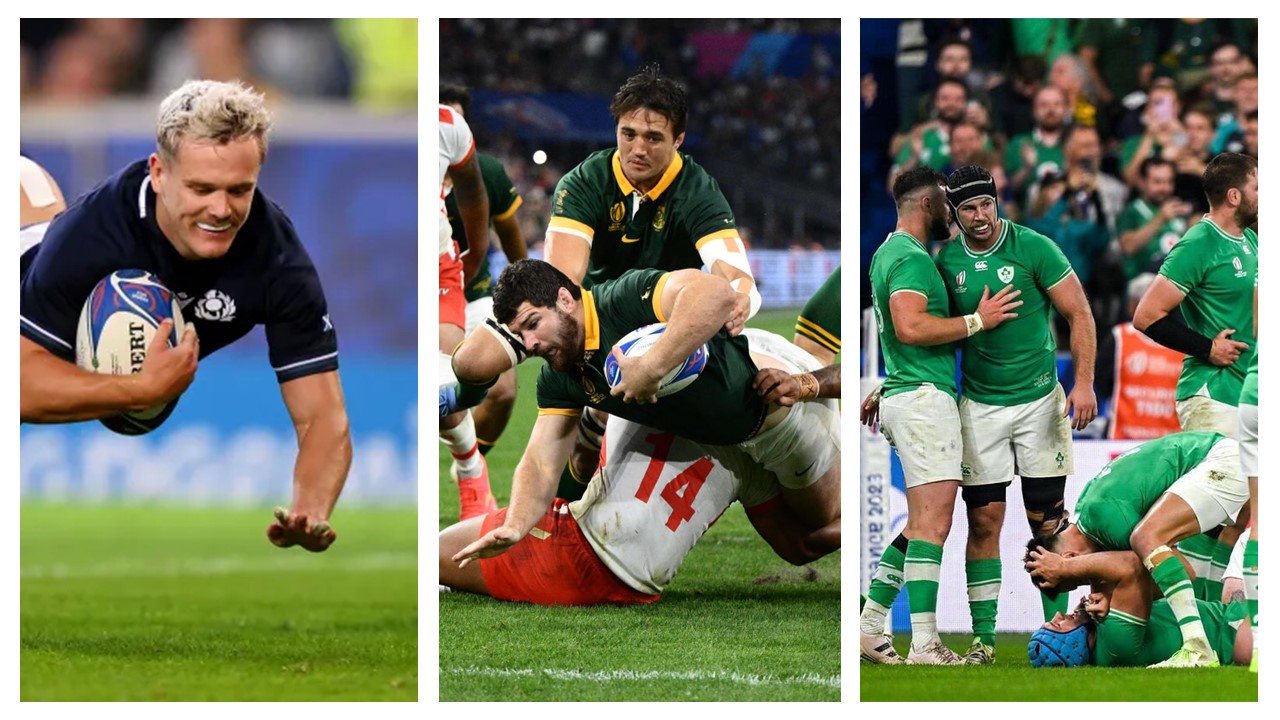
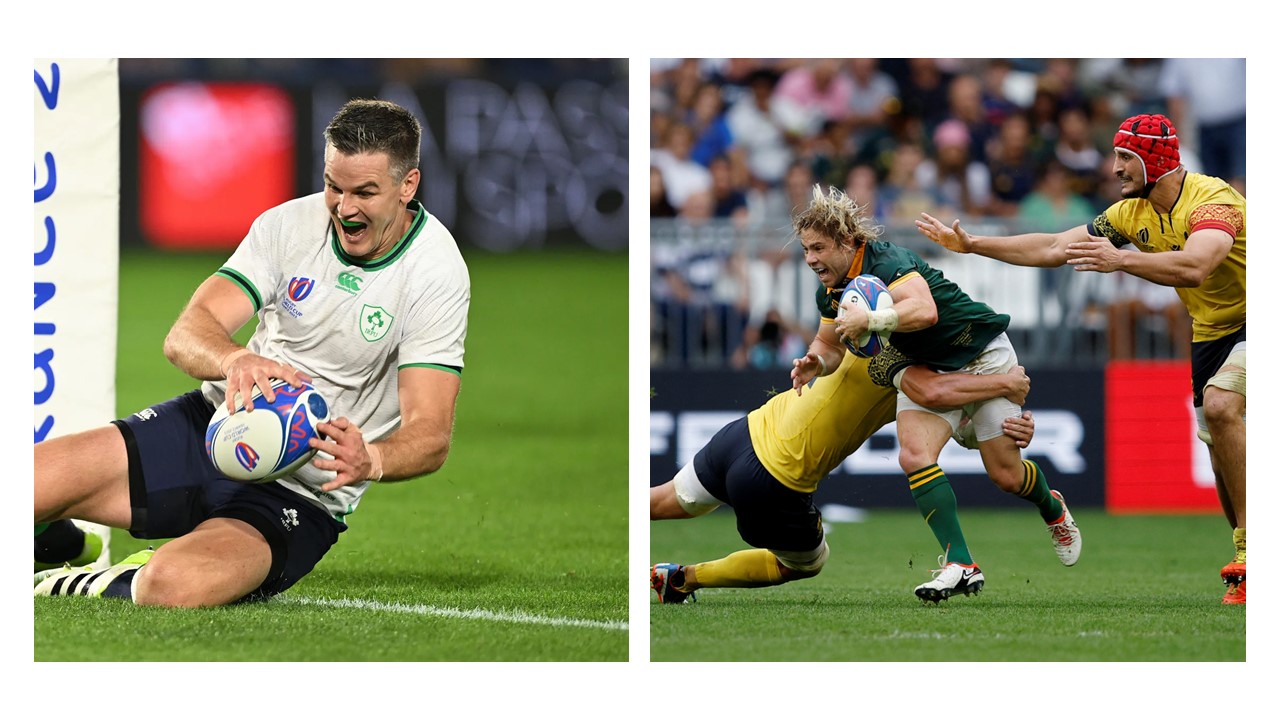
The Lineout Calls of the Week

So it’s only 14 days away and we are starting to feel the mounting excitement. Sure it’s a lopsided draw, but the flip side to it is that it could end up providing one of the most interesting World Cups in history. But that’s a discussion for much later. In the meantime there continues to be plenty of drama as the World Cup warm-ups continue to take their inevitable injury toll. We’re not going to talk about England’s ongoing red card crisis and the Farrell debate, it’s done and dusted now as far as we’re concerned and MORE than enough has been said about it if you ask us.

What really got us talking this week, was a first look at Ireland against big opposition (even though in their present state it may be a bit of a stretch to call England that). Ireland didn’t exactly blow us or anyone off the park, but then they didn’t really need to. Instead a very well deserved 100th cap was handed out to one of the most humble and popular individuals from the Emerald Isle and the global game for that matter, legendary Irish winger Keith Earls. However, Irish supporters will be sweating over the injury to Hooker Dan Sheehan who, if you ask us and many others, is considered to be one of the best if not the best Hooker in International Rugby right now.

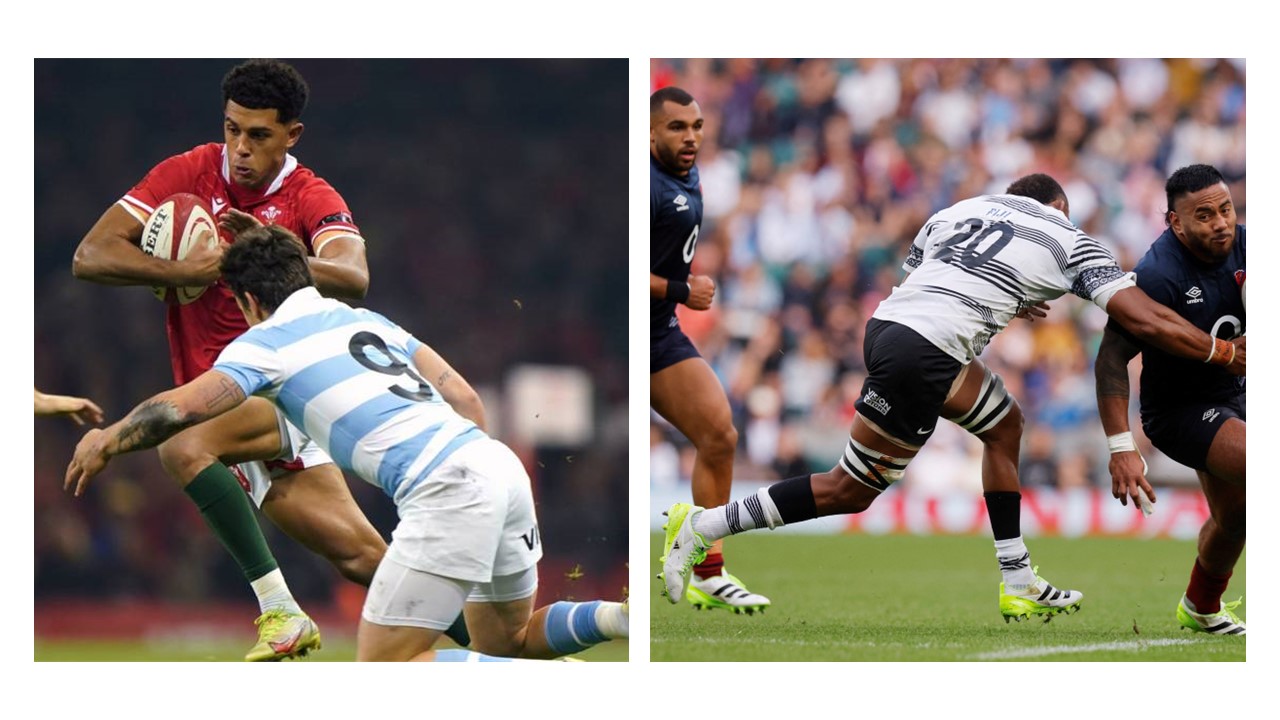
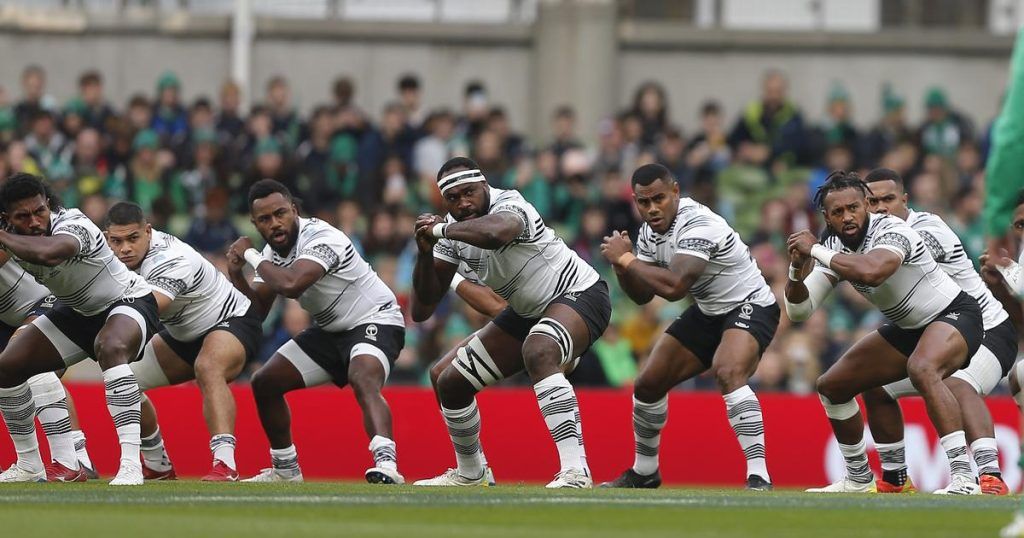
We had a good look at Fiji and their tussle with France, which although les Bleus won comfortably there is no denying that Fiji’s game has developed far beyond their reputation as the Harlem Globetrotters of International Rugby. They are still immensely enjoyable to watch, but there’s much more to the Flying Fijians than just the razzle dazzle of their broken play.

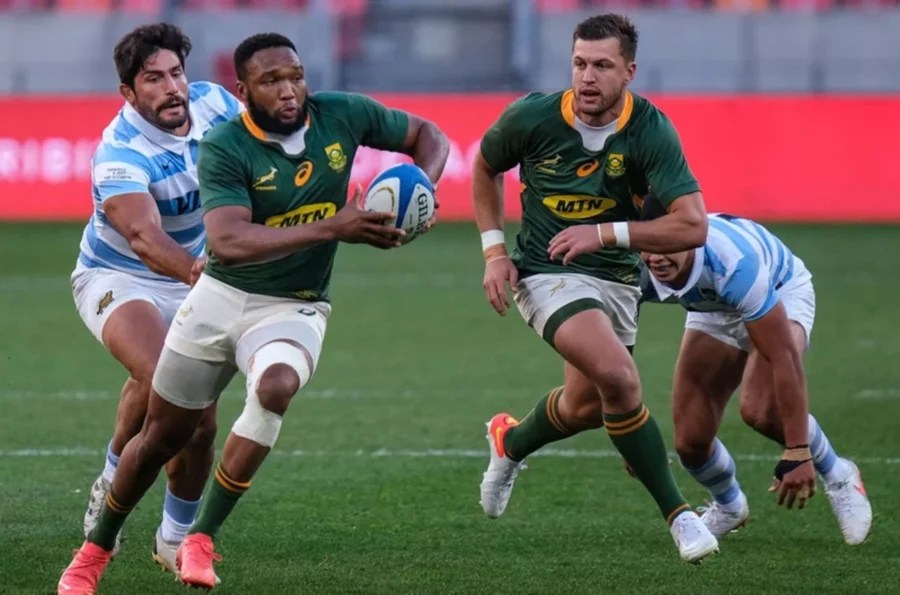
Ahead of what could be called the World Cup’s first “unofficial” game, we take a look at le Crunch match between New Zealand and South Africa at what looks set to be a sold out Twickenham, and yes you will be able to watch it in Canada, details over on the TV page. We also start to to hope, along with every Springbok supporter on the planet, that midfielder Lukhanyo Am and fly half Handre Pollard will actually now appear for South Africa in their critical Pool games against Ireland and Scotland.

Lastly we look at the last of the World Cup warm ups as Rugby’s most colorful Coach, Australia’s Eddie Jones, arrives at the Stade de France to take on a French team that is unquestionably starting to rise to the occasion ahead of them, under the tutelage of their cool as a cucumber Coach Fabien Galthie.

So without any further ado here’s what kept our pints frothy in a busy week of International Rugby as the clock continued to countdown to the big show in Paris on September 8th.

A rusty Ireland do enough to canter past a miserable England without ever really having to reveal their hand in a game that had its highs and lows in equal measure

As predicted Ireland’s warmup win over England provided both anxiety and elation. Anxiety swirled around the injury to their all star Hooker Dan Sheehan and the joy of Keith Earls’ 100th cap signed off with one of the legendary Irish winger’s trademark tries

Let’s start with the good stuff first. The Irish supporters amongst us found it hard to keep a dry eye as one of Ireland’s most humble and dearly loved servants led his three daughters out of the tunnel at the Aviva. Winger Keith Earls hasn’t really enjoyed the limelight of his 100th cap – he’s a modest man and is clearly uncomfortable with all the attention. However, in our opinion and the 51,000 spectators packed into the Aviva last Saturday, there have been few individuals as deserving as the Munsterman. Earls was clearly relieved to join the rest of his teammates as they lined up for the anthems and get on with the business at hand. Keith has been a fan favourite here at the Lineout since his debut in a green jersey way back in 2008.

Ireland cruised to a comfortable albeit slightly ordinary win against England. They didn’t exactly put their opponents to the sword, but then they didn’t really need to as England were more than capable of providing themselves with their own swords to fall on for the full eighty minutes. Instead Ireland cantered across the English whitewash with relative ease five times, without really revealing their hand. Consequently they looked slightly rusty at times though as the game wore on the cobwebs were clearly getting blown off. The Aviva erupted on the 73rd minute as the day’s favorite son Keith Earls, produced one of his legendary acrobatic finishes in the corner off a fantastic break from Josh van der Flier. England shuffled around the park aimlessly for the remaining five minutes, clearly longing for the final whistle, having been reduced to 14 men after 52 minutes after yet another clumsy tackle – this time by Billy Vunipola which saw red. Once again there were few if any positives for England as they continue to look like a team who simply don’t have a plan, shape or an identity – not a good look plain and simple two weeks out from a World Cup.

As for Ireland, they continue to build quietly towards the business end of the tournament which fortunately doesn’t really start for them until September 23rd in Paris when they meet South Africa. However, the injury to their truly phenomenal Hooker Dan Sheehan has set alarm bells ringing. If you ask us, Sheehan is actually more important to Ireland mounting a genuine challenge for the Webb Ellis than their much talked about Captain Johnny Sexton.

You may disagree but let’s unpack this a bit. Hooker is the one genuinely problematic area for Ireland if the stretcher bearers get busy. Sheehan is an explosive wing forward in addition to his abilities at the nuts and bolts of his position, plus he simply creates so much opportunity for Ireland off the set pieces. Ronan Kelleher has many of the same qualities but an injury cloud continues to hang over him even though he is likely to be named in Ireland’s World Cup squad next Monday. Outside these two Ireland’s stocks in the position start to diminish and become distinctly unproven at Test level. So much of what Ireland has become good at is built on the power and explosive pace of both Sheehan and Kelleher. Without them the team remains capable but its X factor suddenly drops considerably.

As we go to press the injury concerns surrounding Sheehan appear to be diminishing but there are still a few sleepless nights ahead for Ireland’s Coaching staff and their supporters. All of us here at the Lineout are quietly crossing our fingers and rubbing every rabbit’s foot that we can find to ensure that this star Irish player will be able to make a significant contribution to the World Cup.

Fiji show they are now just as comfortable wrestling it out in the trenches as they are showing us how rugby players can grow wings

Fiji showed in their 34-17 loss to France that they can now bring a powerful physical game to the World Cup in addition to their extraordinary abilities in open play

Ok let’s put aside the fact that ultimately France got past the flying Fijians and, by the final quarter, looked in charge of proceedings. We don’t think anyone was surprised by the result. However, look at how Fiji faced up to the physical challenge of playing France. In the past, the physical side of the game has never been Fiji’s strong suit from a technical point of view. Make no mistake Fiji produces no shortage of big, physical men who also possess the remarkable ability to go from 0 to 60 in the blink of an eye, while at the same time juggling a rugby ball like a fairground jester. Perhaps more than any country on the planet, Fijians are born with rugby in their genes.

However, in the past they clearly struggled to maintain a physical presence for a full eighty minutes, and invariably became the target of the referee’s whistle more often than not. The technicalities and skills needed in the set pieces were seemingly far too mundane for Fijian rugby. Well, after what we have witnessed so far this year, that is clearly no longer the case. The statistics for the French game make fascinating reading from a Fijian point of view. First up in their last four games, they boasted a 96% success rate in the rucks. Admittedly, their lineout work needs to improve, but they managed a 100% success rate at scrum time against the French. Furthermore, look at both of their tries in the French game which were scored from within the French 22 and at close quarters by some genuine grunt from the forward pack. That first try from Hooker Tevita Ikanivere showed some brute physical power that the French simply couldn’t cope with. Also watch one of La Rochelle’s favourite sons, Levani Bottia who is a centre by trade, and the role he played in the French match in the back row for Fiji – the words power and versatility immediately come to mind.

In short, if Fiji can cause some physical headaches for the fourth ranked team in the World and tournament hosts, just imagine what they can do to their Pool opponents, Wales and Australia. The physical and set piece skills of said opponents are not exactly striking fear into anyone at the moment. Fiji are still giving away too many penalties, and that is one area they will need to tighten up if they are to upset Australia or Wales’ apple carts next month. But in all seriousness, don’t count them out. If Australia or Wales decide the only way to suffocate Fiji’s remarkable attacking game is to get into an arm wrestling contest in the mud of the trenches, don’t be surprised to see this Fijian side be more than comfortable with the challenge. We sincerely hope it doesn’t degenerate to that as the privilege of watching Fiji operate at full throttle is one of the things we look forward to the most at World Cups!
Will they won’t they? South Africa tease the rest of the world about the possibility of two of their most important players managing to overcome injuries and now appear in the World Cup

Given South Africa’s current problems off the tee and a need for creativity in the midfield, the increasing speculation that Handre Pollard and Lukhanyo Am look set to play a part in the Springboks World Cup must be the best news South African supporters have heard all year

Put your hand up if you didn’t notice these two sitting in the stands at Cardiff, and Pollard in particular clearly itching to get onto the pitch. The Springbok Coaching staff is now making more noises about Pollard likely to become available for the Pool stages and even Lukhanyo Am making the knockout stages.

For now it’s all smoke and mirrors but it would appear that by the time the tournament gets underway these two will be somehow slipped into the squad as injuries take their toll. There are various regulations and protocols to be followed, but both are clearly hanging about in Europe ready for the call when it comes, either just prior to the tournament start or at some stage in its progression.

Let’s be brutally honest, mercurial form or not the Springboks need Pollard as their stocks in the 10 jersey remain paper thin. Manie Libbok is rising well to the challenge, but so far offers no security whatsoever from the kicking tee, and everyone knows that some of the big games will be won by the ability to keep the scoreboard ticking over in your favor.

Furthermore, as impressive as South Africa’s centre pairing of Jesse Kriel and Damian de Allende looked last weekend against Wales, pretty well anyone would have looked good in the midfield in that game. That was a second, if not third string Welsh side up against a loaded Springboks outfit. In short, it was chalk and cheese. The need for Kriel and De Allende to be imaginative was simply not necessary, and as a result the pair shone. Against Scotland and Ireland who have some of the best and most dynamic centre pairings in International Rugby at the moment, South Africa will need to be a lot more inventive and imaginative. That is why Lukhanyo Am is so critical to them if they want to go deep into the tournament.

The World Cup warm-ups, as they always do, have kept us glued to the progress charts in the injury wards, but the vital statistics on these two key Springboks have taken on an added urgency.

This Ain’t No Party… This Ain’t No Disco… This Ain’t No Foolin’ Around!
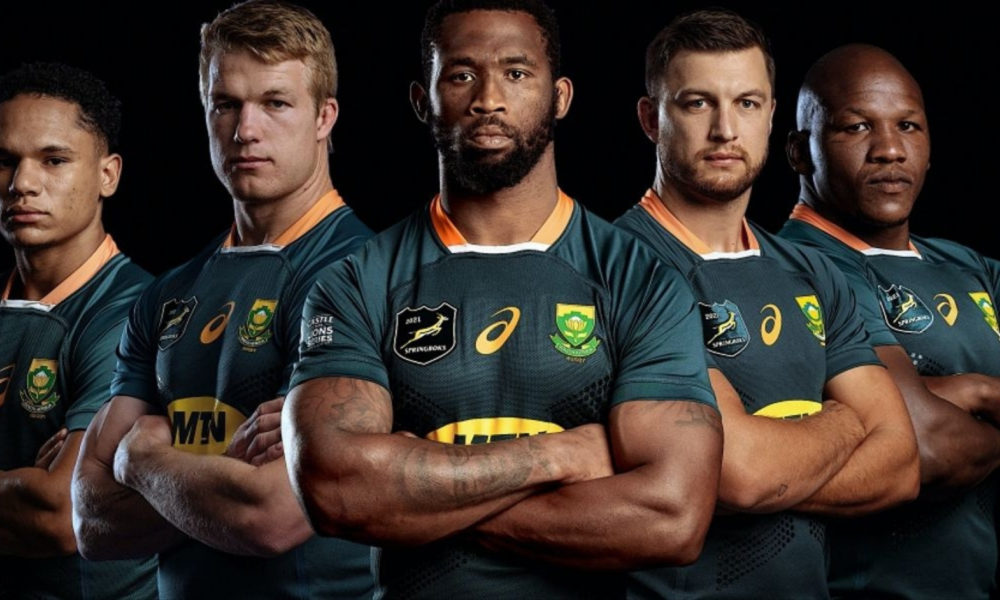
As South Africa and New Zealand look to sellout Twickenham tomorrow, their supporters pray the injury gods will be kind, as no quarter is EVER given no matter what the occasion when these two famous rivals walk onto the pitch

To quote the famous Talking Heads song, Friday’s fixture, in front of what is likely to be a sellout crowd, at Twickenham between New Zealand and South Africa is a very serious business indeed! This is no friendly make no mistake and it never is between two of the sport’s greatest rivals. The World Cup may be only two weeks to the day away, and despite the fear of injuries, both sides have clearly stated that they have every intention of throwing everything including the kitchen sink at each other for the full eighty minutes in West London on Friday. A casual match between these two is simply not in All Black and Springbok rugby players’ DNAs. These players live for the chance to play each other.

As much as there is talk of South Africa possibly joining the Six Nations now that their club rugby focus has shifted to playing in Europe, we have trouble seeing it happen in reality. We just can’t see these two sides giving up the opportunity to have a go at each other twice a year in the Rugby Championship – the landscape may be changing but it is still every Springbok and All Black player’s life blood. Quite simply, it’s how they and their supporters continue to measure the worth and status of their respective teams.

Friday’s fixture sees the teams pitch up as fully loaded as the injury lists will permit. As a result there are some fascinating matchups and combinations to watch. New Zealand’s Luke Jacobsen who has been one of Super Rugby’s standout players of the season for the Chiefs gets to measure himself against South Africa’s Pieter-Steph du Toit, who is quite simply back to the form that blew all of us away at the last World Cup and earned him World Player of the Year. Last weekend South Africa’s talisman and Captain Siya Kolisi showed no sign of wear after returning from injury, in his forty minutes on the pitch but how well will he stand up to containing the likes of that fearsome All Black row and the whirling dervish/battering ram known as Ardie Savea? New Zealand bring in their likely starting combo for the whole tournament of Aaron Smith and Richie Mo’unga and we fear South Africa may struggle to keep up here, especially if the kicking tee becomes a regular accessory.

However, the big talking point for us is that Springbok centre pairing of Canan Moodie and Andre Esterhuizen. It’s unproven and up against one of the best in the world in the shape of New Zealand’s Rieko Ioane and Jordi Barrett, but we have to be honest and say we can’t wait to see the Springbok duo in action. If both handle the pressure and excel, then the combination of either of them with a fit Lukhanyo Am could be one of the revelations of the tournament. It’s a huge gamble by the Springbok Coaching staff and could go spectacularly wrong, but if it actually works, the possibilities could be endless, especially if Am is unable to return from injury. Esterhuizen has a genuinely handy turn of pace to go with his physicality and size, and Moodie has vision and speed plain and simple and is looking increasingly sharp defensively.

This is one you won’t want to miss. Many of you have asked us how to watch it here in Canada as it has fallen outside of the regular broadcasters we use here, but fear not you can catch it via Stan Sport from Australia. Head over to the TV page for details on how to do so.

Krusty the Clown meets Rugby’s James Bond

The Stade de France hosts a clash between France and Australia only twelve days out from opening its doors to the World in a fascinating fixture which wraps up the nerve wracking business of World Cup warm-ups

Yes we are looking forward to this one, as we sign off on the Rugby World Cup warm ups. A bit like the dance taking place at Twickenham between South Africa and New Zealand, both France and Australia are leaving nothing to chance on this one. After one of the most bizarre press conferences we’ve ever seen from Wallaby Coach Eddie Jones, who had clearly taken some notes from Donald Trump in his antics at Sydney Airport, Australia arrive in France as perhaps one of the most intriguing prospects of the World Cup.

At the time of writing this we only know the French squad for this fixture which, much like the New Zealand squad to face off against the Springboks, is stacked and probably not far off the one which will meet the All Blacks in the tournament opener in two weeks time. Eddie Jones has yet to name his squad, but we have a hunch that it will be of similar stature in its proximity to Australia’s lineups for their key pool games against Wales and Fiji.

As much we found Jones’ airport conference slightly eccentric to say the least, and despite our general dislike of Jones and his approach to Coaching, we have to grudgingly admire his conviction if indeed that is what it is. Despite his bluster and claims that Australia are not in France for the croissants, and are genuine contenders for the Webb Ellis trophy on October 28th, it’s fairly obvious where his priorities lie. You guessed it Australia’s opportunity to host their own World Cup in four years’ time. This young but clearly talented side are likely to be at the peak of their powers come 2027. They may end up being lambs to the slaughter come the knockout stages of this World Cup, assuming they even make it out of the Pools which they should, but the lessons learnt along the way will be invaluable to these young players and will boost their growth enormously, as they are about to embark on the most intense crash course in Test Rugby imaginable.

To be honest, we felt that Jones’ predecessor Dave Rennie was doing exactly that and rather well despite the Wallabies loss rate last year, and would have been better at nurturing these players through their development. However, it’s the Jones show now, and one thing he is good at is deflecting all the pressure away from the players and on to his shoulders. In short, he keeps them out of the clutches of the media. By the same token, so does Galthie but in a much less dramatic and attention seeking manner. We have to admit we prefer the Galthie approach, but given Australia’s obsession with their sporting personalities and an almost ruthless need for success, perhaps a Jones type character is what is necessary.

Time will tell if the great Jones experiment works, but in reality the encounter at the Stade de France is the first chapter in the story of the Wallabies road to 2027, as the Rugby Championship and Bledisloe Cup this summer were simply the prologue. Now the work really begins and we can’t wait to see how the plot twists and turns over the coming months.

Well that’s it for this week folks. Work permitting and with the World Cup upon us we’ll do our best to bang something out every week. For now, count the days, enjoy the last days of summer and most importantly stock the fridge!! Take care and may we all, players and supporters alike, stay safe and injury free!

The Lineout Calls of the Week

Well there has been drama aplenty this week, but yes sadly it’s officiating and governance that unfortunately take centre stage once more. England Captain Owen Farrell’s time at “tackle school” cleary had no effect and the serial high tackle offender once again found himself in hot water, only to get away scot free in the end – though that could yet change if World Rugby’s appeal is successful. That unfortunately proved to be the main talking point of an utterly tepid contest between England and Wales that, on current form, would seem to indicate that just surviving the Pool stages may be the biggest challenge for both sides.

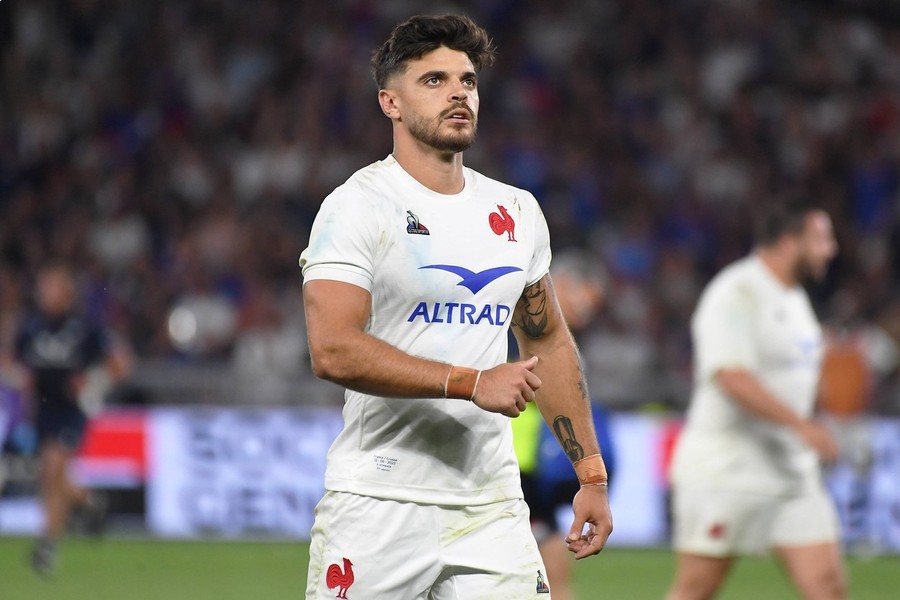
Meanwhile in France, we were treated to yet another absolute thriller between France and Scotland. It was a fantastic contest which clearly indicated that so far France look a bit undercooked, while Scotland look set to cause supporters, players and Coaches in Ireland and South Africa many sleepless nights between now and when the Pool stages wrap up on October 8th. However, as we so often fear, these warm-up matches usually come with a hefty price tag, and France’s star fly half and playmaker Romain Ntamack picked up an injury which rules him out of the global showpiece completely.

South Africa take on Wales this weekend and like France are nursing some troubling injuries. This weekend sees the first game played by Captain and talisman Siya Kolisi since returning from injury himself back in April. It simply cannot be underestimated how important he is to the success of his squad in their push to claim back to back World Cups, and a game against a demoralised Welsh side has all the makings of an injury crisis in the making for South Africa, especially with influential second rower RG Snyman only recently able to start games as opposed to cameos from the bench. Handre Pollard has now been ruled out of the tournament, and given that South Africa is lacking in depth in the ten jersey, any further injuries on this part of the park could have crippling consequences for their World Cup chances.

Lastly we look at Ireland’s duel with a smarting England side in Dublin this weekend. So far Ireland have managed to stay off the injury radar, but given England’s current scrappy state of play, and general low level of morale and discipline, Irish supporters will no doubt be nervously watching this one from behind the couch with a stiff drink in their hands.

So with only 22 days till kickoff of the greatest show on earth, well in our opinion at least, here’s what kept our pints frothy this week.

England’s serial offender loses the plot – AGAIN!!!!

Owen Farrell’s tackle on Wales’ Taine Basham was a red card all day long, especially given his appalling track record with similar transgressions – thus the decision by a supposedly “independent” review to downgrade it to a yellow, made a complete and utter mockery of the much touted drive towards increased player safety and welfare

We don’t even know where to begin on this one. Put aside the issue that Owen Farrell is not one of our favourite players despite his talents. The precedent being set by the decision to rescind the red card for a blatant shoulder tackle and contact to the head of Welsh back rower Taine Basham which caused him to fail an HIA, is beyond dangerous. We have replayed the footage over and over and whichever way you cut it and, ignoring the farcical excuse that a mild push from England Hooker Jamie George caused Basham to “dip” into Farrell’s shoulder, it’s a red card all day, week, month and year long. Watch closely and you can clearly see Farrell brace and rise up into the tackle with his shoulder, while making no attempt at wrapping his arms or trying to adjust to Basham’s falling body position.

We are all for giving players the benefit of the doubt in the heat of the moment. However, the problem is that Farrell has committed such fouls on numerous occasions in his career to the point where the authorities have clearly recognised and made public the fact that he has a dangerous and problematic tackling technique. It’s not like this is his first rodeo on this issue, he’s been banned three times for high tackle offenses, some of which have been horrific. To add insult to injury he has also managed to get away with a few in his time as well.

Furthermore the decision smacks of inconsistency. South Africa’s Pieter Steph du Toit received a much harsher ban when a teammate pushed him from behind causing an unfortunate clash of heads between himself and an opponent last year. Tonga’s George Moala received a ten week ban this week for a messy tip tackle on Canada’s Ben LeSage. A ban was justified but ten weeks while Farrell, as a serial offender, gets away scot free? You can certainly empathise with the view in Tonga that the whole process seems to smack of one set of rules for Tier One countries and another for the rest of the World. Furthermore that the “independent panel” was from Six Nations Rugby (even though it comprised three Australians) also seems to reinforce the point that the new annual competition between SANZAR and Six Nations countries appears to be a drive to create an elite level of competition that seriously puts the brakes on the development of rugby as a global game and favors the wealthy unions.

With the biggest rugby show on earth about to kick off, and one in which all eyes will be on player welfare and safety, this decision sets completely the wrong tone. While World Rugby are appealing the decision and Farrell may still see a ban, the fact that it has come to this in the first place is a seriously bad joke. With this and the kind of abuse being dished out to officials as per the case of Ireland’s Johnny Sexton, the game is in serious danger of falling to a set of lows it has somehow managed to avoid up till now in the professional era. The next two months in France are supposed to be a glorious celebration of our game and its values around the world. On the basis of decisions such as this however, it is in danger of being viewed as a sport bereft of morals and its once cherished values seriously tarnished. We sincerely hope it’s not too late to reverse the rot.

Wales remain a train wreck and Australia, Fiji and Georgia are no doubt licking their lips

Wales’ ineptitude in the set pieces and their complete inability to put last weekend’s game against England well and truly to bed when they had a three man advantage, while at the same time conceding a try in the process, means that they have a mountain to climb if they are going to make it out of the Pool stages.

If you were as unfortunate as we were to suffer through the complete and utter dross served up at Twickenham last Saturday, then it clearly indicated that for the most part neither England or Wales have, on present form, a snowball’s chance in hell of making it out of the Pool stages come the World Cup. However, as dire as England were they did manage to somehow pull off a maul try against all odds with only twelve men, and which Wales with a full complement of 15 were unable to stop. That perhaps is the most glaring aspect of Saturday’s performance from a Welsh point of view. The fact that 15 Welsh players could not turn England’s three players in the sin bin to their advantage beggars belief. If you can’t do that in a mere warm-up match, then there is very little chance you’ll be able to do it in the knockout atmosphere of the World Cup.

Both sides made a plethora of errors, but Wales inability to gain any traction in the set pieces, particularly the lineouts will really get alarm bells ringing at Cardiff HQ. They fared slightly better at scrum time in the win a week earlier against England, but still not well enough, and their lineout work in both games was a disaster. They only managed a 66% success rate across both games at lineout time which is simply unacceptable heading into a World Cup. However, the fact that Wales, who had kept England tryless a week ago, could simply not convert a three man advantage in the English red zone into at least five points is worrying for Coach Warren Gatland, who clearly looks like he is not enjoying having his old job back.

Wales has good players make no mistake, but they look set to frustrate opponents rather than making a lasting impression themselves in the World Cup. Their only saving grace is the fact that fellow Pool C denizens Australia are also at sixes and sevens, and in the past Wales somehow seem to find it in them to rise above the mediocrity they dish out in the buildup to World Cups. That being said though it is also a trait that the Wallabies tend to reserve for the World Cup, though Eddie Jones’ media baiting seems even more unfounded and preposterous this year than it usually is. Perhaps Wales’ biggest stumbling block could be an electric and increasingly physical Fijian side. Fiji’s tussle with France this weekend in Nantes will tell us much as to how tricky Wales’ exit from Pool C may ultimately be.

France dealt a bitter blow in the games that always come with a price

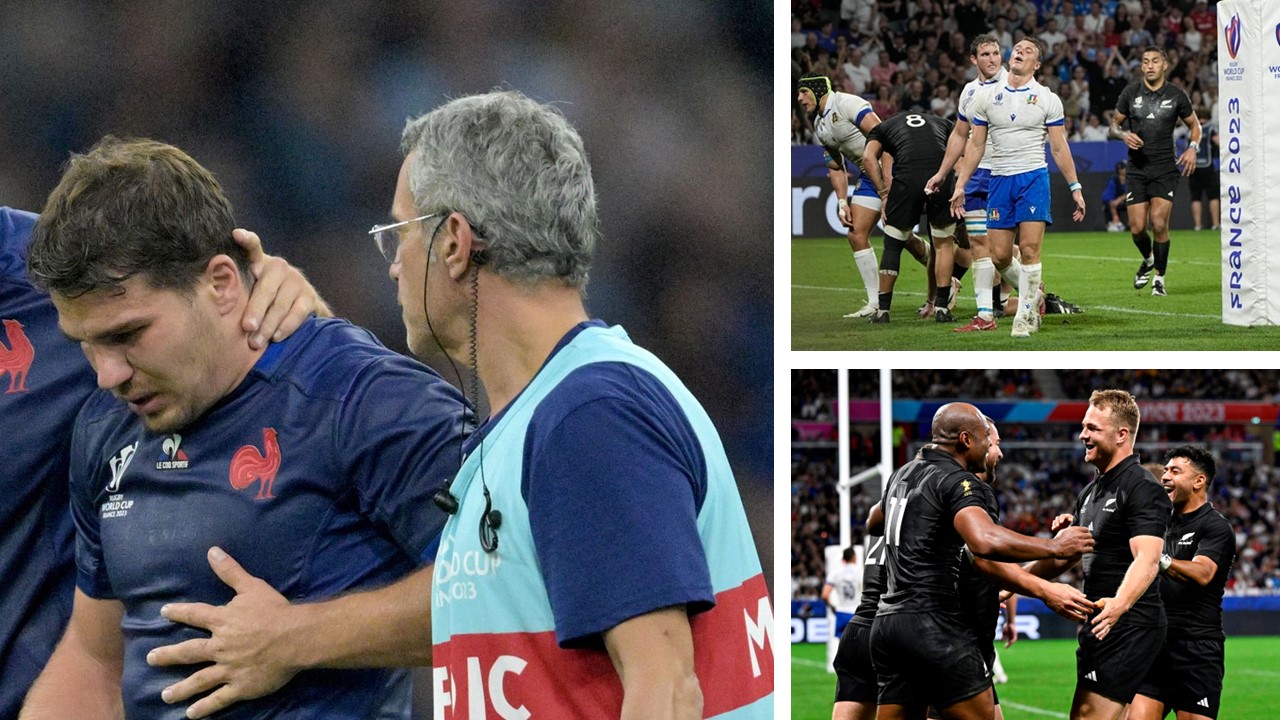
France know they have a lot of work to do between now and September 8th, especially with two injury prone matches lying in wait against Fiji and Australia. The loss of star playmaker and fly half Romain Ntamack is a huge loss, especially with France so far looking more than just a tad off the pace in their first two warm-ups against a VERY feisty Scotland.

Can we just say we HATE these World Cup warm up games. Yes we know they are a necessary evil, but we invariably spend the entire month of August in a state of complete anxiety about the prospect of critical injuries to our respective sides. For French supporters among us, my son included, the loss of French playmaker and fly half Romain Ntamack is a cruel blow. There are some impressive stand ins for him, but none of them works as effortlessly with scrum half and fellow Toulouse teammate Antoine Dupont, who himself is such a big part of France’s World Cup potential. The Ntamack/Dupont axis has a huge bearing on how well France performs.

So now the question is Dupont and who else? Perhaps the front runner for Ntamack’s jersey is clearly Bordeaux’s Matthieu Jalibert, but although a seriously gifted player his chemistry with Dupont is problematic at times, not helped by a slightly larger ego than Ntamack. He is also prone to some rather rash risk taking, something Ntamack makes look much more controlled and more in the vein of classical “French flair”. As a result we have a sneaking suspicion that France’s front runner in Les Bleus 10 jersey could be La Rochelle’s Antoine Hastoy. Hastoy under the tutelage of Ronan O’Gara has steered La Rochelle to back to back European Championships and is no stranger to the pressures of knockout rugby. He’s also a lot more of a physical ten than Jalibert, and while not as flash there is an assured confidence and degree of sound decision making that comes with Hastoy, as opposed to the more exciting but flamboyant Jalibert.

France clearly struggled to find their feet in both matches against Scotland, and while we tend not to read too much into these warmup games in terms of form, France at this stage look quite a ways off the finished product. Their last two games against Fiji and Australia, will no doubt smooth out the rough edges, but as evidenced by last weekend the question remains as to what the final bill will be in terms of injuries. In both matches against Scotland, the Scots at times ran France off the park and Fiji is a fast, physical and free running side as are Australia. France’s traditional stalwart defence also looked slightly porous with them averaging significantly more missed tackles than the Scots. However, they will take comfort from the fact that particularly in the second match their set piece work was rock solid, and also that under intense pressure they managed to hang onto a narrow win in the second game. It’s this kind of resolve in the face of an opponent that clearly fancies stealing a famous win, that is such superb preparation for the knockout environment of the World Cup. In that second Test against Scotland France got some valuable experience in that regard, which should serve them well mentally for the challenges to come.

These final two matches will definitely get France in the right headspace for that all important opening encounter with New Zealand, who love loose and fast games. France are unlikely to reveal their full hand until September 8th, so as a result it would be foolish to pass too much judgement on their likelihood of lifting the Webb Ellis trophy on October 28th on the evidence put forward in these warm up games. However, prepared they will be, of that we have little doubt – we just sincerely hope that the stretcher bearers remain on the sidelines for the next 160 minutes.

South Africa arrive on European shores looking slightly fragile

South Africa take on Wales this weekend as they arrive in the Northern Hemisphere in preparation for the World Cup, with inspirational Captain Siya Kolisi in action for the first time since a serious injury, while others such as RG Snyman are finally starting to see regular action – but South Africa’s injury lists really can’t take any more additions.

South Africa are a conundrum for us plain and simple. They are a great side and always a genuine World Cup competitor, but something is just not sitting right with us this year in terms of being able to accurately assess their chances. Last World Cup they looked decidedly shaky until the Final, but had a World Class squad to carry them through. This time around injuries could seriously blight their chances.

First up they are without fly half Handre Pollard, which perhaps isn’t quite the end of the world as his form since the last World Cup has been hit and miss at times. However, there is no clearly defined replacement and although Manie Libbok looks set to take up the mantle there is no denying he is still a very green, albeit capable, talent. Goalkicking remains a problem for South Africa with a genuine cast of characters lining up to assist, with perhaps scrum half Faf de Klerk being their best bet.

More pressing is the concern as to how fit their talismanic Captain Siya Kolisi is. He’s been out of action since April with injury, and as impressive as his recovery has been, how much will South Africa be willing to risk him in the early stages? Perhaps the first test of that will be seeing how many minutes he gets on Saturday against Wales in his first game since his return from injury. Also RG Snyman, the ferocious second rower, who has been plagued with injury since the last World Cup and his move to Munster, has gingerly reentered the Test arena but it remains to be seen if he really is clear of injury in the long term.

What concerns us the most regarding South Africa’s chances is the loss of Lukhanyo Am at centre for the entire tournament through injury. The midfielder’s vision and rugby brain is one of the best in the modern game. Sadly the current offering of Damian de Allende and Jesse Kriel just can’t hold a candle to a centre pairing featuring Am. Out wide and at fullback we feel South Africa can compete with the best, but it’s that centre channel that remains South Africa’s weakest link in terms of combinations and creativity given Am’s absence.

We hope we’re proved wrong, as a strong Springbok side really helps make a World Cup special, and that Saturday’s encounter in Cardiff doesn’t create more sleepless nights for South Africa’s coaching staff and their supporters.

Ireland are so far easing themselves gently into their buildup for the World Cup and we think they like it that way

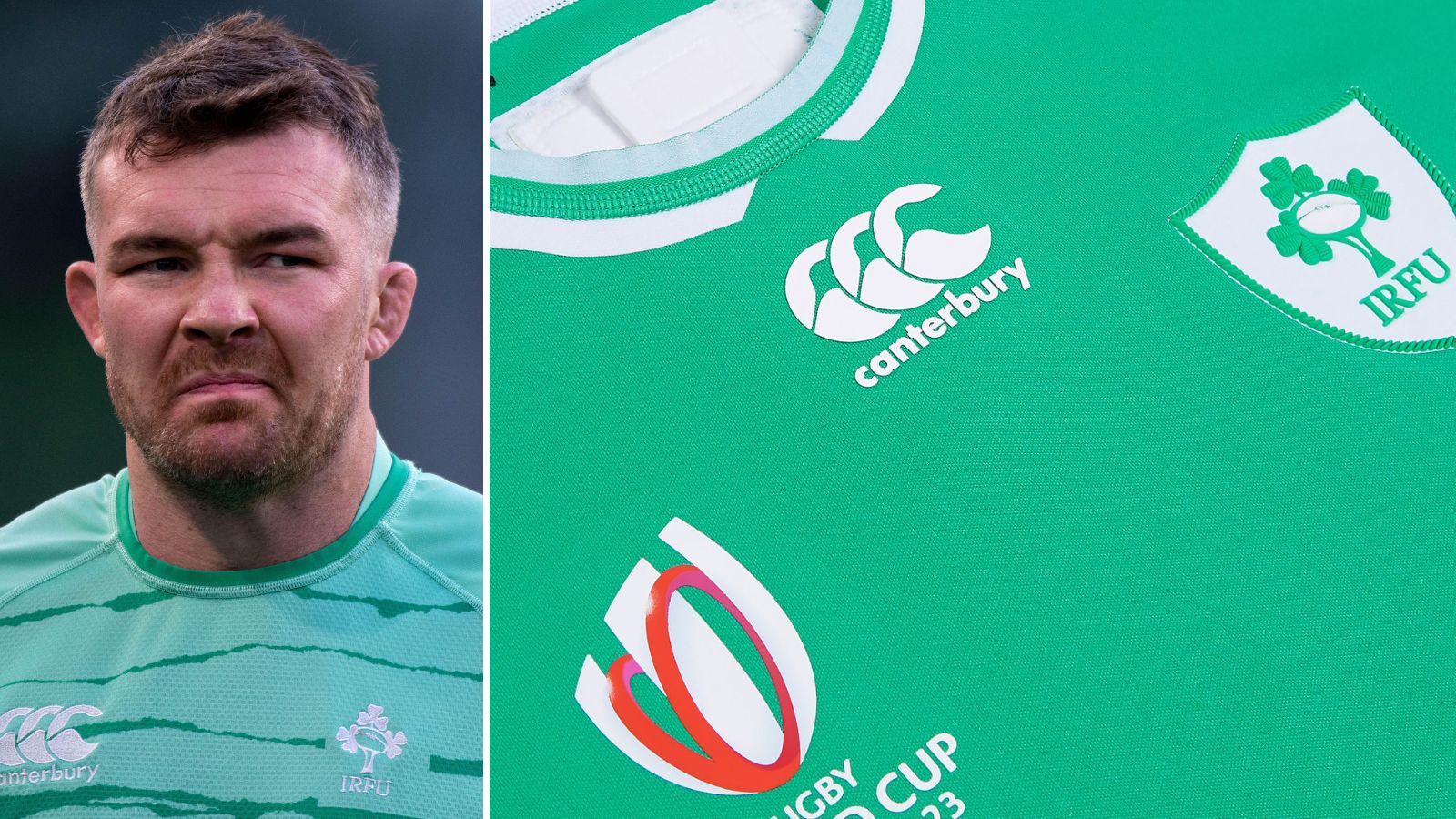
” Look if we can survive wearing this jersey lads for two months then we might just have a crack at winning this World Cup thing”. Ireland appear to be going about their business quietly and off the radar ahead of the World Cup, though that may all change this weekend as they take on a disgruntled England with a point to prove.

Apart from the ongoing controversy surrounding Ireland Captain Jonathan Sexton and his troubled relationships with officials, Ireland’s most difficult issue would appear to be the general dislike of the design of their World Cup jersey. Ireland have so far managed to stay out of the limelight as a squad, Sexton excepted, and out of the casualty wards. That all may change this weekend when they take on a rather unhappy and slightly persecuted English side with a point to prove in Dublin. One already gets the sense that the term friendly will not be applied to this fixture. As a result we’re regarding this match with a fair degree of trepidation, as we have a hunch Ireland may not emerge with a clean bill of health from this one.

This also raises the issue that of all the sides going into the World Cup, Ireland will have the least amount of games under their belt and apart from their clash with England, not faced any top ten countries in preparation for the tournament. They may be taking comfort in the fact that their first two games of the World Cup are for all intents and purposes warm up games in their own right, with no offence to either Romania or Tonga. The business end of the tournament for Ireland doesn’t really start until September 23rd when they face off against South Africa, followed by the rapidly rising dark horse of Scotland.

They may be the number one side in the World for the moment heading into the tournament, and we very much doubt that Saturday’s proceedings against England will change that, but it is interesting that this month all the talk is for the most part about everyone else, and not Ireland. We’re sure they are more than happy with that as they don’t seem overly comfortable with being rated as the top team in the world. In many ways you almost have the sense that Ireland wish that people would just not mention it. That’s probably the best attitude you could ask for heading into a World Cup as hype can be a crippling burden, and has sunk so many teams in the past before the tournament has even got to the knockout stages.

Ireland are quietly and painfully aware that the world knows they have never made it beyond a quarter final, to the point that it almost seems an insurmountable mental hurdle for the team and its supporters to overcome. Nobody is talking up Ireland’s chances, and that must be a genuine relief for Coach Andy Farrell and his charges. Instead they are being allowed to quietly go about their business with the minimum of fuss and expectation, as in some cases people have almost written them off before the tournament has even gotten underway. They haven’t got an easy road ahead of them, but they may be better prepared than perhaps we’re all giving them credit for. We for one can’t wait to find out!

Well that’s it for now folks, as the tension and excitement are rapidly building towards Friday, September 8th. Enjoy the last of the summer and we’ll hopefully be back next week work permitting!

Lineout Calls of the Week

While we’re asking where on earth has the summer gone, you could rightly ask where we’ve disappeared to? A thousand apologies but July was an absolutely insane month for all of us and we didn’t get together once to have our usual banter, and sadly only got to catch much of the rugby well after the action had been played. Family, life, work and apparently summer hijacked our attention completely when it came to matters relating to the oval ball this past month. However as the decks start to clear and the greatest show on earth, at least in our opinion, looms on the horizon a mere 29 days away, we promise to be back with a vengeance!

Although the Rugby Championship has been played out and the World Cup Warmups are in full swing, we have to start this piece with a heartfelt tribute to Canada’s fantastic Women who finished an exceptionally strong second in the recently concluded Pacific Four Series in Ottawa last month and, in doing so, qualified for the top tier of the inaugural WXV tournament to be held in New Zealand in November. We’ll have a look at New Zealand who look to be peaking at just the right time to mount a genuine challenge for the Webb Ellis trophy on October 28th. We look at the Wallabies and life under Eddie Jones which so far leaves Australian supporters with little to shout about. Much the same could also be said of England under Jones’ successor Steve Borthwick as we look at both sides’ World Cup squad announcements. Finally we also have a look at a rather shiny Scottish outfit that could genuinely rain on Ireland and South Africa’s parade come September, should they finally figure out the Oxford dictionary definition of consistency and how it applies to rugby.

Canada’s Women are EPIC – plain and simple!!!

Canada’s strong second place finish in the Pacific Four Series sees them retain their position as the fourth best team in the World in Women’s Rugby and the right to compete at the top table of the new World Rugby WXV annual competition in November

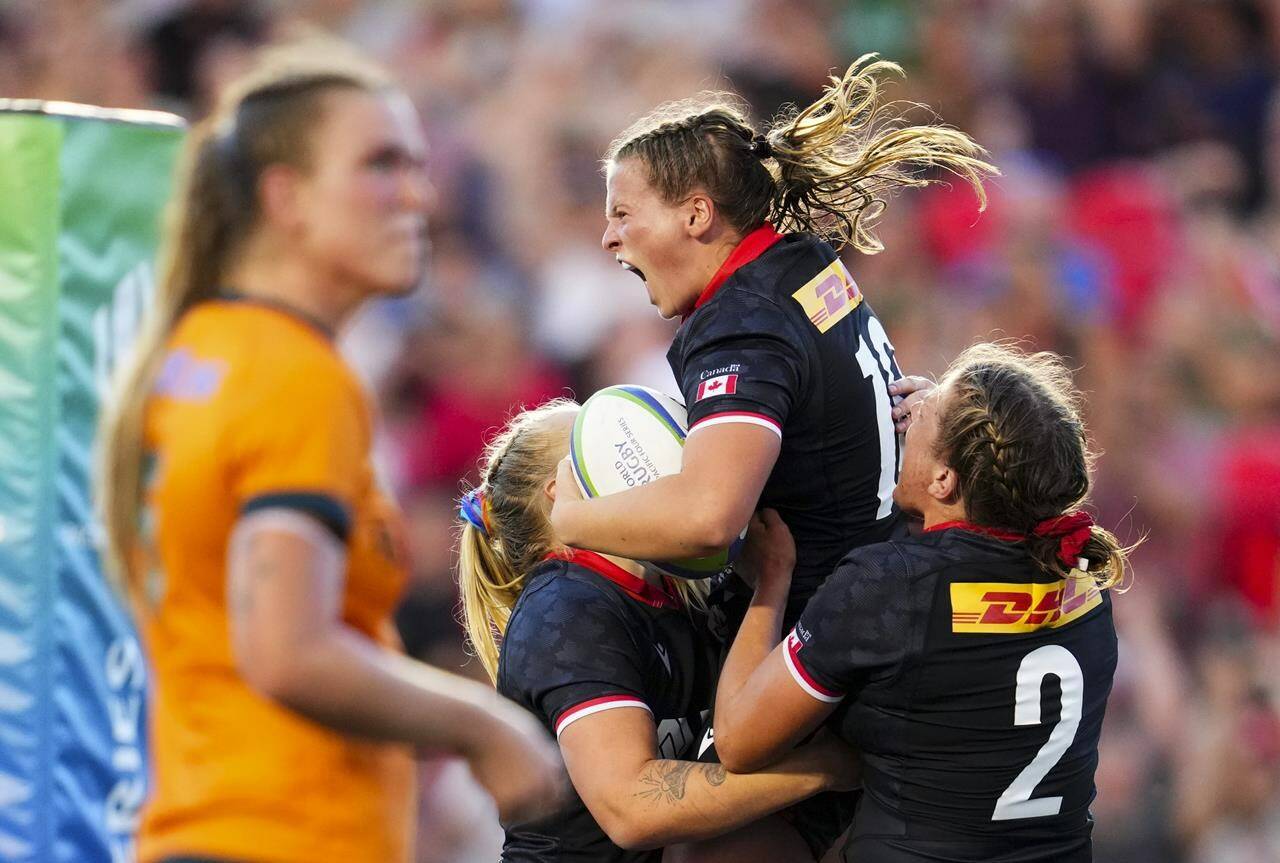
We just had to start this piece with a celebration of Canada’s Women and their outstanding efforts in the recently concluded Pacific Four Series, where they finished a strong second and set themselves up to be included in the top Tier of World Rugby’s exciting new annual global competition the WXV this November. They comfortably beat the USA and Australia and although they received a bit of a schooling at the hands of World Champions New Zealand last month in Ottawa, there were a ton of positives that came out of that game despite the loss.

Firstly, it has to be said that their two wins in the competition were impressive, as they demolished the USA and then ended the tournament by completely outclassing Australia. Although they took a bit of a thumping at the hands of New Zealand in their first of two games played in Ottawa let’s put that loss in perspective. They were first and foremost in that game till the 59th minute and New Zealand were definitely not having things all their own way. Every time New Zealand looked like they were going to pull away on the scoreboard Canada came straight back at them and managed to get themselves back in the game, most notably with an exceptionally strong start to the second half. What tripped Canada up in the end was their execution. As we watched the game we thought they were trying to be far too clever against a Black Ferns side that by comparison was running like a well oiled machine. New Zealand simply didn’t make mistakes and appeared to effortlessly implement a well rehearsed game plan. Canada by comparison, despite never once shirking from the task at hand in terms of 110% commitment for the full eighty minutes, seemed unsure of themselves at times and their kicking game often left us looking away from our TV screens head in hands. However, you simply couldn’t fault them for their bravery which was exceptional in a game that looked on paper to be heavily stacked against them.

What really impressed us however, was that on our to do list the following weekend in the final match against Australia, Canada ticked ALL the boxes of the things they needed to fix from the match against New Zealand. Against Australia it was Canada who looked a mirror image of New Zealand in terms of clinical execution and precision. It was an absolute joy to watch as Canada dismantled Australia with ease for the full eighty minutes. It’s that ability to learn from their mistakes and apply the lessons learnt that impresses us the most, and leads us to believe that this team is only going to get better and is destined for a very bright future. There were so many standout individual performances in the Pacific Four Series, as there were in the World Cup last year, and the team looks exceptionally well coached. A stark contrast to the floundering Men’s side as evidenced by their 28-3 thrashing at the hands of Tonga yesterday.

In short, this Women’s team led by the truly inspirational Sophie de Goede and Coached by the exceptional Kevin Rouet, is a force to be reckoned with in International Rugby and as Canadians we should all be immensely proud of them. While Rugby may still struggle for resources in this country, this team is an outright success story. The Men’s team may be irrelevant on the World stage at the moment, but Canada’s Women have rightfully claimed their place at its top table and Rugby Canada’s ultimate priority should be to keep them there – even if for the foreseeable future, given the current funding climate, it means prioritising resources for the Women’s programme at the expense of the Men’s.

The Men in Black are starting to look EXCEPTIONALLY dangerous at just the right time as they fire their initial warning shots across the bow of the World Cup ship!

New Zealand’s clean sweep of the Rugby Championship and the cherished Bledisloe Cup demonstrated a side that is a shadow of last year’s misfiring unit and one looking well on track to challenge for top honors in France

Just when you thought it was safe to go into the water at the forthcoming World Cup, it’s now teeming with hungry looking Great Black Sharks. Yes folks New Zealand after their annus horribilis in 2022, are back with a vengeance in 2023. Agreed they have yet to test their mettle against Northern Hemisphere giants like France and Ireland, which will give us a true test of where they’re at, but you simply cannot deny that they are already looking like they are on the front row of the grid along with France to have a shot at lifting the Webb Ellis trophy on October 28th. They cruised past all three of their opponents in the Rugby Championship with ease and only started to look mildly vulnerable against Australia when they played a second string side in the second of the two Bledisloe Cup matches.

While they may have wobbled at times against Australia in Bledisloe 2, it’s those kind of down to the wire games that are such crucial preparation for the knockout rugby of the World Cup. With everything on the line, it’s the ability of your bench to come on and steady the ship and the collective nerves to get the job done which is so important, and that is precisely what fly half Richie Mo’unga and his benchmates did. As a result there is little if any doubt that New Zealand’s halfback partnership come the big games will consist of Aaron Smith and Richie Mo’Unga. Their tight five looks capable and reliable with just the right amount of depth, whilst their back row is buzzing with a combination of new and experienced heads. The exceptional Ardie Savea is able to anchor the whole forward unit at 8, a player we’d argue is probably the best in the world at his trade. Their backs and centre pairings look lethal and New Zealand’s World Cup squad looks the business – plain and simple.

Like we say the proof of the pudding will be how well the All Black machine can adapt to the vagaries of Northern Hemisphere rugby and, despite how sharp they look at the moment, we won’t get to find that out until they face France in the critical opener of the World Cup on September 8th. Either way the sharks in black jerseys are circling around the World Cup ship and France, Ireland, South Africa, Scotland and everyone else will need to take a deep breath before they dive in to the deep waters of the Quarter Finals and beyond.

Eddie’s BIG gamble!

Wallabies Coach Eddie Jones’ World Cup squad is a classic example of the colorful Coach’s penchant for keeping us all guessing

Eddie Jones time as Head Coach of the Wallabies already looks as tenuous as his time with England. Having lost all of their three Rugby Championship matches as well as the Bledisloe Cup, it’s not looking great for the Wallabies and one of Australia’s most controversial sporting personalities. The usual Eddie Jones media baiting is already in full throttle, with perhaps the seemingly preposterous claim being made by the Wallaby Coach that his charges are genuine World Cup contenders. Oh Eddie – how we’ve missed you (maybe).

However, putting aside our general distaste for Jones, and his obvious desire to have a cameo role in Netflix’s Formula 1 ‘soapumentary’ “Drive to Survive”, write the man off at your peril as evidenced by Australia’s narrow loss in Bledisloe 2. That was an impressive performance from the Wallabies whichever way you cut it and clearly shaped Jones decision making in his World Cup squad selection. His gamble on the young halfback partnership of scrum half Tate McDermott and the rapidly rising star of Carter Gordon at fly half is clearly an experiment that is rapidly starting to bear fruit. New Captain Will Skelton has clearly learnt a thing or two about discipline and leadership in his time under the tutelage of Ronan O’Gara at back to back European Champions La Rochelle. Mark Nawaqnitawase is proving to be an absolute revelation in the backs and is likely to be one of the standout players of the tournament – don’t be surprised to seem him take up residence in France after the 28th of October. There are some promising stocks in the back row, and Angus Bell looks set to be one of the props we’ll all be watching closely. In short, despite some obvious omissions we can’t help but feel excited about this Wallaby World Cup squad, and given their relatively easy route through their pool, we are definitely going have some fun watching them until at least the quarter final stage.

The buck is likely to stop there however, though there is an element of the dark horse with this Wallaby side. Realistically a semi-final is the very best they can hope for, but there is very much an outside chance they could surprise us and go further, and let’s face it Eddie Jones loves those kinds of odds. We have to admit we weren’t surprised to see the omission of Quade Cooper who to be honest is well past his sell by date, though the decision to take only one specialist ten to France is a massive gamble in our opinion that may well backfire on Eddie. As much as it pains us to see no Michael Hooper, there is no denying that the legendary Wallaby back rower and former Skipper is no longer at his best and there are more potent options rising rapidly through the ranks. Nevertheless despite the fact that there is a definite green tinge to Jones’ selections, we have to admit to harboring a genuine interest in seeing how this Wallaby side fares. It could be an absolute disaster or one of the most exciting units to take the pitch – time will tell but we have to confess to be willing to give Jones a grudging benefit of the doubt on this one!

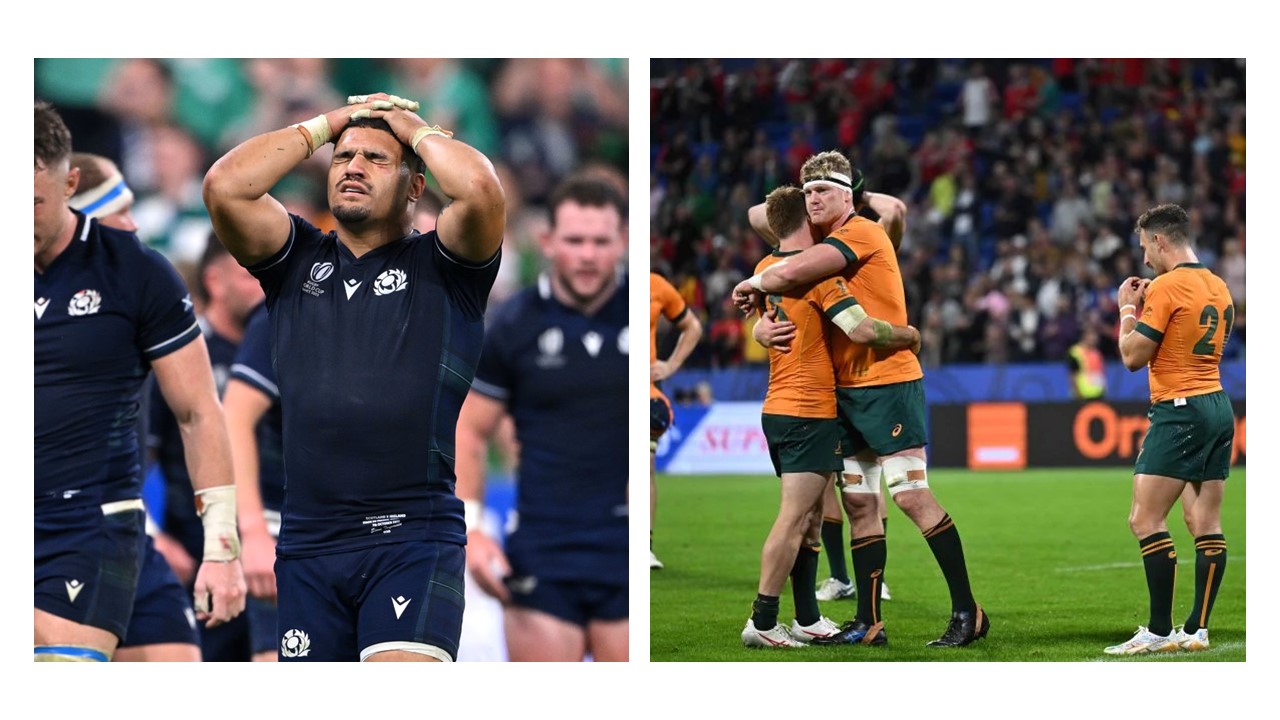
Scotland look more than capable of being Pool B’s giant banana skin – Ireland and South Africa you have been warned!

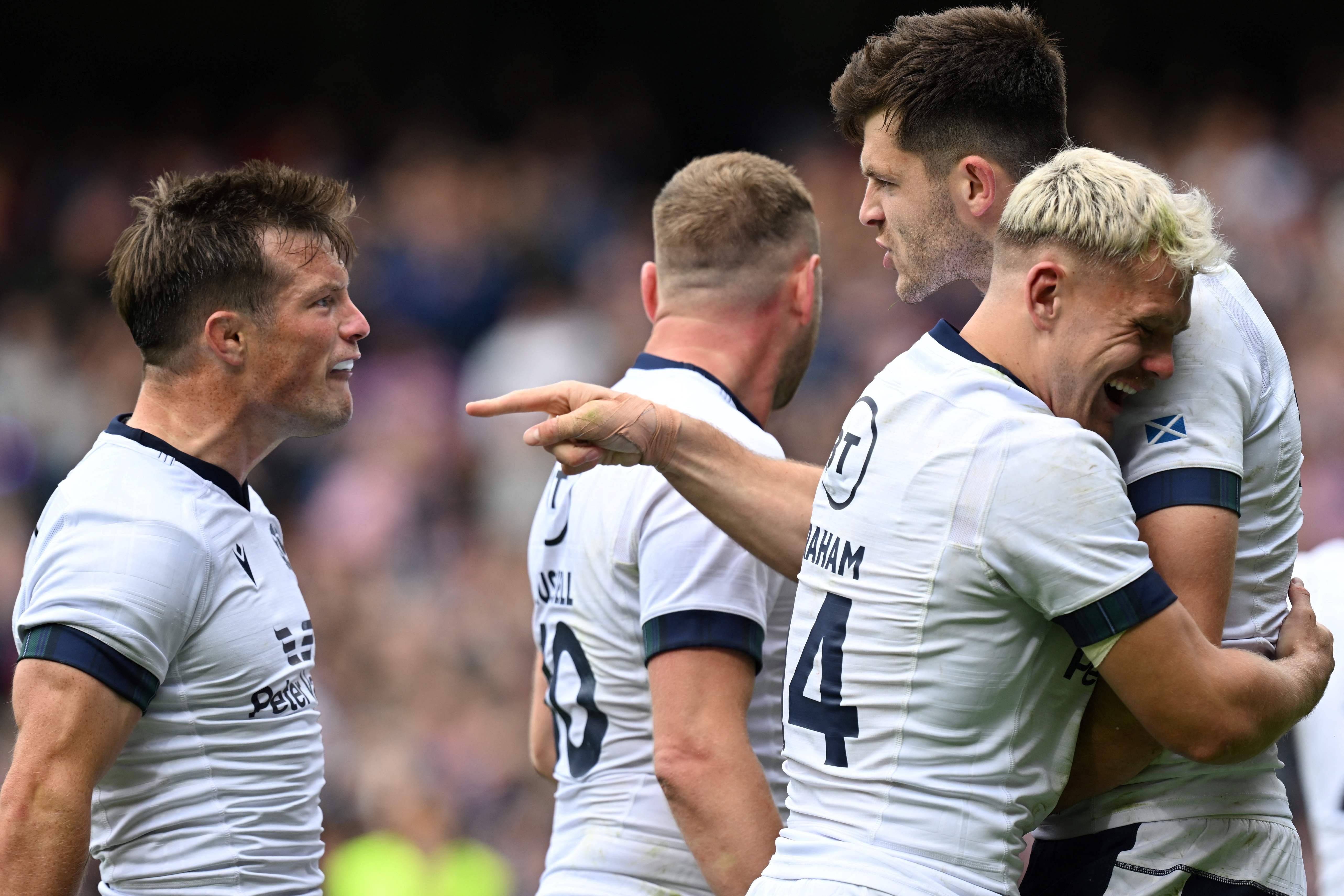
Scotland look a wee bit dangerous we have to say and fullback Blair Kinghorn clearly has a point to prove

We have to confess to thoroughly enjoying Scotland’s arm wrestle with France at Murrayfield last weekend. That wasn’t a warm-up game, it was a full blown Six Nations Test match with no prisoners taken. Scotland will sweat the injury on scrum half Ben White but apparently it’s only precautionary, and Zander Fagerson’s brain implosion and resulting red card (which he sadly has a penchant for) looks set to not get in the way of Scotland’s critical opening game against South Africa, when they will need all the physicality they can muster. Just when you thought that Scotland were going to get blown away by France’s Red Bull powered second string side, a 14 man Scotland pulled off the unthinkable and took charge of the second half and emerged worthy winners.

What caught our eye the most however, over and above Scotland’s nerve and determination in the face of adversity, was the impact made by fullback Blair Kinghorn. Many, ourselves included, seem to have a love hate relationship with the Scottish utility back. Nevertheless what we saw last Saturday definitely put us in the love camp, and cemented our view that with the number 15 on his back Kinghorn is a worthy successor, perhaps even better, than Stuart Hogg who has sadly decided to hang up his boots for good. Townsend needs to stop experimenting with him on the wing or at fly half, and keep him at fullback where as evidenced by his performance last Saturday he clearly excels, while at the same time being an excellent complement to fellow master playmaker fly half Finn Russell. Scotland’s biggest problem has been inconsistency in selection, but in our opinion they could start by keeping the Russell/Kinghorn axis in place as a first step in addressing it ahead of the World Cup. As a result imagine our enthusiasm when we saw the starting lineup for this week’s repeat fixture in St. Etienne where Coach Gregor Townsend has chosen to do exactly that.

If Scotland can master the art of consistency in both selection and execution they could be one of the biggest surprises of this World Cup, despite being firmly camped in the Pool of Death. It’s a good and exciting side make no mistake especially out wide with the contrasting firecracker talents of wingers Darcy Graham and Duhan van der Merwe. When it comes to grunt up front Scotland can hold their heads high with the best of them, and if they can keep a handle on their discipline, Townsend and his charges could genuinely trouble South Africa and Ireland. This is a driven and very motivated side that in their current format looks the most settled they’ve been in a long time, and one that revels in being labeled as feisty underdogs. If you’re going to have a wild card flutter on any team come the World Cup, we’d argue Scotland might just be your best bet!

England – no changes here!!!!

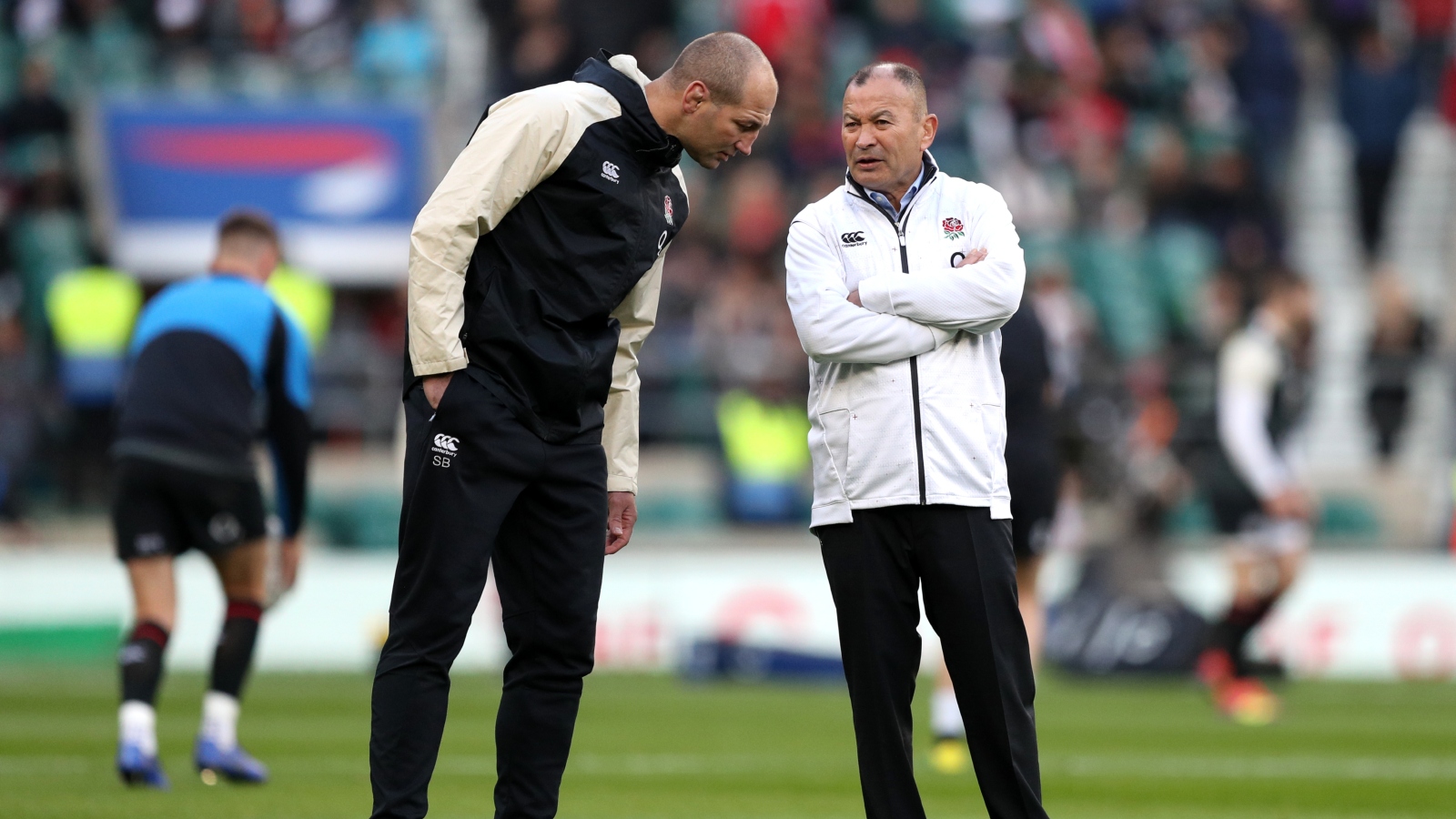
“Mate – stay close once all this World Cup nonsense is over I could get us well set up in Japan or maybe a team principal gig in F1” – do England really look any different under Steve Borthwick than they did under Eddie Jones?

After watching England implode against Wales last Saturday, we couldn’t help feeling that we were watching England from 2022 all over again. With new Coach Steve Borthwick’s World Cup squad announcement this week, it felt even more like a case of the Emperor’s New Clothes. Quite frankly the rot that has pervaded English rugby for the last two years is still very much in evidence, as witnessed in England’s ineptitude against a Welsh side that is supposedly in an even deeper crisis of confidence than England find themselves in.

To be honest Wales certainly didn’t appear to lack either confidence or fitness last Saturday in Cardiff. England by comparison appeared to have neither. England as they have done for much of the last eighteen months looked slow, disorganised and a tad out of shape. Wales Coach Warren Gatland’s pseudo SAS physical fitness training regime, may be brutal to say the least but a touch of it might alleviate some of the obvious huffing and puffing witnessed in the England camp last weekend. Add to that the fact that England seem to have forgotten that actually hanging on to a rugby ball is one of the core basics of the game as they made a phenomenal 16 handling errors compared to Wales’ 2. Given the fact that they only had 2% more possession than Wales in the entire game, that’s simply unacceptable going into a World Cup. Their scrum creaked and groaned and failed to get any traction against the Welsh, and England simply never looked like scoring when in the Welsh 22, especially as the likelihood of them dropping the ball seemed to increase exponentially the closer they got to the Welsh red zone.

While it is unlikely that England will be as bad as they were last weekend in their repeat fixture this weekend against Wales at Twickenham HQ, Borthwick’s World Cup squad selection certainly raised eyebrows. It looks like a disturbingly familiar trip down memory lane, and apart from some genuine new talent sprinkled into the mix, it simply doesn’t fire our imagination. England will not be an exciting team plain and simple, instead they should have enough to grind out some uninspiring wins to possibly get them out of the pool stages, only to get decimated by teams embracing a much more dynamic brand of rugby in the quarter final stages and beyond.

Despite him being chosen as England’s only genuine specialist number eight, the selection of Billy Vunipola who is increasingly injury prone, out of shape and unable to keep up with the more dynamic eights of the modern game came as a surprise. He’s simply too one dimensional and easily read by opposition defences who figured him out a long time ago. Danny Care has done nothing to impress us at Test level in the nine jersey all year as brilliant as he is at club level and don’t get us started on Ben Youngs who is beyond pedestrian. Meanwhile in the centres Borthwick stays true to the belief that Manu Tuilagi can somehow single-handedly right England’s ship, despite the fact he is likely to be injured and out of the tournament by England’s second game and in general looks woefully out of form when compared to many of the other current centres in the modern game at Test level.

In short, England may pull some rabbits out of the hat that may surprise us all as the tournament in France unfolds, but we think Borthwick’s much maligned predecessor may have more luck at playing magician with his new look Wallabies. We wish England well, as a World Cup without them as real contenders is always a loss, but we have a hunch our interests will likely lie elsewhere this World Cup.

Well that’s it for this week folks, and the good news is that life and work have calmed down enough now for us to resume regular service. So take care, stay safe and enjoy the dwindling days of summer and look forward to the excitement just around the corner!

The Lineout Calls of the Week

So let’s be honest our World Cup excitement is now officially building. With Super Rugby now over and the Rugby Championship just around the corner, it’s all about International Rugby from now until the end of October – plain and simple. And it’s not just the Men’s game. For us here at the Lineout there is also huge anticipation surrounding the final two Rounds of the Women’s Pacific Four Series, between Australia, Canada, New Zealand and the USA all being played out in Ottawa in the first two weekends of July. This tournament will also determine the playing order of the new World Rugby Annual Women’s tournament between North American/Pacific and European sides to be played in November. There’s International Friendlies serving as warm-ups for the World Cup also to be played over July and August as well, so in short put away your club jerseys and focus on the global game for the next glorious four months.

There wasn’t too much going on in the Rugby World over the last two weeks, so we didn’t have a huge deal to talk about, but there was enough to keep a few pints frothy so here’s what got us musing.

A chance for Canadian Rugby to shine at long last in 2023

We are REALLY looking forward to this and hope that it’s a sellout for Canada’s games at TD Place!

Let’s face it the Men’s game in Canada has so far been an unmitigated disaster in 2023. The Arrows had their worst season ever in the MLR and the National Team is without any meaningful fixtures for at least the next year. For Canadian Women’s rugby, however, it’s a completely different story. 2023 could be a massive year for the Ladies in Red, following on from their stellar World Cup campaign in New Zealand last year. They are well placed to take at least a strong second place finish in this year’s Pacific Four Series being played out in Ottawa next month, and as a result could find themselves competing at the highest level in November in the new annual World Rugby WXV tournament. In short it’s heady stuff for Women’s Rugby and Canada looks set to be a dominant force.

However, let’s not get too carried away as there is still the business at hand in the Pacific Four series. Canada will first play the World Champions New Zealand’s Black Ferns who are fresh off a 50-0 thumping of Australia this week. In all reality Canada will bring a proud fight to the Women in Black, but New Zealand are in such a class of their own it’s hard to see them stumbling to a fired up Canadian team. Nevertheless, it will be excellent preparation for what is to come for Sophie de Goede and her charges. The following weekend sees Canada take on Australia, and we feel fairly certain that this is a game Canada can and should win. Australia has some genuinely dangerous players in their ranks but lack the clinical organisation that has served Canada so well.

It’s going to be a great couple of weekends, and it is our sincere hope that TD Place in Ottawa is a sellout for both of the Canadian games. We’re long overdue to have something to celebrate rugby wise here in Canada, and the inspirational Sophie de Goede and her outstanding charges should be just the ticket!

It may be shortened this year but that should only serve to up the intensity!

Due to the proximity of the World Cup this year’s Rugby Championship is an abbreviated affair with the four teams only playing each other once as opposed to the normal home and away rounds

It may be a quick fire tournament this year, but it leaves us with so many questions. Due to the World Cup being just around the corner, this year’s Rugby Championship is forced into an abbreviated format where the four participants only play each other once as opposed to twice and the normal home and away structure. As a result the teams have no room for mistakes if they are to get their hands on the silverware. If any of them are to walk away with this year’s trophy the only realistic option is to win all three of your matches, such is the caliber of the opposition this year, despite some of the lingering question marks around all four teams.

Australia, perhaps pose the biggest conundrum with new Boss and Former England Coach Eddie Jones taking over the reins of running the Wallabies. We’re pretty much a divided camp on whether or not Jones will turn Australia into genuine World Cup contenders in a mere four months, especially after Australian sides for the most part failed to make any impression in terms of international competitiveness in the recently concluded Super Rugby Championship. Australia do benefit from two of their games being played at home this year, however their campaign is faced with a daunting start as they have to face the Springboks at altitude in Pretoria. If they come out of that in good shape then it’s back home to face first the All Blacks and then the Pumas. We can’t see them getting the better of New Zealand given Super Rugby form, but a strong second place finish in the Championship would set them up well for what should be an easy start to their World Cup campaign given their favourable draw in the Pools, barring the injuries that have consistently plagued Australian sides.

For Argentina, although their Rugby Championship draw may look less than favourable as they find themselves with only one home game, there are some genuine opportunities on offer. Their first game is against the All Blacks in Mendoza and New Zealand tend to be a bit shaky in their first game of the international season. By the same token it’s also Argentina’s but many of their squad will be recently returned from some intense European seasoning. Admittedly New Zealand have also just finished dominating Super Rugby, but as already mentioned they tend to need a game together to work out all the kinks and Pumas Coach Michael Cheika will be keenly aware of this. Add in the fanatical Mendoza faithful and it will be a daunting arena for the the All Blacks to get their 2023 season underway. After that though it’s a tough schedule on the road for the Pumas with long trips to Sydney and Johannesburg. They’ll put up a spirited performance, but in all reality this tournament is about preparation for the World Cup for Argentina rather than actual silverware.

New Zealand look set to continue their domination of the tournament, with their trump card being that their most difficult game is to be played at home. The trip to Argentina could be a potential banana skin, but that’s followed up by hosting the Springboks in Auckland, though strangely not at Fortress Eden Park. South Africa pose more questions than answers at the moment and should the Springboks arrive buoyed by a comprehensive defeat of the Wallabies in the opening round, then the Auckland fixture is likely to be the highlight of the tournament, especially if the All Blacks come unstuck in Argentina. Still we can’t help feeling that New Zealand head into the tournament as hands down favourites, but it will require a focus right from the get go that All Black sides have traditionally struggled with.

South Africa, like Australia have a favourable draw this year, playing two of their games at home. First up they have the Wallabies on the highveld in Pretoria, which given the competitiveness of South African sides in Europe this year, the Springboks should be considered favourites for. Next up is the long trip to New Zealand, but as mentioned above the match is strangely not being played in the All Blacks traditional stronghold of Eden Park for some strange reason best known to the organizers – even though it’s nothing to do with Ed Sheeran. After that it’s back to Ellis Park for another high altitude contest with Argentina. Despite some of the question marks hanging over South Africa as a result of a worrying injury list, our money is still on them to finish a strong second and in the process build nicely for an exceptionally daunting World Cup Pool.

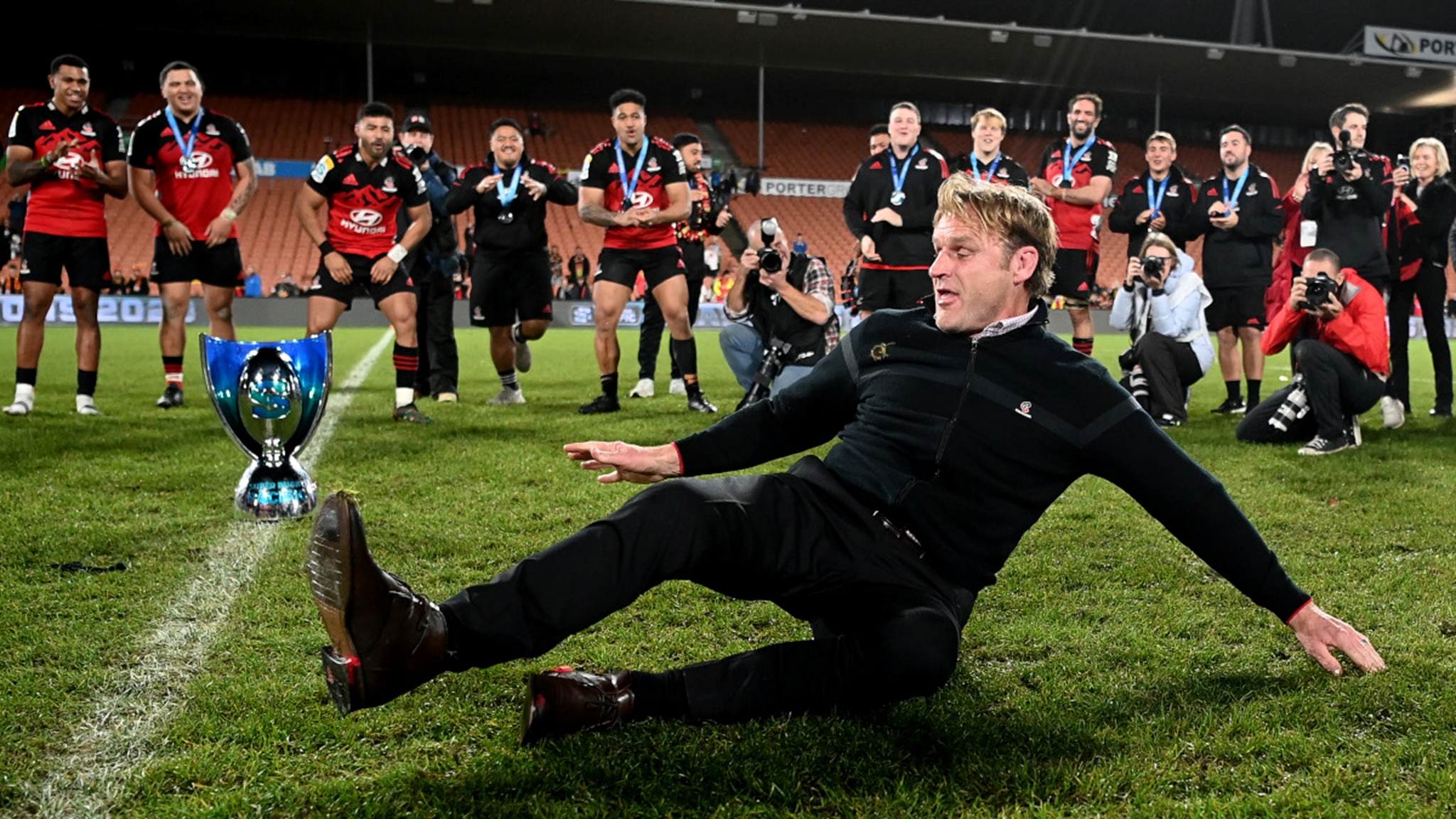
Scott Robertson break dances out of the club scene and onto the International stage in style

Scott Robertson’s legendary breakdancing skills may get left behind when he takes the reins of the All Blacks after the World Cup, but seven straight Super Rugby titles will surely make him and the Men in Black a force to be reckoned with

Scott Robertson and his Crusaders are the most successful franchise in Super Rugby history – end of argument. Under Robertson’s tutelage the Christchurch outfit have won the title seven years in a row capped off by last weekend’s tight win over the Chiefs. The Crusaders have lifted the Super Rugby silverware in its various guises 14 times since the start of the competition in 1996. That is unparallelled dominance making them the rugby equivalent of something like Manchester United.

Although the match was marred by some controversy in its officiating, that perhaps took some of the shine of this rather special victory, there is no denying that Robertson and his charges are perhaps one of the best organized and most adaptable rugby sides on the planet. Add in the exceptional skills of fly half Richie Mo’unga as your playmaker and points kicker, the brute force experience of Captain Scott Barrett and fellow second rower Sam Whitelock and the brilliance of fullback Will Jordan and you already have a lethal unit. However, perhaps one of the revelations of the season has been winger Leicester Fainga’anuku, and we can’t wait to see him in an All Blacks Jersey come the Rugby Championship and beyond, as the Crusaders firecracker has a turn of pace and strength that has to be seen to be believed. In short, it was a Final that lived up to its billing and provided us with an enthralling contest.

Scott Robertson may be untested at an International level, but there is no denying that his appointment as All Blacks Coach after the World Cup is probably the most eagerly anticipated Coaching decision since Fabien Galthie took over France. The All Blacks need to break out of their traditional mold and the Crusaders breakdancing King has now surely proven that he is the man to do it.

Players unite behind the Man in the Spotlight and Rugby Fans need to respect it

Despite missing an obvious forward pass the appalling vilification that Referee Ben O’Keefe received on social media and by fans at the ground has no place in our sport

As former referee and whistle blowing legend Nigel Owens once famously said “this is not soccer”. It pains us that we’ve had to talk about officiating so much of late, but sadly the game is in danger of losing one its core values and degenerating into the free for all and often tasteless realm of association football. We thought that for the most part referee Ben O’Keefe had a good game in officiating the Chiefs vs Crusaders Super Rugby Final. Unfortunately, to which he has openly admitted in his post match review, he missed an obvious forward pass that led to a Crusaders try that probably sealed their close 25-20 victory. However, by the same token he also only handed out a yellow card to the Chiefs centre Anton Lienert-Brown at the start of the match and which many felt should have been red. Had it been red then the result could have been a scoreline a lot more flattering to the Crusaders.

In short, referees will never have a perfect match. In general, we find O’Keefe to be a good and consistent referee who has an excellent officiating track record. However, at the end of the day just like all of us he is human and will occasionally make mistakes. Whether or not the Chiefs would have won the game if the forward pass been spotted and the resulting try denied, is a debate than could go on for centuries. However, by the same token it happened just before half time, and the Chiefs had plenty of time to redress the outcome of that decision and yet were unable to do so on the pitch. Sometimes there are hard knocks in a game of margins, which last Saturday’s contest was, and teams simply have to rise above them. Despite some truly heroic efforts the Chiefs sadly were unable to do so, and the Crusaders as they so often do, given their remarkable cohesion and skills sets, were able to by comparison. Consequently as difficult as it may be for Chiefs fans to swallow as a result, the Crusaders went on to emerge the winners in a contest that was well played by both sides.

The resultant lynching that Ben O’Keefe then received on social media, and the abuse hurled at him and his family was truly disgraceful. He had the courage to come out and admit that he made a mistake and apologised for it. Our game is based on the sacred value of respect for both players and officials, and for fans not to honor that code is truly shameful. It’s made more so by the fact that several players on the losing side, the Chiefs, came out in O’Keefe’s defence after the match and that surely should be enough. As mentioned in previous blogs we find the growing lack of respect for officials deeply troubling and sincerely hope that players and fans will come together to reverse the trend as soon as possible. While we don’t deny that some aspects of the officiating process could do with some refinement, especially ahead of such a high stakes atmosphere as the World Cup, respect for the officials being asked to perform an often thankless and almost impossible task should still remain paramount.

Continuing on with the theme of respect Johnny Sexton could do well to learn some humility from fellow Irish firebrand Ronan O’Gara

Both these past and present Irish fly halves and legends of the modern game have a reputation of misplaced “mouthiness” but the incumbent needs to follow in the steps of his predecessor and learn how to apologize

Both Johnny Sexton, current Ireland Captain and fly half, and his predecessor Ronan O’Gara who also wore the 10 jersey for Ireland and now Coach of European legends La Rochelle have a reputation for not putting brain in gear before they open their mouths. The outcome of Johnny Sexton storming onto the the pitch and verbally assaulting Referee Jaco Peyper after his side lost to Ronan O’Gara’s La Rochelle in this year’s Heineken Cup Final, is yet to be determined and its resulting impact on Ireland’s World Cup preparations. Ronan O’Gara a fortnight ago then appeared a sour loser after he labelled Toulouse as an “average side” who somehow got the rub of the green in the recent TOP 14 Final against his charges. It smacked of a lack of respect for your opponent. While Toulouse may not have played the greatest game they’ve ever played in their illustrious history, they still had moments of magic encapsulated in that Romain Ntamack winning try which La Rochelle simply had no answer to, and as a result Toulouse emerged worthy winners.

Unlike Sexton, O’Gara has since recognized that his comments were made in poor taste and showed a lack of respect for his opponents. While it still doesn’t excuse his actions on the day, he has at least had the decency to recognize the error of his ways and has come out publicly and made a formal apology. Johnny Sexton on the other hand whose behaviour was in many ways even more distasteful has done no such thing. It’s this arrogance and sense of entitlement which may, unlike O’Gara, seriously trip Sexton up both in the weeks to come regarding the outcome of his hearing and for his team during the World Cup. He needs to learn that humility and respect are still the cornerstones of our game and without them we are in danger of rugby slipping into the tasteless abyss of many other sports. In short, swallow your pride Johnny – there’s still time!

Well that’s it for this week folks, hope the air quality is not ruining the start to your summer and spare a thought for the hundreds of brave souls combating the fires. Make sure you support our fabulous and courageous Women at the Pacific Four series and here’s to an epic summer and autumn of Test Rugby! In a more lighthearted tone to give you a chuckle over that summer libation on the deck here is the “Razor” doing his last breakdance for his beloved Crusaders.

The Lineout Calls of the Week

First up, huge apologies that it is over a month since we last sat down to write. Life’s been a bit crazy lately for us with work and family commitments and is likely to remain so for a wee while to come, but we are determined to get at least two missives a month out from now on, especially as it is now only 86 days till the Rugby World Cup!

So despite our month of silence there has been plenty to fuel the debates over some very frothy pints. In many ways though it all seems to have come to a head this week. Our attention has been focused on the end of the club season in Europe, with only France left to conclude their domestic season this weekend. The fortunes of Irish sides and the ramifications of their recent performances for Ireland’s World Cup chances as they remain, at least for now, the number one ranked team in the world, has fuelled much speculation. The potential fallout from their Captain’s recent antics at the Heineken Cup final has also sparked much debate.

We take a look at what seems to be yet another inevitable New Zealand domination of the Super Rugby knockout rounds at Australia’s expense and what it means for the Rugby Championship and World Cup. We look ahead to the start of the Springboks International season culminating in the World Cup, with the defending Champions perhaps being the side posing the most unanswered questions ahead of the global tournament. Last but definitely not least we pass judgement on what can only be described as a desperately disappointing 2023 season for the Toronto Arrows.

So like we say we may have been quiet on the written front, but the pints have had just as much froth on them this past month as they always do!

The importance of knowing one’s place and the consequences for the game if one of its sacred and cherished values is not honored!

Ireland and Leinster Captain Johnny Sexton’s recent faux pas at the Heineken Cup Final has worrying ramifications for both Ireland’s World Cup chances and the game as a whole

As we sit down to write this the controversy is swirling as Ireland and Leinster Captain Johnny Sexton awaits the outcome of an EPCR disciplinary hearing this week. Sexton is in the dock for allegedly storming onto the pitch at the Aviva Stadium at the end of last month’s Heineken Cup final in Dublin between his side and ultimate winners French side La Rochelle, and abusing South African referee Jaco Peyper. There is plenty of speculation surrounding what exactly was said and to who, however the basic tenet comes down to the fact that Sexton who was not playing in the match and not part of the Coaching staff essentially felt he had the right to question the ability of Peyper and his team. While the feelings on the day and the level of emotional investment Sexton has had in the team over the years were there for all to see, and which no doubt had some bearing on his behaviour, whichever way you cut it it’s still hard to justify.

He is currently going before a disciplinary committee which will determine the severity and length of what would appear to be an inevitable ban. The ramifications of this on Ireland’s World Cup preparations will be significant. The best case scenario is that he may miss most of Ireland’s World Cup warm-up games but the worst case scenario is that he could potentially miss the World Cup entirely. This would be a hard pill for both him and Irish supporters to swallow as the Leinster legend has said that the World Cup is to be his last hurrah.

For us there are two issues here. Firstly as much as we respect Sexton for the truly extraordinary and gifted player he is along with being perhaps one of Irish rugby’s greatest servants over the last 14 years, his behavior on May 20th was unacceptable. Secondly, while he has now compromised his and his team’s World Cup preparations by his actions, it would nevertheless be a shame both for him and the tournament as a whole if we weren’t able to see one of the legends of the modern game take his final bow at the global showdown.

In our humble opinion regardless of what or wasn’t said by Sexton to referee Jaco Peyper, before Sexton marched out onto the pitch in his “civvies” looking more like the irate manager of a professional football team than a rugby player, he needed to take an objective pause and think to himself, in his role as Irish Captain, how his behaviour would be perceived. It’s one thing as a player to vent some emotion after a gruelling 80 minutes of physical confrontation, but to do it as a spectator from the comfort of the stands smacks of poor taste and a certain sense of entitlement. In rugby respect for officials and fellow players is an essential bedrock and foundation of the sport and disregarding it sets dangerous precedents for the future. In short, it’s not a trend we want to see, and certainly not one we want our children to accept as normal as they seek to emulate their heroes on the pitch.

Refereeing in such a fluid, dynamic and at times complicated game like rugby is an exceptionally challenging task and mistakes will get made. However, as many have pointed out on several occasions many of Peyper’s decisions actually favored Leinster at times rather than La Rochelle. Leinster blew that game after throwing away an impressive early lead and they knew it. A degree of complacency seemed to set in after the first quarter and Leinster’s 3 try blitz in the first ten minutes. La Rochelle found a way to claw their way back into that game and once they did they hung on like men possessed and capitalised on the remarkable team culture that has been created in the club. In running the risk of wearing out an old cliche, sometimes how you win is more important than the actual winning, and La Rochelle seemed more focused on the former and Leinster the latter.

On the second issue, we would hate to see Sexton as a legend of the Irish game miss this last opportunity to add to the remarkable recent history that Ireland has made since first beating the All Blacks in Chicago in 2016, especially as his skills and efforts have been such a big part of making it happen. To ban him from being able to play a part in this swansong event of his career would be cruel and in our view a punishment out of proportion with the actual crime. He sadly has always been a rather mouthy player and it is a side of his character that most Irish supporters wish he could control, even if at times it is the result of him wearing his heart on his sleeve and fighting for his teammates. Nevertheless, he needs to control it and manage it in a manner appropriate to the situation at hand. Were Ireland to go all the way and actually lift the Webb Ellis trophy on October 28th, we very much doubt Irish supporters would want such a victory to be seen as a result of poor gamesmanship from their Captain, and it would tarnish a dream held dear by many.

Sexton has unfortunately potentially set himself up for failure by not taking the opportunity to apologise at the outset for his behaviour and put it down to a heat of the moment episode of madness. We sincerely hope that this will all eventually blow over but that some valuable lessons get learnt in the process. Sexton is likely to get the rap he deserves in the form of some sort of reasonable and sensible short term ban, allowing him and Ireland to move on from it and focus on what really matters – being the best they and he can be in a tournament which should showcase the very best of Irish rugby and what it stands for.

On a positive note, Ireland could certainly do with some of that good old fashioned Munster grit heading into the World Cup!

Munster’s remarkable journey to claim the URC Championship in Cape Town last month against all the odds will be a huge boost to Ireland’s World Cup aspirations come September

Regular readers of this blog know that we’ve always regarded Munster as a rather gritty and “nuggetty” side, who perhaps epitomize the old adage of rolling up your sleeves and getting the job done. They may not be as flash as a French flagship side like Toulouse or clinical as their Irish rivals Leinster, but when the chips are down the remarkable club culture that has propelled Munster to some memorable achievements in the past shines through.

It’s that grit and single mindedness that could serve Ireland well on their World Cup journey in the coming months. Perhaps what is most significant in Munster’s quest for the URC crown this year was the amount of time they had to spend away from home and travelling. All three of their URC knockout games were played on the road. Admittedly, their quarter and semi-final dates in Glasgow and Dublin were not so far away, allowing a sizeable contingent of the Red Army at both games. However, to travel all the way down to South Africa and back three times in the space of just over six weeks, which included their Round of 16 Heineken Cup clash with the Sharks is impressive. The challenge of playing together week in week out and on the road bred some real cohesion in the squad. It’s that Munster ability to work together under pressure and on and off airplanes/tour buses for weeks at at time this year that the Ireland coaching staff will want to tap into as they prepare their charges for their bid at World Cup glory this fall.

In addition to Munster’s abilities as a band of brothers, some individual acts of brilliance stood out and which all bode well for Irish World Cup hopes. Second rower Tadhg Beirne was absolutely immense on his return from injury and his barnstorming form will be one of Ireland’s most important weapons this year. Back rower Peter O’Mahony was instrumental in leading from the front and his warrior mentality is a genuine talisman for the team. Scrum half Conor Murray is back to his best at just the right time after his star seemed to dip, ably supported by the “atomic kitten” off the bench in the shape of Craig Casey. Meanwhile fly half Jack Crowley is rapidly starting to make people wonder if he isn’t the second coming in terms of looking at life after Johnny Sexton.

Like we say Munster may not be the team that you remember in terms of razzle dazzle, but if those essential qualities in the modern game of grit, determination and absolute focus are what you are looking for then there are few that can beat them – all qualities that Ireland will need in abundance if they are to make their own history this fall in France.

Australia’s traditional misfortunes in Trans Tasman competition come back to bite them once more in the knockout stages of Super Rugby, as the Wallabies look to kick off their International season culminating in the World Cup

Super Rugby’s business end once more sees the rapid disappearance of Australian sides in the knockout stages, which is not exactly ideal preparation for Australia’s upcoming Rugby Championship and World Cup campaigns

Australia and Super Rugby are a genuine conundrum. Let’s face it if you’ve watched any of the Australian derbies this Super Rugby season they’ve been genuinely entertaining affairs showcasing some highly skilled players. However, take those teams across the Tasman or bring New Zealand sides across said body of water and all of a sudden with the exception of the Brumbies, Australian sides don’t look nearly as flash. There have been one or two notable exceptions to this rule, perhaps the most significant being the Reds ending the Chiefs unbeaten winning streak and doing it in New Zealand to boot, while almost pulling it off again in the quarter finals. However in general put a New Zealand and Australian outfit together in the same room and the winner usually ends up being the one with a fondness for small flightless birds.

This weekend’s semi-finals look set to continue the theme as Australia’s only genuine and consistent threat in the competition in the last five years, the Brumbies, have the unenviable task of travelling to New Zealand to take on tournament favorites this year the Chiefs. With the Rugby Championship just around the corner it doesn’t bode well for the Wallabies, although at least come the World Cup a month later they have perhaps the easiest Pool of any of the Tier One countries.

Even though the Brumbies are the most successful Australian Super Rugby side in the competition’s 27 year history, having won it twice and been runners-up four times, their success has rarely translated into Wallaby success in the Rugby Championship (or Tri-Nations as it used to be). It was only in 2001 when the Brumbies first won the Championship that Australia went on to win the Tri Nations as it was that year. Admittedly in 2011 the only year the Reds won the tournament Australia also went on to win the Tri Nations. However, in the Rugby Championship era since 2012, apart from the Waratahs lifting the Super Rugby title in 2014 no Australian side has ever won Super Rugby and only once has there been an Australian runner up. The Rugby Championship has proven to be a similar story with the Wallabies only lifting the trophy once in the abbreviated 2015 tournament. Meanwhile the Bledisloe Cup, the much cherished piece of silverware competed for annually by Australia and New Zealand, hasn’t resided on Australian shores since 2002.

So what’s the fix for Australian Super Rugby and the Wallabies as a whole? Given the competition in Australia for the sporting public’s attention, Rugby Union remains a distant cousin behind AFL, Rugby League and Cricket. Consequently, Australia simply doesn’t have the depth or interest to realistically support five internationally competitive franchises. The reality is more like three. As some players have recently pointed out, the competition for spots in these franchises is as a result not nearly as fierce as it would be across the Tasman or in Europe. As some have said, the likelihood of you getting picked on a regular basis is 70-80% which really only requires 60% effort. Reduce that talent pool to three teams and all of a sudden, as in days of old without the Rebels and Force, competition for starting spots suddenly becomes that much more intense, and individual performances week in week out go up a few gears. All of this feeds positively into the development of the Wallabies.

It remains to be seen what Coach Eddie Jones can do with his Wallaby charges in the coming months. That the talent is there is unquestionable, but how match fit it is for gruelling Test campaigns or able to compete on the international stage is a much more complex and vexing problem for England’s former Boss to work out. As mentioned above, Australia’s journey to a World Cup quarter final is almost child’s play, barring a sudden Welsh resurgence or Fiji turning their own Super Rugby heroics into success on the International stage. Consequently, despite the trials and tribulations of a truncated Rugby Championship this year, Jones has plenty of time to come up with some answers. Either way, we think he along with us will be watching the action at Waikato Stadium this Saturday with keen interest.

South Africa’s four sides competing in Europe this year had a mixed bag of results, making the 2023 edition of the Springboks a genuinely difficult team to predict in terms of who will make the cut for the World Cup and what their chances are

South Africa’s first full foray into European top flight club rugby was hard to define in terms of success and what it means to the Springboks as they look to consolidate lessons learnt ahead of an International season culminating in the World Cup.

We often wonder how different Super Rugby would be if South African sides were still in it. We think that overall it’s safe to say that South Africa’s switch to life in Europe has been a positive and successful undertaking. They have injected some genuine excitement into both the United Rugby Championship and the European Champions and Challenge Cups, even if in the latter their first year in the Competition wasn’t exactly a huge success in terms of results. South African sides have had to adapt the way they play the game, and even if their physicality is still an essential cornerstone of how they structure their game plan, they have benefitted from regular exposure to the power and pace of the Irish and French, the physical and set piece strength of the English, and the creativity of the Scots. Italian flair and Welsh doggedness have also been useful learning experiences.

This season has reaffirmed that South Africa continues to be blessed a with a genuine wealth of talent, that is now perhaps much more seasoned internationally than it was in the days of South African participation in Super Rugby. Unlike their New Zealand rivals who are limited to playing a handful of Australian sides that they seem able to beat with ease week in week out, South African sides have clearly relished their European experiences and the need to adapt quickly to a wider range of playing styles. The down side to that is that Ireland, France and Scotland, whom South Africa are likely going to have to deal with first, up to and including the quarter final stage, have a much better idea of what to expect as opposed to to say what these European sides might face against New Zealand or Australia.

Nevertheless after seeing their charges experience 10 months of seasoning in European club competition, Springbok Coaches Jacques Nienaber and Rassie Erasmus are genuinely spoilt for choice in terms of selection. The only downside may be slightly higher fatigue levels compared to their Australian and New Zealand counterparts come the Rugby Championship next month and the World Cup in September. Nevertheless we can’t wait to see if South Africa’s big European experiment of the last two years pays the hoped for dividends in France come September. If it does we have a hunch that South Africa could well be on the edge of a period of global dominance previously reserved only for the All Blacks.

Flying the White Flag as the Arrows surrender their worst season on record to the dustbin of history and the soul searching begins

With their season essentially over, the Arrows reflect on their 2023 campaign that has left both themselves and their fans longing for the final whistle

The Toronto Arrows still have one more game to play against New Orleans Gold this weekend, but even if they manage to pull off another elusive win and we sincerely hope they do, it still won’t take the edge off what has been a bitterly disappointing season for the Club and its supporters. As the worst team in the league, having won only one of their 15 games and drawn two others, it’s been a season to forget for the Arrows and their fans. The team looks hopelessly disjointed at times and rather rudderless in terms of direction and the type of game they want to play. As the season has progressed and the losses continued to mount, it’s been genuinely depressing to see the growing number of empty seats at York Lions Stadium, the Arrows home ground in Toronto.

So what’s gone so dramatically wrong this year, following on from a decline that became evident last season but now seems to be in freefall? Some have cited injuries, and while that hasn’t helped the Arrows cause this year, we can’t help feeling that it’s simply an excuse to hide behind. Look at the starting lineups of the last few weeks, and while we agree that there are omissions, week in week out courtesy of the stretcher bearers, there are still enough familiar faces from one week to the next to build some consistency and cohesion on the pitch. However, this doesn’t seem to be happening. While we applaud the focus on Canadian talent in this year’s squad much of it is young and inexperienced. It lacks seasoned experience alongside it both from Canada and abroad. What little overseas talent the Arrows do have, consists mainly of players who never got a look in at the top level in their own national sides and have been put out to pasture in the MLR as a home for foreign players in the twilight of their careers, or those simply not good enough to go the distance at home.

Many of the problems that plagued the Arrows towards the end of last season have simply become even more pronounced this year. Most notably a seeming inability to make first phase tackles, a lineout that fails to fire consistently, creaking set pieces, poor decision making and discipline coupled to a kicking game that simply gifts the opposition possession, seems to have little or no purpose and is usually poorly executed. It would appear that despite whatever skills may or may not be lacking in the players themselves, Coaching would appear to have been almost an afterthought this year. To be honest, our overriding impression is one of a team that isn’t actually being Coached at all. While the players will have to do some soul searching in trying to solve some of the problems on the field for next year, we’d argue that the real work needs to be done in the Coaching box, and if necessary a fresh start made for next season and beyond. The players can only do so much but what they really need is direction, which we feel there has been precious little of this season.

We don’t want to paint a completely negative picture and be down on the players, some of whom have put in massive shifts this year, and we still hold that D’Shawn Bowen has been one of the most exciting finds of the season for the League as a whole. We remain staunch Arrows supporters but change is drastically needed and in our opinion it needs to start at the top. Get some seasoned and proven international talent into the squad along with a decent set of Coaches, even if it’s only one or two players and start to rebuild. Apparently this year was supposed to be all about rebuilding but it would appear to have torn down any foundations the team had and left them only rubble to work on and no blueprints to move forward with.

We hope that next season the Arrows are able to rise from the ashes as if they can’t, just like the remarkable Canadian aircraft whose name they so proudly take but which ultimately never got beyond the prototype stage, they run the risk of being consigned to the “what might have beens” of history.

So that’s it for this week folks and we promise to be more prolific in the buildup to the World Cup. Like we say Super Rugby semi finals to look forward to this weekend and the Arrows last hurrah for 2023. As always take care and enjoy summer’s faltering start.

The Lineout Calls of the Week

So this week we’ll be concerning ourselves with what the final Round of the Women’s Six Nations told us about the Women’s game in the Northern Hemisphere. England and France remain in a league of their own, but despite the challenges facing rugby in Wales the Women’s game in the Principality looks in remarkably good health. Scotland also provided a few surprises after they emerged from a fairly negative review of the State of the Nation North of Hadrian’s Wall. Italy showed plenty of promise but it somehow fell short of producing big results. However, Ireland presented a sorry picture of the Women’s game in the Emerald Isle and it is all the more shameful given the fact that the Men’s team is rated as the best in the World.

We also take a look at a clash of Irish management styles in the Heineken Champions Cup final to take place at the end of the month between Leinster and La Rochelle. Last but not least we ask the perplexing question as to who will wear the number nine jersey for the All Blacks come the World Cup, and what is likely to be the pecking order of the three main contenders.

So without any further ado here’s what kept our pints frothy this week.

England and France give us an epic final and with it the biggest crowd ever for a Women’s International

England were deserved Grand Slam Champions but France almost caused them to stumble in front of the largest ever recorded audience for a Women’s International, as Twickenham was held spellbound for eighty minutes

Let’s be honest the drama that played out at Twickenham last weekend was a big deal – a very big deal! The 58,498 fans who packed the stands, the largest ever recorded for a Women’s game, ensured that the momentum built at last year’s World Cup in New Zealand was strengthened. Women’s Rugby is now a major global sport and can make the numbers that attracts the advertisers and the big broadcasting deals. It’s heady stuff, but over and above that we were treated to some genuine top class rugby last weekend at Twickenham, Parma and Edinburgh.

However, all credit must go to England’s remarkable group of Grand Slam Champions. They held their nerve as, in the second half, a seemingly down and out France came roaring back to life and were within minutes of causing the biggest upset we could have seen between now and the World Cup. It was a remarkable game that highlighted England’s truly phenomenal physical presence in the Women’s game. However, it wasn’t just all brute force from the Red Roses and the Marlie Packer steam train, there were some lovely running plays that highlighted the extraordinary skill sets of players such as winger Abby Dow. England have a complete game that will be one of the benchmarks for other teams to measure themselves against till the next global showdown in 2025, especially as England will be the hosts.

Nevertheless, France also deserve huge praise for their remarkable comeback from a 33-0 deficit at half time to finish the game on the wrong end of the scoreboard by only five points at 38-33. As France showed against New Zealand in the World Cup in their one point semi-final loss, this is a team still with a few kinks to work out but clearly a superpower in the making. The warning shots have clearly been fired across England and New Zealand’s bows ahead of the World Cup in 2025. Next year’s Six Nations clash between these two in France should be the stuff of legends and one of the biggest tickets of 2024.

The rugby played by both teams is of an exceptional standard technically and demonstrates just how far the skill levels in the Women’s game have grown in the last four years. While everyone else in the World bar New Zealand will know they have their work cut out to catch up to these two giants of the Women’s game, as standard bearers we couldn’t have asked for better and we look forward to a long and intense rivalry between the two.

Best of the Rest!

Wales showed in Parma that despite the many uncertainties swirling around the future of the oval ball North of the Severn, the Women’s game is looking remarkably robust and on a definite upwards trajectory

Welsh rugby as a whole may be struggling with what it’s future looks like, but Welsh women rugby players seem to be taking it all in their stride. There is no question that outside of France and England they were the best team in the competition, dispatching with relative ease Ireland, Scotland and Italy. We had felt that the game in Parma between Italy and Wales last weekend would tell us much about the emerging hierarchy in the Women’s Game in the Northern Hemisphere and we weren’t proved wrong. If Wales can build on their strong third place finish this year, who’s to say that they won’t be challenging either France or England for second place next year. Much like England they possess an intimidating physical game but in open play they can be equally dangerous. There are still plenty of workons for Wales if they are to make that critical next step, but after this tournament they have clearly laid out a statement of intent and have the nucleus of a squad of developing talent to get them there.

We had thought that Italy were going to pip Wales to that much sought after third place finish, but despite a strong start against France, Italy faltered too often this tournament to go the distance. Don’t get us wrong Italy have some supremely talented players, but much like their Men’s side they have yet to find that fine balance between ambition and skill. However, Italy will be back next year and if they can correct their mistakes against Scotland and Wales, most notably their set piece work, kicking and discipline then the future looks bright for the Azurre, as in open play Italy looked decidedly dangerous. Also Italy and England won more turnovers than any other team. In short – watch this space!

Scotland also were a pleasant surprise this Six Nations, despite emerging with little to show from an exceptionally brave World Cup campaign last year. They will be disappointed by the schoolings they received from France and England, but against Ireland and Italy they showed that there is plenty of grit and determination in this Scottish side. The Scotland that started the campaign in the first three Rounds was a very different side to that which wrapped up proceedings against Ireland last weekend at Edinburgh. Their strong showings against Italy and Ireland at home simply need to be translated into form on the road and when up against sterner opposition. But after the uncomfortable spotlight the game was put under during last year’s review, the initial results of rebuilding the Women’s game in Scotland are starting to look very positive indeed.

Ireland’s uncomfortable truth

Ireland’s Men may be on top of the World heading into this year’s World Cup, but for the women it’s a sorry story of neglect and indifference by the Irish Union as their women remain very much second class citizens in the sport

Despite the triumphant scenes at Twickenham this Women’s Six Nations, it wasn’t all smiles and success. Ireland’s experience painted a very negative picture of the Women’s Game in the Emerald Isle, and so far there only seems to be lip service being paid to the deep rooted problems lying at the heart of Ireland’s failures this Six Nations. It’s important to remember that up to 2017 Ireland was a dominant force in the Women’s tournament. However, since then the gap between the funding of the Men’s game and that of the Women’s has become laughable to the point that the Women’s game has become very much an afterthought in Ireland. The IRFU has made a ham fisted attempt at turning the Women’s game professional, which must surely feel like a slap in the face given the success of the world class structure Ireland has in place for the Men’s Game.

Limited media coverage and at times Neanderthal type social attitudes towards the women’s game amongst men seen in certain social media posts have not helped their cause, made worse by allegations of the IRFU essentially being an “old boys club”. Things are changing slowly as a result of a rather scathing and in depth review recently conducted into how the Women’s game is managed and represented in Ireland. It will be a long slow process, and to some degree takes some of the polish off the remarkable successes in recent years of the Men’s Programme. It is clear that the Irish Women’s team don’t resent the success of their male counterparts and will be the first to celebrate their triumphs should they finally make this a World Cup for Irish supporters to remember. However, the IRFU must make every effort between now and the World Cup to bridge the glaring gaps and make whatever success may come Ireland’s way this autumn accessible to all.

The present state of the Women’s game in Ireland is simply unacceptable and even a tad shameful. It has now been recognised as such by all the parties involved and steps are in hand to address the mess. Ahead of a year that could well be one to remember for Irish rugby for many years to come, it is time for the IRFU to finally put their money where their mouth is.

This year’s Heineken Cup Final is a clash of contrasting Irish styles under two different flags

This year’s Heineken Cup final is a repeat of last year’s fixture between Ireland’s Leinster and France’s La Rochelle with the Irish province being the hosts this year, but the overall flavor is distinctly Irish as Leinster meets Munster in the shape of Leo Cullen and Ronan O’Gara

Sticking with the Irish theme, we now have a Heineken Cup final to be played in Ireland and featuring the best of French and Irish club rugby. However, all of it is seasoned with Irish cooking skills. Leinster Coach Leo Cullen and his La Rochelle counterpart Ronan O’Gara are bringing a distinctly Gaelic approach to proceedings. O’Gara’s time at Munster and in an Irish jersey are the stuff of legends while Cullen can boast a similar record in the blue of Leinster and the green of Ireland. These two gentlemen know each other intimately on and off the pitch having played as both teammates and opponents. Now their club rivalry on the pitch has shifted to the Coaching Box.

Cullen wants his charges to play at lightning speed in both attack and defense whereas O’Gara prefers a more traditional approach based on the principle of grinding down the opposition through your physical presence and ability in the set pieces. It’s almost a touch ironic that, in Cullen, Leinster have a former forward who is advocating a faster and more open game, while in O’Gara, La Rochelle have a former half back settling on a more traditional and physical approach to taking momentum away from your opponents.

It will all make for a fascinating contrast of styles on May 29th at the Aviva. Many are tipping Leinster on their home ground to make up for the disappointment of losing out on the silverware to La Rochelle last year. However, both Coaches have shown themselves adept at adjusting their game plans to suit how a game unfolds on the day. Nothing is a given on May 29th as two of the best brains in European club rugby sit down and try and work out how best to unlock the Champions Cup trophy cabinet.

Mirror mirror on the wall who is the cleverest of them all?

Ian Foster and his All Blacks coaching team are faced with a delicious dilemma of who is their best scrum half ahead of the World Cup

Most International Coaches can only wish to be in the position that All Blacks Coach Ian Foster and his team find themselves in. Ahead of the World Cup who gets the starting nine jersey for most of your big games? New Zealand are quite literally spoilt for choice so where do they begin? It’s probably going to be THE most hotly contested seat on the plane to France.

Let’s start with Chiefs number 9 Brad Weber who has been sensational in the Waikato outfit’s remarkable Super Rugby campaign this year which sees them undefeated after 9 rounds. Long circling the periphery of the All Blacks selection policies, Weber has never been given a consistent start – essentially being brought in when regulars like Aaron Smith or TJ Perenara have been unavailable, but more recently having to operate in the shadow of up and coming Blues sensation Finlay Christie. In the past he’s been known for his reliability and eye for an opportunity, but this year he’s added some genuine speed of delivery and flair to his resume. In short, if it was our call we’d give him the nod for the number one spot on the list.

Then there’s the Blues’ X-factor in the shape of Finlay Christie. In the last two years Christie has increasingly been given the nod for some of the lower stakes games, while being seen as an impact player for the big events once traditional stalwart Aaron Smith has got the job done. However, we’d argue he’s still a bit green around the edges at Test Level and can panic when things aren’t quite going to plan. As a result we can’t help feeling that he’s not quite the bankable commodity the All Blacks need for the big event in France just yet.

Last but certainly not least there is the conundrum of Aaron Smith. While at a club level the Highlanders and Smith are really nothing to write home about, put the man in a Black jersey and he seems completely and utterly transformed. Smith’s big game temperament and ability to cope under pressure is the stuff of legends and has been the gold standard for the All Blacks since 2012. You simply can’t judge him by his performances in a Highlanders jersey. However, the argument that it’s time for a change despite his experience, especially given New Zealand’s dip in form over the last two years is mounting, but can they really do without that experience on the biggest stage of them all?

To make matters even more confusing we haven’t even mentioned outstanding newcomer Cameron Roigard from the Hurricanes and the experience and ability of veteran Crusaders scrum half Mitchell Drummond. However, we can’t help feeling that despite their worth these two are very much on the periphery for the trip to France, and will only likely get the call should an injury to any of the above mentioned three front runners become a concern.

In short, if it was our call we’d go out on a limb and pick Weber as our first choice All Black scrum half for the World Cup. Alternate him and Smith for the big games with Christie on the bench and a starting role for the Blues man for the easier Pool Games like Namibia and Uruguay. We’re fascinated to see how it all plays out when Coach Ian Foster names his starting XV for the big day on September 8th against France.

So that’s it for this week folks. Hopefully on their return to Toronto the Arrows’ dismal season will take a turn for the better along with the weather which has left much to be desired so far this spring. Take care, stay safe and here’s our shout out once again to all the fabulous women who gave us such a memorable Women’s Six Nations this year culminating in that epic attendance at Twickenham!

The Lineout Calls of the Week

This week we concern ourselves with the debacle that we sadly got to witness firsthand at York Lions Stadium here in Toronto last Saturday. We went to our first Arrows game of the season, their second, and sadly were bitterly disappointed by what happened on and off the pitch during the match. After the narrow loss to the New York Ironworkers in their first home game of the season a week earlier we went with cautious optimism, despite their opponents, the New England Free Jacks being the best in the East. What we got treated to instead of a good day out was a record defeat in the MLR as Toronto went down 80-5 to New England and a truly awful fan experience in the stands. The fans themselves as always were great, but the way in which the game was run by the organisers at the Stadium meant that the rugby, instead of being the focus of the evening, was treated almost like a sideshow. Disappointed fans left the stadium half deaf, with their ears bleeding from an aural onslaught of music and ridiculous drivel from the sidelines as a game that was completely forgettable compounded Toronto’s miseries this season.

We also look at the Womens’ Six Nations as it serves to highlight the massive gulf between England/France and the rest of the competition. As entertaining as some of the rugby is and as brave as some of the teams have been there is no denying that the playing field of women’s rugby in the infancy of its professional era is very uneven. We also look at the fortunes of the two Pacific Island sides in this year’s Super Rugby – a struggling but highly entertaining Moana Pasifika and a rapidly improving Fijian Drua who are easily one of the most exciting teams in the competition to watch. We ask the question can anybody beat Leinster as even with a C team in South Africa they continue their remarkable 24 game winning streak. Lastly we look at the idea of a “TMO bunker” being put forward by World Rugby for adoption in the upcoming World Cup.

So that’s what kept our pints frothy this week over some heated debates. There were plenty of talking points as there always are, but these five are the ones we kept coming back to.

The Toronto’s Arrows season seems in no better shape at home than on the road!

There was a good turnout at York Lions Stadium for the Arrows second home game, but fans were left disappointed by the action on the pitch as Toronto suffered the worst defeat of any team in MLR history as they went down to the New England Free Jacks 80-5. To add insult to injury the experience of being a fan in the stands was frustrating as the rugby was treated almost as a sideshow at times and often overshadowed by deafening music and incessant and irrelevant banter from the organisers

We want to start this discussion by saying up front that since day one we have been and will continue to be staunch Arrows supporters and have nothing but respect for team owner Bill Webb and his vision of bringing rugby to Toronto. We stand by all of you and salute your efforts.

However, what we experienced last Saturday at York Lions Stadium at our first Arrows game of the season put that support to the ultimate Test, and left us not exactly bubbling with enthusiasm to go back for more. What we loved about Arrows home games in the past was the fun family atmosphere, my 11 year old son loves going to Arrows games, and the ability to watch Rugby here in Toronto and get behind your local team. We weren’t able to do any of that on Saturday, and if truth be told left the stadium with a sigh of relief not convinced we would be coming back any time soon. We fully appreciate that the organisers need to create an atmosphere in the stands but it was downright obnoxious on Saturday, and we weren’t the only ones fuming at proceedings – a common murmur of dissent could be heard rumbling throughout the stands.

We’d paid good money to watch a rugby game, not have our ears continuously assaulted at full volume by the strangest mix of godawful music we’d heard in years, and don’t get us wrong we love a good tune to rally the troops. However, whoever was running the sidelines “entertainment”, if indeed you could call it that, seemed to be completely unaware that there was a rugby game in progress. The music blared onto the pitch as players were trying to set for kicks, during lineout throws and any stoppage due to referee arbitrations or setup for scrums. As a result we’re sure more than a few key calls were lost in the cacophony of sound and it showed a gross lack of respect to fans and players alike. If we’d wanted to go to a rock show/rave we’d have bought tickets for Coachella!

As for the rugby itself – well what can we say? Toronto’s ongoing problem with a complete lack of any sort of defensive organisation continued to plague them as they leaked 12 soft tries, two of them penalty tries. Their set piece work remains a minefield of lost opportunity and with it their discipline. While we felt the officiating of referee Paulo Duarte left a fair amount to be desired at times, Toronto’s sloppy organisation really didn’t help their cause and set them up for failure more often than not. However the glaring problem that has manifested itself all season continued with a vengeance, Toronto is just missing far too many first up tackles and against a team like the Free Jacks that’s already nailed your coffin shut before being put ten feet under, as was the case with the 80-5 scoreline.

After being the hero of the weekend last week the Arrows decided that somehow winger D’Shawn Bowen would singlehandedly rescue them from the jaws of fate for the full eighty minutes. We lost track of how many times they would simply kick or pass him the ball with little if any support and hope that he could somehow perform miracles. To give him his credit he was one of the few standout players last weekend and, despite the increasingly alarming scoreline, simply refused to quit. He put in some critical tackles and ran like a man possessed whenever he got the ball, but often found himself isolated. Other than that we struggled to find anybody else worthy of a notable mention.

One thing that did strike us was the fact that the Free Jacks boasted four former Arrows players, front rowers Andrew Quattrain, Cole Keith, Centre Ben LeSage and fullback Spencer Jones, all of whom contributed immensely to the Free Jacks routing of Toronto last Saturday, while fellow Canadian international Conor Keys also had a big impact in the second row for the Boston outfit. The four former Arrows all had significant roles in Toronto’s initial success in the MLR and you have to ask yourself why such players can’t be kept. Furthermore, many of the South American internationals who lit up pitches for the Arrows in seasons past are no longer with the team. Instead Toronto seems to have ended up this year with a group of very green Canadian development players and a mix of Canadian internationals and decidedly middle of the road overseas players who seem to be past their prime. They have managed to maintain the services of scrum half Ross Braude but even he seems to have lost some of the sparkle he had from last year. Add to that an injury list from hell, which most notably kept fly half Sam Malcolm out of contention last weekend, and it looks set to be a long and painful conclusion to the 2023 MLR season for Toronto.

We fully appreciate that the sky high cost of living in Toronto has probably made it harder for the Arrows to keep and attract quality players, but if that is genuinely the case we have to wonder how long the franchise, as Canada’s sole entry in the MLR, can remain viable. That has no doubt put a long rumoured second franchise in Vancouver out of the question.

Like we say we have enormous respect for team owner Bill Webb and what he is trying to do with the Arrows and for the rugby community in Toronto and Canada as a whole, but from the minute you entered the grounds last weekend none of that vision was honored. The rugby was of very poor quality and the fan experience was downright painful. While fixing the Arrows ongoing problems on the pitch this season is probably a lot more complex and difficult, rectifying the fan experience is simple and we hope to hear a more positive report from Sunday’s game against the Seawolves which, unfortunately due to other commitments, we won’t be attending. We will be back but until then the Arrows and their management know they have a lot of work to get through. As for the team itself, we know you’ve got this in you boys so onwards and upwards!

England and France are in such a league of their own in the Women’s Six Nations it resembles a two tier competition with Italy and Wales being the two most dominant sides in this supposed Division 2

Italy have been the only side able to stand up to France, and it will be fascinating to see if Wales can also do the same this weekend. Meanwhile England seems untouchable by anyone.

After watching Wales and Scotland get completely outplayed by England and France respectively last weekend we had to ask ourselves if perhaps the Women’s Six Nations in its current format isn’t more like a version of the Heineken Champions Cup and Challenge Cup competitions. In the former you essentially have two teams competing for silverware, England and France with everyone else on a more level playing field in the Challenge Cup with Italy and Wales clearly starting to look like the two dominant teams.

In fairness to both Wales and Scotland they managed to give their English and French opponents a decent scrap for the first 30 minutes, after which the dam wall burst in both matches. In the Ireland game against Italy, even the Irish managed to remain in the match for the first half hour, and although the floodgates didn’t exactly open in the same way they did in Cardiff and Vannes it still wasn’t comfortable viewing if you were an Irish supporter. There is a ton of heart and commitment in all six teams, but only England and France appear to look like they have made the quantum leap to professionalism. Italy and Wales are extremely promising works in progress and there are some positive signs starting to emerge from Scotland. However, there is no denying that in the Northern Hemisphere England and France are completely and utterly in a league of their own when it comes to Women’s rugby.

We played around with an alternative format for the tournament where you did actually have a Champions and Challenge Cup type setup. In the Champions Cup you’d have England and France with either Italy or Wales. The result of the Round 4 match up this weekend between the Azurre and Dragons is likely to tell us much about who really is the best of the rest. In the Challenge Cup at this stage it would most likely be Wales, Scotland and Ireland. The winner of the Challenge series would be promoted to play France and England the following year and the Wooden Spoon holders of the Champions tournament demoted to the Challenge competition.

Controversial we know, but possibly a way to start shrinking the gulf in skill levels and professionalism between France/England and everyone else. We’re not sure, but let’s be honest with two rounds to go there are only two genuinely intriguing fixtures left – that between Wales and Italy and England and France. That’s not to discredit the efforts of any of the teams, but given the significant gaps in both resources and skills available to each of the participating countries a temporary rebalancing act may be worth considering.

Fijian Drua have been the tournament’s cherished project this season, but Moana Pasifika in their first historic game in Samoa last weekend showed just how vibrant rugby is in the Islands.

Fijian Drua seem invincible on home soil. Although they lost Moana Pasifika’s first ever home game in their native Samoa was a resounding success and a superb advertisement for both the competition and the sport – highlighting just how important these two sides are to the tournament by lending it some genuine “international flavour”

Despite not getting the result they wanted, we loved watching Moana Pasifika make history and play in front of their “real home crowd” in Apia, Samoa last weekend. They may ultimately have emerged on the wrong side of the scoreline, but did so in a performance that oozed, commitment, heart and passion, and no shortage of skill (something our own Arrows could take on board). It was all backed up by scenes of absolute joy in the stands as the people of Samoa got to watch their heroes bravely battle a quality Reds side. It was a rugby spectacle and the enthusiasm both on and off the pitch, just like the Fijian Drua’s two home games to date was infectious.

Despite Moana Pasifika remaining winless so far in this year’s Super Rugby Pacific competition, they have still managed to provide a bucketload of entertainment in all their games and put on display some genuine skill and ambition. They may not quite be the “movie stars” of Pacific Island rugby in the same way the 100 mile an hour Fijian Drua are, but it’s still a project worth sticking with. The Fijian Drua have come into their own this year, especially with a good number of games held in Fiji and it is our hope that we will see more of Moana Pasifika’s “home” games take place in the Islands in future editions of the tournament. The Drua are rapidly becoming one of the biggest viewing draws in Super Rugby (they’re huge fan favourites with us here at the Lineout).

By promoting the Pacific Island aspect of Super Rugby, it not only develops the global game but also adds a much needed international element to Super Rugby which the competition was in danger of losing with the departure of South African teams and Argentina’s Jaguares. Furthermore, and perhaps most important of all the boost to the fortunes of Pacific Island sides in the World Cup will be enormous. In short, VIVA Pasifika!!!

Leinster’s C Team gets an A grade in South Africa as its younger stars come of age

Inspirational fly half Sam Prendergast and his Leinster colleagues were exceptional in their comeback defeat of the Lions last weekend in the URC, as the seemingly limitless talent bank Leinster seems to have access to continues to grow

No we’re not going to ask the inevitable question as to whether or not Leinster fly half Sam Prendergast is the new Johnny Sexton. However, we won’t hide our admiration for the Ireland Under 20s star along with a decidedly B even C looking Leinster squad putting on such a show in South Africa for the final two rounds of regular URC season games at the moment. What it serves to illustrate though once more is the truly staggering depth that Leinster seems to have access to, both now and for the future. While the accolades are pouring in that essentially paint Leinster as a genuine superpower in club rugby, it’s hard to argue against the fact that this is a very special team indeed, the likes of which we probably haven’t seen in club rugby. New Zealand’s Crusaders probably being their equivalent in the Southern Hemisphere.

Everything Leinster does looks effortless and we have yet to see a better organised or more creative team this year. We take exception to the ridiculous comments made by former England international and commentator Brian Moore and others that Leinster have been gifted their progress this year and a place in the Heineken Cup Final come May. While perhaps they had the rub of the draw in the Pool stages, and a gentle run into their semi final clash with all their games being played at Fortress Aviva in Dublin, there is no denying that they’ve looked good for it.

What’s more their unbeaten streak of 24 games so far since that narrow loss last year to La Rochelle in the Heineken Cup final should silence most of their critics. They should breeze their way through to a URC final, but there are no guarantees that they’ll be playing in a home Heineken Cup Final. To do that they’ll have to get past a red hot Toulouse, admittedly also at the Aviva. The French side who remain the most successful team to ever compete in the Heineken Cup are the number one TOP 14 side in France’s domestic competition this year and have got better and better with each game in the Champions Cup. Toulouse are peaking at just the right time and the question remains that just like last year have Leinster done so too early, especially as they will be without the services of Johnny Sexton?

After watching Prendergast in action, along with Ross Byrne in the Round 2 Six Nations Ireland/France game we’d argue that the above concern is now a minor technicality. Leinster will have a much sterner test this weekend against the Bulls, but if this current Leinster side of relative unknowns on tour in South Africa can pull it off, then it’s very hard to see anything but a clean sweep of both the URC and the Heineken Cup for the Men in Blue and that cherished fifth European Star on their jersey. If that is genuinely the case then perhaps Irish supporters can really start to believe that this World Cup is the one in which they finally consign their Quarter Final hoodoo to the graveyard of history!

Time to bunker down

The idea of a TMO “bunker” which will be trialed in the U20s Championship this summer in South Africa, is being put forward for adoption into this year’s Rugby World Cup

We’ll be honest and say we really like this idea and hope it gets adopted not only for the upcoming World Cup but for the game as a whole post the global showdown in France. What is it we hear you ask? Contrary to popular belief, it’s not Mathieu Raynal and Jaco Peyper hiding in an armor plated bunker in the heart of a bombed out World Rugby Headquarters building in Dublin.

We’re sure that like us you’re tired of the endless stoppages we now see across the board at both Club and Test level, where momentum gets sapped out of the game as the officiating team of TMOs, the referee and his on field assistants debate the issue of whether or not the laws determine it to be a yellow or red card based on a variety of mitigating circumstances. What World Rugby is proposing as a solution to this and is trialling in this summer’s U20s Championship is the idea of a TMO bunker. If successful it will be used during the World Cup in France starting in September.

The concept is very simple. Red cards for obvious and blatant foul play will be handed out by the on field referee on the spot, so essentially there are no changes there. However, in situations in which the decision is far from clear cut and requires some extensive video analysis to determine the level of foul play, whether it was accidental or not, level of danger and so on, it has been agreed that the time it takes to do this should not bring a halt to the momentum of the game or have the on field decision influenced by 50,000 partisan fans in the stands.

Consequently, what would happen now is that once a case of foul play has been observed but there is lack of consensus as to whether or not it’s a yellow or red card, the offending player will be issued a yellow card. In the ten minutes while he is in the sin bin, a dedicated team of television match officials will review all video footage and determine whether or not it is a yellow or needs to be upgraded to a red card. If it is a yellow card then the player returns to the field after ten minutes, but if that card is deemed worthy of an upgrade to a red he remains off the pitch for the remainder of the game and is not allowed to be replaced, reducing his team to 14 players for the rest of the match.

This would go a long way to ending some of the recent controversies and heat of the moment decisions such as Freddie Steward’s unfortunate red card against Ireland in the Six Nations or Zach Mercer’s unmerited sending off in the recent Champions Cup clash between Exeter and Montpellier. Furthermore, without sapping the momentum of the game it also removes the risk of on field referees being overwhelmed by crowd pressure and making incorrect decisions.

In short, we’re in favor of it plain and simple! Next order of business please World Rugby – consistency in officiating but hopefully this is a step in the right direction!

So that’s it for this week folks. Back to the grindstone tomorrow, so probably no missive from us next week – we’ll see how busy work gets. Till then take care and stay safe and hopefully last weekend’s tease of summer will return with a vengeance sooner rather than later!

The Lineout Calls of the Week

First of all especially as it’s not one of our Calls of the Week this week, we want to give a HUGE shout out to Canada’s Women, who opened their Pacific Four series campaign earlier this month in Spain by thumping the USA 50-17. The tournament featuring Australia, Canada, New Zealand and the USA resumes in June, and Canada’s final two games against the Wallabies and Black Ferns should take place in Canada. Once we have dates and venues confirmed we’ll let you know, but if you can get out there and support our fantastic women make sure you do so! A video of the entire USA game can be found on the TV page of this website. Canada followed on from their resounding victory over the Springboks as a warm up a week earlier, and already in 2023 they look like they have every intention of picking up where they left off after their superb World Cup campaign last year. Canada still remain firmly entrenched as the fourth best side in the world and the future definitely looks bright!

So this week we reflect back on the fallout from two hectic weekends of Heineken Cup knockout rounds, which sadly sees South African sides out of their first foray into the European tournament, and ask ourselves the question as to whether or not it was all just too much rugby? Travel proved to be a major headache for all the teams but particularly the South African sides, who had no home quarter finals. This made us wonder how, given the fact that it was knockout rugby, it was set up like that in the first place. The same theme in many ways applies to the second last round of the URC with playoff spots up for grabs. There was some great rugby action played out over the past two weekends, that we cannot dispute, but the arrangements for it were far from ideal for the players being asked to perform at a level just shy of Test Rugby.

We also have a look at the Womens’ Six Nations which resumes this weekend, and despite the success of the their Men’s team, Ireland’s women find themselves holding the short end of the stick and so far are struggling to fire a shot in the tournament. Traditional Wooden Spooners of the last few years Scotland started the competition in a similar vein but their spirited resistance to a resurgent Welsh side in Round 2 certainly gave them grounds for optimism which Ireland seem to be without. Wales may not make much headway with England and France but certainly look to trouble Italy and finish the tournament strongly. Italy likewise can enjoy the fact that the hardest challenges of the competition, England and France, are now behind them and expect some big performances from the Azurre in the final three rounds. It all leads to that mouthwatering contest on April 29th between England and France to determine who is Europe’s best.

We look at the continuing struggle faced by Australian sides in Super Rugby to make any genuine headway against their New Zealand counterparts, with the Brumbies being the only real exception to the trend. New Wallabies Coach Eddie Jones will have an interesting time of it sorting out his first Wallabies side come their first Test of this World Cup year against the Springboks in July. He has enough talent to assemble a squad that can face off against the All Blacks but their lack of winning ways against New Zealand opposition is a worry.

Lastly we celebrate the Arrows return to Toronto and their first home game last weekend. While they may not have got the win, and a playoff spot is rapidly disappearing into the far distance, there was enough excitement on hand especially in the form of new winger D’Shawn Bowen, that fans can hopefully start to feel optimistic about next season.

So without any further ado, here’s what kept our pints frothy last week.

Too much too soon as European Professional Club Rugby (aka the Heineken Cup) tries to pack too much into a tight window

While South African sides clearly paid the price of some genuinely poor organisation in the format of this year’s premier European Club competition, it is hoped that in future editions some thought will be given to the fact that it now necessitates some serious travel logistics

While we don’t want to come across as whinging or blaming the Stormers and Sharks quarter final exits on their travel arrangements, whichever way you cut it they had some bearing on last weekend’s proceedings. Particularly in the case of the Sharks who, despite a travel schedule from hell and 24 hours in economy class enroute to their quarter final date with Toulouse, made a genuine fist of their contest with the French giants which sadly cannot be said of the Stormers in their tussle with Exeter.

First of all you have to question why the Round of 16 initial knockout stage was immediately followed by the Quarter Finals the next weekend, which to the best of our knowledge has never happened before in the tournament’s history. Why would you do that when you know that some of the participants, unlike in tournaments in past years, are faced with a minimum of 15 hours of airline travel? Secondly, club budgets suddenly become ridiculously stretched and in the case of the Sharks to breaking point, necessitating them to have to travel 24 hours in economy class with only a three day turnaround between games where they were not travelling. Most of us find anything more than 4 hours in economy class these days a fate worse than death. For rugby players, who let’s face it are not exactly small and adaptable to the laughable seat pitch in economy cabins, expecting them to perform at the highest levels in a hugely demanding physical contest is downright cruel after such a flight.

So let’s break down their travel schedule. The weekend after the Six Nations all four South African sides, Bulls, Lions, Sharks and Stormers travelled to Europe for a round of URC matches. The next weekend they were all back in South Africa for the Round of 16 matches in the Champions and Challenge Cup. The Lions, Sharks and Stormers were then expected to pack their bags right away again to head back to Europe for the Challenge and Champions Cup Quarter Finals which all of them lost. Once that was done then it was time to repack again and head back to South Africa for the final two rounds of the URC with playoff spots at stake for the Sharks. It’s a problem facing not just South African sides. Ireland’s Munster are in a similar predicament though not quite as exhausting. For their Round of Sixteen Champions Cup clash they had to travel to Durban. After returning back to Ireland a week later they found themselves back on the plane to South Africa for two critical games against the Stormers and Sharks to determine their playoff hopes in the URC.

This was always going to be a problem once South African sides got integrated into European club competition, but the seemingly blatant disregard for player welfare just smacks of yet another epic fail in how the game is managed these days in the professional era. In short, there is simply too much rugby compressed into too small a time frame. Surely there must be a way to ensure that the schedule reflects the distances now involved and the toll this takes on players. If not the sport as a spectacle fails and we have to be concerned for the long term of health of the players. Like we say we want to give the Sharks FULL credit for putting up a magnificent challenge in their duel with one of Europe’s greatest clubs, Toulouse, right up until the 65th minute. The Stormers on the other hand appeared resigned to their fate before they even walked onto the pitch at Sandy Park, as they simply did little more than go through the motions in their game against Exeter.

We’re not saying that ultimately this is the reason that we find ourselves with no South African representation post the quarter finals in their first foray in the Champions Cup, but it would be hard to argue against it not being a contributing factor. Toulouse and Exeter were ultimately too good on the day and are worthy semi-finalists along with Leinster and La Rochelle, but it is our hope that a slightly more level playing field is created next year in the interests of the sport, the competition’s legitimacy and player welfare.

A clash of Titans awaits at the end of the month

France and England are clearly the two superpowers of this year’s Women’s’ Six Nations, all building towards an epic finale between the two on April 29th

England simply look too good and must be striking fear into all and sundry in this year’s competition. France like their male counterparts clearly struggled with Italian bus timetables and got off a few stops before the Parma Stadium causing them to appear out of sorts at times against Italy in the first round. However, now armed with Lonely Planet and Rough Guides they once again look the all conquering force that came so close to preventing New Zealand from lifting the World Cup last year. In short, these are the two best sides in the competition by a country mile and are heading towards a monumental showdown in the final round of the tournament.

It’s hard to find any chinks in either of these two teams’ armor. After France dispatched Ireland with such ease in Cork two weekends ago, the wobbles against Italy seem almost irrelevant. The only thing really separating the sides is that France’s discipline isn’t quite as tight as England’s and their spectacular ambition at times in open play has resulted in them having more handling errors than any other team. England’s seemingly unstoppable brute power spearheaded by the remarkable Marlie Packer, will mean that everyone including France will find it hard to put the brakes on the Red Roses this year, and the fact that they will have to do it at Twickenham to boot makes it doubly hard.

Either way, if you want to watch two quality sides in action you simply won’t want to miss the final three rounds of this fascinating tournament which once again showcases the meteoric rise in popularity and quality of the Women’s game.

Ireland wonder why it’s all gone so horribly wrong while Scotland start to feel that a new dawn beckons

Ireland’s successes in the tournaments between 2013 and 2017 now seem like ancient history as the team continues its slide to the bottom of the Six Nations pecking order while Scotland look to start turning things around.

Watching Ireland implode against France in Cork a fortnight ago, we found it hard to believe that Ireland were such a force in this tournament from 2013 to 2017 including a Grand Slam during those years. Everyone else has moved on in the modern Women’s game but Ireland seem to be only just waking up to the realities of professionalism. It seems all the more ironic when you consider how successful the Men’s programme has become in the Emerald Isle. Centrally contracted players are just starting to appear in Ireland but in general the game is woefully underfunded and managed almost as if it were an entertaining side show to the National Men’s programme. Much like our own Men’s programme here in Canada there is tug of war between 7s and 15s duties, with players being forced to jump from one code to the other and one tournament to the next, ultimately not doing very well in either.

A creaking review of the Women’s game in Ireland has been made, but change is still slow to be implemented. With the IRFU seeming to be solely focused on getting the Men’s team beyond the Quarter Finals of the World Cup for the first time in history, don’t expect any reversal in fortunes in the near future.

All that aside though, there are some reasons to be cheerful. Hooker Neve Jones is the leading dominant tackler of the tournament so far while flanker Nichola Fryday is second in lineouts won. But other than that it’s pretty slim pickings if you’re an Irish supporter. Their next game is a tough trip to Italy fo face an Italian side reeling from a loss to England of epic proportions. Italy are simply not as bad as the 68-5 scoreline suggested having given France the fright of their lives a week earlier. After that it’s a daunting home game against Tournament giants England followed up by a last round encounter away with a rapidly improving Scottish outfit. This will probably be a tournament to forget for Ireland, but hopefully as the necessary changes to how the game is managed start to take effect, Ireland’s Grand Slam winning ways of 2013 can return.

As for Scotland, apart from their initial heavy Round 1 defeat to England, their performance against Wales gave them reasons to feel optimistic about the rest of their tournament. There are still no easy games and this weekend’s trip to France is not something you’d wish on anyone looking to build confidence.

However, Scotland looked remarkably improved in their gritty loss to Wales. Scotland’s tackling is phenomenal and they lead the tournament in the number of tackles made as well as having more turnovers won in the tackle than anyone else. Admittedly they are missing too many tackles which will cost them dearly against the likes of France and Italy. Their discipline overall has also been good, while Fullback Chloe Rollie along with England’s Abigail Dow have broken more tackles than anyone else. Hooker Lana Skeldon and back rower Evie Gallagher have led those tackle statistics, as well as winning the most turnovers in the tackle in the competition. In short, there’s a lot to like about this Scottish side and they certainly look to have benefitted from their World Cup experience.

Once they get the French game out of the way this weekend, Scotland will no doubt fancy their chances against Italy and Ireland at home in front of a very vocal crowd. Scotland seem further ahead than Ireland in getting the women’s game administered properly, after a review at the end of last year put the way in which the women’s game in Scotland is managed under the harshest and most unflattering spotlight. Drastic action was required and although early days yet it seems to be paying dividends. It would seem the Irish could learn a thing or two from their Celtic cousins.

“So what am I supposed to do with this lot mate?”

New Wallaby Coach Eddie Jones knows that despite the clear and obvious talent in Australian Super Rugby sides they continue to struggle against New Zealand opposition, leaving him with a bit of a headache as he attempts to weld together a side able to compete for the World Cup in less than six months time

Once again in Super Rugby, there really is only one Australian team when it comes to the international component of the competition that is consistent in being able to go head to head with their New Zealand rivals. You guessed it – the Brumbies. For everyone else they can display some very attractive rugby, but a brand that simply doesn’t get results when it comes time to take on their Trans Tasman opponents. Some questionable decision making in terms of team selections for these matches don’t seem to help the cause either. Take for example the Brumbies selection for their trip to Christchurch to take on tournament giants the Crusaders. The Brumbies for reasons best known to themselves decided to take an understrength B team to Christchurch and paid the price in a fairly comprehensive defeat. Surely this was a chance to showcase the best of Australian rugby against one of New Zealand’s top sides, but instead it simply smacked of opportunity lost. The Brumbies did manage to beat the Blues but that game was played in Australia which was a slight advantage. For everyone else the defeats have been consistent and for the most part heavy, especially in away games.

It’s not all doom and gloom as some of the tournament statistics favor the Australians. The Brumbies are the second highest try scoring team in the competition, and in lineouts won the Reds lead the way along with the Rebels. The Rebels have a pretty handy offloading game and the Waratahs a fairly formidable scrum.

Winger Jordan Petaia of the Reds has impressed with his try scoring ability and several Australian players have stood up and been counted in set piece work. However, it would appear that incoming Wallaby Coach Eddie Jones is inheriting a team of brilliant individuals but one that is hard to weld together into an effective unit. It looks strikingly similar to what he was faced with in his last two years in charge of England and we all know how that went. In short, in the space of less than six months he has quite the job on his hands of getting some selection consistency going and developing a team of talented individuals into a cohesive and effective unit capable of going toe to toe with the World’s best.

Admittedly Jones has been granted an easy side of the World Cup draw in which to try and pull it all together and a gem of a Pool to settle the nerves. However, provided he can win the Pool and then deal with a thorny England or Argentina in the quarter finals, New Zealand, Ireland, France or South Africa await him and his charges in the semis and given the state of Australian rugby right now that’s a bit of a messy set of dishes to deal with. Defensively Australian sides continue to look distinctly second best against their New Zealand counterparts and such gaps will be manna from heaven for sides like France and Ireland.

In short, Eddie has a mess to sort out and he needs to do it quickly. Apparently that’s his stock in trade, though once done it all seems to go downhill at a rate of knots if England are anything to go by. For now though Australia will hope that his miracle worker abilities in the short term are still intact.

The Toronto Arrows find their version of Superman and with it some good cheer

Although Toronto have only managed one narrow win out of seven games this season, the arrival onto the MLR stage of sensational winger D’Shawn Bowen gave the Arrows faithful plenty to cheer about last weekend at York Lions Stadium in their first home game, despite the close loss to New York

While we banged our heads a few times on the bar when the final whistle blew at the end of Toronto’s first home game of the MLR 2023 season, we have to admit we thoroughly enjoyed watching the Arrows in their narrow defeat to the New York Ironworkers – something we can’t say we’ve done up to this point. It was great to see packed stands of the Arrows faithful again at York Lions stadium thoroughly enjoying themselves and the exploits of superstar winger D’Shawn Bowen in particular. The team clearly fed off it and while there still remains much work to be done and a playoff spot seems a rather remote possibility to say the least, it was still the start of something positive. Unlike in their first six games where the Arrows faded dramatically in the second half, on Saturday they held their own and kept it a contest right until the final whistle.

There’s still some notable work-ons though let’s not pretend otherwise before we get to the good stuff. Toronto gave away far too many penalties, the lineouts still need some major surgery, the Arrows are not dominant at the breakdown and most importantly of all their first up tackles are almost nonexistent. New York was having a field day in getting past the Arrows in first phase play, and had it not been for the number of handling errors the Ironworkers made, the scoreline could have been very different.

So that’s the bad news, the good news is all bundled up in one number – 14. Winger D’Shawn Bowen’s spectacular 3 try hat trick debut for the Arrows was something to behold. The 7s star brought his A game and then some to York Lions Stadium on Saturday and made it a party for the fans in the stands. Shane O’Leary also looked positive in the fly half jersey although the move of Sam Malcolm from 10 to 15 seemed to diminish his normal star of the show quality. However, there is no question that Bowen is something special for the Arrows and possibly even Canada in the future, having already starred for the national side at 7s level. While everyone knows we think one of Canada’s fundamental problems is switching players between codes, we hope that in Bowen’s case a decent stint in an Arrows jersey and then the national 15s squad could do Canada’s cause no end of good.

It still may be a long and very difficult season ahead for the Arrows, but a bit more of what was on display last Saturday, and all of a sudden the future could start to look very bright indeed for next year and beyond!

Well that’s it folks for another week. Last week was insane with the day job hence the silence but hopefully we can stick to at least once every other week for the rest of the year (probably more realistic). Once again a massive shout out to our phenomenal Canadian women and their success in the Pacific Four series! Enjoy spring which finally seems to have decided to get underway with a balmy 29 C in Toronto today – time to get out the barbecues!!!!

The Lineout Calls of the Week

Now that we’ve had a chance to catch our breath after one of the most memorable Six Nations in a long time, we can reflect on a tournament that told us a lot about the State of Northern Hemisphere Rugby ahead of this year’s World Cup. Ireland emerged as Grand Slam Champions and with it their seemingly unshakeable grip on being the Number One Ranked side in the World was strengthened. However, as predicted World Cup favourites and host France proceeded to show that it will take a very special team to snatch the Webb Ellis trophy from them on home soil. Although they got off to their traditional slow start, by the end Les Bleus were playing rugby fit for the gods. Scotland, as they so often do despite their early promise faded as the tournament wore on and narrowly avoided a disastrous end to their campaign against Italy. England spent much of the tournament adrift at sea without any clear sense of direction, but managed to save their best performance for last and gave their long suffering fans some promise for the future. Wales lurched from one crisis to another but managed to hand Italy the honor of the Wooden Spoon, even if more questions than answers still surround Welsh rugby. Finally Italy, despite losing all five of their games showed some genuine class at times and a resilience we haven’t seen in the past. They may have emerged empty handed but their reputation as the tournament’s whipping boys is now most definitely a thing of the past, and at long last we can say with utmost confidence that the future of Italian rugby looks bright indeed.

Elsewhere around the globe last week, the speculation as to who will be the next All Blacks Coach was finally put to bed, as Crusaders Coach Scott “Razor” Robertson was appointed to the post after this World Cup. While it hardly came as a surprise, it remains to be seen what effect this will or won’t have on New Zealand’s preparations for the forthcoming World Cup under outgoing incumbent Ian Foster. While the Men’s Six Nations came to an epic conclusion, the Womens’ version of the tournament blasted out of the blocks last weekend, with England looking rather terrifying to say the least. The conundrum around the subjectivity of officiating decisions and the numerous grey areas they seem to have to work their way through continued to keep conversations in pubs agitated, after the controversy surrounding England fullback Freddie Steward’s unfortunate red card in the final Six Nations match against Ireland. Lastly, our own Toronto Arrows continued to struggle and to be honest this season is rapidly becoming one that the players and fans may be keen to forget unless things start to change.

So without any further ado, here’s what kept our pints frothy last week.

The Six Nations – The Final Verdict

It’s hard to deny Ireland’s place as worthy Grand Slam Champions but of the six competitors who can feel best prepared for the World Cup?

A great tournament, some epic matches and in the end a worthy Grand Slam champion – what more could you really ask for? The pecking order in terms of the number one and two spots on the final table looked about right and everybody else lived up to the expectations surrounding them heading into the tournament. Ireland and France were the undisputed stars of the show. Scotland impressed but started to fade at the halfway point. England spent much of it trying to figure out who they were but managed to do so by the end and produced their best performance of the new Borthwick era in the process. Wales weathered the stormy seas that the sport found itself in back at home and ultimately managed to avoid the Wooden Spoon. Last but not least Italy entertained us from start to finish and simply refused to quit and in the process played some rather fancy rugby, even if their flair and ambition tripped them up on numerous occasions – but what promise it holds for the future!

So rather than break the competition down into a myriad of statistics for each side we ask the simple question as to whether or not the teams got what we felt they needed to get from this tournament when we previewed it way back at the beginning of February.

For Ireland, we think they can honestly say that they got what they needed to get for the most part out of this tournament. We said they needed to get some genuine confidence in their depth and the ability to deal with injury crises. We think it’s safe to say that after the Scotland game that question or concern is now null and void. We said they needed to find an understudy for Jonathan Sexton, especially with the veteran general now missing the rest of the club season due to a groin injury, but still hopefully fit for the World Cup. Ross Byrne’s performance as his replacement in the second half of the game against France, while still having some workons, allowed us and probably many Irish supporters to sleep just a little easier. Jamison Gibson-Park’s return from injury was stellar, and Craig Casey and Conor Murray provided ample cover in his absence at scrum half. As for the rest of Ireland’s depth, in short it is fantasy league stuff plain and simple. The fact of the matter however still remains that Ireland without Sexton are a world class team but with him they are extraordinary.

For France, their depth across every position on the park is quite simply outrageous. They may have struggled to get going in the early stages of the tournament, but by the time it wound up there were very few people who doubted their World Cup credentials and favourites tag. In short we said they needed to develop a Plan A, B, and C for every position and they did so and then some in this tournament. They have water tight Plan As and Bs and their Cs are already looking seriously ominous. Perhaps of all the teams in this year’s Six Nations France showed us what they can do but with plenty more still left in the tank, as in essence by the end of the tournament they genuinely looked like they were just warming up for the serious business come September.

For Scotland this Six Nations was a bit of a mixed bag. They got themselves off to a brilliant start beating England at Twickenham and then thumping Wales at Murrayfield. We said that the thing they needed most from this year’s tournament was consistency. In the opening two rounds it finally looked like they were getting there. However, against France and Ireland things started to fall apart. They got blitzed by Les Bleus in the opening twenty minutes and once Scotland are forced to play catch up rugby against a strong side like France they panic and the wheels start to fall off. They rallied well in the second half but were still chasing the game and the execution and composure wasn’t there when they needed it. Despite a brilliant first half against Ireland they simply couldn’t maintain it, and couldn’t adapt to the injuries that were being absorbed by both sides as well as Ireland did. In that final game against Italy and without the services of Finn Russell, Scotland were just not convincing and once more appeared to panic as a resurgent Italy started get more and more confident. Scotland were lucky to win that game and they know it. So in short, no Scotland did not get what they needed from this Six Nations – that elusive quality known as consistency.

For England, this Six Nations gave them very little cause for celebration till that final game in Dublin. Sure they ended up fourth on the table at the end, and managed two wins, but Rounds 1-4 were anything but convincing. The execution was poor, defensively they looked like a helium balloon trying to breach the Normandy defences on D-Day and they appeared a tad unfit a lot of the time. However, after the ultimate humiliation by France in Round 4, England have to be applauded for making the journey to Dublin and giving it their all. It was their best performance to date, and showed both a plan and the skill sets needed to start implementing it. Sure there were still lots of work ons and defensively we still remain less than convinced that England are at the races, but you can’t fault them for a gritty and courageous display that clearly rattled Ireland at times. Freddie Steward’s red card was unfortunate and while we very much doubt it was the factor that lost them the game, the fact that England coped as well as they did with fourteen men for a full half must give them and their supporters huge confidence. It was finally a team performance from the Men in White. In terms of what they needed to get out of the tournament we’d argue that for the most part they can tick the boxes. If you look at the three things we said they needed, consistency of selection, the genesis of an attacking game and a crackdown on discipline, we’d argue that by the time the final whistle was blown in Dublin they’d started to get there. Selections are not quite consistent yet but are getting there and we saw the kind of attacking game England want to play even if they didn’t quite pull it off at times. In terms of discipline however, England can feel exceptionally pleased with their progress this Six Nations. The only team to concede less penalties than England in the tournament was Ireland. In short – job done and onwards and upwards from here.

For Wales, this was one to forget in many ways although they did end the tournament in a more optimistic mindset than when they started. They avoided the Wooden Spoon and some traction was made in sorting out the game at a national level, but it’s messy and the future is still less than crystal clear. They continued to struggle with injury and their set piece work and discipline still need some serious attention. Given that these areas of their game required open heart surgery going into the tournament, and would still appear to be on life support afterwards – then no Wales didn’t really get what they needed out of this tournament. Wales had the worst disciplinary record of the competition and their set piece work made for equally unpleasant reading. They only had a 74% success rate in the scrums the entire Six Nations and come the World Cup this could prove to be a serious Achilles Heel. Nevertheless there were glimmers in the final two games, with the win in Rome and the loss in Paris, of what Wales could do if they can just focus on the job at hand.

Lastly, Italy find themselves staring once more at the Wooden Spoon. However, despite emerging winless they must surely feel that this was one of the most positive Six Nations campaigns in their history. Sure that loss to Wales who were their main target for a win must have hurt like hell, but unlike in years past Italy never got thrashed once this tournament and were in all of their games till the final whistle. They gave every team they faced serious food for thought and at times a few mild heart attacks. Italy proved this year that the days of them being a pushover are now finally a thing of the past. However, despite the promise, flair and ambition on show at times and some impressive emerging talent there is still the uncomfortable truth that Italy simply didn’t get what they needed from this tournament. We said they needed one big win as a bare minimum, but in reality they really needed two. They almost got one against France, could have beaten Wales and almost pulled off the upset of the tournament at Murrayfield. Nevertheless it’s yet another tournament which will cause Italy to reflect in their buildup to a World Cup Pool of Death, on what might have been instead of what should have been. Sadly as much as it pains us to say it, given how much we enjoyed watching Italy this year, in terms of what they needed to get out of this tournament Italy failed yet again. Still on a positive note, we really believe that come 2024 Italy could well be a Six Nations dark horse.

We really hope that by the time the opening whistle is blown for France 2023, it’s the rugby we’ll be talking about after the matches and not the officiating

Referees and players are being put on an increasingly confusing, vague and ever changing playing field when it comes to interpreting the rules making it almost impossible to play a game that by its very nature is fluid and dynamic

This Six Nations saw great games marred by the post match breakdown of how much this card or that card ruined the spectacle, skewed the result or was just downright nonsensical. Once more though, and excuse us if we sound like a broken record, the issue of consistency and subjective versus objective interpretation came into play. It’s an area that SIMPLY HAS to be sorted out come the World Cup.

Firstly we need to say two things regarding the red card incident in the final game of the tournament in Dublin. First and foremost we don’t think that any malice was intended in the unfortunate incident between the two fullbacks. It was just a case of mistiming and poor reaction. We rate English fullback Freddie Steward very highly indeed and not once in his time in a white jersey has he given us any reason to believe he could be classed as a “dirty or dangerous player”. Secondly even with the red card, while it didn’t help England’s cause, it wasn’t the reason why England lost and Ireland won.

We appreciate that in the way the rules are currently written, the way Steward turned and faced the unfortunate Keenan can be perceived as having a high degree of danger as his elbow made contact with the Irishman’s head with force. But by the same argument we’d say Steward’s hip could have done even more harm as it’s a larger and more solid surface. Steward was caught in an instant in a very awkward position with both players reacting to momentum. In short, all of us felt that despite how the laws interpret it, it should have been a yellow card end of argument. Given the fact that the disciplinary hearing also felt that no further citing against Steward was required also makes you wonder if a yellow would not have been sufficient on the day, and as a result an unnecessary piece of side show theatre would have been avoided.

If you look at the other red and yellow cards issued throughout the tournament, Steward’s punishment seems excessive. Why weren’t France’s Uini Atonio’s yellow card in the game against Ireland or Italy’s Pierre Bruno’s forearm to the throat of Wales’ Wyn Jones which also saw yellow, reds as well given these views?

All we hope for is consistency and the tools by which to make the distinction between red and yellow so much more clear cut for the officials, thus removing the current confusing levels of subjectivity. On a stage such as the World Cup or Six Nations, rugby produces marvellous spectacles that simply shouldn’t be marred by such game sapping vagaries.

No surprises here!

The long expected appointment of Scott Robertson as the new All Blacks Coach, effective after the upcoming World Cup, was hardly a surprise but the way in which it was handled has left many people frustrated and slightly concerned as to its ramifications for New Zealand’s campaign in France later this year

We all knew this was going to happen, we just didn’t know when.

Is he the right man for the job? Probably, only time will tell.

Was it handled well? No.

Was the timing appropriate? Not really but what choice did the New Zealand authorities really have, having messed it all up in the first place anyway.

Whichever way you cut it, the appointment of the “Razor” aka Crusaders Coach Scott Robertson to the All Blacks top job was inevitable. The timing of the announcement was never going to be perfect. Given the backlash against current Coach Ian Foster, fuelled initially by New Zealand’s governing body themselves last year and fanned by All Black supporters, a decision regarding the future had to be made sooner rather than later. Furthermore, given the fact that Robertson and his competitor Jamie Joseph’s in trays were rapidly filling with lucrative offers from other clubs and countries, they simply couldn’t afford to let what was considered one of the brightest Coaching prospects the All Blacks have had in years slip away.

However, Robertson’s appointment still leaves us feeling slightly uncomfortable. The reasons mentioned above make sense, but put yourself in the position of Ian Foster charged with taking an All Black side that at the moment looks significantly less than the finished product to potential World Cup glory. Let’s just suppose that the All Blacks do turn things around this year and surprise everyone and make it to the final. Let’s take it a step further and throw out the wild card of New Zealand under Foster’s tutelage winning the whole thing. Now a Coach who has no International Coaching experience is preferred over one who has been with the All Black Coaching setup for 11 years and possibly even won the World Cup. That’s an interesting dynamic whichever way you cut it.

All that aside however, the writing on the wall was plain for all to see. The next generation of the All Blacks post France 2023 needs fresh blood in the Coaching box and Robertson is seen as the way forward in that department. The New Zealand public wants it and the players although loyal to Foster and his team, especially the younger members of the squad, know it’s needed. In short, although it may have been badly handled by all and sundry, everybody now simply has to buckle down and get on with the job at hand. The future will ultimately take care of itself but the here and now is the most pressing concern, and it’s our hope that the players and Coaches are simply allowed to focus on the task at hand.

Six Nations Part 2 anyone? – Yes Please!!!!!

The Womens’ version of the annual Northern Hemisphere dustup got off to a cracking start and left us hungry for more, with England looking unstoppable but France and Wales are clearly destined to make some statements this year.

As you all know Womens’ Rugby, especially after the truly memorable World Cup in New Zealand last year, is very much on the radar here at the Lineout. Consequently the opening round of this year’s Six Nations was something we were all eagerly looking forward to, and it’s safe to say we weren’t disappointed. Admittedly we were gutted for Ireland and Scotland who were dispatched with relative ease by Wales and England, but the France/Italy game was a feisty affair that at times had shades of deja vu with the opener between the Mens’ sides back in February.

However, it must be said that England look set to put the disappointment of the World Cup behind them, and return with a vengeance to the winning ways that saw them arrive at the final on an unprecedented 30 game winning streak. It would appear that the World Cup Final was a mere bump in the road for England. It was a dominant 10 try performance against Scotland which also saw back rower Sarah Hunter play her last game for England after an extraordinary 141 caps. Barnstorming flanker and team mascot Marlie Packer crashed over as usual for a hat trick of tries and England looked sharp both physically and mentally. For Scotland it was a very tough day at the office as they simply couldn’t match up to England’s brute physicality and ability to clinically control proceedings.

Wales were perhaps the surprise package of the weekend as they romped to a comfortable 31-5 win over the Irish. Ireland struggled to get into the game and put a stop to the physical prowess of Wales every time they got into the Irish 22. As we thought might be the case Italy continue to be a smoking gun in Womens’ Rugby and made life exceptionally difficult for France at times. Had the weather remained dry it could have been a very different match, but as the heavens started to open in the second half, France coped better with the conditions and showed the composure under pressure that served them so well in the World Cup.

In short it’s only Round 1 and this tournament looks set to provide us with some thrilling encounters. England may be hard to beat and France are likely to get progressively stronger as the tournament unfolds, but at this stage all the participants look more than capable of pulling off some memorable wins. Make sure you don’t miss it!

The Arrows need some good news – FAST!

The Arrows efforts this year so far could be described as lacklustre at best and with very few if any easy fixtures ahead of them, given their current form, 2023 may be their toughest season yet

We’ll be honest we’re struggling to remain positive so far this season about this new look Arrows side. While we were delighted to see so many Canadian players and new domestic talent in the side, there is no denying that Toronto are missing some of their South American contingent from seasons past. Five games in and only one narrow win to show for it, is not exactly the ideal season opener.

A lot of the same problems persist from last season, mainly around discipline and set piece work, but we also can’t help noticing that the Arrows simply don’t look as fit as their opponents with some of the older guard looking distinctly slow out of the blocks. Toronto have turned in some relatively impressive first halves, but seem to completely run out of gas in the second half, even from off the bench. Fly half Sam Malcolm remains a bright spark in an otherwise relatively lacklustre side so far. He seems one step ahead of the play while the rest of his teammates seem at least two behind it. If it wasn’t for his accuracy with the boot, a lot of the scorelines in Toronto’s opening five matches would make for much more painful viewing.

We’re not quite sure what the answer is at this stage. As mentioned in previous posts, we’ve always been willing to give the Arrows the benefit of the doubt in their first few games before they finally get their first game at home in Toronto six weeks into the season. However, by the time they arrived for their first home game last year they already had four wins under their belt. This weekend they face the only team who have fared worse than them this year, the Dallas Jackals and it’s hoped that this is where it all starts to click for them. If it doesn’t then they face a tough three week stint against some of the top teams in the league, so a confidence boosting win this weekend is absolutely critical if they are to start getting their season on track.

Well that’s it for this week folks. Women’s Six Nations action this weekend, Heineken Cup Round of 16 and another party in Fiji with Super Rugby as the Drua host the Rebels. Enjoy it all and hopefully the long awaited start of spring!

The Lineout Calls of the Week

As the Six Nations draws to a thundering close – let’s be honest is there anything else to really talk about? Well actually yes there is. A bunch of lads from Fiji turned the form book upside down last weekend in Lautoka and made history in one of the most enjoyable and infectiously joyous rugby games we can remember for a long time. Also our own Arrows started to click courtesy of a young Kiwi and got their first win of the season, even if it was a bit more of a nail biter than we would have liked.

But ultimately as it should the Six Nations took centre stage and gave us some epic moments. Maybe we’d talked Italy up too much, but perhaps as a result of too much ambition the Azzurri played their hearts out but ultimately fluffed their lines against a Welsh side that seemed to have rediscovered their love of the game, despite all the troubles plaguing it back home. France then proceeded to completely and utterly put England to the sword at Twickenham and in the process silenced many of us who had been wondering if they’d peaked too soon ahead of their own World Cup this year. England by comparison are clearly wishing that this was the start of the World Cup cycle and not its conclusion. Lastly on Sunday, Scotland the brave gave everything they had against Ireland but, despite the number of Irish casualties littering the field, they just couldn’t get past the Men in Green. For Ireland who look set to cruise to the Grand Slam this Saturday, their ability to adapt to the ongoing field hospital conditions was nothing short of miraculous, while depth and composure is something that Ireland now appear to have in abundance.

So as always there was plenty of subject matter to keep our pints frothy but here’s what got us jabbering the most.

Wales make sure that it’s a race to the finish for the Wooden Spoon between themselves and Italy

Veteran Welsh scrum half Rhys Webb showed his Coach what he’d been missing all along in Rome on Saturday, while Italy are once more in danger of walking away from this Six Nations with nothing more than a Wooden Spoon

As Wales looked into the abyss of the Six Nations basement last Friday night, they knew that Saturday’s match was critical to breathing life back into a Welsh dragon that is clearly suffering. Sometimes the best teams simply know how to find the strength as a unit to fight their way out of such dark places. Wales’ performance last Saturday in Rome was exactly that. It wasn’t perfect but it was a team playing for each other and in the process remembering that, despite all the turmoil back in Wales, this is a game they love to play together and for each other. It probably won’t be enough to get them past France this weekend but it at least put a smile back on their faces and in the process the mental strength to face a daunting final game in Paris. Wales may be down but they are definitely not out yet. Build on the performance in Rome, and at least be competitive in Paris this weekend and the tough task of building for the World Cup come September can be approached with some degree of optimism.

For Italy, it was almost as if the desire to win was overwhelming. They were filled with ambition and kept trying to play too much rugby and be too clever, and as a result it tripped them up almost every time. There was no lack of enterprise but they simply couldn’t finish off the moves. If ever there was a time to slow it down and keep it simple, the game in Rome on Saturday was a case in point for Italy. Although the promise of what they can do has finally started to take shape this Six Nations, they have a tendency to overcomplicate things. Their handling error count which was already the highest in the competition went through the roof on Saturday, and the number of times we had to look away as a rushed pass or kick/chase was butchered was immensely frustrating.

In short, Italy didn’t play a bad game and Wales didn’t play a brilliant game, but the Welsh were the more patient of the two and it paid huge dividends. Italy did almost twice as much as Wales in practically every statistic but with only a 50% success rate. The Welsh by comparison fed off Italy’s mounting error count, and took their own chances in a much more measured and composed fashion. Welsh scrum half Rhys Webb made an extraordinary return to Test rugby and made Coach Warren Gatland wonder why he’d fallen out of favor in the first place.

Italy now face the daunting trip to Murrayfield to face a Scottish side in serious danger of reverting to type and fizzling out of the Six Nations once more after a promising start. As a result there is still an outside chance that just like last year Italy could pull off a big surprise for the final round. Wales although boosted by the win in Rome must have watched France’s demolition of the English with serious alarm. Beating a feisty Italian side in Rome is one thing, beating the world’s second best team who now appear to be in full song is another thing altogether and in front of a packed Stade de France. The contest for the Wooden Spoon is still very much alive and will keep us in suspense until Australian referee Nic Berry blows the final whistle in Paris on Saturday.

France make it look too easy while England looked as though they hadn’t studied or been to the gym

France’s Damian Penaud made Test rugby look like child’s play as he and his colleagues showcased France back to their best, while England looked out of shape and out of ideas

If you were a French supporter or a neutral you would have found Saturday’s proceedings a glorious exposition of the beauty of the modern game. If you were an England supporter you were most likely looking over the top of the couch in sheer horror and with a very stiff drink in your hand. France were magnificent in every aspect and any doubts about whether or not they are genuine contenders to lift the Webb Ellis trophy in the Stade de France on October 28th can once more be consigned to the rubbish heap. England meanwhile know they have a ridiculously short and painful five months ahead of them in which to get them even close to the point where they can be genuinely competitive once they leave the pool stages, and that’s assuming they even make it out of the pools alive.

For England what really struck us the most was how unfit they looked. Admittedly it must be tiring as all hell chasing around after a bunch of guys in blue jerseys as sharp as France are, but still that porous English defence was once again glaringly obvious. Their forwards were completely outplayed at the breakdown by France who attacked and defended with speed and precision. Far too many English players were left isolated after a promising break, with the rest of their teammates arriving far too late. England were painfully slow at recycling the ball and keeping it moving, whereas the French were doing everything at least twice if not three or four times as fast. England’s lethargic pace at times allowed French defences to reset continuously with every English play being literally telegraphed ahead to the French coaching box before it got underway. Once again England’s handling errors mounted as the game increasingly got away from them, and France were there to pounce on every English miscue and Ireland will do the same this Saturday.

For France it was a faultless performance from start to finish and one which reflected the standards this remarkable team must now set for themselves in the World Cup. Wales should be a relatively straightforward proposition for the Men in Blue on Saturday to finish off their campaign in style. Although France’s chances of lifting the Six Nations silverware now look rather dim, given that they require a badly misfiring England to do them a favor in Dublin on Saturday, a strong second place finish will leave Fabien Galthie and his Coaching team with a warm fuzzy feeling ahead of their World Cup preparations. After watching Saturday’s game at Twickenham you can’t help get the feeling that the best is yet to come from France.

Scotland put up a brave fight in a match that took some heavy casualties, but Ireland’s ability to adapt prevailed

Scotland must be commended for putting in a massive opening 40 minutes, but as the body count started to mount on both sides Ireland showed some remarkable flexibility in dealing with it

First up, let’s simply say that Sunday’s encounter in Edinburgh was a game of two halves. In the first half two sides went at each other hammer and tongs and ran from every perceivable corner of the pitch. It was thrilling stuff and showed enormous enterprise and skill from both teams. However, in the second half Scotland ran out of gas and once more started to chase the scoreboard as they did in Paris a fortnight earlier and sadly we all seem to know how that ends. Despite a mounting casualty list on both sides, Ireland simply hunkered down and adapted to the crisis they were forced to deal with, whereas Scotland slowly but surely started to look reckless and flustered. It was interesting as the more the game went on the more Scotland started to look like Italy under pressure in the game against Wales the day before. Ireland took a deep breath and focused on the task at hand while Scotland and Finn Russell played an increasingly risky and rushed game.

For Scotland it’s a trend they simply have to fix come the World Cup to realise their full potential. The skill and talent in this squad is exceptional, but just like Italy at times it boasts an ambition that is either inappropriate given the immediate situation they are faced with or not backed by the skills needed in the heat of the moment. Ireland always looked as if they had the measure of the game and the although audacious at times, their moves always boasted the skill set and preparation needed to make them fire. As the game wore on the same could not be said for Scotland. With fullback Stuart Hogg and fly half and star playmaker Finn Russell ultimately succumbing to injury Scotland were clearly starting to lose their cohesion.

For Ireland, they will look at Sunday’s game as a remarkable achievement. As an exercise in depth and crisis management Ireland excelled. To lose both your hookers is every Coach’s nightmare, but somehow Ireland took it all in their stride. Cian Healy proved once more that Test centurions have their value and then some as he made an outstanding shift to being a Test level hooker by necessity. In addition, World Player of the Year Josh van der Flier made a pretty solid effort at throwing lineout darts. Meanwhile the bench rose to the occasion, as Ryan Baird, Jack Conan and Robbie Henshaw all stood up and were counted for their injured counterparts. Jamison Gibson-Park returned from injury and once released from the bench looked as though his time on the sidelines hadn’t caused him to miss a beat whatsoever. Ireland will still be concerned with the number of tackles they are missing, 27 compared to Scotland’s 11, but their phenomenal success at turning the ball over is managing to compensate for it. However, it’s still an issue that simply has to get addressed ahead of the World Cup and unfortunately England are unlikely to give them much of a workout in that department this Saturday.

Scotland will want to end what has been for all intents and purposes one of their most positive Six Nations campaigns in recent memory, despite the two back to back losses. However, a solid win over Italy is absolutely key to ensuring they carry some formidable momentum into a challenging World Cup Pool. For Ireland a Grand Slam beckons and despite the missed tackle count, all of Ireland’s development goals for this Six Nations and building towards the World Cup, provided they dispatch England on Saturday, will have been met and then some.

We need to talk to our travel agents about flights to Lautoka

As the Fijian Drua scored an historic win over defending Super Rugby Champions the Crusaders, the atmosphere in Lautoka just looked so much fun

If you were as fortunate as we were to catch the Fijian Drua’s historic win over the Crusaders on Friday night (here in Toronto time wise that is), then the party atmosphere was well underway by the time you got up to watch Wales and Italy do battle on Saturday morning. We can’t remember the last time we had so much fun watching a Super Rugby game. So much so we’re all planning our winter holidays in Fiji next year to coincide with a Drua game. The atmosphere in the stands was absolutely fantastic and a wonderful celebration of what our glorious sport is all about. Everybody was just having so much fun! We weren’t having fun at the Crusaders expense as they did the match credit by putting up a serious contest, but as a sporting spectacle it took some beating. What’s even more exciting is that over the course of this Super Rugby season we get to watch the Drua put on a show in front of their adoring fans six (yes count them) more times!

As everyone knows who reads this blog, we have a genuine fanboy/girl thing about the Drua. However it’s based on wanting to see a side from a country that clearly struggles with resources but not talent do well in a premier club competition. When they do as evidenced on Friday it’s heady stuff and let’s be honest everyone loves the underdog. Sure you can argue that the Crusaders were missing some of their big guns like Richie Mo’unga but there was still a significant contingent of All Blacks there. Admittedly it looked incredibly humid which clearly didn’t help ball handling skills or fatigue at times for either side, but the Drua played with flair, passion, commitment and above all absolute loyalty to their delirious fans.

Rugby was the winner on the day in Lautoka and we look forward to a lot more of its winning ways.

The Arrows grind out their first win of the season with Sam Malcolm stealing the show

Toronto Arrows fly half Sam Malcolm was instrumental in their tight win over the Chicago Hounds and their first of the season

Like we said in the previous post, we wanted to reserve judgement on the Arrows season for 2023 until they were at least 3 games in. Secondly, unlike all the other teams they will not get to play in front of their faithful Toronto fans until their seventh game. That’s a long time whichever way you cut it and in our opinion explains their traditional slow start to the season.

All that aside though, Saturday’s one point win over League newcomers the Chicago Hounds showed just how valuable to the team Kiwi fly half Sam Malcolm is. The Arrows have been fortunate enough to secure his services for a fifth consecutive season, and on Saturday he showed why he is such a good investment. Despite Toronto’s opening two losses, Malcolm remains the League’s second highest point scorer. His composure under pressure is exemplary and his ability to marshall Toronto’s attack even if as a whole the team looks frayed is key to their potential success this year. He has a keen eye for opportunity and an ability to put players in space. Add to that a reliable boot to make sure opposition sides pay dearly for their disciplinary indiscretions and Toronto looks well placed to make some noise this year.

However, kicking points alone is not what wins you a Championship and it’s Malcolm’s speed of thought and decision making which could be Toronto’s greatest asset this season – the rest of the team just need to make sure they can keep up!

So that’s it for another bumper week of top notch rugby. Lots of Super Rugby Trans Tasman action this weekend to look forward to leading up to Super Saturday and the grand finale of the Six Nations as well as our Arrows doing battle with Old Glory. Enjoy folks and hopefully by next week we can finally start to peek over the top of the winter wall towards spring!