Well, the Greatest Rivalry Tour is done and dusted, and to be honest, we have to say that despite our initial reservations when it was originally dreamed up, we did rather enjoy the proceedings, even the controversial 4th Test in Baltimore, if for nothing other than the sight of the “Braai Army” taking over MKT Stadium and all the good bonhomie that ensued from it, a bit like the “Tartan Army’s” recent invasion of Boston during the Football World Cup this summer. However, let’s face it: over four Tests, some rather enthralling rugby was served up.
Canada’s Women played the first of 3 Tests against England in this year’s WXV tournament. Both teams now cross the Atlantic to play at Toronto’s BMO Field and Ottawa’s TD Place. Saying we can’t wait for the Toronto game is likely one of this year’s biggest understatements. Canada got their campaign off to a rollicking start in Edinburgh, beating Scotland on the opening weekend. Canada put in a stellar performance against the Red Roses in their first of three Tests with their World Cup rivals, ending England’s 39-game winning streak with a hard-fought, thrilling draw. Canada came badly unstuck a week later in La Rochelle, where a fired-up French side beat them. Still, the lessons learnt should prepare them well for their final two Tests of the year at home in Toronto and Ottawa against England.
This past month, Canada’s Men also competed in the third-place playoff for this year’s Pacific Nations Cup in Japan against arch-rivals the USA, made all the more spicy by the ongoing political and economic spat between the two countries. Although Canada lost their Semi-Final to Fiji, the rivalry with the USA produced a gripping encounter, and Canada showed much of the solid play they displayed in the Semi-Final against Fiji, despite the heavens opening and soaking the pitch in the second half. In a tight contest, Canada found a way to edge it and emerge with third place, winning 19-16.
Finally, in perhaps one of the craziest Tests of the year, South Africa travelled to Perth to face the Wallabies fresh off their Greatest Rivalry Series successes against the All Blacks. However, things didn’t quite go according to plan and in a helter-skelter match which saw the Wallabies have to close out the match with only 11 men on the field compared to a full complement of Springboks, the resulting victory by Australia has to be amongst the greatest games ever played by the Men in Gold in a long and proud history.
So was the Greatest Rivalry experiment worthwhile? We’ll eat humble pie and, despite our reservations, admit that yes, it was!

As everyone who regularly reads our misguided musings knows, when they announced the whole Greatest Rivalry Series to replace the regular Rugby Championship, we weren’t impressed. We didn’t like that two sides seemed to think their own bragging rights mattered more than a tournament that was the closest thing the Southern Hemisphere will get to its Northern Hemisphere treasured annual showpiece, the Six Nations. It also smacked of an attitude that implied Australia and Argentina were in the Rugby Championship simply to make up the numbers, as the tournament had been essentially won only by South Africa or New Zealand since it became four teams instead of three, with Australia winning it once in 2015 when it was an abbreviated tournament as it always is in World Cup years.
So forgive our initial skepticism. Sadly, the Tour matches also didn’t really live up to expectations as the All Blacks took on the four understrength provincial franchises. However, the last midweek game against the Lions, which, to be honest, we thought would be a total whitewash, turned out to be the best of the provincial games by a country mile. It also came agonizingly close to making history as a young Lions team, with many already seeing Springbok stardust sprinkle on them, stole the show. At the final whistle, the Johannesburg upstarts lost by a mere six points in a 76-point thriller. If ever a match lived up to the hype of the Tours of old, then this was surely the advertisement the Series needed. The only thing that detracted from the whole spectacle was an almost empty Ellis Park, considering it had been packed at the weekend for the opening Test.
As for the Tests themselves, though, there was no disappointment whatsoever. They lived up to their billing and then some. The Springboks got their tactics wrong in the first game and paid the price, and the All Blacks took no prisoners. A week later in Cape Town, wily old sage Springbok Coach Rassie Erasmus made sure they didn’t repeat the same mistakes. His charges rose to the occasion, overpowered the All Blacks in every key contact area, and did the same in that final nail-biting Test in Johannesburg. Although the Series concluded in Baltimore, the Springboks did what mattered most and sealed a 2-1 series win on South African soil. Even if they had lost in Baltimore, both All Black and Springbok fans would have seen the important business done in South Africa. The Baltimore fixture mattered, but in the context of the old Touring Rivalries, Johannesburg settled that score on September 5th.
As for the game in Baltimore itself, it was a highly enjoyable encounter and a quality Test match, but its relevance in the grand scheme is debatable. We’d argue that big Test matches like this are a viable option in the US, especially given the huge South African diaspora in North America, for whom travelling home to see their beloved Springboks is often not a viable cost option. The MKT’s good nature and bonhomie were fantastic and a great advertisement for our sport. However, rather than being an integral part of the next Rivalry Series between the All Blacks and the Springboks in New Zealand, such matches should be standalone fixtures as part of both sides’ preparation for their fall Tours to Europe. While the value of the game in the US is relevant to generate American interest in the World Cup they are scheduled to hold in 2031, World Rugby’s continued obsession with trying to use such fixtures to awaken the financial sleeping giant that, in their eyes, is the US market is the stuff of fantasy and merely a pipe dream. Rugby will never make a strong, lasting impression on the US sporting landscape; sadly, the sooner World Rugby realizes and accepts this, the better.
As New Zealand look towards the first of their two Bledisloe Cup encounters with Australia this weekend, they will have much to reflect on from their South African adventures, some of it uncomfortable. There is no denying the All Blacks remain one of the world’s benchmark teams; however, their aura has diminished dramatically. They are now simply an exceptionally good team that will always be World Cup contenders, but the idea that they will always have one hand on the Webb Ellis Cup until the knockout stages is perhaps becoming a myth. If anything, heading into next year’s World Cup, they face the same odds as France of dislodging the Springbok juggernaut’s ironclad grip on the trophy. They can do it, but their chances will be tested far sooner than France’s next year, as New Zealand and South Africa appear destined to knock one or the other out of the running at the Quarter-Final stage.
The stats for the Rivalry Series are confusing, as the All Blacks held their own in many key areas and, in some cases, even bested their opponents. However, compared to the Springboks, they looked less like a cohesive unit for the full eighty minutes. Even when they held their own at set pieces, the All Blacks appeared to lack the cohesion and consistency to turn it into wins. The Springboks may not have been as flashy or clever as the All Blacks at times, but their bench depth, relentless pack dominance, and brutal physical intensity at the breakdown wore New Zealand down from the second Test onwards. If anyone is going to beat the Springboks next year in Australia, they’ll need that mental fortitude and stamina to play at that level and intensity for 7 games straight, without being lulled into a false sense of complacency early in the tournament against weaker opponents.
If Australia’s madcap game against South Africa a fortnight ago has any lessons for the All Blacks this weekend, it’s learning how to deal with the unexpected. One might think the All Blacks will have a field day with Australia at Eden Park in particular, but you could have said the same about the Springboks when they hosted the Wallabies at Fortress Ellis Park last year, and that didn’t go according to script, did it? New Wallaby coach Les Kiss has his charges pumped and full of self-belief ahead of a World Cup on home soil. That first Test at Eden Park could arguably be one of this year’s biggest wild cards. If, as predicted, the Wallabies lose, the return fixture a week later in Sydney could be one of the year’s biggest Tests, especially if Auckland’s result this weekend is close.
Either way, we think it will be fascinating to see what lessons the All Blacks have learnt from their Greatest Rivalry adventures in the coming weeks, and how Dave Rennie and his Coaching Team go about making the All Blacks the World Cup contenders we all know they are more than capable of being.
New Zealand vs Australia – Saturday, October 10th – 2:00 AM (Eastern) – Premier Sports and Stan Sport Australia (live and on demand)
Canada and England pursue a poignant rivalry of their own over the next two weeks in the WXV, with Canada making a statement in their second game and first of three against the Red Roses by ending England’s 39-game winning streak!
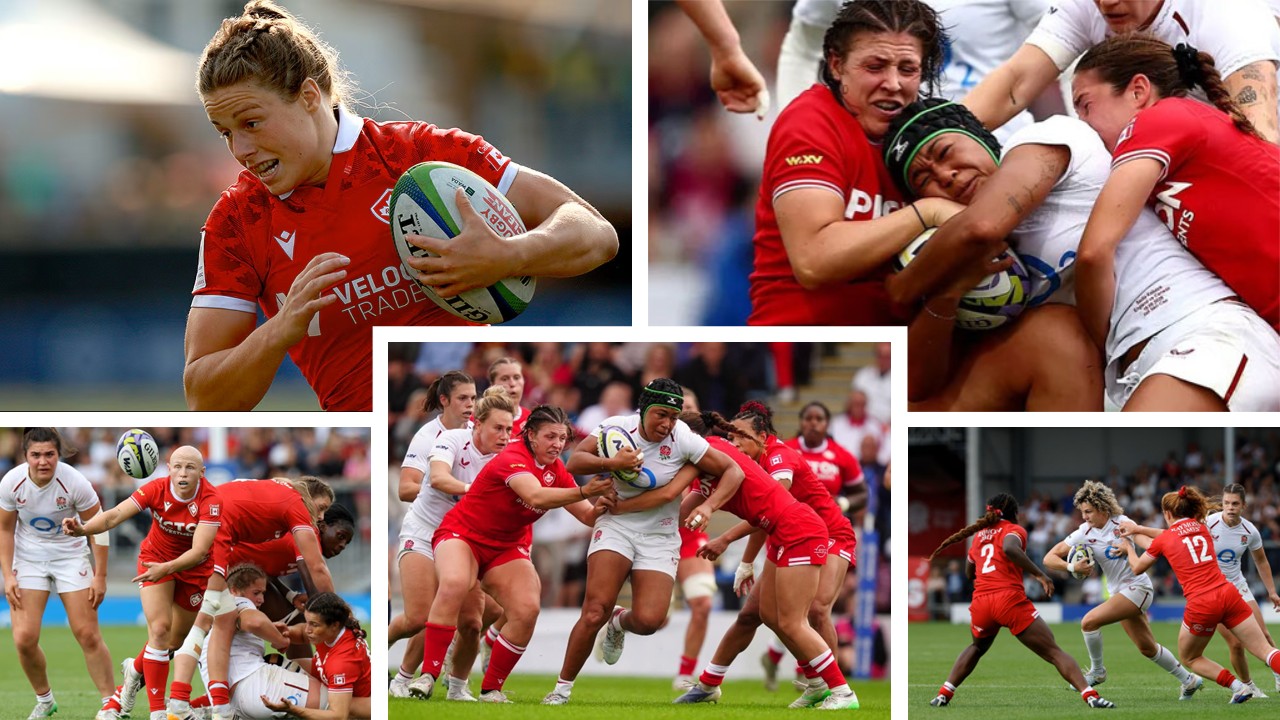
Canada’s first of three Tests against their World Cup Final opponents from last year, England, was hands down one of the best Tests of 2026 in either the Men’s or Women’s game. Imagine our excitement at the prospect of two more against the same opponent, and best of all, here on home soil in Toronto and Ottawa. While Canada left the European leg of this year’s WXV tournament with an unfortunate heavy loss to France, we’d argue it was a temporary blip on the radar ahead of two games that this side of remarkable Women have been focused on since the final whistle at Twickenham last year. La Rochelle will have taught the team valuable lessons, and we’d argue the side will be that much stronger for the daunting task ahead.
Canada’s performance against England in Exeter was remarkable. Their defence in that final quarter, when a concentrated, ruthless English assault tried to snatch the win, was legendary and, to be honest, a quality we hadn’t seen in Canada’s considerable armoury up to now. Canada have always been solid in the contact areas of their defensive game, but defending their line 5 metres out against wave after wave of English attacks showed maturity and resilience that bodes well for the future. They looked organized and able to cope with the considerable pressure England put on them.
The Herculean effort to hold the line against England left them with little gas in the tank for a fired-up French side a week later. The tightly knit, disciplined approach required to keep a highly organized, structured English team at bay left Canada ill-prepared for the helter-skelter, yet equally physical, approach France showed the following week in La Rochelle. In many ways, against France, Canada looked and felt like they were playing a team much like themselves. With their sole focus over the last few months on beating England and avenging that World Cup loss, it wasn’t surprising they were sometimes caught out, especially in defence. French Rugby has always flourished in unstructured play. This trait serves Canada equally well. Still, against a side like England, probably the best-coached team in the Women’s game, disrupting the Red Roses’ relentless physical intensity and structure requires a very different style of play, one that ultimately caught Canada napping against France and, especially in the Final Quarter, led to some uncharacteristically poor decision-making.
England will have taken note of the French game. Still, they will also know that the home crowds at BMO Field in Toronto and TD Place Stadium in Ottawa will give Canada the kind of 16th-player presence the Red Roses haven’t been used to in previous encounters with their Canadian opponents. The crowd atmosphere in La Rochelle was electric, and several Canadian players hope their fans can provide the same inspiration and backdrop in the coming weeks. We intend to make our presence as loud as possible next week at BMO Field to support our fabulous Women.
The two weeks starting on October 16th are probably the biggest rugby event this country has ever seen. Momentum from last year’s World Cup, and interest in Canada and England’s participation in the Final, continue to grow. Rugby Fans from all corners of the sport in this country have seen the famous Red jersey finally stand up and be counted on one of the sport’s biggest stages. The excitement around what the future holds, especially for Women’s Rugby in this country, is limitless. Canada’s Women are a world-class side. The new talent coming through the ranks we’ve seen this year, such as Hooker Kiki Idowu, back rowers Julia Omokhuale and Lizzie Gibson and winger Charity Williams, along with all of last year’s World Cup heroes, means the future looks exceptionally bright and is the catalyst this country has needed for so long to promote our beloved sport.
Canada clinched third place in this year’s Pacific Nations Cup with a gritty, determined effort against the USA.

Is it finally safe to say that things are looking up for the Men’s game in this country? After watching Canada this year in the Pacific Nations Cup, we’d argue yes. What really caught our eye was their Pacific Nations Cup Semi-Final against Fiji. Sure, they conceded 45 points, but it wasn’t exactly a thrashing, as they scored 29 of their own in response. Agreed, Canada still has plenty to work on. However, overall they looked more disciplined and organized, and despite the handling errors still being far too high at this level, their overall execution is infinitely better than it was a year ago. New players are coming through the ranks and starting to make a name for themselves, like fullback Takoda McMullin, centre Jacob Ince, back rower Daragh Doyle and prop Sam Miller. In addition, stalwarts such as back rowers Lucas Rumball and Mason Fletch have been exceptional this year.
Canada followed that up with a solid performance against the USA to clinch third place in the Pacific Nations Cup. Appalling second-half conditions marred the game, but Canada weathered the storm and got the job done, marking back-to-back PNC victories over the USA in the last two years. It wasn’t pretty at times and certainly not as easy on the eye as the Fiji game, but a determined team effort got Canada across the finish line ahead of a very determined US opponent. What’s more, Canada outscored the US three tries to one, and had Canada’s goalkicking been on point, the 19-16 scoreline would have been much more comfortable.
Our only concern, however, is that much of the squad still sits on the wrong side of 27 heading into Canada’s first World Cup since 2019. The conveyor belt of new talent coming through the ranks doesn’t seem to match that of other Rugby Nations Cup competitors, such as Portugal. For example, the average age of the Portuguese bench that recently faced Canada this summer in the Rugby Nations Cup was 23. Canada’s was 26, and Portugal outscored the Canadians 6 tries to 2, with all their points coming from tries and the resulting conversions.
Canada faces a daunting Rugby Nations Cup schedule next month, taking on Tier 2 Powerhouse Georgia in Tbilisi, Romania in Bucharest, and what was once considered a potentially soft fixture, Hong Kong China in France. Hong Kong turned the rugby world upside down this summer after pulling off a thrilling victory over South America’s traditional Tier 2 Giant, Uruguay, in Montevideo, so Canada can’t go into this game thinking it is the easier of three challenging fixtures. However, if they find the kind of spark that made Canada so compelling to watch at times against Fiji, as well as the grit and determination to stay the course in last month’s tough PNC third-place playoff against the USA, Canada could end 2026 on a real high and the kind of momentum needed to build towards their return to the World Cup stage next year.
In one of the craziest Tests of the Year, Australia held off the Springboks with just 11 men, proving the Wallabies still have plenty of life in them ahead of the World Cup

To be honest, we have to eat a bit of humble pie since new Wallaby Coach Les Kiss took over the reins from Joe Schmidt. We felt the Wallabies were adrift, and Kiss may have found himself out of his depth trying to right a ship that was seriously listing. Well, after having watched what can only be described as one of the most insane games of Rugby we’ve ever witnessed, but also one of the most entertaining, the Wallabies, who were down to 11 men for the final 12 minutes, held on to their lead against a determined group of Springbok World Champions. In short, it was legendary stuff and, once again, it made clear that, despite the frustration it generates, Australian Rugby can be a mesmerizing, captivating sporting experience. Our beloved sport is so much richer because of their involvement.
Australian Rugby seems to thrive on the chaos principle even more so than the French. Furthermore, when their attacks come together, they produce some of the most spellbinding, free-flowing Rugby ever seen. The game in Perth a fortnight ago was a shining example of that. Perhaps even more pleasing for Australian fans, especially a year out from the World Cup, is that even with the South Africans dominating the physical side of the game, Australia still contained them, even though the set-piece battles for the most part favoured the Springboks. At the 65-minute mark, Australia led 42-17, a remarkable result, and they seemed to have found a way to unpick South Africa’s traditional brick-wall defence. They found gaps other sides, including the All Blacks, couldn’t, and denied the Springboks time to organize and stabilize their defence. Remember that children’s story you may have read to your kids, “We’re Going on a Bear Hunt”? The constant refrain is, “We can’t go over it, we can’t go under it, oh no we’ve got to go through it!” Well, that’s what the Wallabies did for a full 65 minutes.
What followed was the stuff of legends: Italian referee Andrea Piardi sent four Wallabies to the sin bin, meaning Australia had to defend against a rather peeved Springbok side at full strength for almost the entire final quarter, determined to bat Australia aside and restore the rightful world order. Give South Africa credit, they came within a hair’s breadth of pulling it off, but somehow, against all odds, the Wallabies clung on to one of this century’s most remarkable wins. That kind of resolve, when all the tables are stacked against you, bodes well for Australia’s World Cup campaign, especially on home soil next year. As we have said for many years, we just love watching Australia play and when they decide to throw the form book out the window and just play with that extraordinary, almost cavalier attitude of saying, “well everyone’s written us off so let’s just have a go at it”, you’re usually in for eighty minutes of pure rugby entertainment, and that’s certainly what we got last Sunday in Perth. We still believe this team can go far next year, and Perth was the first step toward that goal. The next two Bledisloe Tests will give us more insight into what this team can do in the Nations Championship next month and the World Cup next year.
As for South Africa, despite the setback, we doubt alarm bells are ringing just yet. They will obviously be concerned about the ramifications of this game for their date with France in the Rugby Nations Championship next month, as, let’s face it, France and New Zealand currently look like the biggest threat to their World Cup threepeat aspirations. After the Greatest Rivalry Tour, South Africa probably feel they have the measure of New Zealand, but France is clearly a wild card they may struggle to approach. The madcap nature of the game against Australia may have been the best preparation they could have asked for. If anything, as they head into the countdown to the World Cup, the tapes of the shenanigans in Perth may be the most-watched as they prepare for the unexpected.
Perhaps the biggest question for us remains how much gas is still left in the tank for this Springbok squad? This year has shown that its stalwarts, while still at their peak, are rapidly approaching the twilight of their careers. While Pieter-Steph du Toit may well play Rugby at the same intensity well into his eighties, we feel age is starting to show elsewhere in the squad. There is enough seasoned experience to get the job done, no doubt, but if injuries kick in, what staying power does South Africa have beyond the Quarter-Finals? If you ask us, a couple of players really need to be fast-tracked in the coming months. Ethan Hooker, we thought, was outstanding in attack and on defence on the wing; Morne van den Berg is a rapidly rising star in the nine jersey, while Ruan Nortje’s leadership role in the forwards needs to be emphasized. Bulls number 8 Cameron Hanekom should be considered a starter for the Rugby Nations Championship next month and beyond, and the Lions URC campaign this season may need a closer look at the young bloods.
As we say, none of this doubts the Springboks’ prowess or the fact that they will be the team to beat next year in Australia. They are back-to-back World Champions and the World number 1 side for a reason. Still, they need to keep a keen eye on the future in the coming months and develop beyond the World Cup, a task that, despite his brilliance, Coach Rassie Erasmus has at times been slightly reluctant to embrace.
So for the Springboks, it’s simply a case of watch this space, but no cause for alarm. Meanwhile, this weekend, there is plenty to watch as Bledisloe 1 gives us an in-depth look at Australia and the All Blacks post their recent encounters with the Springboks and what they’ve learnt. You won’t want to miss a second.
New Zealand vs Australia – Saturday, October 10th – 2:00 AM (Eastern) – Premier Sports and Stan Sport Australia (live and on demand)

