First up sorry for the silence but I’ve been away on a training course and apart from catching up on all the rugby of the past ten days in the limited time available to me, there was precious little for sitting down and writing.As a result it’s a bit of a whip round this week. In this piece we look at the continuing ups and down of a Lions tour that for the most part seems to be defying logic and somehow manages to keep going. We’ll also be following this up with another piece looking at all the non-Lions action that took place this past weekend.
Despite some tragic setbacks at the outset and continuing doubts as to whether the Series will be allowed to play to its conclusion – the Lions soldier on in adversity
Despite the loss of perhaps one of the greatest Lions talismans of all time – Gatland remains positive that this tour will ultimately be a success
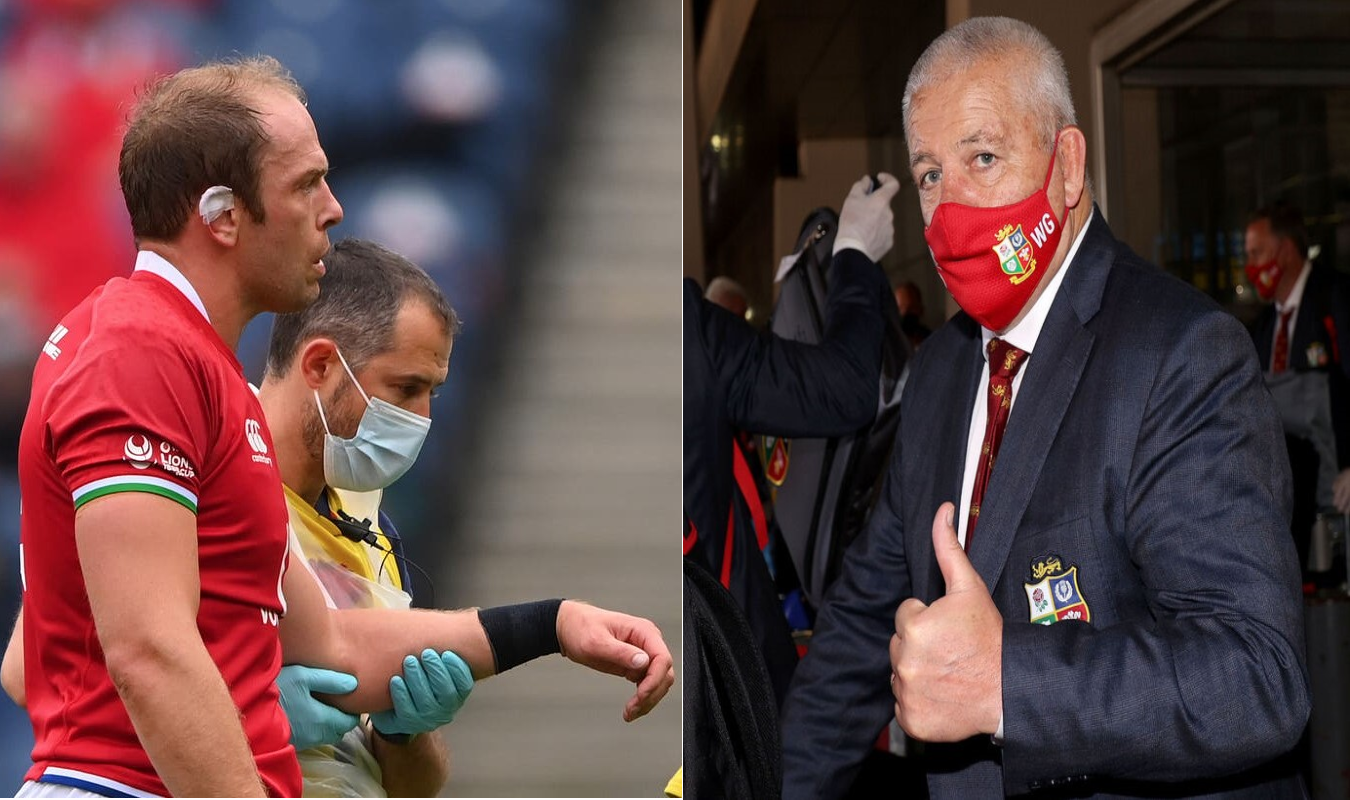
If you were like us there was a deathly silence in your TV room as you watched a genuine Lions legend walk off the pitch after only seven minutes of a Lions tour that was likely to further cement his place in the history books as perhaps the greatest Lions Captain of all time. After that there was probably anguish, depression, rage, despair – and a recourse to the nearest libation available to numb the shock. How could the Lions go on without their Mufasa, their Aslan?
Well it seems they can, and despite the setback it has hardened the resolve of the 37 men donning the red jersey to do the great man proud and make this Tour one that will stick in our memories as being done in his honor. He may not be there in person but in spirit he is clearly looming large over the current squad, and rumor has it that he may be out to join the coaching team for the actual three Tests against the Springboks, as well as an even more surreal fantasy of him actually returning to the pitch for those matches.
In his absence, Gatland raised everyone’s eyebrows by appointing Ireland’s Conor Murray as Captain in Jones’ absence. This is a player who has only captained his own club side Munster once, but never his country, let alone wear a Lions armband. However, once our brows unfurled and we stopped our head scratching, the decision, even if it is a bit out in left field does make sense. He’s the perfect link between the backs and the forwards and understands the trials and tribulations of both, he’s perhaps one of the most popular guys in the squad and most important of all has two Lions tours under his belt, making this his third. In short he’s got the street cred.
As for the tour itself. The current COVID complications have once more thrown the whole thing into crisis, with the Springboks now reeling from the virus and South Africa itself in crisis as the third wave sinks its ugly teeth into the country, still playing catchup from the first two waves. Questions linger around whether or not it is appropriate in such times to even be playing rugby in the first place when your host country has rather more pressing problems. Can the Springboks emerge fit, healthy and more importantly match ready in the space of just over two weeks before the first Test? Their first Test since the World Cup against Georgia seemed to indicate that they were fairly capable of blowing off the cobwebs quickly, but a squad of some of the combined Northern Hemisphere’s finest is a slightly different proposition.
In short, while Gatland’s unbounded optimism around the tour’s ultimate success may seem to some to lacking any grounding in reality or even empathy with what his hosts are going through, we have to grudgingly admire it. The Tour has become in many ways a direct challenge to the cloud of gloom and doom we’ve all had to live under for the last 18 months, and in a country like South Africa where good news is often hard to find even in the best of times these days, the Tour has become like a beacon for better times ahead.
So therefore, we side with Gatland and the Springboks in wanting the Tour to continue despite the minefields it’s had to cross already and the ones still lying in wait. In a land where Nelson Mandela once famously said that “sport has the power to inspire and unite people in a way that little else does”, the Lions and the Springboks recognize that this Tour is bigger than just rugby at a time when South Africa desperately needs to find a way to smile and cheer.
The long wait is over, strap yourselves in and get set. Despite the controversy, the restrictions of COVID-19, the lack of crowds and so much more – this Lions tour surely must be one of the most eagerly anticipated in years. The excitement is building and this Saturday sees the slow start of a return to normal service in terms of International Rugby. Crowds will be at the Rugby Championship which immediately follows the Lions tour, as well as at France’s tour of Australia, and Canada and the USA’s tour of the UK. In short, rugby is back and we have a vintage summer to look forward to!
Despite the primary focus of the Lions tour being on the three Tests with South Africa next month, this warmup game against Japan is one that holds a great deal of interest for fans of International Test rugby. While the Lions will be the first Test opponents that South Africa will face since their World Cup triumph, they will also be the first Test Japan will have played since the World Cup. Like South Africa, Japan have also been in international isolation since the global showdown as a result of COVID. They took the world by storm at the World Cup, by proving that Japanese rugby has improved by leaps and bounds in the last twenty years. Their quarter-final effort against South Africa was impressive, and this is clearly a side that has arrived with strong Tier 1 aspirations.
Consequently Saturday’s match holds plenty of interest, as Lions Coach Warren Gatland puts together a strong side that should be able to handle a very quick and nimble Japanese offering. Here’s a couple of points that got us talking about what to look for this weekend.
So where are the Brave Blossoms after the most successful World Cup in their history?
Japan stunned the world at the last Cup by winning every one of their pool matches, including victories over Ireland and Scotland
Japan had a fairytale World Cup that sadly ended at the knockout stages as they were summarily dismissed by the ultimate Champions and the Lions opponents this summer – South Africa. However, they played some absolutely exquisite rugby in the process and captured the world’s imagination. It put Japanese players on the map, and got the talent scouts in the top leagues in Europe genuinely interested. The big question is now after almost two years, has that incredible momentum of the World Cup come to a grinding halt? They can ask for no better examination than by a side representing some of the best players in the Northern Hemisphere. Club rugby has flourished in Japan since the World Cup and with some key Japanese players now plying their trade in Europe, there is every reason to believe that we are in for a competitive showing at Murrayfield by the Brave Blossoms. It may be too stern an initial Test for Japan, but will set them up admirably for their encounter with Ireland a week later. Either way it will be great to see one of the most inspirational sides of the last World Cup welcomed back to the fold of International Test Rugby.
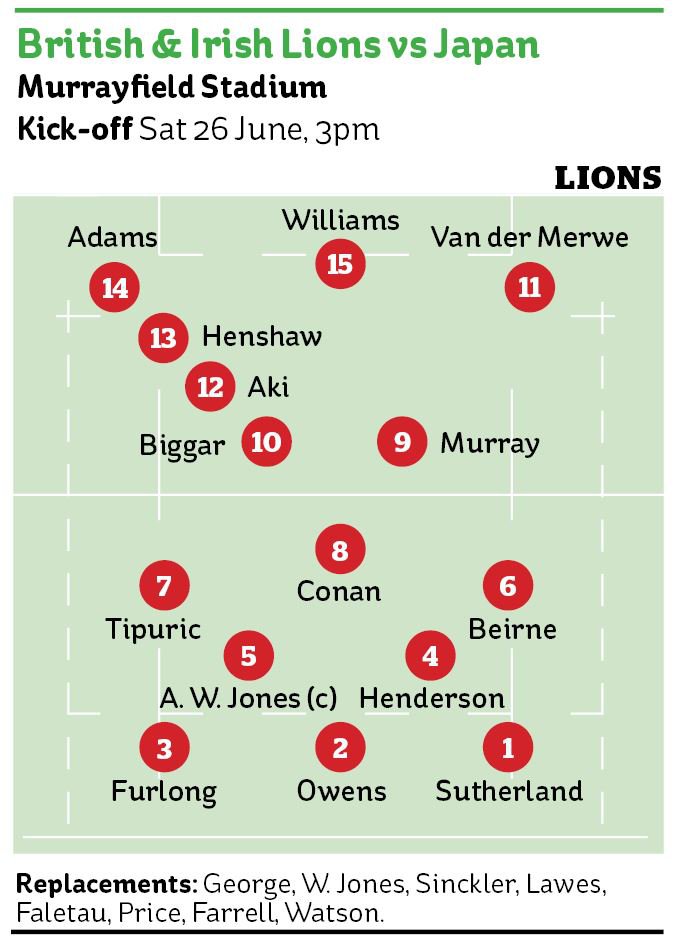
Gatland picks a Northern Hemisphere fantasy XV of note!
Wow is all we can say. We’d fancy this lot against the best in the world and have a hunch that the starting lineup for the three Springbok Tests isn’t going to look too different, with possible tweaks in the second and back rows and possibly at fullback. In short, expect to see these 23 individuals dominate the latter stages of the Lions Tour. Throw in Itoje and the Exeter pair of Stuart Hogg and Sam Simmonds, who will be doing duty in the English Premiership final this weekend, and you have a truly fearsome unit – powerful, fast and full of creativity. Gatland has picked a physical but highly mobile squad to counteract the kind of silky opportunistic running much favored by the Japanese. There’s been much speculation about the possibility of “Warrenball” this tour, given that its chief proponent is running the show. However, Gatland hates the term and to give one of the most successful Coaches in this era of Test Rugby credit, one that hasn’t really reflected the play style of his charges in the last couple of years. It may have given Wales an initial platform when he first took charge but the Gatland style has evolved dramatically in the last five years. His ability to enable his teams to adapt quickly to their opponents is becoming legendary, and we’d hardly say that it’s a boring brand. Barring coaching his native All Blacks, a clean sweep of South Africa would be the crowning achievement on a career that is rapidly elevating him to a position where he will be able to sit with the Coaching gods.
Two feisty but very mobile opponents
Conan will be wary of Mafi after it all went so horribly wrong for Ireland against Japan at the World Cup
While Amanaki Mafi may be a slightly colorful character at times who can get on the wrong side of the referee and even his teammates, there is no denying the bruising Japanese back rower has an eye for the kind of opportunities that make headlines for number 8s. Ireland and the Lions Jack Conan is outstanding at seizing such moments with both hands and has done so time and again for the Men in Green to devastating effect. Both are bruising ball carriers, solid defensively but blindingly quick off loose ball, and with a head of steam behind them hard to bring down. Talupe Faletau may be Lions Coach Warren Gatland’s first choice at number 8, but Conan will relish the opportunity to put his talents on display in front of his new boss.
Supermanmeets Captain Fantastic
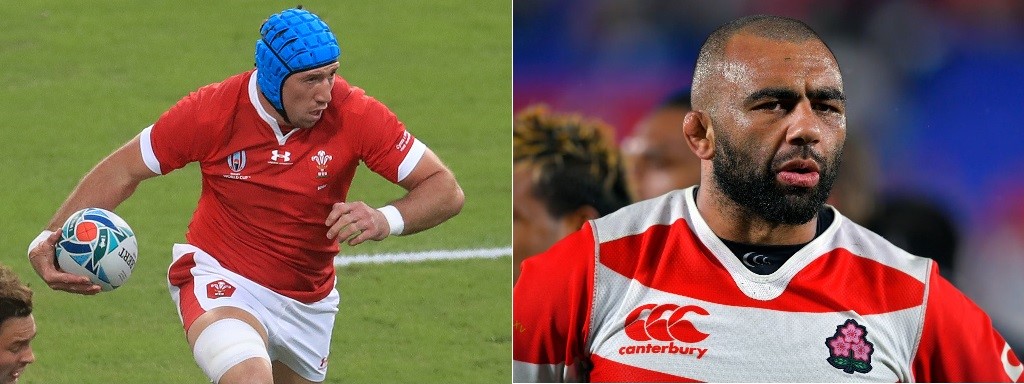
Welsh Lion Justin Tipuric meets a truly inspirational Captain in Japan’s Michael Leitch
It was supposed to be Scotland’s Hamish Watson, out with a minor injury, but Justin Tipuric or “Superman” has we call him here at the Lineout will rise admirably to the occasion on Saturday as he meets one of Test Rugby’s most talismanic leaders Japan’s back rower and Captain Michael Leitch. A national hero in Japan Leitch has been at the forefront of really putting Japan on the map in the last ten years. A veteran of three World Cups, he shows no sign of slowing down at the tender age of 33. He may not be the most gifted player on the planet but his workrate is very much in the same vein as the mighty Tipuric who we’d have to argue is amongst the five best International Test sevens in the world. Tipuric may be the fitter and more inventive player but Leitch will endeavour to stifle all of those qualities and probably do a fairly admirable job of it, while creating some opportunities of his own. In short there is going to be a lot of grit on display here, and while that Lions back row may simply prove too much for Leitch and his colleagues it won’t be for the want of trying.
He may be fast but can he get past the Lions Duhan van der Merwe?
Japan’s Kotaro Matsushimais a master of invention and speed but the Lions van der Merwe can match him at pace, and when it comes to the physical side of things the Scottish Springbok is likely to have the edge
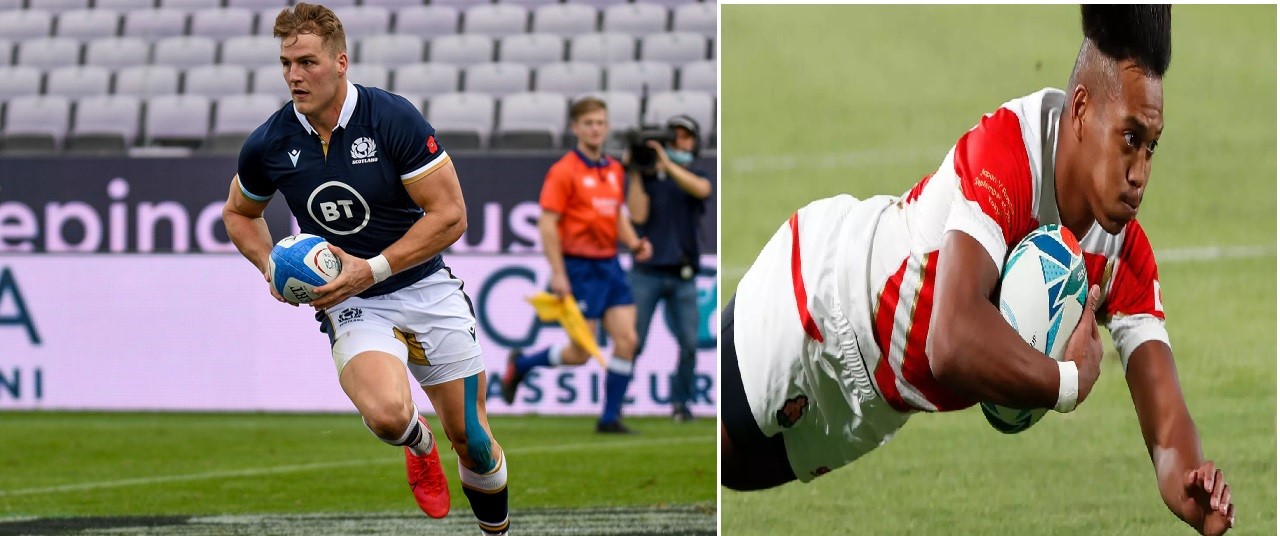
Japan’s Kotaro Matsushima has been one of the stars of the last two World Cups. The winger’s dancing feet have been so impressive that he has been snapped up by French Top 14 side Clermont and is clearly making his presence felt in Europe. His weaving runs are a trademark of the exciting free flowing rugby that caused all of us neutrals to embrace Japan as our favourite underdog team in the last World Cup. He’ll need those dancing feet though to get past the hulking menace of the Lions Duhan van der Merwe. Despite some brave efforts Matsushima is unlikely to be able to match up to the Scottish Springbok import’s physicality and once the Lion is up to speed with ball in hand the Japanese winger will need to call in support to try and bring him down. If his colleagues can keep the ball away from van der Merwe and Matsushima can keep away from the Lion prowling the touchlines then we could see a very exciting clash of playing styles. It may be a mismatch on paper but one that could provide some of the most exciting moments of the match.
It’s hard to see anything other than an outright win for the Lions despite a solid challenge from Japan at Murrayfield. The pedigree of the Lions matchday 23 is so high and Japan’s game time since the last World Cup so low, that we have trouble seeing an upset here. The Lions may be going through that initial bonding process and figuring out how to play the kind of game that the Coaching staff have devised for them, but the star studded calibre of Saturday’s lineup and experience it brings leaves the end result in little doubt. Japan are a good side and they could well cause Ireland some grief a week later if they have a strong showing on Saturday, but facing up against a collection of the Northern Hemisphere’s very best as your first taste of International Rugby in almost two years is a tall order. Gatland will be keen to lay down a marker to the Springboks of their intent, without showing his hand too much at this early stage. Either way it’s a contest we won’t want to miss and a glorious foretaste of a summer that could well be one for the ages.
In case you’ve forgotten just how magical Japan were at the last World Cup feast your eyes on this. Enjoy!
With Director of South African Rugby Rassie Erasmus and new Springbok Coach Jacques Nienaber naming their sqaud to face the Lions next month there were relatively few surprises. It’s a side that is, for all intents and purposes, a mirror image of the one that won South Africa the World Cup under Erasmus’ tutelage almost two years ago. There are some exciting new names in it though who could really add some spice to a squad that already looks more than capable of the task at hand.
While most of you will be no stranger to the majority of names on the team sheet, we thought it’s worth having a look at the uncapped players, who given South Africa’s isolation from the rugby world due to the complications of COVID for the last eighteen months, are relative unknowns to the world at large.So we’ve picked out five of the players four of whom are uncapped, who you may not know too much about, but are likely to come the end of the Lions tour. While many of them may not make it past the South Africa A match against the Lions which will see the squad trimmed down from 46 to 32 for the three full Tests, the injury card may well see them do longer service than currently planned.
Jasper Wiese– Leicester Tigers
You may not know him all that well, but cast your memory back to the Cheetahs in Super Rugby and all of a sudden it might not be so hazy. English Premiership side Leicester Tigers clearly liked what they saw and snapped up the number eight, and haven’t looked back since. A supercharged ball carrier who is likely to give the Lions Jack Conan a serious run for his money, Wiese is just as stellar in defence as he is in attack. A player who loves to seize opportunities when they come his way, Wiese is likely to be a defensive nightmare for the Lions, especially as in the English Premiership statistics he sits third in most defenders beaten. He also featured top of the charts in the recently concluded European Challenge Cup for defenders beaten, number of carries, metres made and offloads, so international competition clearly suits him. In short, someone the Lions will need to take very seriously indeed. If you need any more convincing we think the video below might sway the argument in Wiese’s favor.
Rynhardt Elstadt– Toulouse
Although Elstadt does have two caps for the Springboks it has always amazed us that he hasn’t donned the green jersey more often. Despite six years as a Stormers regular and the last three years as part of Toulouse’s backbone, Elstadt has not really featured till very recently in the Springboks planning. If you want a tackling machine you don’t get much better than the powerhouse Toulouse flanker. Sitting 3rd in the TOP 14’s tackle statistics this season, he is also a truly bruising ball carrier. Elstadt is definitely in the mold of large and frightening South African loose forwards who are EXCEPTIONALLY difficult to bring down. We wouldn’t be surprised at all to see Elstadt along with Wiese make the cut all the way to the final Test. We think you’ll agree after watching this video clip that encounters with Elstadt are going to keep the Lions medics busy!
Sanele Nohamba – Sharks
An absolute star for the Springbok under 20s side, Nohamba will provide a superb backup for the Springboks in case either of their first choice 9s, Faf de Klerk or Herschel Jantjies fail to last the full campaign due to injury. The under 20s speedster is making a solid transition to the senior game with the Sharks. He’s quick and possesses a keen eye for opportunity. A very capable scrum half in the making and don’t be surprised to see him ultimately turn out for the Springboks in this year’s Rugby Championship and ultimately form part of their World Cup squad should he fare well in this Lions series.
Wandisile Simelane – Lions
If you want excitement and a player who clearly loves what he does, then look no further than Lions centre Wandisile Simelane. His athletics background before he picked up a rugby ball is plain to see. Blindingly fast and possessing some insane footwork, Simelane must surely be one of the most exciting Springbok future prospects. Add to the fact that he would not be out of place in a top European soccer club given his ability with the boot, Simelane brings a full package to his game. Simelane’s grinning face could well end up being one of the lasting images of this series if the Springboks can find a way to create space for him. While he may not make the cut for the three Tests once the Springbok squad gets trimmed down to 32, we secretly hope that “Mr. Happy” as we call Simelane here at the Lineout gets to go the distance in a green jersey next month.
Aphelele Fassi – Sharks
Fast forward the video below to the 45 second mark and you’ll understand why we are so excited about the Sharks fullback who is getting his first Springbok call-up. Once you’ve done that enjoy the rest of video in its entirety highlighting the youngster’s sublime try scoring ability. But for us it that’s blinding turn of pace to catch Aphiwe Dyantyi who was one of the fastest men alive in the sport until recently, which really makes us sit up and take notice as we’re sure it did the Springbok coaching staff. Pitting him against the Lions own Concorde in the shape of Louis Rees-Zammit could well be one of the highlights of the tournament.
We’re doing a brief run through of the Springbok squad in its entirety over on the podcast tonight. But for now we thought you’d appreciate us trying to shed some light for you on those players who have yet to really make a name for themselves in the Green and Gold jersey. We have a feeling that these five players are likely to be getting a lot of space in the media next month and for all the right reasons. Enjoy this foretaste of the Springboks secret weapons ahead of a tour that we can’t wait to see get underway!
Here’s the squad in full over on the podcast if you’re interested.
The Arrows 2021 season has so far been a bit of a rollercoaster. Arguably facing more than their fair share of hurdles to be even playing in the tournament at all as the only Canadian franchise, the Arrows have had a promising campaign at times but a glaring lack of consistency is clearly holding them back. With seven games left before the playoffs, they essentially have it all to do if they fancy their chances at post season glory. They are playing some quality rugby and if they can manage to do that week in week out for the next seven weeks, then a shot at the title is not beyond the realms of possibility. However, it will take some pretty steely resolve and just a little bit of luck.Still we’d argue that on paper they are a better team than their mid season results would indicate.
As we’ve said before, this season was never going to be easy for the lads. To be able to play in the tournament at all has meant the entire squad living in a bubble in their temporary new home of Georgia, away from their family and friends for the duration of the tournament. Four months is a long time, and a hardship their colleagues in the rest of the league are not having to contend with. Consequently, we take our hats off to them for ensuring that Canada has a presence this year in a tournament that is already starting to put rugby more on the mainstream sporting landscape in North America.The team has made a huge sacrifice to play this year and give us a Canadian team to cheer for, so celebrate their successes and sympathise when things don’t quite go their way.While this year may not bring the results the Arrows would like there is no denying that it will lay the foundations for an outstanding 2022 season, giving their fans something to really look forward to. This will be made even sweeter by the fact they will have the opportunity to cheer them on in person as the team will once more be able to make Toronto’s Lamport Stadium their home ground.
So let’s have a quick summary of the Arrows nine games to date and what worked and what didn’t.
Game 1 – Rugby Atlanta 21 – Toronto Arrows 14
As season openers go, it wasn’t a bad effort from Toronto. They were unlucky not to get the draw in the dying minutes, after a brilliant run down the right wing from Uruguayan Leandro Leivas who looked just as dangerous as he was in Toronto’s first season in MLR. Unfortunately the winger’s excellent run was brought to a halt just short of the 5 metre line and some gritty defence from Atlanta ground Toronto out of the proceedings. The first half was a feisty physical affair with Atlanta just having the edge in the forward battles which accounted for all five tries scored by both sides. The second half was very much a war of attrition between the two teams until a spark of life from Toronto as the clock ran down, but to be honest the second half was a rather lethargic affair from both sides. Toronto acquitted themselves well for the most part but not having played together for over a year was definitely noticeable.
Game 2 – Utah Warriors 39 – Toronto Arrows 24
The rust that had hampered Toronto getting their game face on against Atlanta, became glaringly apparent in Toronto’s second encounter of the season. The first half was a shambles from Toronto, who looked disjointed and clearly out of sorts with whatever kind of game plan they were trying to implement. They were bossed around up front by Utah and their execution was generally poor. Utah took full advantage and found themselves with a comfortable 20-3 lead at half time. Defensively Toronto had more holes than a block of Swiss cheese and the whole performance made for depressing viewing. After a shaky start to the second half with Utah scoring their third try, someone clearly hit the on switch in the Arrows camp. Captain Lucas Rumball led the charge as he always does and Toronto hit back scoring two well constructed tries in the space of 4 minutes. All of a sudden it was game on with a ten point difference. However, once again Toronto’s defence became hopelessly porous and Utah pulled away. The game got scrappy and to be fair to Toronto, Utah’s discipline was sketchy at the best of times resulting in a red and yellow card for the men from the Rockies. Toronto would use the two man advantage to score a consolation try at the end, but it was hard to overlook their defensive frailties which had allowed Utah to wreak so much havoc for much of the match.
Game 3 – Old Glory 19 – Toronto Arrows 40
Joaquin Tuculet – Definitely a case of money well spent by Toronto
Toronto finally found the mojo that served them so well in the 2019 season in this match and produced a blistering display of return to form as they ran in five tries to Old Glory’s two. They put Old Glory under pressure right from the get go. The defence was tight, the execution was crisp and their forwards dominant allied to some silky running from their backs- in short it looked like the Arrows team that gave us so much to cheer about two years ago. The Arrows South American back line contingent, showed off their pace and their big money signing of Puma fullback Joaquin Tuculet looked to be a very sound investment. With the job well done, the Arrows could be forgiven for taking their foot off Old Glory’s jugular for a few minutes allowing the Washington men to score a consolation try in the dying minutes. Nevertheless it was a sound and heartwarming performance that gave us plenty of grounds for optimism.
Game 4 – Toronto Arrows 16 – LA Giltinis 43
This was a game the Arrows will probably want to forget in a hurry, and is probably the worst performance we’ve seen from them so far this season. In short it wasn’t an attractive game from either side, and hardly a glowing advertisement for the sport. However, Toronto simply failed to show up for this one and what we saw was an intensely scrappy and disjointed performance. One in which we lost count of the handling errors from both sides but particularly from Toronto. The Arrows looked exhausted and frustrated and for the most part like they just didn’t want to be there. Maybe this was a factor of the hardship of a life in exile for four months, but this was one where perhaps the Coaching staff needed to look into the psychological welfare of their charges. Toronto simply didn’t look happy and it was reflected in their performance. We didn’t think the table topping Giltinis played all that well but then sadly they didn’t need to. It was a messy poorly disciplined game not helped by some sloppy officiating at times. In short, not one for the photo album despite a moment of second quarter razzle dazzle from another of Toronto’s Puma imports, winger Manuel Montero. Montero’s try made it onto the number two spot for the MLR’s top five tries of the round, so at least Toronto could find something to put in their 2021 season highlights reel from this match.
Game 5 – Toronto Arrows 52 – Seattle Seawolves 7
Lucas Rumball has embraced the Captaincy and is such a key component of the Arrows core
After the horror show in New Orleans the Arrows came storming back into contention with a 7 try demolition of reigning Champions the Seattle Seawolves. Tuculet was once more back to his best, but it was a complete team performance from Toronto. They just looked sharp from start to finish. Their defence which had been so questionable in the opening four rounds was tight as a drum for this one. The offloading by Toronto’s backs was simply exquisite at times and would not have looked out of place in a top flight match in France. As always Captain and flanker Lucas Rumball led from the front and is such a talisman for his team. If Toronto can put in a string of performances like this then all of a sudden a playoff spot does not look out of the question. This game was a joy to watch and a glorious advertisement for the sport even if it was at the Seawolves expense.
Game 6 – Rugby United New York 12 – Toronto Arrows 53
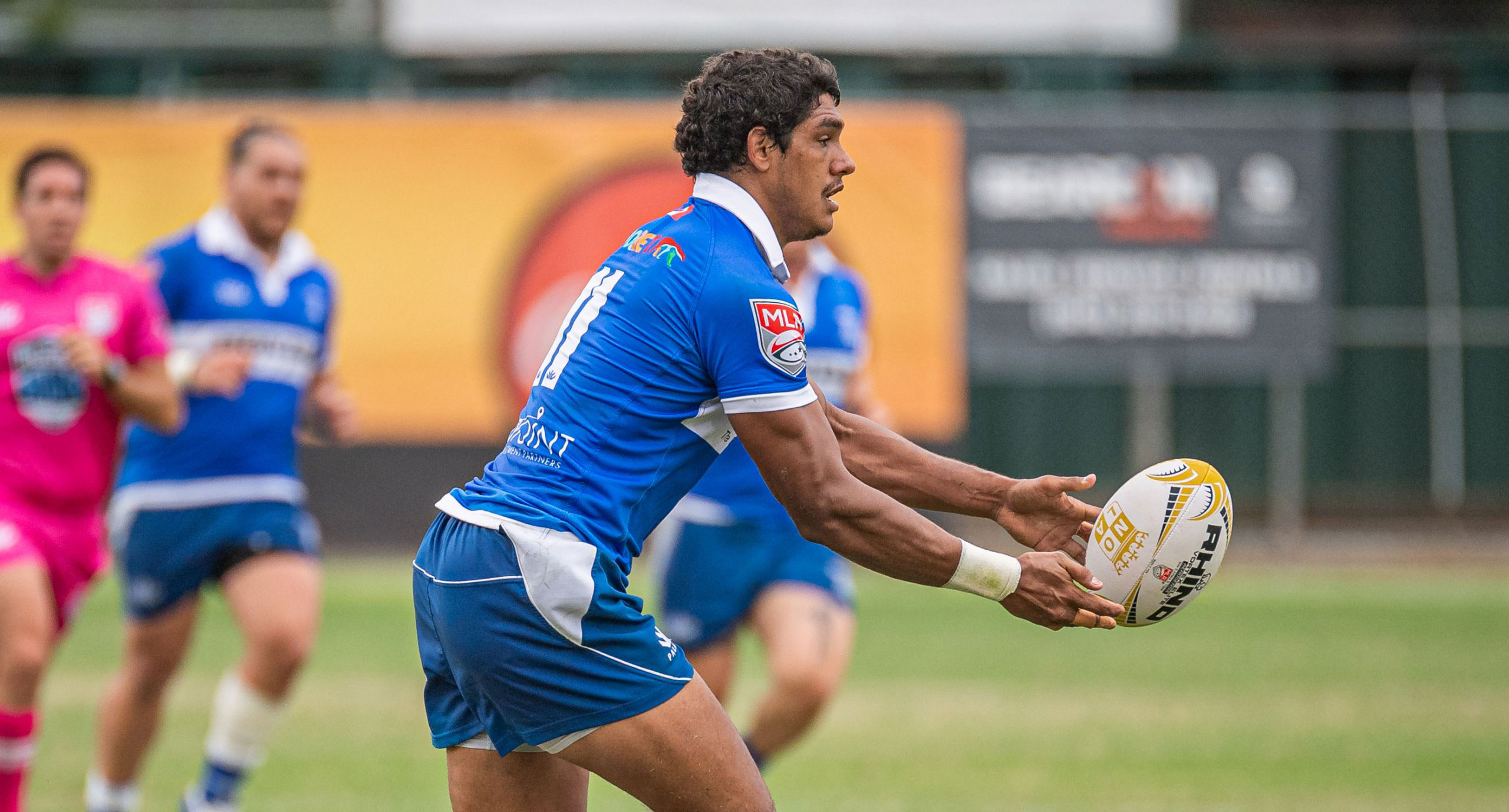
Toronto’s Mr. Excitement – winger Manuel Montero
If you thought it couldn’t get any better after Toronto’s exploits against the Seawolves, the Arrows took on a much stronger side in the shape of Rugby United New York and put them to the sword. Montero the Magician ran in three tries of his own and Toronto clearly put the lessons learnt the previous week into good practice and proved that they can hold up against sterner opposition. We had a horrible sense of deja vu that perhaps the previous weekend’s heroics were a flash in the pan, as New York stormed out of the blocks in the opening ten minutes and appeared to catch the Arrows off guard. Fortunately it was only an illusion, and Toronto got their first try after 14 minutes and thereafter it was all about the Exiles from North of the Border. Once more Toronto’s South American back line were on song and produced some outrageous counter attacks from deep, producing a glorious spectacle of running rugby. As exciting as the South American contingent are, the value of centre and Canadian international Ben LeSage cannot be underestimated. His ability to provide the Arrows with quick thinking explosive carries up the middle is key to supplying their back line with such good ball to work with.
Game 7 – NOLA Gold 22 – Toronto Arrows 14
This and the next round were two painful lost opportunities for Toronto. They should have won this game, and for all intents and purposes were the dominant side in the first half. Whether their two thumping victories of the previous two rounds took it out of them or not we’ll never know, but they appeared to run out of gas in the second half. They played a brilliant first half which looked set to continue the momentum built up against Seattle and New York. However, in the second half they imploded badly. NOLA had been plagued by problems of their own in the first half, most notably figuring out how to actually hold onto a rugby ball. However, whatever half time talk took place in the NOLA changing rooms it clearly worked. NOLA got their house in order and whatever handling ailments they seemed to have in the first half were transferred to Toronto. Toronto simply fizzled in the second half and exited stage left for a good twenty minutes. They rallied once more towards the end but at that stage it was too little too late. They were forced to play catch up rugby with 5 minutes left on the clock. They tried to force the play far too much and the errors came thick and fast and with it a lack of discipline as frustration got the better of the players. Even with NOLA being a player short due to a yellow card, Toronto simply couldn’t gain the upper hand.
Game 8 – Toronto Arrows 29 – Rugby Atlanta 33
The Arrows South American contingent may be making the points but Canadian International centre Ben LeSage is often the architect
This nail biting heartbreaker for the Arrows on their adopted home ground for this season was a bitter pill to swallow. It got off to a shaky start for the Arrows, with the Georgians looking to be the dominant side, but after five minutes Toronto came charging back with another of their talismans, the indomitable second rower Mike Shepherd crashing over for Toronto’s first points. For the next twenty minutes the Arrows dominated proceedings in an intensely physical and fast paced encounter. The execution wasn’t quite as precise as that shown against New York and Seattle and once again Toronto went missing for a crucial 20 minute period during the final 10 of the first and opening 10 of the second halves. Toronto tied the match up at 26-26 on the 64th minute and thereafter the game seesawed back and forth between the two sides. A penalty kick from Arrows fly half Tayler Adams who had been dependable with the boot all match pulled Toronto ahead to 29-26 with five minutes to go. It was Toronto’s match to lose and sadly that is exactly what happened despite Toronto’s very best efforts. Toronto had to withstand an all out assault on their try line as the clock wound into the red, and the Georgians were just able to shove it that final inch across the whitewash against a valiant but exhausted Toronto defence. If Toronto can just avoid those costly lapses in concentration then games such as this are theirs for their taking. Once again there were plenty of positives from Toronto in this match and yet again centre Ben LeSage showed just how valuable he is when it comes to finding space for the Arrows backline to operate in.
Game 9 – Houston Sabercats 10 – Toronto Arrows 19
Another of Toronto’s South American contingent who just doesn’t quit – No 8 Manuel Diana
It wasn’t pretty at times, and definitely a game that Toronto should have won more comfortably but in the end a win is a win and one Toronto simply had to get. Houston have not been one of the top sides but have some silky try scorers in their midst. Toronto were able to effectively negate that threat but in the process simply didn’t look as dangerous in attack as they should have done. They are likely to rue the lack of a points haul should they get themselves into contention for a possible playoff spot at the business end of the season, but will have to settle for the win for now. Once again a lack of concentration in the final ten minutes could have cost them the game, but they held their nerve and more importantly their discipline and got the job done. Man of the Match, Uruguayan number 8 Manuel Diana had a massive game and has been one of the Arrows most consistent performers in a season that has had more than its fair share of ups and downs so far.
Verdict
With seven games left before the playoffs Toronto have it all to do and everything to play for. If you recall their first full season in the MLR in 2019, the first half was a rocky road, but they stormed home at the end to secure a place in the semi-finals. However, they did benefit from having the last half of their season entirely at home in Toronto in front of their exuberant fans, a luxury they simply won’t have this year. Focus will be the order of business for the remainder of the season and Toronto must set their sights on at least five big wins as a bare minimum. It won’t be easy but you sense there is once more a belief growing in this team and their sense of togetherness is plain for all to see. The majority of their remaining games are against teams they can get the measure of so it’s definitely a possibility.
Their strengths are obvious. First up is a tightly knit and cohesive forward pack, that can compete and often dominate the set pieces with individuals like Lucas Rumball and Manuel Diana being exceptionally effective in the loose. Their lineout work has consistently improved as the season has progressed. They have an increasingly impressive and competent half back pairing, with fly half Tayler Adams able to keep the scoreboard ticking over and we really like the look of Ross Braude at scrum half. As for their backs, their back line could hold their own in the top leagues in Europe and as mentioned above Ben LeSage has really come into his own in the centre channels and is definitely one of the Arrows key playmakers. It’s a good Arrows squad which is surely only going to get better, and while this may not be the season it all comes together for the Arrows, we have a hunch that next season is going to be one to remember for Toronto and their fans, especially once they are reunited at Lamport Stadium.
Till then enjoy what has been some exceptionally entertaining rugby at times, and here’s to what should be an exciting finale to this year’s MLR season. Like we say be lenient in your criticisms of the Arrows given their circumstances, and instead embrace the fact that in a time when we’ve had little to cheer about, they have kept a Canadian presence in our beloved sport very much alive. For that we salute every one of them and wish them the very best of luck for the remainder of the season!
After much speculation, second guessing and will it won’t it musings, we are now so much closer to an event that despite all the pandemic controversy we are all eagerly awaiting. Lions Coach Warren Gatland has finally lifted the veil on his selections, and much to our surprise it’s a 37 man squad that, bar one or two question marks and raised eyebrows, we find ourselves for the most part agreeing wholeheartedly with – not something we do very often!Like we say there are a few head scratchers in there, but perhaps more on the omissions than inclusions side. However, overall we have to be honest and say that we think Gatland may well have got it right.
So much like we did with our Six Nations report cards we’ll go through the departments and give our verdicts on the lucky winners with a brief aside and consolation to the one or two individuals who we thought were shoe ins but sadly will not be getting on the plane.
The Front Row – No surprises as Gatland goes for power and consistency without risking discipline
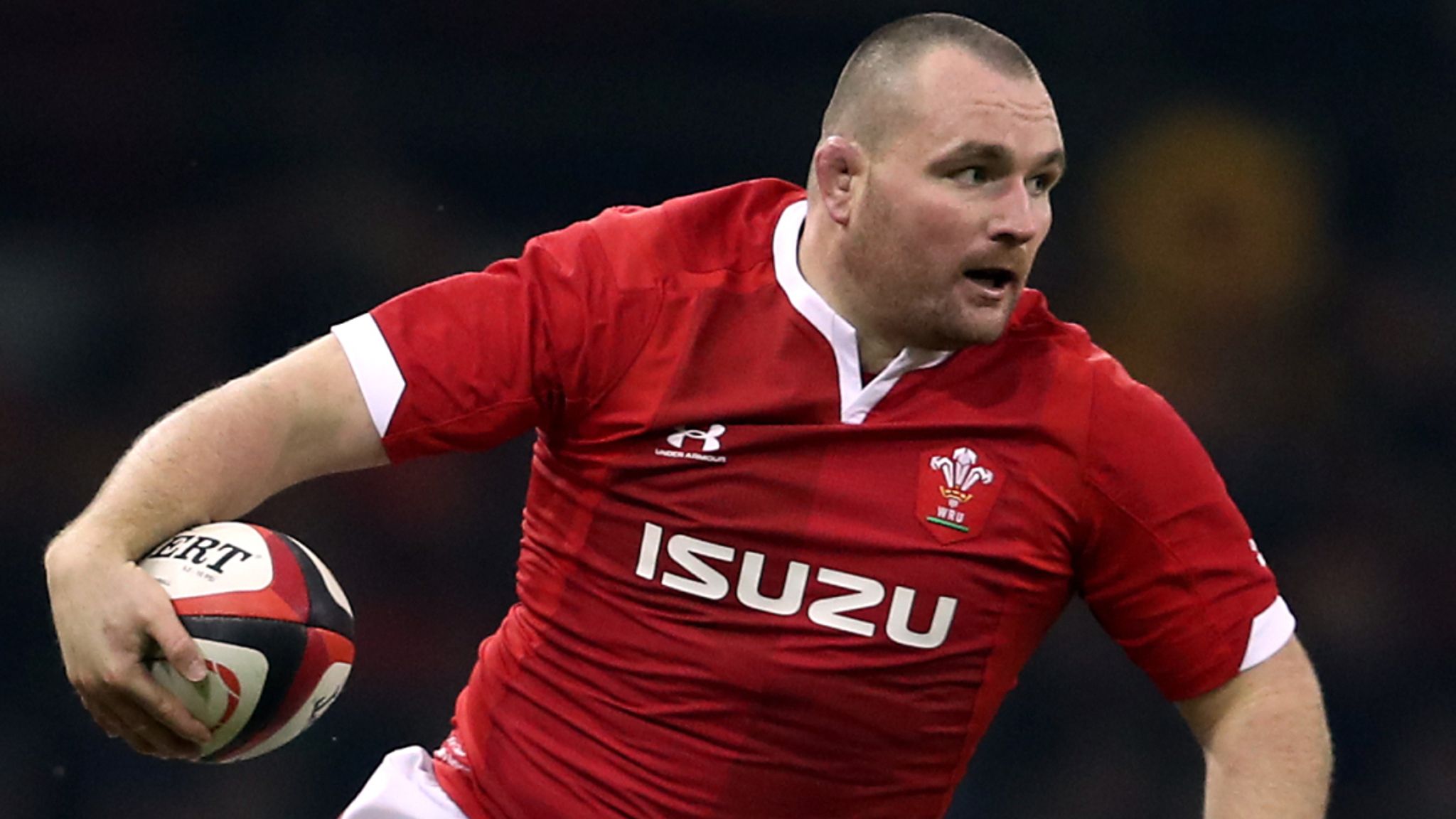
Like his Captain, Welsh Hooker Ken Owens will bring some quiet but consistent power and solidity to the Lions scrum and set pieces
It’s always tough to choose a front row especially on a tour to South Africa, where what goes on in the dark corners of the coal face would be essential reading for Defence against the Dark Arts students in Harry Potter books. South Africa will excel at getting under your skin here and the key is all about not rising to it and letting your discipline slip. Consequently Gatland has gone with individuals who for the most part seem to be able to keep a calm head in such circumstances. Wales Ken Owens is more than likely his starting choice at Hooker, with England’s Jamie George a reliable back up and starter for matches outside the three Tests. Don’t be surprised to see England’s Luke Cowan-Dickie even get a starting Test berth, we think he’s that good and has been one of England’s relatively few standout performers this year.
In the props, we feel that Gatland has got it right with one glaring exception. Scotland’s Rory Sutherland had an outstanding Six Nations and if you put his unfortunate red card aside so too did fellow Scot Zander Fagerson – there’s some gritty reliability here that Gatland can ill afford to do without. Ireland’s Tadhg Furlong was always a given, but we are delighted to see his colleague Andrew Porter get the nod as well. Porter will bring some much needed ferocity and aggression to the mix, but seems able to channel all this in such a way that he keeps the right side of the referee’s whistle. Welshman Wyn Jones was one of the cornerstones of Wales recent Six Nations success so he was never in doubt, but we’ll be honest and say that our collective jaws hit the floor when we saw England’s Mako Vunipola make the cut. Our choice would have been Ireland’s Cian Healy, but the only reason we can think of Vunipola’s inclusion is Gatland needs a lump figure to shore up the loosehead side at times. However, put aside the bulk and Vunipola is simply not dynamic enough for us up against some of the opposition he is likely to encounter in South Africa and we’d have rather gone with Healy’s more mobile package. We were also surprised to not see Wales’ Tomas Francis or England’s Kyle Sinckler get a look in. While Francis has had the odd lapses in the consistency department and Sinckler a tad too many disciplinary indiscretions, this still must have been a genuinely hard choice to leave these two dynamos out of proceedings.
The Second Row – With Gatland spoilt for choice here it’s hard to argue with only one real question mark
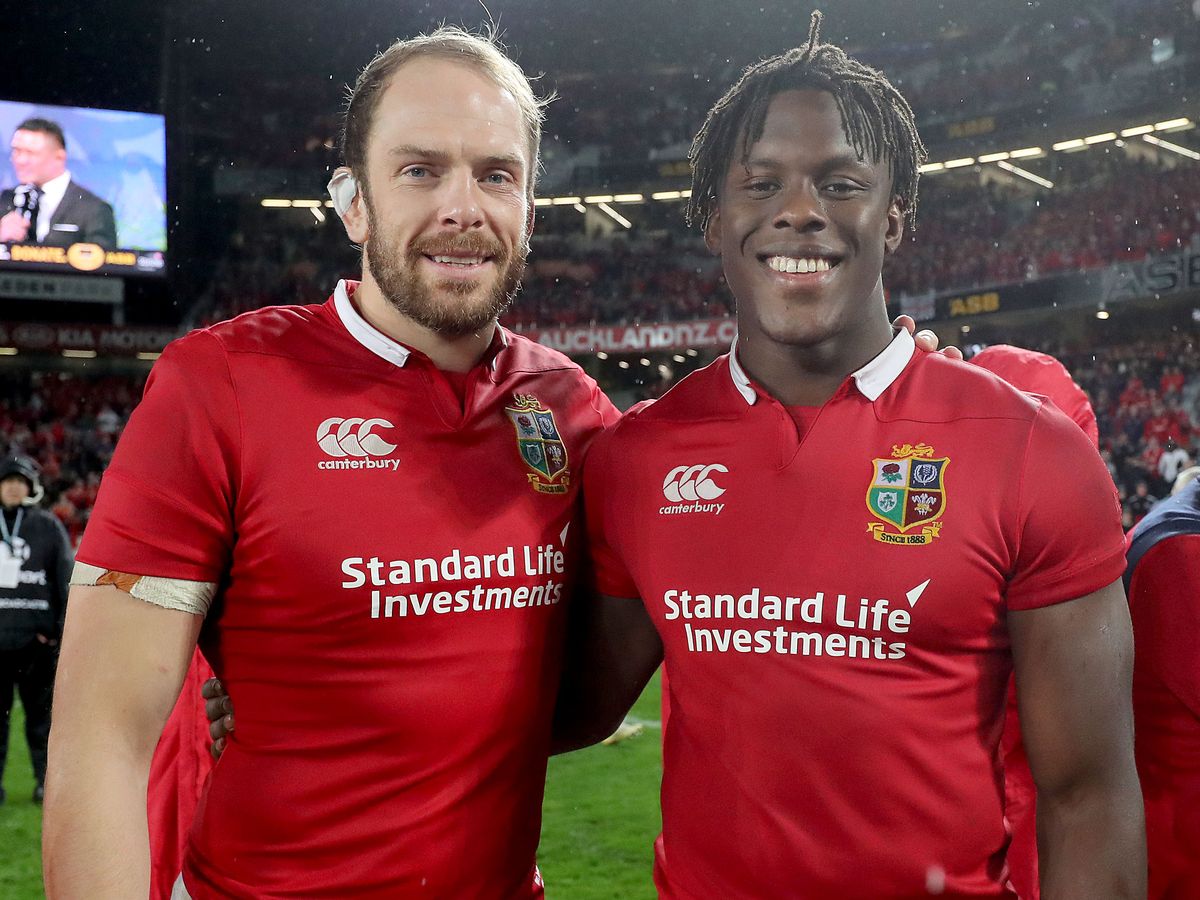
This pairing was NEVER in doubt – Wales Alun Wyn-Jones and England’s Maro Itoje
The real question marks here are more about who’s not going than who is. Wales’ Alun Wyn-Jones was guaranteed the Captain’s armbands as despite his age, he is a veteran who shows no signs of slowing down and his Test experience is simply second to none. England’s Maro Itoje we still feel is arguably England’s best player hands down, and an England and Lions Captain apprentice. Who better to serve your apprenticeship under than one of the game’s modern day legends? Sure there were question marks around Itoje’s discipline this Six Nations and that will be tested to the brink in South Africa, but few can argue against the fact that he is one of the hardest working players in Test rugby today. We feel Ireland’s Iain Henderson is a shrewd choice and his playing style may be particularly effective against a player like South Africa’s Lood de Jager. Ireland’s Tadhg Beirne was one of THE players of the Six Nations and adds some genuine versatility to Gatland as he is equally at home and devastating in the back row. The same can be said of England’s Courtney Lawes who can also ply his trade in both departments, and while he may be slightly lean on game time, he can often turn in some extraordinary performances when his team needs them the most, backed up by some phenomenal physicality which is exactly what you need in South Africa.
Our question mark really centres on the inclusion of England’s Jonny Hill over the likes of Ireland’s James Ryan and Scotland’s Jonny Gray. Watching Hill get destroyed in most of England’s Six Nations matches allied to some questionable discipline didn’t exactly fill us with confidence. We saw the same in Exeter’s recent quarter final against La Rochelle where Hill was more of a liability than an asset. While Gray may be nursing some injury niggles that may have concerned Gatland as well as Ryan having similar issues coupled to a Six Nations that wasn’t the best showcase of his exceptional talents – we think Gatland will regret leaving either of these two behind. Hill may pack some bulk that Gatland feels he may need against the giant Springbok second rowers that South Africa is renown for churning out, but we just have an uncomfortable feeling about this one.
The Back Row – A genuine golden horn of riches for Gatland means there was always going to be disappointment for some
Eddie Jones may not get it but Gatland clearly doesas England’s Sam Simmonds gets a shot on the big stage
As difficult as the selection decisions must have been here, they surely must have been some of Gatland’s most enjoyable as a wealth of back row talent would have been laid before him. We simply cannot argue with any of his selections, even if Ireland’s Jack Conan and England’s Sam Simmonds may have raised a few eyebrows. In the case of Simmonds just because England Head Coach Eddie Jones seems oblivious to the Exeter man’s talents the rest of the world is not. The big talking point post this Lions tour will be that if, as many predict, Simmonds shines then how can Jones justify refusing to select him and surely can no longer avoid him. As for Jack Conan all we can say is why not? A powerhouse with both Leinster and Ireland, his bruising ball carrying and quick thinking in the No 8 slot will be a huge asset to the Lions in South Africa. Wales Justin Tipuric simply had to go and if Scotland’s Hamish Watson had not got the call we would have probably boycotted the Lions tour in protest. Of the rest despite a weak Six Nations England’s Tom Curry is the kind of ferociously relentless player the Lions will need while Wales Talupe Faletau epitomises the quiet power and reliability that the Lions will need to balance Conan’s explosive rampaging around the park.
Of omissions, we don’t think you can really argue with them, the problem is Gatland can only take so many players, and in a situation where he is literally spoilt for choice then his hands are tied. However, our condolences go out to England’s Sam Underhill who can be so effective when paired with Tom Curry and Scotland’s Jamie Ritchie who is equally effective alongside the “Mighty Mish” Hamish Watson. We feel that Wales’ Josh Navidi and Ireland’s legendary South African CJ Stander are also deeply unlucky not to make the plane.
The Halfbacks – the home of hard knocks and difficult choices
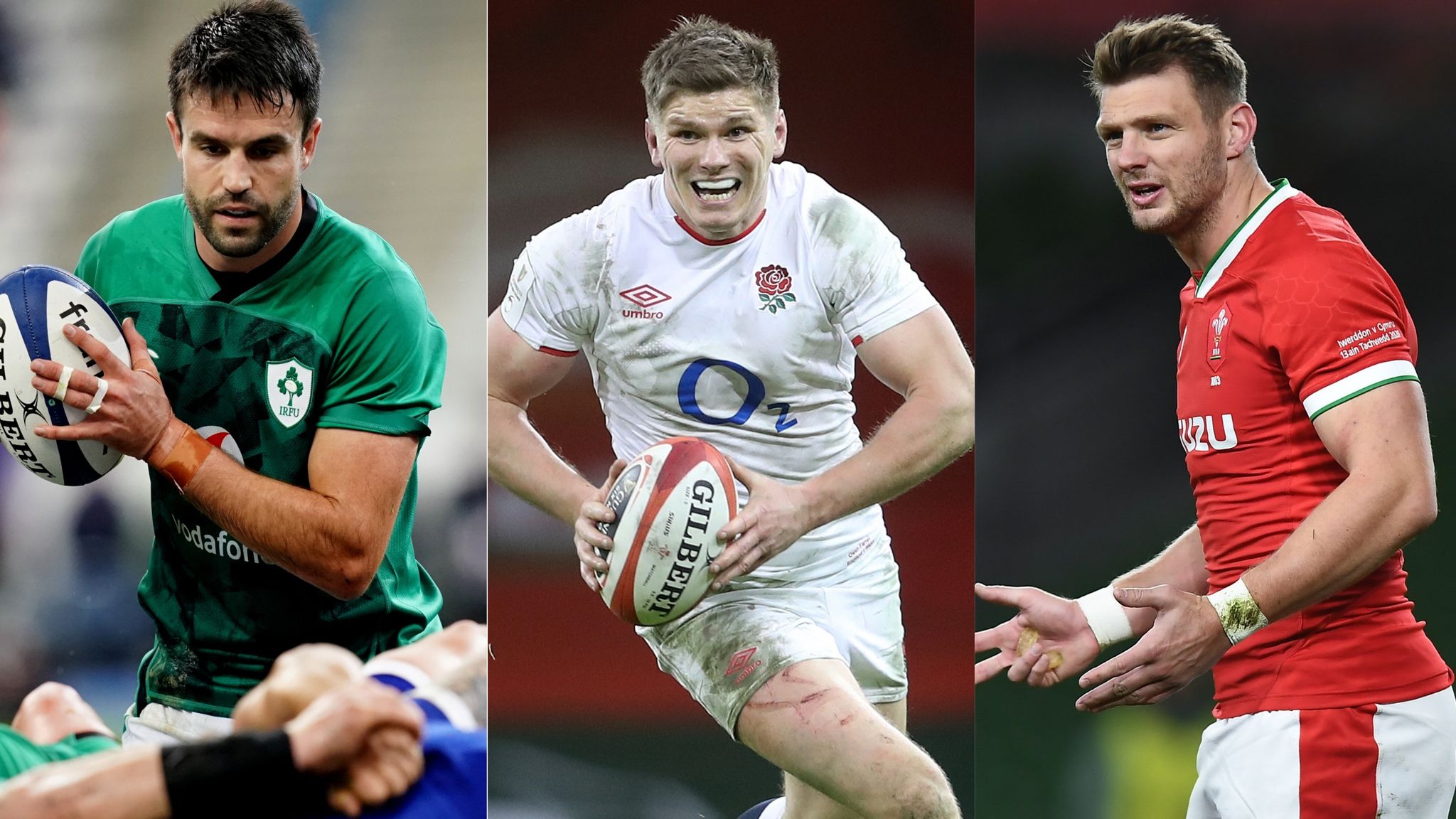
Experience counts for a lot in Gatland’s eyes in this part of the park – Ireland’s Conor Murray, England’s Owen Farrell and Welshman Dan Biggarall have plenty
Of all the decisions he had to make these were probably some of the most vexing for Warren Gatland. In the end though we think he got it right. We don’t think he had much choice in the scrum half department. Despite England’s Ben Youngs counting himself out of contention for a Lions spot, with all due respect he seemed to be suffering from a slight degree of delusion if he really thought he was in the running in the first place. Ireland’s Conor Murray and Wales Gareth Davies fit the bill in terms of big match experience while Scotland’s Ali Price had such a good Six Nations that somehow seemed to go under the radar of quite a few observers, it would have been folly to leave him behind.
For the fly halves though he clearly would have struggled with no real standout contenders other than perhaps Scotland’s Finn Russell and Wales’ Dan Biggar. Biggar was clearly the Six Nations most reliable fly half and Russell the tournament’s most dynamic and unpredictable. England’s Owen Farrell is there for his experience and the fact that he has performed admirably well in a Lions jersey in the past irrespective of his current form, and can also cover the centre channels. We would argue it is a bit of gamble taking him, but once again what choice did Gatland really have?
While many will wonder why Ireland’s Johnny Sexton didn’t make the cut despite a stellar performance against England in the last round of the Six Nations, Sexton has had more off days in the last year than good ones allied to an increasingly problematic injury record. When he is on song there are few that can better him, but when he’s not things can go rapidly south for his team. The same could be said about Farrell. The England fly half may not have the injury problems facing Sexton, but he can be an enormous disciplinary liability at times which South Africa will seek to exploit to the full. He struggles to keep his emotions in check, though without the burden of the Captaincy on his shoulders he may fare better but is still likely to be a gamble for Gatland. England’s George Ford did nothing this Six Nations to improve his International credibility while Wales’ Calum Sheedy simply lacks the kind of experience needed for a tour like this.
The Centres – Gatland decides to shake things up
It seems we’re the only people not surprised by Scotland’s Chris Harris getting the call
We have to admit that while we applauded one of his decisions that raised many an eyebrow this is clearly a problematic part of the park when it comes to getting the right mix. While we are perhaps not sure about Gatland’s pick of Ireland centre Bundee Aki, we had tipped Scotland’s Chris Harris as the surprise shoe in of all the selections and were delighted to be proved right. Aki is a surprising choice and one we are slightly on the fence about, but we do get what Gatland is trying to do with it. South African centres excel at straight up the middle highly physical play. You won’t get a Brian O’Driscoll type of centre, it’s smash and bash up the centre channels all the way. That’s what Aki does really well so it’s clearly a case of match what you’re up against. As for Harris, he may not be that imaginative on attack but then his opponents won’t be either, but what he excelled at this Six Nations was defending those centre channels against both the smash and bash experts or the magicians like France’s Gael Fickou and Virimi Vakatawa. That’s why he there – defence! Ireland’s Robbie Henshaw is there because he can do both as well as being exceptionally creative in attack which will be very useful in getting around his more unimaginative South African opponents. However, having just watched the first round of the South African Rainbow Cup matches, we’re not sure that the label of unimaginative still applies to South African centres as they looked awfully mobile around the park to us and Aki may be a bit more of a one-dimensional gamble, albeit a powerful one, than Gatland and the Lions really need.
What we don’t understand is England’s Elliot Daly. Firstly we don’t think he’s overly comfortable in the centre role, and he was a failure on the wing and at fullback in England’s Six Nations campaign. As far as we can fathom, he is there for one reason only, and that is his monster boot which in the thin air of the Veld in Johannesburg will give the Lions a lot of mileage in terms of carving out territory. Still we don’t think given his recent form that is reason enough to hand him a plane ticket. Ireland’s Gary Ringrose is a much more deserving candidate and even England’s Henry Slade despite a quiet Six Nations would have been better choices in our opinion.
The Backs – The fast and the furious
If Jonny May can’t catch him – who can? Welsh wonderkid Louis Rees-Zammit
The only thing slightly wrong with the picture above is that England’s Jonny May will not be on the plane to South Africa, despite him being one of the Northern Hemisphere’s fastest and most dynamic wingers. However, as we saw this Six Nations his abilities paled in comparison to those of new Welsh sensation Louis Rees-Zammit. Despite his lack of experience relative to May, Rees-Zammit’s defensive abilities were surprisingly on the mark this Six Nations, something which could not be said of May. As brilliant as the Englishman is on attack, defense is not his strong point. Rees-Zammit however seemed to have it all and thus gets the nod. England’s Anthony Watson made a blistering return to form this Six Nations despite the misfortunes of the rest of his colleagues, and can also do a useful shift at fullback if needed so his selection is a wise one. Welshman Josh Adams is a reliable figure out wide and Scotland’s Duhan van der Merwe was one of the revelations of this Six Nations. The Scottish South African import’s big bruising ball carrying ability will come in very useful as he returns to his native land and the country that gave him his rugby education. His familiarity with the environment will be a valuable asset to the Lions and he’ll be no stranger to the hard fast pitches and thin air. Lastly there were few if any surprises in the fullback choices. Scotland’s Stuart Hogg is one of the most exciting players in the game today, and this Six Nations emerged as a real leader of men as he proved to be an exemplary Captain. Meanwhile Wales Liam Williams is a tried and trusted commodity and excels at getting his team out of trouble under pressure and like Hogg is a master of the counterattack from deep. Given that both also possess an exceptionally handy boot, there were few if any surprises in Gatland’s selections for the 15 jersey and what a delicious dilemma to have when it comes to choosing your starter for the three Tests.
Apart from Jonny May we thought there might have been an outside chance of a spot for Ireland’s Hugo Keenan at fullback who had a stellar Six Nations as well as Ireland’s Keith Earls who was often Ireland’s go to man this Six Nations on the wing.
It’s a long hard tour with plenty of scope for hard knocks and injuries so some of those we felt are feeling slightly miffed at not getting a shot at Lions glory may still get a chance before it’s all over. Either way it should be a stellar tournament and we can’t wait even if the curse of COVID 19 continues to deny us the crowds and supporters that are synonymous with a Lions tour. How a South African side that hasn’t played a Test match in almost two years will fare against Britain and Ireland’s finest is a HUGE question mark. However, let’s not forget that despite their lack of game time since the last World Cup they still are World Champions, with a raft of players plying their trade in the top leagues of Europe. In short, on home soil and in a country where rugby is almost a religion they will be no pushover. As soon as we get a handle on how we’ll be able to watch it here in Canada we’ll let you know.
To get you in the mood and start building some anticipation – here’s a little teaser!
With the dust now settled on what for us has been one of the most riveting Six Nations in years, it’s time to hand out the marks. Despite the lack of crowds, the quality of rugby for the most part did not suffer and we were treated to a series of vintage games that are likely to stay on our highlights reel for many years to come.
So who got it right and who got it spectacularly wrong? For most of the participants there was lots to be learnt with the majority taking the lessons to heart and making good use of them. For a small minority of participants it appeared to be a tournament where opportunities to grow and prepare for the next World Cup and even the next Six Nations were completely wasted. For the Celtic nations and France it is a time for optimism. For Italy it is yet another year to forget. Perhaps the most worrying lesson though in all of this is that for England the clock is ticking with increasingly little time left to find the answers to a series of problems that really haven’t been addressed since England’s defeat in the last World Cup final.
So agree to disagree but here’s the second part of how we judged the overall performances of this year’s Six Nations participants looking at the bottom 3 in this year’s table.
Scotland – 7/10
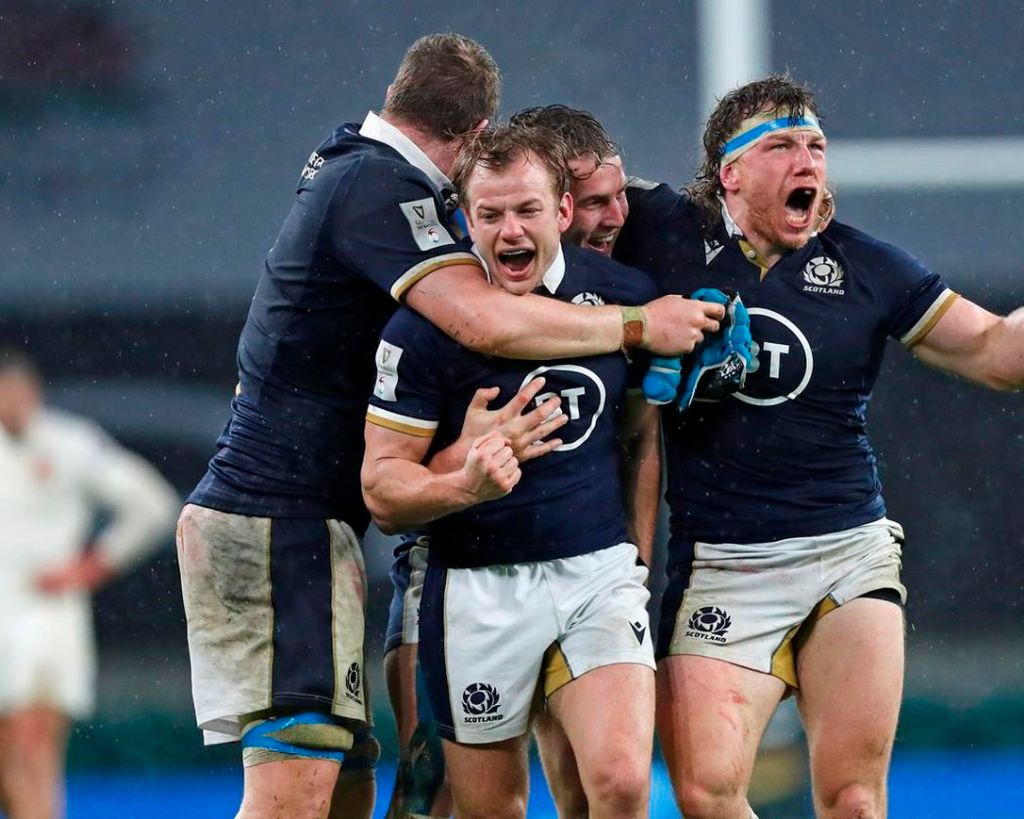
With Hamish Watson Scotland are phenomenal – but once again this tournament showed that consistency is Scotland’s Achilles Heel
In many ways Scotland’s fourth place finish somehow just doesn’t add up. They were without a doubt one of the most entertaining teams to watch in the competition who consistently applied maximum effort and wore their hearts on their sleeves. In short, we thoroughly enjoyed Scotland’s romp through the Six Nations and they provided some of the tournament’s best moments. Sadly though they occasionally got a bad roll of the dice, most noticeably falling victim to France’s Wafflegate which arguably had a more detrimental effect on them than France, and threw their Championship momentum completely off kilter. Nevertheless, international sport these days excels at throwing teams curve balls and a measure of a team’s success is how well they cope with such disruptions. Add to the fact that consistency week in week out is still a problem for Scotland and sadly despite some stunning performances, the cards didn’t quite fall in Scotland’s favor this year. But make no mistake this is a very good Scottish team that is only going to get better in the build up to the World Cup, and Scottish supporters can feel excited about their team’s fortunes.
Scotland got their campaign off to the best of possible starts by achieving a convincing win over the ‘auld enemy’ England at Fortress Twickenham, the first since 1983. It got the tournament as a whole off to a thrilling start and proved that its billing of possibly the most open Championship in years had some merit. Next up Scotland suffered a heartbreaking loss to Wales at Murrayfield by one point and were hampered by having to play with only 14 men for most of the second half due to a red card being handed to Prop Zander Fagerson. Scotland were in it to the death however and were unlucky to lose and in the process provided us with an absolute thriller.
After that Ireland made a visit to Murrayfield, but due to Scotland’s third round match with France being postponed, the Scots had been without game time for a full four weeks. A slightly more match fit Ireland got the better of them, albeit by the narrowest of margins. Scotland fought their way back into the match in the second half and were arguably the better side at times. Nevertheless it wasn’t good enough and another match went begging and with it their hopes of Championship glory. However, now match fit they made short work of Italy at Murrayfield and came away with a healthy 52 point haul.
All that remained now was their postponed match with France. With France having put paid to Wales’ Grand Slam ambitions on Super Saturday, all the focus was on whether or not France could rob Wales of the Championship. Scotland clearly resented all the talk about France, especially as Les Bleus faux pas had put paid to their own tournament momentum. In a match full of poetic justice, Scotland ended their Six Nations campaign in the same vein as they started it against England. The thriller in Paris was one for the ages and another one of those 110% team efforts from Scotland. Scotland took the lifeline given to them at the death by French fullback Brice Dulin, and in an epic display of grit and determination hammered away at the French try line for the next 5 minutes of extra time, managing to keep the ball in play for an incredible 20 phases. An impressive end to what had been a solid tournament for the Scots despite only finishing fourth.
Put aside their fourth place on the table and watch the highlights reels of their Six Nations and there is little doubt that Scotland played some of the most attractive, exciting and at times daring rugby of the tournament. Occassionally their inconsistency in decision making or attempting the impossible through fly half Finn Russell cost them, but this is a very good Test team who are already showing signs of causing Ireland and South Africa (their main pool opponents) some serious headaches come the World Cup. Furthermore they will be serious contenders for Six Nations glory in the remaining two tournaments before the next World Cup in France. Scotland seem to revel in the underdog label, though given their performances against England and France this year, it’s unlikely to be one associated with them much longer.
Our department picks this year for the Scots were all fairly straightforward, with one player perhaps being the best back rower of the tournament. Starting off in the front row, it has to be Prop Rory Sutherland. He was already registering on opposition radars before the tournament, and while he may not have been Scotland’s flashiest player he was arguably one of their most quietly efficient and consistent. In the second row, it has to be Jonny Gray until injury sadly knocked him out of the competition after the Ireland match. In the back row, the mighty Hamish Watson was simply Scotland’s best player and one of THE players of the entire tournament. Despite his size the man was simply a monster and one of the hardest working players in the sport. In the half backs some may be surprised to see us give scrum half Ali Price the nod over fly half Finn Russell. Russell may be a genuine magician but he tends to live a bit too much on the edge for our liking. Price had a stellar tournament making quick and sensible decisions and providing fast and accurate service, and in our opinion is one of Scotland’s most undervalued assets. In the centres, despite our initial reservations, you have to give a standing ovation to Chris Harris. He may not be the quickest or sharpest player on attack but defensively he was superb, a trait which was key in helping Scotland seal the deal in Paris. Finally in the back line it’s a hard call to not give winger Duhan van der Merwe top honors as he scored some crucial tries, but we simply have to give it to fullback and Captain Stuart Hogg. Hogg really came of age as a leader of men this tournament and his counterattacks from deep were the stuff of legends this Six Nations. Although these six individuals may have really stood out for their team they were able to do so in large part because of the outstanding team effort made by Scotland as a whole.
England – 5/10
England need to learn how to master Plan B no matter how good their Plan A is
We have to admit we never really thought England would be duking it out with Italy this Six Nations for the Wooden Spoon. However, we were convinced that the reluctance to blood new talent and look to the future would seriously dent England’s chances this year. In that respect we were not proven wrong. England were way off the mark in terms of performance and creativity. Eddie Jones and his staff have completely wasted a golden opportunity to blood new talent in preparation for the next World Cup. Instead they now run the risk of having it all to do in a very short space of time, while at the same time continuing to rely on a group of players that increasingly look like something from the dinosaur age.
The other Six Nations competitors embraced change this year – England did not and it cost them dearly. There is a basic trend with this current England squad that when things are going their way they can hold their own against the world’s best, but the minute they are either found out or the opposition starts playing in a way they can’t understand England’s wheels fall off quickly and dramatically. We don’t think we’ve ever witnessed a team so bereft of a Plan B let alone C and D. Very good when a game goes according to script but at sixes and sevens the minute the opposition starts to improvise. Is this over coaching or a simple lack of imagination and creativity? England need to find the answers quickly before South Africa shows up at Twickenham this fall, especially given the fact that very few English players are likely to be on the plane to South Africa this summer for the Lions tour.
England got their campaign off to an ominous start against Scotland and recorded their first defeat to the Men from North of Hadrian’s Wall at Twickenham since 1983. England looked lethargic and completely bereft of ideas in attack. They made a much better showing against Italy a week later, but Italy are usually a golden opportunity to haul in the maximum amount of points while conceding none of your own. On this count England failed miserably as although they scored six tries, they only managed to convert 4 of them while allowing Italy to get two tries against them. Although it was an emphatic win the points difference was only 23, the smallest by any side against Italy during this year’s tournament.
England then travelled to Cardiff to take on a Welsh side brimming with confidence and on song for a possible Grand Slam. Put aside some of the more controversial refereeing decisions and Wales would still have won as a shambolic and exceptionally poorly disciplined English side never really fired a shot, and in the final quarter simply capitulated. Licking their wounds they headed back to Twickenham and finally found some redemption by beating tournament favorites France. It was a tense and close run affair and France almost snatched it at the death. England won but it wasn’t overly convincing in the process, while France were clearly suffering from a lack of fluidity and cohesion after a month out of the Test window courtesy of their earlier ‘Wafflegate’ antics in Rome.
England’s last hurdle was a difficult trip to Dublin to face an Irish side who was rapidly gaining confidence after a shaky start to their own tournament. However, the Irish showed all the invention, organisation and resilience with England showing none of the same qualities. Ireland dismantled England comprehensively and the Men in White spent much of the eighty minutes looking completely out of their depth in how to respond. In their confusion, their discipline also went out the window. In the end an abject England team wandered off the pitch in Dublin clearly at a loss as to how to explain what had just happened yet again.
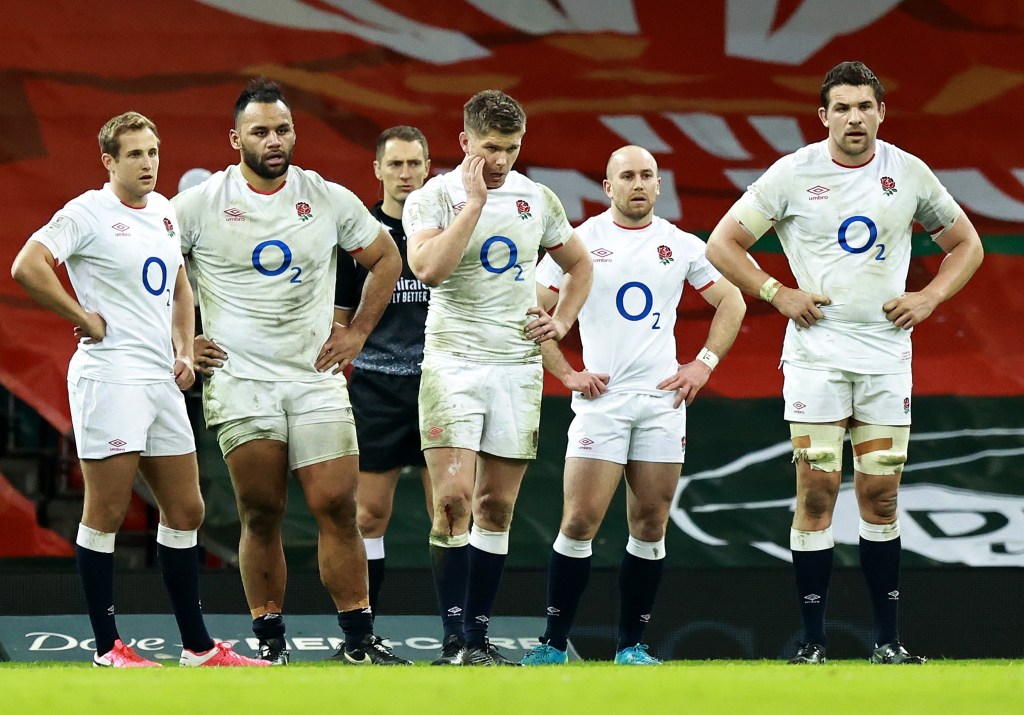
Put a picture of England’s facial expressions after the World Cup final up against one taken after the final whistle in Dublin and they are disturbingly similar, with almost no lessons learnt in what has been a year and half. It begs the question as to what what is going on in English rugby? Eddie Jones complete exoneration this week after the Six Nations inquest, leaves us wondering if any learning is likely to happen between now and the next World Cup. There is no reason for England to be as poor as they were this Six Nations. There is a wealth of young talent in the country which would be the envy of most rugby nations and Coaches. Sadly however, none of it is being tapped and there seem to be no plans in place to do so and develop it into the World Cup winning resource it could be come 2023 which is only 24 months away. Until England learn how to adapt under pressure and develop an effective Plan B using the right talent at their disposal, the next two years could sadly be very lean ones indeed for the Men in White. It’s something that both existing players and Coaching staff must take responsibility for equally.
Given England’s rather lukewarm performance this year, we really struggled with picking our department heads from the Championship but here goes. In the front row we ultimately settled on Hooker Luke Cowan-Dickie. Although he wasn’t always consistent when he did produce, most noticeably against France, his presence was really felt and his youth lent some dynamism to England’s front row efforts. In the second row, the choice was easy, Maro Itoje. As we said in our piece on the Welsh game, although the giant lock led England’s penalty count that was more due to the fact that he was one of the few players actually putting in an effort. Consequently by being at the centre of every piece of action on the field he was bound to catch the attention of the referee. It doesn’t excuse his digressions, and he is lapse to letting his emotions and frustrations get the better of him, but his value to England simply cannot be underestimated. He is the right side of the age curve for the next two World Cups and as a result given his undeniable raw talent, one of England’s most important assets for the future. His work rate is phenomenal and he is quite simply a massive thorn in the side of any opposition. In the back row we really struggled once more. Tom Curry is usually our go to man, but at times his discipline and understanding of the laws of the game was laughable this tournament. Nevertheless, like Itoje his is such a raw and powerful talent that he is integral to England’s future. In the half back department, we have to offer up George Ford who although outclassed on numerous occasions did at least attempt to offer England some creativity in attack. In the centres, we’d go with Henry Slade over Owen Farrell. Once again although Farrell has the greater experience and in theory has the better rugby brain, Slade we feel has the potential to make a greater contribution to England’s future if coached properly, whereas Farrell has been in a constant rut since the World Cup final. Lastly in the back line we are going to salute the return to form of winger Anthony Watson. While his colleague Jonny May scored some trademark spectacular tries, it was Watson when unleashed on attack with some exceptionally powerful runs that impressed the most. May’s talents are a given, but England seemed desperately short on skill out wide until the resurgence of Watson this year. Like we say we really struggled with this short list, from a group who sadly defined mediocrity this Championship.
Italy – 4/10
Italy stare in disbelief once more at the scoreboard – a look that has become depressingly familiar
We were so optimistic about Italy at the start of this Championship as we vainly hoped that maybe, just maybe, this year would be different. As the tournament wore on and such hopes and dreams rapidly sounded like yet another broken record, we realised with a crushing sense of disappointment that come the end of the Championship we would once again be struggling to find something positive to say about another miserable year of Italian Six Nations trials and tribulations. There are one or two glimmering lights in Italy’s performances this year, but they are all individual and as a team Italy sadly have little to offer in terms of a new dawn for rugby in a land more renown for its skills with round rather than oval balls. They have plenty of passion of that there is no doubt and at times some genuine skill in attack, but overall their discipline makes England look almost saintly and they seem positively incapable of any kind of defence. Until some traction is made in both these areas, then the talent that Italy does have will simply be wasted. As much as the responsibility for this lies in the Coaching box, it equally lies with the players who have consistently failed to collectively address these frailties for over twenty years now.
Italy’s campaign got off to the worst possible start with a 40 point deficit against France, with an understanding of the offside law clearly something completely beyond the grasp of most of the Italian squad. Next up was England and to give Italy their credit they did make life complicated at times for England, but given England’s abilities this tournament that wasn’t exactly a vote of confidence, even if they were doing it at Twickenham. Italy then hosted Ireland who finally got their campaign on track with a thumping defeat of the Azurri who simply had nothing to offer. Things continued to go from bad to worse as Wales paid them a visit and ran in a similar score against them as Ireland had managed. Their tournament ended with a whimper as they were annihilated by the Scots at Murrayfield. The only positive thing you can say about this Italian squad is that the vast majority of them are barely out of rugby kindergarten. So they definitely have youth on their side, and if Coach Franco Smith can finally get them to grasp some of the key basics of the game such as defence and discipline then there could just be hope for this generation of Italian players. Nevertheless it’s a big ask and one which their fans and every rugby neutral have been making for the last two decades. It’s time for the players to exercise that famous Latin expression “carpe diem”. If they don’t Italian rugby is to be permanently cast as International rugby’s greatest failure in the development of a global game.
As woeful as Italy were as a unit, it was a slightly easier task to pick some players who stood out in Italy’s Six Nations campaign this year. In the front row, although he struggled to keep his emotions in check we still hold that Prop Danilo Fischetti is a talent to build on for the future. In the second row, we really like the look of David Sisi and England’s loss is clearly Italy’s gain here. In the back row however, Italy does have reasons to get excited in both their imports from Southern Africa Johan Meyer and Sebastian Negri. For us though Negri was arguably Italy’s most consistent performer this Six Nations. In the half backs scrum half Stephen Varney is worth getting excited about for the future but fly half Paolo Garbisi was without question Italy’s most enterprising and accomplished player this tournament, all at the tender age of twenty. In the centres, although we saw less of him than we would have liked due to injury Marco Zanon remains a genuine threat on attack, but new Argentinian import Juan Ignacio Brex showed some real promise. Lastly in the back line winger Monty Ioane produced a handful of spectacular tries and if he can learn how to defend as well as he can attack then Italy could get some consistency finally in this part of the field. Like our England selections though we struggled to group all these individuals, as talented as they may be, into a team that can actually use them properly, and until that happens Italy will remain a loosely knit collection of mercurial talents.
Endnote
So that’s it for this year’s Six Nations and what a ride it’s been. We enjoyed every single moment of it, and if we get the privilege of adding fans to the experience next year, the 2022 edition could be even better. However, even without the fans this year it was a tournament we’ll remember fondly.
Last but not least it’s time for us to echo our support for the man who earned Player of the Tournament and is a definite fan favourite and folk hero here at the Lineout. Yes you guessed it Scotland’s very own the “Mighty Mish”. Back rower Hamish Watson turned in power house performances in every match of the Championship no matter where Scotland was on the scoreboard. The man is a legend plain and simple! Scotland and the rugby world as a whole are genuinely privileged to have him grace or more appropriately chew up pitches across the globe!
We’ll be back in the next week or so as we start to unpack the Toronto Arrows performances this season and look ahead to the British and Irish Lions tour to South Africa. Till then stay safe everyone!
With the dust now settled on what for us has been one of the most riveting Six Nations in years, it’s time to hand out the marks. Despite the lack of crowds, the quality of rugby for the most part did not suffer and we were treated to a series of vintage games that are likely to stay on our highlights reel for many years to come.
So who got it right and who got it spectacularly wrong? For most of the participants there was lots to be learnt with the majority taking the lessons to heart and making good use of them. For a small minority of participants it appeared to be a tournament where opportunities to grow and prepare for the next World Cup and even the next Six Nations were completely wasted. For the Celtic nations and France it is a time for optimism. For Italy it is yet another year to forget. Perhaps the most worrying lesson though in all of this is that for England the clock is ticking with increasingly little time left to find the answers to a series of problems that really haven’t been addressed since England’s defeat in the last World Cup final.
So agree to disagree but here’s how we judged the overall performances of this year’s Six Nations participants starting with the top 3 in this year’s table.
Wales – 8/10
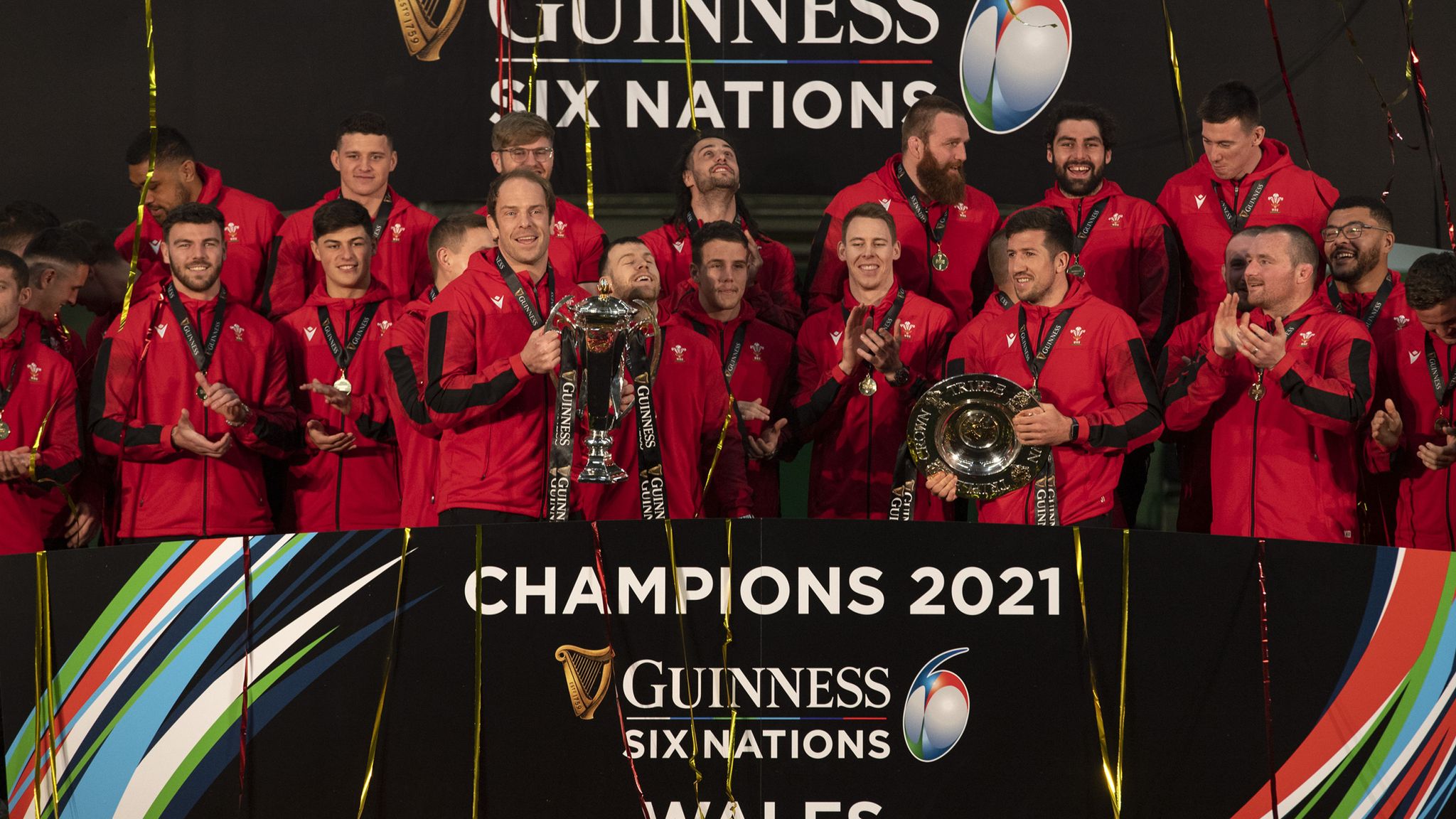
We said at the end of last year that where there was smoke there would be fire – and the Welsh dragon did not prove us wrong!
Wales are always the tournament’s smoking gun, well except perhaps last year. However, we couldn’t help feeling all along that the Welsh misery of 2020 was simply a bump in the road, and their superb effort this year shouldn’t really have come as much of a surprise as it did to most. Wales has an excellent balance of youth and experience, it just needed to gel with new Coach Wayne Pivac. There is little question that the gel is now set, and Pivac has a team that looks the business as well as one that can grow and develop during this World Cup cycle.
Why not a score higher than eight then you might ask? Wales were rightful Champions, but it was awful close at times, and the odd element of luck occassionally had a bit too much of a say in proceedings for our liking. Furthermore, despite their Herculean effort in the final match in Paris, Grand Slam winners they are not, at least for the moment. There were times in the French match where that trademark Welsh grit just wasn’t enough to overcome a more inventive and arguably fitter French side. Perhaps Wales strongest asset is their ability to remain calm under pressure, something England could do well to copy, but the French match saw it start to weaken slightly.
Wales opened their campaign well against an Irish side struggling with discipline, and the Men in Red benefitted from being able to play against 14 men for almost the entire game after Peter O’Mahony was red carded 13 minutes into proceedings. Next up was an incredibly tight affair against Scotland where once again Wales benefitted from a red card decision reducing the Scots to 14 men for most of the second half. Then it was the thriller against England which saw the Men in Red come out resoundingly on top, even if you took away what some considered were questionable officiating decisions. Their Roman holiday against Italy saw them come away with the inevitable hefty points haul, which would ensure that even with the loss to France in the final round the points difference would see them home.
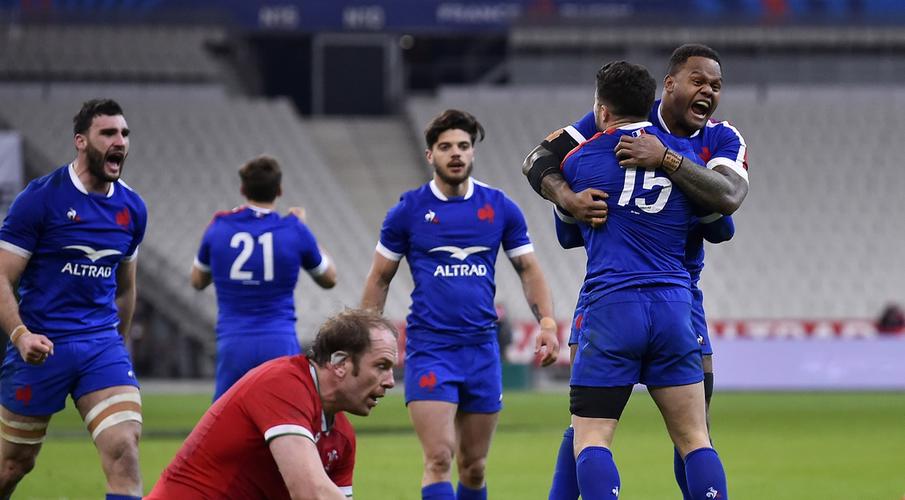
Their last match against France was an extraordinary game that had more twists and turns than a Game of Thrones episode. However, this time Wales couldn’t use the red card given to France towards the end of the match to their advantage. After holding off multiple French assaults in their 22 Wales themselves succumbed to an inevitable yellow card as fatigue set in and the numbers on the pitch were level again. France got the measure of a clearly exhausted Welsh side and robbed the Men in Red of that elusive Grand Slam. Wales would still emerge champions after France came short against Scotland six days later, but as we suspected given the quality of the opposition this year, Grand Slams were never really on the cards for any of the teams.
It was an extraordinary performance from Wales, and they were deserved winners of not only the Triple Crown but the Championship as well, even if that dream Grand Slam was lost at the death in Paris. Halfway through this World Cup cycle they must surely feel pleased with where they find themselves. They have some extraordinary young talent coming through the ranks, a Coach who has now proven how to get results, and a wealth of experienced and seasoned veterans who have one more big World Cup performance left in them. Perhaps the only question hanging over Wales is who will replace Captain extraordinaire Alun Wyn Jones, who now at 35 is unlikely to be in the running to lead the Men in Red in two years time.
There were a host of notable performances, but here is our list of who made the biggest impression in each department for Wales. In the front row, Loosehead prop Wyn Jones was stellar, providing some much needed stability to the Welsh scrum which last year had proved problematic. In the second row, Captain Alun Wyn Jones was absolutely immense and without a doubt the leader of the tournament. In the back row Josh Navidi and Talupe Faletau put in some massive shifts, but as always it was Welsh Superman Justin Tipuric who consistently stood out both in ability and a work rate that is simply off the charts. In the half backs, fly half Callum Sheedy’s performance in the second half against England showed what talent Wales have in their youth. In the centres George North seems to have rediscovered himself and as a result made a huge contribution to Welsh efforts this Championship and was back to his try scoring best. Finally in the back line, as good as Liam Williams and Josh Adams were, it was newcomer Louis Rees-Zammit who impressed the most off the wing and showed that all the hype surrounding this latest Welsh prodigy was completely justified at Test Level. While these six individuals may be our picks of the tournament, it was a complete Welsh effort and every Welshman who donned the red jersey over the past two months can and should feel proud of their achievements, and we can’t wait to see what’s in store for this remarkable group of players.
France – 7/10
A FABULOUS team in the making – but clearly still in the design stages
Magnifique, incroyable, extraordinaire – these were all terms used to describe this year’s edition of France’s Six Nations ensemble. Tipped by many as favourites to take the title, they did not disappoint. However, there were moments where despite all the panache and flair, France looked a little a ways off from being the finished product just yet. At times you sensed they perhaps got carried away with all the hype surrounding them, and still have quite a bit of fine tuning to do before they can consider themselves a shoe in for World Cup glory in two years time. Consequently, despite the fact that we probably enjoyed watching France’s rugby joie de vivre more than any other team in this year’s Six Nations, their ability to blow hot and cold in the blink of an eye cost them a slightly lower score. However, the current foundation is so strong that there is little doubt that France are going to be the team to watch over the next two years.
France got their campaign off to a blistering start against the hapless Italians, and made sure that like Wales they used the fixture to maximise their points haul. Next up however, a lot of the shine of Nouvelle France wore off as they struggled to get past a disjointed but feisty Irish side in Dublin. They got the win but it felt labored and was often error strewn, with star playmaker scrum half Antoine Dupont proving that he is most definitely human and not some extraordinarily gifted extraterrestrial rugby being.
After that France had to live under the self-inflicted cloud of “Wafflegate” after the team was forced into isolation after testing positive for COVID 19 due to a poorly thought out excursion in Rome for said breakfast delicacies, and Coach Fabien Galthie leaving the bubble to watch his son play in Paris. While the latter may be more understandable than the Roman breafast faux pas it is still hard to justify as they both almost scuppered the tournament and meant the postponement of France’s match with Scotland.
After a month break it was time to take on England, and perhaps as a form of poetic justice France’s lack of playing time clearly had an effect as they were beaten by arguably the second worst team of the tournament. Still it appeared to snap them out of both their complacency and sense of entitlement that the tournament was theirs to win. They needed a massive performance to beat Wales and remain in the hunt for Six Nations silverware. They produced it, even if at times it looked as if the day was going to belong to Wales. They held their nerve right to the end and in perhaps one of the greatest final ten minute comebacks in the history of the tournament, pulled off one of the Six Nations greatest wins. With all the attention now on them, they perhaps got carried away once more with the hype and focused more on what they had to do to win the Championship rather than keep a Scottish side that had seemingly slipped completely under their radar at bay. Scotland simply looked like they had a more of a point to prove, and as a result walked away the winners, robbing France of the Championship. France will be back bigger and better next year, but perhaps more than any other team they have embraced change and the huge resources of talent and youth at their disposal. Their squad come the World Cup should be at the absolute peak of their game, and the rest of the world has been warned that the Northern Hemisphere’s strongest contender for the ultimate Webb Ellis souvenir is likely to be singing “La Marseillaise”.
Our department picks were a challenge in this rather talented squad to say the least. However in the front row we simply have to go with Hooker Julien Marchand, who was perhaps one of the most underrated players heading into the tournament but consistently ensured that France were competitive at scrum time and in the lineouts. In the second row we struggled but ultimately, and possibly as a surprise to some, settled on Romain Taofifenua whose performance in the Welsh game was so critical, as well as numerous impact appearances from the bench. In the back row, we really struggled to pick between Captain Charles Ollivon and Gregory Alldritt. Ollivon was an excellent leader but Alldritt went above and beyond in all five of France’s Six Nations games, and in the two games France lost he was the standout performer for les Bleus. In the halfbacks, despite Emile Ntamack’s late return from injury towards the end of the tournament and scrum half Antoine Dupont’s star quality, it was fly half MatthieuJalibert who got top marks from us. Given that he has had to live in Ntamack’s shadow for the last year, he clearly stamped his authority on the role to the point where France have two very healthy starting options in the number 10 jersey. In the centres Gael Fickou gets the nod by a country mile. He was outstanding at marshalling France’s midfield attacks and defences and the veteran is probably close to the top of his game. In the back line, despite his wobble at the eighty minute mark against Scotland which ultimately cost France the game, fullback Brice Dulin was one of the standout performers of the tournament in the 15 jersey. Even against Scotland you could understand his seemingly inexplicable decision to keep the ball in play at the death, given that France were still chasing the elusive points they needed to get past Wales for the Championship. At the end of the day, given his stellar performances for France in the rest of the tournament and his absolute solidity under the high ball it would be remiss of us not to sing his praises.
France are so close to being the real dea,l and the next year will be all about fine tuning a squad that is destined for greatness. France have fired the opening shots of the next World Cup and the world has been warned.
Ireland – 7/10
Ireland’s Tadgh Beirne was one of the standout performers of the entire Championship – but Ireland are starting to click as a unit again
Once Ireland found their groove this Six Nations, they finally looked like a team starting to go places once more after what can only be described as two years in the wilderness. The transition to new Coach Andy Farrell has raised many an eyebrow, with many pundits ourselves included, being less than convinced that he was the right man for the job. However, after this Six Nations Irish supporters may just be feeling a tingling sense of optimism. Some of the youngsters are really coming to the fore, the veterans are stepping up to the plate once again and players who have been overlooked in the past are finally getting the recognition they so fully deserve. Lastly add into the Coaching mix an Irish legend and patron saint of forward packs Paul O’Connell, and Ireland are definitely once more on the rise.
Ireland got their campaign off to a poor start it has to be said. The ill disciplined and shambolic effort against Wales had all the hallmarks of a team at sixes and sevens in terms of direction. Their next encounter showed a more positive effort against France, as they put the title contenders under pressure and forced them into uncharacteristic mistakes. However, it wasn’t coherent enough to get the win, and the error and penalty count were still too high. There seemed to be very little evidence of any sort of plan in attack as Ireland dominated possession and territory but did little with either.
Their trip to Rome however, saw them finally come together as a unit and give them something to build on. Given Italy’s woeful defences it was always a golden opportunity to try out an attacking style of play and Ireland seized the opportunity with both hands running in six superbly executed tries. Next up it was Scotland and Ireland continued their run of form against their fellow Celts with a hard fought victory at Murrayfield against a clearly rusty Scottish side, after their enforced COVID 19 break courtesy of France’s Wafflegate. Ireland saved their best performance for last however, and put in the most solid effort we’ve seen from them in the new Andy Farrell era. They dismantled England from start to finish in a masterful display of defence, discipline under pressure and attacking prowess. Ireland’s performance in this Six Nations was very much a case of an improved showing from one match to the next. The second round against France was a marked improvement which culminated in a complete team effort against England in the final round earning Ireland a well justified third place.
Our department picks were pretty straightforward for the Men in Green and we doubt they’ll raise too many eyebrows. In the front row, the return from injury of Tighthead Prop Tadhg Furlong had an enormous impact on Irish fortunes at the coalface. Add to that his rather dazzling dance moves in the loose and Ireland have a real live wire in the front ably complimented by the likes of Cian Healy, Andrew Porter and Ronan Kelleher. In the second row, our choice could not have been more obvious – Tadhg Beirne. The second row monster was immense for the Men in Green, dominating lineouts, creating turnovers, making line breaks….the list goes on and he’s also equally capable in the back row. No matter what kind of day the rest of his team was having Beirne was having a day to remember, and is justifiably one of the players of the tournament. In the back row despite some very healthy competition from the likes of Josh van der Flier and Jack Conan it has to be Ireland’s favourite South African, the mighty CJ Stander in his swansong Six Nations appearance in an Irish jersey. One of the hardest working back rowers in Test rugby over the last five years, Stander did his adopted country proud from start to finish this year. In the halfbacks, it was Conor Murray’s return to form in the scrum half berth that would have got Irish eyes smiling culminating in his superb final round effort against England. In the centres, another nominee for player of the tournament, Robbie Henshaw, gets the nod. Another player who has suddenly rediscovered his form and is arguably now playing at the top of his game. Lastly in the back line we were severely torn between veteran winger Keith Earls and newcomer Hugo Keenan at fullback. Keenan has clearly made the 15 jersey his and was one of Ireland’s most consistent performers all tournament and best finds of the last year. However, we have to hand the honor to Earls who we think has always been one of Ireland’s most underrated players. He produced some spectacular tries this tournament and can often be relied upon to shore up Ireland’s problematic last line of defence. Perhaps not one of Ireland’s most talented players but arguably one of their most capable and reliable.
Under Andy Farrell, Ireland have clearly shaken off the rather rigid shackles of the Schmidt era, and appear to be revelling in the new found freedom to be slightly less structured and as a result more unpredictable on the pitch. It appears to be paying dividends, whilst the the discipline and defensive systems put in place during their time with Joe Schmidt are serving them well when under pressure. There are still question marks around some key positions in the build up to the next World Cup, most importantly around the fly half berth, but after this Six Nations, Irish supporters can breathe a little bit easier as like Wales, they are developing a healthy balance of youth and experience.
That’s it for now. We’ll be back next week with part two as we look at the three residents of the bottom half of the Six Nations table, Scotland, England and Italy. Sorry that it has taken so long to get this out, but with the pressures of work and COVID lockdowns it’s been a struggle to get our thoughts together. To keep you going till next time here’s a highlights reel of all the best tries of what was a remarkable tournament.
Sure in a perfect world and all the controversy aside we should now be dissecting the ramifications of what has been one of the most enthralling Six Nations Championships we can remember in a long time. However, before we do that there is still the unfinished business of France and Scotland’s postponed Round 3 match on Friday night to deal with. Forget all the finger pointing, which is all ancient history now and France’s waffle eating negligence which got us here in the first place, as both Scotland and France will be 100% focused on the business at hand on Friday night and as fans so should we. After France pipped Wales at the death 32-30 and out of a Grand Slam last Saturday in Paris, we are now treated to one last glorious roll of the dice in the French capital to see whether the silverware will remain at the Stade de France or make it’s way to Cardiff once referee Wayne Barnes blows his final whistle.
Last weekend’s Super Saturday was vintage stuff, and will be remembered as one to savour. Scotland came blasting out of the blocks to resurrect their campaign by blitzing Italy and now face the tantalising prospect of finishing second if they manage to beat France and the numbers punched into calculators work in their favor. Ireland demolished an English side that is clearly in need of a new chassis and aggressive tune up in a thrilling match in Dublin. But the showpiece event without a doubt was 80 minutes of classic Test rugby in Paris as France and Wales fought tooth and nail. It was tense, hugely physical and had more drama than a full season of The Sopranos. There was some exquisite rugby on display from both sides and the hits could have registered on a Richter Scale. The seven try, 62 point fest was one that will be talked about for many years to come as two perfectly matched sides gave no quarter for the full eighty minutes from end to end. Your heart has to go out to the Welsh and their outstanding effort, but we always felt that a Grand Slam was just not on the cards for anyone this year as tantalisingly close as Wales came to achieving it. However, as a result we get to have one last indulgence in a tournament that despite the COVID 19 pandemic has exceeded our wildest expectations in terms of entertainment and excitement.
France vs Scotland – Friday, March 26th – Paris
Let’s put aside the finger pointing in the run up to this match, and the French squad’s faux pas surrounding COVID 19 protocols. It’s not perfect and while the seeming lack of repercussions has riled some of us, what’s done is done. Scotland and France both had a break from the momentum of Six Nations Test Rugby and it cost them both dearly. France in their loss to England and Scotland in their defeat by Ireland. Agreed Scotland didn’t ask for it and would appear the more hard done by, but unlike France before they headed into the break they had already lost to Wales so things weren’t exactly going to plan after that historic Round 1 defeat of England at Twickenham. A trip to Paris may well have been a bridge too far too soon at that point. Now after recovering their mojo against Italy in a relatively easy training run, you’d have to argue they go into this match looking the fresher of the two sides after only a six day turnaround. The maths are pretty complicated for Scotland to get second place and their highest ever Six Nations finish, but in short it involves beating France, and then it’s down to the calculators. They either have to score four tries against the French or beat the French by five points and deny them a try or losing bonus point and let’s face it the likelihood of France NOT scoring a try is akin to making a convincing argument for the flat earth campaign.
France had to play out of their skins against Wales last Saturday in a game from which the physical toll will be hard to get over in the space of just six days. That being said, there is no denying the momentum that kind of victory can give you and Scotland are going to have to be at their very best to stop the French juggernaut on a ground that the boys from North of Hadrian’s wall haven’t won on since 1999. France need to beat Scotland by 21 points and score four tries, or 20 points and six tries to win the title off Wales. In addition to those basics there is also some maths to do, but essentially without either of those two conditions as a starting point then the Championship will belong to Wales. Despite all the accounting and number punching to do, there is the fact that Friday’s match has everything to play for for both sides. In short, a battle royale for very different reasons awaits us in Paris.
A time to focus on what really matters
French Coach Fabien Galthie has been feeling the heat from COVID and not choosing his words carefully enough
French Coach Fabien Galthie has come under some serious criticism of late. Firstly due to his breaking of COVID 19 protocols which ultimately led to the postponement of this fixture, and secondly his inflammatory remarks accusing Wales of milking red card opportunities with referees. Poor on both counts, and now that he has had some time to reflect he no doubt wishes that he’d done neither. More importantly he wishes that the media would get back to focusing on what he and his charges do best – play some rather brilliant rugby. It’s been an emotional roller coaster for France these last few weeks, and it’s almost inevitable that things may get said in the heat of the moment that shouldn’t. Galthie and his coaching staff are an exceptionally talented group well liked and respected by their players. Much of what has been said and done over the last few weeks are rather uncharacteristic and no doubt brought on to some degree by the pressure the group has been under. We’re not making excuses for any of it but think that it’s time to move away from the media circus and get back to judging Galthie and his charges by their actions on the pitch – and let’s be honest in that respect they have given us something to celebrate this Championship.
Life really is all about how you cope with Plan B
Gregor Townsend and Stuart Hogg know thatthings very rarely go according to plan for the Scots but in the process opportunity knocks
Scotland it seems are constantly having to reinvent themselves, whether it’s due to the injury gods depleting their ranks, cancelled fixtures, seemingly inexplicable refereeing decisions – the list goes on. In short, Scotland can never run out onto the pitch thinking that the next 80 minutes will go according to whatever dress rehearsals they’ve gone through. Saturday’s encounter in Paris will be no different, and Captain Stuart Hogg will once again find his leadership and resolve tested to the max. We’d argue he’s developed into the kind of unflappable talisman and leader of men Scotland need, while Coach Gregor Townsend is more than capable of hiding a few tricks up his sleeve that will only see the light of day once referee Wayne Barnes blows the opening whistle. Two of Test Rugby’s shrewdest and wiliest characters will take on the brains trust that is French rugby and as a result it is now Scotland rather than France who beg the question – “which Scottish team will turn up”? They may be underdogs but they are probably the world’s most dangerous team carrying such a tag right now.
It’s all in the throw
Gregor Townsend will be hoping that George Turner and Dave Cherry have been playing a lot of darts in their spare time this week
Scotland need their starting Hooker George Turner to find his targets on Friday night in Paris, something he singularly failed to do at Murrayfield against Ireland in Round 4. Dave Cherry looked much more comfortable a week later against Italy when assigned the job of throwing darts and was also no stranger to the try line. Ireland has plenty of lineout poachers, which made Turner’s job especially difficult, something Cherry didn’t really have to contend with against Italy. Fortunately, France aren’t exactly leading the statistics in lineout steals, so provided Turner can improve his accuracy Scotland should improve their showing here. Cherry’s try scoring antics against Italy are unlikely to come into play against France and a distinctly more robust defence, so it’s really up to Turner to put in the kind of performance that turned heads against England and make Scotland competitive in the set pieces against a very formidable French pack.
Les Magiciens
Masters of the unexpected – France’s Romain Ntamack and Scotland’s Finn Russell
One is without game time and the other has a worrying lack of consistency even with game time. Both however, are absolute geniuses and a joy to watch. France’s Romain Ntamack made his return off the bench to duty in the French fly half jersey last weekend against Wales. Considering that it was his first crack at Six Nations action for quite some time after injury we thought he put in a pretty good shift, especially in the final ten minutes when he really hit his straps. He was instrumental in setting up France’s match winning try, and now he has his Test legs again the battle between him and Scotland’s impish wizard Finn Russell will be well worth the price of admission. The big question mark hanging over Finn Russell is his consistency and propensity to throw a game after attempting the impossible, as daring and clever as it may be. On the one hand Scotland need Russell to throw caution to the wind, but on the other somehow need to manage when he does it, as he himself is not always the best at judging the moment. Key for Scotland on Friday will be to “manage the game manager” without stifling his creativity. The interplay between himself and back line magician Captain Stuart Hogg will be critical.
Tied at one apiece
Despite some raised eyebrows Scotland’s Chris Harris and France’s Virimi Vakatawa are fairly effective at dealing with each other
There were some furrowed brows this morning when the team sheets came out and Scotland’s Chris Harris got the starting berth at outside centre over Huw Jones who lit up the pitch at Murrayfield against Italy. However, on the two occasions that Chris Harris has come up against France’s Virimi Vakatawa in the past year, Scotland won and lost one. In last year’s Six Nations encounter at Murrayfield Harris provided some gritty defence when needed, a quality that Huw Jones despite his brilliance on attack has not really shown much of. Six months later in the Autumn Nations Cup it was a very different story and France’s Fijian ran rings around Harris all afternoon. Still Harris has at times shown that while he rarely shines on attack, when some forceful and physical defence is needed, which it certainly will be on Friday night, he’s a bit more of a reliable commodity than Huw Jones. If he and fellow centre Sam Johnson can withstand the initial French onslaught by Vakatawa and Arthur Vincent, then that should allow Scottish Coach Gregor Townsend the freedom to bring on Jones to step up the attack against a tiring French duo in the last quarter of the match. It’s a gamble but it might just pay off.
Verdict
There’s no silverware on the table for Scotland, but pride and perhaps revenge for a perceived slight by France in causing the Scots to lose their momentum halfway through the tournament, will mean that Scotland will have a point to prove and a score to settle in Paris on Friday night. Their highest finish in the tournament since it became the Six Nations in 2000, is surely motivation enough for a talented and feisty Scottish side who have shown that they can handle the pressure on the road and in big venues like Twickenham. Paris is not a happy hunting ground for them but then neither was Twickenham.
However, France are not a dysfunctional England and are literally buzzing with confidence and a hunger for silverware. France want to lay down markers to the world at large that they will be the team to beat in 2023, and an emphatic win over Scotland on Friday night and with it the Six Nations crown will be a pretty convincing argument in their favor. As fired up as Scotland will be, our heads are telling us that it will be France emerging victorious but just short of the points required to claim the Championship. Our hearts are hoping for a Scottish performance that produces another match that goes down to the wire. Ultimately though even with a French win, we have hunch that the Six Nations trophy may be finding itself on a late night flight to Cardiff on Friday.
We’ll be doing our wrap up of the tournament next week, and then turning our attention to the European Champions Cup Finals and Toronto’s campaign in Major League Rugby. After that it’s the British and Irish Lions tour to South Africa and other summer internationals to look forward to, COVID 19 permitting. Hopefully by the time we get to November, COVID will be a distant memory and it will be back to business as usual for some tantalising Autumn Internationals that are starting to come together.
Enjoy Friday and here’s hoping for a fitting end to what has been a great Championship!
In the meantime we’ll leave you with the Mighty Squidge’s video analysis of the France/Wales match. Enjoy and get behind his excellent work!
We should, had COVID-19 not got in the way, be toasting this year’s Six Nations Champion by the time referee Luke Pearce blows for time on Saturday in Paris. If Wales complete their Grand Slam journey and beat France, then we will indeed be toasting all things in Red. However, should they come unstuck in France then it gets complicated and once more it becomes a two horse race between Wales and Les Bleus only to be decided once Wayne Barnes blows the final whistle in Paris next Friday night. For France to emerge victorious they will have to beat both Wales and Scotland with a bonus point, while at the same time denying Wales a bonus point this Saturday. Failing that it all comes down to points differences and everyone getting out their calculators. In short, nothing is guaranteed and Super Saturday’s final match carries with it plenty of suspense and what ifs.
Wales must surely be feeling confident as they head undefeated to Paris, as well as having made a handy points haul in Rome last weekend. Italy it must be said were rather weak opponents so Wales were not exactly tested ahead of a very tricky fixture on Saturday, but they certainly looked well drilled in their approach to the Italian game – traits they are likely to bring to their biggest encounter since their World Cup semi-final encounter with South Africa.
France looked good for the first sixty minutes against England last week, but much like Scotland the four week hiatus from Six Nations rugby caught up with them in the final quarter where they started to look rather puffed against a shiny English side that seemed able to take the intensity of the match comfortably in their stride. France had a strong rally in the final five minutes that looked like they were just about to snatch victory from the jaws of defeat, but their chief magician Antoine Dupont fumbled the ball forward in the dying minute and France kissed their Grand Slam ambitions goodbye. With two games left, their sole focus must be on denying Wales the Grand Slam and keeping their own Six Nations silverware dreams alive. It’s going to be a tall order, even in Paris but this French side have shown that they do have that composure when they need it most, especially now they are match fit once more. The Championship couldn’t ask for a better 80 minutes of nerve wracking tension for fans and players alike.
France vs Wales – Saturday, March 20th – Paris
Of Relative Strengths
What do the numbers mean you may ask, especially when you consider that these are two very good teams chasing silverware? Wales may have more confidence and be feeling slightly more pumped given their run up to this point than France who perhaps are not feeling as invincible even on home turf. The numbers indicate though where the two sides have their greater strengths. For Wales we feel they have the edge in the front and second rows and the blindside flanker position. For France we feel their offerings in the backs from scrum half to fullback is the stronger unit, as gifted as Wales are in some of those positions. But hang on we hear you say where is 7 and 8? They are not included as for both sides they balance each other out. France’s openside flanker and number eight combination of Charles Ollivon and Gregory Aldritt is every bit as good as Wales’ Justin Tipuric and Taulupe Faletau – in short there is nothing to choose between the two sides here.
We think Wales are going to dominate the set pieces and France the back play. The two sides are likely to be even in matters of open play and overall Wales are likely to be the more disciplined side when it comes to keeping on the right side of Luke Pearce’s whistle. Do the maths and if you take out passion and emotion, the numbers would give Wales the slightest edge. However, there is still this nagging doubt that Wales’ fairy tale ride has got to end at some point and France are the most likely party spoilers that the Welsh dragon will face this year. It’s our belief that France have it all to do on Saturday and Wales simply have to stay the course and keep their wits about them. Either way it still looks like some pretty big dice are being rolled on Saturday afternoon in Paris and we won’t be laying any bets – it’s just that close.
The return of the Cat
France’s replacement Hooker Camille Chat is in the mold of the original French caveman second rower Sebastien Chabal
French Coach Fabien Galthie enjoys the luxury of a problem most Coaches would dearly love to have. When you have two genuine World Class Hookers who do you choose? Much has been made in the media of France’s neckless wonder Camille Chat, but Galthie has stuck with Julien Marchand in the starting role for Saturday’s match. It’s the right call, Chat brings that X-factor and body crushing impact you need from a replacement front rower, while Marchand will get through a mountain of work quietly, efficiently and often with spectacular results for the first three quarters. You felt that Chat could have been brought on a bit earlier in the England game, but you still couldn’t fault an outstanding shift from Marchand. They’ll be up against it in the form of Wales’ Ken Owens who has been superb for the Men in Red, but if Elliott Dee comes off the bench sooner rather than later expect to see Chat make his appearance. If that proves to be the case we fear that France are likely to take complete control of front row proceedings at that point as well as causing havoc in broken play.
The Stats Master
Making the numbers work for him – Welsh second rower Adam Beard
We feel that we owe Adam Beard an apology. As regular readers know we’ve never really rated the Welsh lock, and if anything found him rather anonymous, an opinion shared by many others. But here’s an interesting fact Beard’s numbers in the Championship make for impressive reading even if you’re not actually noticing him producing them on the pitch. He’s made the second highest number of passes by a second rower in the Championship (Italy’s David Sisi holds that honor) and ranks second in lineout steals alongside CJ Stander, Tadgh Beirne and Maro Itoje. If you actually look across the entire player statistics for this year’s Championship Beard features highly in all the positive numbers. We were delighted to see Cory Hill back in action last week, but he’s going to have to work extra hard this year to unseat Beard and his quiet efficiency.
A very healthy rivalry
Who is the understudy – Matthieu Jalibert or Romain Ntamack?
The architect of Wales’ defeat in this same fixture last year, Romain Ntamack, makes his return from injury once more on the bench. However, in his absence Matthieu Jalibert has really come of age, leaving French Coach Fabien Galthie with another delicious dilemma when it comes to selection time. There is no question that Jalilbert has taken the opportunities given to him with both hands and matured into a genuine world class fly half. It would be hard to argue against him not being Ntamack’s equal if not better than the Toulouse playmaker based on current form. France will need to develop both these exceptional players for the World Cup, but balancing big match game time for both of them is the kind of headache most national team Coaches would dearly love to have.
Six Nations frequent flyers
France’s Damian Penaud and Louis Rees-Zammit have been burning up pitches for the last two months
French winger Damian Penaud is no stranger to the razzle dazzle of Test Rugby, but newcomer Welshman Louis Rees-Zammit has proven that all the hype surrounding his debut in the International Arena was fully justified. Consequently the contest between two of Test Rugby’s fastest men will be something to savor on Saturday. Penaud is more of an offload specialist and breaking the gain line from loose play, whereas Rees-Zammit’s all out speed and rather remarkable footballing skills have been a revelation this tournament. Two very different but equally gifted players should provide us with a genuine spectacle of attacking rugby as well as making our sport give its rival the so called “beautiful game” a genuine run for its money on Saturday.
Verdict
So the question on everyone’s lips is who is going to win? Will it be Wales and the Championship draws to a conclusion this Saturday, or will France claim the spoils and with it keep us in suspense till next Friday? Coming into this Championship it was clear that France were going to be the side to beat, but it’s been Wales steady but impressive course that has perhaps stayed with us the most. France have the talent and skill in bucket loads but Wales have shown a resolve and sense of purpose that has Champions in waiting written all over it. We didn’t see it coming but now we have it’s hard to argue against Wales’ deserved claims to the title this Saturday. A side that has gone from strength to strength as the tournament unfolded have surely saved their best performance for last. As accomplished as France are, we have a hunch that it’s Wales story to write on Saturday in a tale of high stakes drama that will be won by the narrowest of margins. We’ve struggled more than most years to pick winners in every round of this year’s Championship and Saturday’s finale in Paris is no exception – but if we have to and without any great sense of conviction we’re giving Wales a last gasp win by the smallest of margins.
So stay safe everyone, stock up on your libations of choice, connect with your rugby mates either at a distance or virtually and get set for one of the best Saturdays of the year!
England and France may be “le Crunch” but England and Ireland contests are renown for packing plenty of intensity and emotion. Last weekend’s “Crunch” at Twickenham provided arguably the best game of the tournament to date, as in a nailbiting and fast flowing game a rejuvenated England managed to narrowly derail France’s Grand Slam ambitions. Meanwhile Ireland kept their recent winning streak at Murrayfield alive with a convincing win over an out of sorts Scottish side. Saturday’s dustup in Dublin should prove to be a big physical contest, with two sides desperately wanting to put a finishing shine on what has been an otherwise disappointing Six Nations campaign for both.
England’s revival in their defeat of France last weekend was impressive, with the Men in White playing an exciting attacking game while at the same time staying true to their hard hitting physical brand of rugby. Ireland did much the same at Murrayfield and like England held their nerve to hold off a late challenge from their opponents. England managed to get a handle on their discipline and maintain their composure as France made a dramatic comeback at the end. Ireland finally appeared to have a game plan against Scotland that played to their obvious physical strengths while allowing their backs a lot more of the ball than they have been used to seeing of late.
It’s one of our favourite fixtures of the year and you won’t want to miss it.
Ireland vs England – Saturday, March 20th – Dublin
Jukebox tango
Props aren’t known for their dancing skills but Ireland’s Tadgh “Jukebox” Furlong could grace many a ballroom with these moves
Ireland’s Tadgh Furlong produced one of the most memorable moments of the tournament with this dazzling display of footwork against Scotland last weekend. The powerhouse prop made a bruising return to the Irish front office, and there was no hint of the injury that had kept him off the Irish team sheets for the last year. As good as England were last weekend, we think with Furlong in the mix Ireland will be able to hold their own against the English trio of Kyle Sinckler, Luke Cowan Dickie and Mako Vunipola. There will be an equally sparky encounter in the front row once the replacements come on as Ireland’s Andrew Porter and England’s Ellis Genge get to know each other again at the coalface. If you like gritty edgy contests up front Saturday’s matchups are unlikely to disappoint.
Clash of the Titans
A contest for the Ages– Ireland’s Tadgh Beirne against England’s Maro Itoje
Saturday’s match sees a contest we’ve been eagerly anticipating all year in the second row. Two players who have had massive impact for their respective sides go head to head, and you could argue that the battle could be won and lost here more than in any other area on Saturday. Ireland’s Tadgh Beirne has been absolutely outstanding for Ireland throughout their Six Nations campaign and the same can be said of England’s Maro Itoje. Despite some people criticizing Itoje’s penalty count in the Round 3 match with Wales, we felt that it stemmed more from the fact that he was one of the few English players actually applying himself. Beirne has spent his Six Nations equally at home in the back and second rows but in all four matches has been one of Ireland’s standout players whatever position he plays. With Irish second row legend Paul O’Connell now helping out with Ireland’s set pieces Beirne has become even more of an effective unit. Itoje lends England an edge and degree of controlled aggression that they can ill afford to do without. His towering presence in both the lineouts and at the breakdowns has been of vital importance to England, and last weekend against France the lock was imperious. Two players with very different but highly effective playing styles, the contest between them alone on Saturday will be worth the price of admission. Itoje may have more Test caps under his belt but Beirne has had a huge impact on Ireland since coming into the squad in 2018. You won’t want to miss this one.
End of an era for one of Ireland’s favourite adopted sons
Ireland will want to give one of their most loyal servants CJ Stander a royal sendoff on Saturday
Since South African CJ Stander burst onto the scene for Ireland in 2016, he has been front and centre of everything Ireland does well. One of the nicest guys playing the modern game, and a player seemingly oblivious to injury and with a work rate second to none, his teammates will play out of their skins on Saturday to ensure that this Irish legend’s final match is one to remember. It’s a great shame that Stander’s final outing in a green jersey will not be in front of the 50,000 Aviva crowd who have taken him into their hearts these last 5 years. Still expect the powerful back rower to play like a man possessed and give his worthy opposite number Mark Wilson more than a few bumps and bruises to take back to Twickenham as a souvenir. One of the games great jackals and guaranteed to have one of the highest ball carrying stats of the match once referee Mathieu Raynal blows the final whistle, Stander will be sorely missed by Ireland after he hangs up his green boots for the last time on Saturday.
Old boys clubs
It’s business as usual between two rival companies
While Ben Youngs and George Ford may not be quite the established half back partnership for England that Johnny Sexton and Conor Murray have become over the years they are not far off it. Equally dynamic together and with an implicit understanding of what they are both trying to do, there is little to choose between them and as a result an even contest awaits. The Irish pair have been accused of being a long way off their lofty Grand Slam standards of 2018, but Sexton’s performance against Scotland last weekend saw the fly half play one of his best games in years. Murray is also picking up a head of steam again after troubles with injuries so provided they click Ireland should be in very safe hands on Saturday. England’s scrum half Ben Youngs has been firmly planted in the crosshairs of English supporters sights since the last World Cup, but like Sexton silenced his critics and then some last weekend in an outstanding performance against France. His partner George Ford has provided England that attacking edge they have been missing since the World Cup, making everyone seriously question why he hasn’t had more than the 48 starts he has had to date for England since he debuted way back in 2014.
The baby faced warrior makes his return
Jacob Stockdale makes a welcome return for Ireland in a position he is more suited to
We’ve felt a bit sorry for Jacob Stockdale over the years. Sure his try scoring exploits of 2018 did slightly go to his head, and he clearly was never meant to be the long term solution to replacing Rob Kearney at full back. We think that it has become fairly obvious this Championship that newcomer Hugo Keenan has carved his name in stone on the 15 jersey. Find the right way to use Stockdale and all of a sudden Ireland has a world class threat. He’s a big lad in the mold of Shane Horgan and Tommy Bowe, and defensively he seems to fare better on the wings than at fullback. Let’s face it defence out wide in the shape of James Lowe who Stockdale replaces has been a nightmare for Ireland this Six Nations, and the Scotland game proved without a shadow of a doubt that despite his talents on attack Lowe is not a Test Level wing. Stockdale on the other hand has proven his merit and recently his defensive positioning especially out wide has definitely improved. At this stage Ireland have to revert to the more proven commodity in Stockdale and hope the Ulster winger brings his club form to the Test arena as containing England’s Anthony Watson who turned in a blinder of a performance against France will be no easy task.
Verdict
This match has all the makings of a classic on Saturday as with no silverware to chase, both sides technically have nothing to lose but their reputations. Consequently expect both teams to go at each other hammer and tongs in what is traditionally one of Test Rugby’s most physical events of the year. It’s a hard one to call but England after last weekend look the tighter and more coherent of the two sides in terms of execution. Consequently in what should be an absolute nail biter to the death we have a hunch that it could be England’s day by a very tight margin. Expect Ireland to pull out all the stops to ensure CJ Stander has the sendoff he deserves, and that could end up swinging it Ireland’s way provided they can keep their emotions in check. Despite the occasion though we’d still argue it’s England’s game to lose. Either way we CAN’T wait to find out whether we’re right or wrong and think we’re in for eighty minutes of top class Six Nations entertainment whichever side walks away with the spoils.