Well, it’s Six Nations time once more and some very tasty and indeed intriguing fixtures on the table this weekend. Wales look like no slackers despite their youth and relative inexperience, but can they really take on the Irish juggernaut on their home soil at the Aviva? Then, in one of our favorite fixtures of the tournament, can England wrestle back the Calcutta Cup from the Scots who have kept it locked away in Murrayfield’s deepest vault for the last three years? Last but not least a fascinating encounter awaits in Lille as France who are a long way off from firing on all cylinders host an Italian outfit that shows plenty of promise if they can simply be patient and master the basics. Lille is not one of France’s traditional rugby heartlands, and can the Italians use it to their advantage and treat it almost like a neutral ground?
In addition to the Six Nations, rugby in the Southern Hemisphere kicks into gear with the start of the Super Rugby Pacific season. There are so many questions to be answered. Can Australian sides, despite the massive upheaval and uncertainty going on in Australian rugby, actually be competitive this year, or will the tournament dissolve into a New Zealand domestic competition as it approaches its business end. Will everybody’s second team, the Fijian Drua, build on the success of the national side last year at the World Cup? Is the Crusaders remarkable seven year dominance of the tournament finally over now their Coach Scott “Razor” Robertson has moved on to the take the reins of the All Blacks Coaching job?
These were the main talking points for us this week, but there is also that intriguing little matter of South Africa opening their Test season this year at Twickenham in June against Wales, something which looks set to become par for the course in terms of the International Calendar in the coming years. Good for the game or just a money grab? We’d argue a bit of both.
So with so much to talk about, let’s get stuck into what kept our pints frothy this week.
South Africa clearly have a soft spot for Twickenham

We’re beginning to get the impression that Twickenham is starting to feel like a comfortable old blanket for the Springboks. Look at the sea of green and gold that filled England HQ as they gave the All Blacks a schooling last August, and it’s easy to see why. The South African community in London is massive, and they all love and miss their rugby. Consequently, having their idols play essentially a home game in London is a dream come true for those suffering more than just a touch of homesickness. Add to this the significant injection of hard currency into SARU’s coffers, and it’s no surprise that they jumped at the opportunity.
Wales themselves, while probably wanting to play at the Principality and their own home ground, certainly won’t mind cashing in on the profits to be made from playing such a fixture in London, especially now Taylor Swift has booted them out of Cardiff for that proposed date anyway. Given the parlous state of finances that Welsh rugby is faced with, any opportunity to jump on the bandwagon of a cash cow won’t go amiss.
So put all the finances aside, and ask yourselves the question of whether or not this is too much rugby and who will be available on the proposed fixture date of June 22nd. If you were Irish, Scottish or possibly even Italian you might feel a bit peeved knowing that the final of the United Rugby Championship will also be taking place on that day, and therefore not have your best players available to face the World Champions. However, the harsh reality is that most Welsh teams will be well out of the URC by that stage, and only a handful of players playing in the English Premiership or French Top 14 will be affected. In the case of South Africa, only one of their URC teams is likely to be in the final unless Leinster or Glasgow suffer some massive end of season dip in form. Admittedly some of the best Springboks are still likely to be wrapping up their contractual obligations in the TOP 14 and English Premiership, but a sizeable proportion of the World Cup winning squad will have finished their club duties in Japan and thus be available for this match.
As a result, both teams should be able to put together pretty respectable sides that can do the occasion justice. It will be excellent preparation for Wales’ tour of Australia the next month, while South Africa will be getting spooled up to host Ireland and then the Rugby Championship. While initially it all looked a bit forced we actually think that if managed properly this could end up being a worthwhile fixture for both sides, with some very beneficial revenues to be made out of it for both in the process. Furthermore, if it does prove as financially lucrative as it promises to be, expect to see South Africa start their International Season in London on a regular basis.
In short, it’s an interesting proposition, and we can’t wait to see how it pans out and what it means for the future. Either way, it’s likely to be much more of a success than the rather tepid low quality encounter between these two that was held in Washington DC of all places at the same time six years ago.
Super Rugby Pacific – who will provide the spark this tournament desperately needs?
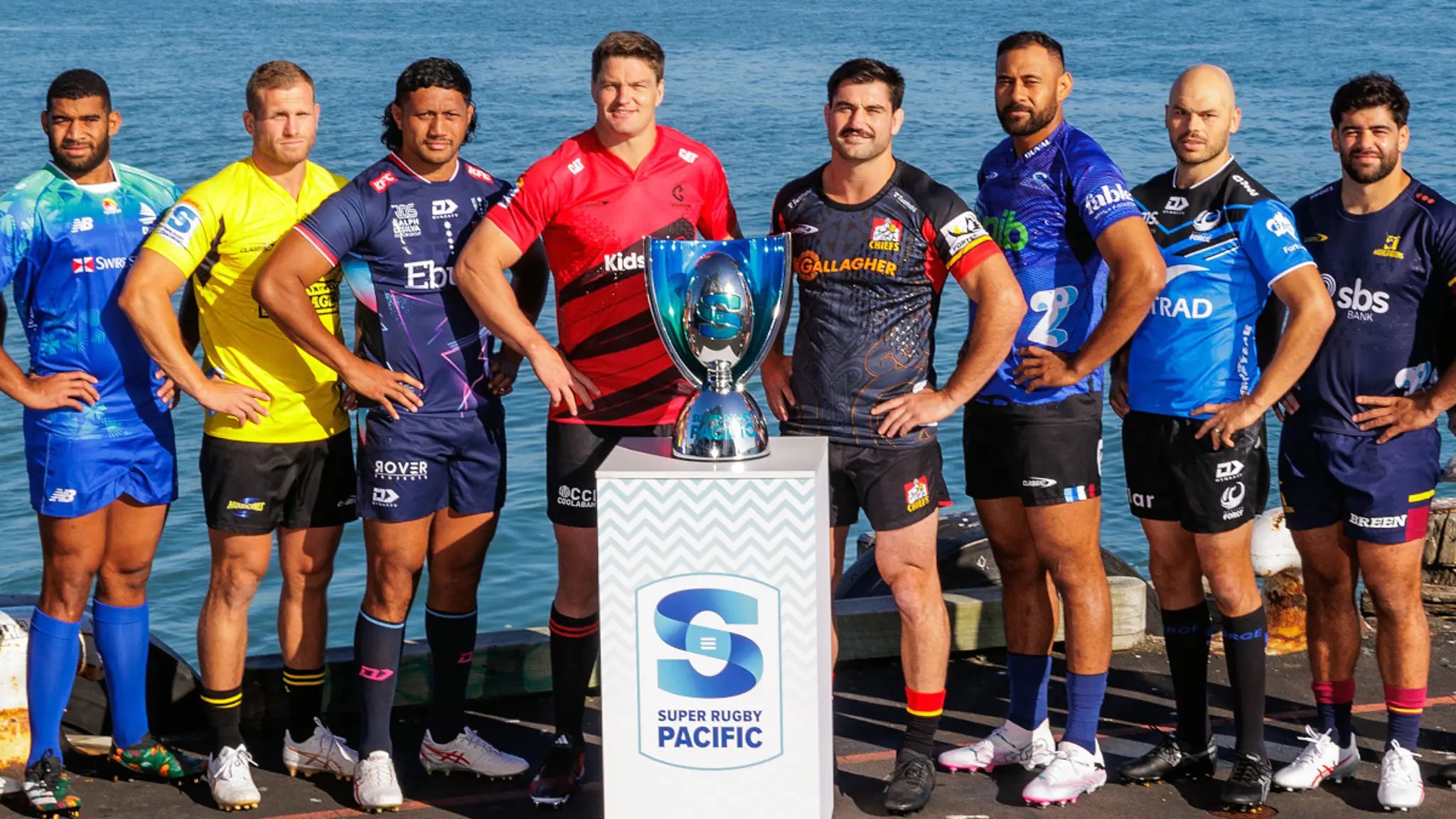
It’s back, folks, and although it doesn’t quite hold the same thrall for us as the Champions Cup in the Northern Hemisphere, it’s still an entertaining competition. Super Rugby Pacific, since the departure of South African sides in 2021, has definitely lost some of its luster and international flavor. It has been dominated by New Zealand teams since then, with the semis and especially the final being all Kiwi affairs. The arrival of the two Pacific Island sides Moana Pasifika and Fijian Drua spiced things up a bit more, and certainly, the addition of the Fijians has been a welcome and exciting addition. The crisis affecting Australian rugby over the last two years has been magnified in this competition, with the Brumbies being the only side who can consistently hold their own against their New Zealand rivals. The rest of the Australian teams rarely make much of a dent in the competition.
However, it’s not all gloom and doom, and this season throws up some interesting scenarios. While we expect to see New Zealand teams continue to dominate, we very much doubt that the Crusaders who have won the competition for the last 7 years will be lifting the trophy this year. Of the New Zealand sides, most likely to compete for the silverware, we think it will be between the Blues, Hurricanes, and Chiefs. The fan favorites for every neutral and all of us here at the Lineout, the Fijian Drua, are being tipped to go deep into the competition this year. Furthermore, you simply won’t want to miss any of their 7 home games in Fiji, where the atmosphere will be absolutely electric and one which literally pops out of your TV screen and into your living room. If every there was a solid advertisement for growing the game globally, it’s a Drua home game in Fiji. Also, expect to see Moana Pasifika throw the odd unexpected upset into the mix.
As for the Australian sides, it will be one of two scenarios. We hope they finally start to turn a corner and new Wallaby Coach Joe Schmidt is able to look forward to his Tests in charge this summer with some degree of optimism. What we’re hoping we don’t see is a continuing slide, and some franchises such as the Melbourne Rebels disappear forever into history, while Joe Schmidt ends up questioning his career choices. To say that 2024 is a make or break year for Australian rugby is likely to be the understatement of the decade, and it all starts on Friday when the Force meet the Hurricanes.
Sadly, for now, we are feeling more pessimistic than optimistic, but desperately hope that this opening weekend gives us and Australian supporters reasons to be cheerful not just for their own rugby but the competition as a whole. If New Zealand are to remain competitive on the International stage, they need some viable competition at club level and exposure to different playing styles, and Australia will be key to providing that. Without it, New Zealand will head into its International season with little quality overseas exposure if Australian sides remain uncompetitive at Super Rugby level. This could have ramifications for the All Blacks and their success on the International stage despite the genius of their new Coach, Scott Robertson.
In short, there are plenty of questions ahead of the new season and plenty at stake for all parties.
Ireland continue to reach for the stars

Who will derail Ireland? Can a young but ambitious side displaying a bucket load of that hard to quantify quality of Welsh grit get the job done? Or will it be left to either England or Scotland in the cauldrons of Twickenham and Murrayfield? To be honest, having watched Ireland in the opening two rounds, it’s hard to see the Men in Red being the outfit to upset the green apple cart on Saturday in Dublin. There will be plenty of grit and determination on hand, and Wales may at times force Ireland to think on their feet and throw caution to the wind. However, it’s hard to see a relatively inexperienced but courageous Welsh outfit topple the green juggernaut. Ireland have simply looked too good and clinical so far this Six Nations, and in their 36-0 drubbing of Italy two weeks ago they barely had to get into third gear, while their demolition job on France in Marseille in the opening weekend, which many dubbed as the Championship decider, was a well drilled performance of enterprise and efficiency.
As for Wales, we’d argue they have exceeded expectations so far. They simply refused to quit against both Scotland and England, and both those games could have gone either way. In short, write this young but gritty team off at your peril. While an upset of atomic proportions against Ireland in Dublin on Saturday afternoon is most likely fantasy league stuff, expect them to have a genuine crack at tilting windmills.
While we fully expect Wales to be competitive up front in the front and second row exchanges, it’s hard to see them getting the measure of the Irish offering, with the only question mark being Tadgh Furlong who hasn’t quite been at his rampaging best of late for Ireland. However, Wales have really struggled at set piece time with their scrum creaking horrendously at times and their lineout accuracy being especially suspect, though the decision to give Elliot Dee the starting Hooker berth did dramatically improve the Welsh performance in that department against England and we’re relieved that Coach Warren Gatland has kept the faith with Dee this weekend.
It’s a very capable and competitive Welsh back row, with Alex Mann in particular proving to be a revelation so far, having scored a try in both rounds. Tommy Reffell is pedigree through and through, but so is his opponent, Irish firebrand, and Captain Peter O’Mahony. Aaron Wainwright has been immense for Wales, but Ireland’s Caelan Doris is likely to walk away with the label of best number eight if not player of the tournament.
Ireland’s new halfback pairing of Jamison Gibson-Park and Jack Crowley is barely missing a beat since Johnny Sexton’s retirement, but Crowley’s goal kicking would appear to still be a work in progress along with some of the finer aspects of his tactical kicking, but it should still get the better of Wales. Unlike Ireland, Wales still seem to be unsure as to who their long-term replacement for fly half Dan Biggar is, with Sam Costelow getting his second Six Nations audition this year.
In the backs, the Welsh centre pairing of George North and Nick Tompkins certainly made England sit up and take notice of them two weeks ago at Twickenham, but they will have to be at their bravest to stop the Bundee Aki express and Robbie Henshaw’s quick thinking. Calvin Nash is relishing life on the wing for Ireland and seems to be a permanent fixture for the future while James Lowe continues to cause opposition defenses all kinds of headaches as well as a boot that keeps getting the Irish out of tricky situations with ease. The contest between Rio Dyer and Calvin Nash should be one of the most entertaining of the match, with the Welshman missing a few too many tackles for comfort, but no slacker in the speed department. Lastly, Ireland are forced into a change with Hugo Keenan out injured for this one at fullback, and as a result making a spot for utility back Ciaran Frawley to fill his rather large boots. Keenan’s reliability under the high ball and ability to break the gain line are becoming the stuff of legends, and as a result Frawley has some very big boots to fill on Saturday, as he attempts to contain his opposite number for Wales Cameron Winnett. The 21 year old Welshman looks born to the role and has easily been one of Coach Warren Gatland’s most impressive debutants in the red jersey this Six Nations.
This should be a fairly straightforward arm wrestle for Ireland in front of a very vocal and expectant home crowd. Get this one out of the way and all of a sudden Ireland have one hand firmly on the Six Nations trophy and that dream of back to back historic Grand Slams suddenly starts to look like a distinct possibility despite two tough trips to Twickenham and Murrayfield which lay ahead of them. As for Wales, expect further refinement and plenty of heart from Coach Warren Gatland’s young but exceptionally enthusiastic charges. Make no mistake, this is not a Welsh side to be taken lightly, despite its relative youth and inexperience and one which seems undaunted by supposedly stronger opponents. In short, this should be an entertaining contest and one that may require something stronger added to your morning coffee on Saturday.
The Calcutta Cup’s similarity to Braveheart gets stronger every year

This was always a great game, and it is steeped in history as one of our sport’s oldest and most prestigious trophies. However, in recent years, it has definitely been one of the highlights of the Six Nations Championship. Always tightly contested and a game won often by the slimmest of margins, in the last few years, it has produced some genuine classics. The last three years though have been all about Scotland, and even if the rest of their Six Nations campaign goes to pot, you feel this is the one they want to win the most – it’s their version of “Le Crunch”. Make no mistake England want it just as badly, especially as the Cup seems to have taken up permanent residency status in Scotland for the last three years, but it perhaps doesn’t have quite the same resonance as it does for the Scots especially when played at Murrayfield as it will be this Saturday.
Scotland, however, remain THE most frustrating team on the planet to get behind. They are one of our fan favourites here at the Lineout, but drive us to drink and elation in equal measure. So let’s get the elephant out of the room, sure Scotland should and could have beaten France at Murrayfield two weeks ago – but the point is they didn’t and they sadly only have themselves to blame. Yes we agree that the try at the death should have been awarded by the TMO and the on field officials, but in the harsh light of day, Scotland had actually lost that game 15 minutes earlier, and a win at the death would have simply glossed over a fundamental problem that until addressed will mean that Scotland will never be a Championship side.
Scotland have some extraordinary talent in their ranks, typified by their exceptional Captain and tactical maestro fly half Finn Russell. However, what they don’t have is focus and the killer instinct to go with it. In both of the opening rounds of this year’s Championship, both against Wales and then France, they had their foot on their opponents jugular, but then, after sixty minutes, invariably seemed to switch off. This was blatantly evident in the first game against Wales where they threw away a 27-0 lead in the second half, and were forced into a period of desperate and chaotic defense which saw them sneak home by one point as Wales scored 26 unanswered points.
In Round 2, they had a disorganized France on the ropes until the 60th minute and then once again proceeded to fall asleep, allowing France to steal the game. Admittedly, Scotland scrambled in the final minute to try and salvage the game, and the debate will rage on for years about that disallowed try, which would have allowed them to snatch it at the death. However, scrambling at the last minute does not win you games or Championships, especially when you’ve spent the last twenty minutes squandering a perfectly good lead. It’s clear that Finn Russell is exasperated by his teammates’ lack of focus, as are Scotland’s long suffering but faithful fans. Is it down to Coaching, a lack of fitness, poor communication and leadership on the pitch or just downright complacency? We simply can’t put our finger on it, but like many are tired of talking Scotland up, as much as we love watching them play.
Consequently, Saturday’s fixture is a perplexing one. This is Scotland’s last home game before a challenging trip to Rome and a potentially tournament wilting excursion to Dublin in the final Round. It just has to be a powerhouse performance for the full eighty minutes if Scotland are going to end this tournament on a high. Implode against England, and Scotland’s confidence, which is always suspect, is likely to hit rock bottom, making those final two road trips exceptionally challenging.
For England, it’s definitely a case of slow and steady wins the race. They head into Round 3 along with Ireland, as the only unbeaten sides so far, but unlike the Irish, they haven’t looked overly convincing in the way in which they’ve gone about it. They managed to eke out a win against Italy in Rome and then struggled to cope with a Welsh side that appeared to suffer no stage fright at Twickenham despite its lack of experience. England still look rather weak on attack, although tactically and defensively, they are looking much sharper these days. Their scrum, however, remains a disaster, but then Scotland’s isn’t much better, so they won’t be losing too much sleep over that while their discipline could also be improved.
We have a hunch that England’s forward pack will get the better of Scotland especially in the tight five, though Ellis Genge really needs to find some of the fire that served him so well in the front row for England during the World Cup. The same could be said of Jamie Ritchie in the back row for Scotland, as he appears to have lost a lot of the combative edge that was so important in last year’s Six Nations. However, the battle of the back rows should be one of the most intense contests of the afternoon and expect Scotland’s Rory Darge and England’s Ben Earl to be grabbing most of the headlines.
If they fire though for the full eighty minutes, then the halfback pairing of Scotland’s Finn Russell and Ben White should be able to put their team on the front foot provided that they can get their forwards and backs singing from the same song sheet for the full eighty minutes. The attacking potential in the Scottish duo is far more dangerous in our opinion than England’s offering of Danny Care and George Ford, and we’re just not convinced that they make an effective partnership, with Care seeming to play better alongside his Harlequins teammate the injured Marcus Smith. However, Ford’s tactical nous and ability to allow England to be comfortable playing without the ball and forcing their opponents to play from deep, served them well in the World Cup even if it weakens the attacking threat England pose.
English Premiership revelations Northampton are well represented in the backs with fullback George Furbank replacing England stalwart Freddie Steward and winger Tommy Freeman keeping his spot on the wing. As impressive as Furbank is for his club, he has yet to impress in an England jersey, and under Eddie Jones, his promise failed to materialize. We like the look of Scotland’s back five and the return of Blair Kinghorn to the fullback position after injury could set some sparks flying, while the center channels look threatening along with the South African contingent of Duhan van der Merwe and Kyle Steyn out wide. If the Scottish unit stays focused on the task at hand and defensively sound for the full eighty minutes on Saturday, we give the Scots the edge in this match over an English unit still looking to gel.
This one really could go either way, though we have a hunch that the Calcutta Cup may be remaining North of Hadrian’s Wall for another year. This is Scotland’s last show in front of the Murrayfield faithful this Six Nations, and they know they need to make a statement ahead of a challenging end to their tournament on the road. England will be desperate to rain on their parade and carry the cherished piece of silverware back to Twickenham at long last, but we have a hunch Scotland have the bigger point to prove on Saturday.
Italy and France attempt to dust off their World Cup blues on a ground that could be the closest thing to a neutral ground for Italy in France’s backyard
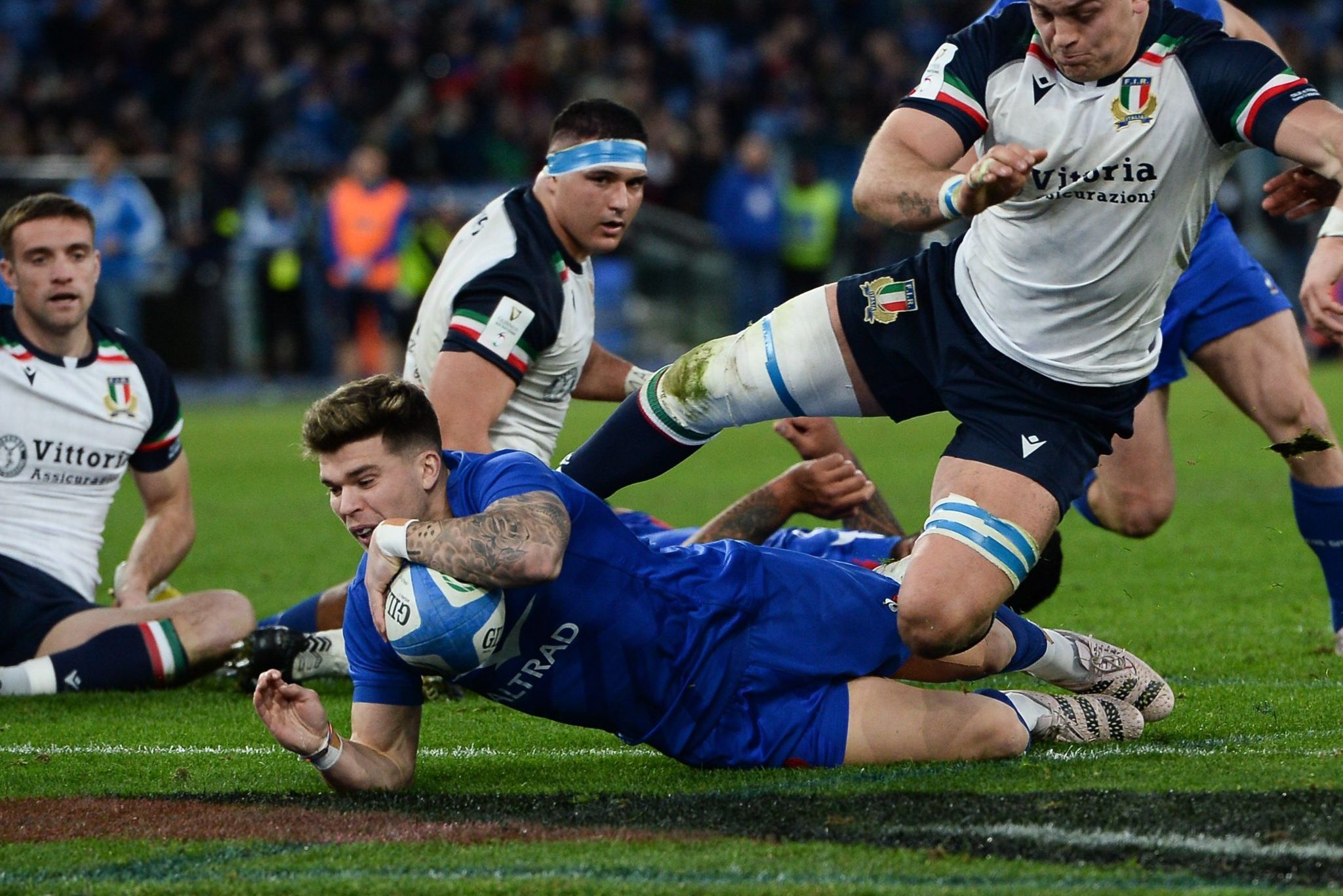
Like we said earlier, this is perhaps for us the most intriguing of all the fixtures this weekend. The Calcutta Cup match at Murrayfield is the one that we’re most looking forward to, but the dustup in Northern France between Les Bleus and the Azurri is the one whose outcome fascinates us the most. Both teams need a convincing win. France are clearly still reeling from their World Cup disappointments, while Italy under new Coach Gonzalo Quesada looked impressive against England at times. They imploded dramatically against Ireland a week later, but for most of us, that outcome had been on the cards since the fixture list for this year’s Championship was announced, so there were very few surprises there. Where Italy tripped up is that they tried playing their ambitious game plan against a side that was able to shut it down before the plays had even been called. Had Italy been a bit more patient and conservative in their approach to the Irish game, the score line might not have been so painful.
French supporters will hope that their team has finally managed to regroup after a chaotic and disorganised first two Rounds. Admittedly they were able to salvage some pride against Scotland with a win two weeks ago, but one can’t help get the feeling that the Scots handed them that win on a plate after switching off for a crucial fifteen minutes of the game in the second half. Had Scotland managed to find that killer instinct which they so often leave in the changing rooms rather than bringing it with them onto the pitch, we probably would have had to write a very different postscript for that match. As it is, France still look a long way off the form that brought them such success last year and a Grand Slam in 2022. Italy will know this and given that they are playing in a venue that doesn’t exactly live and breathe rugby, they will clearly be fancying their chances if they have learnt the lessons they got given in the opening two rounds.
For Italy, the biggest improvement we can see is the decision to start with Benetton Hooker Giacomo Nicotera. His lineout throwing is vastly superior to Gianmarco Lucchesi, who, for reasons best known to the Italian Coaching staff, has been the starting Hooker in the two opening games of the tournament. Consequently, the lineout is an area where Italy has come undone, particularly against Ireland. Ally Nicotera to Danilo Fischetti and Giosue Zilochhi and the all Benetton front row could cause France some issues in the set pieces, where all three are used to plying their trade together at club level. It’s still a pretty impressive French front row, particularly with Cyril Baille in the mix, but they were certainly less than flash at times against Scotland, and their own lineouts are rather hit and miss affairs. The big talking point is that French second row where Cameron Woki will really need to rediscover his form, especially at lineout time, and the giant Posolo Tuilagi wrecking ball gets his first Test start. For Italy, Federico Ruzza is always a force but became so rattled by Ireland’s set piece dominance that his game disintegrated completely after such a strong showing from the big second rower against England a week before. If Italy’s Niccolo Cannone can keep the Tuilagi behemoth in check, then these could be two very competitive tight five units.
In the back row, the French should pull ahead, as there is little doubt that Italy are really struggling without Lorenzo Cannone to anchor the ship at 8. Nevertheless, France are also bereft of their talisman at number eight Gregory Alldritt, necessitating the Captaincy being handed back to Charles Ollivon. Paul Boudehent is into the starting XV alongside Ollivon along with Francois Cros, who moves to number 8, and provided such an impact off the bench against Scotland a fortnight ago. For Italy, all the talk is of a Test debut for Exeter sensation Ross Vintcent at number eight. He may be untested at this level, but his exploits at Exeter have shown that he certainly has the talent. Nevertheless, we can’t help feeling that overall France’s forward pack have the potential to make short work of their Italian counterparts, particularly if they are able to rattle their confidence early in the proceedings.
What has puzzled us, though, is the scrum half selections on both sides. We just don’t think that the Jallibert/Lucu combination is working for France despite it being so effective at club level, while Italy and Quesada would appear unable to settle on who should wear the number 9 jersey as Paolo Garbisi gets yet another new partner to marshal the forwards in the shape of Carcassone’s Martin Page-Relo. If you ask us, we would have preferred to see the Garbisi brothers reunited for this one, as they looked impressive against England in the opening round. As for France, this surely would have been a golden opportunity for Nolan le Garrec to get the starting 9 jersey, and if Lucu fails to have an impact it remains to be seen how long le Garrec bides his time keeping the bench warm on Sunday.
For Italy, we’re also not quite sure of the rationale of breaking up the Benetton center pairing of Tommaso Menoncello and Juan Ignacio Brex. It’s a highly effective unit, with each player complementing the other’s skill sets. Instead, Menoncello is moved to the wing, and Federico Mori is brought in alongside Brex at the centre. It’s definitely a gamble, but Italy now have two powerful wingers in Menoncello and Monty Ioane who excel at breaking the gain line with a handy turn of pace. France have stuck with Louis Bielle-Biarrey and Damian Penaud out wide, and both provide non-stop excitement with ball in hand even if their defense can be questioned at times. Lastly, Italian wonder kid Ange Capuozzo shores up Italy’s last line of defense at fullback against the consummate professional for France Thomas Ramos. There were glimmers of what Capuozzo can do with ball in hand against Ireland, and we’re hoping that this match will finally see him break free once more, while Ramos has been remarkably quiet by his standards so far this Six Nations.
Everything to play for here for both sides, and is this the chance for Italy to claim their first upset of the tournament? While it’s hard to see France slipping up on home soil, this is clearly the biggest potential banana skin of the weekend. France and Italy invariably end up running each other remarkably close in the Six Nations, and the Italians have a habit of catching France napping, and will want revenge after their drubbing at the hands of the French in the World Cup a few months ago. If Italy get their tails up early and then settle into a rhythm and don’t panic under pressure, this could be one to turn the form books upside down. We can’t wait to find out.
Well, that’s it for this week folks, lots to look forward to, and here’s hoping the Fijian Drua put on a show tonight in Auckland!
 The Lineout
Great write up again Neil. Some mouth watering matches coming up. Although in some ways I’m subdued by the same issues you’ve mentioned… a Scottish team that fails consistently to deliver, an England team seemingly without focus and direction but eeking out results but not making us think glory is around their corner, an Italian team trying hard and playing open rugby regardless of the inevitable defeats at the end and Ireland just going through the motions of simply being the best on offer in the NH.
LikeLike
As always thanks for the support Micky. Yeah very interesting weekend with more questions than answers right now. Think we’ll all be a bit wiser come Sunday evening. Take care and enjoy the rugby
LikeLike